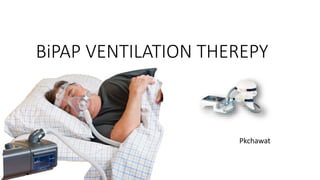
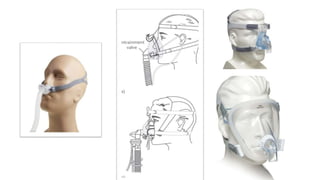
BiPAP VENTILATION THEREPY
Pkchawat
What Is BiPAP or Bilevel Therapy?
• BiPAP (also referred to as BPAP) stands for Bilevel Positive Airway Pressure.
• It is very similar in function and design to a CPAP machine (continuous
positive airway pressure).
• A BiPAP machine is a non-invasive form of therapy for patients suffering
from sleep apnea.
• Sleep apnea, also spelled sleep apnoea, is a sleep disorder where a person
has pauses in breathing or periods of shallow breathing during sleep
• Central sleep apnea occurs because your brain doesn't send proper signals
to the muscles that control your breathing
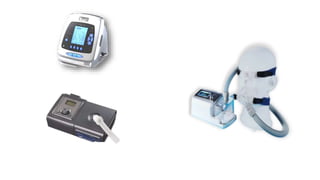
• Both machine types deliver pressurized air through a mask to the patient's
airways.
• The air pressure keeps the throat muscles from collapsing and reducing
obstructions by acting as a splint.
• Both CPAP and BiPAP machines allow patients to breathe easily and
regularly throughout the night
Bilevel Pressure
• The key distinguishing feature of BiPAP is that the pressurized air is delivered at
two alternating levels.
• The inspiratory positive airway pressure (IPAP) is higher and supports a breath as
it is taken in. Conversely,
• The expiratory positive airway pressure (EPAP) is a lower pressure that allows
you to comfortably breathe out.
• These pressures are preset based on a prescription provided by your sleep doctor
and alternate just like your breathing pattern.
• Beyond these standard settings, there are a few other variations that are
available. Bilevel ST includes the timed delivery of a breath if breathing pauses
occur. These pauses are often present in central sleep apnea.
• In addition, auto or adaptive servo-ventilation (ASV) includes more sophisticated
settings that vary the timing, length, and volume of the breaths that are delivered
Where can use BiPAP Therapy?
• BiPAP machines are often prescribed to obstructive sleep apnea, sleep
apnea patients with high pressure settings or low oxygen levels.
• BiPAPs are often used after CPAP has failed to adequately treat certain
patients.
• BiPAPs can be helpful for patients with cardiopulmonary disorders such as
congestive heart failure.
• Often prescribed to people with lung disorders or certain neuromuscular
disorders. amyotrophic lateral sclerosis
• BiPAP is a method of breathing support that is often used to treat central
sleep apnea, a condition that occurs in the setting of opioid use, congestive
heart failure, and prior stroke
• it is a non-invasive means of support that can be used in hospitalized
people who are in respiratory distress but who do not wish to be placed on
a ventilator
Bipap

Bipap

  • 1.
  • 2.
    What Is BiPAPor Bilevel Therapy? • BiPAP (also referred to as BPAP) stands for Bilevel Positive Airway Pressure. • It is very similar in function and design to a CPAP machine (continuous positive airway pressure). • A BiPAP machine is a non-invasive form of therapy for patients suffering from sleep apnea. • Sleep apnea, also spelled sleep apnoea, is a sleep disorder where a person has pauses in breathing or periods of shallow breathing during sleep • Central sleep apnea occurs because your brain doesn't send proper signals to the muscles that control your breathing • Both machine types deliver pressurized air through a mask to the patient's airways. • The air pressure keeps the throat muscles from collapsing and reducing obstructions by acting as a splint. • Both CPAP and BiPAP machines allow patients to breathe easily and regularly throughout the night
  • 3.
    Bilevel Pressure • Thekey distinguishing feature of BiPAP is that the pressurized air is delivered at two alternating levels. • The inspiratory positive airway pressure (IPAP) is higher and supports a breath as it is taken in. Conversely, • The expiratory positive airway pressure (EPAP) is a lower pressure that allows you to comfortably breathe out. • These pressures are preset based on a prescription provided by your sleep doctor and alternate just like your breathing pattern. • Beyond these standard settings, there are a few other variations that are available. Bilevel ST includes the timed delivery of a breath if breathing pauses occur. These pauses are often present in central sleep apnea. • In addition, auto or adaptive servo-ventilation (ASV) includes more sophisticated settings that vary the timing, length, and volume of the breaths that are delivered
  • 9.
    Where can useBiPAP Therapy? • BiPAP machines are often prescribed to obstructive sleep apnea, sleep apnea patients with high pressure settings or low oxygen levels. • BiPAPs are often used after CPAP has failed to adequately treat certain patients. • BiPAPs can be helpful for patients with cardiopulmonary disorders such as congestive heart failure. • Often prescribed to people with lung disorders or certain neuromuscular disorders. amyotrophic lateral sclerosis • BiPAP is a method of breathing support that is often used to treat central sleep apnea, a condition that occurs in the setting of opioid use, congestive heart failure, and prior stroke • it is a non-invasive means of support that can be used in hospitalized people who are in respiratory distress but who do not wish to be placed on a ventilator