BIOSIMILARS 
INDIAN PERSPECTIVE AND 
ROAD AHEAD
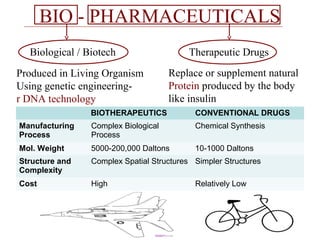
BIO - PHARMACEUTICALS 
Biological / Biotech Therapeutic Drugs 
Produced in Living Organism 
Using genetic engineering-r 
DNA technology 
Replace or supplement natural 
Protein produced by the body 
like insulin 
BIOTHERAPEUTICS CONVENTIONAL DRUGS 
Manufacturing 
Process 
Complex Biological 
Process 
Chemical Synthesis 
Mol. Weight 5000-200,000 Daltons 10-1000 Daltons 
Structure and 
Complexity 
Complex Spatial Structures Simpler Structures 
Cost High Relatively Low
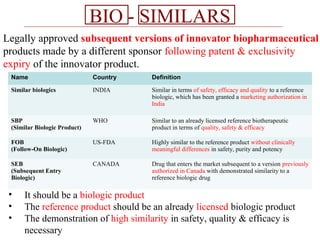
BIO - SIMILARS 
Legally approved subsequent versions of innovator biopharmaceutical 
products made by a different sponsor following patent & exclusivity 
expiry of the innovator product. 
Name Country Definition 
Similar biologics INDIA Similar in terms of safety, efficacy and quality to a reference 
biologic, which has been granted a marketing authorization in 
India 
SBP 
(Similar Biologic Product) 
WHO Similar to an already licensed reference biotherapeutic 
product in terms of quality, safety & efficacy 
FOB 
(Follow-On Biologic) 
US-FDA Highly similar to the reference product without clinically 
meaningful differences in safety, purity and potency 
SEB 
(Subsequent Entry 
Biologic) 
CANADA Drug that enters the market subsequent to a version previously 
authorized in Canada with demonstrated similarity to a 
reference biologic drug 
• It should be a biologic product 
• The reference product should be an already licensed biologic product 
• The demonstration of high similarity in safety, quality & efficacy is 
necessary
SIMILAR NOT IDENTICAL 
• Manufacturers have access to the Final Product Only 
• Process Details for the production of Reference Product are not available 
• Each Manufacturer designs their own process based on: 
• Different CELL LINES 
• Different PROCESS STEPS 
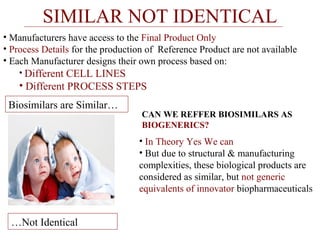
Biosimilars are Similar… 
…Not Identical 
CAN WE REFFER BIOSIMILARS AS 
BIOGENERICS? 
• In Theory Yes We can 
• But due to structural & manufacturing 
complexities, these biological products are 
considered as similar, but not generic 
equivalents of innovator biopharmaceuticals
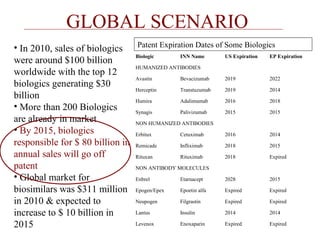
GLOBAL SCENARIO 
• In 2010, sales of biologics 
were around $100 billion 
worldwide with the top 12 
biologics generating $30 
billion 
• More than 200 Biologics 
are already in market 
• By 2015, biologics 
responsible for $ 80 billion in 
annual sales will go off 
patent 
• Global market for 
biosimilars was $311 million 
in 2010 & expected to 
increase to $ 10 billion in 
2015 
Patent Expiration Dates of Some Biologics 
Biologic INN Name US Expiration EP Expiration 
HUMANIZED ANTIBODIES 
Avastin Bevacizumab 2019 2022 
Herceptin Transtuzumab 2019 2014 
Humira Adalimumab 2016 2018 
Synagis Palivizumab 2015 2015 
NON HUMANIZED ANTIBODIES 
Erbitux Cetuximab 2016 2014 
Remicade Infliximab 2018 2015 
Rituxan Rituximab 2018 Expired 
NON ANTIBODY MOLECULES 
Enbrel Etarnacept 2028 2015 
Epogen/Epex Epoetin alfa Expired Expired 
Neupogen Filgrastin Expired Expired 
Lantus Insulin 2014 2014 
Levenox Enoxaparin Expired Expired
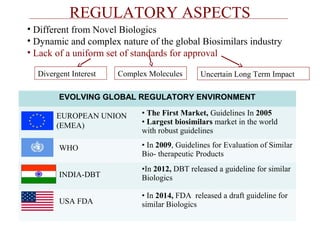
REGULATORY ASPECTS 
• Different from Novel Biologics 
• Dynamic and complex nature of the global Biosimilars industry 
• Lack of a uniform set of standards for approval 
Divergent Interest Complex Molecules Uncertain Long Term Impact 
EVOLVING GLOBAL REGULATORY ENVIRONMENT 
• The First Market, Guidelines In 2005 
• Largest biosimilars market in the world 
with robust guidelines 
• In 2009, Guidelines for Evaluation of Similar 
Bio- therapeutic Products 
•In 2012, DBT released a guideline for similar 
Biologics 
• In 2014, FDA released a draft guideline for 
similar Biologics 
EUROPEAN UNION 
(EMEA) 
WHO 
INDIA-DBT 
USA FDA
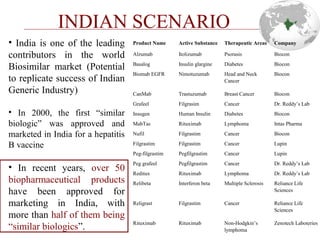
INDIAN SCENARIO 
• India is one of the leading 
contributors in the world 
Biosimilar market (Potential 
to replicate success of Indian 
Generic Industry) 
• In 2000, the first “similar 
biologic” was approved and 
marketed in India for a hepatitis 
B vaccine 
• In recent years, over 50 
biopharmaceutical products 
have been approved for 
marketing in India, with 
more than half of them being 
“similar biologics”. 
Product Name Active Substance Therapeutic Areas Company 
Alzumab Itolizumab Psorasis Biocon 
Basalog Insulin glargine Diabetes Biocon 
Biomab EGFR Nimotuzumab Head and Neck 
Cancer 
Biocon 
CanMab Trastuzumab Breast Cancer Biocon 
Grafeel Filgrasim Cancer Dr. Reddy’s Lab 
Insugen Human Insulin Diabetes Biocon 
MabTas Rituximab Lymphoma Intas Pharma 
Nufil Filgrastim Cancer Biocon 
Filgrastim Filgrastim Cancer Lupin 
Peg-filgrastim Pegfilgrastim Cancer Lupin 
Peg grafeel Pegfilgrastim Cancer Dr. Reddy’s Lab 
Reditux Rituximab Lymphoma Dr. Reddy’s Lab 
Relibeta Interferon beta Multiple Sclerosis Reliance Life 
Sciences 
Religrast Filgrastim Cancer Reliance Life 
Sciences 
Rituximab Rituximab Non-Hodgkin’s 
lymphoma 
Zenotech Laboteries
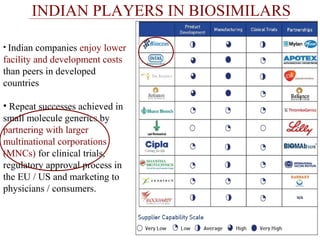
INDIAN PLAYERS IN BIOSIMILARS 
• Indian companies enjoy lower 
facility and development costs 
than peers in developed 
countries 
• Repeat successes achieved in 
small molecule generics by 
partnering with larger 
multinational corporations 
(MNCs) for clinical trials, 
regulatory approval process in 
the EU / US and marketing to 
physicians / consumers.
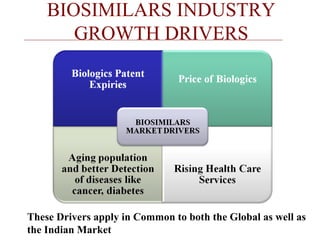
BIOSIMILARS INDUSTRY 
GROWTH DRIVERS 
These Drivers apply in Common to both the Global as well as 
the Indian Market
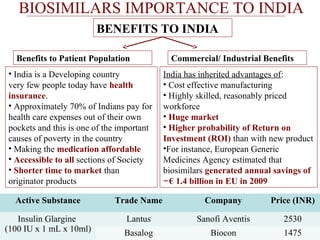
BIOSIMILARS IMPORTANCE TO INDIA 
BENEFITS TO INDIA 
Benefits to Patient Population Commercial/ Industrial Benefits 
• India is a Developing country 
very few people today have health 
insurance. 
• Approximately 70% of Indians pay for 
health care expenses out of their own 
pockets and this is one of the important 
causes of poverty in the country 
• Making the medication affordable 
• Accessible to all sections of Society 
• Shorter time to market than 
originator products 
India has inherited advantages of: 
• Cost effective manufacturing 
• Highly skilled, reasonably priced 
workforce 
• Huge market 
• Higher probability of Return on 
Investment (ROI) than with new product 
•For instance, European Generic 
Medicines Agency estimated that 
biosimilars generated annual savings of 
€ ∼ 1.4 billion in EU in 2009 
Active Substance Trade Name Company Price (INR) 
Insulin Glargine 
(100 IU x 1 mL x 10ml) 
Lantus Sanofi Aventis 2530 
Basalog Biocon 1475
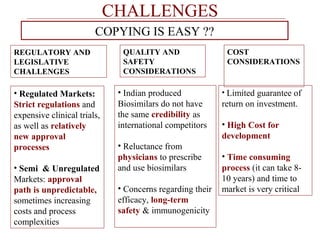
CHALLENGES 
REGULATORY AND 
LEGISLATIVE 
CHALLENGES 
QUALITY AND 
SAFETY 
CONSIDERATIONS 
COST 
CONSIDERATIONS 
• Indian produced 
Biosimilars do not have 
the same credibility as 
international competitors 
• Reluctance from 
physicians to prescribe 
and use biosimilars 
• Concerns regarding their 
efficacy, long-term 
safety & immunogenicity 
• Regulated Markets: 
Strict regulations and 
expensive clinical trials, 
as well as relatively 
new approval 
processes 
• Semi & Unregulated 
Markets: approval 
path is unpredictable, 
sometimes increasing 
costs and process 
complexities 
• Limited guarantee of 
return on investment. 
• High Cost for 
development 
• Time consuming 
process (it can take 8- 
10 years) and time to 
market is very critical 
COPYING IS EASY ??
REFERENCES 
• Formula of success Emerging trends in Biosimilars in India, 
IBEF, www.ibef.org 
• Guidelines on similar biologics, DBT India, 2012 
• An Overview of Biosimilars and the Biosimilar Pathway 
in India, Bricwallblog.worldpress.com, 2014

Biosimilars

  • 1.
  • 2.
    BIO - PHARMACEUTICALS Biological / Biotech Therapeutic Drugs Produced in Living Organism Using genetic engineering-r DNA technology Replace or supplement natural Protein produced by the body like insulin BIOTHERAPEUTICS CONVENTIONAL DRUGS Manufacturing Process Complex Biological Process Chemical Synthesis Mol. Weight 5000-200,000 Daltons 10-1000 Daltons Structure and Complexity Complex Spatial Structures Simpler Structures Cost High Relatively Low
  • 3.
    BIO - SIMILARS Legally approved subsequent versions of innovator biopharmaceutical products made by a different sponsor following patent & exclusivity expiry of the innovator product. Name Country Definition Similar biologics INDIA Similar in terms of safety, efficacy and quality to a reference biologic, which has been granted a marketing authorization in India SBP (Similar Biologic Product) WHO Similar to an already licensed reference biotherapeutic product in terms of quality, safety & efficacy FOB (Follow-On Biologic) US-FDA Highly similar to the reference product without clinically meaningful differences in safety, purity and potency SEB (Subsequent Entry Biologic) CANADA Drug that enters the market subsequent to a version previously authorized in Canada with demonstrated similarity to a reference biologic drug • It should be a biologic product • The reference product should be an already licensed biologic product • The demonstration of high similarity in safety, quality & efficacy is necessary
  • 4.
    SIMILAR NOT IDENTICAL • Manufacturers have access to the Final Product Only • Process Details for the production of Reference Product are not available • Each Manufacturer designs their own process based on: • Different CELL LINES • Different PROCESS STEPS Biosimilars are Similar… …Not Identical CAN WE REFFER BIOSIMILARS AS BIOGENERICS? • In Theory Yes We can • But due to structural & manufacturing complexities, these biological products are considered as similar, but not generic equivalents of innovator biopharmaceuticals
  • 5.
    GLOBAL SCENARIO •In 2010, sales of biologics were around $100 billion worldwide with the top 12 biologics generating $30 billion • More than 200 Biologics are already in market • By 2015, biologics responsible for $ 80 billion in annual sales will go off patent • Global market for biosimilars was $311 million in 2010 & expected to increase to $ 10 billion in 2015 Patent Expiration Dates of Some Biologics Biologic INN Name US Expiration EP Expiration HUMANIZED ANTIBODIES Avastin Bevacizumab 2019 2022 Herceptin Transtuzumab 2019 2014 Humira Adalimumab 2016 2018 Synagis Palivizumab 2015 2015 NON HUMANIZED ANTIBODIES Erbitux Cetuximab 2016 2014 Remicade Infliximab 2018 2015 Rituxan Rituximab 2018 Expired NON ANTIBODY MOLECULES Enbrel Etarnacept 2028 2015 Epogen/Epex Epoetin alfa Expired Expired Neupogen Filgrastin Expired Expired Lantus Insulin 2014 2014 Levenox Enoxaparin Expired Expired
  • 6.
    REGULATORY ASPECTS •Different from Novel Biologics • Dynamic and complex nature of the global Biosimilars industry • Lack of a uniform set of standards for approval Divergent Interest Complex Molecules Uncertain Long Term Impact EVOLVING GLOBAL REGULATORY ENVIRONMENT • The First Market, Guidelines In 2005 • Largest biosimilars market in the world with robust guidelines • In 2009, Guidelines for Evaluation of Similar Bio- therapeutic Products •In 2012, DBT released a guideline for similar Biologics • In 2014, FDA released a draft guideline for similar Biologics EUROPEAN UNION (EMEA) WHO INDIA-DBT USA FDA
  • 7.
    INDIAN SCENARIO •India is one of the leading contributors in the world Biosimilar market (Potential to replicate success of Indian Generic Industry) • In 2000, the first “similar biologic” was approved and marketed in India for a hepatitis B vaccine • In recent years, over 50 biopharmaceutical products have been approved for marketing in India, with more than half of them being “similar biologics”. Product Name Active Substance Therapeutic Areas Company Alzumab Itolizumab Psorasis Biocon Basalog Insulin glargine Diabetes Biocon Biomab EGFR Nimotuzumab Head and Neck Cancer Biocon CanMab Trastuzumab Breast Cancer Biocon Grafeel Filgrasim Cancer Dr. Reddy’s Lab Insugen Human Insulin Diabetes Biocon MabTas Rituximab Lymphoma Intas Pharma Nufil Filgrastim Cancer Biocon Filgrastim Filgrastim Cancer Lupin Peg-filgrastim Pegfilgrastim Cancer Lupin Peg grafeel Pegfilgrastim Cancer Dr. Reddy’s Lab Reditux Rituximab Lymphoma Dr. Reddy’s Lab Relibeta Interferon beta Multiple Sclerosis Reliance Life Sciences Religrast Filgrastim Cancer Reliance Life Sciences Rituximab Rituximab Non-Hodgkin’s lymphoma Zenotech Laboteries
  • 8.
    INDIAN PLAYERS INBIOSIMILARS • Indian companies enjoy lower facility and development costs than peers in developed countries • Repeat successes achieved in small molecule generics by partnering with larger multinational corporations (MNCs) for clinical trials, regulatory approval process in the EU / US and marketing to physicians / consumers.
  • 9.
    BIOSIMILARS INDUSTRY GROWTHDRIVERS These Drivers apply in Common to both the Global as well as the Indian Market
  • 10.
    BIOSIMILARS IMPORTANCE TOINDIA BENEFITS TO INDIA Benefits to Patient Population Commercial/ Industrial Benefits • India is a Developing country very few people today have health insurance. • Approximately 70% of Indians pay for health care expenses out of their own pockets and this is one of the important causes of poverty in the country • Making the medication affordable • Accessible to all sections of Society • Shorter time to market than originator products India has inherited advantages of: • Cost effective manufacturing • Highly skilled, reasonably priced workforce • Huge market • Higher probability of Return on Investment (ROI) than with new product •For instance, European Generic Medicines Agency estimated that biosimilars generated annual savings of € ∼ 1.4 billion in EU in 2009 Active Substance Trade Name Company Price (INR) Insulin Glargine (100 IU x 1 mL x 10ml) Lantus Sanofi Aventis 2530 Basalog Biocon 1475
  • 11.
    CHALLENGES REGULATORY AND LEGISLATIVE CHALLENGES QUALITY AND SAFETY CONSIDERATIONS COST CONSIDERATIONS • Indian produced Biosimilars do not have the same credibility as international competitors • Reluctance from physicians to prescribe and use biosimilars • Concerns regarding their efficacy, long-term safety & immunogenicity • Regulated Markets: Strict regulations and expensive clinical trials, as well as relatively new approval processes • Semi & Unregulated Markets: approval path is unpredictable, sometimes increasing costs and process complexities • Limited guarantee of return on investment. • High Cost for development • Time consuming process (it can take 8- 10 years) and time to market is very critical COPYING IS EASY ??
  • 12.
    REFERENCES • Formulaof success Emerging trends in Biosimilars in India, IBEF, www.ibef.org • Guidelines on similar biologics, DBT India, 2012 • An Overview of Biosimilars and the Biosimilar Pathway in India, Bricwallblog.worldpress.com, 2014