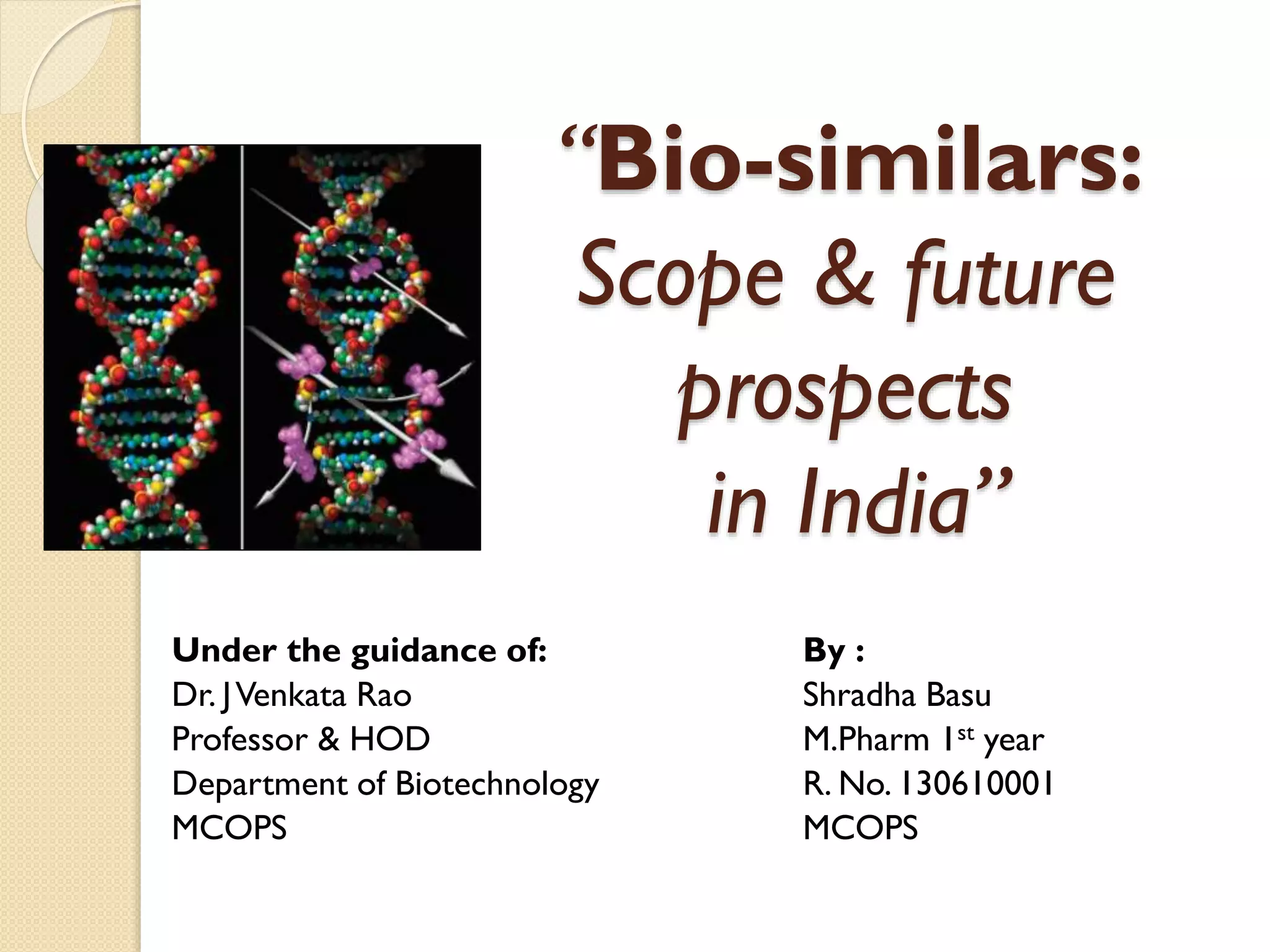

“Bio-similars:
Scope & future
prospects
in India”
Under the guidance of: By :
Dr. JVenkata Rao Shradha Basu
Professor & HOD M.Pharm 1st year
Department of Biotechnology R. No. 130610001
MCOPS MCOPS
Contents
 Introduction
 Definitions
 Classifications
 Market overview
 Regulatory issues
 Regulatory guidelines
 Development process in India
 Approval process
 Forces shaping the biosimilar market
 Factors supporting biosimilar market
 Biosimilar market in India
 Specific company advancements
 Conclusions
Introduction
 “The market for biologics is growing at twice the rate of
pharmaceutical drugs, placing significant cost pressures on
government, employers, insurers, and patients.”
 “Establishing a regulatory pathway for ‘follow-on’ biologics
(bio-similars) was therefore felt to be necessary by many
stake holders to encourage competition and reduce prices.”
 “Many pharmaceutical companies – both large and small - are
expecting their bottom line growth to be driven by bio-
similars and are channelling their R&D budgets to compete
in what – according to many - is going to be one of the
hottest areas in a radically changing global pharmaceutical
market.”
-QPS, global CRO
Definitions
 According to the WHO, a bio-similar is a bio-
therapeutic product which is similar in terms of quality,
safety and efficacy to an already licensed reference bio-
therapeutic product.
 According to the FDA, a bio-similar is a biological
product that is highly similar to a US-licensed reference
biological product notwithstanding minor differences in
clinically inactive components, and for which there are
no clinically meaningful differences between the
biological product and the reference product in terms
of the safety, purity, and potency of the product.
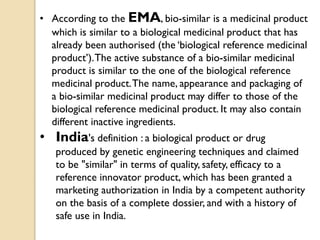
• According to the EMA, bio-similar is a medicinal product
which is similar to a biological medicinal product that has
already been authorised (the ‘biological reference medicinal
product’).The active substance of a bio-similar medicinal
product is similar to the one of the biological reference
medicinal product.The name, appearance and packaging of
a bio-similar medicinal product may differ to those of the
biological reference medicinal product. It may also contain
different inactive ingredients.
• India's definition : a biological product or drug
produced by genetic engineering techniques and claimed
to be "similar" in terms of quality, safety, efficacy to a
reference innovator product, which has been granted a
marketing authorization in India by a competent authority
on the basis of a complete dossier, and with a history of
safe use in India.
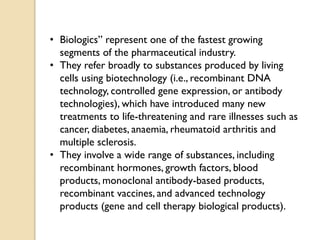
• Biologics” represent one of the fastest growing
segments of the pharmaceutical industry.
• They refer broadly to substances produced by living
cells using biotechnology (i.e., recombinant DNA
technology, controlled gene expression, or antibody
technologies), which have introduced many new
treatments to life-threatening and rare illnesses such as
cancer, diabetes, anaemia, rheumatoid arthritis and
multiple sclerosis.
• They involve a wide range of substances, including
recombinant hormones, growth factors, blood
products, monoclonal antibody-based products,
recombinant vaccines, and advanced technology
products (gene and cell therapy biological products).
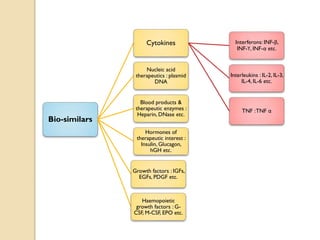
Bio-similars
Cytokines Interferons: INF-β,
INF-ϒ, INF-α etc.
Interleukins : IL-2, IL-3,
IL-4, IL-6 etc.
TNF :TNF α
Nucleic acid
therapeutics : plasmid
DNA
Blood products &
therapeutic enzymes :
Heparin, DNase etc.
Hormones of
therapeutic interest :
Insulin, Glucagon,
hGH etc.
Growth factors : IGFs,
EGFs, PDGF etc.
Haemopoietic
growth factors : G-
CSF, M-CSF, EPO etc.
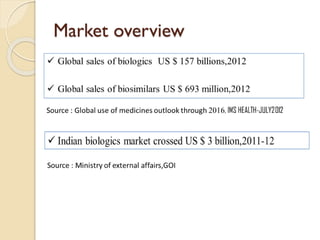
Market overview
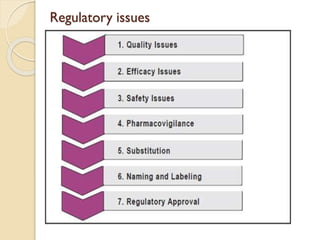
Regulatory issues
Regulatory guidelines
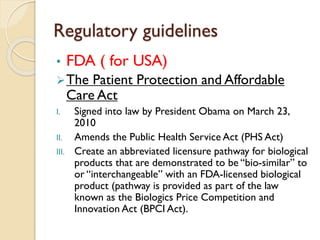
• FDA ( for USA)
The Patient Protection and Affordable
Care Act
I. Signed into law by President Obama on March 23,
2010
II. Amends the Public Health Service Act (PHS Act)
III. Create an abbreviated licensure pathway for biological
products that are demonstrated to be “bio-similar” to
or “interchangeable” with an FDA-licensed biological
product (pathway is provided as part of the law
known as the Biologics Price Competition and
Innovation Act (BPCI Act).
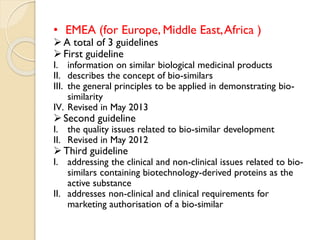
• EMEA (for Europe, Middle East,Africa )
A total of 3 guidelines
First guideline
I. information on similar biological medicinal products
II. describes the concept of bio-similars
III. the general principles to be applied in demonstrating bio-
similarity
IV. Revised in May 2013
Second guideline
I. the quality issues related to bio-similar development
II. Revised in May 2012
Third guideline
I. addressing the clinical and non-clinical issues related to bio-
similars containing biotechnology-derived proteins as the
active substance
II. addresses non-clinical and clinical requirements for
marketing authorisation of a bio-similar
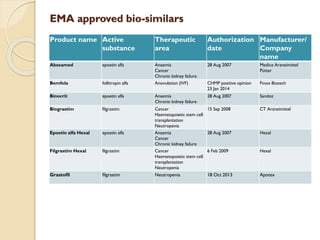
EMA approved bio-similars
Product name Active
substance
Therapeutic
area
Authorization
date
Manufacturer/
Company
name
Abseamed epoetin alfa Anaemia
Cancer
Chronic kidney failure
28 Aug 2007 Medice Arzneimittel
Pütter
Bemfola follitropin alfa Anovulation (IVF) CHMP positive opinion
23 Jan 2014
Finox Biotech
Binocrit epoetin alfa Anaemia
Chronic kidney failure
28 Aug 2007 Sandoz
Biograstim filgrastim Cancer
Haematopoietic stem cell
transplantation
Neutropenia
15 Sep 2008 CT Arzneimittel
Epoetin alfa Hexal epoetin alfa Anaemia
Cancer
Chronic kidney failure
28 Aug 2007 Hexal
Filgrastim Hexal filgrastim Cancer
Haematopoietic stem cell
transplantation
Neutropenia
6 Feb 2009 Hexal
Grastofil filgrastim Neutropenia 18 Oct 2013 Apotex
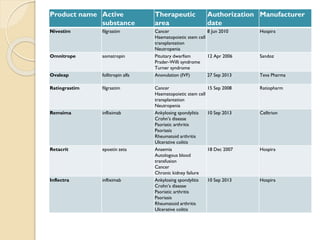
Product name Active
substance
Therapeutic
area
Authorization
date
Manufacturer
Nivestim filgrastim Cancer
Haematopoietic stem cell
transplantation
Neutropenia
8 Jun 2010 Hospira
Omnitrope somatropin Pituitary dwarfism
Prader-Willi syndrome
Turner syndrome
12 Apr 2006 Sandoz
Ovaleap follitropin alfa Anovulation (IVF) 27 Sep 2013 Teva Pharma
Ratiograstim filgrastim Cancer
Haematopoietic stem cell
transplantation
Neutropenia
15 Sep 2008 Ratiopharm
Remsima infliximab Ankylosing spondylitis
Crohn’s disease
Psoriatic arthritis
Psoriasis
Rheumatoid arthritis
Ulcerative colitis
10 Sep 2013 Celltrion
Retacrit epoetin zeta Anaemia
Autologous blood
transfusion
Cancer
Chronic kidney failure
18 Dec 2007 Hospira
Inflectra infliximab Ankylosing spondylitis
Crohn’s disease
Psoriatic arthritis
Psoriasis
Rheumatoid arthritis
Ulcerative colitis
10 Sep 2013 Hospira
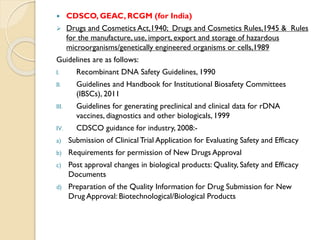
 CDSCO, GEAC, RCGM (for India)
 Drugs and Cosmetics Act,1940; Drugs and Cosmetics Rules,1945 & Rules
for the manufacture, use, import, export and storage of hazardous
microorganisms/genetically engineered organisms or cells,1989
Guidelines are as follows:
I. Recombinant DNA Safety Guidelines, 1990
II. Guidelines and Handbook for Institutional Biosafety Committees
(IBSCs), 2011
III. Guidelines for generating preclinical and clinical data for rDNA
vaccines, diagnostics and other biologicals, 1999
IV. CDSCO guidance for industry, 2008:-
a) Submission of Clinical Trial Application for Evaluating Safety and Efficacy
b) Requirements for permission of New Drugs Approval
c) Post approval changes in biological products: Quality, Safety and Efficacy
Documents
d) Preparation of the Quality Information for Drug Submission for New
Drug Approval: Biotechnological/Biological Products
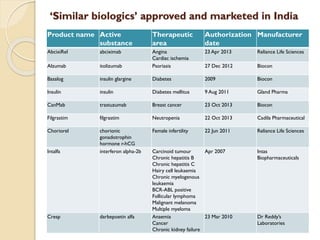
‘Similar biologics’ approved and marketed in India
Product name Active
substance
Therapeutic
area
Authorization
date
Manufacturer
AbcixiRel abciximab Angina
Cardiac ischemia
23 Apr 2013 Reliance Life Sciences
Alzumab itolizumab Psoriasis 27 Dec 2012 Biocon
Basalog insulin glargine Diabetes 2009 Biocon
Insulin insulin Diabetes mellitus 9 Aug 2011 Gland Pharma
CanMab trastuzumab Breast cancer 23 Oct 2013 Biocon
Filgrastim filgrastim Neutropenia 22 Oct 2013 Cadila Pharmaceutical
Choriorel chorionic
gonadotrophin
hormone r-hCG
Female infertility 22 Jun 2011 Reliance Life Sciences
Intalfa interferon alpha-2b Carcinoid tumour
Chronic hepatitis B
Chronic hepatitis C
Hairy cell leukaemia
Chronic myelogenous
leukaemia
BCR-ABL positive
Follicular lymphoma
Malignant melanoma
Multiple myeloma
Apr 2007 Intas
Biopharmaceuticals
Cresp darbepoetin alfa Anaemia
Cancer
Chronic kidney failure
23 Mar 2010 Dr Reddy’s
Laboratories
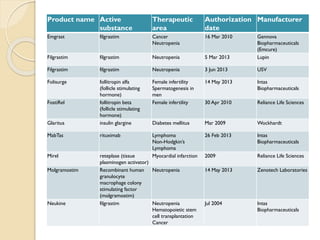
Product name Active
substance
Therapeutic
area
Authorization
date
Manufacturer
Emgrast filgrastim Cancer
Neutropenia
16 Mar 2010 Gennova
Biopharmaceuticals
(Emcure)
Filgrastim filgrastim Neutropenia 5 Mar 2013 Lupin
Filgrastim filgrastim Neutropenia 3 Jun 2013 USV
Folisurge follitropin alfa
(follicle stimulating
hormone)
Female infertility
Spermatogenesis in
men
14 May 2013 Intas
Biopharmaceuticals
FostiRel follitropin beta
(follicle stimulating
hormone)
Female infertility 30 Apr 2010 Reliance Life Sciences
Glaritus insulin glargine Diabetes mellitus Mar 2009 Wockhardt
MabTas rituximab Lymphoma
Non-Hodgkin’s
Lymphoma
26 Feb 2013 Intas
Biopharmaceuticals
Mirel reteplase (tissue
plasminogen activator)
Myocardial infarction 2009 Reliance Life Sciences
Molgramostim Recombinant human
granulocyte
macrophage colony
stimulating factor
(molgramostim)
Neutropenia 14 May 2013 Zenotech Laboratories
Neukine filgrastim Neutropenia
Hematopoietic stem
cell transplantation
Cancer
Jul 2004 Intas
Biopharmaceuticals
Development process in India
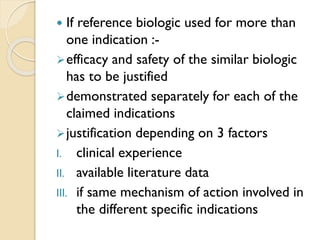
 Developed through sequential process to
demonstrate the similarity by extensive
characterization studies
 Reference biologic should be licensed in
India
 Testing of the similar biologic is generally
less than that required for the reference
biologic
 Testing of the similar biologic should be
sufficient to confirm acceptable levels of
safety, efficacy & quality of product to ensure
public health
 If reference biologic used for more than
one indication :-
efficacy and safety of the similar biologic
has to be justified
demonstrated separately for each of the
claimed indications
justification depending on 3 factors
I. clinical experience
II. available literature data
III. if same mechanism of action involved in
the different specific indications
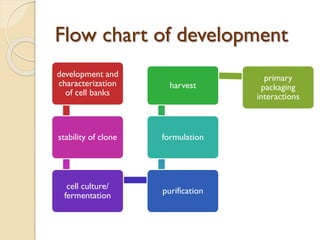
development and
characterization
of cell banks
stability of clone
cell culture/
fermentation
purification
formulation
harvest
primary
packaging
interactions
Flow chart of development
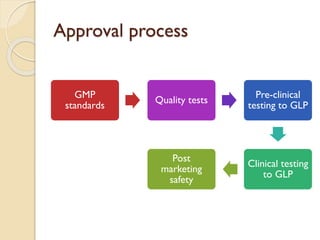
Approval process
GMP
standards
Quality tests
Pre-clinical
testing to GLP
Clinical testing
to GLP
Post
marketing
safety
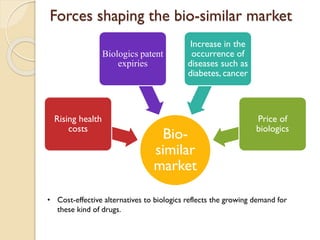
Forces shaping the bio-similar market
Bio-
similar
market
Rising health
costs
Biologics patent
expiries
Increase in the
occurrence of
diseases such as
diabetes, cancer
Price of
biologics
• Cost-effective alternatives to biologics reflects the growing demand for
these kind of drugs.
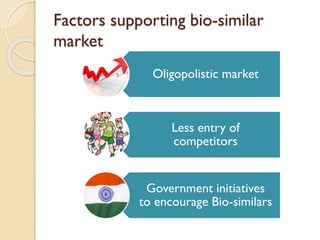
Factors supporting bio-similar
market
Oligopolistic market
Less entry of
competitors
Government initiatives
to encourage Bio-similars
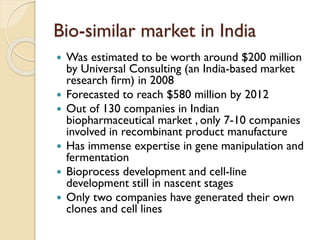
Bio-similar market in India
 Was estimated to be worth around $200 million
by Universal Consulting (an India-based market
research firm) in 2008
 Forecasted to reach $580 million by 2012
 Out of 130 companies in Indian
biopharmaceutical market , only 7-10 companies
involved in recombinant product manufacture
 Has immense expertise in gene manipulation and
fermentation
 Bioprocess development and cell-line
development still in nascent stages
 Only two companies have generated their own
clones and cell lines
 Semi-regulated market
 Phase I-II trials not required for bio-similar approval except
in special cases
 total cost to develop a bio-similar ranges from $10 – 20
million which helps Indian companies to offer their products
at a 25-40% cheaper price than the original biologics
 Key challenges faced by the bio-similar companies in India-
affordability
 More than 85% of Indian population do not have any form of
health insurance.
 1% of the population has more than $20,000 income per
annum
 Even at 25-40% lower prices, the population that can afford
such products is marginal
 Therefore it is safe to say that comparison in the Indian
market is not between an innovator brand and various biosimilar
brands – but it is rather between traditional generic drugs versus
bio-similar drugs.
Specific company advancements
 Dr. Reddy’s
Reditux, the 1st bio-similar, a copy of
Rituximab manufactured by Dr. Reddy’s, has
been available in India since 2007
Product portfolio:-
I. filgrastim
II. peg-filgrastim
III. Rituximab & Darbepeotin-α
have commercial presence in 13 emerging
countries
 Lupin
 In a time period of 5 years
 have created & developed a total of 10 bio-similars
 in various stages of development
 among these are 8 potential blockbusters
 indicated for therapeutic conditions like Oncology, Inflammation,
Antivirals, Osteoporosis and Rheumatoid arthritis
 The various highlights of 2013 are :-
I. received marketing authorisation for its first oncology product
following the successful completion of its multi-centric, Phase III
ClinicalTrial in India
II. another long-acting oncology product is close to receiving
marketing authorisation and has demonstrated excellent
biosimilarity in Phase III ClinicalTrials in India
III. 5 biosimilar products, including a basket of Blockbuster
Monoclonal Antibodies and therapeutic Recombinant Proteins
are in advanced stages of development, having successfully
completed pre-clinical studies
IV. 3 process patents have been filed for 2 of these products
 Cipla
As recent as April 2013, the company
released its first bio-similar, Etanercept,
used to treat rheumatic disorders.
 Formed through a partnership alliance,
the drug sold under the Etacept brand
name will be manufactured by China-
based Shanghai CP Guojian
Pharmaceutical Co and marketed by Cipla
in India, a note from Cipla said.
 Wockhardt
Seeking to partner in developed and
emerging markets for bio-similar portfolio
pioneering efforts in biotechnology
led to successful launch of products in
India
I. Wepox (recombinant human
erythropoietin)
II. Wosulin (recombinant human insulin)
III. Glaritus (long-acting Insulin Glargine)
Conclusion
 The bio-similars market is in the nascent stage of the
industry life cycle with limited market and product
development experience. However as patents expire,
there is significant increase in market opportunities.
 High initial investments are still a major barrier for
new entrants.
 Collaborations among large pharmaceutical
companies with financial capabilities and specialty
biotech companies with technical expertise are
expected.
 Integration of 3 key factors-marketing, research and
development skills is the essential for success in the
bio-similars market.
 A few biologics would be very attractive
targets for bio-similar development due to
their large revenues.
 It is not possible to create a simplified
general scientific pathway for developing bio-
similars & therefore most products will have
to go through a long, expensive and risky
development process.
 Getting an adequate market foothold for a
bio-similar could be difficult when there is
no added benefit over the innovator and
insignificant cost savings.
 It is highly unlikely that a formal regulatory
pathway for bio-similars would benefit the
small biotech industry.
References
Web references-
 http://www.international.to/index.php?option=com_content&view=
article&id=52083:biosimilars-market-is-poised-to-reach-$2-0-
billion-by-2018&catid=309:pitchengine&Itemid=446 (24.2.2014)
 http://gabi-journal.net/the-future-of-biological-therapy-a-pathway-
forward-for-biosimilars.html (24.2.2014)
 http://www.lexology.com/library/detail.aspx?g=1ef6238a-310f-45d6-
bba2-13eafd3ea1d0 (25.2.2014)
 http://www.ncbi.nlm.nih.gov/pmc/articles/PMC3271516/ (25.2.2014)
 http://www.reuters.com/article/2014/03/03/us-india-lupin-
idUSBREA2216C20140303 (25.2.2014)
 http://www.managingip.com/Article/3313982/India-Interesting-
development-on-biosimilars.html (27.2.2014)
 http://www.thepharmaletter.com/article/india-now-making-
moves-into-pharma-innovation (27.2.2014)
 http://www.digitaljournal.com/pr/1736839 (27.2.2014)
 http://www.marketwatch.com/story/global-biosimilars-
market-2014-2018-2014-02-27?reflink=MW_news_stmp
(27.2.2014)
 http://www.ft.com/cms/s/0/a3d28626-9053-11e3-a776-
00144feab7de.html#axzz2uugXR2kE (27.2.2014)
 http://news.medill.northwestern.edu/chicago/news.aspx?id=2
27915 (28.2.2014
 http://www.gabionline.net/Biosimilars/General/Biosimilars-
approved-in-Europe (2.3.2014)
 http://www.gabionline.net/Biosimilars/General/Similar-biologics-
approved-and-marketed-in-India (2.3.2014)
 http://www.fda.gov/drugs/developmentapprovalprocess/howdrugsar
edevelopedandapproved/approvalapplications/therapeuticbiologicap
plications/biosimilars/default.htm (2.3.2014)
 http://www.qps.com/whitepaper/QPS_CommercialWhitepaper_Bio
similars_Final_August2011_2.pdf
 http://www.biospectrumasia.com/biospectrum/regulatory/1969/indi
a-announces-biosimilar-guidelines/page/2#.UxgTw4VafTM
 http://www.ema.europa.eu/ema/index.jsp?curl=pages/news_and_ev
ents/news/2013/06/news_detail_001811.jsp&mid=WC0b01ac0580
04d5c1(2.3.2014)
 http://pharma.financialexpress.com/20120215/market04.shtml
(3.3.2014)
 http://www.lupinworld.com/biotechnology-research.htm (7.3.2014)
 http://www.wockhardt.com/partnerships/collaborations-
partnerships.aspx (7.3.2014)
Text references-
 Tripathi K K, Shani S, Rathore A S. Guidelines on Similar Biologics:
Regulatory Requirements for Marketing Authorization in India.2012
 Sekhon B S, SalujaV. Biosimilars :An Overview. Dove Press. 2011:
1:1-5
 Balancing Innovation,Access, and Profits — Market Exclusivity for
Biologics. New England Journal of Medicine.2009:361(917):1919
 Kumar M: Biosimilars-Past, Present & Future. Regulatory
Focus.2011:25-26
Bio similars-scope & future prospects in india

Bio similars-scope & future prospects in india

  • 1.
    “Bio-similars: Scope & future prospects inIndia” Under the guidance of: By : Dr. JVenkata Rao Shradha Basu Professor & HOD M.Pharm 1st year Department of Biotechnology R. No. 130610001 MCOPS MCOPS
  • 2.
    Contents  Introduction  Definitions Classifications  Market overview  Regulatory issues  Regulatory guidelines  Development process in India  Approval process  Forces shaping the biosimilar market  Factors supporting biosimilar market  Biosimilar market in India  Specific company advancements  Conclusions
  • 3.
    Introduction  “The marketfor biologics is growing at twice the rate of pharmaceutical drugs, placing significant cost pressures on government, employers, insurers, and patients.”  “Establishing a regulatory pathway for ‘follow-on’ biologics (bio-similars) was therefore felt to be necessary by many stake holders to encourage competition and reduce prices.”  “Many pharmaceutical companies – both large and small - are expecting their bottom line growth to be driven by bio- similars and are channelling their R&D budgets to compete in what – according to many - is going to be one of the hottest areas in a radically changing global pharmaceutical market.” -QPS, global CRO
  • 4.
    Definitions  According tothe WHO, a bio-similar is a bio- therapeutic product which is similar in terms of quality, safety and efficacy to an already licensed reference bio- therapeutic product.  According to the FDA, a bio-similar is a biological product that is highly similar to a US-licensed reference biological product notwithstanding minor differences in clinically inactive components, and for which there are no clinically meaningful differences between the biological product and the reference product in terms of the safety, purity, and potency of the product.
  • 5.
    • According tothe EMA, bio-similar is a medicinal product which is similar to a biological medicinal product that has already been authorised (the ‘biological reference medicinal product’).The active substance of a bio-similar medicinal product is similar to the one of the biological reference medicinal product.The name, appearance and packaging of a bio-similar medicinal product may differ to those of the biological reference medicinal product. It may also contain different inactive ingredients. • India's definition : a biological product or drug produced by genetic engineering techniques and claimed to be "similar" in terms of quality, safety, efficacy to a reference innovator product, which has been granted a marketing authorization in India by a competent authority on the basis of a complete dossier, and with a history of safe use in India.
  • 6.
    • Biologics” representone of the fastest growing segments of the pharmaceutical industry. • They refer broadly to substances produced by living cells using biotechnology (i.e., recombinant DNA technology, controlled gene expression, or antibody technologies), which have introduced many new treatments to life-threatening and rare illnesses such as cancer, diabetes, anaemia, rheumatoid arthritis and multiple sclerosis. • They involve a wide range of substances, including recombinant hormones, growth factors, blood products, monoclonal antibody-based products, recombinant vaccines, and advanced technology products (gene and cell therapy biological products).
  • 7.
    Bio-similars Cytokines Interferons: INF-β, INF-ϒ,INF-α etc. Interleukins : IL-2, IL-3, IL-4, IL-6 etc. TNF :TNF α Nucleic acid therapeutics : plasmid DNA Blood products & therapeutic enzymes : Heparin, DNase etc. Hormones of therapeutic interest : Insulin, Glucagon, hGH etc. Growth factors : IGFs, EGFs, PDGF etc. Haemopoietic growth factors : G- CSF, M-CSF, EPO etc.
  • 8.
  • 9.
  • 10.
    Regulatory guidelines • FDA( for USA) The Patient Protection and Affordable Care Act I. Signed into law by President Obama on March 23, 2010 II. Amends the Public Health Service Act (PHS Act) III. Create an abbreviated licensure pathway for biological products that are demonstrated to be “bio-similar” to or “interchangeable” with an FDA-licensed biological product (pathway is provided as part of the law known as the Biologics Price Competition and Innovation Act (BPCI Act).
  • 11.
    • EMEA (forEurope, Middle East,Africa ) A total of 3 guidelines First guideline I. information on similar biological medicinal products II. describes the concept of bio-similars III. the general principles to be applied in demonstrating bio- similarity IV. Revised in May 2013 Second guideline I. the quality issues related to bio-similar development II. Revised in May 2012 Third guideline I. addressing the clinical and non-clinical issues related to bio- similars containing biotechnology-derived proteins as the active substance II. addresses non-clinical and clinical requirements for marketing authorisation of a bio-similar
  • 12.
    EMA approved bio-similars Productname Active substance Therapeutic area Authorization date Manufacturer/ Company name Abseamed epoetin alfa Anaemia Cancer Chronic kidney failure 28 Aug 2007 Medice Arzneimittel Pütter Bemfola follitropin alfa Anovulation (IVF) CHMP positive opinion 23 Jan 2014 Finox Biotech Binocrit epoetin alfa Anaemia Chronic kidney failure 28 Aug 2007 Sandoz Biograstim filgrastim Cancer Haematopoietic stem cell transplantation Neutropenia 15 Sep 2008 CT Arzneimittel Epoetin alfa Hexal epoetin alfa Anaemia Cancer Chronic kidney failure 28 Aug 2007 Hexal Filgrastim Hexal filgrastim Cancer Haematopoietic stem cell transplantation Neutropenia 6 Feb 2009 Hexal Grastofil filgrastim Neutropenia 18 Oct 2013 Apotex
  • 13.
    Product name Active substance Therapeutic area Authorization date Manufacturer Nivestimfilgrastim Cancer Haematopoietic stem cell transplantation Neutropenia 8 Jun 2010 Hospira Omnitrope somatropin Pituitary dwarfism Prader-Willi syndrome Turner syndrome 12 Apr 2006 Sandoz Ovaleap follitropin alfa Anovulation (IVF) 27 Sep 2013 Teva Pharma Ratiograstim filgrastim Cancer Haematopoietic stem cell transplantation Neutropenia 15 Sep 2008 Ratiopharm Remsima infliximab Ankylosing spondylitis Crohn’s disease Psoriatic arthritis Psoriasis Rheumatoid arthritis Ulcerative colitis 10 Sep 2013 Celltrion Retacrit epoetin zeta Anaemia Autologous blood transfusion Cancer Chronic kidney failure 18 Dec 2007 Hospira Inflectra infliximab Ankylosing spondylitis Crohn’s disease Psoriatic arthritis Psoriasis Rheumatoid arthritis Ulcerative colitis 10 Sep 2013 Hospira
  • 14.
     CDSCO, GEAC,RCGM (for India)  Drugs and Cosmetics Act,1940; Drugs and Cosmetics Rules,1945 & Rules for the manufacture, use, import, export and storage of hazardous microorganisms/genetically engineered organisms or cells,1989 Guidelines are as follows: I. Recombinant DNA Safety Guidelines, 1990 II. Guidelines and Handbook for Institutional Biosafety Committees (IBSCs), 2011 III. Guidelines for generating preclinical and clinical data for rDNA vaccines, diagnostics and other biologicals, 1999 IV. CDSCO guidance for industry, 2008:- a) Submission of Clinical Trial Application for Evaluating Safety and Efficacy b) Requirements for permission of New Drugs Approval c) Post approval changes in biological products: Quality, Safety and Efficacy Documents d) Preparation of the Quality Information for Drug Submission for New Drug Approval: Biotechnological/Biological Products
  • 15.
    ‘Similar biologics’ approvedand marketed in India Product name Active substance Therapeutic area Authorization date Manufacturer AbcixiRel abciximab Angina Cardiac ischemia 23 Apr 2013 Reliance Life Sciences Alzumab itolizumab Psoriasis 27 Dec 2012 Biocon Basalog insulin glargine Diabetes 2009 Biocon Insulin insulin Diabetes mellitus 9 Aug 2011 Gland Pharma CanMab trastuzumab Breast cancer 23 Oct 2013 Biocon Filgrastim filgrastim Neutropenia 22 Oct 2013 Cadila Pharmaceutical Choriorel chorionic gonadotrophin hormone r-hCG Female infertility 22 Jun 2011 Reliance Life Sciences Intalfa interferon alpha-2b Carcinoid tumour Chronic hepatitis B Chronic hepatitis C Hairy cell leukaemia Chronic myelogenous leukaemia BCR-ABL positive Follicular lymphoma Malignant melanoma Multiple myeloma Apr 2007 Intas Biopharmaceuticals Cresp darbepoetin alfa Anaemia Cancer Chronic kidney failure 23 Mar 2010 Dr Reddy’s Laboratories
  • 16.
    Product name Active substance Therapeutic area Authorization date Manufacturer Emgrastfilgrastim Cancer Neutropenia 16 Mar 2010 Gennova Biopharmaceuticals (Emcure) Filgrastim filgrastim Neutropenia 5 Mar 2013 Lupin Filgrastim filgrastim Neutropenia 3 Jun 2013 USV Folisurge follitropin alfa (follicle stimulating hormone) Female infertility Spermatogenesis in men 14 May 2013 Intas Biopharmaceuticals FostiRel follitropin beta (follicle stimulating hormone) Female infertility 30 Apr 2010 Reliance Life Sciences Glaritus insulin glargine Diabetes mellitus Mar 2009 Wockhardt MabTas rituximab Lymphoma Non-Hodgkin’s Lymphoma 26 Feb 2013 Intas Biopharmaceuticals Mirel reteplase (tissue plasminogen activator) Myocardial infarction 2009 Reliance Life Sciences Molgramostim Recombinant human granulocyte macrophage colony stimulating factor (molgramostim) Neutropenia 14 May 2013 Zenotech Laboratories Neukine filgrastim Neutropenia Hematopoietic stem cell transplantation Cancer Jul 2004 Intas Biopharmaceuticals
  • 17.
    Development process inIndia  Developed through sequential process to demonstrate the similarity by extensive characterization studies  Reference biologic should be licensed in India  Testing of the similar biologic is generally less than that required for the reference biologic  Testing of the similar biologic should be sufficient to confirm acceptable levels of safety, efficacy & quality of product to ensure public health
  • 18.
     If referencebiologic used for more than one indication :- efficacy and safety of the similar biologic has to be justified demonstrated separately for each of the claimed indications justification depending on 3 factors I. clinical experience II. available literature data III. if same mechanism of action involved in the different specific indications
  • 19.
    development and characterization of cellbanks stability of clone cell culture/ fermentation purification formulation harvest primary packaging interactions Flow chart of development
  • 20.
    Approval process GMP standards Quality tests Pre-clinical testingto GLP Clinical testing to GLP Post marketing safety
  • 21.
    Forces shaping thebio-similar market Bio- similar market Rising health costs Biologics patent expiries Increase in the occurrence of diseases such as diabetes, cancer Price of biologics • Cost-effective alternatives to biologics reflects the growing demand for these kind of drugs.
  • 23.
    Factors supporting bio-similar market Oligopolisticmarket Less entry of competitors Government initiatives to encourage Bio-similars
  • 24.
    Bio-similar market inIndia  Was estimated to be worth around $200 million by Universal Consulting (an India-based market research firm) in 2008  Forecasted to reach $580 million by 2012  Out of 130 companies in Indian biopharmaceutical market , only 7-10 companies involved in recombinant product manufacture  Has immense expertise in gene manipulation and fermentation  Bioprocess development and cell-line development still in nascent stages  Only two companies have generated their own clones and cell lines
  • 25.
     Semi-regulated market Phase I-II trials not required for bio-similar approval except in special cases  total cost to develop a bio-similar ranges from $10 – 20 million which helps Indian companies to offer their products at a 25-40% cheaper price than the original biologics  Key challenges faced by the bio-similar companies in India- affordability  More than 85% of Indian population do not have any form of health insurance.  1% of the population has more than $20,000 income per annum  Even at 25-40% lower prices, the population that can afford such products is marginal  Therefore it is safe to say that comparison in the Indian market is not between an innovator brand and various biosimilar brands – but it is rather between traditional generic drugs versus bio-similar drugs.
  • 26.
    Specific company advancements Dr. Reddy’s Reditux, the 1st bio-similar, a copy of Rituximab manufactured by Dr. Reddy’s, has been available in India since 2007 Product portfolio:- I. filgrastim II. peg-filgrastim III. Rituximab & Darbepeotin-α have commercial presence in 13 emerging countries
  • 27.
     Lupin  Ina time period of 5 years  have created & developed a total of 10 bio-similars  in various stages of development  among these are 8 potential blockbusters  indicated for therapeutic conditions like Oncology, Inflammation, Antivirals, Osteoporosis and Rheumatoid arthritis  The various highlights of 2013 are :- I. received marketing authorisation for its first oncology product following the successful completion of its multi-centric, Phase III ClinicalTrial in India II. another long-acting oncology product is close to receiving marketing authorisation and has demonstrated excellent biosimilarity in Phase III ClinicalTrials in India III. 5 biosimilar products, including a basket of Blockbuster Monoclonal Antibodies and therapeutic Recombinant Proteins are in advanced stages of development, having successfully completed pre-clinical studies IV. 3 process patents have been filed for 2 of these products
  • 28.
     Cipla As recentas April 2013, the company released its first bio-similar, Etanercept, used to treat rheumatic disorders.  Formed through a partnership alliance, the drug sold under the Etacept brand name will be manufactured by China- based Shanghai CP Guojian Pharmaceutical Co and marketed by Cipla in India, a note from Cipla said.
  • 29.
     Wockhardt Seeking topartner in developed and emerging markets for bio-similar portfolio pioneering efforts in biotechnology led to successful launch of products in India I. Wepox (recombinant human erythropoietin) II. Wosulin (recombinant human insulin) III. Glaritus (long-acting Insulin Glargine)
  • 30.
    Conclusion  The bio-similarsmarket is in the nascent stage of the industry life cycle with limited market and product development experience. However as patents expire, there is significant increase in market opportunities.  High initial investments are still a major barrier for new entrants.  Collaborations among large pharmaceutical companies with financial capabilities and specialty biotech companies with technical expertise are expected.  Integration of 3 key factors-marketing, research and development skills is the essential for success in the bio-similars market.
  • 31.
     A fewbiologics would be very attractive targets for bio-similar development due to their large revenues.  It is not possible to create a simplified general scientific pathway for developing bio- similars & therefore most products will have to go through a long, expensive and risky development process.  Getting an adequate market foothold for a bio-similar could be difficult when there is no added benefit over the innovator and insignificant cost savings.  It is highly unlikely that a formal regulatory pathway for bio-similars would benefit the small biotech industry.
  • 32.
    References Web references-  http://www.international.to/index.php?option=com_content&view= article&id=52083:biosimilars-market-is-poised-to-reach-$2-0- billion-by-2018&catid=309:pitchengine&Itemid=446(24.2.2014)  http://gabi-journal.net/the-future-of-biological-therapy-a-pathway- forward-for-biosimilars.html (24.2.2014)  http://www.lexology.com/library/detail.aspx?g=1ef6238a-310f-45d6- bba2-13eafd3ea1d0 (25.2.2014)  http://www.ncbi.nlm.nih.gov/pmc/articles/PMC3271516/ (25.2.2014)  http://www.reuters.com/article/2014/03/03/us-india-lupin- idUSBREA2216C20140303 (25.2.2014)  http://www.managingip.com/Article/3313982/India-Interesting- development-on-biosimilars.html (27.2.2014)
  • 33.
     http://www.thepharmaletter.com/article/india-now-making- moves-into-pharma-innovation (27.2.2014) http://www.digitaljournal.com/pr/1736839 (27.2.2014)  http://www.marketwatch.com/story/global-biosimilars- market-2014-2018-2014-02-27?reflink=MW_news_stmp (27.2.2014)  http://www.ft.com/cms/s/0/a3d28626-9053-11e3-a776- 00144feab7de.html#axzz2uugXR2kE (27.2.2014)  http://news.medill.northwestern.edu/chicago/news.aspx?id=2 27915 (28.2.2014
  • 34.
     http://www.gabionline.net/Biosimilars/General/Biosimilars- approved-in-Europe (2.3.2014) http://www.gabionline.net/Biosimilars/General/Similar-biologics- approved-and-marketed-in-India (2.3.2014)  http://www.fda.gov/drugs/developmentapprovalprocess/howdrugsar edevelopedandapproved/approvalapplications/therapeuticbiologicap plications/biosimilars/default.htm (2.3.2014)  http://www.qps.com/whitepaper/QPS_CommercialWhitepaper_Bio similars_Final_August2011_2.pdf  http://www.biospectrumasia.com/biospectrum/regulatory/1969/indi a-announces-biosimilar-guidelines/page/2#.UxgTw4VafTM  http://www.ema.europa.eu/ema/index.jsp?curl=pages/news_and_ev ents/news/2013/06/news_detail_001811.jsp&mid=WC0b01ac0580 04d5c1(2.3.2014)  http://pharma.financialexpress.com/20120215/market04.shtml (3.3.2014)  http://www.lupinworld.com/biotechnology-research.htm (7.3.2014)  http://www.wockhardt.com/partnerships/collaborations- partnerships.aspx (7.3.2014)
  • 35.
    Text references-  TripathiK K, Shani S, Rathore A S. Guidelines on Similar Biologics: Regulatory Requirements for Marketing Authorization in India.2012  Sekhon B S, SalujaV. Biosimilars :An Overview. Dove Press. 2011: 1:1-5  Balancing Innovation,Access, and Profits — Market Exclusivity for Biologics. New England Journal of Medicine.2009:361(917):1919  Kumar M: Biosimilars-Past, Present & Future. Regulatory Focus.2011:25-26