VIVEKANANDA
ARTS AND SCIENCE COLLEGE FOR WOMEN
VEERACHIPALAYAM, SANKAGIRI WEST TALUK, SALEM DISTRICT-637303.
DEPARTMENT OF MICROBIOLOGY
GUIDED BY,
Dr.R.DINESH KUMAR,
ASSISTANT PROFESSOR,
DEPARTMENT OF MICROBIOLOGY,
VIVEKANANDHAARTS AND SCIENCE
COLLEGE FOR WOMEN,
SAKAGIRI, SALEM.
PRESENTED BY,
NANDHINI MARAPPAN,
I-M.Sc. MICROBIOLOGY,
DEPARTMENT OF MICROBIOLOGY,
VIVEKANANDHAARTS AND SCIENCE
COLLEGE FOR WOMEN,
SANKAGIRI,SALEM.
DEGRADATION OF NITRO AROMATIC COMPOUNDS
CONTENTS
 INTRODUCTION
 NITRO AROMATICS
 SYNTHETIC NITRO AROMATICS COMPOUNDS
 RELEASE OF NITROAROMATICS IN THE ENVIRONMENT
 TOXIC EFFECTS
 TREATMENT OPTIONS
 BIOREMEDIATION
 MICROBIAL DEGRADATION OF NITROAROMATICS
 EVOLUTION OF GENES FOR NITROAROMATIC DEGRADATION
 MODES OF GENE EVOLUTION
 CONCLUSION
INTRODUCTION
• Microbes are empowered to degrade environmental pollutants under different
conditions to perform unusual metabolic and physiological activities.
• The metabolic versatility of the microbes helps them utilize a range of
organic/inorganic compounds for their growth.
• This metabolic versatility has been exploited for human benefit in various industrial
products like cheese (dairy industry), insulin, antibiotics (pharmaceutical industry),
etc.
• Microbial enzyme systems have also been used for the development of suitable
biocatalysts for green chemistry applications.
• Whole microbes have also been tested for their potential in bioremediation.
• Thus, a remediation and degradation study of aromatics has been a focus of intensive
study.
NITROAROMATICS
• Nitroaromatic compounds have at least one nitro group attached to the aromatic ring,
like nitrobenzene, nitrotoluenes, nitrophenols, etc.
• In nature, nitroaromatic compounds are mostly found in natural products from
different plants, fungi, and bacteria.
• The role of some nitroaromatic compounds in cellular signaling has also been
established.
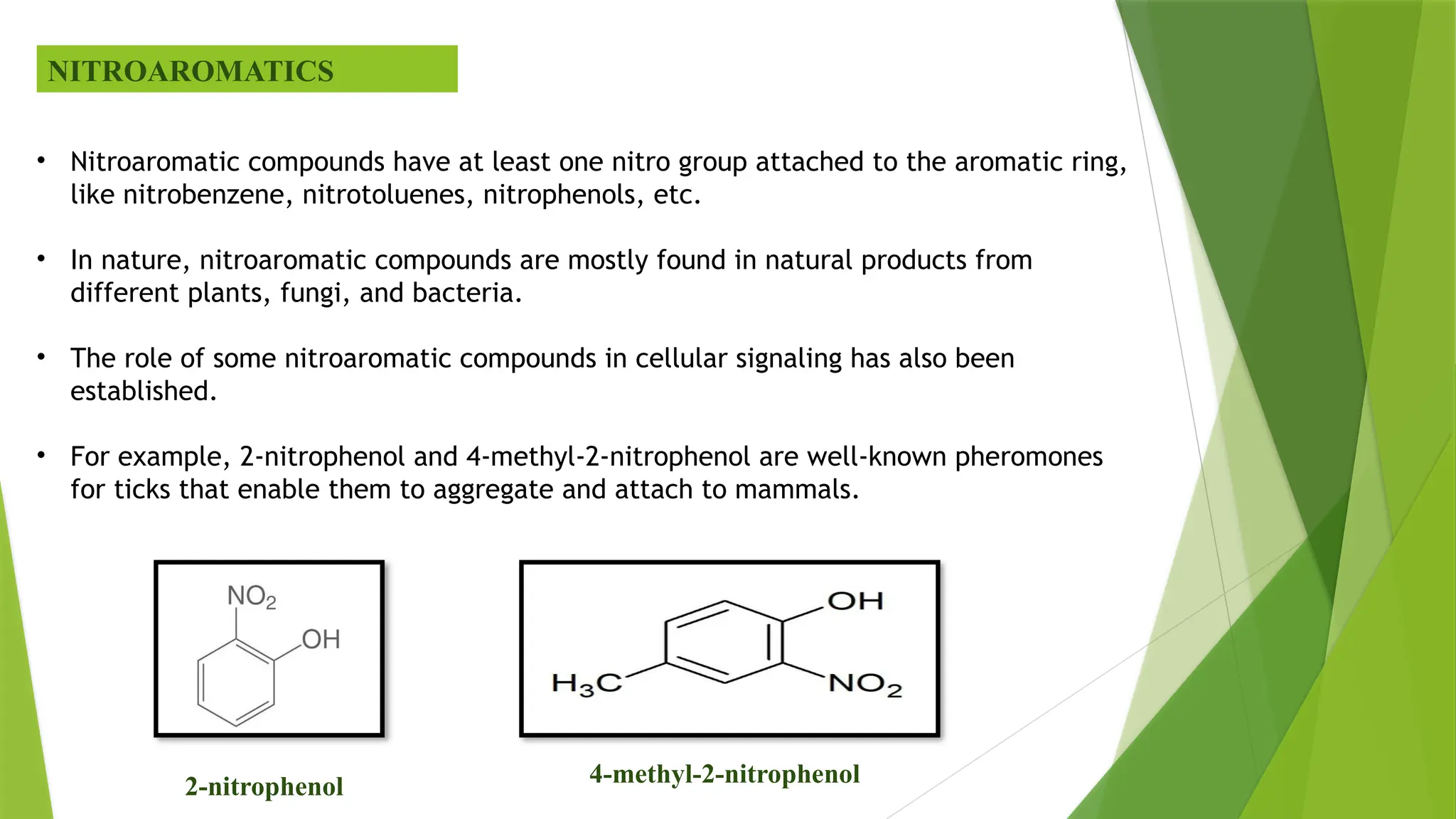
• For example, 2-nitrophenol and 4-methyl-2-nitrophenol are well-known pheromones
for ticks that enable them to aggregate and attach to mammals.
2-nitrophenol 4-methyl-2-nitrophenol
• In nature, several nitroaromatic compounds are produced by the incomplete
combustion of fossil fuel, which releases hydrocarbons.
• These hydrocarbons produce nitroaromatic compounds after nitration with nitrogen
dioxide present in the atmosphere.
• Mixtures of nitro-polyaromatic hydrocarbons can be produced to form 3-nitrobiphenyl,1-
and 2-nitronaphthalene,3-NT and nitrobenzene by a hydroxyl radical-initiated
mechanism.
SYNTHETIC NITRO AROMATIC COMPOUNDS
• The versatile chemistry of the nitro group ensures that nitroaromatic compounds serve as
important feed stocks in different industrial processes.
• These compounds are commonly used in the manufacture of pharmaceuticals.
• For example, substituted nitrobenzenes and nitropyridines are used in the production of
indoles, which are active components of several drugs and agrochemicals.
• Paracetamol (an analgesic and antipyretic) is synthesized in a one-step reductive
acetamidation from 4-nitrophenol.
• Some nitroaromatics like nitrobenzene, nitrotoluene, and nitrophenols are used in
the synthesis of pesticides.
• For example, fluorodifen, bifenox, parathion, and carbofuran are synthesized from
nitrophenols.
• Some dinitrophenols like 2,5-dinitro-o-cresol have been used in the synthesis of
herbicides, insecticides, fungicides, etc.
• Aromatic amines are the largest feedstock group for chemical industries.
• It is estimated that the worldwide consumption of aniline is approximately 3
million tons.
• Aniline is used in the synthesis of drugs, pesticides, and explosives and used as a
building block for the production of polyurethane foams, rubber, azodyes,
photographic chemicals, and varnishes.
• Some nitroaromatics are used in the production of explosives like trinitrotoluene
(TNT), which is produced by sequential nitration of toluenes.
RELEASE OF NITROAROMATICS IN THE ENVIRONMENT
• The estimated annual production of nitroaromatic compounds is 108 tons.
• Chemical industries release these compounds into the environment through various
sources, like the use of pesticides and the improper handling or storage of
chemicals.
• The leakage into industrial effluents by improper disposal or through accidental
spills by explosive ammunitions are commonly responsible for these compounds to
find their way into the environment.
• Example: An industrial accident is from China, where about 100 tons of benzene and
nitrobenzene were released to Songhua River because of an accidental explosion in
the factory of China National Petroleum, Jilin City, on November 13, 2005.
TOXIC EFFECTS
• The electron withdrawing property of the nitro groups creates a charge on the
molecule.
• It is a unique property that makes the nitro group an important functional group for
different industrial synthetic processes.
• Simultaneously, the same property makes these molecules hazardous to the
environment.
• This is why these compounds are given hazardous rating 3(HR 3), where 3 shows the
highest level of toxicity.
• These are toxic to most living organisms,including humans, fishes, algae, and
microorganisms.
• Their toxicity principally manifests itself due to their ability to uncouple photo or
oxidative phosphorylation processes.
• Some of these compounds are also known for their ecotoxicity, immunotoxicity,
carcinogenicity, mutagenicity, and teratogenicity.
• Some nitroaromatics are also converted into carcinogens and mutagens when
metabolized by liver or intestinal microflora.
TREATMENT OPTIONS
• Different physical methods are available for the treatment of these toxic
chemicals, like adsorption, incineration, photo-oxidation, hydrolysis,
volatilization, etc.
• During adsorption,these compounds are only adsorbed on resins and
separated but not destroyed completely.
• In incinerations, these compounds are treated at very high temperatures,
which is neither cost effective nor eco-friendly because toxic Nox fumes
are often released in the environment in this process.
• There are various reports on advanced oxidation processes (AOPs) that
utilize ozone, UV radiation, hydrogen peroxide, or combinations of all
these for the treatment of nitroaromatic compounds.
• The use of hydrogen peroxide in these processes generates toxic intermediates and
is therefore not cost-effective.
• Because of limitations of these methods, biodegradation has emerged as a viable
alternative.
BIOREMEDIATION
• Bioremediation involves biological agents to catalyze the degradation and transformation
of recalcitrant molecules to simpler structures.
• Biodegradation is the breakdown of organic pollutants due to microbial activity.
• In this process, the microbe feeds on the pollutant to grow.
• The degradation of contaminant generates energy and microbe utilizes this energy for
its growth.
• Biomineralization is the process of complete biodegradation.
• The organic contaminants are degraded completely through a series of degradation
steps and finally converted to inorganic molecules like H2O and CO2.
• In the process, organic molecule provides both carbon and energy to the microbe,
and if organic molecule is nitroaromatic, it provides nitrogen as well.
• Biotransformation is the process where in one organic molecule is modified by the
action of biological agents.
• Sometimes, biotransformation occurs with catabolism, where a microbe uses a
substrate for its growth but transforms another substrate, which is not utilized by
microbe for its growth.
• Microbes have been isolated from almost all the parts of biosphere.
• Further, their adoptability for different environmental conditions and ability to
utilize even recalcitrant compounds for their foods make them suitable agents for
bioremediation.
• Biodegradation gained worldwide attention to treat toxic compounds.
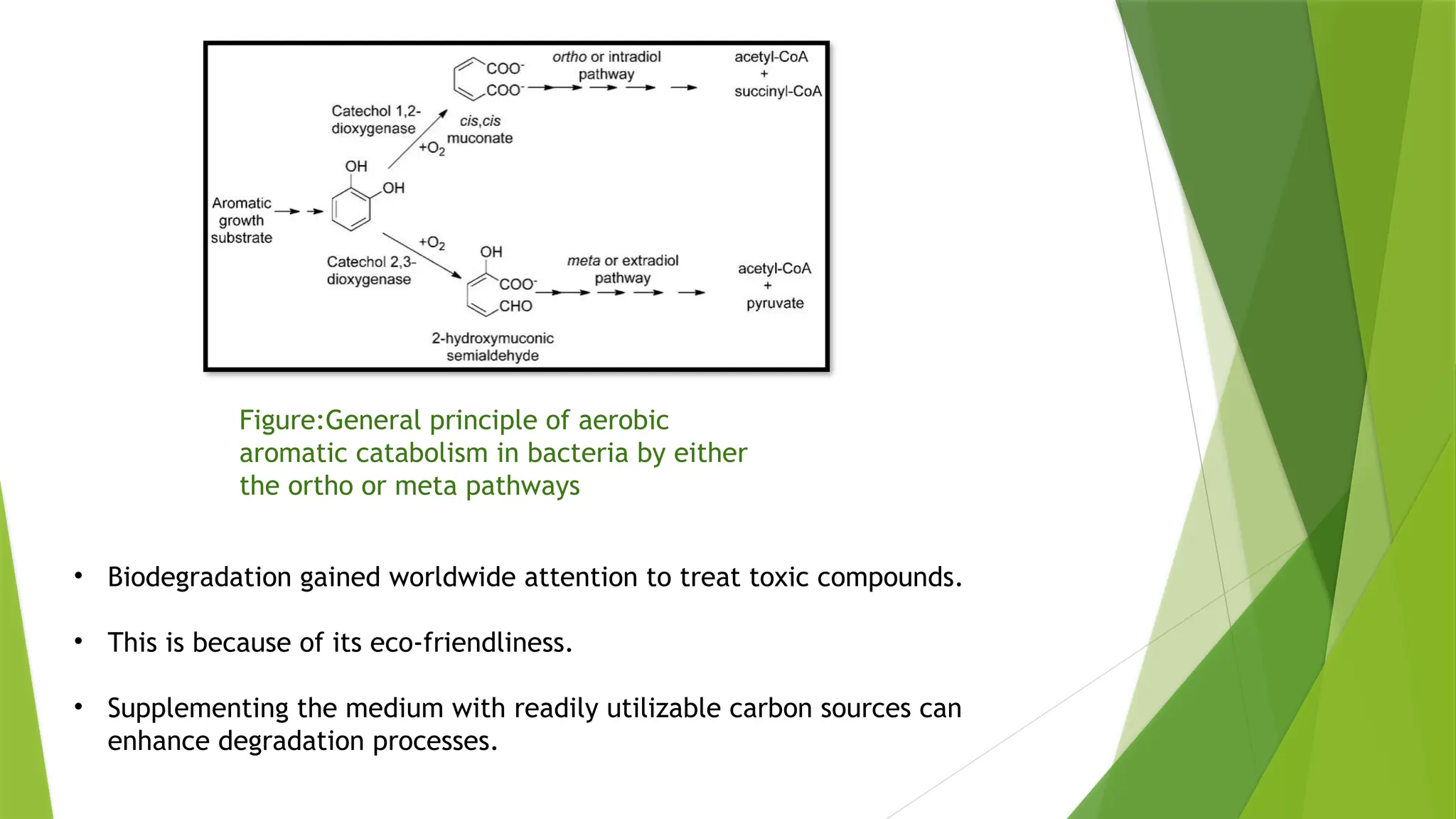
Figure:General principle of aerobic
aromatic catabolism in bacteria by either
the ortho or meta pathways
• Biodegradation gained worldwide attention to treat toxic compounds.
• This is because of its eco-friendliness.
• Supplementing the medium with readily utilizable carbon sources can
enhance degradation processes.
• Thus, toxic intermediates are not generated and complete removal of toxic
compounds is possible.
• During the last few decades, extensive research has been carried out for isolation of
microbes with the abilities of degrading wide range of toxic nitroaromatic
compounds and has been reviewed nicely.
MICROBIAL DEGRADATION OF NITROAROMATICS
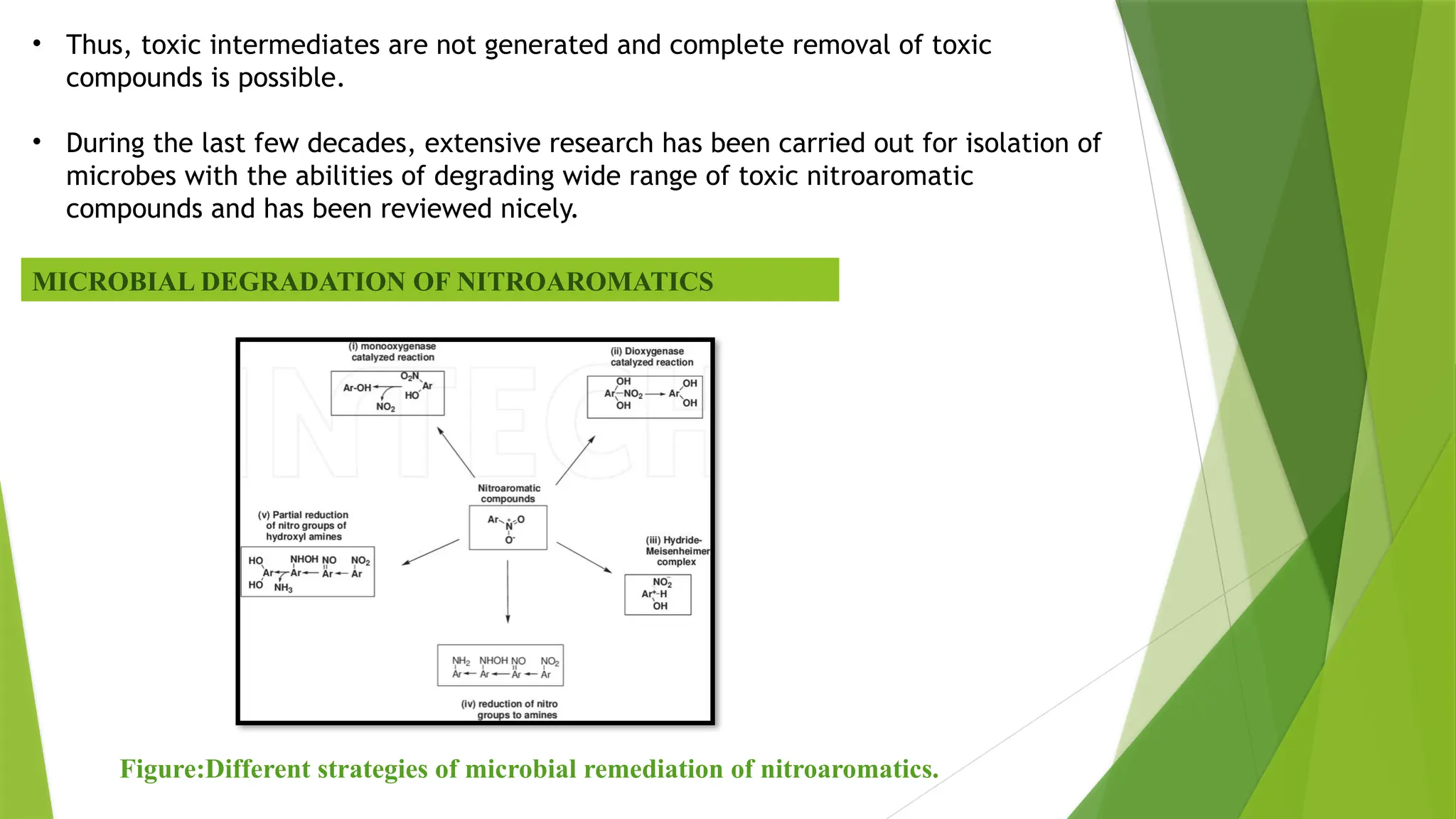
Figure:Different strategies of microbial remediation of nitroaromatics.
• When a nitroaromatic compound is exposed to the environment, its biodegradation
takes place either by anaerobic route or by aerobic route.
• Different strategies applied for the degradation of nitroaromatic compounds by
bacterial strains.
ANAEROBIC BIODEGRADATION OF NITROAROMATICS
• In this process, nitro group is reduced to nitroso derivative, hydroxyl amines, or
amines by the action of nitroreductases.
• The degradation of most of the (poly)nitroaromatic compounds occurs only under
anaerobic conditions.
• The complete mineralization of nitroaromatic by a single anaerobic strain is very
rare.
• There are several reports showing that the initial step during the degradation of
mono-, di-, and trinitroaromatic compounds is the reduction of nitro groups to
amino groups.
AEROBIC BIODEGRADATION OF NITROAROMATICS
• Mono- and dinitroaromatics are mainly subjected to aerobic biodegradation and
achieve to complete mineralization.
• Here nitroaromatics serve as source of carbon, nitrogen, and energy for the
microbe.
• During the past few decades, several reports came up with isolation of microbes
mineralizing different nitroaromatic compound and their degradation pathway.
• Few of them are extensively studied and characterized.
• There are different strategies in the aerobic degradation of nitroaromatics,
which is used in nature.
EVOLUTION OF GENES FOR NITROAROMATIC DEGRATION
• Nitroaromatics are recent compounds present in the environment and bacterial
strains that adapted themselves for the removal of these compounds.
• This was possible only through evolution of its degradation system at a genetic
level.
MODES OF GENE EVOLUTION
• Mutational drift
• Genetic rearrangement within a cell
• Horizontal gene transfer
MUTATIONAL DRIFT
• Substrate profile of an existing enzyme may be altered by point mutations
in its corresponding genes.
• The reasons for changes in primary DNA sequences are slippage of DNA poly‐
merase while replications, erroneous DNA repair, and gene conversion.
• However, results of these changes are relatively smaller.
• These alone cannot be accountable for adaptation to the new environment
by bacteria.
GENETIC REARRANGEMENT WITHIN A CELL
• The rearrangement of genes for the development of new pathway may take place
by the help of cells own recombination system.
• Gene segments can be exchanged between two positions flanked by homologous
sequences, insertion elements, transposons, and even sequence identities of four
base pairs are sufficient to facilitate this process.
HORIZONTAL GENE TRANSFER
• Horizontal gene transfer is reported as the main source of evolution of pathways
in bacteria.
• Sequencing results of genomes from different bacterial strains have revealed the
presence of acquired genes in mosaic like fashion throughout bacterial genomes.
• Their presence varies from almost negligible (Rickettsia prowazekii and
Mycobacterium genitalium) to about 17% (in Synechocystis strain).
• Plasmids also play a major role in carrying catabolic genes during horizontal gene
transfer.
• Transposons are also known to facilitate the catabolic gene transfer processes.
CONCLUSION
• Nitroaromatic compounds are relatively new to the environment, but bacterial systems
have already evolved the ability to metabolize them.
• Nitroaromatics are major pollutants released in the environment during the post-
industrialization era and pose toxic effects to living organisms.
• Several bacterial strains have been isolated for the degradation of these nitroaromatic
pollutant.
• Very few bacterial pathways have been characterized at genetic and molecular levels.

BIOREMEDIATION - Degradation of nitro aromatic compounds

  • 1.
    VIVEKANANDA ARTS AND SCIENCECOLLEGE FOR WOMEN VEERACHIPALAYAM, SANKAGIRI WEST TALUK, SALEM DISTRICT-637303. DEPARTMENT OF MICROBIOLOGY GUIDED BY, Dr.R.DINESH KUMAR, ASSISTANT PROFESSOR, DEPARTMENT OF MICROBIOLOGY, VIVEKANANDHAARTS AND SCIENCE COLLEGE FOR WOMEN, SAKAGIRI, SALEM. PRESENTED BY, NANDHINI MARAPPAN, I-M.Sc. MICROBIOLOGY, DEPARTMENT OF MICROBIOLOGY, VIVEKANANDHAARTS AND SCIENCE COLLEGE FOR WOMEN, SANKAGIRI,SALEM.
  • 2.
    DEGRADATION OF NITROAROMATIC COMPOUNDS CONTENTS  INTRODUCTION  NITRO AROMATICS  SYNTHETIC NITRO AROMATICS COMPOUNDS  RELEASE OF NITROAROMATICS IN THE ENVIRONMENT  TOXIC EFFECTS  TREATMENT OPTIONS  BIOREMEDIATION  MICROBIAL DEGRADATION OF NITROAROMATICS  EVOLUTION OF GENES FOR NITROAROMATIC DEGRADATION  MODES OF GENE EVOLUTION  CONCLUSION
  • 3.
    INTRODUCTION • Microbes areempowered to degrade environmental pollutants under different conditions to perform unusual metabolic and physiological activities. • The metabolic versatility of the microbes helps them utilize a range of organic/inorganic compounds for their growth. • This metabolic versatility has been exploited for human benefit in various industrial products like cheese (dairy industry), insulin, antibiotics (pharmaceutical industry), etc. • Microbial enzyme systems have also been used for the development of suitable biocatalysts for green chemistry applications. • Whole microbes have also been tested for their potential in bioremediation. • Thus, a remediation and degradation study of aromatics has been a focus of intensive study.
  • 4.
    NITROAROMATICS • Nitroaromatic compoundshave at least one nitro group attached to the aromatic ring, like nitrobenzene, nitrotoluenes, nitrophenols, etc. • In nature, nitroaromatic compounds are mostly found in natural products from different plants, fungi, and bacteria. • The role of some nitroaromatic compounds in cellular signaling has also been established. • For example, 2-nitrophenol and 4-methyl-2-nitrophenol are well-known pheromones for ticks that enable them to aggregate and attach to mammals. 2-nitrophenol 4-methyl-2-nitrophenol
  • 5.
    • In nature,several nitroaromatic compounds are produced by the incomplete combustion of fossil fuel, which releases hydrocarbons. • These hydrocarbons produce nitroaromatic compounds after nitration with nitrogen dioxide present in the atmosphere. • Mixtures of nitro-polyaromatic hydrocarbons can be produced to form 3-nitrobiphenyl,1- and 2-nitronaphthalene,3-NT and nitrobenzene by a hydroxyl radical-initiated mechanism. SYNTHETIC NITRO AROMATIC COMPOUNDS • The versatile chemistry of the nitro group ensures that nitroaromatic compounds serve as important feed stocks in different industrial processes. • These compounds are commonly used in the manufacture of pharmaceuticals. • For example, substituted nitrobenzenes and nitropyridines are used in the production of indoles, which are active components of several drugs and agrochemicals. • Paracetamol (an analgesic and antipyretic) is synthesized in a one-step reductive acetamidation from 4-nitrophenol.
  • 6.
    • Some nitroaromaticslike nitrobenzene, nitrotoluene, and nitrophenols are used in the synthesis of pesticides. • For example, fluorodifen, bifenox, parathion, and carbofuran are synthesized from nitrophenols. • Some dinitrophenols like 2,5-dinitro-o-cresol have been used in the synthesis of herbicides, insecticides, fungicides, etc. • Aromatic amines are the largest feedstock group for chemical industries. • It is estimated that the worldwide consumption of aniline is approximately 3 million tons. • Aniline is used in the synthesis of drugs, pesticides, and explosives and used as a building block for the production of polyurethane foams, rubber, azodyes, photographic chemicals, and varnishes. • Some nitroaromatics are used in the production of explosives like trinitrotoluene (TNT), which is produced by sequential nitration of toluenes.
  • 7.
    RELEASE OF NITROAROMATICSIN THE ENVIRONMENT • The estimated annual production of nitroaromatic compounds is 108 tons. • Chemical industries release these compounds into the environment through various sources, like the use of pesticides and the improper handling or storage of chemicals. • The leakage into industrial effluents by improper disposal or through accidental spills by explosive ammunitions are commonly responsible for these compounds to find their way into the environment. • Example: An industrial accident is from China, where about 100 tons of benzene and nitrobenzene were released to Songhua River because of an accidental explosion in the factory of China National Petroleum, Jilin City, on November 13, 2005.
  • 8.
    TOXIC EFFECTS • Theelectron withdrawing property of the nitro groups creates a charge on the molecule. • It is a unique property that makes the nitro group an important functional group for different industrial synthetic processes. • Simultaneously, the same property makes these molecules hazardous to the environment. • This is why these compounds are given hazardous rating 3(HR 3), where 3 shows the highest level of toxicity. • These are toxic to most living organisms,including humans, fishes, algae, and microorganisms. • Their toxicity principally manifests itself due to their ability to uncouple photo or oxidative phosphorylation processes.
  • 9.
    • Some ofthese compounds are also known for their ecotoxicity, immunotoxicity, carcinogenicity, mutagenicity, and teratogenicity. • Some nitroaromatics are also converted into carcinogens and mutagens when metabolized by liver or intestinal microflora. TREATMENT OPTIONS • Different physical methods are available for the treatment of these toxic chemicals, like adsorption, incineration, photo-oxidation, hydrolysis, volatilization, etc. • During adsorption,these compounds are only adsorbed on resins and separated but not destroyed completely. • In incinerations, these compounds are treated at very high temperatures, which is neither cost effective nor eco-friendly because toxic Nox fumes are often released in the environment in this process. • There are various reports on advanced oxidation processes (AOPs) that utilize ozone, UV radiation, hydrogen peroxide, or combinations of all these for the treatment of nitroaromatic compounds.
  • 10.
    • The useof hydrogen peroxide in these processes generates toxic intermediates and is therefore not cost-effective. • Because of limitations of these methods, biodegradation has emerged as a viable alternative. BIOREMEDIATION • Bioremediation involves biological agents to catalyze the degradation and transformation of recalcitrant molecules to simpler structures. • Biodegradation is the breakdown of organic pollutants due to microbial activity. • In this process, the microbe feeds on the pollutant to grow. • The degradation of contaminant generates energy and microbe utilizes this energy for its growth. • Biomineralization is the process of complete biodegradation.
  • 11.
    • The organiccontaminants are degraded completely through a series of degradation steps and finally converted to inorganic molecules like H2O and CO2. • In the process, organic molecule provides both carbon and energy to the microbe, and if organic molecule is nitroaromatic, it provides nitrogen as well. • Biotransformation is the process where in one organic molecule is modified by the action of biological agents. • Sometimes, biotransformation occurs with catabolism, where a microbe uses a substrate for its growth but transforms another substrate, which is not utilized by microbe for its growth. • Microbes have been isolated from almost all the parts of biosphere. • Further, their adoptability for different environmental conditions and ability to utilize even recalcitrant compounds for their foods make them suitable agents for bioremediation. • Biodegradation gained worldwide attention to treat toxic compounds.
  • 12.
    Figure:General principle ofaerobic aromatic catabolism in bacteria by either the ortho or meta pathways • Biodegradation gained worldwide attention to treat toxic compounds. • This is because of its eco-friendliness. • Supplementing the medium with readily utilizable carbon sources can enhance degradation processes.
  • 13.
    • Thus, toxicintermediates are not generated and complete removal of toxic compounds is possible. • During the last few decades, extensive research has been carried out for isolation of microbes with the abilities of degrading wide range of toxic nitroaromatic compounds and has been reviewed nicely. MICROBIAL DEGRADATION OF NITROAROMATICS Figure:Different strategies of microbial remediation of nitroaromatics.
  • 14.
    • When anitroaromatic compound is exposed to the environment, its biodegradation takes place either by anaerobic route or by aerobic route. • Different strategies applied for the degradation of nitroaromatic compounds by bacterial strains. ANAEROBIC BIODEGRADATION OF NITROAROMATICS • In this process, nitro group is reduced to nitroso derivative, hydroxyl amines, or amines by the action of nitroreductases. • The degradation of most of the (poly)nitroaromatic compounds occurs only under anaerobic conditions. • The complete mineralization of nitroaromatic by a single anaerobic strain is very rare. • There are several reports showing that the initial step during the degradation of mono-, di-, and trinitroaromatic compounds is the reduction of nitro groups to amino groups.
  • 15.
    AEROBIC BIODEGRADATION OFNITROAROMATICS • Mono- and dinitroaromatics are mainly subjected to aerobic biodegradation and achieve to complete mineralization. • Here nitroaromatics serve as source of carbon, nitrogen, and energy for the microbe. • During the past few decades, several reports came up with isolation of microbes mineralizing different nitroaromatic compound and their degradation pathway. • Few of them are extensively studied and characterized. • There are different strategies in the aerobic degradation of nitroaromatics, which is used in nature.
  • 16.
    EVOLUTION OF GENESFOR NITROAROMATIC DEGRATION • Nitroaromatics are recent compounds present in the environment and bacterial strains that adapted themselves for the removal of these compounds. • This was possible only through evolution of its degradation system at a genetic level. MODES OF GENE EVOLUTION • Mutational drift • Genetic rearrangement within a cell • Horizontal gene transfer
  • 17.
    MUTATIONAL DRIFT • Substrateprofile of an existing enzyme may be altered by point mutations in its corresponding genes. • The reasons for changes in primary DNA sequences are slippage of DNA poly‐ merase while replications, erroneous DNA repair, and gene conversion. • However, results of these changes are relatively smaller. • These alone cannot be accountable for adaptation to the new environment by bacteria.
  • 18.
    GENETIC REARRANGEMENT WITHINA CELL • The rearrangement of genes for the development of new pathway may take place by the help of cells own recombination system. • Gene segments can be exchanged between two positions flanked by homologous sequences, insertion elements, transposons, and even sequence identities of four base pairs are sufficient to facilitate this process.
  • 19.
    HORIZONTAL GENE TRANSFER •Horizontal gene transfer is reported as the main source of evolution of pathways in bacteria. • Sequencing results of genomes from different bacterial strains have revealed the presence of acquired genes in mosaic like fashion throughout bacterial genomes. • Their presence varies from almost negligible (Rickettsia prowazekii and Mycobacterium genitalium) to about 17% (in Synechocystis strain). • Plasmids also play a major role in carrying catabolic genes during horizontal gene transfer. • Transposons are also known to facilitate the catabolic gene transfer processes.
  • 20.
    CONCLUSION • Nitroaromatic compoundsare relatively new to the environment, but bacterial systems have already evolved the ability to metabolize them. • Nitroaromatics are major pollutants released in the environment during the post- industrialization era and pose toxic effects to living organisms. • Several bacterial strains have been isolated for the degradation of these nitroaromatic pollutant. • Very few bacterial pathways have been characterized at genetic and molecular levels.