Home Composting
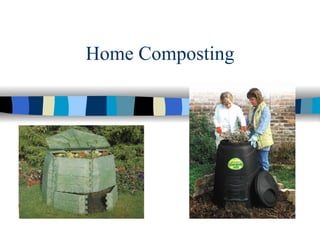
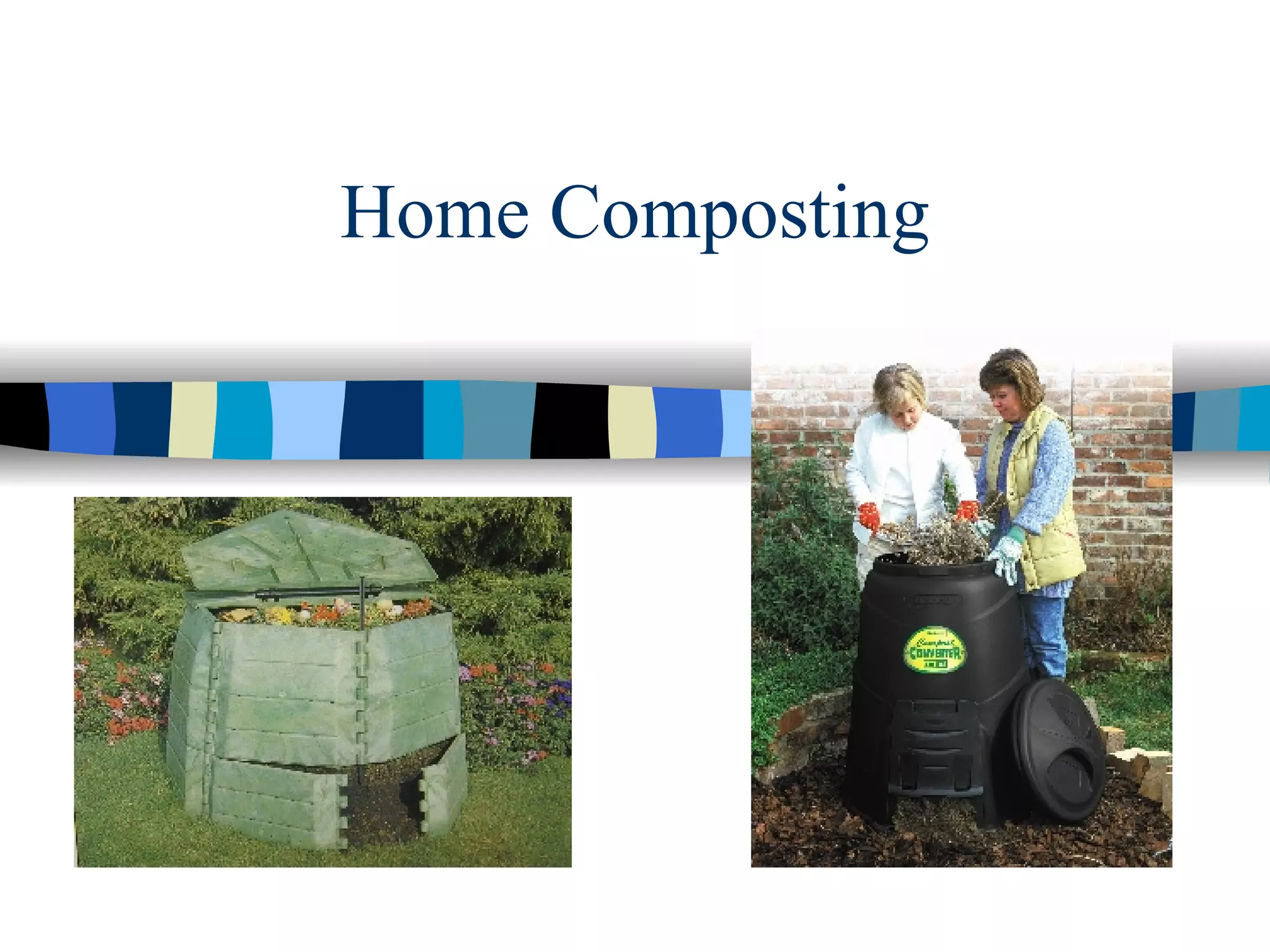
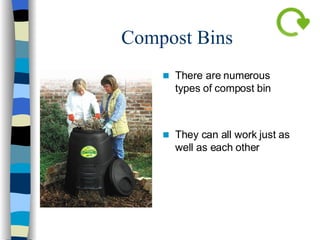
Compost Bins There are numerous types of compost bin They can all work just as well as each other
3 Main Steps to Composting Step One - Placing your bin Step Two - What can go in Step Three - Making good compost
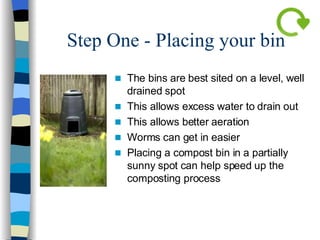
Step One - Placing your bin The bins are best sited on a level, well drained spot This allows excess water to drain out This allows better aeration  Worms can get in easier Placing a compost bin in a partially sunny spot can help speed up the composting process
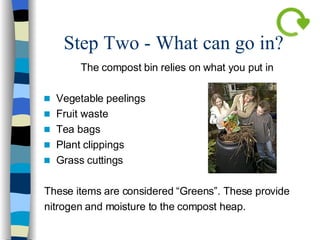
Step Two - What can go in?  The compost bin relies on what you put in Vegetable peelings Fruit waste Tea bags Plant clippings  Grass cuttings These items are considered “Greens”. These provide  nitrogen and moisture to the compost heap.
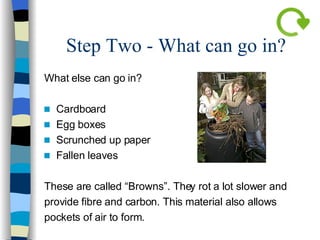
Step Two - What can go in? What else can go in? Cardboard Egg boxes Scrunched up paper Fallen leaves These are called “Browns”. They rot a lot slower and provide fibre and carbon. This material also allows  pockets of air to form.
What Cant go in?  x No cooked food No diseased plants No animal faeces No nappies Limit the amount of leaves
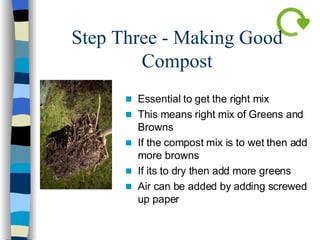
Step Three - Making Good Compost Essential to get the right mix This means right mix of Greens and Browns If the compost mix is to wet then add more browns If its to dry then add more greens Air can be added by adding screwed up paper
Compost Essentials Air Water Food The items we add to the bin provide these. Air, water  and food are essential in order for the materials to break down.  The materials biodegrade, this means to rot down.
What else is in a compost bin? Worms Beetles Ants Slugs Centipede  Earwigs  The general rule is the more diversity of creatures in your compost bin the more quickly it will break down.
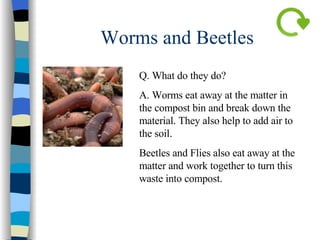
Worms and Beetles Q. What do they do? A. Worms eat away at the matter in the compost bin and break down the material. They also help to add air to the soil.  Beetles and Flies also eat away at the matter and work together to turn this waste into compost.
Problems with the mix If there is not enough air in the compost bin then the waste will become anaerobic .  Anaerobic means in the absence of oxygen. This is when biodegradable waste will start to produce methane. Methane is a greenhouse gas which is contributing toward climate change.
Composting Quiz
Question 1 Which of the following should not be added to a compost bin? (please select one). Plastic bottle Grass Card Paper Egg Shells
Question 2 Do worms need to be added to a compost bin? Yes No
Question 3 It requires a lot of time and expensive equipment to  start composting. True False
Question 4 Moisture is necessary for the composting process to  occur. True    False
Question 5 Anaerobic means in the absence of oxygen. True   False
Question 6 Can leaves be put into a compost bin? Yes   No
Question 7 Please select which items are examples of what we call “ Green” materials. Grass   Sticks Vegetable peelings
Question 8 Please select which items are examples of “Brown”  materials. Twigs   Fruit peelings Paper
Question 9 Please select which of the following is essential for  successful composting. Air Moisture Food
Thank you for listening

Composting Presentation

  • 1.
  • 2.
    Compost Bins Thereare numerous types of compost bin They can all work just as well as each other
  • 3.
    3 Main Stepsto Composting Step One - Placing your bin Step Two - What can go in Step Three - Making good compost
  • 4.
    Step One -Placing your bin The bins are best sited on a level, well drained spot This allows excess water to drain out This allows better aeration Worms can get in easier Placing a compost bin in a partially sunny spot can help speed up the composting process
  • 5.
    Step Two -What can go in? The compost bin relies on what you put in Vegetable peelings Fruit waste Tea bags Plant clippings Grass cuttings These items are considered “Greens”. These provide nitrogen and moisture to the compost heap.
  • 6.
    Step Two -What can go in? What else can go in? Cardboard Egg boxes Scrunched up paper Fallen leaves These are called “Browns”. They rot a lot slower and provide fibre and carbon. This material also allows pockets of air to form.
  • 7.
    What Cant goin? x No cooked food No diseased plants No animal faeces No nappies Limit the amount of leaves
  • 8.
    Step Three -Making Good Compost Essential to get the right mix This means right mix of Greens and Browns If the compost mix is to wet then add more browns If its to dry then add more greens Air can be added by adding screwed up paper
  • 9.
    Compost Essentials AirWater Food The items we add to the bin provide these. Air, water and food are essential in order for the materials to break down. The materials biodegrade, this means to rot down.
  • 10.
    What else isin a compost bin? Worms Beetles Ants Slugs Centipede Earwigs The general rule is the more diversity of creatures in your compost bin the more quickly it will break down.
  • 11.
    Worms and BeetlesQ. What do they do? A. Worms eat away at the matter in the compost bin and break down the material. They also help to add air to the soil. Beetles and Flies also eat away at the matter and work together to turn this waste into compost.
  • 12.
    Problems with themix If there is not enough air in the compost bin then the waste will become anaerobic . Anaerobic means in the absence of oxygen. This is when biodegradable waste will start to produce methane. Methane is a greenhouse gas which is contributing toward climate change.
  • 13.
  • 14.
    Question 1 Whichof the following should not be added to a compost bin? (please select one). Plastic bottle Grass Card Paper Egg Shells
  • 15.
    Question 2 Doworms need to be added to a compost bin? Yes No
  • 16.
    Question 3 Itrequires a lot of time and expensive equipment to start composting. True False
  • 17.
    Question 4 Moistureis necessary for the composting process to occur. True False
  • 18.
    Question 5 Anaerobicmeans in the absence of oxygen. True False
  • 19.
    Question 6 Canleaves be put into a compost bin? Yes No
  • 20.
    Question 7 Pleaseselect which items are examples of what we call “ Green” materials. Grass Sticks Vegetable peelings
  • 21.
    Question 8 Pleaseselect which items are examples of “Brown” materials. Twigs Fruit peelings Paper
  • 22.
    Question 9 Pleaseselect which of the following is essential for successful composting. Air Moisture Food
  • 23.
    Thank you forlistening