Biomes
Biomes are regions in the
world that have their own
kind of climate, soil,
plants, and animals.
Major biomes:
 Taiga
 Deciduous Forest
 Tropical Rainforest
 Desert
 Tundra
 Grassland
 Marine
 Freshwater
Taiga: Coniferous Forest
 A cool forest biome of conifers in the upper Northern
Hemisphere.
 Also called the boreal forest
 The largest terrestrial biome
 Temperatures are low
 Precipitation is primarily snow
 Soil is nutrient poor and acidic
 Flora is mostly conifers
 Animals include woodpeckers, hawks, moose, bear and lynx.
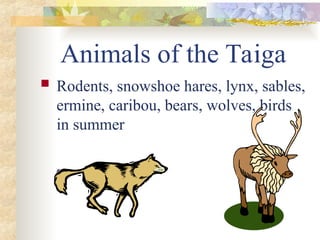
Animals of the Taiga
 Rodents, snowshoe hares, lynx, sables,
ermine, caribou, bears, wolves, birds
in summer
Deciduous Forest
A forest biome with many kinds
of trees that lose their leaves
every year during fall.
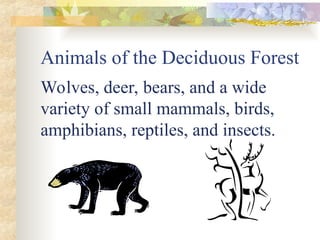
Animals of the Deciduous Forest
Wolves, deer, bears, and a wide
variety of small mammals, birds,
amphibians, reptiles, and insects.
Tropical Rain Forest
A hot, humid biome near the equator, with much
rainfall and a wide variety of life.
Lots of rain
Little variation in climate
Highly diverse species
Soil is nutrient-poor and acidic
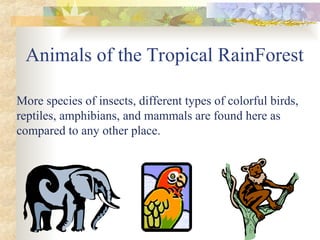
Animals of the Tropical RainForest
More species of insects, different types of colorful birds,
reptiles, amphibians, and mammals are found here as
compared to any other place.
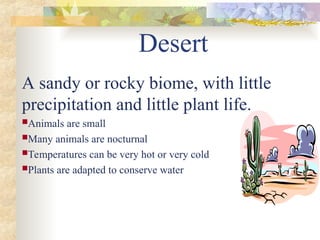
Desert
A sandy or rocky biome, with little
precipitation and little plant life.
Animals are small
Many animals are nocturnal
Temperatures can be very hot or very cold
Plants are adapted to conserve water
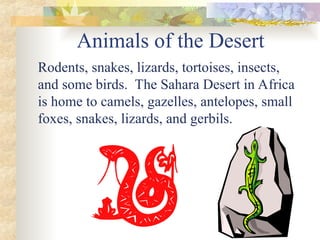
Animals of the Desert
Rodents, snakes, lizards, tortoises, insects,
and some birds. The Sahara Desert in Africa
is home to camels, gazelles, antelopes, small
foxes, snakes, lizards, and gerbils.
Tundra
A cold biome of the far north; the
ground is frozen even in summer
Very cold
Low diversity
Simple vegetation
Short growing season
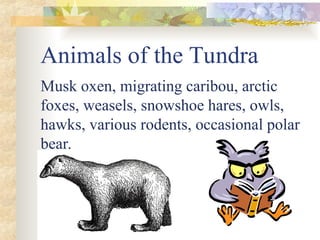
Animals of the Tundra
Musk oxen, migrating caribou, arctic
foxes, weasels, snowshoe hares, owls,
hawks, various rodents, occasional polar
bear.
Grassland
A biome where grasses, not trees, are the main plant
life. There are two types of grasslands: Tropical
grasslands (Savannah) and the Temperate grasslands.
 Dominated by grass
 Savannah has a wet and dry season
 Temperate grassland has hot summers and cold winters
Grassland animals
American Grasslands: Prairie dogs,
foxes, small mammals, snakes, insects,
various birds.
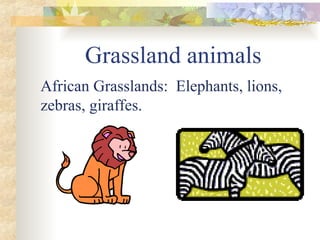
Grassland animals
African Grasslands: Elephants, lions,
zebras, giraffes.
Marine Biome
Consists of oceans, coral reefs, and estuaries
The ocean is the largest of all ecosystems.
The ocean contains a diverse array of plants and animals
at various depth zones.
Coral reefs consist mainly of coral.
Estuaries are areas where fresh and salt water
environments converge. Mangroves, oysters, crabs and
marsh grasses are examples of species in this environment.
Freshwater Biomes
 Includes ponds, and lakes; streams and rivers, and
wetlands.
 Ponds and lakes have well lit zones and a variety of
fish dominate this zone.
 Streams and rivers move in one direction.
 Wetlands are areas of standing water that support
aquatic plants.

Biomes WCPSS grade 6 presentation---.ppt

  • 1.
  • 2.
    Biomes are regionsin the world that have their own kind of climate, soil, plants, and animals.
  • 3.
    Major biomes:  Taiga Deciduous Forest  Tropical Rainforest  Desert  Tundra  Grassland  Marine  Freshwater
  • 4.
    Taiga: Coniferous Forest A cool forest biome of conifers in the upper Northern Hemisphere.  Also called the boreal forest  The largest terrestrial biome  Temperatures are low  Precipitation is primarily snow  Soil is nutrient poor and acidic  Flora is mostly conifers  Animals include woodpeckers, hawks, moose, bear and lynx.
  • 5.
    Animals of theTaiga  Rodents, snowshoe hares, lynx, sables, ermine, caribou, bears, wolves, birds in summer
  • 6.
    Deciduous Forest A forestbiome with many kinds of trees that lose their leaves every year during fall.
  • 7.
    Animals of theDeciduous Forest Wolves, deer, bears, and a wide variety of small mammals, birds, amphibians, reptiles, and insects.
  • 8.
    Tropical Rain Forest Ahot, humid biome near the equator, with much rainfall and a wide variety of life. Lots of rain Little variation in climate Highly diverse species Soil is nutrient-poor and acidic
  • 9.
    Animals of theTropical RainForest More species of insects, different types of colorful birds, reptiles, amphibians, and mammals are found here as compared to any other place.
  • 10.
    Desert A sandy orrocky biome, with little precipitation and little plant life. Animals are small Many animals are nocturnal Temperatures can be very hot or very cold Plants are adapted to conserve water
  • 11.
    Animals of theDesert Rodents, snakes, lizards, tortoises, insects, and some birds. The Sahara Desert in Africa is home to camels, gazelles, antelopes, small foxes, snakes, lizards, and gerbils.
  • 12.
    Tundra A cold biomeof the far north; the ground is frozen even in summer Very cold Low diversity Simple vegetation Short growing season
  • 13.
    Animals of theTundra Musk oxen, migrating caribou, arctic foxes, weasels, snowshoe hares, owls, hawks, various rodents, occasional polar bear.
  • 14.
    Grassland A biome wheregrasses, not trees, are the main plant life. There are two types of grasslands: Tropical grasslands (Savannah) and the Temperate grasslands.  Dominated by grass  Savannah has a wet and dry season  Temperate grassland has hot summers and cold winters
  • 15.
    Grassland animals American Grasslands:Prairie dogs, foxes, small mammals, snakes, insects, various birds.
  • 16.
    Grassland animals African Grasslands:Elephants, lions, zebras, giraffes.
  • 17.
    Marine Biome Consists ofoceans, coral reefs, and estuaries The ocean is the largest of all ecosystems. The ocean contains a diverse array of plants and animals at various depth zones. Coral reefs consist mainly of coral. Estuaries are areas where fresh and salt water environments converge. Mangroves, oysters, crabs and marsh grasses are examples of species in this environment.
  • 18.
    Freshwater Biomes  Includesponds, and lakes; streams and rivers, and wetlands.  Ponds and lakes have well lit zones and a variety of fish dominate this zone.  Streams and rivers move in one direction.  Wetlands are areas of standing water that support aquatic plants.