Inheritance and Genetic Diseases 
Introduction: the History of Genetics 
 Gregor Mendel considered father of genetics 1800’s monk 
 Experiments on pea plants- self- pollinating flowers could easily be cross fertilized= hybrid 
 HYBRID: new types of plants formed by cross fertilizing varieties of the same species 
 He first grew many varieties of pea plants- made sure each was purebred (when it pollinates 
itself the successive generation always looks like the parent plant) 
 Mendel began to cross purebred plants that differed in only one characteristic= 
MONOHYBRID CROSS and always chose contrasting traits (height of plant) 
 To cross two plants, pollen was spread from the stamen of a tall plant to the stigma of a 
short plant 
 SCIENTISTS AT THE TIME thought that offspring were a blend of their parents- Mendel 
disproves this 
Mendel’s Results 
 All the offspring of a cross look the same- show characteristics of only one parent 
 Let the offspring self- fertilize= one or other trait showed in a 3:1 ratio 
This Proved That: 
 Genes that control characteristics occur in pairs 
 If the genes are different, one will be DOMINANT and the other RECESSIVE 
 During the formation of gametes, the paired genes separate and each gamete receives one 
of the genes 
Chromosomes, Genes and Alleles 
 25 000 genes on a chromosome (carry hereditary genes) 
 GENE: small piece of DNA in the chromosome which carries info about characteristic in the 
body 
 LOCUS: a particular position of a gene 
 ALLELE: different forms of the same gene, found in the same position on the corresponding 
homologous chromosome- one allele from mother and one from father 
HOMOZYGOUS= alleles for particular characteristic are the same- gene is either TT or tt 
HETEROZYGOUS= two alleles for same characteristic are different- gene is Tt 
Genetic Diagrams 
GENOTYPE: genetic factors present in organism 
PHENOTYPE: visible expression of the genotype- way organism looks is due to genotype 
MONOHYBRID CROSS: only one hereditary trait is investigated at a time
Symbols used in Genetic Diagrams 
1. GENERATIONS 
a. P- parent generation 
b. F1- first Filial- first generation of offspring 
c. F2- second Filial- second generation of offspring 
2. ALLELES OF A GENE represented by capital and small letters 
a. DOMINANT TRAIT= capital letter eg tall plant: T 
b. RECESSIVE TRAIT= small letter eg dwarf plant: t 
3. As there are 2 alleles for each trait (one on each chromosome in homologous pair) we write 
two letter- DOMINANT ALLELE ALWAYS COME FIRST 
a. Homozygous (purebred) tall plant= TT (both alleles tall) 
b. Homozygous (purebred) dwarf plant= tt (both allele dwarf) 
c. Heterozygous (hybrid) tall plant= Tt (one allele dwarf, one tall) 
4. DURING MEIOSIS in the formation of gametes, homologous chromosomes separate. Each 
gamete receives only 1 allele of pair. Eg if parent is Tt, gamete receives either T or t 
LOOK AT GENETIC DIAGRAM AND LEARN/ PRACTICE SOLVING GENETIC PROBLEMS 
NOTE: always include key 
In Genotype say the literal genes present eg TT; tt; Tt; Tt 
In Phenotype, say the result of these genes eg Tall, Tall, Tall, Short (3 tall 1 short ) and say the 
percentage (75% tall, 25% short) 
The Inheritance of Sex 
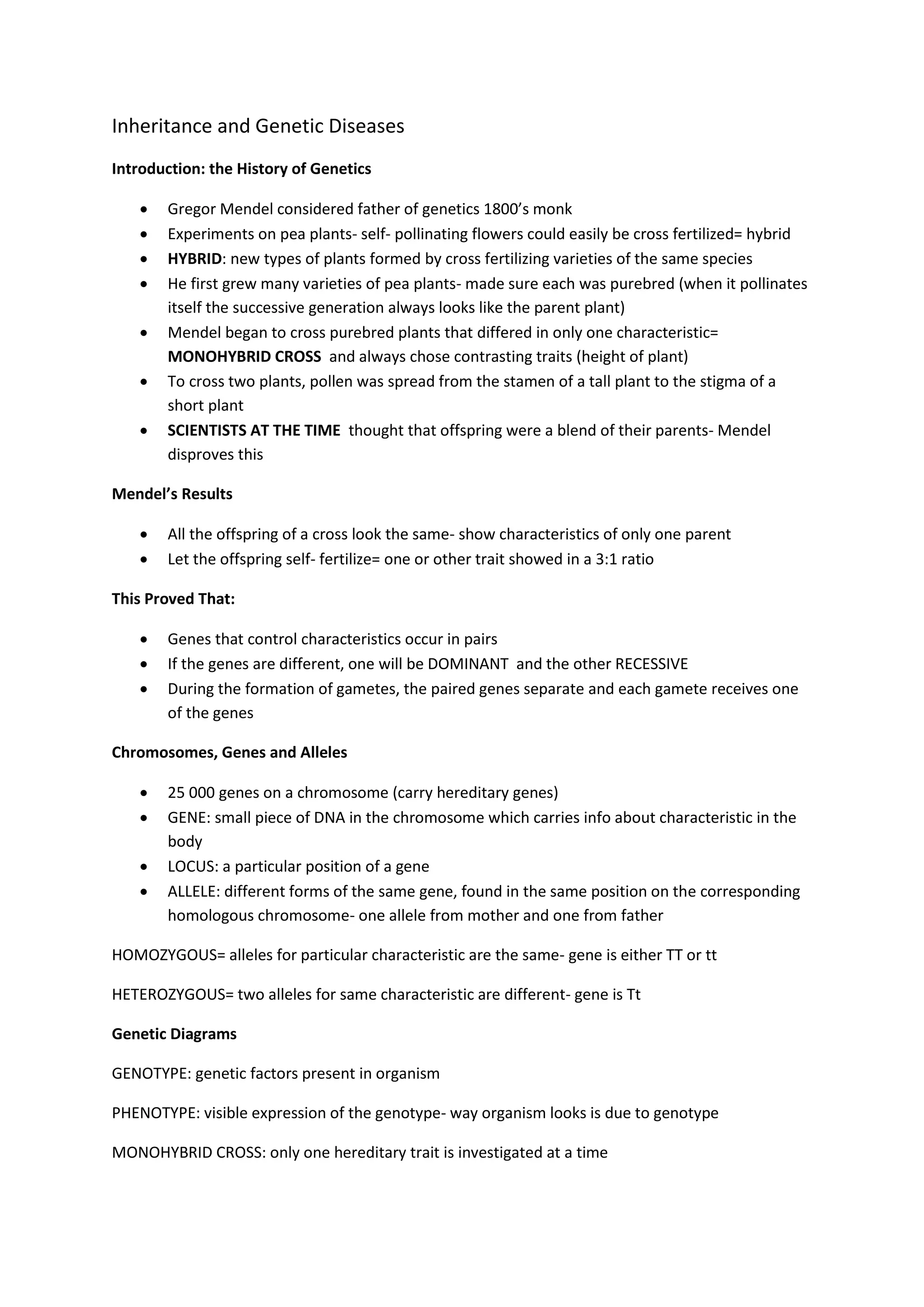
 The two gonosomes (23rd chromosome/sex chromosome) carry info that determine whether 
offspring m/ f 
 Female chromosome(X) never swops info with male chromosome (Y) 
o Therefore info pertaining to sex including traits of that sex is inherited by offspring 
as a complete set of info 
 Y dominant over X, therefore all males carry XY all females carry XX 
 This means father determines sex as mother donates X and father donates X or Y 
 X chromosome is much longer and can carry many alleles 
 Only small part of X and Y chromosomes can pair up during meiosis and no crossing over 
occurs 
 Alleles carried on the non-homologous part of X chromosome are called x linked/sex linked 
alleles 
 Men only have one X chromosome so will have one of each sex linked allele, this is why 
certain genetic diseases are present more in males than females 
- If gene on X chromosome mutates/gene for disease male will express it, female only 
express it if gene is recessive on both X chromosomes
Genes, Alleles and Mutations 
When do MUTATIONS occur? 
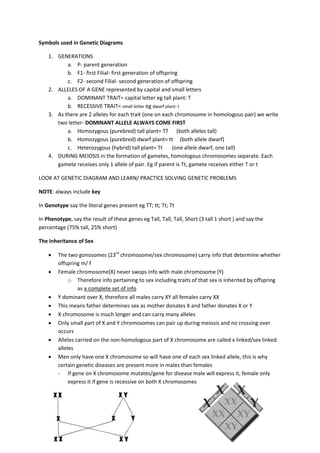
 DNA strand of a gene changes forming a new allele. Change in DNA structure changes 
information allele gives to the cell 
o Chromosomal- damage to chromosome due to UV, cosmic rays, X ray, Radiation 
o Point- single pair of nucleotides in certain point in DNA replaced by different base 
pair 
 Substitution- wrong nucleotide 
 Deletion- less 
 Insertion- extra 
Somatic Mutations 
 Occur in somatic body cells- kidney/ bone skin 
 Damage/ kill/ convert into tumour cells= cancerous 
 when mitosis happens, Mutation transferred to daughter cells in tissue/ organ 
 METASTASIS(spread of disease from part to another non-adjacent part.) occurs when cancer 
cells spread through body 
 Somatic mutation dies when cells die/ tumour cells are killed 
 Occurs after conception/ will not be passed down 
Germline Mutations 
 Occur in egg/ sperm- passed onto zygote which will have mutation present in all cells 
 Next generation of gametes will carry mutation= FIXED MUTATION/ DRIVES EVOLUTION
Beneficial/ Harmless/ Harmful 
Beneficial Mutations 
 Natural selection based on principle that genes mutate & form new alleles 
 Depending on environmental changes, mutation can become harmful/ beneficial 
Harmful Mutation 
 Change gene so that allele cannot function (albinism) change message gene gives (extra 
limb) 
 Cause disease/ death 
 LETHAL ALLELE- gene is not coding for production of important substance 
Harmless 
 Also called neutral/ changes physical characteristics without affecting body function 
Cystic Fibrosis- a Genetic Disorder 
 Lethal allele- cannot produce protein in cells of lungs to transport salts/ water across 
membrane into cells 
 Salt/ water collect in air passages= sticky mucous blocking air passage in/ out of lungs 
 O2 deprived/ CO2 poisoning/ lung infections/ organ failure 
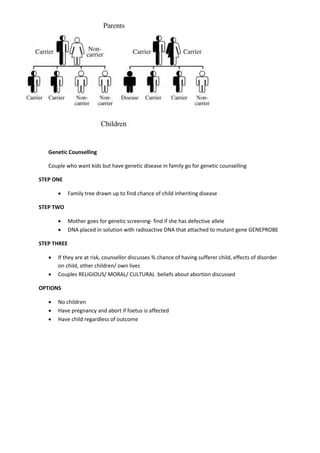
 Children of 2 carrier parents have a one in four chance of being sufferers (25%) 
Sex Linked Allele 
 Certain characteristics/ genetic diseases more prominent in m than f 
o Due to structure of sex chromosomes (heterosomes) 
 X CHROMOSOME- many genes on it/ Y CHROMOSOME- smaller/ few genes on it 
 If a gene on X mutates, mutation will be seen in male because he has only one gene for that 
trait (on his X) 
 If mutation is recessive, it will only be seen in female if both X chromosomes have that trait 
Muscular Dystrophy 
 Duchenne muscular dystrophy occurs when gene on X fails to make muscle protein 
dystrophin 
 Begins in early childhood- progressive loss of muscle strength- die in 20’s of respiratory/ 
cardiac muscle failure 
Colour Blindness 
 Red green both recessive and sex linked 
 Recessive gene for colour blindness found on X, Y doesn’t carry gene for colour distinction 
 Carrier female will be normal as dominant normal gene on other X will dominate 
 BUT if she has a son, he can inherit her recessive X in which case he will be colour blind 
 If a girl receives a recessive gene from both Barents, she will be colour blind
Genetic Counselling 
Couple who want kids but have genetic disease in family go for genetic counselling 
STEP ONE 
 Family tree drawn up to find chance of child inheriting disease 
STEP TWO 
 Mother goes for genetic screening- find if she has defective allele 
 DNA placed in solution with radioactive DNA that attached to mutant gene GENEPROBE 
STEP THREE 
 If they are at risk, counsellor discusses % chance of having sufferer child, effects of disorder 
on child, other children/ own lives 
 Couples RELIGIOUS/ MORAL/ CULTURAL beliefs about abortion discussed 
OPTIONS 
 No children 
 Have pregnancy and abort if foetus is affected 
 Have child regardless of outcome

Biology notes-inheritence-and-genetic-diseases

  • 1.
    Inheritance and GeneticDiseases Introduction: the History of Genetics  Gregor Mendel considered father of genetics 1800’s monk  Experiments on pea plants- self- pollinating flowers could easily be cross fertilized= hybrid  HYBRID: new types of plants formed by cross fertilizing varieties of the same species  He first grew many varieties of pea plants- made sure each was purebred (when it pollinates itself the successive generation always looks like the parent plant)  Mendel began to cross purebred plants that differed in only one characteristic= MONOHYBRID CROSS and always chose contrasting traits (height of plant)  To cross two plants, pollen was spread from the stamen of a tall plant to the stigma of a short plant  SCIENTISTS AT THE TIME thought that offspring were a blend of their parents- Mendel disproves this Mendel’s Results  All the offspring of a cross look the same- show characteristics of only one parent  Let the offspring self- fertilize= one or other trait showed in a 3:1 ratio This Proved That:  Genes that control characteristics occur in pairs  If the genes are different, one will be DOMINANT and the other RECESSIVE  During the formation of gametes, the paired genes separate and each gamete receives one of the genes Chromosomes, Genes and Alleles  25 000 genes on a chromosome (carry hereditary genes)  GENE: small piece of DNA in the chromosome which carries info about characteristic in the body  LOCUS: a particular position of a gene  ALLELE: different forms of the same gene, found in the same position on the corresponding homologous chromosome- one allele from mother and one from father HOMOZYGOUS= alleles for particular characteristic are the same- gene is either TT or tt HETEROZYGOUS= two alleles for same characteristic are different- gene is Tt Genetic Diagrams GENOTYPE: genetic factors present in organism PHENOTYPE: visible expression of the genotype- way organism looks is due to genotype MONOHYBRID CROSS: only one hereditary trait is investigated at a time
  • 2.
    Symbols used inGenetic Diagrams 1. GENERATIONS a. P- parent generation b. F1- first Filial- first generation of offspring c. F2- second Filial- second generation of offspring 2. ALLELES OF A GENE represented by capital and small letters a. DOMINANT TRAIT= capital letter eg tall plant: T b. RECESSIVE TRAIT= small letter eg dwarf plant: t 3. As there are 2 alleles for each trait (one on each chromosome in homologous pair) we write two letter- DOMINANT ALLELE ALWAYS COME FIRST a. Homozygous (purebred) tall plant= TT (both alleles tall) b. Homozygous (purebred) dwarf plant= tt (both allele dwarf) c. Heterozygous (hybrid) tall plant= Tt (one allele dwarf, one tall) 4. DURING MEIOSIS in the formation of gametes, homologous chromosomes separate. Each gamete receives only 1 allele of pair. Eg if parent is Tt, gamete receives either T or t LOOK AT GENETIC DIAGRAM AND LEARN/ PRACTICE SOLVING GENETIC PROBLEMS NOTE: always include key In Genotype say the literal genes present eg TT; tt; Tt; Tt In Phenotype, say the result of these genes eg Tall, Tall, Tall, Short (3 tall 1 short ) and say the percentage (75% tall, 25% short) The Inheritance of Sex  The two gonosomes (23rd chromosome/sex chromosome) carry info that determine whether offspring m/ f  Female chromosome(X) never swops info with male chromosome (Y) o Therefore info pertaining to sex including traits of that sex is inherited by offspring as a complete set of info  Y dominant over X, therefore all males carry XY all females carry XX  This means father determines sex as mother donates X and father donates X or Y  X chromosome is much longer and can carry many alleles  Only small part of X and Y chromosomes can pair up during meiosis and no crossing over occurs  Alleles carried on the non-homologous part of X chromosome are called x linked/sex linked alleles  Men only have one X chromosome so will have one of each sex linked allele, this is why certain genetic diseases are present more in males than females - If gene on X chromosome mutates/gene for disease male will express it, female only express it if gene is recessive on both X chromosomes
  • 3.
    Genes, Alleles andMutations When do MUTATIONS occur?  DNA strand of a gene changes forming a new allele. Change in DNA structure changes information allele gives to the cell o Chromosomal- damage to chromosome due to UV, cosmic rays, X ray, Radiation o Point- single pair of nucleotides in certain point in DNA replaced by different base pair  Substitution- wrong nucleotide  Deletion- less  Insertion- extra Somatic Mutations  Occur in somatic body cells- kidney/ bone skin  Damage/ kill/ convert into tumour cells= cancerous  when mitosis happens, Mutation transferred to daughter cells in tissue/ organ  METASTASIS(spread of disease from part to another non-adjacent part.) occurs when cancer cells spread through body  Somatic mutation dies when cells die/ tumour cells are killed  Occurs after conception/ will not be passed down Germline Mutations  Occur in egg/ sperm- passed onto zygote which will have mutation present in all cells  Next generation of gametes will carry mutation= FIXED MUTATION/ DRIVES EVOLUTION
  • 4.
    Beneficial/ Harmless/ Harmful Beneficial Mutations  Natural selection based on principle that genes mutate & form new alleles  Depending on environmental changes, mutation can become harmful/ beneficial Harmful Mutation  Change gene so that allele cannot function (albinism) change message gene gives (extra limb)  Cause disease/ death  LETHAL ALLELE- gene is not coding for production of important substance Harmless  Also called neutral/ changes physical characteristics without affecting body function Cystic Fibrosis- a Genetic Disorder  Lethal allele- cannot produce protein in cells of lungs to transport salts/ water across membrane into cells  Salt/ water collect in air passages= sticky mucous blocking air passage in/ out of lungs  O2 deprived/ CO2 poisoning/ lung infections/ organ failure  Children of 2 carrier parents have a one in four chance of being sufferers (25%) Sex Linked Allele  Certain characteristics/ genetic diseases more prominent in m than f o Due to structure of sex chromosomes (heterosomes)  X CHROMOSOME- many genes on it/ Y CHROMOSOME- smaller/ few genes on it  If a gene on X mutates, mutation will be seen in male because he has only one gene for that trait (on his X)  If mutation is recessive, it will only be seen in female if both X chromosomes have that trait Muscular Dystrophy  Duchenne muscular dystrophy occurs when gene on X fails to make muscle protein dystrophin  Begins in early childhood- progressive loss of muscle strength- die in 20’s of respiratory/ cardiac muscle failure Colour Blindness  Red green both recessive and sex linked  Recessive gene for colour blindness found on X, Y doesn’t carry gene for colour distinction  Carrier female will be normal as dominant normal gene on other X will dominate  BUT if she has a son, he can inherit her recessive X in which case he will be colour blind  If a girl receives a recessive gene from both Barents, she will be colour blind
  • 5.
    Genetic Counselling Couplewho want kids but have genetic disease in family go for genetic counselling STEP ONE  Family tree drawn up to find chance of child inheriting disease STEP TWO  Mother goes for genetic screening- find if she has defective allele  DNA placed in solution with radioactive DNA that attached to mutant gene GENEPROBE STEP THREE  If they are at risk, counsellor discusses % chance of having sufferer child, effects of disorder on child, other children/ own lives  Couples RELIGIOUS/ MORAL/ CULTURAL beliefs about abortion discussed OPTIONS  No children  Have pregnancy and abort if foetus is affected  Have child regardless of outcome