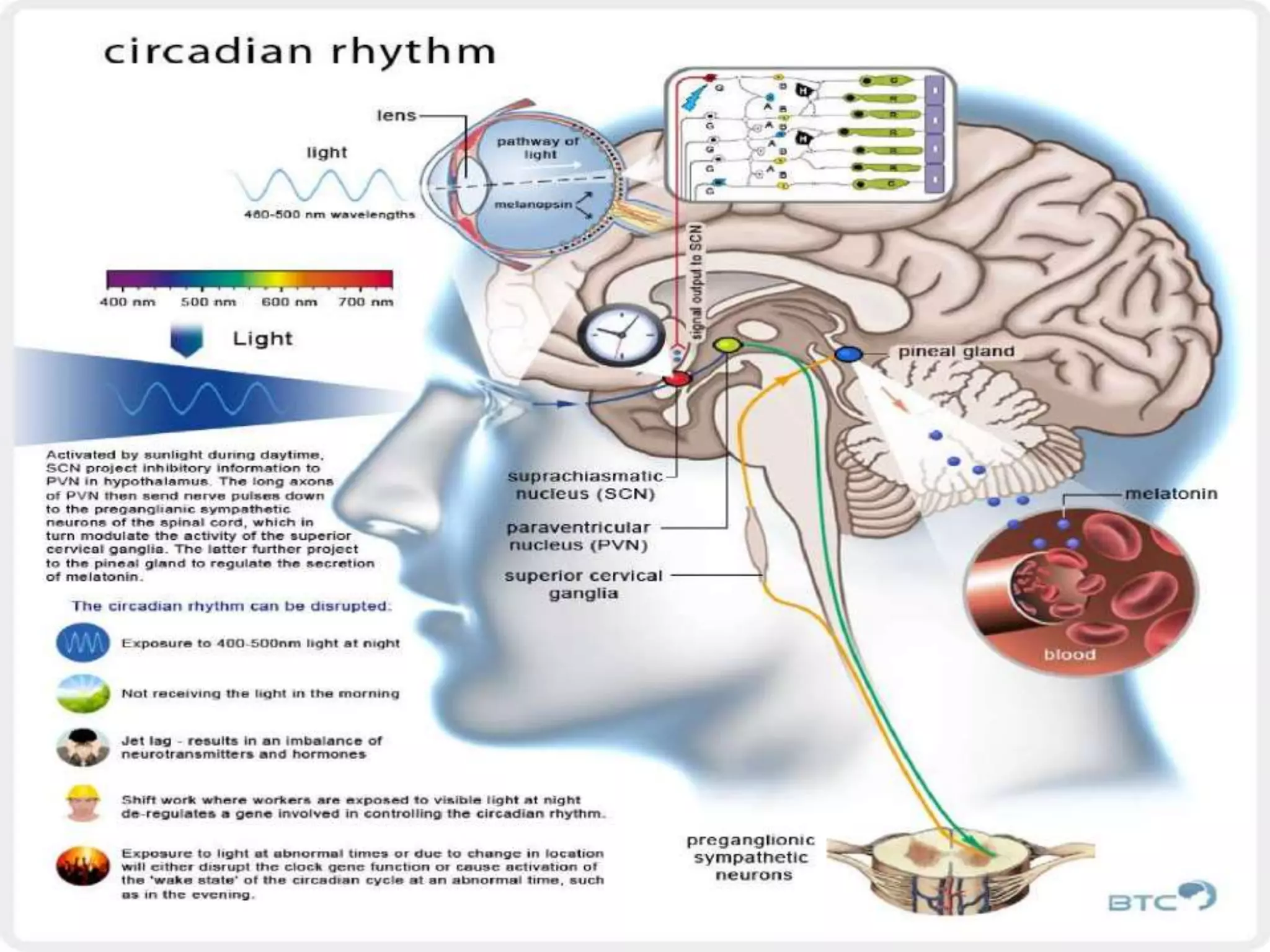
1. Circadian rhythms are 24-hour biological cycles that influence various bodily functions like sleep-wake cycles, temperature regulation, and hormone secretion. They are controlled by the brain's central pacemaker and can be disrupted by conditions like shift work.
2. Common circadian rhythm disorders include delayed sleep phase syndrome, where people have trouble falling asleep before late at night, and advanced sleep phase syndrome, where people feel sleepy very early in the evenings.
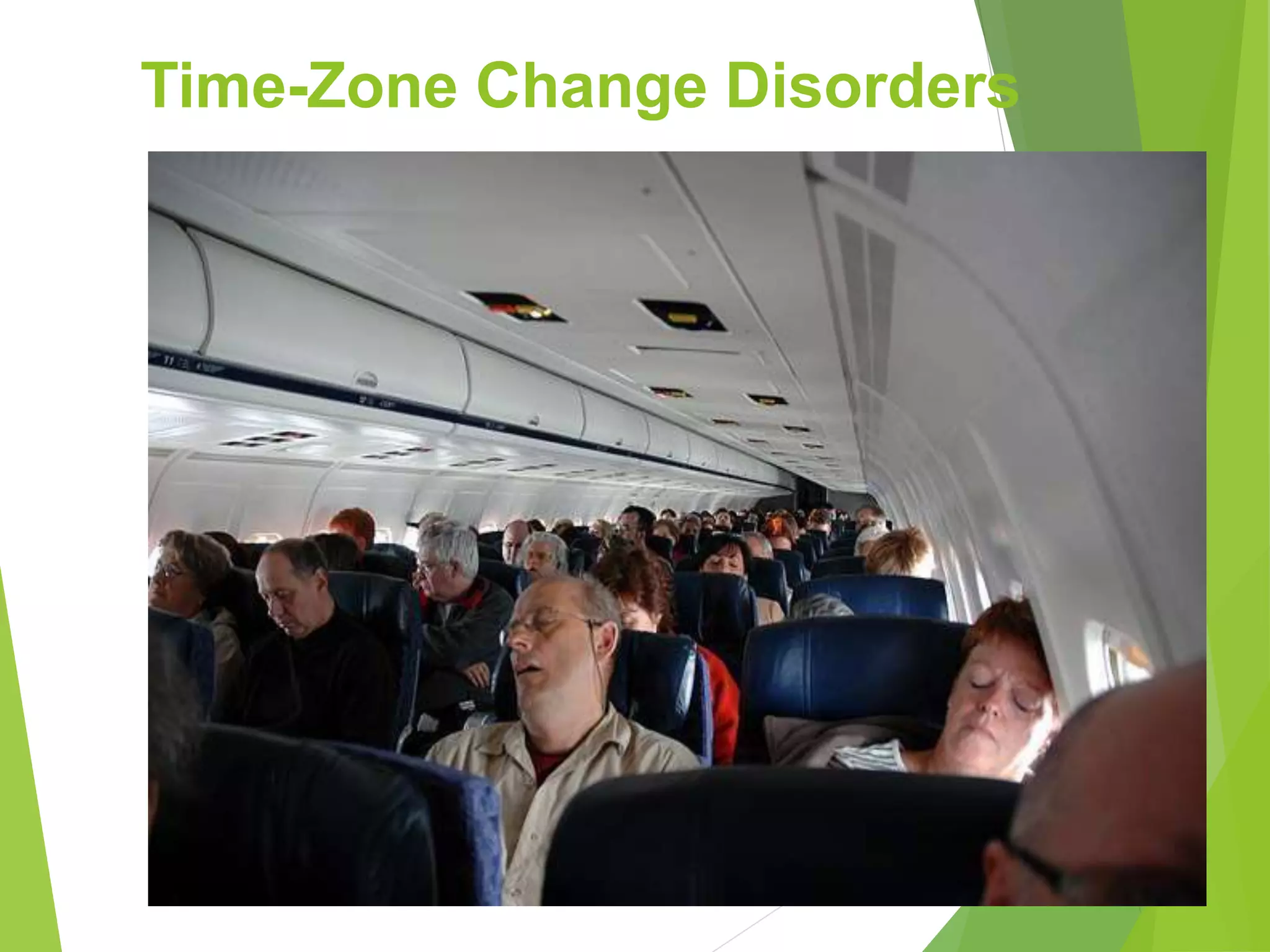
3. Non-24-hour sleep-wake disorder causes people's circadian rhythms to follow a cycle slightly longer than 24 hours, resulting in progressively later sleep times each day. Shift work and jet lag can also disrupt normal circadian rhythms.


















![Concept of Sleep Modern [Autosaved] (2).pptx](https://cdn.slidesharecdn.com/ss_thumbnails/sleepmodernautosaved2-250415015823-7ee70ee7-thumbnail.jpg?width=640&height=640&fit=bounds)


