Challenges and opportunities of bio-fortified
crops in Bangladesh
Md Akter Hossain
Dhaka I May 5, 2016
What is bio-fortified crop?
• Food crops (staple) that are more
nutritious
• Most often means increased content of
essential micronutrients (minerals and
vitamins)
• Developed through plant breeding (incl.
genetic engineering)
Why are micronutrients so
important?
• Deficiency affect blindness, birth defects, mental health, and child
survival.
• Vitamin A & Zinc important for immune system -deficiency
increases mortality
• Lack of vitamin A can lead to blindness
• Iron needed for physical & cognitive development
• Zinc deficiency causes stunting in children
• Women and young children most affected
• 1 out of 3 people in developing countries suffers
• In Bangladesh, over 40 % children under five are stunted while an
estimated 44 % percent of the same age group are at risk of zinc
deficiency
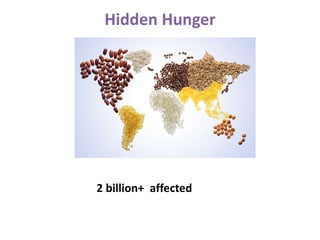
Hidden Hunger
2 billion+ affected
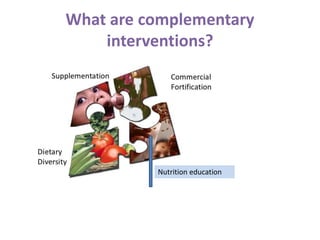
What are complementary
interventions?
Nutrition education
What are the advantages of
biofortification?
• Capitalizes the regular daily intake of food staples .
Implicitly targets low-income households
• After the one-time investment to develop fortified seeds ,
recurrent costs are low; and fortified seeds shared
internationally. Cost-effective
• Once in place, the biofortified crop system is highly
sustainable
• Fortified seed not incur a yield penalty. May have important
indirect effects in increasing farm productivity by helping
plants resist to disease and other environmental stresses.
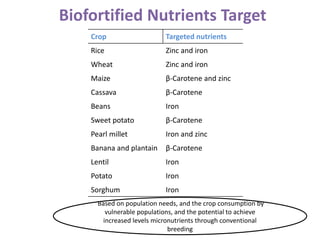
Biofortified Nutrients Target
Crop Targeted nutrients
Rice Zinc and iron
Wheat Zinc and iron
Maize β-Carotene and zinc
Cassava β-Carotene
Beans Iron
Sweet potato β-Carotene
Pearl millet Iron and zinc
Banana and plantain β-Carotene
Lentil Iron
Potato Iron
Sorghum Iron
Based on population needs, and the crop consumption by
vulnerable populations, and the potential to achieve
increased levels micronutrients through conventional
breeding
Current Scale/Pipeline of Biofortified
Crops
Biofortified crops released in 27 countries
18 in Africa, 4 in Asia, 5 in LAC
In-testing in 43 countries
26 in Africa, 8 in Asia, 9 in LAC
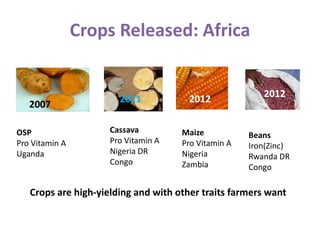
Crops Released: Africa
2007
2011 2012
2012
OSP
Pro Vitamin A
Uganda
Cassava
Pro Vitamin A
Nigeria DR
Congo
Maize
Pro Vitamin A
Nigeria
Zambia
Beans
Iron(Zinc)
Rwanda DR
Congo
Crops are high-yielding and with other traits farmers want
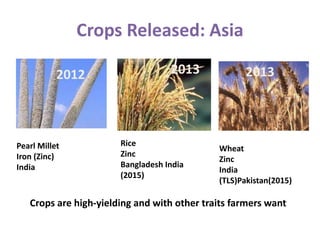
Crops Released: Asia
2013
Rice
Zinc
Bangladesh India
(2015)
Pearl Millet
Iron (Zinc)
India
Wheat
Zinc
India
(TLS)Pakistan(2015)
Crops are high-yielding and with other traits farmers want
2012 2013
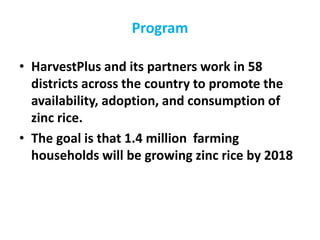
• HarvestPlus and its partners work in 58
districts across the country to promote the
availability, adoption, and consumption of
zinc rice.
• The goal is that 1.4 million farming
households will be growing zinc rice by 2018
Program
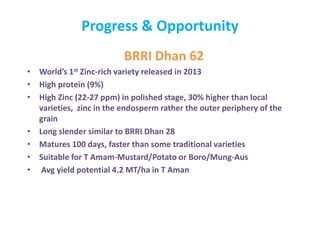
BRRI Dhan 62
• World’s 1st Zinc-rich variety released in 2013
• High protein (9%)
• High Zinc (22-27 ppm) in polished stage, 30% higher than local
varieties, zinc in the endosperm rather the outer periphery of the
grain
• Long slender similar to BRRI Dhan 28
• Matures 100 days, faster than some traditional varieties
• Suitable for T Amam-Mustard/Potato or Boro/Mung-Aus
• Avg yield potential 4.2 MT/ha in T Aman
Progress & Opportunity
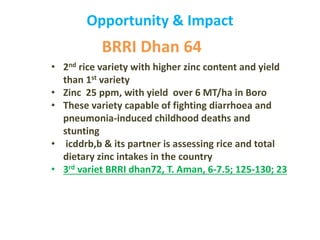
• 2nd rice variety with higher zinc content and yield
than 1st variety
• Zinc 25 ppm, with yield over 6 MT/ha in Boro
• These variety capable of fighting diarrhoea and
pneumonia-induced childhood deaths and
stunting
• icddrb,b & its partner is assessing rice and total
dietary zinc intakes in the country
• 3rd variet BRRI dhan72, T. Aman, 6-7.5; 125-130; 23
BRRI Dhan 64
Opportunity & Impact
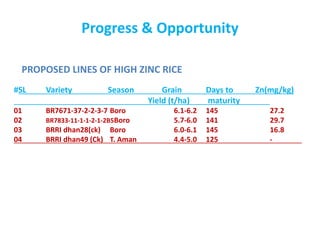
#SL Variety Season Grain Days to Zn(mg/kg)
Yield (t/ha) maturity
01 BR7671-37-2-2-3-7 Boro 6.1-6.2 145 27.2
02 BR7833-11-1-1-2-1-2B5Boro 5.7-6.0 141 29.7
03 BRRI dhan28(ck) Boro 6.0-6.1 145 16.8
04 BRRI dhan49 (Ck) T. Aman 4.4-5.0 125 -
PROPOSED LINES OF HIGH ZINC RICE
Progress & Opportunity
• The government, NGOs and private seed sectors
started supplying seeds to farmers and informed
them of this technology
• High Zinc rice intake stared
• Raise hope for 4 rice/year
• As per international collaboration, the zinc-enriched
rice varieties developed in Bangladesh are now
expected to export to Cambodia, Indonesia, the
Philippines and Vietnam
Impact
Efforts to be make
• Need to reach farm households with commercial seed
• Need to develop sustainable markets for this seed and grain
to catch a substantial market share
• Convincing farmers and consumers that biofertified crop is
worth growing and consuming
• Providing public health education on the benefits of eating
biofortified foods
• Developing agricultural infrastructure for adoption of new
biofortified varieties
• Building effective partnerships of researchers and
entrepreneurs
Conclusion
• Biofortification very important for controlling
micronutrient deficiencies
• Now need to get consumer acceptance,
thereby increasing the intake of the target
nutrients. With the advent of good seed
systems, the development of markets and
products, and demand creation, this can
become a reality
Thank YOU ALL
Acknowledgement: For data sources
Website of HarvestPlus, IRRI, BRRI & their valued
partners
News articles/website/blog

Biofortified Crops PPT IRRI

  • 1.
    Challenges and opportunitiesof bio-fortified crops in Bangladesh Md Akter Hossain Dhaka I May 5, 2016
  • 2.
    What is bio-fortifiedcrop? • Food crops (staple) that are more nutritious • Most often means increased content of essential micronutrients (minerals and vitamins) • Developed through plant breeding (incl. genetic engineering)
  • 3.
    Why are micronutrientsso important? • Deficiency affect blindness, birth defects, mental health, and child survival. • Vitamin A & Zinc important for immune system -deficiency increases mortality • Lack of vitamin A can lead to blindness • Iron needed for physical & cognitive development • Zinc deficiency causes stunting in children • Women and young children most affected • 1 out of 3 people in developing countries suffers • In Bangladesh, over 40 % children under five are stunted while an estimated 44 % percent of the same age group are at risk of zinc deficiency
  • 4.
  • 5.
  • 6.
    What are theadvantages of biofortification? • Capitalizes the regular daily intake of food staples . Implicitly targets low-income households • After the one-time investment to develop fortified seeds , recurrent costs are low; and fortified seeds shared internationally. Cost-effective • Once in place, the biofortified crop system is highly sustainable • Fortified seed not incur a yield penalty. May have important indirect effects in increasing farm productivity by helping plants resist to disease and other environmental stresses.
  • 7.
    Biofortified Nutrients Target CropTargeted nutrients Rice Zinc and iron Wheat Zinc and iron Maize β-Carotene and zinc Cassava β-Carotene Beans Iron Sweet potato β-Carotene Pearl millet Iron and zinc Banana and plantain β-Carotene Lentil Iron Potato Iron Sorghum Iron Based on population needs, and the crop consumption by vulnerable populations, and the potential to achieve increased levels micronutrients through conventional breeding
  • 8.
    Current Scale/Pipeline ofBiofortified Crops Biofortified crops released in 27 countries 18 in Africa, 4 in Asia, 5 in LAC In-testing in 43 countries 26 in Africa, 8 in Asia, 9 in LAC
  • 9.
    Crops Released: Africa 2007 20112012 2012 OSP Pro Vitamin A Uganda Cassava Pro Vitamin A Nigeria DR Congo Maize Pro Vitamin A Nigeria Zambia Beans Iron(Zinc) Rwanda DR Congo Crops are high-yielding and with other traits farmers want
  • 10.
    Crops Released: Asia 2013 Rice Zinc BangladeshIndia (2015) Pearl Millet Iron (Zinc) India Wheat Zinc India (TLS)Pakistan(2015) Crops are high-yielding and with other traits farmers want 2012 2013
  • 13.
    • HarvestPlus andits partners work in 58 districts across the country to promote the availability, adoption, and consumption of zinc rice. • The goal is that 1.4 million farming households will be growing zinc rice by 2018 Program
  • 14.
    BRRI Dhan 62 •World’s 1st Zinc-rich variety released in 2013 • High protein (9%) • High Zinc (22-27 ppm) in polished stage, 30% higher than local varieties, zinc in the endosperm rather the outer periphery of the grain • Long slender similar to BRRI Dhan 28 • Matures 100 days, faster than some traditional varieties • Suitable for T Amam-Mustard/Potato or Boro/Mung-Aus • Avg yield potential 4.2 MT/ha in T Aman Progress & Opportunity
  • 15.
    • 2nd ricevariety with higher zinc content and yield than 1st variety • Zinc 25 ppm, with yield over 6 MT/ha in Boro • These variety capable of fighting diarrhoea and pneumonia-induced childhood deaths and stunting • icddrb,b & its partner is assessing rice and total dietary zinc intakes in the country • 3rd variet BRRI dhan72, T. Aman, 6-7.5; 125-130; 23 BRRI Dhan 64 Opportunity & Impact
  • 16.
    #SL Variety SeasonGrain Days to Zn(mg/kg) Yield (t/ha) maturity 01 BR7671-37-2-2-3-7 Boro 6.1-6.2 145 27.2 02 BR7833-11-1-1-2-1-2B5Boro 5.7-6.0 141 29.7 03 BRRI dhan28(ck) Boro 6.0-6.1 145 16.8 04 BRRI dhan49 (Ck) T. Aman 4.4-5.0 125 - PROPOSED LINES OF HIGH ZINC RICE Progress & Opportunity
  • 17.
    • The government,NGOs and private seed sectors started supplying seeds to farmers and informed them of this technology • High Zinc rice intake stared • Raise hope for 4 rice/year • As per international collaboration, the zinc-enriched rice varieties developed in Bangladesh are now expected to export to Cambodia, Indonesia, the Philippines and Vietnam Impact
  • 18.
    Efforts to bemake • Need to reach farm households with commercial seed • Need to develop sustainable markets for this seed and grain to catch a substantial market share • Convincing farmers and consumers that biofertified crop is worth growing and consuming • Providing public health education on the benefits of eating biofortified foods • Developing agricultural infrastructure for adoption of new biofortified varieties • Building effective partnerships of researchers and entrepreneurs
  • 19.
    Conclusion • Biofortification veryimportant for controlling micronutrient deficiencies • Now need to get consumer acceptance, thereby increasing the intake of the target nutrients. With the advent of good seed systems, the development of markets and products, and demand creation, this can become a reality
  • 20.
    Thank YOU ALL Acknowledgement:For data sources Website of HarvestPlus, IRRI, BRRI & their valued partners News articles/website/blog