Shoolini University Solan
Dr. Arshdeep Singh
Department of Agronomy
Unit1
Introduction to agronomy
Meaning and scope of
Agronomy
Meaning of agronomy
Agronomy is derived from a Greek word ‘agros’
meaning ‘field’ and ‘nomos’ meaning
management’. Literally, agronomy means the
“art of managing field”. Technically,
it means the “science and economics of crop
production by management of farm land”.
Definition of agronomy
It is defined as an agricultural science deals with
principles and practices of crop production and field
management.
2. Agronomy is branch of agricultural science, which
deals with principles, & practices of soil, water & crop
management.
Importance :
• Among all the branches of agriculture, agronomy occupies a pivotal
position and is regarded as the mother branch or primary branch.
• Like agriculture, agronomy is an integrated and applied aspect of
different disciplines of pure sciences.
• Agronomy has three clear branches namely,
(i) Crop Science, (ii) Soil Science, and (iii) Environmental Science that
deals only with applied aspects (i.e.,) Soil-Crop-Environmental
relationship.
• Agronomy is a synthesis of several disciplines like crop science, which
includes plant breeding, crop physiology and biochemistry etc., and
soil science, which includes soil fertilizers, manures etc., and
environmental science which includes meteorology and crop ecology.
Basic Principles
• Planning, programming and executing measures for
maximum utilization of land, labour, capital and other factors
of production.
• Choice of crop varieties adaptable to the particular agro-
climate, land situation, soil fertility, season and method of
cultivation and befitting to the cropping system.
• Proper field management by tillage, preparing field channels
and bunds for irrigation and drainage, checking soil erosion,
levelling and adopting other suitable land improvement
practices.
• Adoption of multiple cropping and also mixed or
intercropping to ensure harvest even under adverse
environmental conditions.
• Timely application of proper and balanced nutrients to the
crop and improvement of soil fertility and productivity.
• Choice of quality seed or seed material and maintenance of
requisite plant density per unit area with healthy and
uniform seedlings;
• Proper water management with respect to crop, soil and
environment through conservation and utilization of soil
moisture.
• Adoption of adequate, need-based, timely and exacting
plant protection measures against weeds, insect-pests and
pathogens.
• Adoption of suitable and appropriate management
practices including intercultural operations.
• Adoption of suitable method and time of harvesting of
crop.
• Adoption of suitable post-harvest technologies.
Scope of agronomy
• Agronomy is a dynamic discipline with the
advancement of knowledge and better understanding
of plant, environment and agriculture. Agronomy
science becomes imperative in Agriculture in the
following areas:
• For the identification of proper season for cultivation
of crops.
• For the proper methods of cultivation
• For the availability and application of chemical
fertilizers.
• For the availability of herbicides for control of weeds .
• In water management practices.
• Intensive cropping.
• To overcome the effect of moisture stress
under dry land condition.
• Packages of practices .
• Keeping farm implements in good shape and
utilizing them with efficient manner.
• Maintaining the ecological balance.
• Care and disposal of farm and animal
products.
Agronomist
• Agronomist: “Scientist who studies the
principles and practices of crop production
and soil management for production of food
for human beings and feed for his animals”.
Role of agronomist
• Agronomist studies the problems of crop production and develops
better ways of producing food, feed and fibre.
• Agronomist aims at obtaining maximum production at minimum
cost.
• Agronomist shoulder the responsibilities of all social, economic,
cultural problems in addition to field problems for the effective
functioning of the farm in general.
• Agronomist exploits the knowledge developed by basic and allied,
applied sciences for higher crop production.
• Agronomist carries out research on scientific cultivation of crops
taking into account the effect of factors like soil, climate, crop
varieties and adjust production techniques suitably depending on
the situation.
• The agronomist co-operates and co-ordinate with all the disciplines
of agriculture.
• To develop efficient method of cultivation.
• He has to identify various types of nutrients
required by crops.
• Agronomist must select a better weed
management practice.
• Irrigation management.
• Crop planning (i.e.,) developing crop sequence
should be developed by agronomist
• Agronomists are also developing the method
of harvesting, time for harvesting, etc.
• Decision-making in the farm management.
Relation of agronomy to other
sciences
Agronomy
Soil science
Crop
physiology
Plant
ecology
Biochemistry
Economics
Agriculture
chemistry
Soil science
• The Soil Science helps the agronomist to
thoroughly understand the soil physical,
chemical and biological properties to effect
modification of the soil environment.
Agricultural chemistry
• The Agricultural Chemistry help the
agronomist to understand the chemical
composition and changes involved in the
production, protection, and use of crops and
livestock.
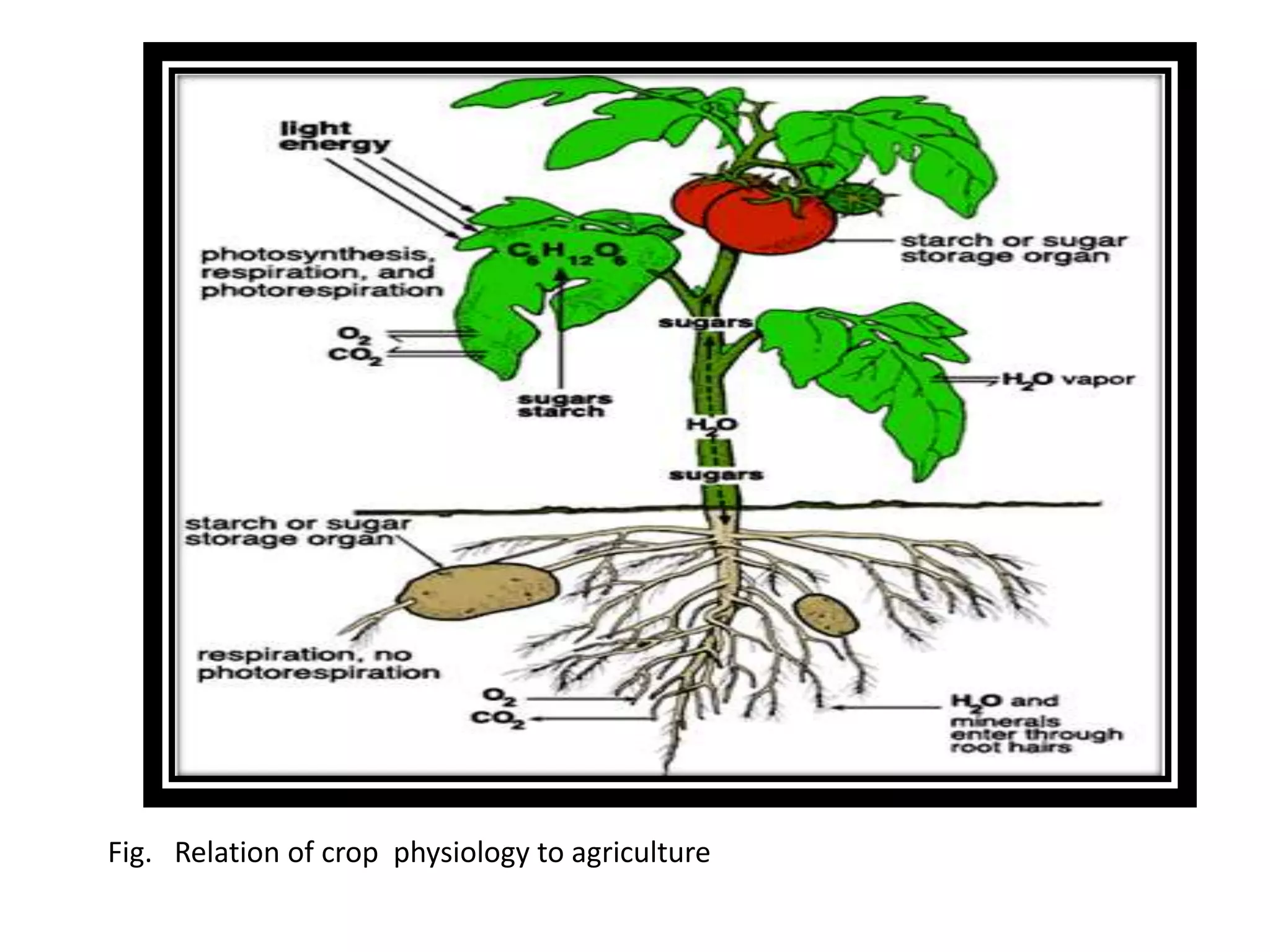
• The crop physiology helps to understand the
basic life process of crops to understand
functioning of each parts of plant to
determine their input requirement like
nutrients etc.
Crop physiology
Fig. Relation of crop physiology to agriculture
Plant ecology
• The plant ecology helps us to understand the
associated environment in which the crops
grown like the influence of weather
(Temperature, Rainfall ).
Biochemistry
• The biochemistry shows the way in which
biochemical process takes place in crops
which helps to understand critical
requirements to favourably activate this
process.
Economics
The economics paves the way for profit and loss
analysis in farming.
Introduction of Agronomy

Introduction of Agronomy

  • 1.
    Shoolini University Solan Dr.Arshdeep Singh Department of Agronomy
  • 2.
  • 3.
    Meaning and scopeof Agronomy
  • 4.
    Meaning of agronomy Agronomyis derived from a Greek word ‘agros’ meaning ‘field’ and ‘nomos’ meaning management’. Literally, agronomy means the “art of managing field”. Technically, it means the “science and economics of crop production by management of farm land”.
  • 5.
    Definition of agronomy Itis defined as an agricultural science deals with principles and practices of crop production and field management. 2. Agronomy is branch of agricultural science, which deals with principles, & practices of soil, water & crop management.
  • 6.
    Importance : • Amongall the branches of agriculture, agronomy occupies a pivotal position and is regarded as the mother branch or primary branch. • Like agriculture, agronomy is an integrated and applied aspect of different disciplines of pure sciences. • Agronomy has three clear branches namely, (i) Crop Science, (ii) Soil Science, and (iii) Environmental Science that deals only with applied aspects (i.e.,) Soil-Crop-Environmental relationship. • Agronomy is a synthesis of several disciplines like crop science, which includes plant breeding, crop physiology and biochemistry etc., and soil science, which includes soil fertilizers, manures etc., and environmental science which includes meteorology and crop ecology.
  • 7.
    Basic Principles • Planning,programming and executing measures for maximum utilization of land, labour, capital and other factors of production. • Choice of crop varieties adaptable to the particular agro- climate, land situation, soil fertility, season and method of cultivation and befitting to the cropping system. • Proper field management by tillage, preparing field channels and bunds for irrigation and drainage, checking soil erosion, levelling and adopting other suitable land improvement practices. • Adoption of multiple cropping and also mixed or intercropping to ensure harvest even under adverse environmental conditions.
  • 8.
    • Timely applicationof proper and balanced nutrients to the crop and improvement of soil fertility and productivity. • Choice of quality seed or seed material and maintenance of requisite plant density per unit area with healthy and uniform seedlings; • Proper water management with respect to crop, soil and environment through conservation and utilization of soil moisture. • Adoption of adequate, need-based, timely and exacting plant protection measures against weeds, insect-pests and pathogens. • Adoption of suitable and appropriate management practices including intercultural operations. • Adoption of suitable method and time of harvesting of crop. • Adoption of suitable post-harvest technologies.
  • 9.
    Scope of agronomy •Agronomy is a dynamic discipline with the advancement of knowledge and better understanding of plant, environment and agriculture. Agronomy science becomes imperative in Agriculture in the following areas: • For the identification of proper season for cultivation of crops. • For the proper methods of cultivation • For the availability and application of chemical fertilizers. • For the availability of herbicides for control of weeds .
  • 10.
    • In watermanagement practices. • Intensive cropping. • To overcome the effect of moisture stress under dry land condition. • Packages of practices . • Keeping farm implements in good shape and utilizing them with efficient manner. • Maintaining the ecological balance. • Care and disposal of farm and animal products.
  • 11.
    Agronomist • Agronomist: “Scientistwho studies the principles and practices of crop production and soil management for production of food for human beings and feed for his animals”.
  • 12.
    Role of agronomist •Agronomist studies the problems of crop production and develops better ways of producing food, feed and fibre. • Agronomist aims at obtaining maximum production at minimum cost. • Agronomist shoulder the responsibilities of all social, economic, cultural problems in addition to field problems for the effective functioning of the farm in general. • Agronomist exploits the knowledge developed by basic and allied, applied sciences for higher crop production. • Agronomist carries out research on scientific cultivation of crops taking into account the effect of factors like soil, climate, crop varieties and adjust production techniques suitably depending on the situation. • The agronomist co-operates and co-ordinate with all the disciplines of agriculture.
  • 13.
    • To developefficient method of cultivation. • He has to identify various types of nutrients required by crops. • Agronomist must select a better weed management practice. • Irrigation management. • Crop planning (i.e.,) developing crop sequence should be developed by agronomist • Agronomists are also developing the method of harvesting, time for harvesting, etc. • Decision-making in the farm management.
  • 14.
    Relation of agronomyto other sciences Agronomy Soil science Crop physiology Plant ecology Biochemistry Economics Agriculture chemistry
  • 15.
    Soil science • TheSoil Science helps the agronomist to thoroughly understand the soil physical, chemical and biological properties to effect modification of the soil environment.
  • 16.
    Agricultural chemistry • TheAgricultural Chemistry help the agronomist to understand the chemical composition and changes involved in the production, protection, and use of crops and livestock.
  • 17.
    • The cropphysiology helps to understand the basic life process of crops to understand functioning of each parts of plant to determine their input requirement like nutrients etc. Crop physiology
  • 18.
    Fig. Relation ofcrop physiology to agriculture
  • 19.
    Plant ecology • Theplant ecology helps us to understand the associated environment in which the crops grown like the influence of weather (Temperature, Rainfall ).
  • 20.
    Biochemistry • The biochemistryshows the way in which biochemical process takes place in crops which helps to understand critical requirements to favourably activate this process.
  • 21.
    Economics The economics pavesthe way for profit and loss analysis in farming.