

BY NEERAJ PANDEY
M PHARM (PHARMACEUTICS)
RITM LUCKNOW.
 EQUIVALENCE.
 BIOEQUIVALANCE.
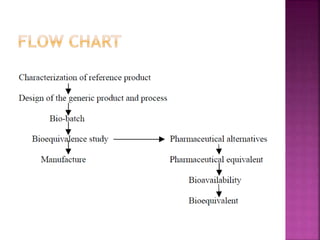
 FLOW CHART.
 GRAPH
 TYPES OF BIOEQUIVALENCE.
 IN VIVO STUDIES.
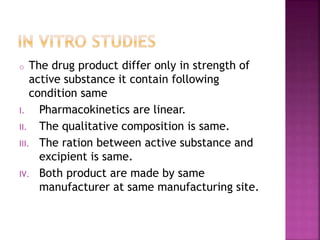
 IN VITRO STUDIES.
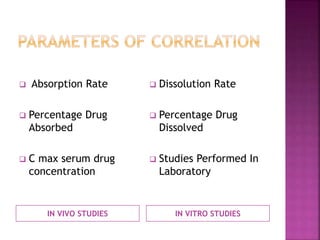
 PARAMETER OF CORRELATION.
 METHOD TO ASESS BIOEQUIVALANCE.
 ADVANTAGE.
 DISADVANTAGE.
 CONCLUSION.
 Equivalence is a relative term which
compares drug product with respect to
specific characteristic or function.
 Types of equivalence
i. Chemical equivalence.
ii. Pharmaceutical equivalence.
iii. Bio equivalence.
iv. Therapeutic equivalence.
 Bioequivalence refers to the drug substances
in two or more identical dosage forms,
reaches the systemic circulation at the same
rate and same relative extent.
 Example- The plasma concentration-time
profile will be identical without significant
differences.
 IN VIVO STUDIES
 IN VITRO STUDIES
 Oral immediate release product with systemic
action.
i. Narrow therapeutic response.
ii. Absorption<70% or nonlinear kinetics, pre
systemic elimination >70%.
iii. Documented evidence for bioavailability
problem.
iv. Unfavorable physiochemical properties e.g.
low solubility, instability etc.
v. No relevant data available.
 Non oral immediate release product.
 Modified release product with oral action.
o The drug product differ only in strength of
active substance it contain following
condition same
I. Pharmacokinetics are linear.
II. The qualitative composition is same.
III. The ration between active substance and
excipient is same.
IV. Both product are made by same
manufacturer at same manufacturing site.
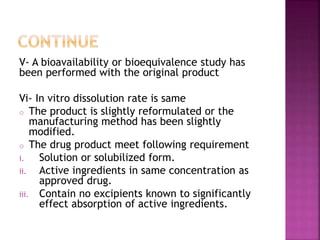
V- A bioavailability or bioequivalence study has
been performed with the original product
Vi- In vitro dissolution rate is same
o The product is slightly reformulated or the
manufacturing method has been slightly
modified.
o The drug product meet following requirement
i. Solution or solubilized form.
ii. Active ingredients in same concentration as
approved drug.
iii. Contain no excipients known to significantly
effect absorption of active ingredients.
IN VIVO STUDIES IN VITRO STUDIES
 Absorption Rate
 Percentage Drug
Absorbed
 C max serum drug
concentration
 Dissolution Rate
 Percentage Drug
Dissolved
 Studies Performed In
Laboratory
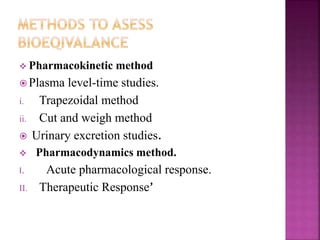
 Pharmacokinetic method
 Plasma level-time studies.
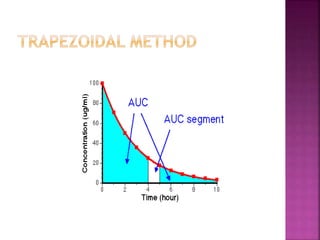
i. Trapezoidal method
ii. Cut and weigh method
 Urinary excretion studies.
 Pharmacodynamics method.
I. Acute pharmacological response.
II. Therapeutic Response’
 Minimize the effect of inter subject
variability.
 It minimize the carryover effect.
 Require less no of subject to get meaningful
result.
 Require longer time to complete the
studies.
 Increase in period leads to high subject
dropouts.
 Medical ethics does not allow too many trials
on a subject continuously for a longer time.
 Bioequivalence is used mainly for the generic
drug for reducing its cost because if the drug
is only proved to be equivalent to its brand
previously approved drug then there is no
need to perform the clinical trial and it is
also used to minimize difference between
batches of same drug.
Bioeqivqlqnce studies

Bioeqivqlqnce studies

  • 1.
    BY NEERAJ PANDEY MPHARM (PHARMACEUTICS) RITM LUCKNOW.
  • 2.
     EQUIVALENCE.  BIOEQUIVALANCE. FLOW CHART.  GRAPH  TYPES OF BIOEQUIVALENCE.  IN VIVO STUDIES.  IN VITRO STUDIES.  PARAMETER OF CORRELATION.  METHOD TO ASESS BIOEQUIVALANCE.  ADVANTAGE.  DISADVANTAGE.  CONCLUSION.
  • 3.
     Equivalence isa relative term which compares drug product with respect to specific characteristic or function.  Types of equivalence i. Chemical equivalence. ii. Pharmaceutical equivalence. iii. Bio equivalence. iv. Therapeutic equivalence.
  • 4.
     Bioequivalence refersto the drug substances in two or more identical dosage forms, reaches the systemic circulation at the same rate and same relative extent.  Example- The plasma concentration-time profile will be identical without significant differences.
  • 7.
     IN VIVOSTUDIES  IN VITRO STUDIES
  • 8.
     Oral immediaterelease product with systemic action. i. Narrow therapeutic response. ii. Absorption<70% or nonlinear kinetics, pre systemic elimination >70%. iii. Documented evidence for bioavailability problem. iv. Unfavorable physiochemical properties e.g. low solubility, instability etc. v. No relevant data available.  Non oral immediate release product.  Modified release product with oral action.
  • 9.
    o The drugproduct differ only in strength of active substance it contain following condition same I. Pharmacokinetics are linear. II. The qualitative composition is same. III. The ration between active substance and excipient is same. IV. Both product are made by same manufacturer at same manufacturing site.
  • 10.
    V- A bioavailabilityor bioequivalence study has been performed with the original product Vi- In vitro dissolution rate is same o The product is slightly reformulated or the manufacturing method has been slightly modified. o The drug product meet following requirement i. Solution or solubilized form. ii. Active ingredients in same concentration as approved drug. iii. Contain no excipients known to significantly effect absorption of active ingredients.
  • 11.
    IN VIVO STUDIESIN VITRO STUDIES  Absorption Rate  Percentage Drug Absorbed  C max serum drug concentration  Dissolution Rate  Percentage Drug Dissolved  Studies Performed In Laboratory
  • 12.
     Pharmacokinetic method Plasma level-time studies. i. Trapezoidal method ii. Cut and weigh method  Urinary excretion studies.  Pharmacodynamics method. I. Acute pharmacological response. II. Therapeutic Response’
  • 14.
     Minimize theeffect of inter subject variability.  It minimize the carryover effect.  Require less no of subject to get meaningful result.
  • 15.
     Require longertime to complete the studies.  Increase in period leads to high subject dropouts.  Medical ethics does not allow too many trials on a subject continuously for a longer time.
  • 16.
     Bioequivalence isused mainly for the generic drug for reducing its cost because if the drug is only proved to be equivalent to its brand previously approved drug then there is no need to perform the clinical trial and it is also used to minimize difference between batches of same drug.