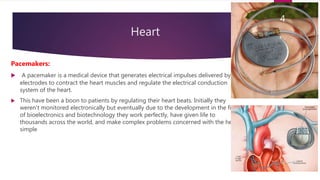
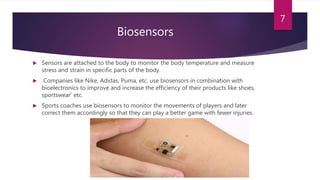
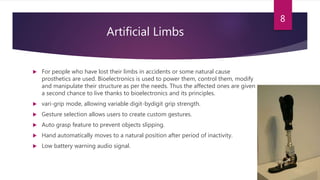
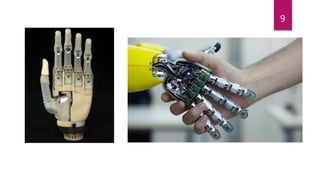
Bioelectronic medicine uses principles of electronics, biology, and neuroscience to develop technologies that can diagnose diseases and regulate biological processes through nerve stimulation and sensing. This includes using implanted devices powered by the body that can replace organ functions like pacemakers for the heart or provide prosthetics for limbs. Applications also include biosensors that can monitor things like body temperature, stress, and movement to provide health and performance data. The field holds promise for new treatments for conditions like heart disease by providing electrical alternatives to drugs or surgery.