Biodynamic Agriculture
Economic Botany
Dr. Uma Garimella
April 19, 2007
Principle Investigators:
Amanda MacMillan
Kendria Taylor
Sustainable Agriculture
• Movement that emerged in the 1970’s
• Serves to address the Environmental
and Social concerns brought on by
modern, industrial agriculture
• Three Main Goals:
– Environmental Stewardship
– Farm Profitability
– Prosperous Farming Communities
Concerns with Industrial Agriculture:
• Nutrient depletion and erosion of topsoil
• Soil compaction and decreased water holding capacity
• Overuse of chemicals such as pesticides, herbicides,
and fertilizers
• Pesticide resistant insects
• Loss of wetlands, wildlife habitat, tropical rainforests,
and native vegetation
• Reduced genetic diversity due to genetic uniformity of
crops
• Groundwater contamination due to sediments, salts,
fertilizers, pesticides, and manures
• Overuse of surface and groundwater for irrigation
• The decline of family farms
• Increasing costs of production
• Toxic residues found on foods
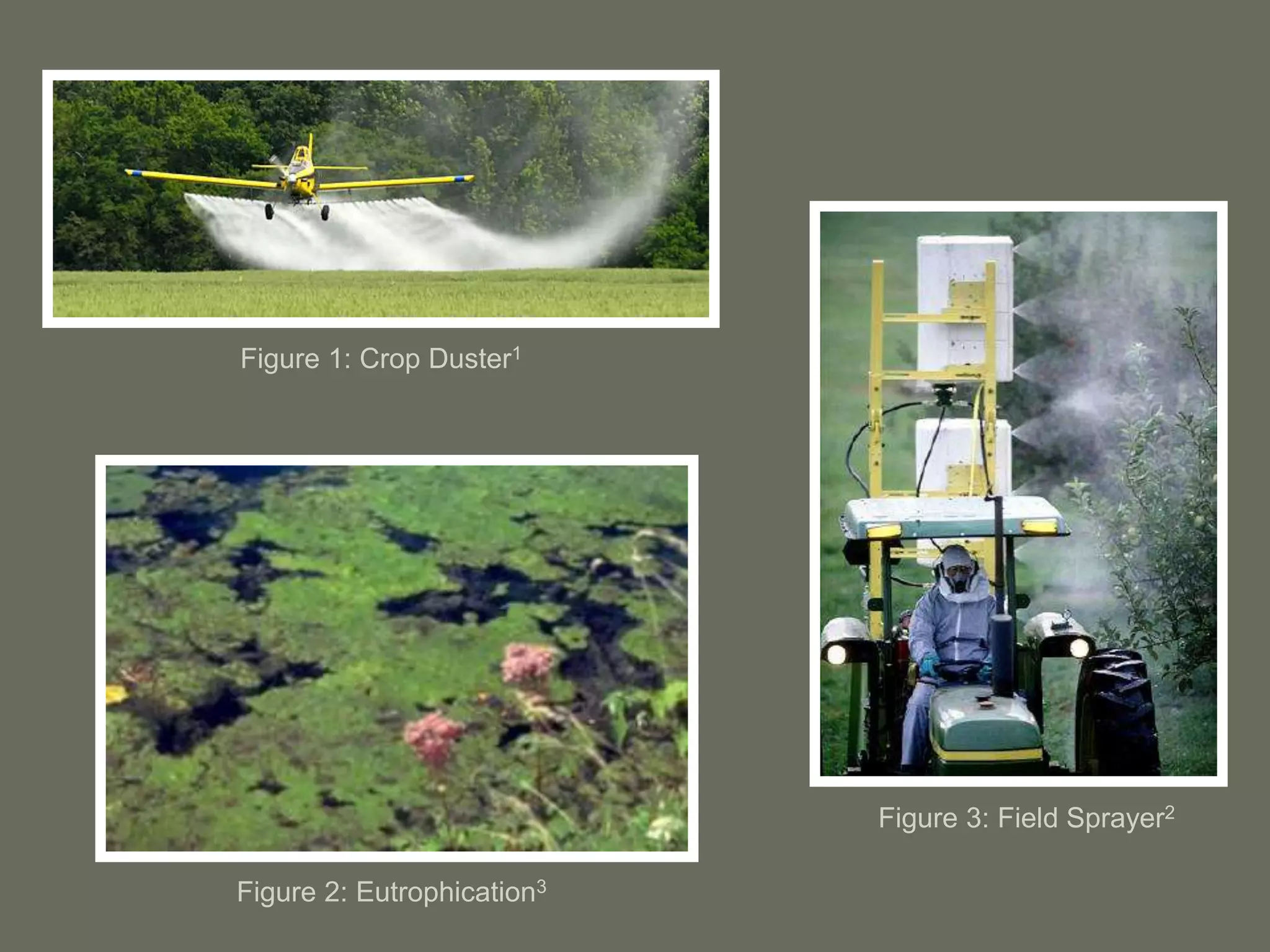
Figure 1: Crop Duster1
Figure 2: Eutrophication3
Figure 3: Field Sprayer2
Figure 4: Point and Non-point sources of Water Pollution3
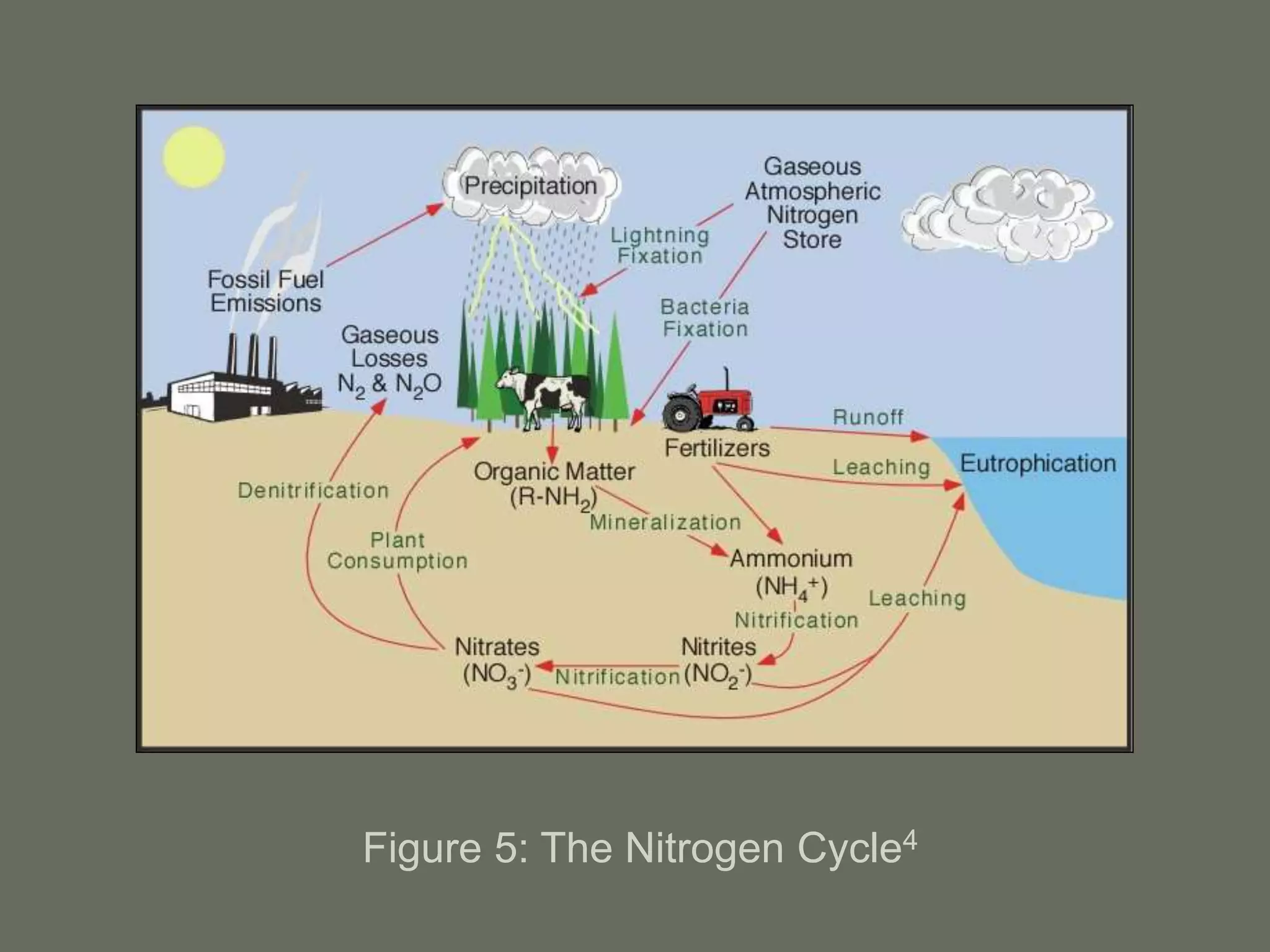
Figure 5: The Nitrogen Cycle4
Sustainable Agriculture
Legislation
• Congress’s 1990 “Farm Bill” stated that:
– “the term sustainable agriculture means an
integrated system of plant and animal
production practices having a site-specific
application that will, over the long term:
• satisfy human food and fiber needs
• enhance environmental quality and the natural
resource base upon which the agricultural economy
depends
• make the most efficient use of nonrenewable resources
and on-farm resources and integrate, where
appropriate, natural biological cycles and controls
• sustain the economic viability of farm operations
• enhance the quality of life for farmers and society as a
whole.”5
Sustainable Agriculture
Legislation cont.
• USDA’s 1996 Sustainable Agriculture
Policy
– The "USDA is committed to working toward the
economic, environmental, and social
sustainability of diverse food, fiber, agriculture,
forest, and range systems. USDA will balance
goals of improved production and profitability,
stewardship of the natural resource base and
ecological systems, and enhancement of the
vitality of rural communities. USDA will
integrate these goals into its policies and
programs, particularly through interagency
collaboration, partnerships and outreach.”5
Sustainable Agriculture cont.
Divided into three branches:
1. Organic
2. Biodynamic
3. Indore Process
Organic
An ecological production management
system that promotes and enhances
biodiversity, biological cycles and soil
biological activity. It is based on
minimal use of off-farm inputs and on
management practices that restore,
maintain and enhance ecological
harmony.
Organic
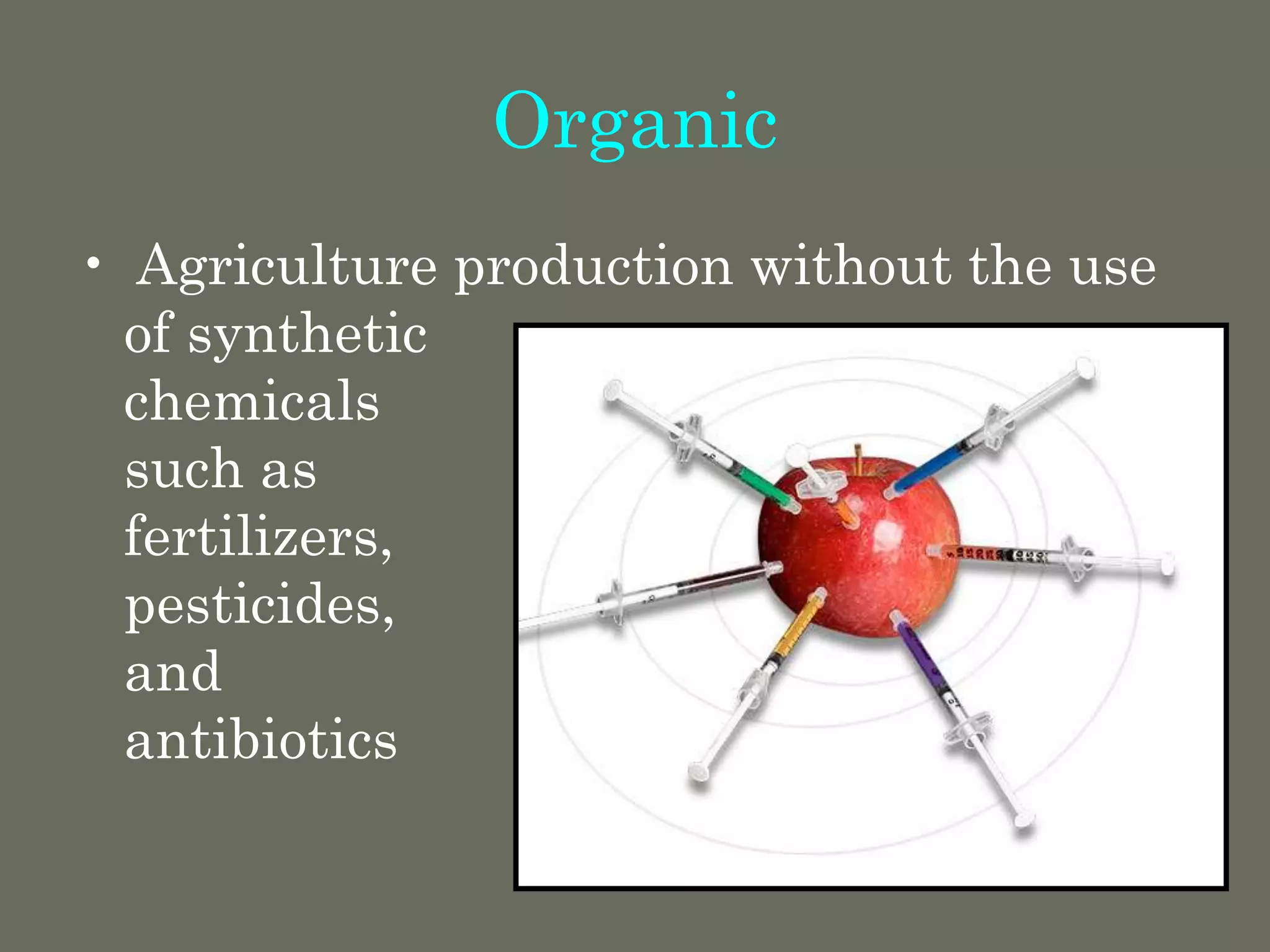
• Agriculture production without the use
of synthetic
chemicals
such as
fertilizers,
pesticides,
and
antibiotics
Biodynamic
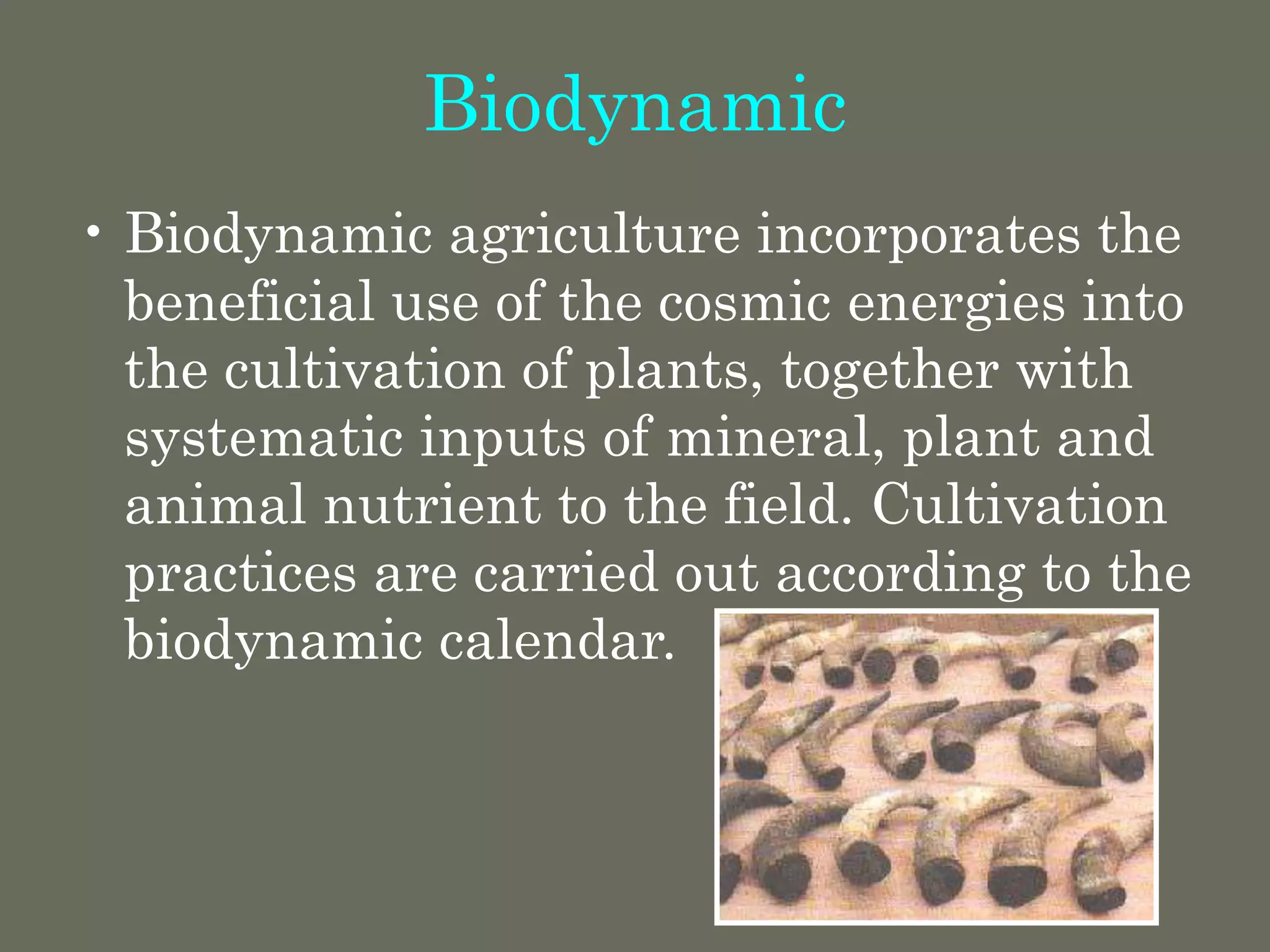
• Biodynamic agriculture incorporates the
beneficial use of the cosmic energies into
the cultivation of plants, together with
systematic inputs of mineral, plant and
animal nutrient to the field. Cultivation
practices are carried out according to the
biodynamic calendar.
Indore Process
It was observed in the course of these
studies that the maintenance of soil fertility is
the real basis of health and of resistance to
disease. The various parasites were found to
be only secondary matters: their activities
resulted from the breakdown of a complex
biological system -- the soil in its relation to
the plant and to the animal -- due to improper
methods of agriculture, an impoverished soil,
or to a combination of both.
Indore Process
• Two basic principles:
– 1. The admixture of vegetable and animal
wastes with a base for neutralizing acidity
– 2. The management of the mass so that the
micro-organisms which do the work can
function in the most effective manner
Anthroposophy
• “Wisdom of the human being”
• Path of self knowledge
• It is essentially a discipline by which to
see into the spiritual world.
Anthroposophy
• It is a path of knowledge, to guide the
Spiritual in the human being to the
Spiritual in the universe. It arises in
man as a need of the heart, of the life of
feeling; and it can be justified inasmuch
as it can satisfy this inner need.
Anthroposophy
• Teaches the methods/disciplines of
achieving spiritual, sense–free knowing
• Seeing of the inner core of every reality
• Knowledge of the higher or spiritual
world is made possible by the principle
of self that is referred to as the “Spirit,
Ego or I”
History
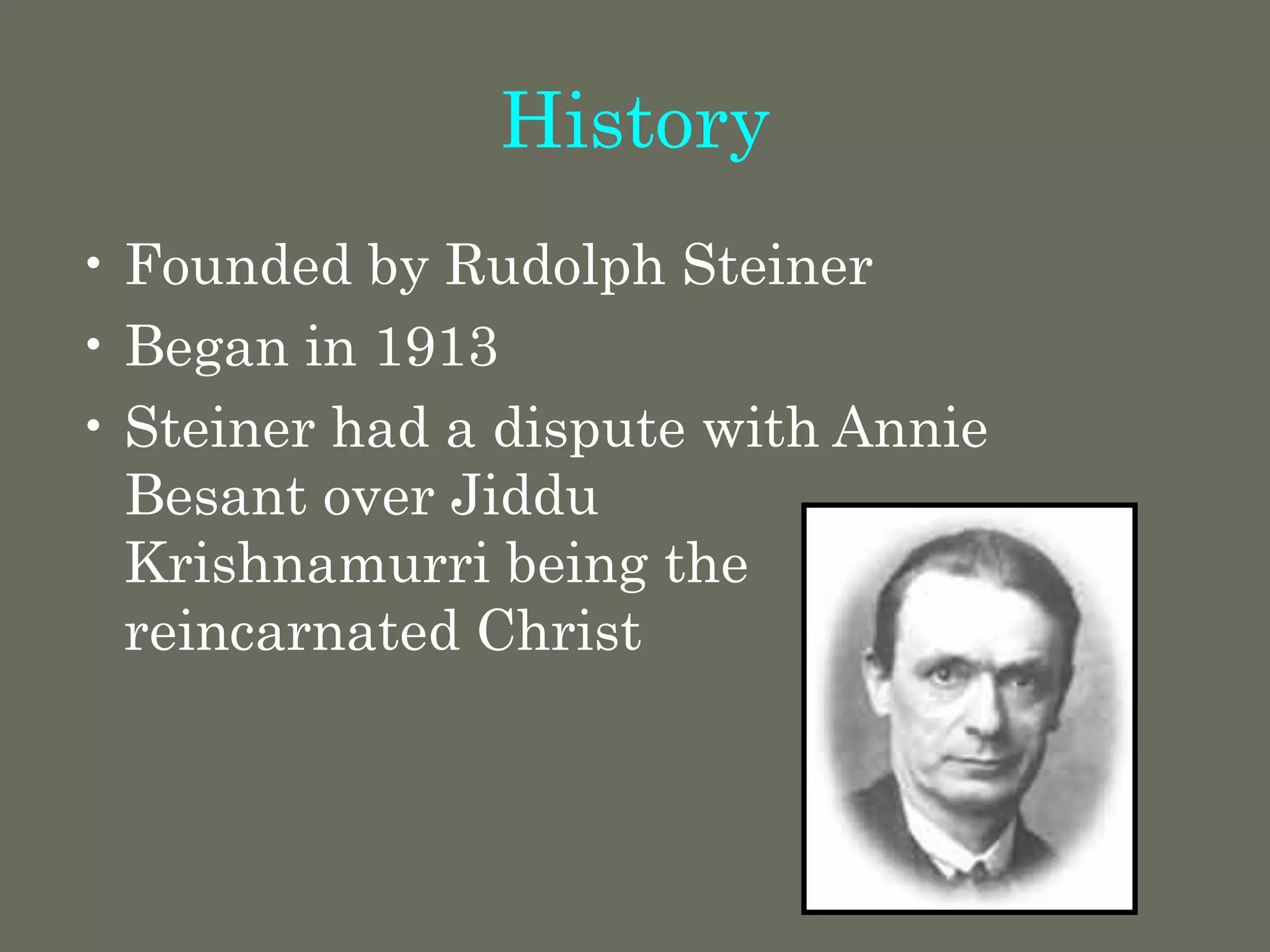
• Founded by Rudolph Steiner
• Began in 1913
• Steiner had a dispute with Annie
Besant over Jiddu
Krishnamurri being the
reincarnated Christ
Basic Principles6
• Broaden Our Perspective
• Reading the Book of Nature
• Cosmic Rhythms
• Plant Life is Intimately Bound Up with the
Life of the Soil
• A New View of Nutrition
• Medicine for the Earth: Biodynamic
Preparations
• The Farm as the Basic Unit of Agriculture
• Economic Based on Knowledge of the Job
Qualifications cont.
• To be a biodynamic agriculture farmer the
farmer must meet the qualifications of
Demeter
• Biological practices include a series of well
known farming techniques that increase the
quality of the soil
• Dynamic practices are intended to influence
biological as well as metaphysical aspects of
the farm and to adapt the farm to natural
rhythms
Qualifications cont.
• Demeter is the brand for products for
biodynamic agriculture
• Biodynamic preparations serve as the
core for the biodynamic method
Qualifications cont.
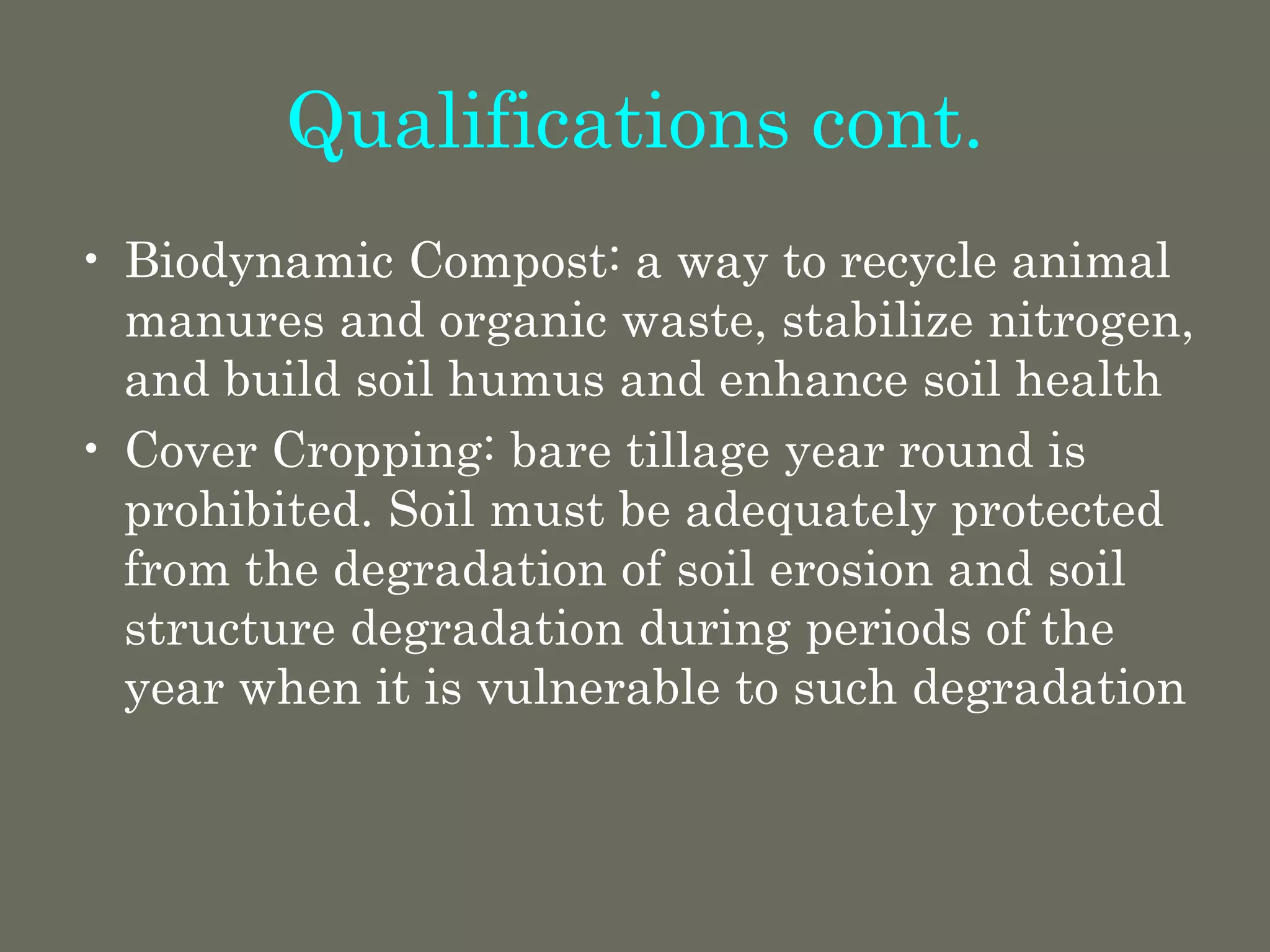
• Biodynamic Compost: a way to recycle animal
manures and organic waste, stabilize nitrogen,
and build soil humus and enhance soil health
• Cover Cropping: bare tillage year round is
prohibited. Soil must be adequately protected
from the degradation of soil erosion and soil
structure degradation during periods of the
year when it is vulnerable to such degradation
Qualifications cont.
• Crop Rotation- tillable acreage cannot be
planted only to monoculture. Botanical
species diversity must be maintained via
crop rotation strategies utilized.
• Biodynamic preparations are made from
medicinal herbs, minerals, and cow
dung.
Practices
• Nine basic preparations:
– #500 Horn Manure
– #501 Horn Silica
– #502 Yarrow
– #503 Chamomile
– #504 Stinging Nettles
– #505 Oak Bark
– #506 Dandelion Flowers
– #507 Valerian
– #508 Horsetail
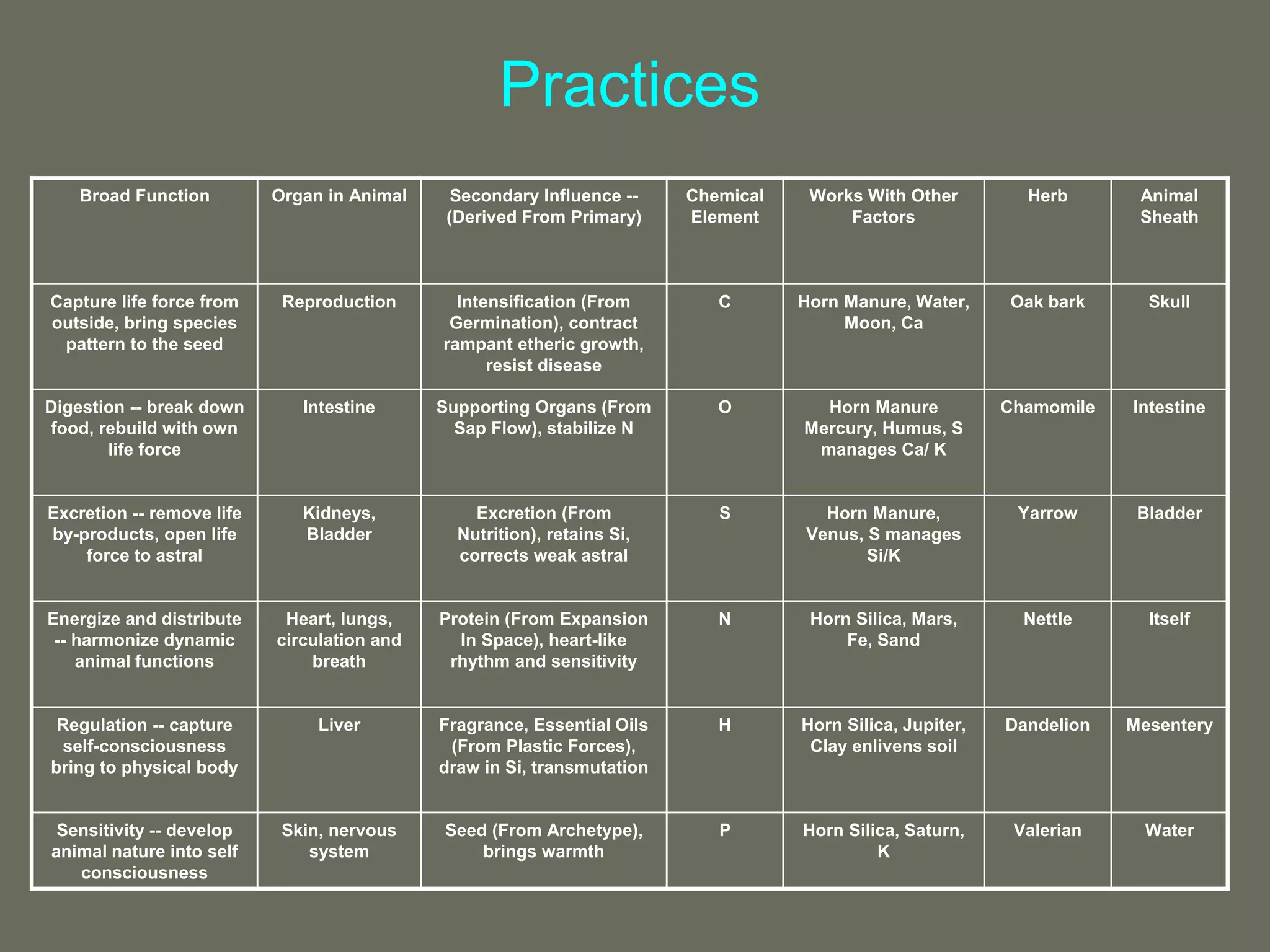
Broad Function Organ in Animal Secondary Influence --
(Derived From Primary)
Chemical
Element
Works With Other
Factors
Herb Animal
Sheath
Capture life force from
outside, bring species
pattern to the seed
Reproduction Intensification (From
Germination), contract
rampant etheric growth,
resist disease
C Horn Manure, Water,
Moon, Ca
Oak bark Skull
Digestion -- break down
food, rebuild with own
life force
Intestine Supporting Organs (From
Sap Flow), stabilize N
O Horn Manure
Mercury, Humus, S
manages Ca/ K
Chamomile Intestine
Excretion -- remove life
by-products, open life
force to astral
Kidneys,
Bladder
Excretion (From
Nutrition), retains Si,
corrects weak astral
S Horn Manure,
Venus, S manages
Si/K
Yarrow Bladder
Energize and distribute
-- harmonize dynamic
animal functions
Heart, lungs,
circulation and
breath
Protein (From Expansion
In Space), heart-like
rhythm and sensitivity
N Horn Silica, Mars,
Fe, Sand
Nettle Itself
Regulation -- capture
self-consciousness
bring to physical body
Liver Fragrance, Essential Oils
(From Plastic Forces),
draw in Si, transmutation
H Horn Silica, Jupiter,
Clay enlivens soil
Dandelion Mesentery
Sensitivity -- develop
animal nature into self
consciousness
Skin, nervous
system
Seed (From Archetype),
brings warmth
P Horn Silica, Saturn,
K
Valerian Water
Practices
Practices cont.
Farms in the United States
that Practice Biodynamic
Agriculture6
Eastern
Central
Mountain
Pacific and Hawaii
Eastern
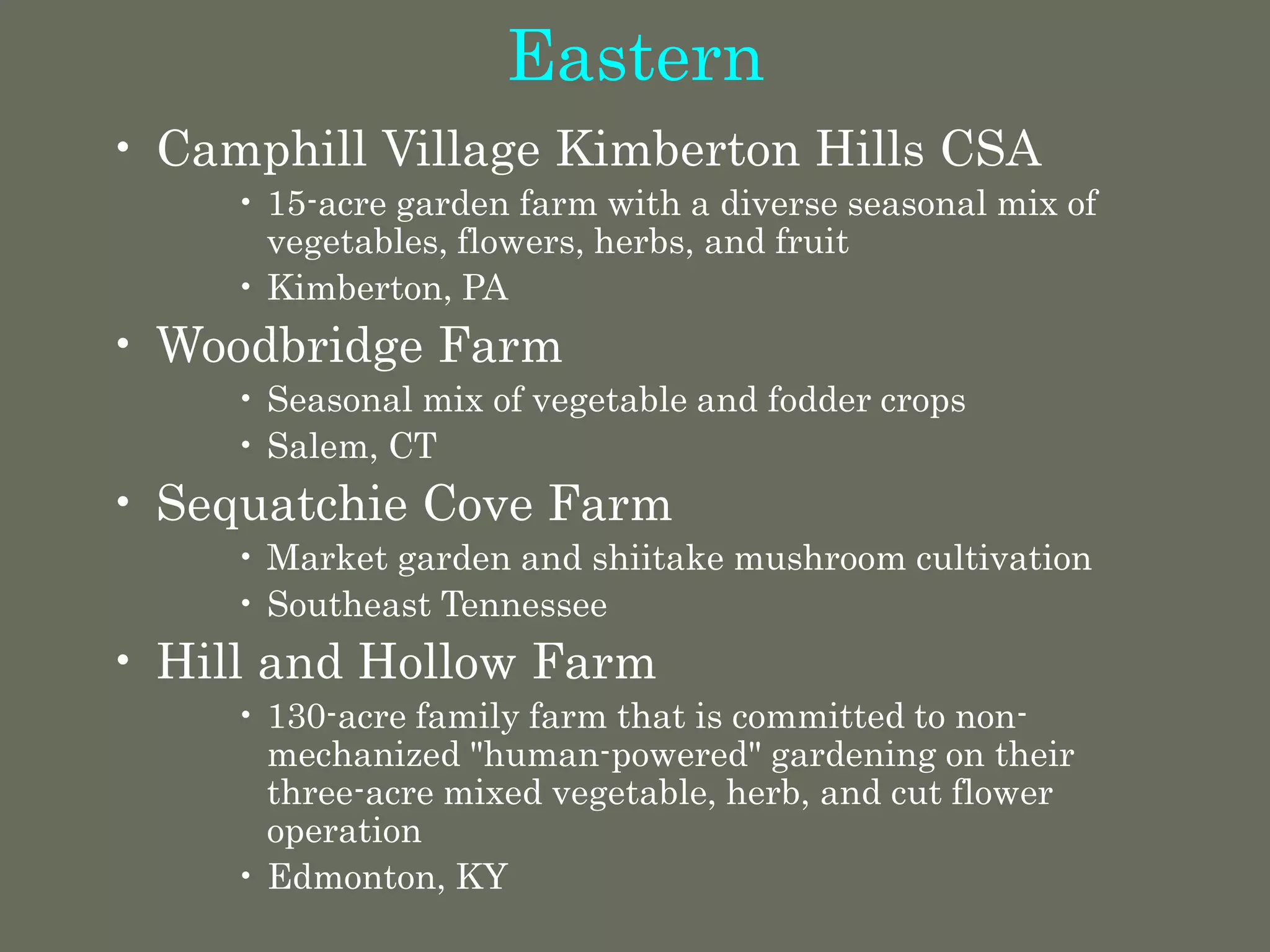
• Camphill Village Kimberton Hills CSA
• 15-acre garden farm with a diverse seasonal mix of
vegetables, flowers, herbs, and fruit
• Kimberton, PA
• Woodbridge Farm
• Seasonal mix of vegetable and fodder crops
• Salem, CT
• Sequatchie Cove Farm
• Market garden and shiitake mushroom cultivation
• Southeast Tennessee
• Hill and Hollow Farm
• 130-acre family farm that is committed to non-
mechanized "human-powered" gardening on their
three-acre mixed vegetable, herb, and cut flower
operation
• Edmonton, KY
Central
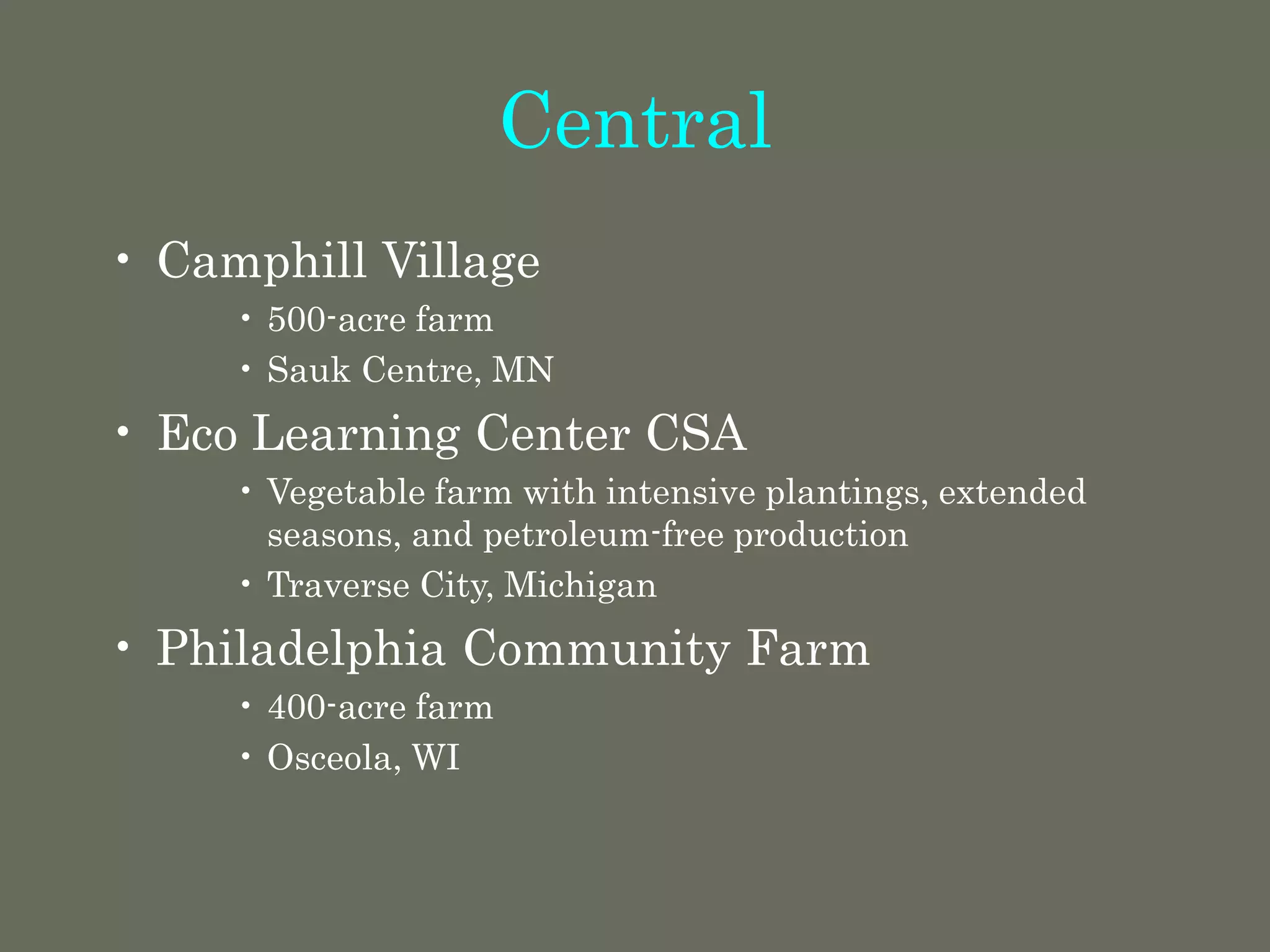
• Camphill Village
• 500-acre farm
• Sauk Centre, MN
• Eco Learning Center CSA
• Vegetable farm with intensive plantings, extended
seasons, and petroleum-free production
• Traverse City, Michigan
• Philadelphia Community Farm
• 400-acre farm
• Osceola, WI
Mountain
• Fat Duck Farm/Emma's Garden Farm
•Farms consists of pasture, vegetable gardens
and river bosque
•Northern New Mexico
• The Mountain School of Bellevue, Idaho
•1.4-acre model educational biodynamic garden
•Bellevue, Idaho
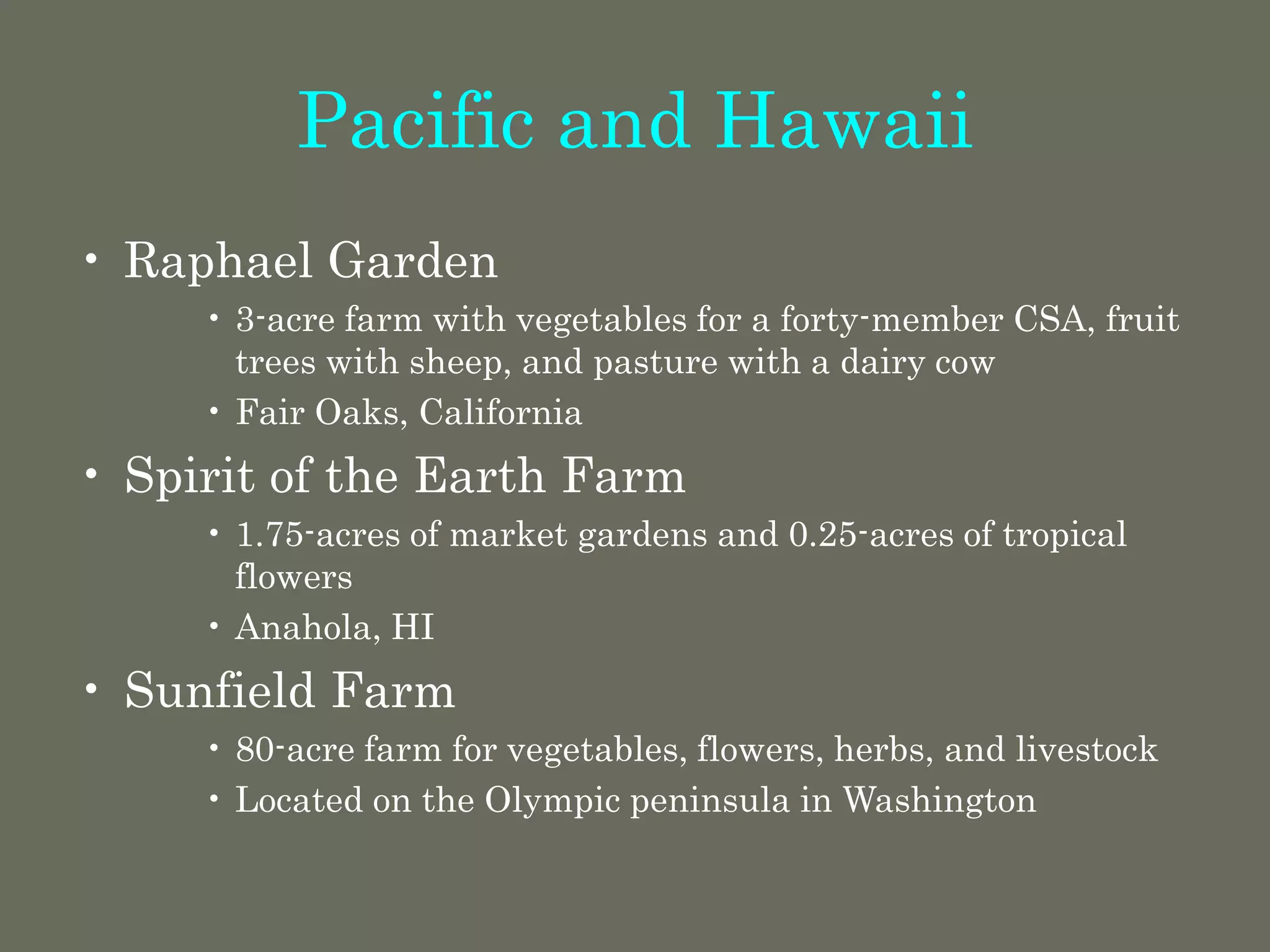
Pacific and Hawaii
• Raphael Garden
• 3-acre farm with vegetables for a forty-member CSA, fruit
trees with sheep, and pasture with a dairy cow
• Fair Oaks, California
• Spirit of the Earth Farm
• 1.75-acres of market gardens and 0.25-acres of tropical
flowers
• Anahola, HI
• Sunfield Farm
• 80-acre farm for vegetables, flowers, herbs, and livestock
• Located on the Olympic peninsula in Washington
Advantages of Biodynamic
Agriculture
• Good for the Environment
• Improvement in Soil Quality
• Societal Benefits
• Healthier for the Consumer
• Higher Annual Yields
Environmental Benefits
• Total Elimination of Toxic Chemicals
• Conservation of Water
• Improvement in Water Quality
• Conservation for Wildlife
• Reductions in Energy Use
• Improvement in Air Quality
• Plant Species Co-Mingling
• Insect Habitats
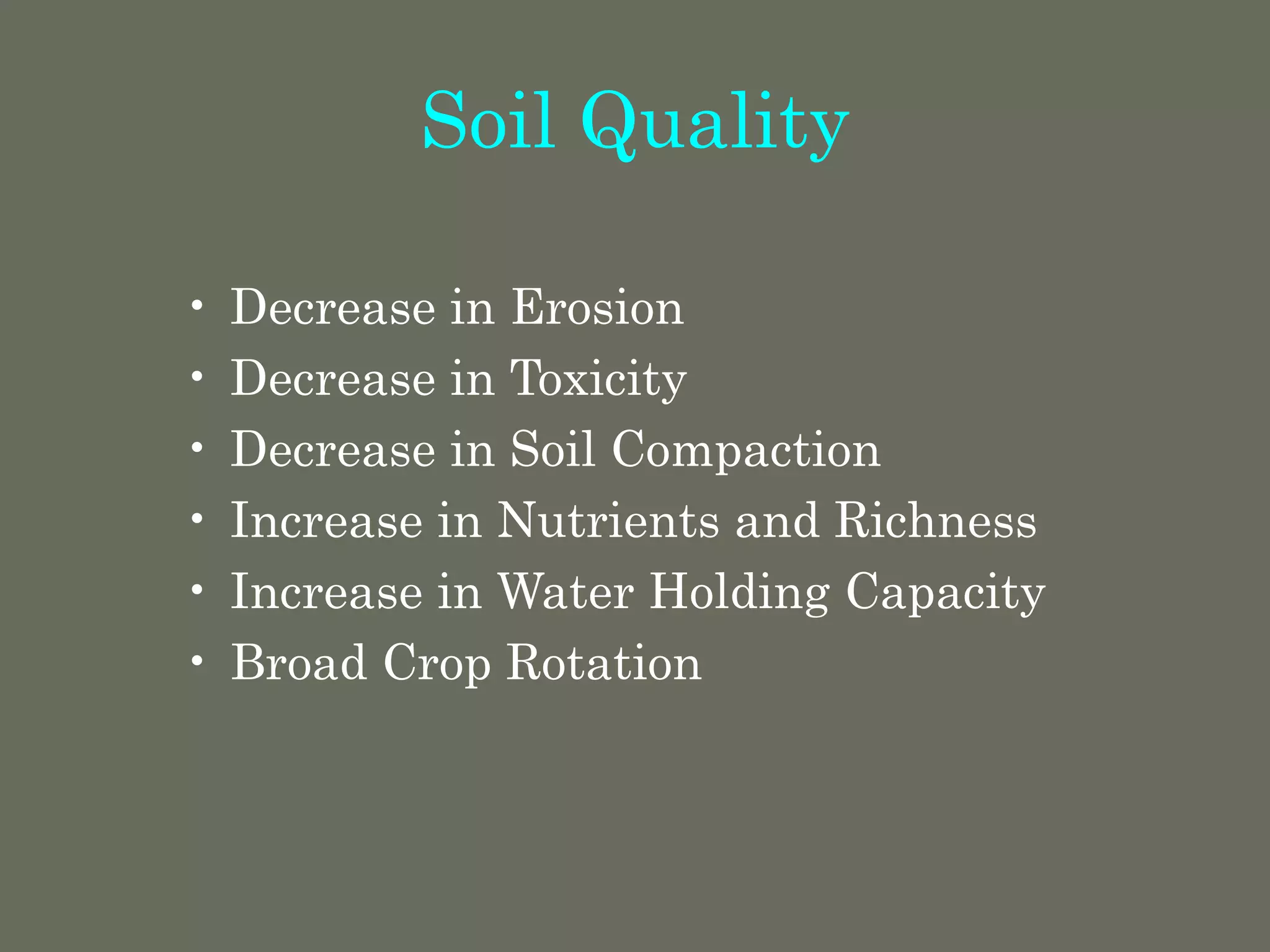
Soil Quality
• Decrease in Erosion
• Decrease in Toxicity
• Decrease in Soil Compaction
• Increase in Nutrients and Richness
• Increase in Water Holding Capacity
• Broad Crop Rotation
Table 1: Soil Characteristics of Different Agricultural
Systems of Manuring over 18 years7
Treatment Full B-D Crude
Manure
½ Manure: ½
NPK
Control Fertilizer NPK NPK
Fertilizer: kg
N/ha/year
82 93 61 0 56 111
Yields (t/ha cereals) 4.86 4.90 5.03 3.77 4.83 4.87
Bulk Density of Soil:
Top Layer 1.14 1.09 1.10 1.10 1.14 1.16
Subsoil 1.33 1.29 1.42 1.50 1.51 1.48
Organic Matter
(total N):
Topsoil (%N) 0.24 0.24 0.25 0.25 0.26 0.26
Subsoil (%N) 0.14 0.17 0.08 0.16 0.12 0.09
Earthworm burrows >
1.5mm/m2
100 111 53 22 11 16
mg CO2/100g of soil 125 108 91 83 75 81
Dehydrogenase,
TPF/10g soil
547 377 302 213 211 258
Study on the Quality of
Two Soil Samples8
Left: Original degraded soil
Right: Soil after two years of Biodynamic farming
Study of the Effect of Soil Quality on Plants
grown under different conditions8
• Left: control plant
• Center: with chemical fertilizers
• Right: in Biodynamic soil
Societal Benefits
• Towards Community Based
Farming/Small-scale Farming
• Alternative to large-scale, industrial
farming
• Better for the Local Economy
• Cuts out the Middle Man
• No Hierarchy
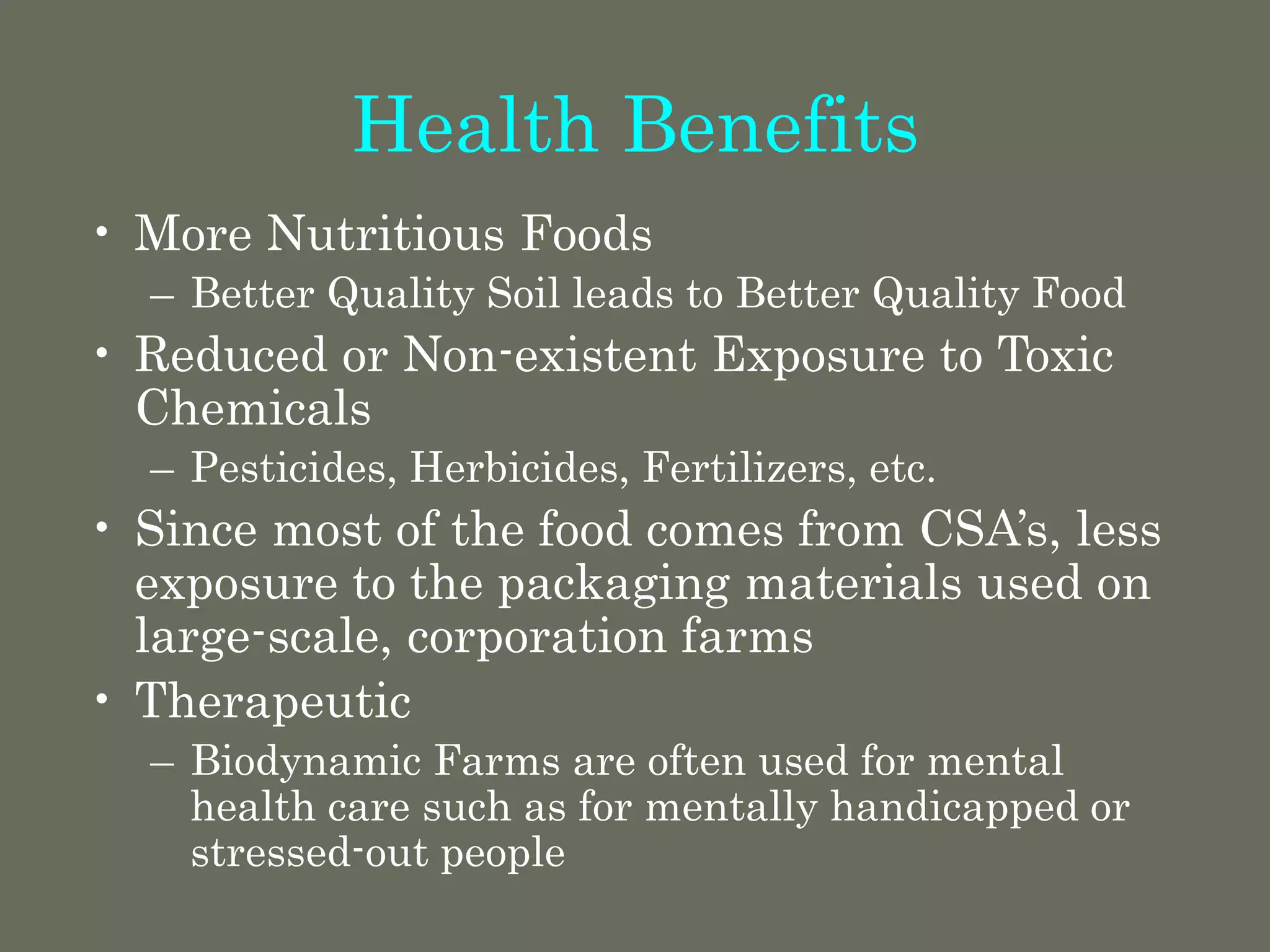
Health Benefits
• More Nutritious Foods
– Better Quality Soil leads to Better Quality Food
• Reduced or Non-existent Exposure to Toxic
Chemicals
– Pesticides, Herbicides, Fertilizers, etc.
• Since most of the food comes from CSA’s, less
exposure to the packaging materials used on
large-scale, corporation farms
• Therapeutic
– Biodynamic Farms are often used for mental
health care such as for mentally handicapped or
stressed-out people
Yields from Biodynamic Agriculture
Control B-D
Wheat:
Grains 4.17 4.55
Straw 4.49 5.51
Sugar Beets:
Roots 7.49 8.52
Leaves 4.39 4.93
Carrots:
Roots 9.36 10.06
Leaves 6.60 6.75
Table 2: Comparative Yields of Wheat, Sugar Beets, and
Carrots in Tons/Hectare of Dry Matter9
Disadvantages of
Biodynamic Agriculture
• Small scale
– Agriculture today is about “mass production”
– Limited Distribution
• Labor Intensive
• More Expensive for the Consumer
• Against the Mainstream
– Difficult to persuade people away from
corporation farming due to an overall lack of
environmental concern in our society
– The cosmic aspects of the practice could possibly
frighten or deter people from becoming involved
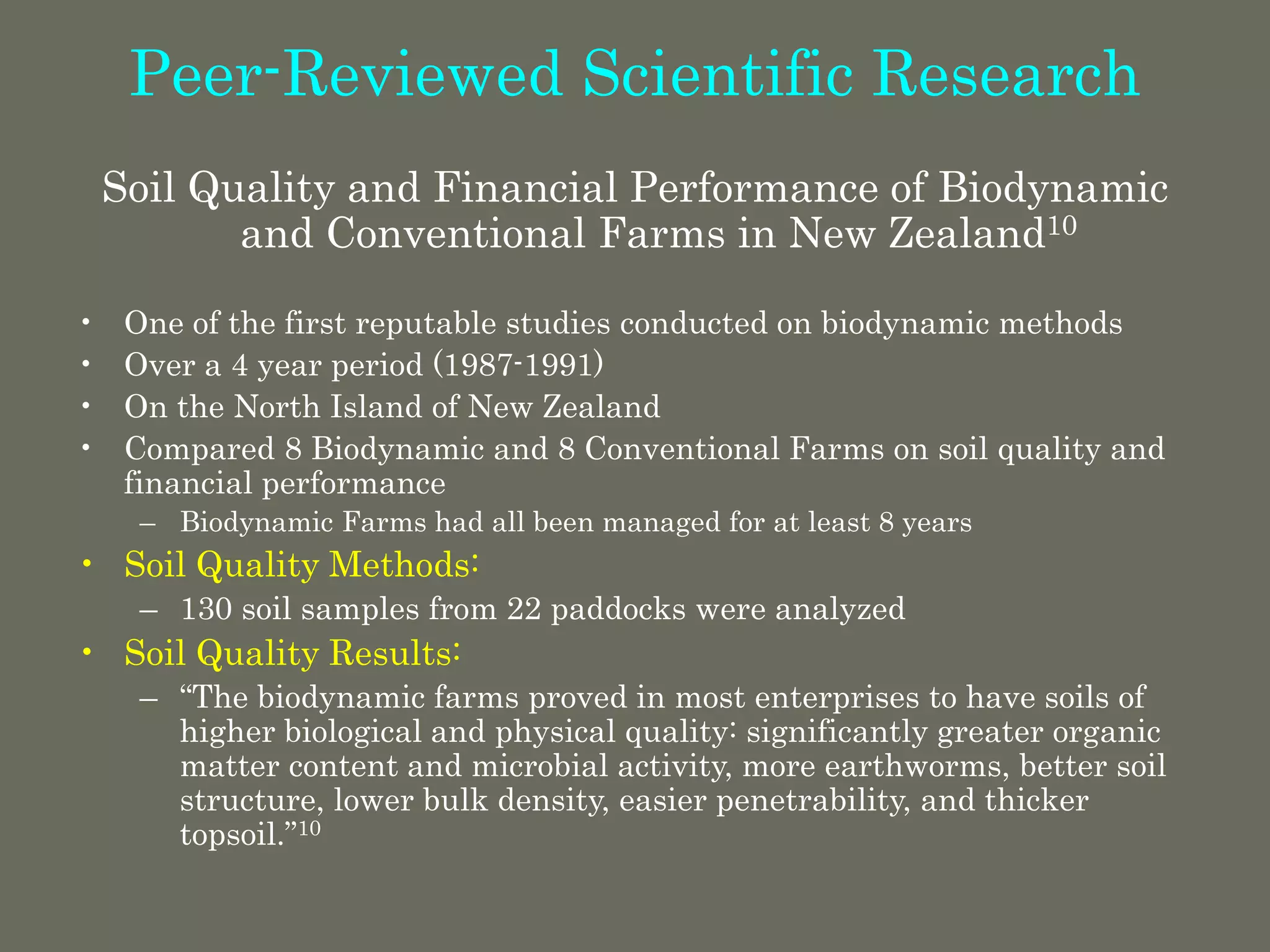
Peer-Reviewed Scientific Research
Soil Quality and Financial Performance of Biodynamic
and Conventional Farms in New Zealand10
• One of the first reputable studies conducted on biodynamic methods
• Over a 4 year period (1987-1991)
• On the North Island of New Zealand
• Compared 8 Biodynamic and 8 Conventional Farms on soil quality and
financial performance
– Biodynamic Farms had all been managed for at least 8 years
• Soil Quality Methods:
– 130 soil samples from 22 paddocks were analyzed
• Soil Quality Results:
– “The biodynamic farms proved in most enterprises to have soils of
higher biological and physical quality: significantly greater organic
matter content and microbial activity, more earthworms, better soil
structure, lower bulk density, easier penetrability, and thicker
topsoil.”10
Soil Property All B-D Farms All Conv. Farms
Bulk Density (Mg/m3) 1.07 1.15*
Penetration resistance (0-20 cm) (MPa) 2.84 3.18*
Penetration resistance (20-40 cm) (MPa) 3.55* 3.52
Topsoil thickness (cm) (includes surface and subsurface horizons) 22.8* 20.6
C (%) 4.84* 4.27
Respiration (microL O2 h-1 g-1) 73.7* 55.4
Mineralizable nitrogen (mg/kg) 140.0* 105.9
Ratio of mineralizable N to C (mg min N/g C) 2.99* 2.59
Cation exchange capacity (cmol/kg) 21.5* 19.6
Total N (mg/kg) 4840* 4260
Total P (mg/kg) 1560 1640
Extractable P (mg/kg) 45.7 66.2*
Extractable S (mg/kg) 10.5 21.5*
Extractable Ca (cmol/kg) 12.8 13.5
Extractable Mg (cmol/kg) 1.71 1.68
Extractable K (cmol/kg) 0.97 1.00
pH 6.10 6.29*
*indicates a significantly higher value
Table 3: Mean Values of Aggregated Soils Data10
Research cont.
Financial Performance
• Methods:
– Farmers were interviewed and their accounts
analyzed
• Results:
– The biodynamic citrus, livestock, and dairy farms
were able to secure reliable markets for their
products
– “Gross margins for the biodynamic market garden
were less than for the conventional counterpart in
1988 and 1989 but greater in 1990 and 1991.”10
– Developing markets, improved productivity, and
farm management have helped increase returns for
biodynamic market gardens
Research cont.
Biological Farming for Sustainable Agriculture
Production11
• “Study conducted to compare organic, biodynamic, integrated,
and conventional broadacre farming systems for attributes of
sustainability”11
• Conducted in 1989 and spanned a 6 year period
• Took place at Roseworthy campus in Australia
• Methods:
– Monitored indicators such as soil physical, chemical, and biological changes,
product quality, economics, crop water usage, and energy requirements
• Results for the biodynamic farming system:
– Biodynamic treatment had the highest gross margins
– Available P levels declined 12%
– Weed management the main problem for increasing production levels
Research cont.
Biodynamic vs. Conventional Farming Effects on Soil
Structure Expressed by Simulated Potential
Productivity12
• “Conducted to compare two farming systems by converting ‘static’
basic soil properties into a ‘dynamic’ assessment using simulation
modeling”12
• Soils on four fields on two farms were analyzed
– Southwestern part of the Netherlands
– Sampling took place in 1996
– Both farms had been practicing their management systems for about
70 years
• Methods:
– Four procedures were used to express differences in soil structure as
a function of different management
– WAVE simulation model used to predict potato yields
Research cont.
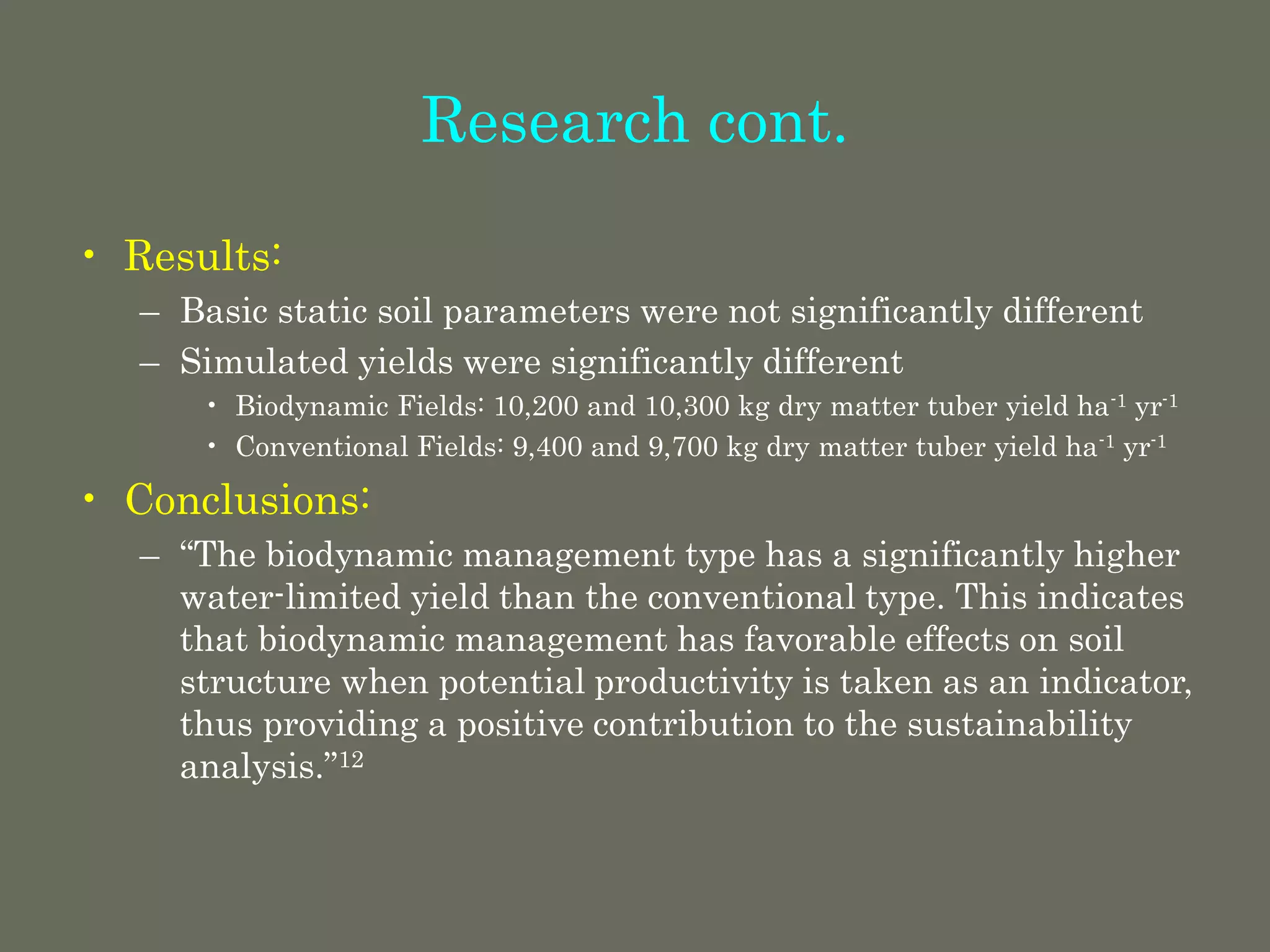
• Results:
– Basic static soil parameters were not significantly different
– Simulated yields were significantly different
• Biodynamic Fields: 10,200 and 10,300 kg dry matter tuber yield ha-1 yr-1
• Conventional Fields: 9,400 and 9,700 kg dry matter tuber yield ha-1 yr-1
• Conclusions:
– “The biodynamic management type has a significantly higher
water-limited yield than the conventional type. This indicates
that biodynamic management has favorable effects on soil
structure when potential productivity is taken as an indicator,
thus providing a positive contribution to the sustainability
analysis.”12
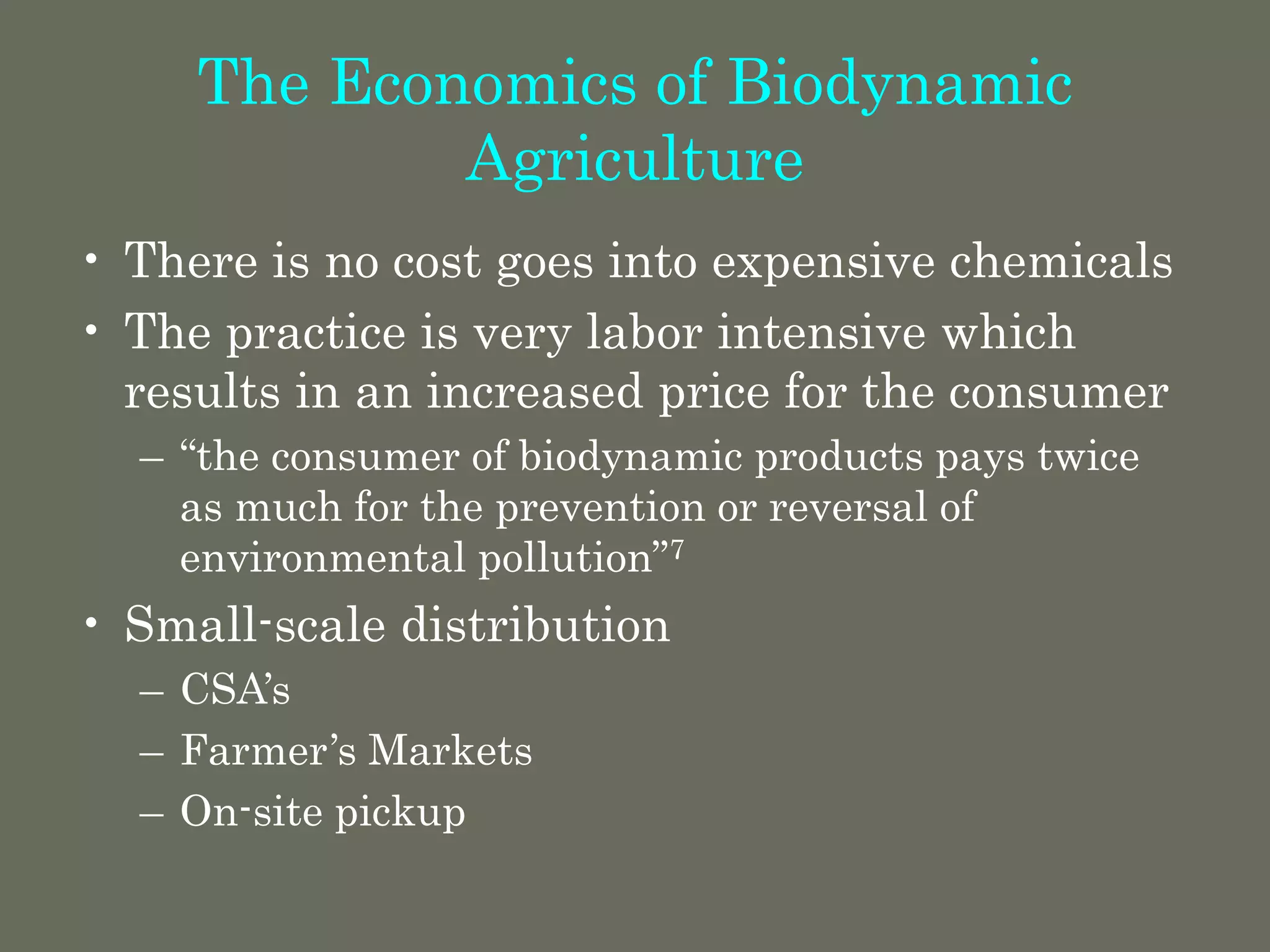
The Economics of Biodynamic
Agriculture
• There is no cost goes into expensive chemicals
• The practice is very labor intensive which
results in an increased price for the consumer
– “the consumer of biodynamic products pays twice
as much for the prevention or reversal of
environmental pollution”7
• Small-scale distribution
– CSA’s
– Farmer’s Markets
– On-site pickup
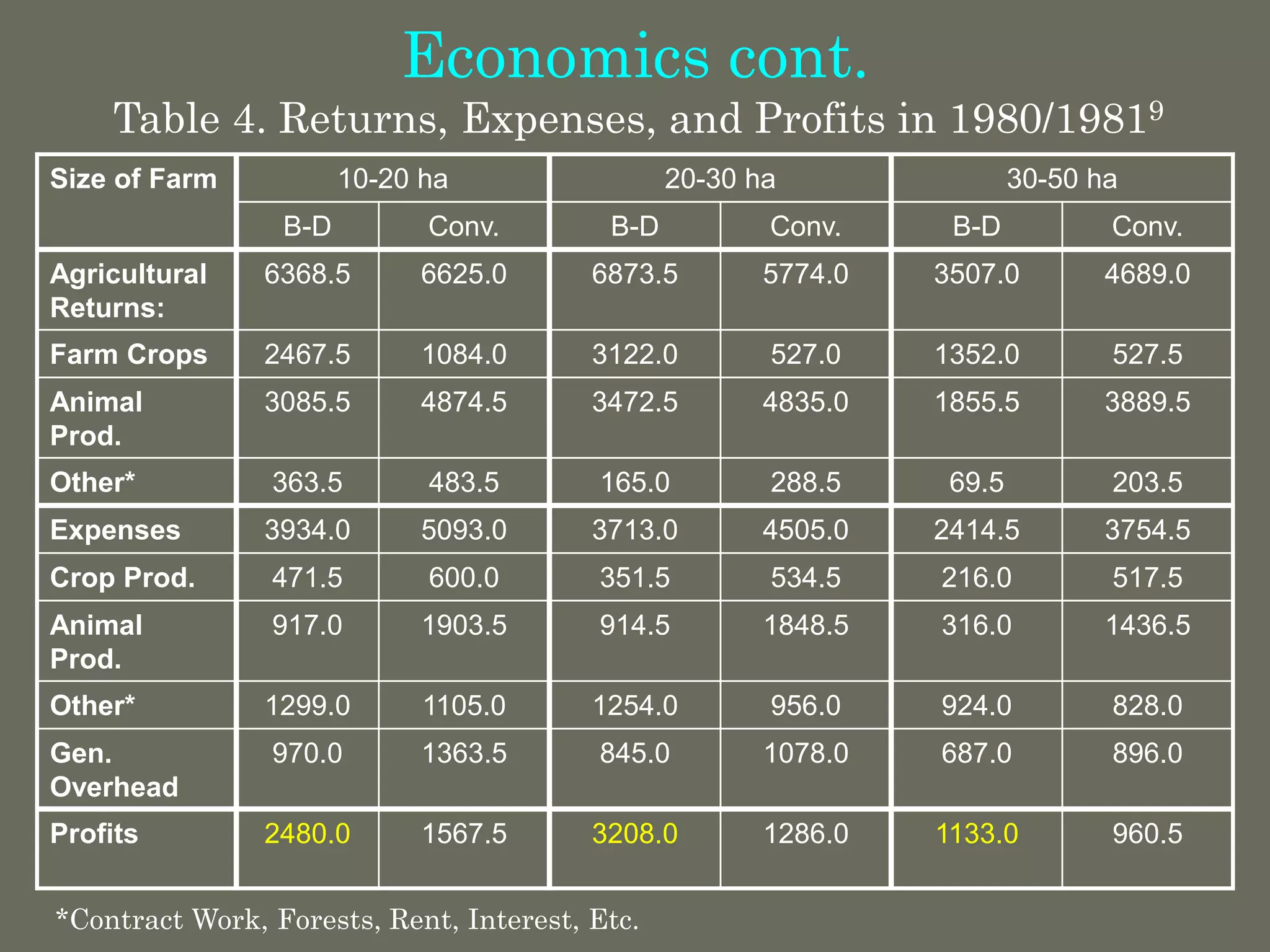
Economics cont.
Size of Farm 10-20 ha 20-30 ha 30-50 ha
B-D Conv. B-D Conv. B-D Conv.
Agricultural
Returns:
6368.5 6625.0 6873.5 5774.0 3507.0 4689.0
Farm Crops 2467.5 1084.0 3122.0 527.0 1352.0 527.5
Animal
Prod.
3085.5 4874.5 3472.5 4835.0 1855.5 3889.5
Other* 363.5 483.5 165.0 288.5 69.5 203.5
Expenses 3934.0 5093.0 3713.0 4505.0 2414.5 3754.5
Crop Prod. 471.5 600.0 351.5 534.5 216.0 517.5
Animal
Prod.
917.0 1903.5 914.5 1848.5 316.0 1436.5
Other* 1299.0 1105.0 1254.0 956.0 924.0 828.0
Gen.
Overhead
970.0 1363.5 845.0 1078.0 687.0 896.0
Profits 2480.0 1567.5 3208.0 1286.0 1133.0 960.5
*Contract Work, Forests, Rent, Interest, Etc.
Table 4. Returns, Expenses, and Profits in 1980/19819
Economics cont.
Costs and Yields Biodynamic Farm Conventional Farm
Expenses for fertilizers or
materials for
preparations and straw
(DM/ha/year)
7.70 147.00
Yields: Grains
(kg/ha/year)
3600 2900
Hectares per Worker 10.80 9.70
Income per Hectare (DM) 1800.00 1111.00
Income per worker per
year (DM)
18750.00 10760.00
Table 5: Farming costs and yields: Conventional
and biodynamic7
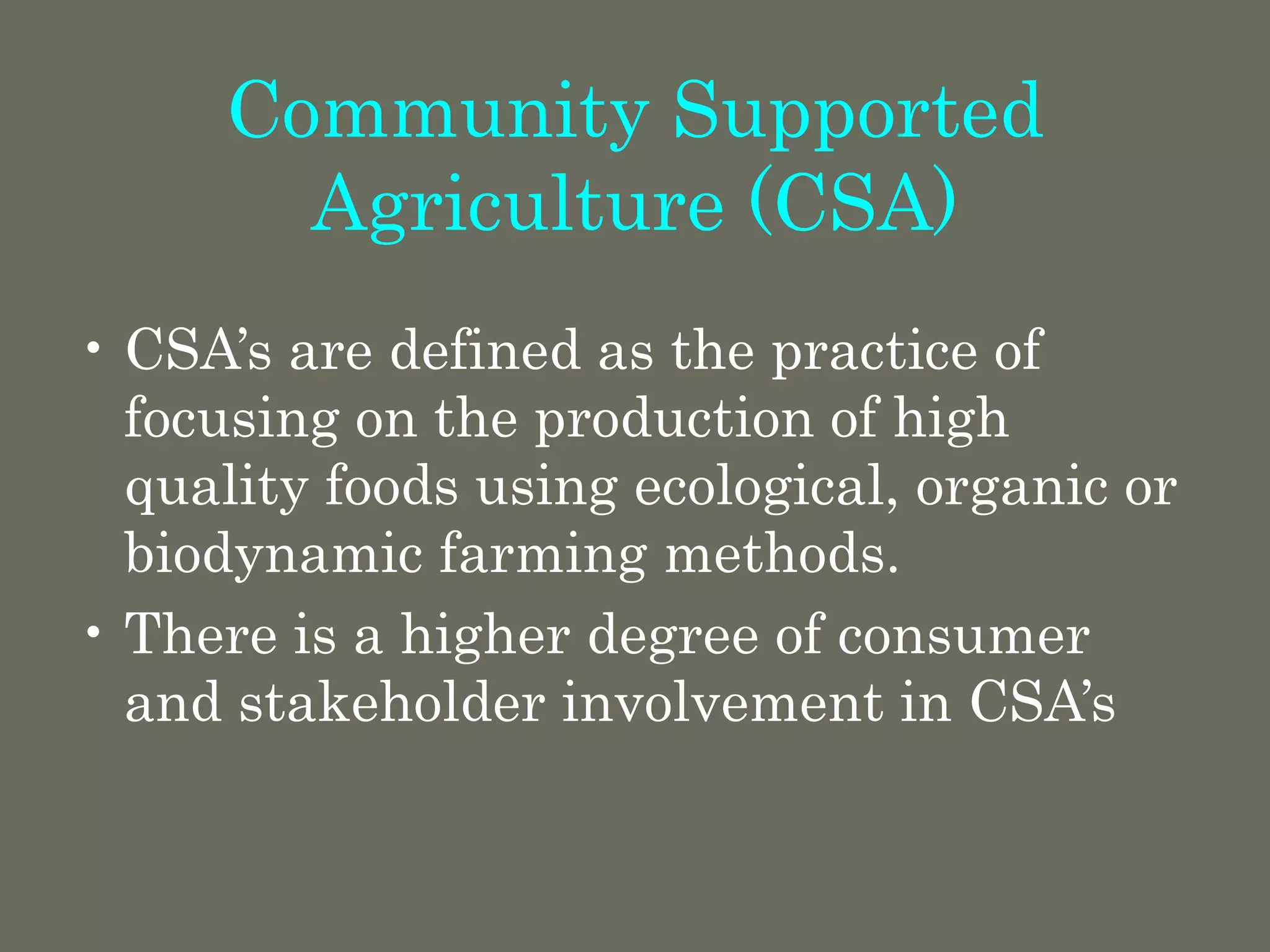
Community Supported
Agriculture (CSA)
• CSA’s are defined as the practice of
focusing on the production of high
quality foods using ecological, organic or
biodynamic farming methods.
• There is a higher degree of consumer
and stakeholder involvement in CSA’s
CSA’s cont.
CSA’s Main Concept:
• Producing a variety of products for a set
number of weeks a year
• A pricing system where the producers and
consumers agree on the acceptance of the
budget
• A ‘shared risk and reward’ agreement
where the consumers accept the
fluctuations in growing seasons
Additionally, most CSA’s produce vegetables
that are location and season specific
– i.e. lettuce in the spring and melons in late
summer
CSA’s Near You
• Heifer International in Perryville, AR
– Organic Garden is also a CSA
•Weekly deliveries to Little Rock in the Summer
•Or you can go and pick up your bushel on site
•Phone Number: 1-501-889-5124
Biodynamic Products Online
• Biodynamic Farms have websites that
sell their produce online to the
surrounding area such as:
– Marian Farms in San Joaquin Valley,
California
•http://marianfarmsbiodynamic.com/products.php
– American Health & Nutrition/The Organic
Harvest in Ann Arbor, MI
•www.theorganicharvest.com
Summary
• Biodynamic agriculture is a branch of sustainable agriculture
that is commonly practiced in Europe and the United States.
• It gained it’s popularity after WWII.
• It’s advantages include being good for the environment,
improvement in soil quality, societal benefits, healthier for the
consumer, and higher annual yields.
• It’s disadvantages include being small scale, labor intensive,
more expensive for the consumer, and against the mainstream.
• Research has shown that in several cases, biodynamic
agriculture has proven to be advantageous in terms of yields and
soil quality.
• The economics of the practice shows little to no output for
chemicals, but it is very labor intensive. The large labor force
required and small-scale operation leads to an increased cost for
the consumer.
References
1. http://images.usatoday.com/news/_photos/2006/06/29/crop-duster-mtopper.jpg
2. http://www.ens-newswire.com/ens/feb2006/20060227_sprayer.jpg
3. http://www.nutrition4health.org/NOHAnews/NNS95ContaminatedDrinkingWater.
htm
4. http://www.physicalgeography.net/fundamentals/9s.html
5. http://www.nal.usda.gov/afsic/AFSIC_pubs/srb9902.htm
6. http://www.biodynamics.com/biodynamics.html
7. Schilthuis, W. Biodynamic Agriculture. Anthrophosophic Press, New York, 1994.
8. http://www.fesflowers.com/Demeter.htm
9. Koeph, H.H. Research in Biodynamic Agriculture: Methods and Results. Bio-
Dynamic Farming and Gardening Association, Inc. Kimberton, PA, 1993.
10. Reganold, J.P.; Palmer, A.S.; Lockhart, J.C.; & Macgregor, A.N. Soil Quality and
Financial Performance of Biodynamic and Conventional Farms in New Zealand.
Science 260; 344-349, 1993.
11. Penfold, C.M.; Miyan, M.S.; Reeves, T.G.; & Grierson, I.T. Biological Farming for
Sustainable Agricultural Production. Australian Journal of Experimental
Agriculture 35; 849-856, 1995.
12. Droogers, P. & Bouma, J. Biodynamic vs. Conventional Farming Effects on Soil
Structure Expressed by Simulated Potential Productivity. Soil Science Society of
America Journal 60; 1552-1558, 1996.
13. http://marianfarmsbiodynamic.com/csa.php
14. http://www.organicconsumers.org/biodynamics.cfm
15. http://www.sare.org/
16. http://www.sarep.ucdavis.edu/concept.htm#Top
References
17. http://www.demeter.org
18. http://www.sunbridge.edu/home/
anthroposophy.asp
19. http://www.themystica.org/mystica/articles/
a/anthroposophy.html
20. http://www.pantheon.org/articles/d/
demeter.html
21. http://oregonbd.org/Class/Mod4.htm
22. http://www.attra.org/attra-pub/
biodynamic.html
Questions???

Biodynamic Agriculture Presentation.ppt

  • 1.
    Biodynamic Agriculture Economic Botany Dr.Uma Garimella April 19, 2007
  • 2.
  • 3.
    Sustainable Agriculture • Movementthat emerged in the 1970’s • Serves to address the Environmental and Social concerns brought on by modern, industrial agriculture • Three Main Goals: – Environmental Stewardship – Farm Profitability – Prosperous Farming Communities
  • 4.
    Concerns with IndustrialAgriculture: • Nutrient depletion and erosion of topsoil • Soil compaction and decreased water holding capacity • Overuse of chemicals such as pesticides, herbicides, and fertilizers • Pesticide resistant insects • Loss of wetlands, wildlife habitat, tropical rainforests, and native vegetation • Reduced genetic diversity due to genetic uniformity of crops • Groundwater contamination due to sediments, salts, fertilizers, pesticides, and manures • Overuse of surface and groundwater for irrigation • The decline of family farms • Increasing costs of production • Toxic residues found on foods
  • 5.
    Figure 1: CropDuster1 Figure 2: Eutrophication3 Figure 3: Field Sprayer2
  • 6.
    Figure 4: Pointand Non-point sources of Water Pollution3
  • 7.
    Figure 5: TheNitrogen Cycle4
  • 8.
    Sustainable Agriculture Legislation • Congress’s1990 “Farm Bill” stated that: – “the term sustainable agriculture means an integrated system of plant and animal production practices having a site-specific application that will, over the long term: • satisfy human food and fiber needs • enhance environmental quality and the natural resource base upon which the agricultural economy depends • make the most efficient use of nonrenewable resources and on-farm resources and integrate, where appropriate, natural biological cycles and controls • sustain the economic viability of farm operations • enhance the quality of life for farmers and society as a whole.”5
  • 9.
    Sustainable Agriculture Legislation cont. •USDA’s 1996 Sustainable Agriculture Policy – The "USDA is committed to working toward the economic, environmental, and social sustainability of diverse food, fiber, agriculture, forest, and range systems. USDA will balance goals of improved production and profitability, stewardship of the natural resource base and ecological systems, and enhancement of the vitality of rural communities. USDA will integrate these goals into its policies and programs, particularly through interagency collaboration, partnerships and outreach.”5
  • 10.
    Sustainable Agriculture cont. Dividedinto three branches: 1. Organic 2. Biodynamic 3. Indore Process
  • 11.
    Organic An ecological productionmanagement system that promotes and enhances biodiversity, biological cycles and soil biological activity. It is based on minimal use of off-farm inputs and on management practices that restore, maintain and enhance ecological harmony.
  • 12.
    Organic • Agriculture productionwithout the use of synthetic chemicals such as fertilizers, pesticides, and antibiotics
  • 13.
    Biodynamic • Biodynamic agricultureincorporates the beneficial use of the cosmic energies into the cultivation of plants, together with systematic inputs of mineral, plant and animal nutrient to the field. Cultivation practices are carried out according to the biodynamic calendar.
  • 14.
    Indore Process It wasobserved in the course of these studies that the maintenance of soil fertility is the real basis of health and of resistance to disease. The various parasites were found to be only secondary matters: their activities resulted from the breakdown of a complex biological system -- the soil in its relation to the plant and to the animal -- due to improper methods of agriculture, an impoverished soil, or to a combination of both.
  • 15.
    Indore Process • Twobasic principles: – 1. The admixture of vegetable and animal wastes with a base for neutralizing acidity – 2. The management of the mass so that the micro-organisms which do the work can function in the most effective manner
  • 16.
    Anthroposophy • “Wisdom ofthe human being” • Path of self knowledge • It is essentially a discipline by which to see into the spiritual world.
  • 17.
    Anthroposophy • It isa path of knowledge, to guide the Spiritual in the human being to the Spiritual in the universe. It arises in man as a need of the heart, of the life of feeling; and it can be justified inasmuch as it can satisfy this inner need.
  • 18.
    Anthroposophy • Teaches themethods/disciplines of achieving spiritual, sense–free knowing • Seeing of the inner core of every reality • Knowledge of the higher or spiritual world is made possible by the principle of self that is referred to as the “Spirit, Ego or I”
  • 19.
    History • Founded byRudolph Steiner • Began in 1913 • Steiner had a dispute with Annie Besant over Jiddu Krishnamurri being the reincarnated Christ
  • 20.
    Basic Principles6 • BroadenOur Perspective • Reading the Book of Nature • Cosmic Rhythms • Plant Life is Intimately Bound Up with the Life of the Soil • A New View of Nutrition • Medicine for the Earth: Biodynamic Preparations • The Farm as the Basic Unit of Agriculture • Economic Based on Knowledge of the Job
  • 21.
    Qualifications cont. • Tobe a biodynamic agriculture farmer the farmer must meet the qualifications of Demeter • Biological practices include a series of well known farming techniques that increase the quality of the soil • Dynamic practices are intended to influence biological as well as metaphysical aspects of the farm and to adapt the farm to natural rhythms
  • 22.
    Qualifications cont. • Demeteris the brand for products for biodynamic agriculture • Biodynamic preparations serve as the core for the biodynamic method
  • 23.
    Qualifications cont. • BiodynamicCompost: a way to recycle animal manures and organic waste, stabilize nitrogen, and build soil humus and enhance soil health • Cover Cropping: bare tillage year round is prohibited. Soil must be adequately protected from the degradation of soil erosion and soil structure degradation during periods of the year when it is vulnerable to such degradation
  • 24.
    Qualifications cont. • CropRotation- tillable acreage cannot be planted only to monoculture. Botanical species diversity must be maintained via crop rotation strategies utilized. • Biodynamic preparations are made from medicinal herbs, minerals, and cow dung.
  • 25.
    Practices • Nine basicpreparations: – #500 Horn Manure – #501 Horn Silica – #502 Yarrow – #503 Chamomile – #504 Stinging Nettles – #505 Oak Bark – #506 Dandelion Flowers – #507 Valerian – #508 Horsetail
  • 26.
    Broad Function Organin Animal Secondary Influence -- (Derived From Primary) Chemical Element Works With Other Factors Herb Animal Sheath Capture life force from outside, bring species pattern to the seed Reproduction Intensification (From Germination), contract rampant etheric growth, resist disease C Horn Manure, Water, Moon, Ca Oak bark Skull Digestion -- break down food, rebuild with own life force Intestine Supporting Organs (From Sap Flow), stabilize N O Horn Manure Mercury, Humus, S manages Ca/ K Chamomile Intestine Excretion -- remove life by-products, open life force to astral Kidneys, Bladder Excretion (From Nutrition), retains Si, corrects weak astral S Horn Manure, Venus, S manages Si/K Yarrow Bladder Energize and distribute -- harmonize dynamic animal functions Heart, lungs, circulation and breath Protein (From Expansion In Space), heart-like rhythm and sensitivity N Horn Silica, Mars, Fe, Sand Nettle Itself Regulation -- capture self-consciousness bring to physical body Liver Fragrance, Essential Oils (From Plastic Forces), draw in Si, transmutation H Horn Silica, Jupiter, Clay enlivens soil Dandelion Mesentery Sensitivity -- develop animal nature into self consciousness Skin, nervous system Seed (From Archetype), brings warmth P Horn Silica, Saturn, K Valerian Water Practices
  • 27.
  • 28.
    Farms in theUnited States that Practice Biodynamic Agriculture6 Eastern Central Mountain Pacific and Hawaii
  • 29.
    Eastern • Camphill VillageKimberton Hills CSA • 15-acre garden farm with a diverse seasonal mix of vegetables, flowers, herbs, and fruit • Kimberton, PA • Woodbridge Farm • Seasonal mix of vegetable and fodder crops • Salem, CT • Sequatchie Cove Farm • Market garden and shiitake mushroom cultivation • Southeast Tennessee • Hill and Hollow Farm • 130-acre family farm that is committed to non- mechanized "human-powered" gardening on their three-acre mixed vegetable, herb, and cut flower operation • Edmonton, KY
  • 30.
    Central • Camphill Village •500-acre farm • Sauk Centre, MN • Eco Learning Center CSA • Vegetable farm with intensive plantings, extended seasons, and petroleum-free production • Traverse City, Michigan • Philadelphia Community Farm • 400-acre farm • Osceola, WI
  • 31.
    Mountain • Fat DuckFarm/Emma's Garden Farm •Farms consists of pasture, vegetable gardens and river bosque •Northern New Mexico • The Mountain School of Bellevue, Idaho •1.4-acre model educational biodynamic garden •Bellevue, Idaho
  • 32.
    Pacific and Hawaii •Raphael Garden • 3-acre farm with vegetables for a forty-member CSA, fruit trees with sheep, and pasture with a dairy cow • Fair Oaks, California • Spirit of the Earth Farm • 1.75-acres of market gardens and 0.25-acres of tropical flowers • Anahola, HI • Sunfield Farm • 80-acre farm for vegetables, flowers, herbs, and livestock • Located on the Olympic peninsula in Washington
  • 33.
    Advantages of Biodynamic Agriculture •Good for the Environment • Improvement in Soil Quality • Societal Benefits • Healthier for the Consumer • Higher Annual Yields
  • 34.
    Environmental Benefits • TotalElimination of Toxic Chemicals • Conservation of Water • Improvement in Water Quality • Conservation for Wildlife • Reductions in Energy Use • Improvement in Air Quality • Plant Species Co-Mingling • Insect Habitats
  • 35.
    Soil Quality • Decreasein Erosion • Decrease in Toxicity • Decrease in Soil Compaction • Increase in Nutrients and Richness • Increase in Water Holding Capacity • Broad Crop Rotation
  • 36.
    Table 1: SoilCharacteristics of Different Agricultural Systems of Manuring over 18 years7 Treatment Full B-D Crude Manure ½ Manure: ½ NPK Control Fertilizer NPK NPK Fertilizer: kg N/ha/year 82 93 61 0 56 111 Yields (t/ha cereals) 4.86 4.90 5.03 3.77 4.83 4.87 Bulk Density of Soil: Top Layer 1.14 1.09 1.10 1.10 1.14 1.16 Subsoil 1.33 1.29 1.42 1.50 1.51 1.48 Organic Matter (total N): Topsoil (%N) 0.24 0.24 0.25 0.25 0.26 0.26 Subsoil (%N) 0.14 0.17 0.08 0.16 0.12 0.09 Earthworm burrows > 1.5mm/m2 100 111 53 22 11 16 mg CO2/100g of soil 125 108 91 83 75 81 Dehydrogenase, TPF/10g soil 547 377 302 213 211 258
  • 37.
    Study on theQuality of Two Soil Samples8 Left: Original degraded soil Right: Soil after two years of Biodynamic farming
  • 38.
    Study of theEffect of Soil Quality on Plants grown under different conditions8 • Left: control plant • Center: with chemical fertilizers • Right: in Biodynamic soil
  • 39.
    Societal Benefits • TowardsCommunity Based Farming/Small-scale Farming • Alternative to large-scale, industrial farming • Better for the Local Economy • Cuts out the Middle Man • No Hierarchy
  • 40.
    Health Benefits • MoreNutritious Foods – Better Quality Soil leads to Better Quality Food • Reduced or Non-existent Exposure to Toxic Chemicals – Pesticides, Herbicides, Fertilizers, etc. • Since most of the food comes from CSA’s, less exposure to the packaging materials used on large-scale, corporation farms • Therapeutic – Biodynamic Farms are often used for mental health care such as for mentally handicapped or stressed-out people
  • 41.
    Yields from BiodynamicAgriculture Control B-D Wheat: Grains 4.17 4.55 Straw 4.49 5.51 Sugar Beets: Roots 7.49 8.52 Leaves 4.39 4.93 Carrots: Roots 9.36 10.06 Leaves 6.60 6.75 Table 2: Comparative Yields of Wheat, Sugar Beets, and Carrots in Tons/Hectare of Dry Matter9
  • 42.
    Disadvantages of Biodynamic Agriculture •Small scale – Agriculture today is about “mass production” – Limited Distribution • Labor Intensive • More Expensive for the Consumer • Against the Mainstream – Difficult to persuade people away from corporation farming due to an overall lack of environmental concern in our society – The cosmic aspects of the practice could possibly frighten or deter people from becoming involved
  • 43.
    Peer-Reviewed Scientific Research SoilQuality and Financial Performance of Biodynamic and Conventional Farms in New Zealand10 • One of the first reputable studies conducted on biodynamic methods • Over a 4 year period (1987-1991) • On the North Island of New Zealand • Compared 8 Biodynamic and 8 Conventional Farms on soil quality and financial performance – Biodynamic Farms had all been managed for at least 8 years • Soil Quality Methods: – 130 soil samples from 22 paddocks were analyzed • Soil Quality Results: – “The biodynamic farms proved in most enterprises to have soils of higher biological and physical quality: significantly greater organic matter content and microbial activity, more earthworms, better soil structure, lower bulk density, easier penetrability, and thicker topsoil.”10
  • 44.
    Soil Property AllB-D Farms All Conv. Farms Bulk Density (Mg/m3) 1.07 1.15* Penetration resistance (0-20 cm) (MPa) 2.84 3.18* Penetration resistance (20-40 cm) (MPa) 3.55* 3.52 Topsoil thickness (cm) (includes surface and subsurface horizons) 22.8* 20.6 C (%) 4.84* 4.27 Respiration (microL O2 h-1 g-1) 73.7* 55.4 Mineralizable nitrogen (mg/kg) 140.0* 105.9 Ratio of mineralizable N to C (mg min N/g C) 2.99* 2.59 Cation exchange capacity (cmol/kg) 21.5* 19.6 Total N (mg/kg) 4840* 4260 Total P (mg/kg) 1560 1640 Extractable P (mg/kg) 45.7 66.2* Extractable S (mg/kg) 10.5 21.5* Extractable Ca (cmol/kg) 12.8 13.5 Extractable Mg (cmol/kg) 1.71 1.68 Extractable K (cmol/kg) 0.97 1.00 pH 6.10 6.29* *indicates a significantly higher value Table 3: Mean Values of Aggregated Soils Data10
  • 45.
    Research cont. Financial Performance •Methods: – Farmers were interviewed and their accounts analyzed • Results: – The biodynamic citrus, livestock, and dairy farms were able to secure reliable markets for their products – “Gross margins for the biodynamic market garden were less than for the conventional counterpart in 1988 and 1989 but greater in 1990 and 1991.”10 – Developing markets, improved productivity, and farm management have helped increase returns for biodynamic market gardens
  • 46.
    Research cont. Biological Farmingfor Sustainable Agriculture Production11 • “Study conducted to compare organic, biodynamic, integrated, and conventional broadacre farming systems for attributes of sustainability”11 • Conducted in 1989 and spanned a 6 year period • Took place at Roseworthy campus in Australia • Methods: – Monitored indicators such as soil physical, chemical, and biological changes, product quality, economics, crop water usage, and energy requirements • Results for the biodynamic farming system: – Biodynamic treatment had the highest gross margins – Available P levels declined 12% – Weed management the main problem for increasing production levels
  • 47.
    Research cont. Biodynamic vs.Conventional Farming Effects on Soil Structure Expressed by Simulated Potential Productivity12 • “Conducted to compare two farming systems by converting ‘static’ basic soil properties into a ‘dynamic’ assessment using simulation modeling”12 • Soils on four fields on two farms were analyzed – Southwestern part of the Netherlands – Sampling took place in 1996 – Both farms had been practicing their management systems for about 70 years • Methods: – Four procedures were used to express differences in soil structure as a function of different management – WAVE simulation model used to predict potato yields
  • 48.
    Research cont. • Results: –Basic static soil parameters were not significantly different – Simulated yields were significantly different • Biodynamic Fields: 10,200 and 10,300 kg dry matter tuber yield ha-1 yr-1 • Conventional Fields: 9,400 and 9,700 kg dry matter tuber yield ha-1 yr-1 • Conclusions: – “The biodynamic management type has a significantly higher water-limited yield than the conventional type. This indicates that biodynamic management has favorable effects on soil structure when potential productivity is taken as an indicator, thus providing a positive contribution to the sustainability analysis.”12
  • 49.
    The Economics ofBiodynamic Agriculture • There is no cost goes into expensive chemicals • The practice is very labor intensive which results in an increased price for the consumer – “the consumer of biodynamic products pays twice as much for the prevention or reversal of environmental pollution”7 • Small-scale distribution – CSA’s – Farmer’s Markets – On-site pickup
  • 50.
    Economics cont. Size ofFarm 10-20 ha 20-30 ha 30-50 ha B-D Conv. B-D Conv. B-D Conv. Agricultural Returns: 6368.5 6625.0 6873.5 5774.0 3507.0 4689.0 Farm Crops 2467.5 1084.0 3122.0 527.0 1352.0 527.5 Animal Prod. 3085.5 4874.5 3472.5 4835.0 1855.5 3889.5 Other* 363.5 483.5 165.0 288.5 69.5 203.5 Expenses 3934.0 5093.0 3713.0 4505.0 2414.5 3754.5 Crop Prod. 471.5 600.0 351.5 534.5 216.0 517.5 Animal Prod. 917.0 1903.5 914.5 1848.5 316.0 1436.5 Other* 1299.0 1105.0 1254.0 956.0 924.0 828.0 Gen. Overhead 970.0 1363.5 845.0 1078.0 687.0 896.0 Profits 2480.0 1567.5 3208.0 1286.0 1133.0 960.5 *Contract Work, Forests, Rent, Interest, Etc. Table 4. Returns, Expenses, and Profits in 1980/19819
  • 51.
    Economics cont. Costs andYields Biodynamic Farm Conventional Farm Expenses for fertilizers or materials for preparations and straw (DM/ha/year) 7.70 147.00 Yields: Grains (kg/ha/year) 3600 2900 Hectares per Worker 10.80 9.70 Income per Hectare (DM) 1800.00 1111.00 Income per worker per year (DM) 18750.00 10760.00 Table 5: Farming costs and yields: Conventional and biodynamic7
  • 52.
    Community Supported Agriculture (CSA) •CSA’s are defined as the practice of focusing on the production of high quality foods using ecological, organic or biodynamic farming methods. • There is a higher degree of consumer and stakeholder involvement in CSA’s
  • 53.
    CSA’s cont. CSA’s MainConcept: • Producing a variety of products for a set number of weeks a year • A pricing system where the producers and consumers agree on the acceptance of the budget • A ‘shared risk and reward’ agreement where the consumers accept the fluctuations in growing seasons Additionally, most CSA’s produce vegetables that are location and season specific – i.e. lettuce in the spring and melons in late summer
  • 54.
    CSA’s Near You •Heifer International in Perryville, AR – Organic Garden is also a CSA •Weekly deliveries to Little Rock in the Summer •Or you can go and pick up your bushel on site •Phone Number: 1-501-889-5124
  • 55.
    Biodynamic Products Online •Biodynamic Farms have websites that sell their produce online to the surrounding area such as: – Marian Farms in San Joaquin Valley, California •http://marianfarmsbiodynamic.com/products.php – American Health & Nutrition/The Organic Harvest in Ann Arbor, MI •www.theorganicharvest.com
  • 56.
    Summary • Biodynamic agricultureis a branch of sustainable agriculture that is commonly practiced in Europe and the United States. • It gained it’s popularity after WWII. • It’s advantages include being good for the environment, improvement in soil quality, societal benefits, healthier for the consumer, and higher annual yields. • It’s disadvantages include being small scale, labor intensive, more expensive for the consumer, and against the mainstream. • Research has shown that in several cases, biodynamic agriculture has proven to be advantageous in terms of yields and soil quality. • The economics of the practice shows little to no output for chemicals, but it is very labor intensive. The large labor force required and small-scale operation leads to an increased cost for the consumer.
  • 57.
    References 1. http://images.usatoday.com/news/_photos/2006/06/29/crop-duster-mtopper.jpg 2. http://www.ens-newswire.com/ens/feb2006/20060227_sprayer.jpg 3.http://www.nutrition4health.org/NOHAnews/NNS95ContaminatedDrinkingWater. htm 4. http://www.physicalgeography.net/fundamentals/9s.html 5. http://www.nal.usda.gov/afsic/AFSIC_pubs/srb9902.htm 6. http://www.biodynamics.com/biodynamics.html 7. Schilthuis, W. Biodynamic Agriculture. Anthrophosophic Press, New York, 1994. 8. http://www.fesflowers.com/Demeter.htm 9. Koeph, H.H. Research in Biodynamic Agriculture: Methods and Results. Bio- Dynamic Farming and Gardening Association, Inc. Kimberton, PA, 1993. 10. Reganold, J.P.; Palmer, A.S.; Lockhart, J.C.; & Macgregor, A.N. Soil Quality and Financial Performance of Biodynamic and Conventional Farms in New Zealand. Science 260; 344-349, 1993. 11. Penfold, C.M.; Miyan, M.S.; Reeves, T.G.; & Grierson, I.T. Biological Farming for Sustainable Agricultural Production. Australian Journal of Experimental Agriculture 35; 849-856, 1995. 12. Droogers, P. & Bouma, J. Biodynamic vs. Conventional Farming Effects on Soil Structure Expressed by Simulated Potential Productivity. Soil Science Society of America Journal 60; 1552-1558, 1996. 13. http://marianfarmsbiodynamic.com/csa.php 14. http://www.organicconsumers.org/biodynamics.cfm 15. http://www.sare.org/ 16. http://www.sarep.ucdavis.edu/concept.htm#Top
  • 58.
    References 17. http://www.demeter.org 18. http://www.sunbridge.edu/home/ anthroposophy.asp 19.http://www.themystica.org/mystica/articles/ a/anthroposophy.html 20. http://www.pantheon.org/articles/d/ demeter.html 21. http://oregonbd.org/Class/Mod4.htm 22. http://www.attra.org/attra-pub/ biodynamic.html
  • 59.