COT 6930 HPC and Bioinformatics Bioinformatics Resources and Databases sree
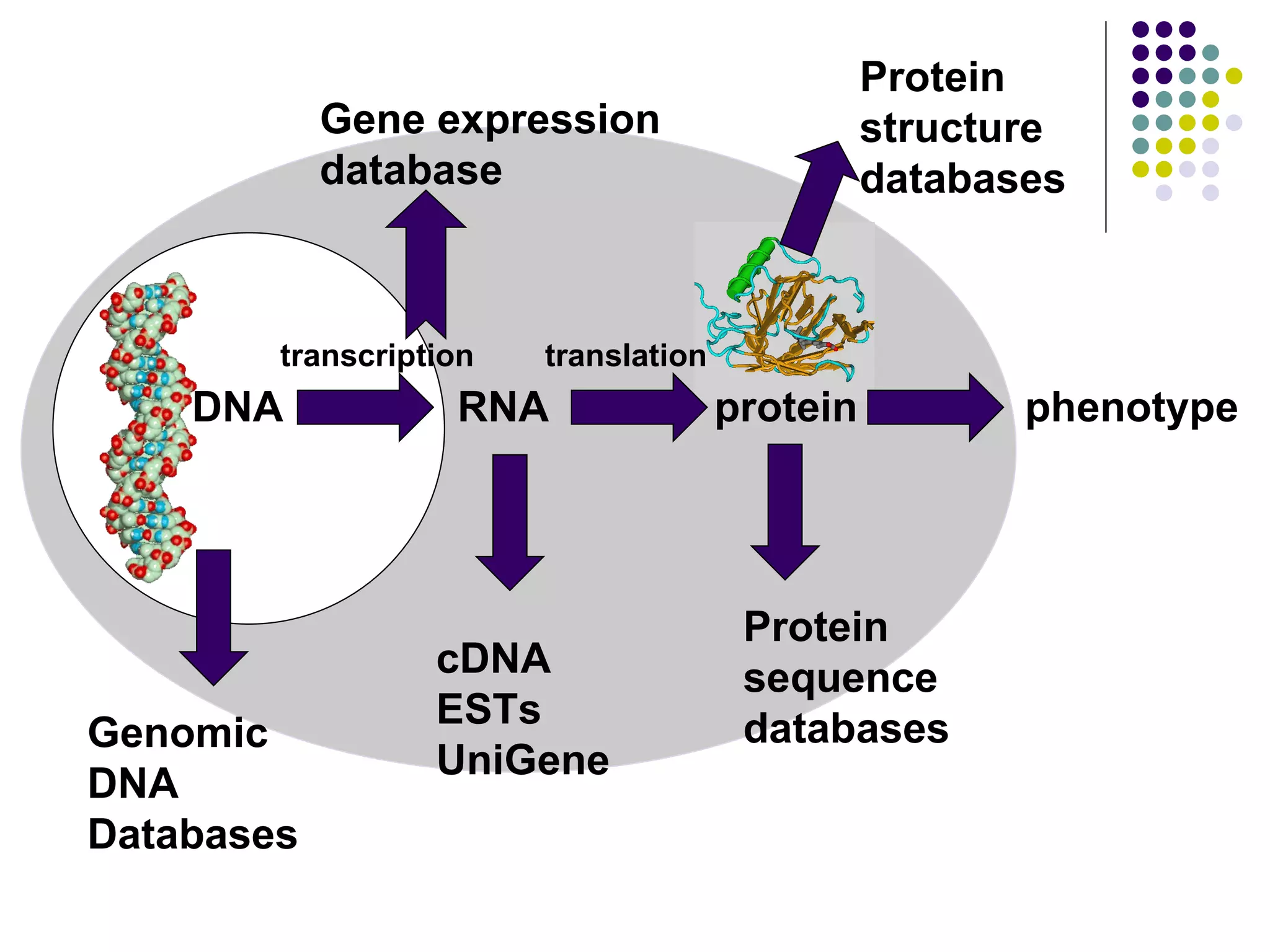
DNA RNA cDNA ESTs UniGene phenotype Genomic DNA Databases  Protein  sequence  databases protein Protein  structure  databases transcription translation Gene expression database
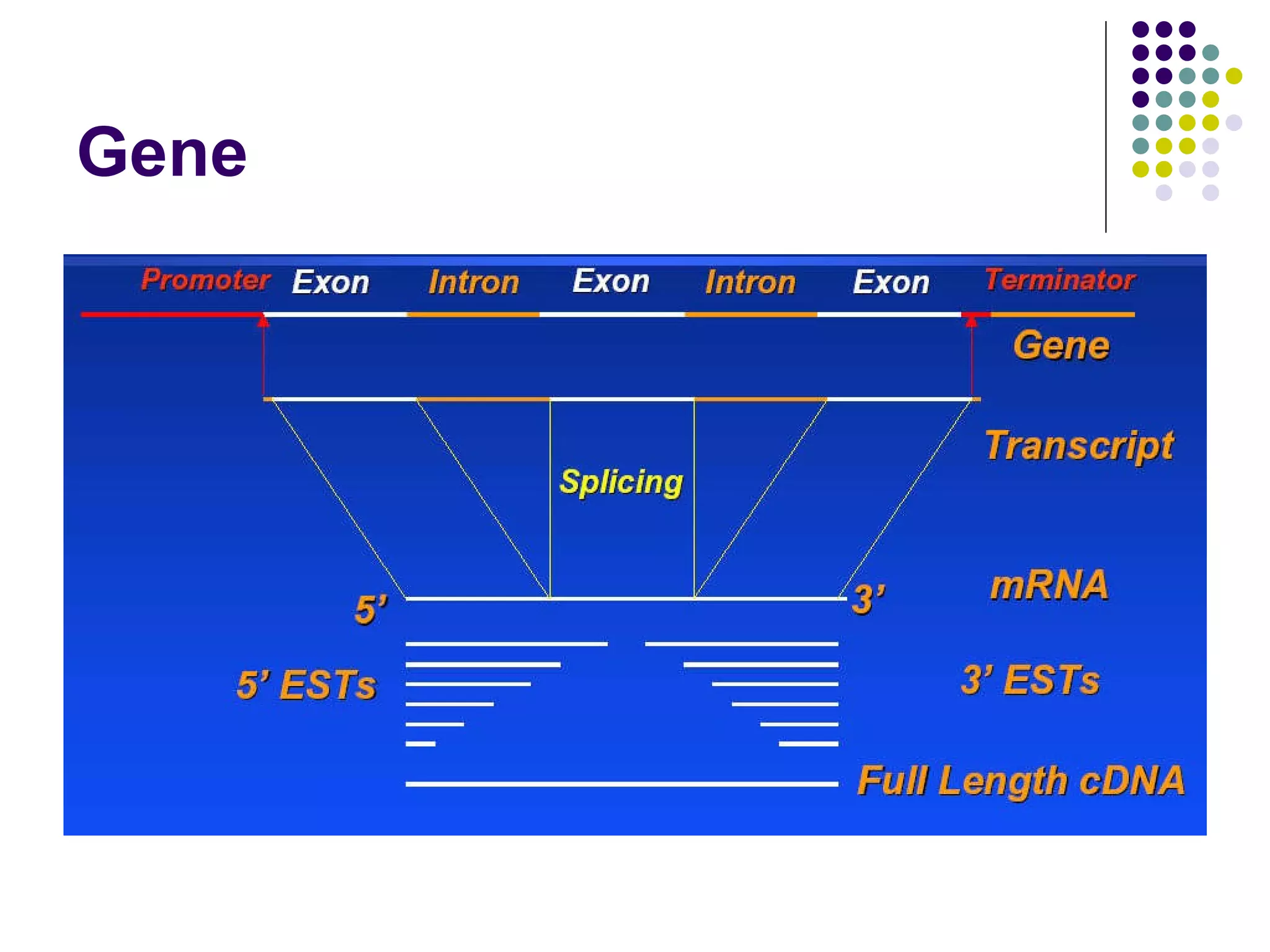
Gene
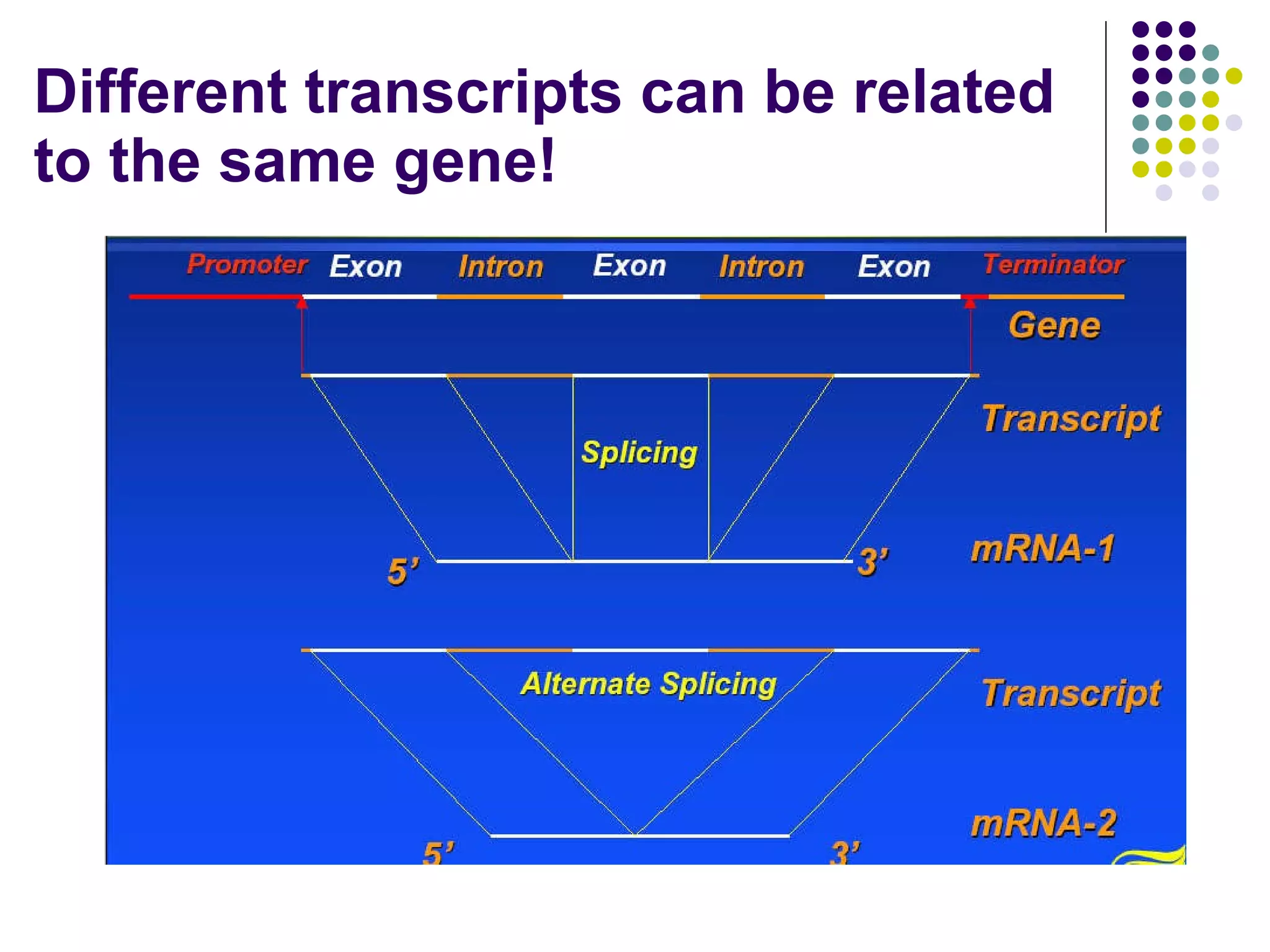
Different transcripts can be related to the same gene !
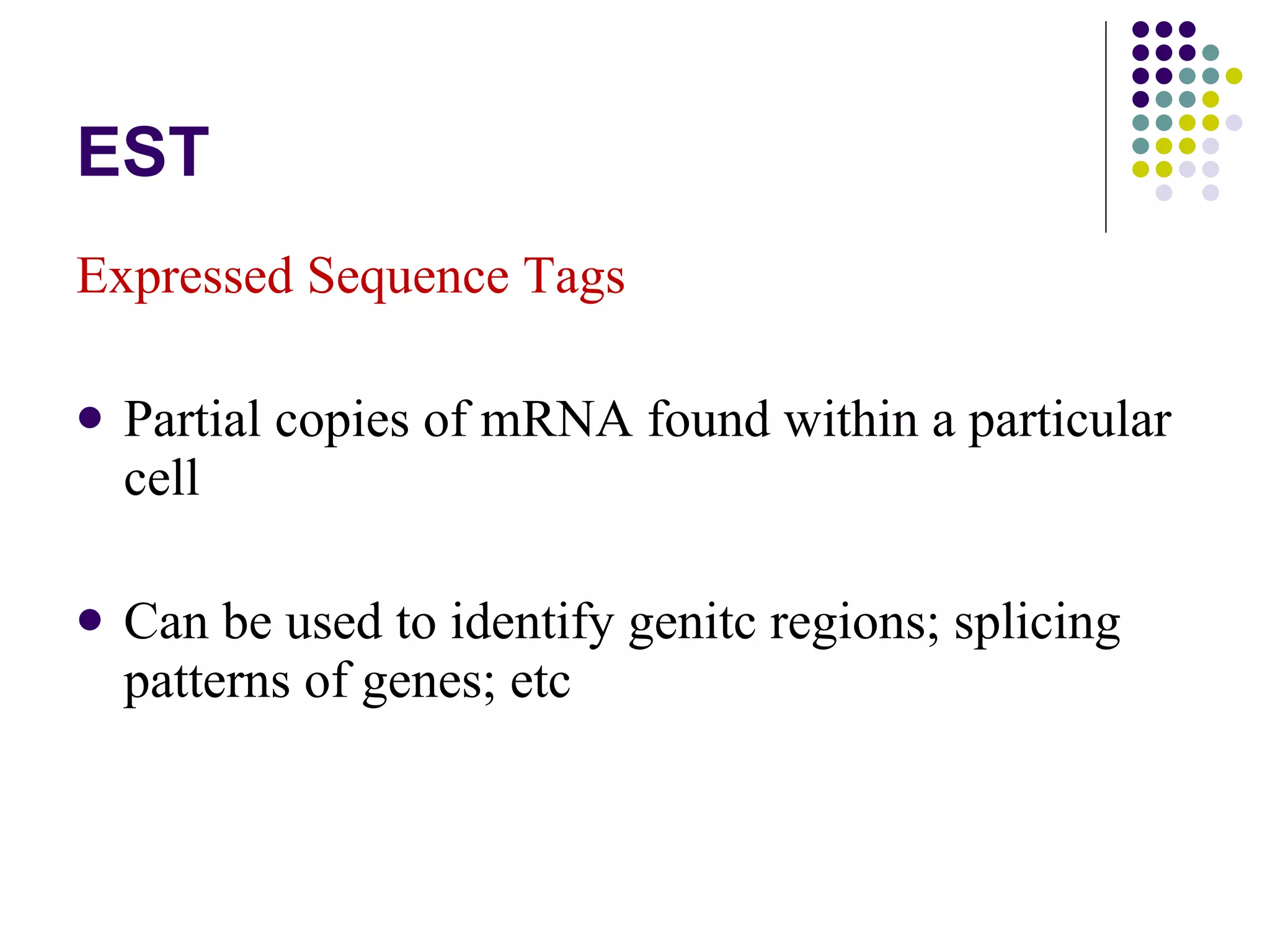
EST Expressed Sequence Tags Partial copies of mRNA found within a particular cell Can be used to identify genitc regions; splicing patterns of genes; etc
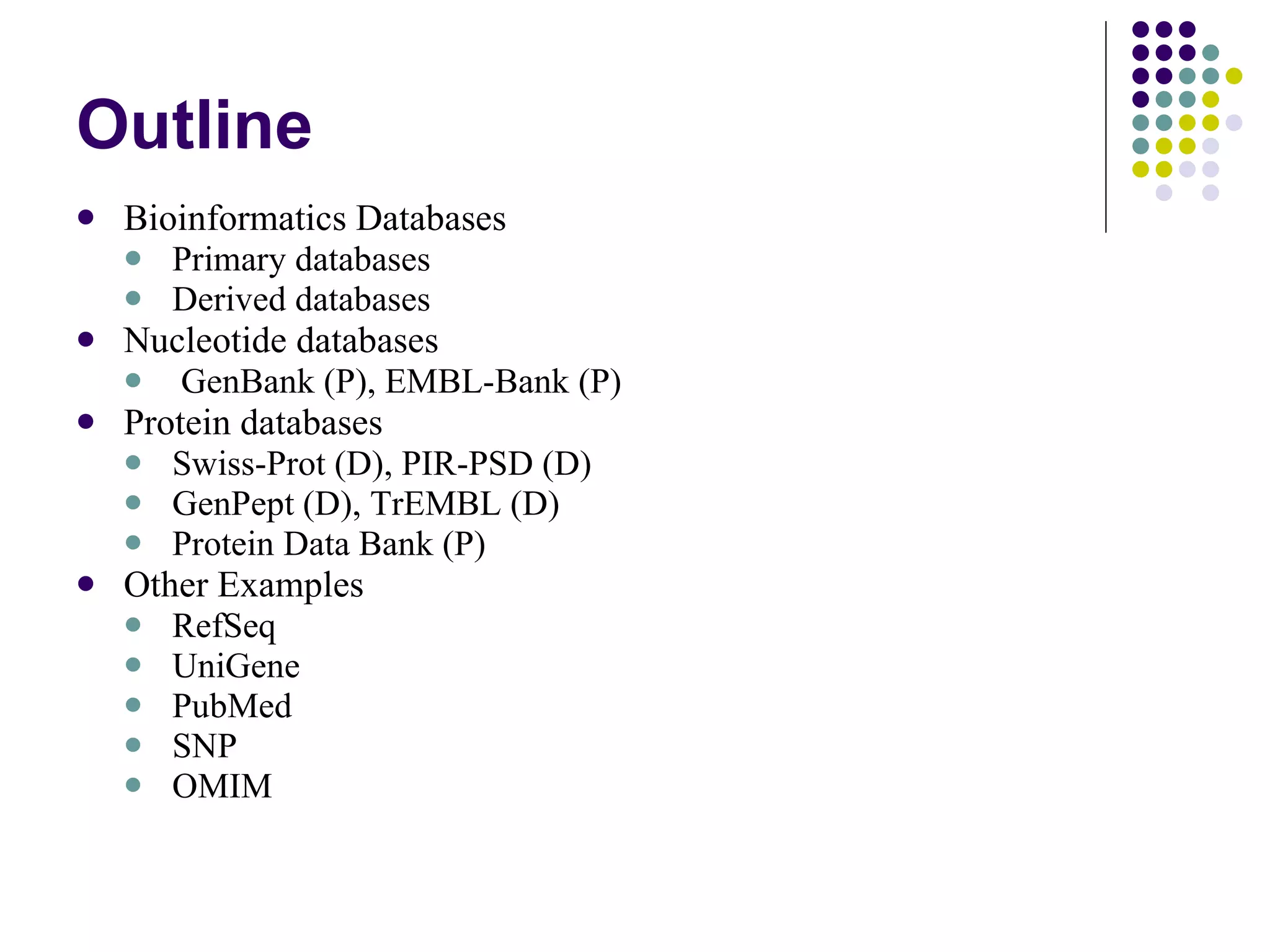
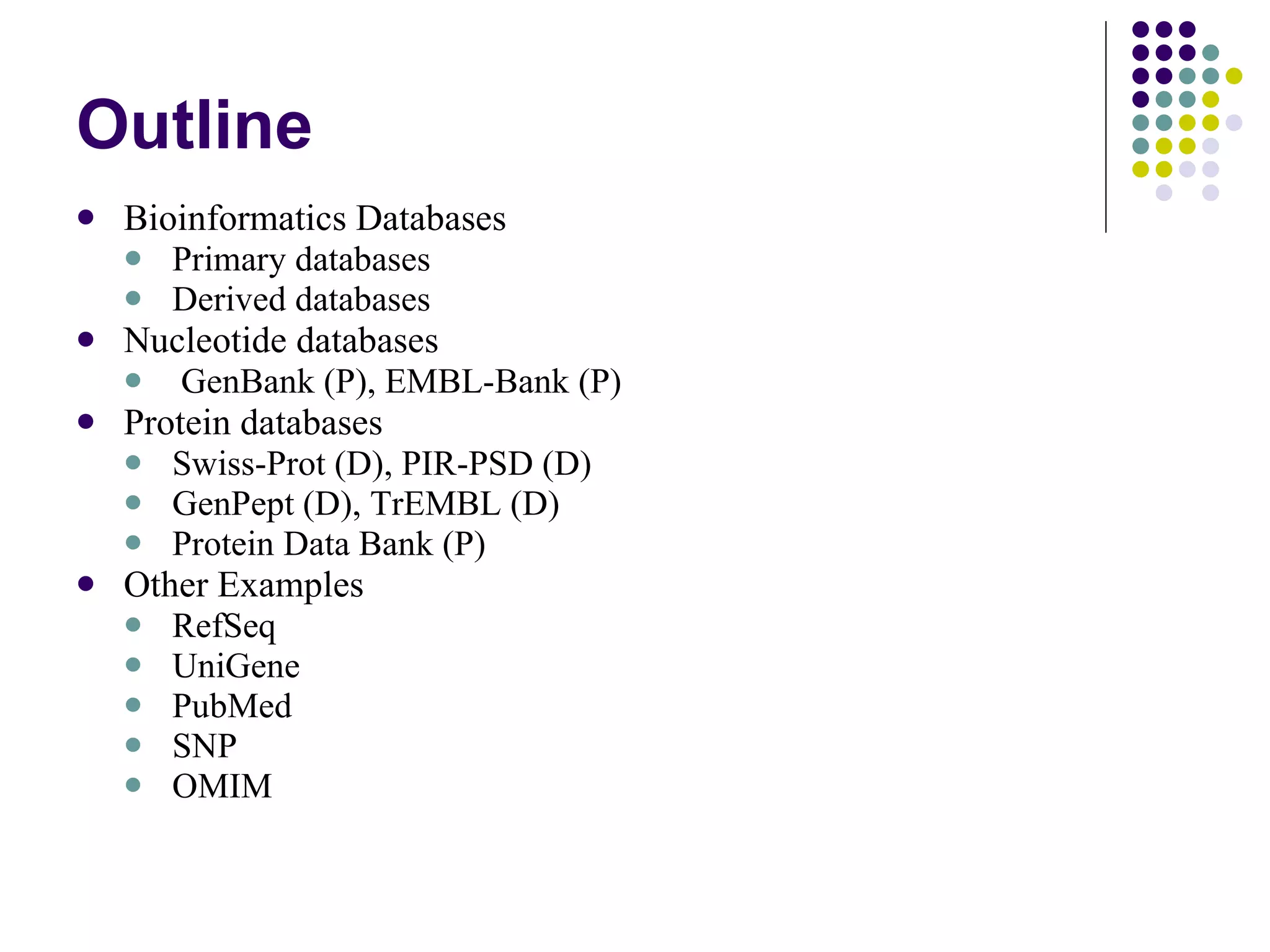
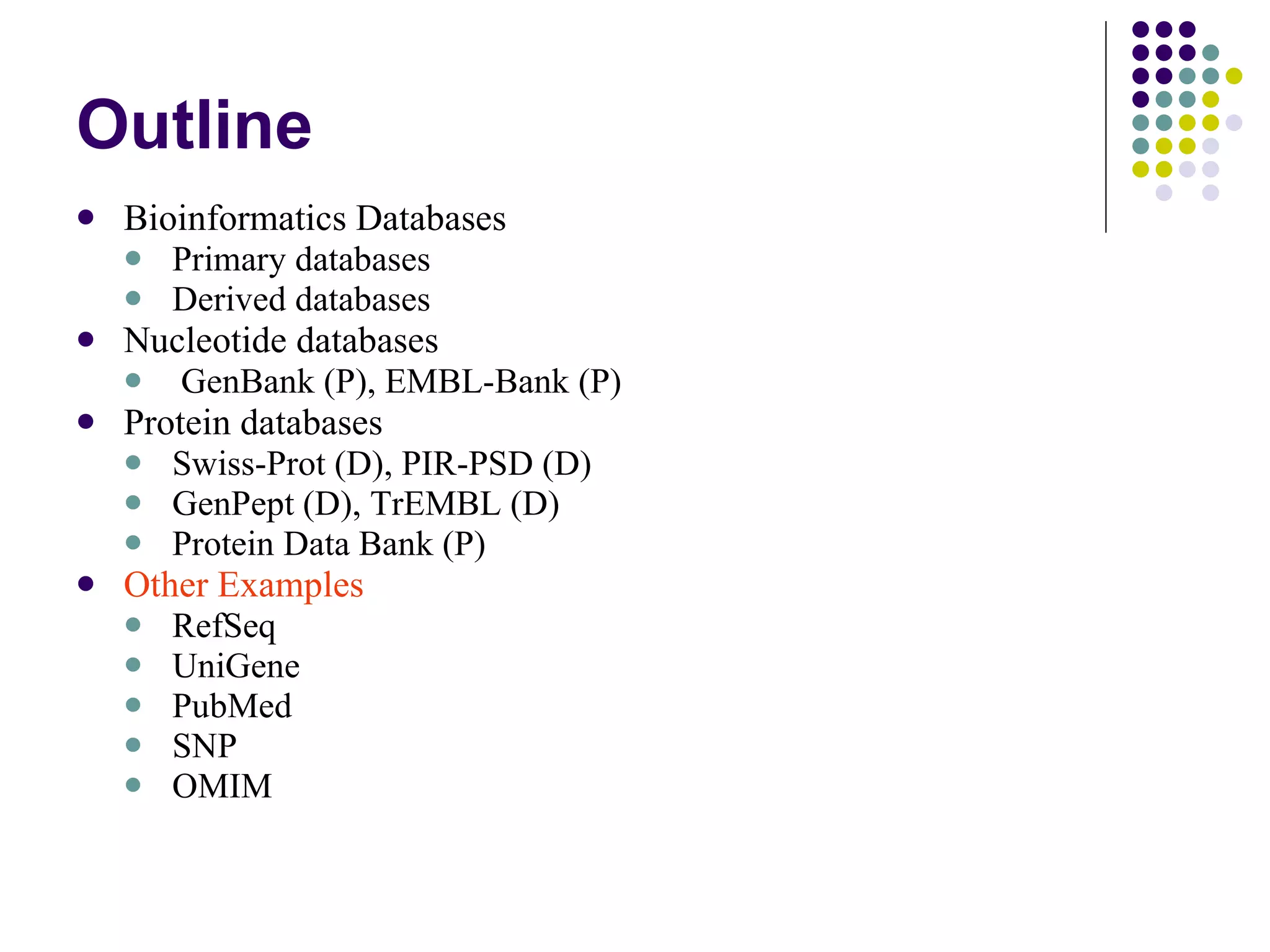
Outline Bioinformatics Databases  Primary databases Derived databases Nucleotide databases GenBank (P), EMBL-Bank (P) Protein databases Swiss-Prot (D), PIR-PSD (D) GenPept (D), TrEMBL (D) Protein Data Bank (P) Other Examples RefSeq UniGene PubMed SNP OMIM
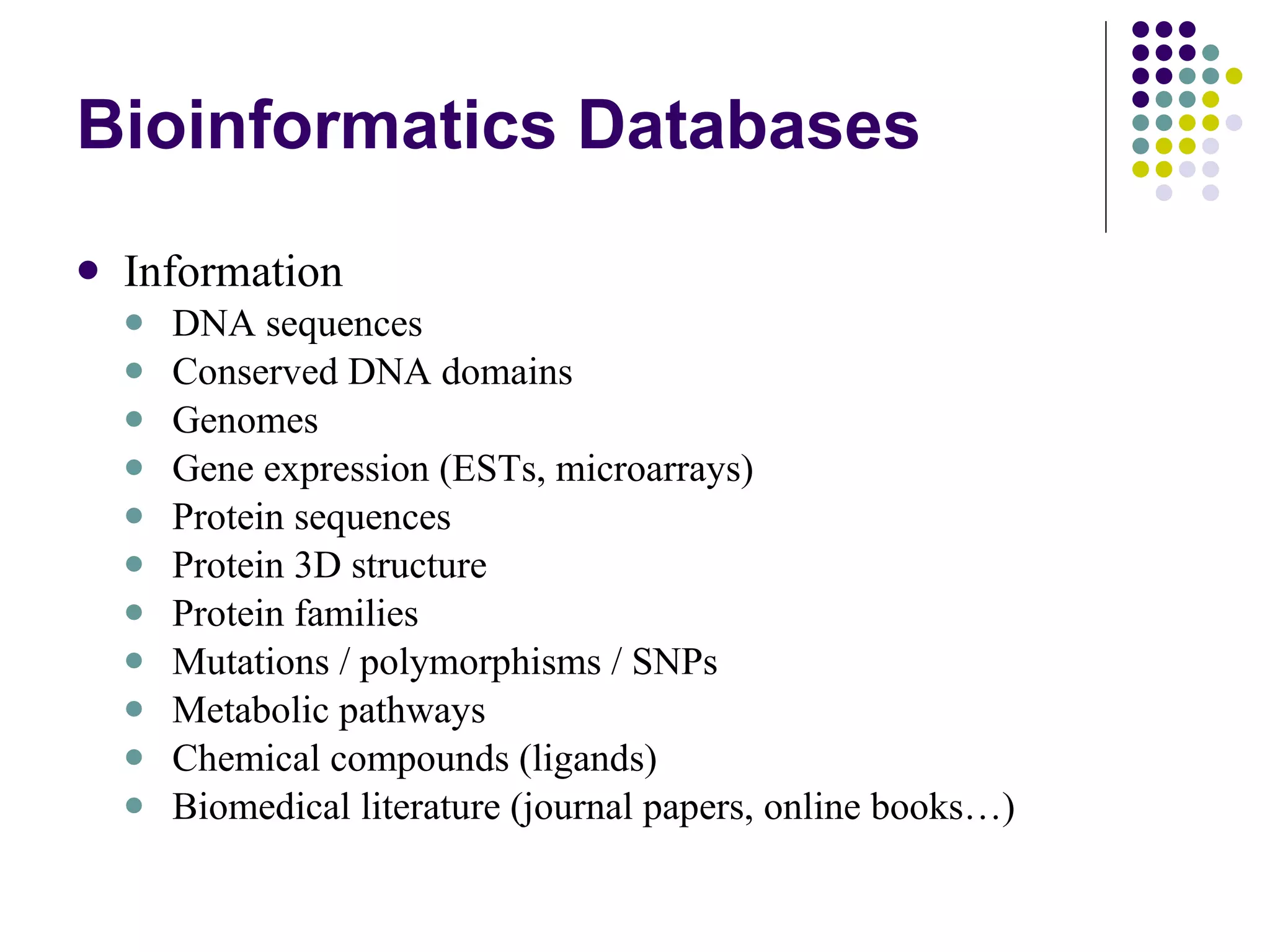
Bioinformatics Databases Information DNA sequences Conserved DNA domains Genomes Gene expression (ESTs, microarrays) Protein sequences Protein 3D structure Protein families Mutations / polymorphisms / SNPs Metabolic pathways Chemical compounds (ligands) Biomedical literature (journal papers, online books…)
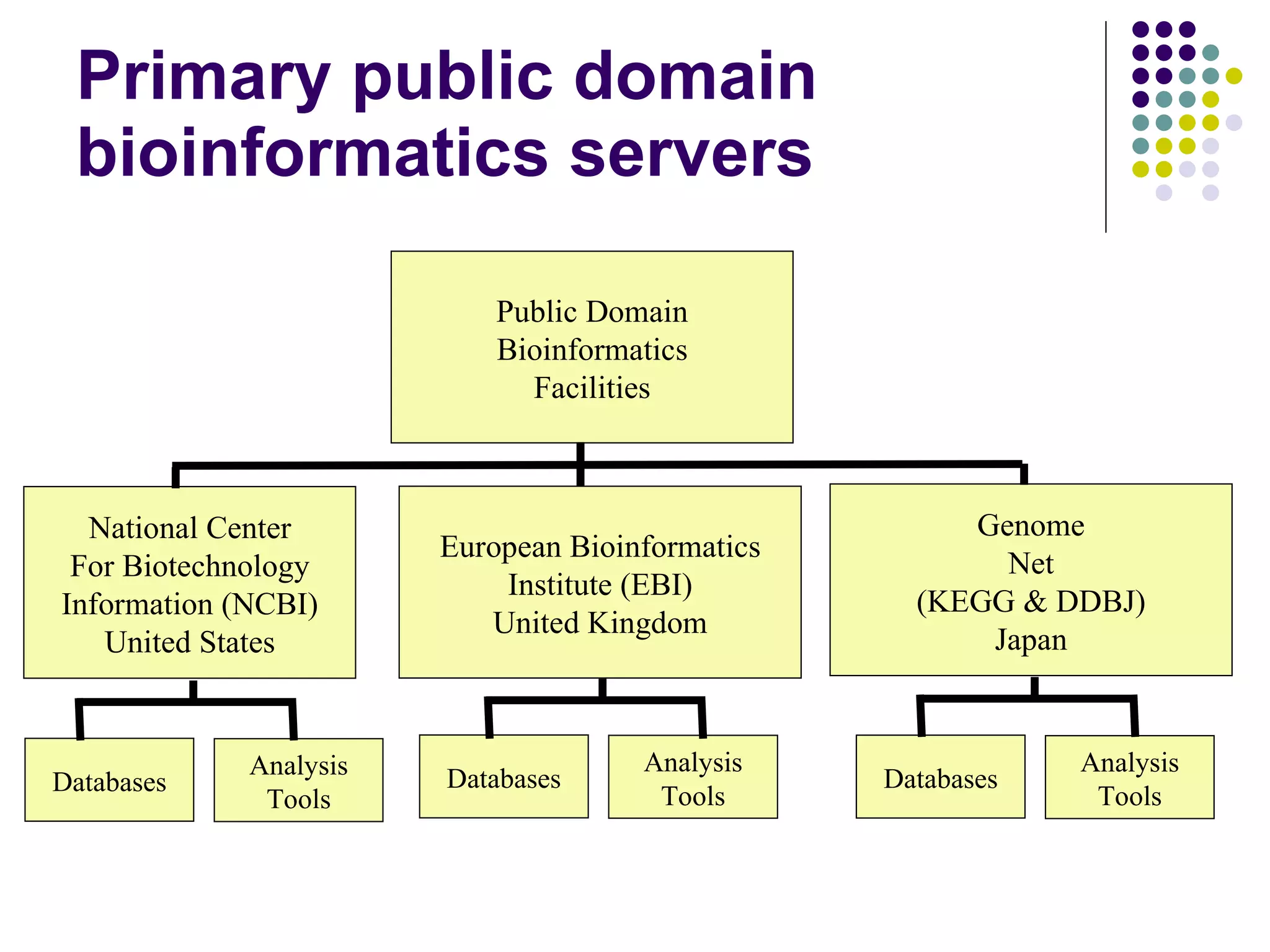
Primary public domain bioinformatics servers Public Domain Bioinformatics Facilities European Bioinformatics Institute (EBI) United Kingdom National Center For Biotechnology Information (NCBI) United States Genome Net (KEGG & DDBJ) Japan Databases Analysis Tools Databases Analysis Tools Databases Analysis Tools
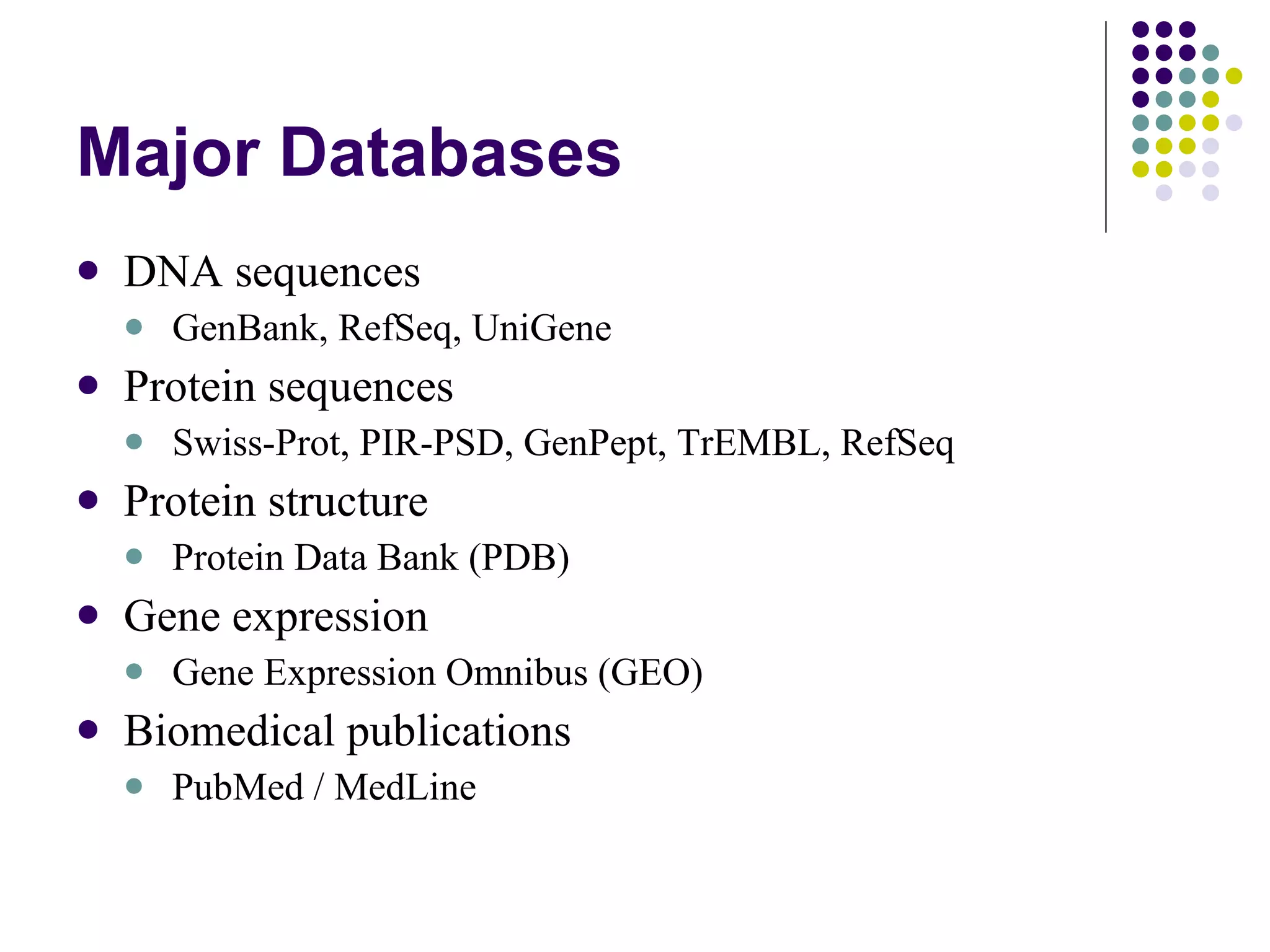
Major Databases DNA sequences GenBank, RefSeq, UniGene Protein sequences Swiss-Prot, PIR-PSD, GenPept, TrEMBL, RefSeq Protein structure Protein Data Bank (PDB) Gene expression Gene Expression Omnibus (GEO) Biomedical publications PubMed / MedLine
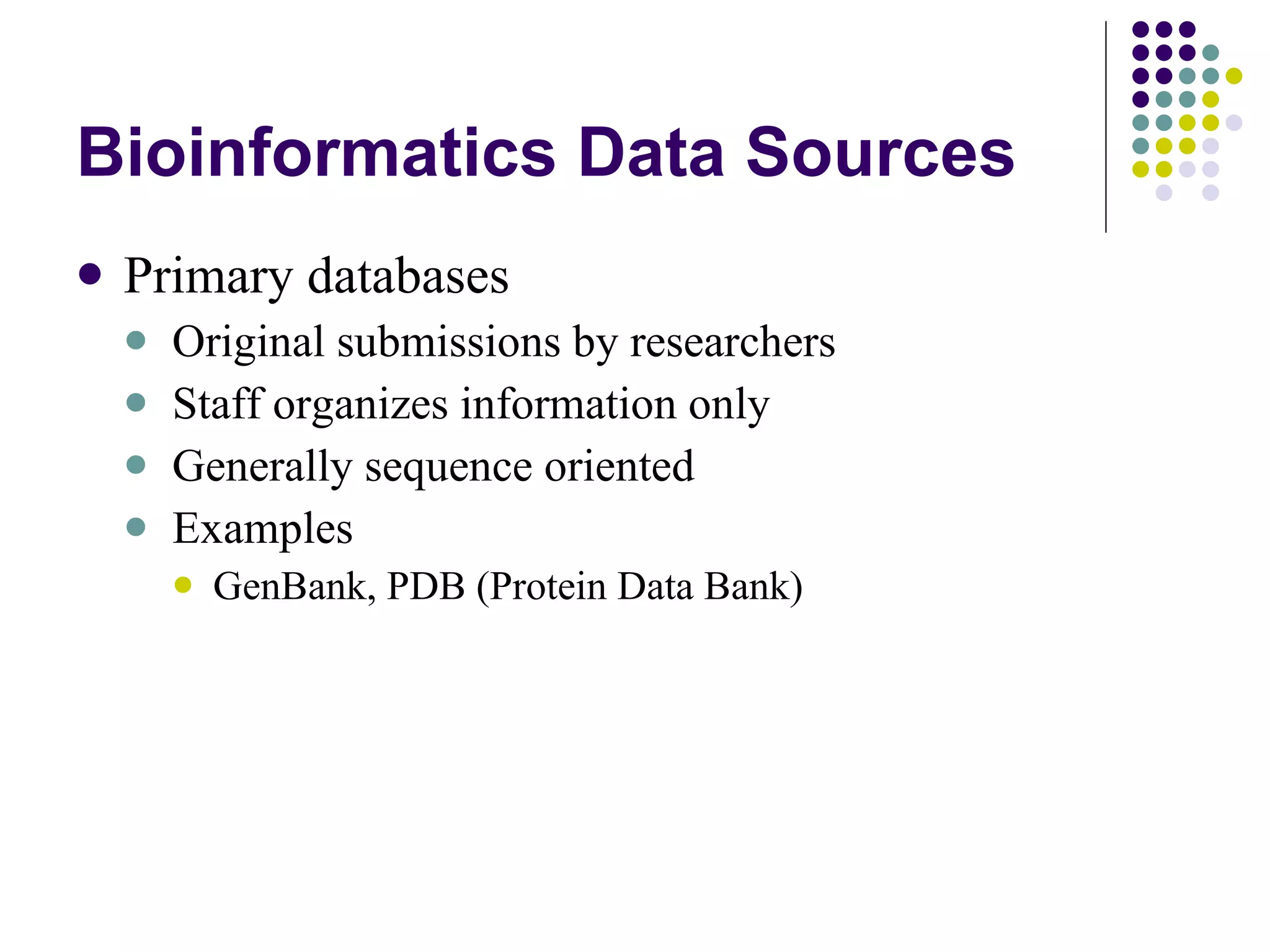
Bioinformatics Data Sources Primary databases Original submissions by researchers Staff organizes information only Generally sequence oriented Examples GenBank, PDB (Protein Data Bank)
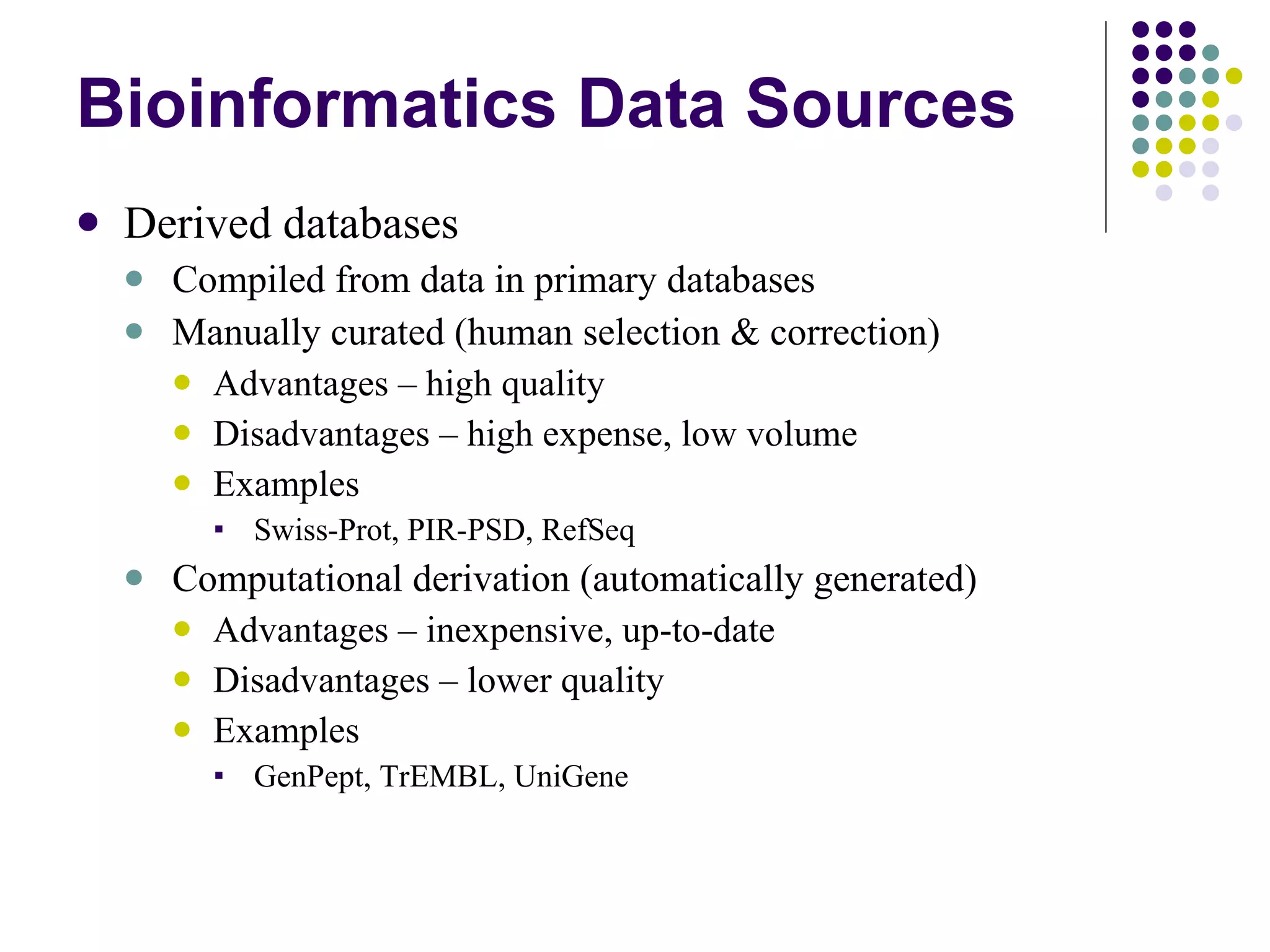
Bioinformatics Data Sources Derived databases Compiled from data in primary databases Manually curated (human selection & correction) Advantages – high quality Disadvantages – high expense, low volume Examples Swiss-Prot, PIR-PSD, RefSeq Computational derivation (automatically generated) Advantages – inexpensive, up-to-date Disadvantages – lower quality Examples GenPept, TrEMBL, UniGene
Outline Bioinformatics Databases  Primary databases Derived databases Nucleotide databases GenBank (P), EMBL-Bank (P) Protein databases Swiss-Prot (D), PIR-PSD (D) GenPept (D), TrEMBL (D) Protein Data Bank (P) Other Examples RefSeq UniGene PubMed SNP OMIM
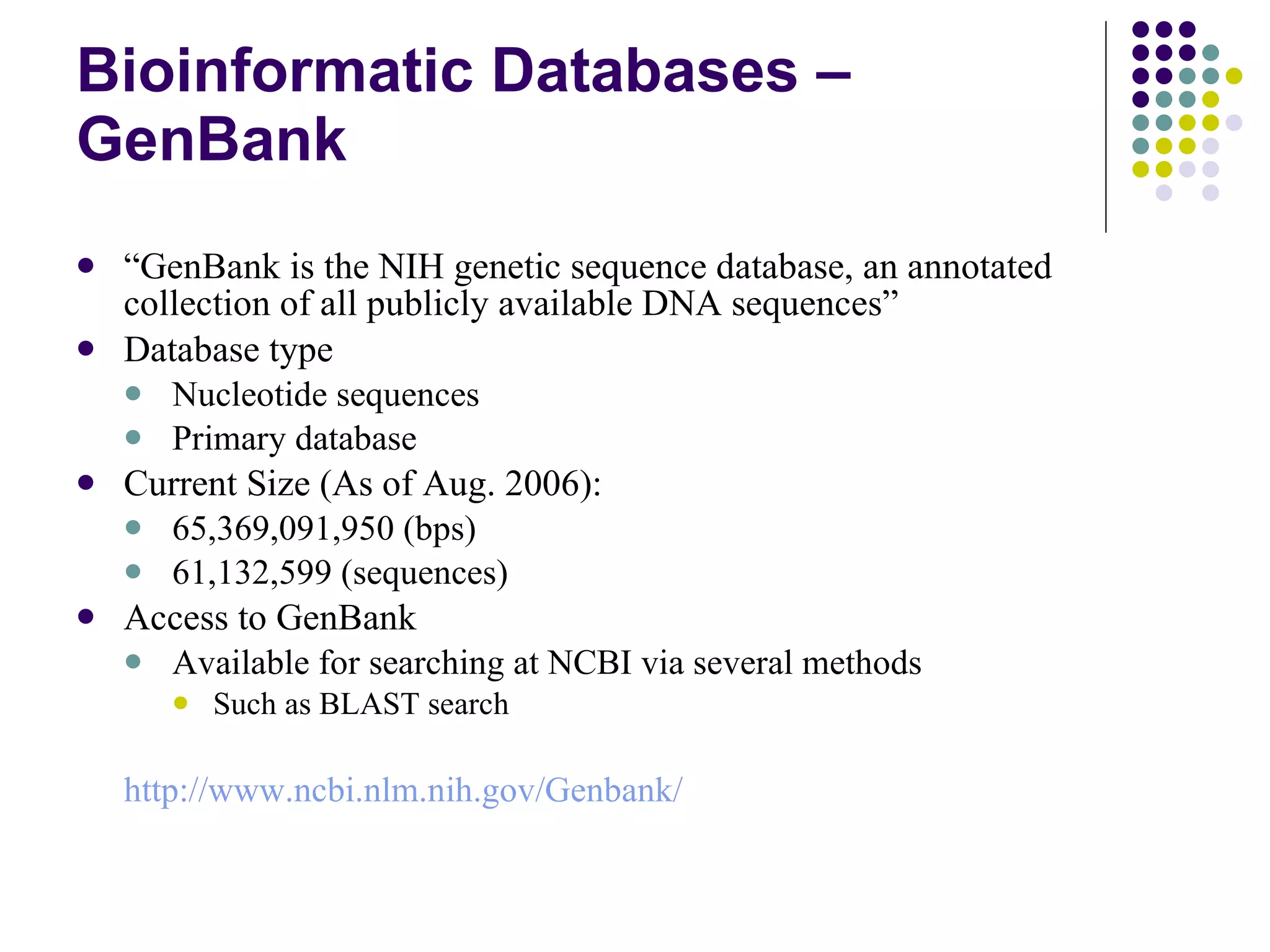
Bioinformatic Databases – GenBank “ GenBank is the NIH genetic sequence database, an annotated collection of all publicly available DNA sequences”  Database type Nucleotide sequences Primary database Current Size (As of Aug. 2006): 65,369,091,950 (bps) 61,132,599 (sequences) Access to GenBank Available for searching at NCBI via several methods Such as BLAST search http:// www.ncbi.nlm.nih.gov/Genbank /
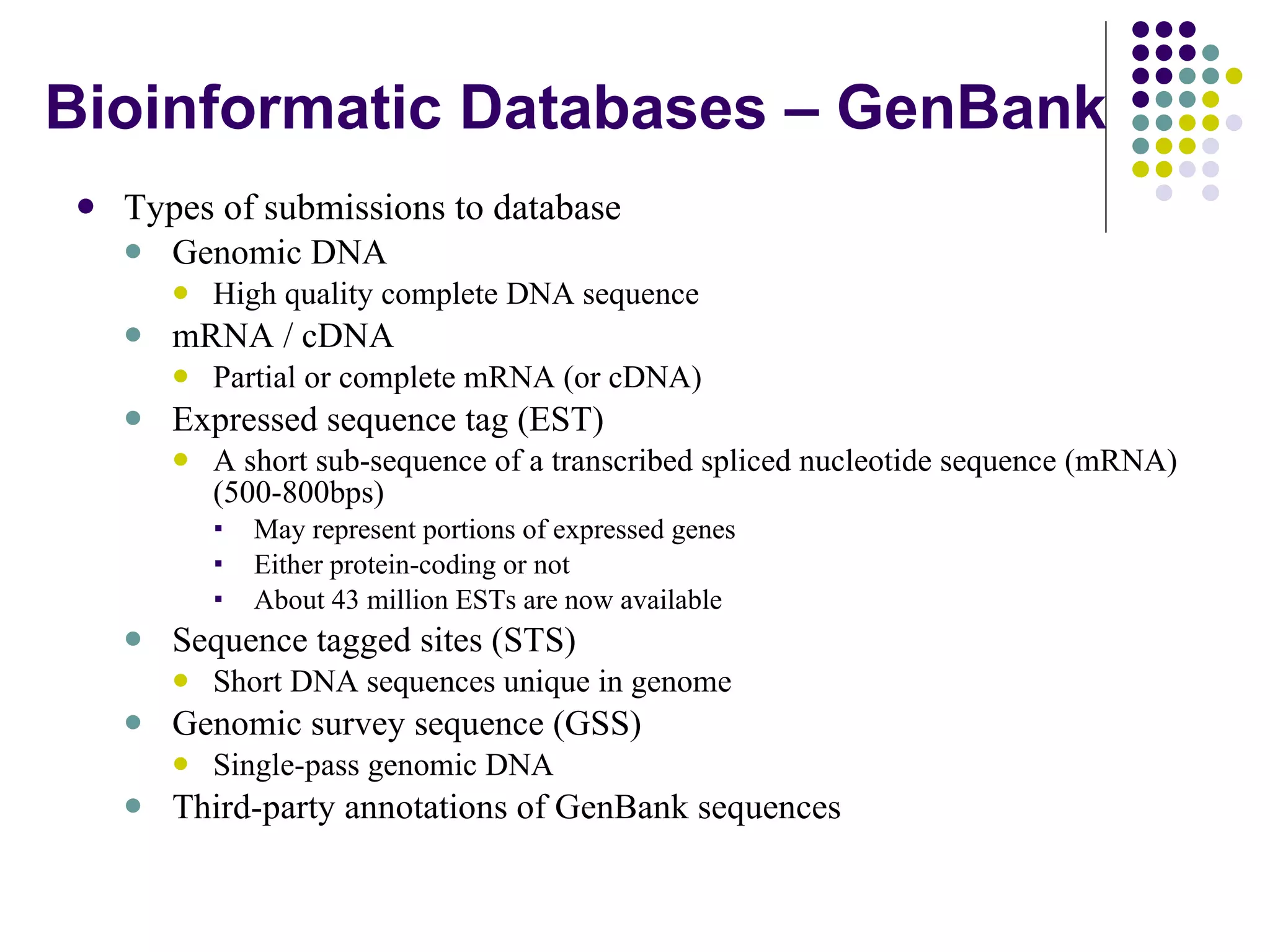
Bioinformatic Databases – GenBank Types of submissions to database Genomic DNA High quality complete DNA sequence mRNA / cDNA Partial or complete mRNA (or cDNA) Expressed sequence tag (EST) A short sub-sequence of a transcribed spliced nucleotide sequence (mRNA) (500-800bps)  May represent portions of expressed genes Either protein-coding or not About 43 million ESTs are now available Sequence tagged sites (STS) Short DNA sequences unique in genome Genomic survey sequence (GSS) Single-pass genomic DNA Third-party annotations of GenBank sequences
Bioinformatic Databases – EMBL-Bank Europe's primary nucleotide sequence resource  Primary databases Database type Nucleotide sequences Primary database http://www.ebi.ac.uk/embl/
Outline Bioinformatics Databases  Primary databases Derived databases Nucleotide databases GenBank (P), EMBL-Bank (P) Protein databases Swiss-Prot (D), PIR-PSD (D) GenPept (D), TrEMBL (D) Protein Data Bank (P) Other Examples RefSeq UniGene PubMed SNP OMIM
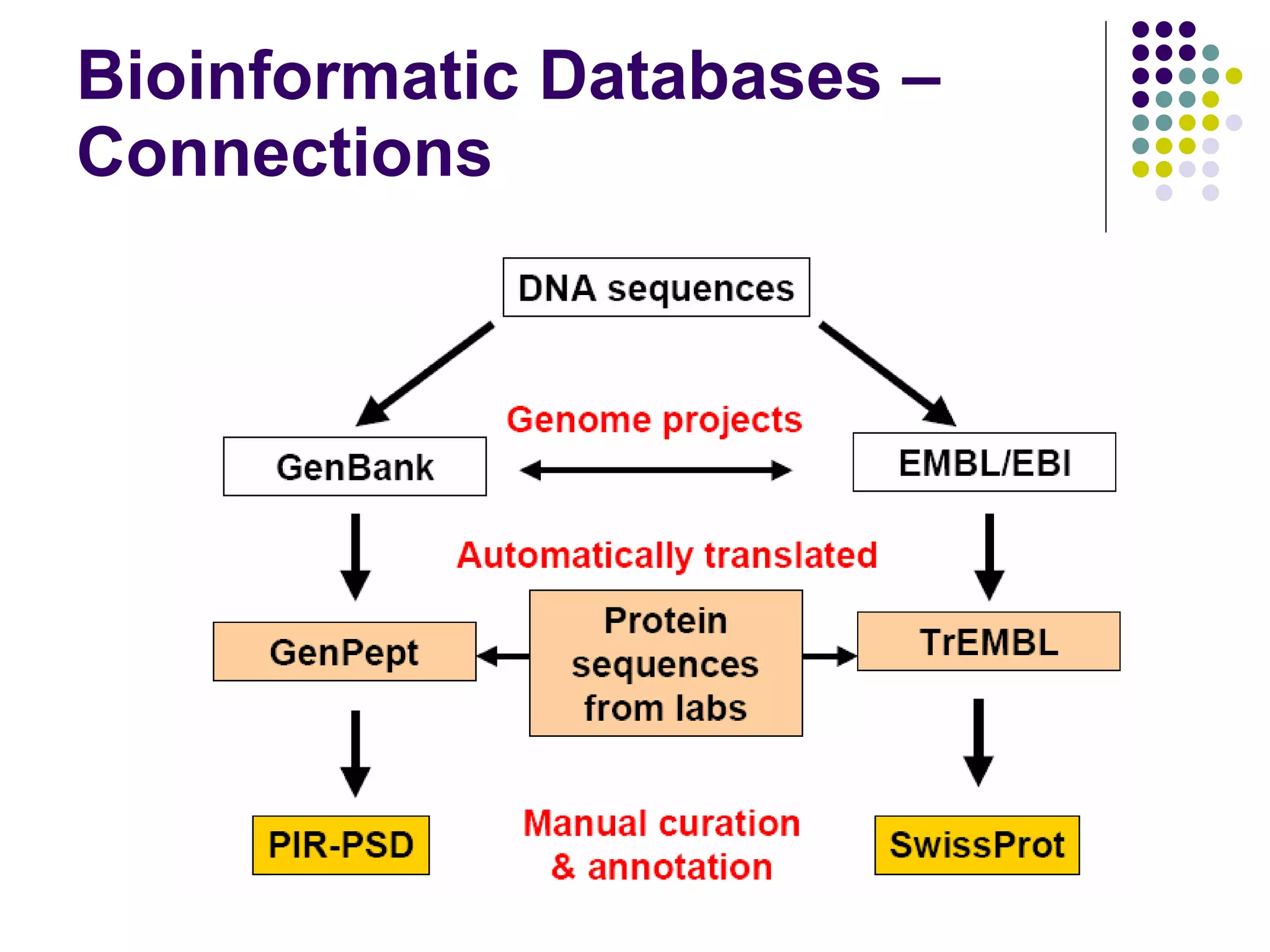
Bioinformatic Databases – Proteins Protein sequence databases Once derived from laboratory experiments Now mostly based on predicted ORFs from DNA Manual curation Swiss-Prot PIR-PSD Computational derivation GenPept TrEMBL
Bioinformatic Databases – Swiss-Prot, PIR-PSD Database type Protein sequences Derived database Manually curated (non-redundant, annotated) Many annotations Functions of the protein Domains and sites Secondary & quaternary structure Similarities to other proteins Variants Swiss-Prot http://ca.expasy.org/sprot/ PIR-PSD http:// pir.georgetown.edu/pirwww/dbinfo/pir_psd.shtml
Bioinformatic Databases – GenPept, TrEMBL Database type Protein sequences Computationally derived database Predicted (translating) coding sequences (CDS) from GenBank, EMBL (i.e., gene product) GenPept Download:  ftp://ftp.ncifcrf.gov/pub/genpept/ Release 163 (as of 12/26/2007) 4,970,178 loci containing 1,517,599,916 residues  TrEMBL http:// www.ebi.ac.uk/trembl/index.html
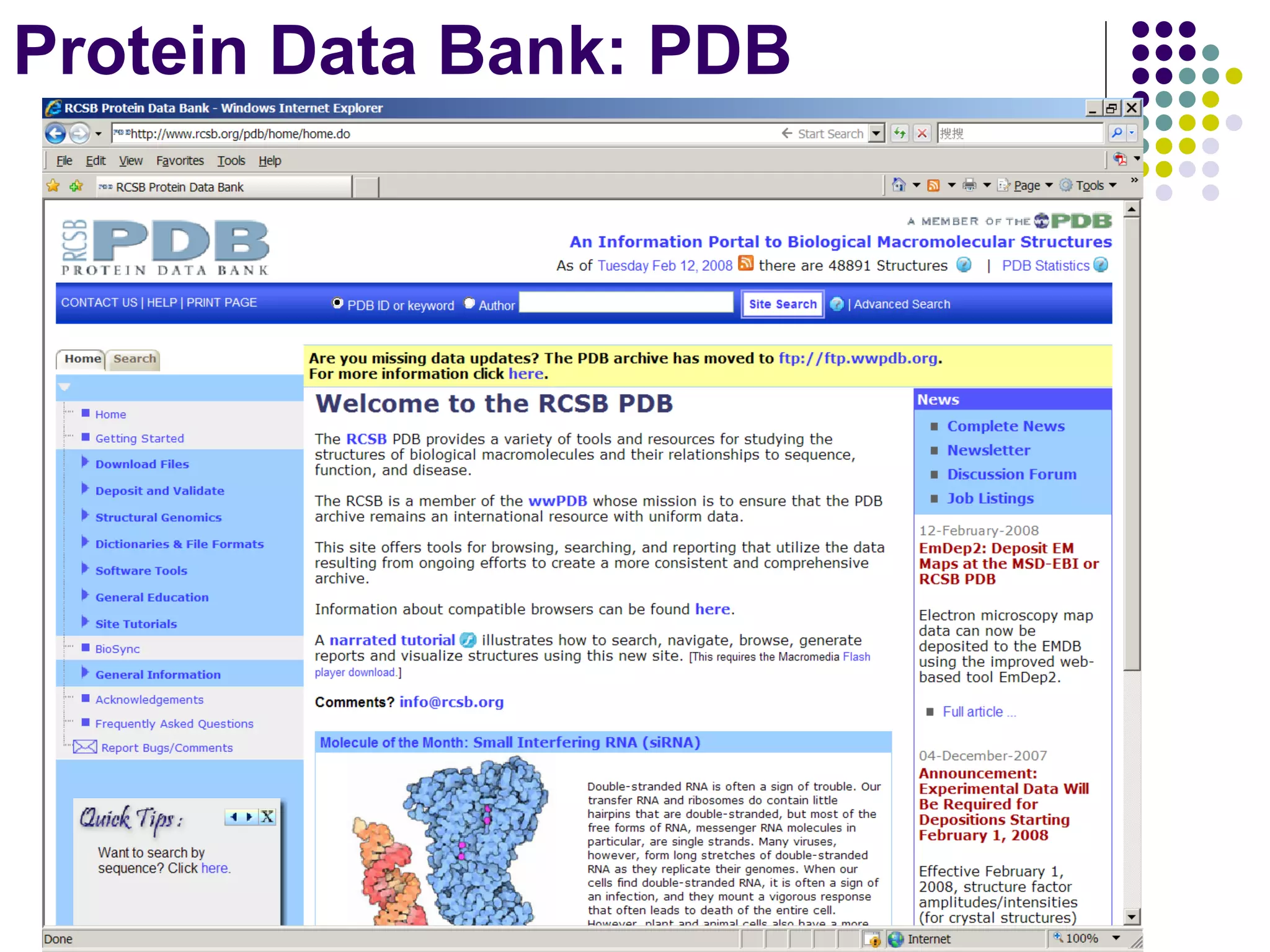
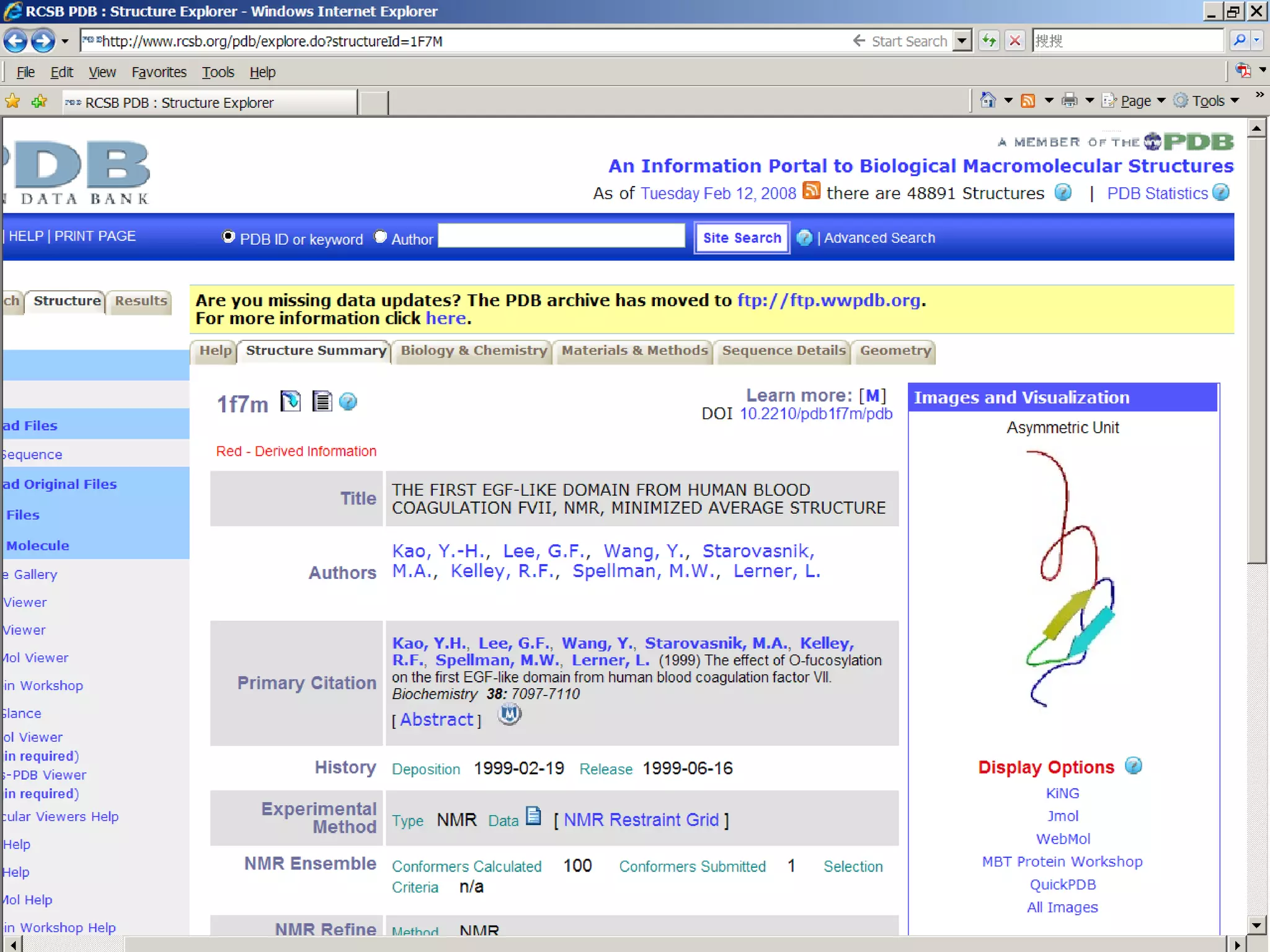
Structure Databases 3-dimensional structures of proteins, nucleic acids, molecular complexes etc 3-d data is available due to techniques such as NMR and X-Ray crystallography Protein Data Bank  Protein 3D structures Primary database ( http://www.rcsb.org/pdb/home/home.do )
Protein Data Bank: PDB
 
Bioinformatic Databases – Connections
Outline Bioinformatics Databases  Primary databases Derived databases Nucleotide databases GenBank (P), EMBL-Bank (P) Protein databases Swiss-Prot (D), PIR-PSD (D) GenPept (D), TrEMBL (D) Protein Data Bank (P) Other Examples RefSeq UniGene PubMed SNP OMIM
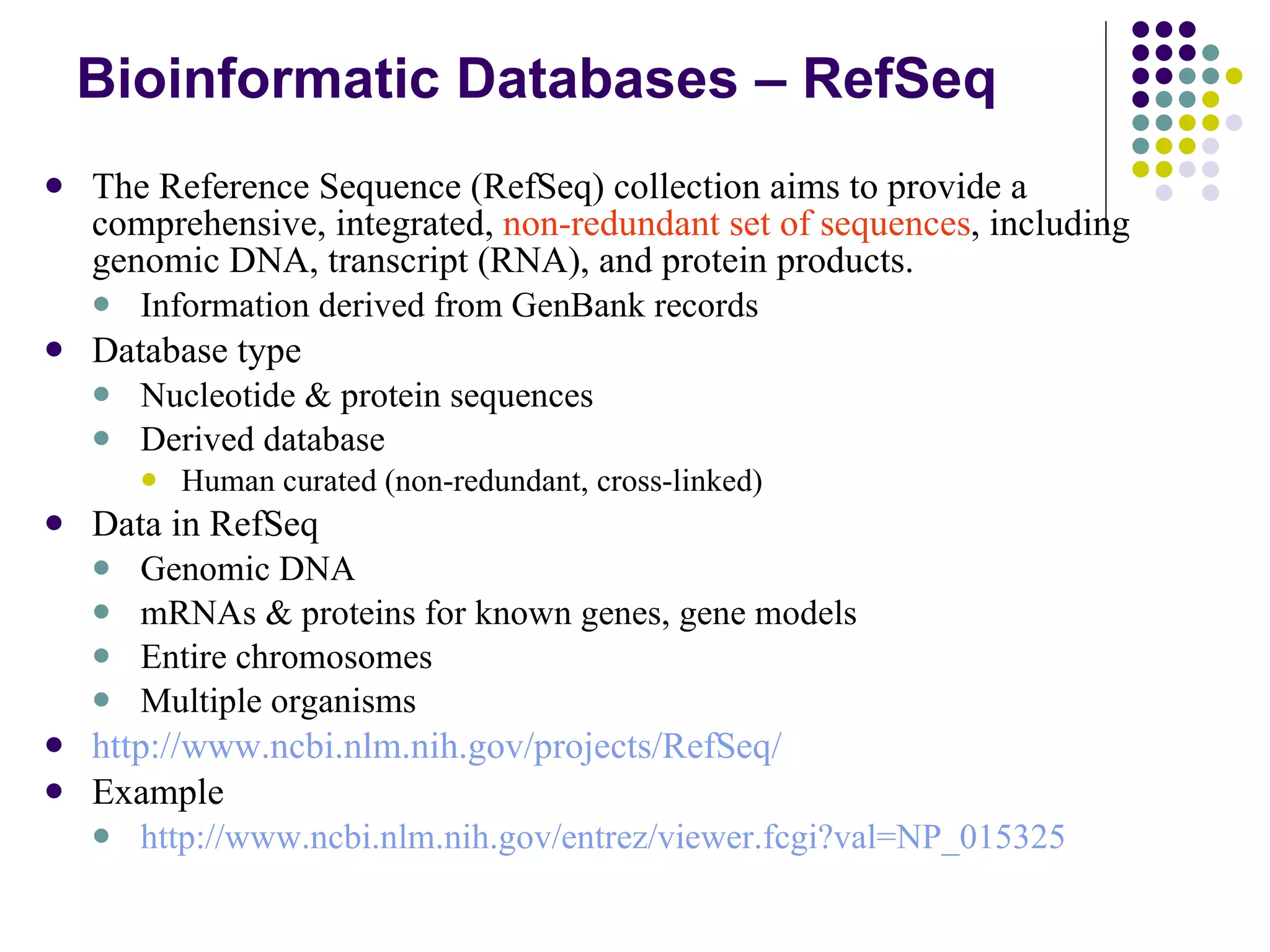
Bioinformatic Databases – RefSeq The Reference Sequence (RefSeq) collection aims to provide a comprehensive, integrated,  non-redundant set of sequences , including genomic DNA, transcript (RNA), and protein products.  Information derived from GenBank records  Database type Nucleotide & protein sequences Derived database Human curated (non-redundant, cross-linked) Data in RefSeq Genomic DNA mRNAs & proteins for known genes, gene models Entire chromosomes Multiple organisms http://www.ncbi.nlm.nih.gov/projects/RefSeq/ Example http://www.ncbi.nlm.nih.gov/entrez/viewer.fcgi?val=NP_015325
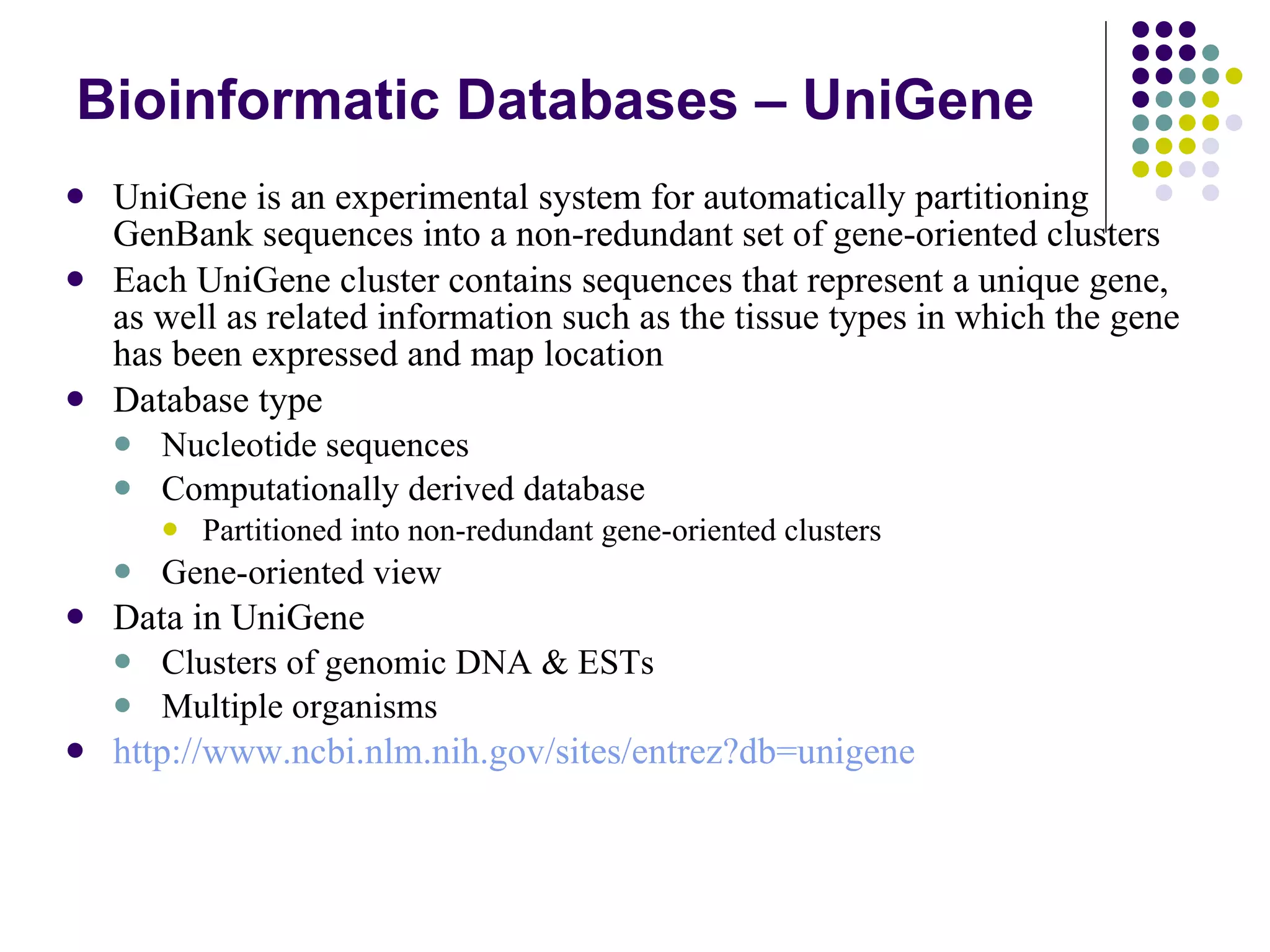
Bioinformatic Databases – UniGene UniGene is an experimental system for automatically partitioning GenBank sequences into a non-redundant set of gene-oriented clusters  Each UniGene cluster contains sequences that represent a unique gene, as well as related information such as the tissue types in which the gene has been expressed and map location  Database type Nucleotide sequences Computationally derived database Partitioned into non-redundant gene-oriented clusters Gene-oriented view Data in UniGene Clusters of genomic DNA & ESTs Multiple organisms http://www.ncbi.nlm.nih.gov/sites/entrez?db=unigene
Database type Biomedical papers Manually curated database Service of the National Library of Medicine MEDLINE publication database Over 17,000 journals 15 million citations since 1950 http :// www . ncbi . nlm . nih . gov / PubMed / Bioinformatic Databases – PubMed
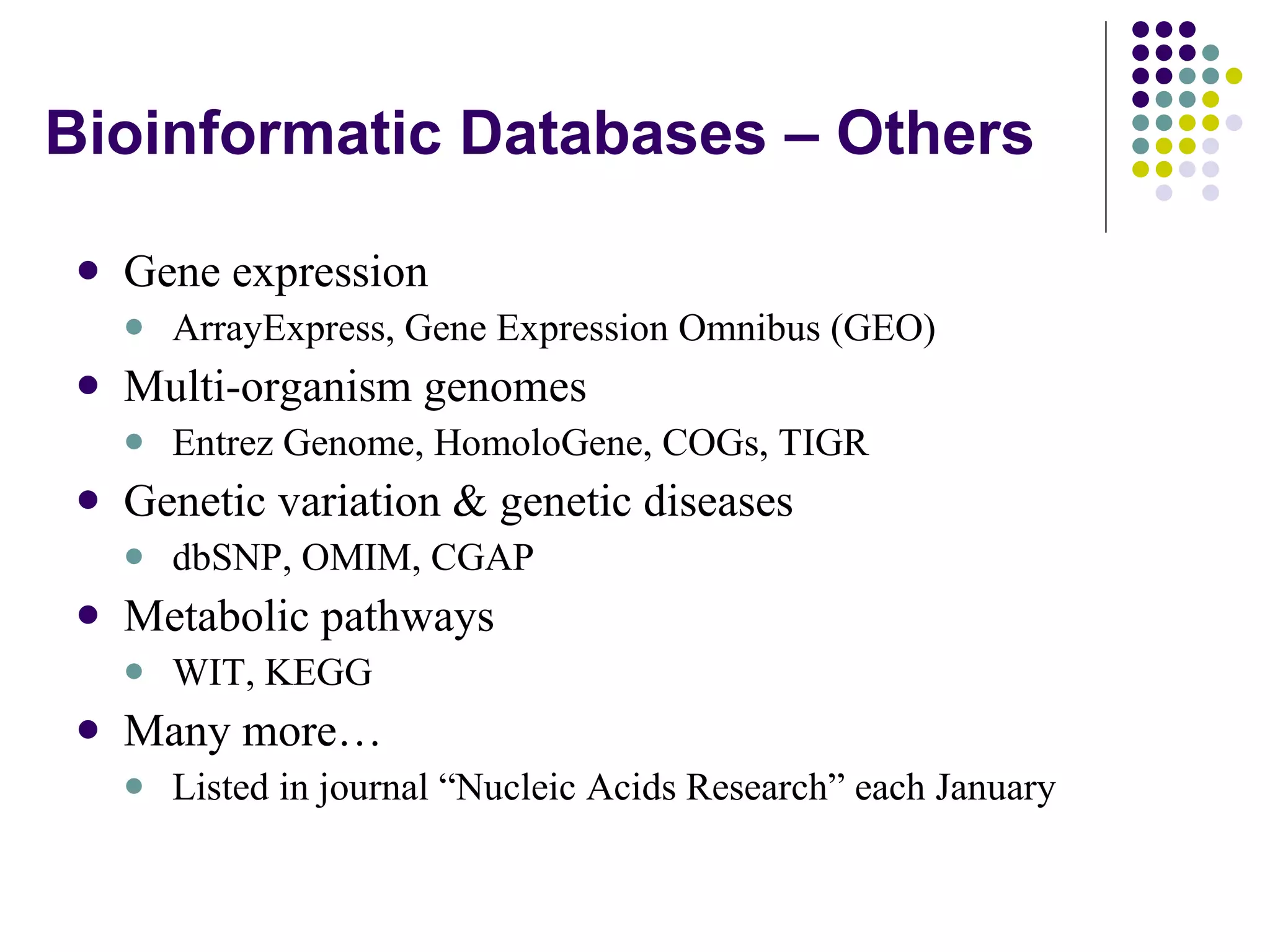
Bioinformatic Databases – Others Gene expression ArrayExpress, Gene Expression Omnibus (GEO) Multi-organism genomes Entrez Genome, HomoloGene, COGs, TIGR Genetic variation & genetic diseases dbSNP, OMIM, CGAP Metabolic pathways WIT, KEGG Many more… Listed in journal “Nucleic Acids Research” each January
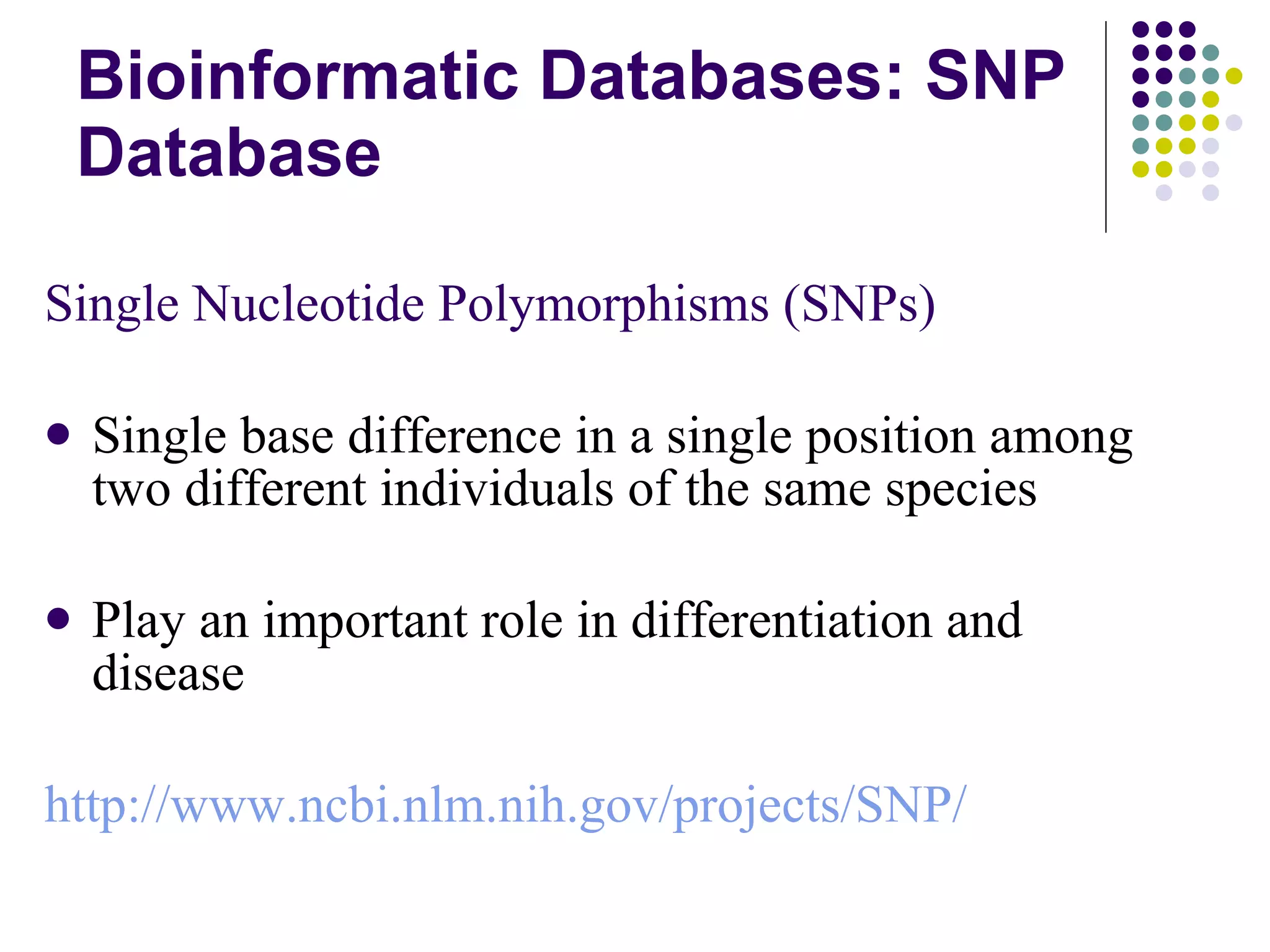
Bioinformatic Databases: SNP Database Single Nucleotide Polymorphisms (SNPs) Single base difference in a single position among two different individuals of the same species Play an important role in differentiation and disease http://www.ncbi.nlm.nih.gov/projects/SNP/
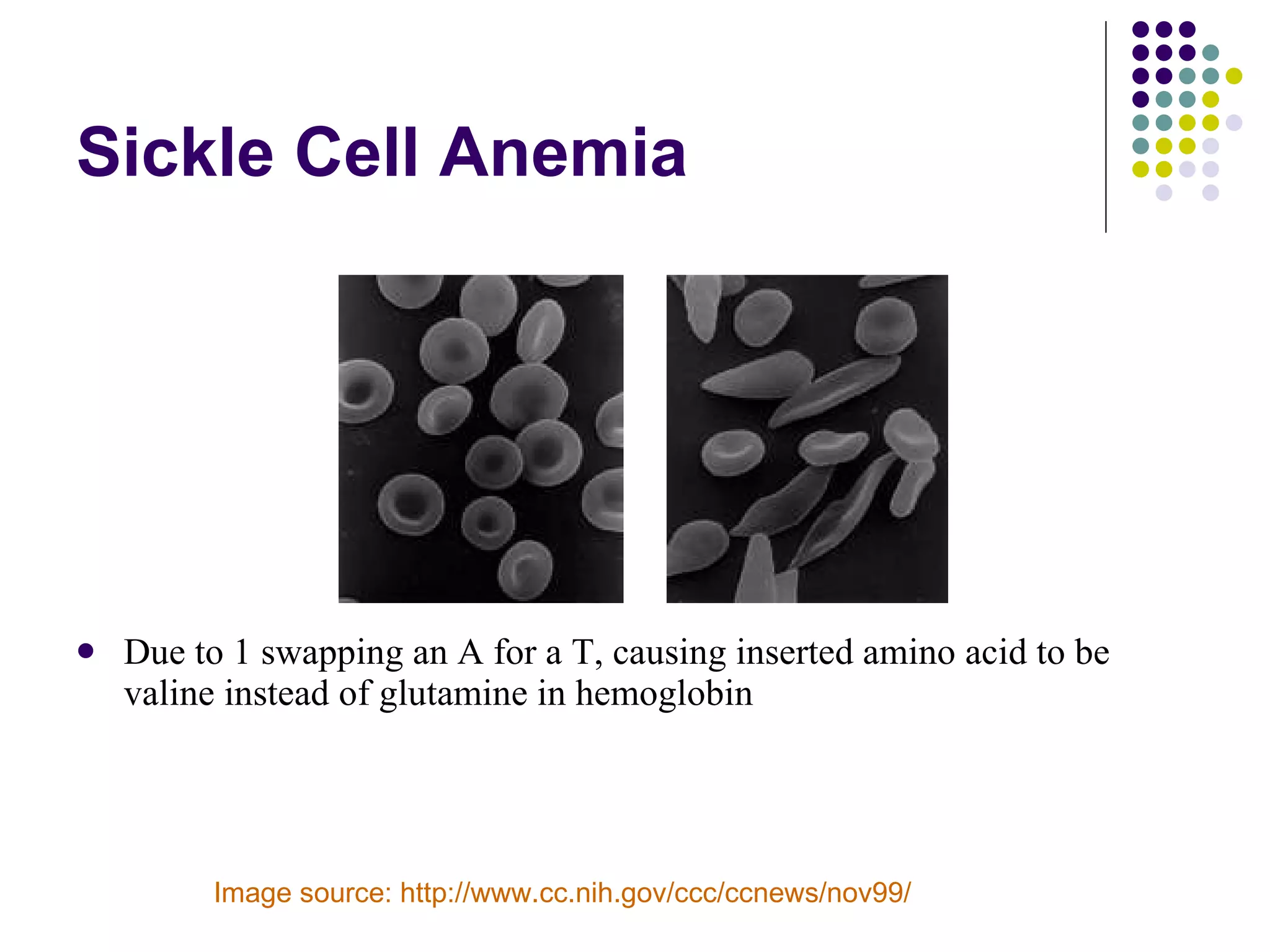
Sickle Cell Anemia Due to 1 swapping an A for a T, causing inserted amino acid to be valine instead of glutamine in hemoglobin Image source: http://www.cc.nih.gov/ccc/ccnews/nov99/
Healthy Individual >gi|28302128|ref|NM_000518.4| Homo sapiens hemoglobin, beta (HBB), mRNA ACATTTGCTTCTGACACAACTGTGTTCACTAGCAACCTCAAACAGACACC ATG GTGCATCTGACTCCTGA G G A G AAGTCTGCCGTTACTGCCCTGTGGGGCAAGGTGAACGTGGATGAAGTTGGTGGTGAGGCCCTGGGC AGGCTGCTGGTGGTCTACCCTTGGACCCAGAGGTTCTTTGAGTCCTTTGGGGATCTGTCCACTCCTGATG CTGTTATGGGCAACCCTAAGGTGAAGGCTCATGGCAAGAAAGTGCTCGGTGCCTTTAGTGATGGCCTGGC TCACCTGGACAACCTCAAGGGCACCTTTGCCACACTGAGTGAGCTGCACTGTGACAAGCTGCACGTGGAT CCTGAGAACTTCAGGCTCCTGGGCAACGTGCTGGTCTGTGTGCTGGCCCATCACTTTGGCAAAGAATTCA CCCCACCAGTGCAGGCTGCCTATCAGAAAGTGGTGGCTGGTGTGGCTAATGCCCTGGCCCACAAGTATCA CTAAGCTCGCTTTCTTGCTGTCCAATTTCTATTAAAGGTTCCTTTGTTCCCTAAGTCCAACTACTAAACT GGGGGATATTATGAAGGGCCTTGAGCATCTGGATTCTGCCTAATAAAAAACATTTATTTTCATTGC  >gi|4504349|ref|NP_000509.1| beta globin [Homo sapiens] MVHLTP E EKSAVTALWGKVNVDEVGGEALGRLLVVYPWTQRFFESFGDLSTPDAVMGNPKVKAHGKKVLG AFSDGLAHLDNLKGTFATLSELHCDKLHVDPENFRLLGNVLVCVLAHHFGKEFTPPVQAAYQKVVAGVAN  ALAHKYH
Diseased Individual >gi|28302128|ref|NM_000518.4| Homo sapiens hemoglobin, beta (HBB), mRNA ACATTTGCTTCTGACACAACTGTGTTCACTAGCAACCTCAAACAGACACC ATG GTGCATCTGACTCCTGA G G T G AAGTCTGCCGTTACTGCCCTGTGGGGCAAGGTGAACGTGGATGAAGTTGGTGGTGAGGCCCTGGGC AGGCTGCTGGTGGTCTACCCTTGGACCCAGAGGTTCTTTGAGTCCTTTGGGGATCTGTCCACTCCTGATG CTGTTATGGGCAACCCTAAGGTGAAGGCTCATGGCAAGAAAGTGCTCGGTGCCTTTAGTGATGGCCTGGC TCACCTGGACAACCTCAAGGGCACCTTTGCCACACTGAGTGAGCTGCACTGTGACAAGCTGCACGTGGAT CCTGAGAACTTCAGGCTCCTGGGCAACGTGCTGGTCTGTGTGCTGGCCCATCACTTTGGCAAAGAATTCA CCCCACCAGTGCAGGCTGCCTATCAGAAAGTGGTGGCTGGTGTGGCTAATGCCCTGGCCCACAAGTATCA CTAAGCTCGCTTTCTTGCTGTCCAATTTCTATTAAAGGTTCCTTTGTTCCCTAAGTCCAACTACTAAACT GGGGGATATTATGAAGGGCCTTGAGCATCTGGATTCTGCCTAATAAAAAACATTTATTTTCATTGC  >gi|4504349|ref|NP_000509.1| beta globin [Homo sapiens] MVHLTP V EKSAVTALWGKVNVDEVGGEALGRLLVVYPWTQRFFESFGDLSTPDAVMGNPKVKAHGKKVLG AFSDGLAHLDNLKGTFATLSELHCDKLHVDPENFRLLGNVLVCVLAHHFGKEFTPPVQAAYQKVVAGVAN  ALAHKYH
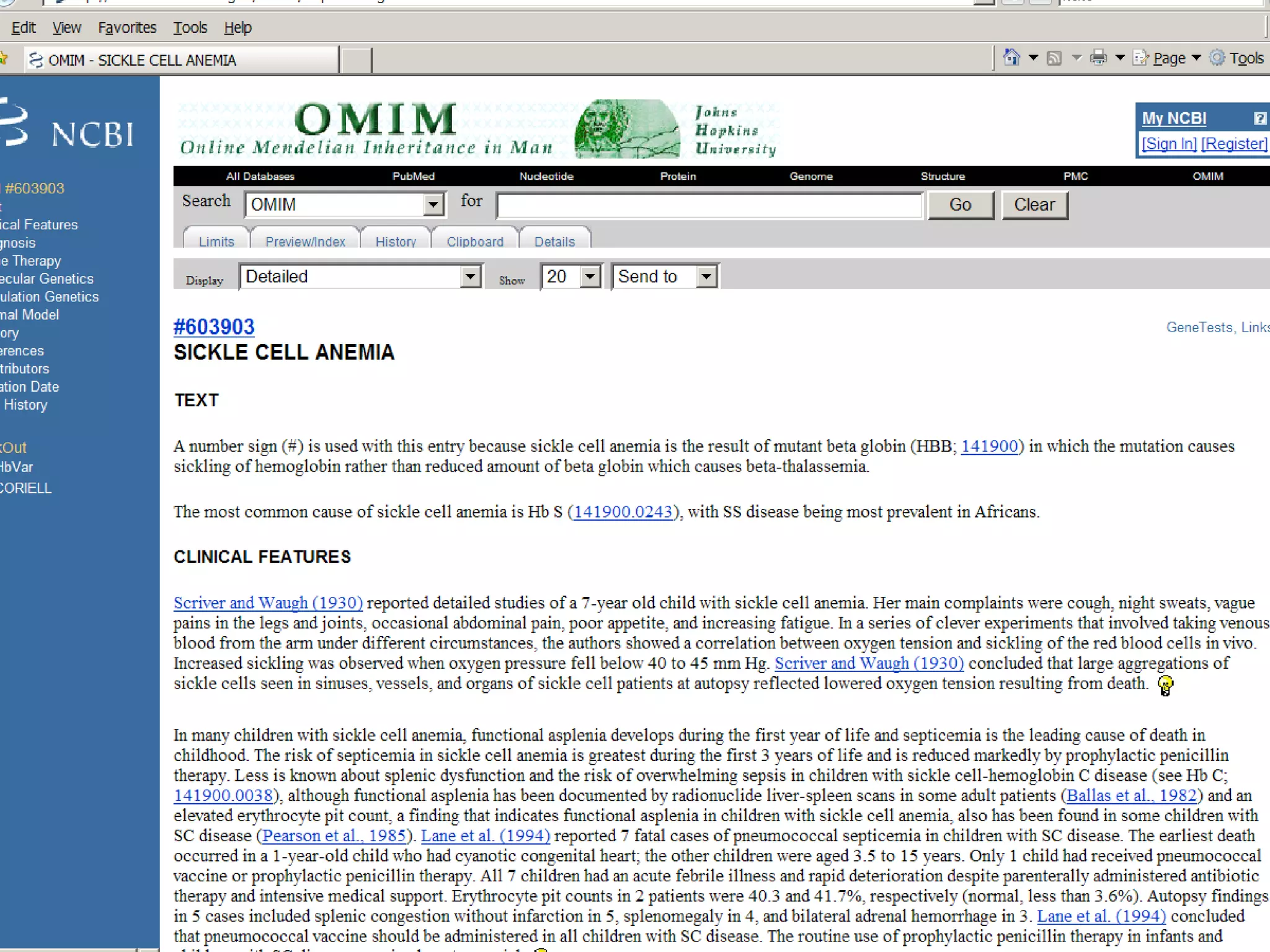
Disease Databases Genes are involved in disease Many diseases are well studied Description of diseases and what is known about them is stored A good place to start when you want to know about a certain disease Linked to PubMed, the OMIM Morbid Map OMIM  - Online Mendelian Inheritance in Man “ A catalog of human genes and genetic disorders maintained by Johns Hopkins University” http:// www.ncbi.nlm.nih.gov/sites/entrez?db = omim
 
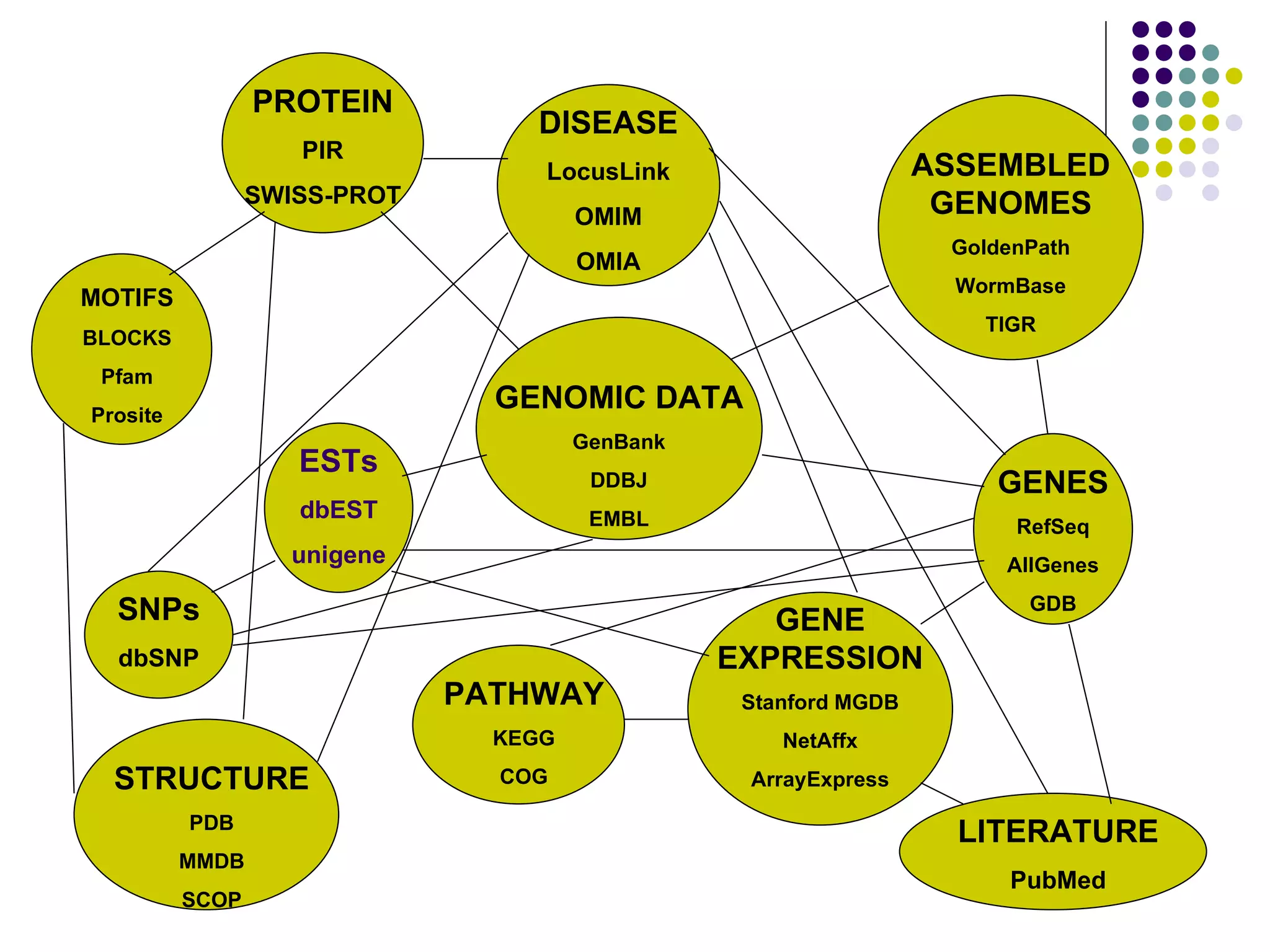
Putting it All Together Each Database contains specific information Like other biological systems also these databases are interrelated
GENOMIC DATA GenBank DDBJ EMBL ASSEMBLED GENOMES GoldenPath WormBase TIGR PROTEIN PIR SWISS-PROT STRUCTURE PDB MMDB SCOP LITERATURE PubMed PATHWAY KEGG COG DISEASE LocusLink OMIM OMIA GENES RefSeq AllGenes GDB SNPs dbSNP ESTs dbEST unigene MOTIFS BLOCKS Pfam Prosite GENE EXPRESSION Stanford MGDB NetAffx ArrayExpress
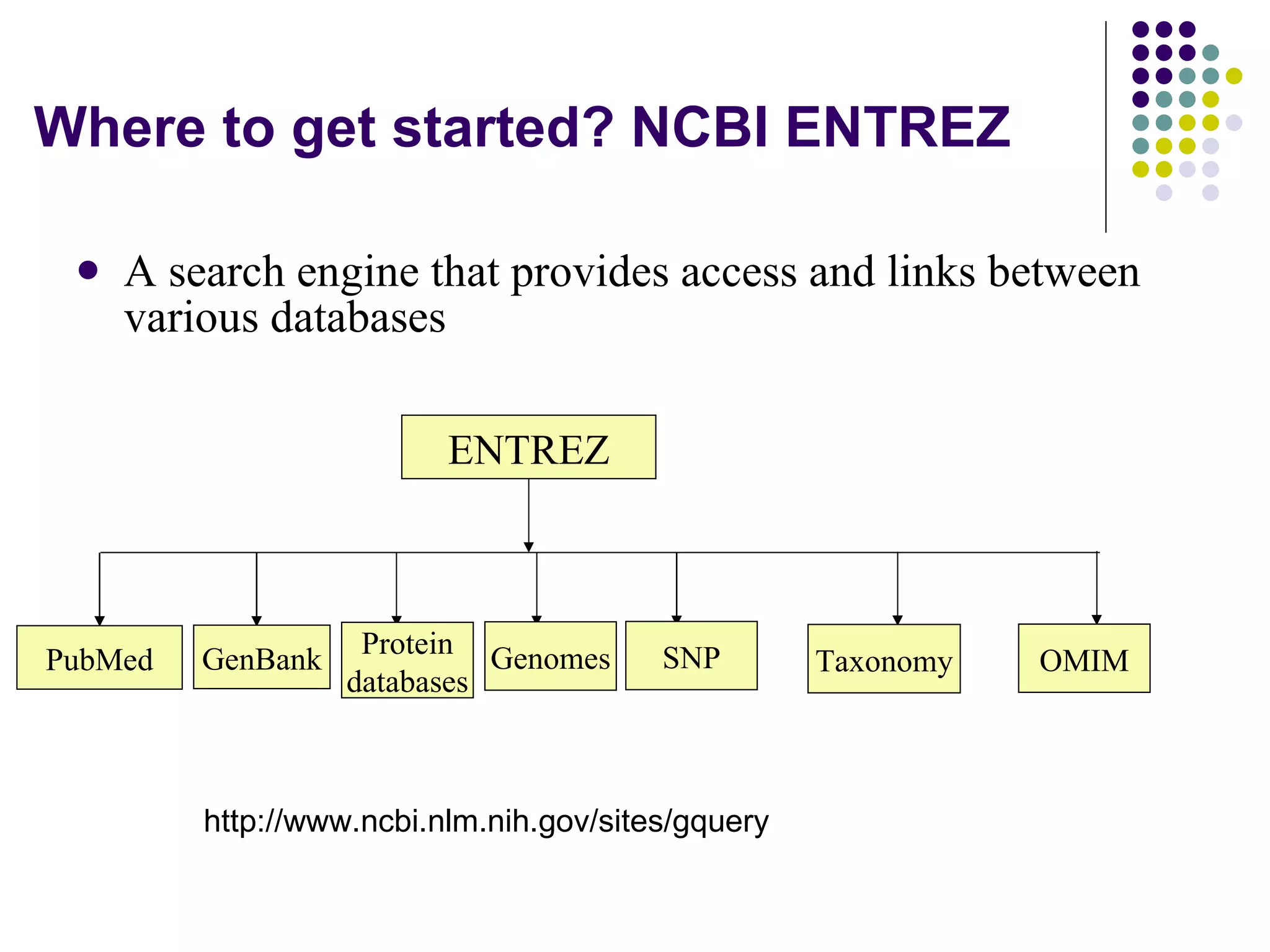
Where to get started? NCBI ENTREZ A search engine that provides access and links between various databases ENTREZ PubMed GenBank Protein databases Genomes SNP Taxonomy OMIM http://www.ncbi.nlm.nih.gov/sites/gquery
Outline Bioinformatics Databases  Primary databases Derived databases Nucleotide databases GenBank (P), EMBL-Bank (P) Protein databases Swiss-Prot (D), PIR-PSD (D) GenPept (D), TrEMBL (D) Protein Data Bank (P) Other Examples RefSeq UniGene PubMed SNP OMIM

Biodatabases 101220022654-phpapp02

  • 1.
    COT 6930 HPCand Bioinformatics Bioinformatics Resources and Databases sree
  • 2.
    DNA RNA cDNAESTs UniGene phenotype Genomic DNA Databases Protein sequence databases protein Protein structure databases transcription translation Gene expression database
  • 3.
  • 4.
    Different transcripts canbe related to the same gene !
  • 5.
    EST Expressed SequenceTags Partial copies of mRNA found within a particular cell Can be used to identify genitc regions; splicing patterns of genes; etc
  • 6.
    Outline Bioinformatics Databases Primary databases Derived databases Nucleotide databases GenBank (P), EMBL-Bank (P) Protein databases Swiss-Prot (D), PIR-PSD (D) GenPept (D), TrEMBL (D) Protein Data Bank (P) Other Examples RefSeq UniGene PubMed SNP OMIM
  • 7.
    Bioinformatics Databases InformationDNA sequences Conserved DNA domains Genomes Gene expression (ESTs, microarrays) Protein sequences Protein 3D structure Protein families Mutations / polymorphisms / SNPs Metabolic pathways Chemical compounds (ligands) Biomedical literature (journal papers, online books…)
  • 8.
    Primary public domainbioinformatics servers Public Domain Bioinformatics Facilities European Bioinformatics Institute (EBI) United Kingdom National Center For Biotechnology Information (NCBI) United States Genome Net (KEGG & DDBJ) Japan Databases Analysis Tools Databases Analysis Tools Databases Analysis Tools
  • 9.
    Major Databases DNAsequences GenBank, RefSeq, UniGene Protein sequences Swiss-Prot, PIR-PSD, GenPept, TrEMBL, RefSeq Protein structure Protein Data Bank (PDB) Gene expression Gene Expression Omnibus (GEO) Biomedical publications PubMed / MedLine
  • 10.
    Bioinformatics Data SourcesPrimary databases Original submissions by researchers Staff organizes information only Generally sequence oriented Examples GenBank, PDB (Protein Data Bank)
  • 11.
    Bioinformatics Data SourcesDerived databases Compiled from data in primary databases Manually curated (human selection & correction) Advantages – high quality Disadvantages – high expense, low volume Examples Swiss-Prot, PIR-PSD, RefSeq Computational derivation (automatically generated) Advantages – inexpensive, up-to-date Disadvantages – lower quality Examples GenPept, TrEMBL, UniGene
  • 12.
    Outline Bioinformatics Databases Primary databases Derived databases Nucleotide databases GenBank (P), EMBL-Bank (P) Protein databases Swiss-Prot (D), PIR-PSD (D) GenPept (D), TrEMBL (D) Protein Data Bank (P) Other Examples RefSeq UniGene PubMed SNP OMIM
  • 13.
    Bioinformatic Databases –GenBank “ GenBank is the NIH genetic sequence database, an annotated collection of all publicly available DNA sequences” Database type Nucleotide sequences Primary database Current Size (As of Aug. 2006): 65,369,091,950 (bps) 61,132,599 (sequences) Access to GenBank Available for searching at NCBI via several methods Such as BLAST search http:// www.ncbi.nlm.nih.gov/Genbank /
  • 14.
    Bioinformatic Databases –GenBank Types of submissions to database Genomic DNA High quality complete DNA sequence mRNA / cDNA Partial or complete mRNA (or cDNA) Expressed sequence tag (EST) A short sub-sequence of a transcribed spliced nucleotide sequence (mRNA) (500-800bps) May represent portions of expressed genes Either protein-coding or not About 43 million ESTs are now available Sequence tagged sites (STS) Short DNA sequences unique in genome Genomic survey sequence (GSS) Single-pass genomic DNA Third-party annotations of GenBank sequences
  • 15.
    Bioinformatic Databases –EMBL-Bank Europe's primary nucleotide sequence resource Primary databases Database type Nucleotide sequences Primary database http://www.ebi.ac.uk/embl/
  • 16.
    Outline Bioinformatics Databases Primary databases Derived databases Nucleotide databases GenBank (P), EMBL-Bank (P) Protein databases Swiss-Prot (D), PIR-PSD (D) GenPept (D), TrEMBL (D) Protein Data Bank (P) Other Examples RefSeq UniGene PubMed SNP OMIM
  • 17.
    Bioinformatic Databases –Proteins Protein sequence databases Once derived from laboratory experiments Now mostly based on predicted ORFs from DNA Manual curation Swiss-Prot PIR-PSD Computational derivation GenPept TrEMBL
  • 18.
    Bioinformatic Databases –Swiss-Prot, PIR-PSD Database type Protein sequences Derived database Manually curated (non-redundant, annotated) Many annotations Functions of the protein Domains and sites Secondary & quaternary structure Similarities to other proteins Variants Swiss-Prot http://ca.expasy.org/sprot/ PIR-PSD http:// pir.georgetown.edu/pirwww/dbinfo/pir_psd.shtml
  • 19.
    Bioinformatic Databases –GenPept, TrEMBL Database type Protein sequences Computationally derived database Predicted (translating) coding sequences (CDS) from GenBank, EMBL (i.e., gene product) GenPept Download: ftp://ftp.ncifcrf.gov/pub/genpept/ Release 163 (as of 12/26/2007) 4,970,178 loci containing 1,517,599,916 residues TrEMBL http:// www.ebi.ac.uk/trembl/index.html
  • 20.
    Structure Databases 3-dimensionalstructures of proteins, nucleic acids, molecular complexes etc 3-d data is available due to techniques such as NMR and X-Ray crystallography Protein Data Bank Protein 3D structures Primary database ( http://www.rcsb.org/pdb/home/home.do )
  • 21.
  • 22.
  • 23.
  • 24.
    Outline Bioinformatics Databases Primary databases Derived databases Nucleotide databases GenBank (P), EMBL-Bank (P) Protein databases Swiss-Prot (D), PIR-PSD (D) GenPept (D), TrEMBL (D) Protein Data Bank (P) Other Examples RefSeq UniGene PubMed SNP OMIM
  • 25.
    Bioinformatic Databases –RefSeq The Reference Sequence (RefSeq) collection aims to provide a comprehensive, integrated, non-redundant set of sequences , including genomic DNA, transcript (RNA), and protein products. Information derived from GenBank records Database type Nucleotide & protein sequences Derived database Human curated (non-redundant, cross-linked) Data in RefSeq Genomic DNA mRNAs & proteins for known genes, gene models Entire chromosomes Multiple organisms http://www.ncbi.nlm.nih.gov/projects/RefSeq/ Example http://www.ncbi.nlm.nih.gov/entrez/viewer.fcgi?val=NP_015325
  • 26.
    Bioinformatic Databases –UniGene UniGene is an experimental system for automatically partitioning GenBank sequences into a non-redundant set of gene-oriented clusters Each UniGene cluster contains sequences that represent a unique gene, as well as related information such as the tissue types in which the gene has been expressed and map location Database type Nucleotide sequences Computationally derived database Partitioned into non-redundant gene-oriented clusters Gene-oriented view Data in UniGene Clusters of genomic DNA & ESTs Multiple organisms http://www.ncbi.nlm.nih.gov/sites/entrez?db=unigene
  • 27.
    Database type Biomedicalpapers Manually curated database Service of the National Library of Medicine MEDLINE publication database Over 17,000 journals 15 million citations since 1950 http :// www . ncbi . nlm . nih . gov / PubMed / Bioinformatic Databases – PubMed
  • 28.
    Bioinformatic Databases –Others Gene expression ArrayExpress, Gene Expression Omnibus (GEO) Multi-organism genomes Entrez Genome, HomoloGene, COGs, TIGR Genetic variation & genetic diseases dbSNP, OMIM, CGAP Metabolic pathways WIT, KEGG Many more… Listed in journal “Nucleic Acids Research” each January
  • 29.
    Bioinformatic Databases: SNPDatabase Single Nucleotide Polymorphisms (SNPs) Single base difference in a single position among two different individuals of the same species Play an important role in differentiation and disease http://www.ncbi.nlm.nih.gov/projects/SNP/
  • 30.
    Sickle Cell AnemiaDue to 1 swapping an A for a T, causing inserted amino acid to be valine instead of glutamine in hemoglobin Image source: http://www.cc.nih.gov/ccc/ccnews/nov99/
  • 31.
    Healthy Individual >gi|28302128|ref|NM_000518.4|Homo sapiens hemoglobin, beta (HBB), mRNA ACATTTGCTTCTGACACAACTGTGTTCACTAGCAACCTCAAACAGACACC ATG GTGCATCTGACTCCTGA G G A G AAGTCTGCCGTTACTGCCCTGTGGGGCAAGGTGAACGTGGATGAAGTTGGTGGTGAGGCCCTGGGC AGGCTGCTGGTGGTCTACCCTTGGACCCAGAGGTTCTTTGAGTCCTTTGGGGATCTGTCCACTCCTGATG CTGTTATGGGCAACCCTAAGGTGAAGGCTCATGGCAAGAAAGTGCTCGGTGCCTTTAGTGATGGCCTGGC TCACCTGGACAACCTCAAGGGCACCTTTGCCACACTGAGTGAGCTGCACTGTGACAAGCTGCACGTGGAT CCTGAGAACTTCAGGCTCCTGGGCAACGTGCTGGTCTGTGTGCTGGCCCATCACTTTGGCAAAGAATTCA CCCCACCAGTGCAGGCTGCCTATCAGAAAGTGGTGGCTGGTGTGGCTAATGCCCTGGCCCACAAGTATCA CTAAGCTCGCTTTCTTGCTGTCCAATTTCTATTAAAGGTTCCTTTGTTCCCTAAGTCCAACTACTAAACT GGGGGATATTATGAAGGGCCTTGAGCATCTGGATTCTGCCTAATAAAAAACATTTATTTTCATTGC >gi|4504349|ref|NP_000509.1| beta globin [Homo sapiens] MVHLTP E EKSAVTALWGKVNVDEVGGEALGRLLVVYPWTQRFFESFGDLSTPDAVMGNPKVKAHGKKVLG AFSDGLAHLDNLKGTFATLSELHCDKLHVDPENFRLLGNVLVCVLAHHFGKEFTPPVQAAYQKVVAGVAN ALAHKYH
  • 32.
    Diseased Individual >gi|28302128|ref|NM_000518.4|Homo sapiens hemoglobin, beta (HBB), mRNA ACATTTGCTTCTGACACAACTGTGTTCACTAGCAACCTCAAACAGACACC ATG GTGCATCTGACTCCTGA G G T G AAGTCTGCCGTTACTGCCCTGTGGGGCAAGGTGAACGTGGATGAAGTTGGTGGTGAGGCCCTGGGC AGGCTGCTGGTGGTCTACCCTTGGACCCAGAGGTTCTTTGAGTCCTTTGGGGATCTGTCCACTCCTGATG CTGTTATGGGCAACCCTAAGGTGAAGGCTCATGGCAAGAAAGTGCTCGGTGCCTTTAGTGATGGCCTGGC TCACCTGGACAACCTCAAGGGCACCTTTGCCACACTGAGTGAGCTGCACTGTGACAAGCTGCACGTGGAT CCTGAGAACTTCAGGCTCCTGGGCAACGTGCTGGTCTGTGTGCTGGCCCATCACTTTGGCAAAGAATTCA CCCCACCAGTGCAGGCTGCCTATCAGAAAGTGGTGGCTGGTGTGGCTAATGCCCTGGCCCACAAGTATCA CTAAGCTCGCTTTCTTGCTGTCCAATTTCTATTAAAGGTTCCTTTGTTCCCTAAGTCCAACTACTAAACT GGGGGATATTATGAAGGGCCTTGAGCATCTGGATTCTGCCTAATAAAAAACATTTATTTTCATTGC >gi|4504349|ref|NP_000509.1| beta globin [Homo sapiens] MVHLTP V EKSAVTALWGKVNVDEVGGEALGRLLVVYPWTQRFFESFGDLSTPDAVMGNPKVKAHGKKVLG AFSDGLAHLDNLKGTFATLSELHCDKLHVDPENFRLLGNVLVCVLAHHFGKEFTPPVQAAYQKVVAGVAN ALAHKYH
  • 33.
    Disease Databases Genesare involved in disease Many diseases are well studied Description of diseases and what is known about them is stored A good place to start when you want to know about a certain disease Linked to PubMed, the OMIM Morbid Map OMIM - Online Mendelian Inheritance in Man “ A catalog of human genes and genetic disorders maintained by Johns Hopkins University” http:// www.ncbi.nlm.nih.gov/sites/entrez?db = omim
  • 34.
  • 35.
    Putting it AllTogether Each Database contains specific information Like other biological systems also these databases are interrelated
  • 36.
    GENOMIC DATA GenBankDDBJ EMBL ASSEMBLED GENOMES GoldenPath WormBase TIGR PROTEIN PIR SWISS-PROT STRUCTURE PDB MMDB SCOP LITERATURE PubMed PATHWAY KEGG COG DISEASE LocusLink OMIM OMIA GENES RefSeq AllGenes GDB SNPs dbSNP ESTs dbEST unigene MOTIFS BLOCKS Pfam Prosite GENE EXPRESSION Stanford MGDB NetAffx ArrayExpress
  • 37.
    Where to getstarted? NCBI ENTREZ A search engine that provides access and links between various databases ENTREZ PubMed GenBank Protein databases Genomes SNP Taxonomy OMIM http://www.ncbi.nlm.nih.gov/sites/gquery
  • 38.
    Outline Bioinformatics Databases Primary databases Derived databases Nucleotide databases GenBank (P), EMBL-Bank (P) Protein databases Swiss-Prot (D), PIR-PSD (D) GenPept (D), TrEMBL (D) Protein Data Bank (P) Other Examples RefSeq UniGene PubMed SNP OMIM