Arooba Baig
 MATLAB

 MATLAB is a high-level language and interactive
environment for numerical computation, visualization, and
programming.
 Features of Matlab
 you can analyze data,
 develop algorithms,
 Create models and applications.
 BCL2 B-cell CLL/lymphoma 2 [Homo sapiens (human)]
 Function
 Transcriptional regulator that acts as an activator. Promotes beta-
catenin transcriptional activity
 Fasta format
 >gi|568815580:c63319778-63123346 Homo sapiens chromosome
18, GRCh38 Primary
AssemblyCTTCTCCCCACCCCTCGCCGCACCACACACAGCG
CGGGCTTCTAGCGCTCGGCACCGGCGGGCCAGGCGCGTCC
TGCCTTCATTTATCCAGCAGCTTTTCGGAAAATGCATTTGC
TGTTCGGAGTTTAATCAGAAGAGGATTCCTGCCTCCGTCC
CCGGCTCCTTCATCGTCCCCTCTCCCCTGTCTCTCTCCTGG
GGAGGCGTGAAGCG
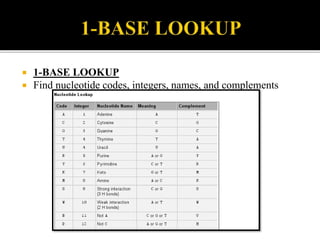
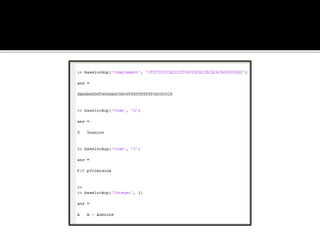
 1-BASE LOOKUP
 Find nucleotide codes, integers, names, and complements
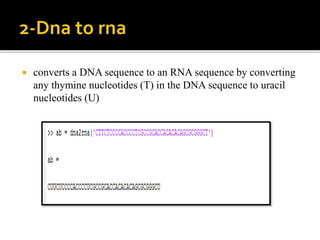
 converts a DNA sequence to an RNA sequence by converting
any thymine nucleotides (T) in the DNA sequence to uracil
nucleotides (U)
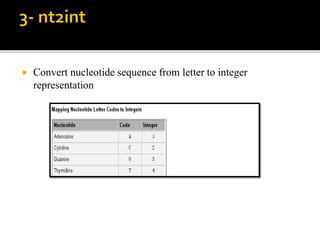
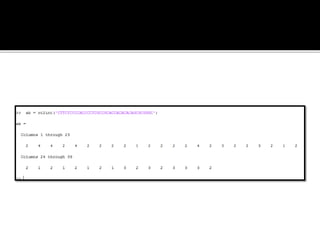
 Convert nucleotide sequence from letter to integer
representation
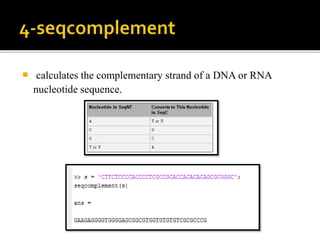
 calculates the complementary strand of a DNA or RNA
nucleotide sequence.
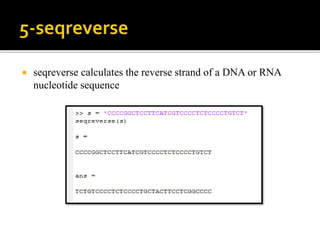
 seqreverse calculates the reverse strand of a DNA or RNA
nucleotide sequence
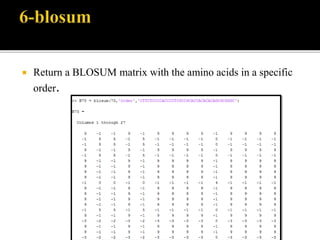
 Return a BLOSUM matrix with the amino acids in a specific
order.
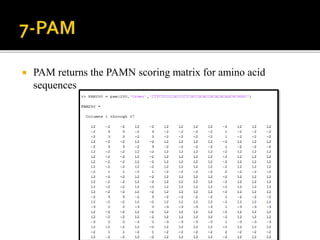
 PAM returns the PAMN scoring matrix for amino acid
sequences
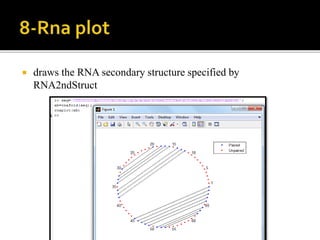
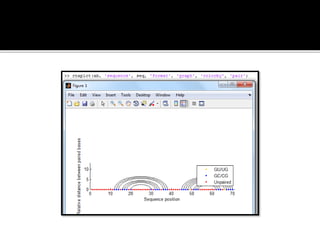
 draws the RNA secondary structure specified by
RNA2ndStruct
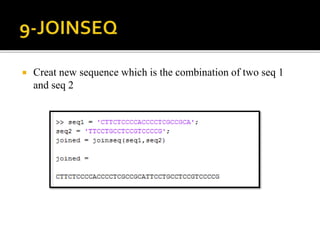
 Creat new sequence which is the combination of two seq 1
and seq 2
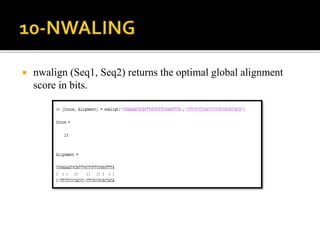
 nwalign (Seq1, Seq2) returns the optimal global alignment
score in bits.
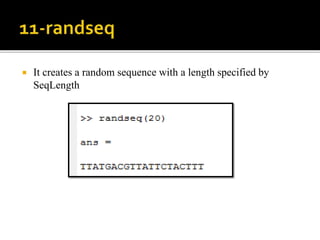
 It creates a random sequence with a length specified by
SeqLength
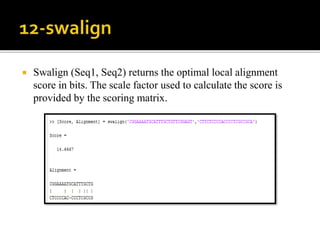
 Swalign (Seq1, Seq2) returns the optimal local alignment
score in bits. The scale factor used to calculate the score is
provided by the scoring matrix.
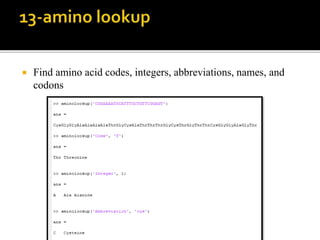
 Find amino acid codes, integers, abbreviations, names, and
codons
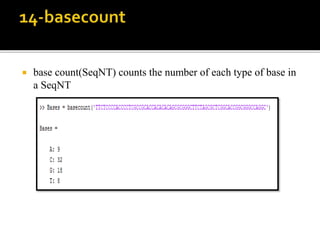
 base count(SeqNT) counts the number of each type of base in
a SeqNT
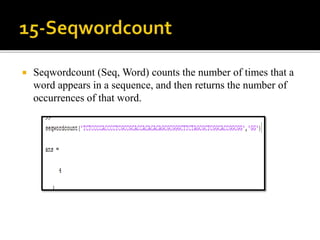
 Seqwordcount (Seq, Word) counts the number of times that a
word appears in a sequence, and then returns the number of
occurrences of that word.
Bio info

Bio info

  • 1.
  • 2.
     MATLAB   MATLABis a high-level language and interactive environment for numerical computation, visualization, and programming.  Features of Matlab  you can analyze data,  develop algorithms,  Create models and applications.
  • 3.
     BCL2 B-cellCLL/lymphoma 2 [Homo sapiens (human)]  Function  Transcriptional regulator that acts as an activator. Promotes beta- catenin transcriptional activity  Fasta format  >gi|568815580:c63319778-63123346 Homo sapiens chromosome 18, GRCh38 Primary AssemblyCTTCTCCCCACCCCTCGCCGCACCACACACAGCG CGGGCTTCTAGCGCTCGGCACCGGCGGGCCAGGCGCGTCC TGCCTTCATTTATCCAGCAGCTTTTCGGAAAATGCATTTGC TGTTCGGAGTTTAATCAGAAGAGGATTCCTGCCTCCGTCC CCGGCTCCTTCATCGTCCCCTCTCCCCTGTCTCTCTCCTGG GGAGGCGTGAAGCG
  • 4.
     1-BASE LOOKUP Find nucleotide codes, integers, names, and complements
  • 6.
     converts aDNA sequence to an RNA sequence by converting any thymine nucleotides (T) in the DNA sequence to uracil nucleotides (U)
  • 7.
     Convert nucleotidesequence from letter to integer representation
  • 9.
     calculates thecomplementary strand of a DNA or RNA nucleotide sequence.
  • 10.
     seqreverse calculatesthe reverse strand of a DNA or RNA nucleotide sequence
  • 11.
     Return aBLOSUM matrix with the amino acids in a specific order.
  • 12.
     PAM returnsthe PAMN scoring matrix for amino acid sequences
  • 13.
     draws theRNA secondary structure specified by RNA2ndStruct
  • 15.
     Creat newsequence which is the combination of two seq 1 and seq 2
  • 16.
     nwalign (Seq1,Seq2) returns the optimal global alignment score in bits.
  • 17.
     It createsa random sequence with a length specified by SeqLength
  • 18.
     Swalign (Seq1,Seq2) returns the optimal local alignment score in bits. The scale factor used to calculate the score is provided by the scoring matrix.
  • 19.
     Find aminoacid codes, integers, abbreviations, names, and codons
  • 20.
     base count(SeqNT)counts the number of each type of base in a SeqNT
  • 21.
     Seqwordcount (Seq,Word) counts the number of times that a word appears in a sequence, and then returns the number of occurrences of that word.