Chapter 40
                                              Conservation
                                                Biology
                                      Lecture Outline


Copyright © The McGraw-Hill Companies, Inc. Permission required for reproduction or display.
40.1 Conservation biology

 Conservation biology

   Goal of conserving natural resources for this
    generation and all future generations

   Support of biodiversity for all species

   Helps reduce extinctions of species


                                                    40-2
Biodiversity & Extinction

 Biodiversity – variety of life on Earth
    Between 10 and 50 million species may exist


 Of the described species, nearly 1,200 in the
  United States and 40,000 worldwide are in
  danger of extinction

 Endangered species is in peril of immediate
  extinction throughout all or most of its range

                                                   40-3
Genetic & Ecosystem Diversity
 Genetic diversity

    Variations among the members of a population

    The more diverse a population, the more likely they survive


 Ecosystem diversity

    Conserve species that play a critical role in an ecosystem

    Saving an entire ecosystem can save many species

                                                                   40-4
Landscape diversity
 Landscape diversity
    Ecosystems can be so fragmented that they are connected by
     patches or strips of land that allow organisms to move from one
     ecosystem to the other


 Distribution of Biodiversity
    Biodiversity is not evenly distributed throughout the biosphere

    Some regions of the world are called biodiversity hotspots
     because they contain unusually large concentrations of species

    Exs: Madagascar, Great Barrier Reef in Australia, rainforests

                                                                       40-5
Medicinal & Agricultural Value

 Medicinal Value
   Most prescription drugs in the United States were
    originally derived from living organisms
      Valued at over $200 billion
 Agricultural Value
   Crops such as wheat, corn, and rice are derived from
    wild plants

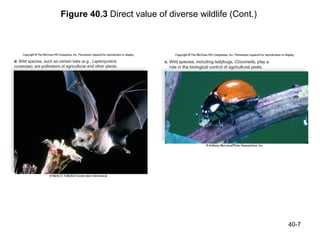
   Biological pest controls (natural predators and
    parasites) are often preferable to chemical pesticides
      Ladybugs, bats
                                                        40-6
Figure 40.3 Direct value of diverse wildlife (Cont.)


                                                       40-7
Consumptive Use Value

 Consumptive Use Value
   Most freshwater and marine harvests depend on the
    catching of wild animals, such as crustaceans,
    mammals, and fishes

   Provides a variety of other products that are sold in
    the marketplace worldwide, including wild fruits and
    vegetables, skins, fibers, beeswax, and seaweed

   Many trees in the natural environment are still felled
    for their wood
                                                            40-8
Ecological Value
 Biogeochemical Cycles Dispose of Waste
    Biodiversity contributes to workings of water, carbon,
     phosphorus, and nitrogen cycles


 Natural Areas Provide Fresh Water, Prevent Soil
  Erosion, and Regulate Climate
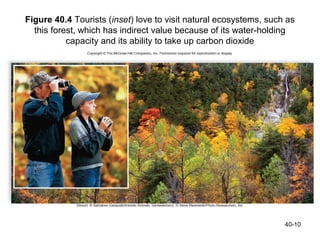
    Water-holding capacity of forests and wetlands reduces the
     possibility of flooding
    Forests improve climate because they take up carbon dioxide


 Ecotourism Is Enjoyed by Many
    In U.S., people spend $4 billion each year on ecotourism
                                                                   40-9
Figure 40.4 Tourists (inset) love to visit natural ecosystems, such as
  this forest, which has indirect value because of its water-holding
           capacity and its ability to take up carbon dioxide


                                                                   40-10
Habitat Loss & Extinctions
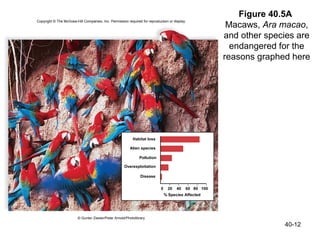
 Of 1,880 threatened and endangered species in
  U.S., habitat loss was involved in 85% of cases

   Other significant causes of extinction are introduction
    of alien species, pollution, overexploitation, and
    disease


                                                        40-11
Figure 40.5A
Copyright © The McGraw-Hill Companies, Inc. Permission required for reproduction or display.
                                                                                                        Macaws, Ara macao,
                                                                                                       and other species are
                                                                                                         endangered for the
                                                                                                       reasons graphed here


                                                           Habitat loss

                                                         Alien species

                                                               Pollution

                                                      Overexploitation

                                                                Disease


                                                                            0    20   40   60 80 100
                                                                                % Species Affected


                         © Gunter Ziesler/Peter Arnold/Photolibrary

                                                                                                                     40-12
Non-native Species
 Alien species – nonnative members brought
  into new ecosystems
   Introduced by
      Colonization – Europeans brought various familiar species
       with them when they colonized new places
           Dandelions
      Horticulture and agriculture – Aliens now taking over vast
       tracts of land have escaped from cultivated areas
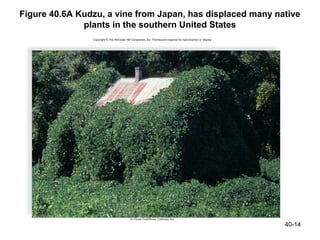
           Kudzu is a vine from Japan that the U.S. Department of
            Agriculture thought would help prevent soil erosion
      Accidental transport – Global trade and travel accidentally
       bring many new species from one country to another
           Zebra mussels
                                                               40-13
Figure 40.6A Kudzu, a vine from Japan, has displaced many native
              plants in the southern United States


                                                            40-14
40.7 Pollution contributes to extinctions

 Exs. of Pollution

    Acid deposition – (or “Acid Rain”):Both sulfur dioxide
     from power plants and nitrogen oxides in automobile
     exhaust are converted to acids when they combine
     with water vapor in the atmosphere

    Eutrophication – Lakes are also under stress due to
     over-enrichment (excess nitrogen and phosphorus)
       Algae blooms occur and upon death, the decomposers break
        down the algae, but in so doing, they use up oxygen
                                                            40-15
Ozone & Organic Chemicals
 Ozone depletion – Ozone (O3) “shield” absorbs most of
  the wavelengths of harmful ultraviolet (UV) radiation so
  they do not strike the Earth
    Severe ozone shield depletion can impair crop and tree growth
     and also kill plankton that sustain oceanic life


 Organic chemicals – Organic chemicals are used in
  pesticides, dishwashing detergents, cosmetics & plastics
    Mimic the effects of hormones and, in that way, most likely harm
     wildlife


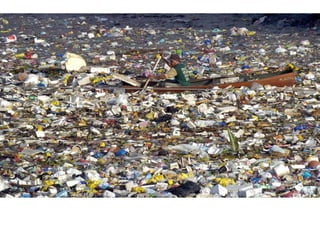
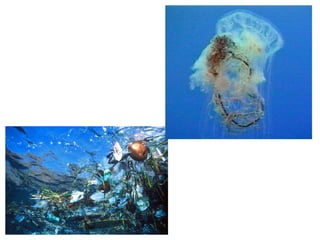
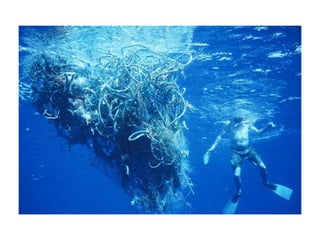
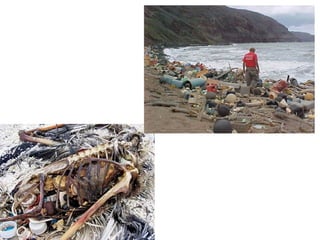
 Solid waste disposal – plastic floating in the ocean
  creates a danger to wildlife
                                                                40-16
 http://www.youtube.com/watch?v=tnUjTHB1lvM
 http://www.youtube.com/watch?v=J-gqJAsXiKQ
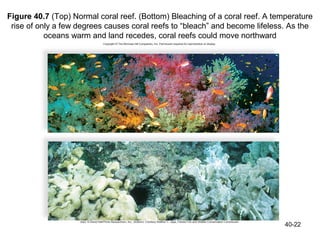
Figure 40.7 (Top) Normal coral reef. (Bottom) Bleaching of a coral reef. A temperature
 rise of only a few degrees causes coral reefs to “bleach” and become lifeless. As the
           oceans warm and land recedes, coral reefs could move northward


                                                                              40-22
40.8 Overexploitation
         contributes to extinctions
 Overexploitation occurs when the number of individuals
  taken from a wild population is so great that the
  population becomes severely reduced in number
    Overexploitation accounts for 17% of extinctions


 U.N. Food and Agricultural Organization tells us that
  humans have now overexploited 11 of 15 major oceanic
  fishing areas


                                                        40-23
40.9 Disease contributes to extinctions

 Number of pathogens that cause diseases is on
  the rise, threatening human health as well as
  that of wildlife

 Pollution can weaken organisms so that they are
  more susceptible to disease

   Example: Almost half of sea otter deaths along the
    coast of California are now due to infectious diseases

                                                       40-24
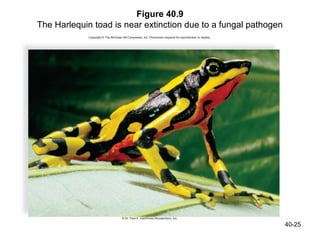
Figure 40.9
The Harlequin toad is near extinction due to a fungal pathogen


                                                                 40-25
40.10 Habitat preservation:
             Keystone Species
 Keystone species
   Species that influence the viability of a community,
    although their numbers may not be excessively high

   Extinction of a keystone species can lead to other
    extinctions and loss of biodiversity

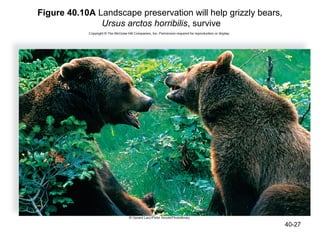
   Ex: Grizzly bears in northwestern US and Canada
         Berry seed distribution, control populations of other animals
      Otters
         Keep populations of other species in check
      Bats
         Essential pollinators                                    40-26
Figure 40.10A Landscape preservation will help grizzly bears,
               Ursus arctos horribilis, survive


                                                                40-27
40.11 Restoration Ecology

 Restoration ecology – seeks scientific ways to
  return ecosystems to former state

   Three principles have so far emerged
      It is best to begin as soon as possible before remaining
       fragments of the original habitat are lost
      Once the natural history is understood, it is best to use
       biological techniques that mimic natural processes to bring
       about restoration
      Goal is sustainable development, ability of an ecosystem to
       maintain itself while providing services to human beings

                                                              40-28
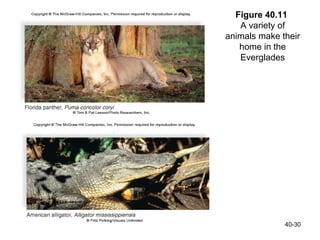
 The Everglades – southern Florida
   Vast sawgrass prairie, interrupted occasionally by a
    hardwood tree island
   Beginning of 20th century, settlers began to drain land
    to grow crops
   A restoration plan has been developed that will
    sustain the Everglades ecosystem, while maintaining
    the services society requires
   The Everglades is to receive a more natural flow of
    water from Lake Okeechobee

                                                       40-29
Figure 40.11
   A variety of
animals make their
   home in the
   Everglades


              40-30
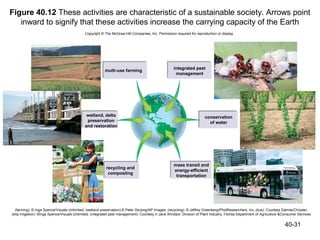
Figure 40.12 These activities are characteristic of a sustainable society. Arrows point
   inward to signify that these activities increase the carrying capacity of the Earth
                                             Copyright © The McGraw-Hill Companies, Inc. Permission required for reproduction or display.


                                                                                                    integrated pest
                                                         multi-use farming
                                                                                                     management


                                              wetland, delta                                                            conservation
                                              preservation                                                                of water
                                             and restoration


                                                                                                    mass transit and
                                                          recycling and
                                                                                                    energy-efficient
                                                           composting
                                                                                                     transportation


  (farming): © Inga Spence/Visuals Unlimited; (wetland preservation):© Peter DeJong/AP Images; (recycling): © Jeffrey Greenberg/PhotResearchers, Inc.;(bus): Courtesy DaimlerChrysler;
(drip irrigation): ©Inga Spence/Visuals Unlimited; (integrated pest management): Courtesy V.Jane Windsor, Division of Plant Industry, Florida Department of Agriculture &Consumer Services


                                                                                                                                                                         40-31
40.13 Renewable Energy Sources


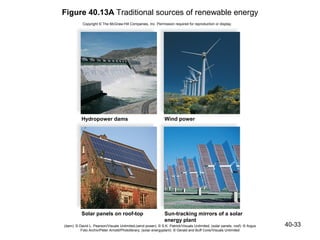
 Traditional renewable energy sources
     Hydroelectric plants
     Geothermal energy
     Wind power
     Solar energy

 In the future, biofuels may run power plants or
  your car

                                                    40-32
Figure 40.13A Traditional sources of renewable energy
           Copyright © The McGraw-Hill Companies, Inc. Permission required for reproduction or display.


          Hydropower dams                                      Wind power


          Solar panels on roof-top                             Sun-tracking mirrors of a solar
                                                               energy plant
(dam): © David L. Pearson/Visuals Unlimited;(wind power): © S.K. Patrick/Visuals Unlimited; (solar panels, roof): © Argus   40-33
          Foto Archiv/Peter Arnold/Photolibrary; (solar energyplant): © Gerald and Buff Corsi/Visuals Unlimited
Connecting the Concepts:
           Chapter 40
 Biodiversity includes genetic, ecosystem & landscape
  diversity
 Organisms have medicinal, agricultural & ecological value
 Habitat loss & introduction of non-native species are
  destructive
 Overexploitation, pollution & diseases contribute to
  extinctions
 Importance of developing renewable energy sources
 Habitat preservation & restoration = sustainable
  development

                                                      40-34

Bio 100 Chapter 40

  • 1.
    Chapter 40 Conservation Biology Lecture Outline Copyright © The McGraw-Hill Companies, Inc. Permission required for reproduction or display.
  • 2.
    40.1 Conservation biology Conservation biology  Goal of conserving natural resources for this generation and all future generations  Support of biodiversity for all species  Helps reduce extinctions of species 40-2
  • 3.
    Biodiversity & Extinction Biodiversity – variety of life on Earth  Between 10 and 50 million species may exist  Of the described species, nearly 1,200 in the United States and 40,000 worldwide are in danger of extinction  Endangered species is in peril of immediate extinction throughout all or most of its range 40-3
  • 4.
    Genetic & EcosystemDiversity  Genetic diversity  Variations among the members of a population  The more diverse a population, the more likely they survive  Ecosystem diversity  Conserve species that play a critical role in an ecosystem  Saving an entire ecosystem can save many species 40-4
  • 5.
    Landscape diversity  Landscapediversity  Ecosystems can be so fragmented that they are connected by patches or strips of land that allow organisms to move from one ecosystem to the other  Distribution of Biodiversity  Biodiversity is not evenly distributed throughout the biosphere  Some regions of the world are called biodiversity hotspots because they contain unusually large concentrations of species  Exs: Madagascar, Great Barrier Reef in Australia, rainforests 40-5
  • 6.
    Medicinal & AgriculturalValue  Medicinal Value  Most prescription drugs in the United States were originally derived from living organisms  Valued at over $200 billion  Agricultural Value  Crops such as wheat, corn, and rice are derived from wild plants  Biological pest controls (natural predators and parasites) are often preferable to chemical pesticides  Ladybugs, bats 40-6
  • 7.
    Figure 40.3 Directvalue of diverse wildlife (Cont.) 40-7
  • 8.
    Consumptive Use Value Consumptive Use Value  Most freshwater and marine harvests depend on the catching of wild animals, such as crustaceans, mammals, and fishes  Provides a variety of other products that are sold in the marketplace worldwide, including wild fruits and vegetables, skins, fibers, beeswax, and seaweed  Many trees in the natural environment are still felled for their wood 40-8
  • 9.
    Ecological Value  BiogeochemicalCycles Dispose of Waste  Biodiversity contributes to workings of water, carbon, phosphorus, and nitrogen cycles  Natural Areas Provide Fresh Water, Prevent Soil Erosion, and Regulate Climate  Water-holding capacity of forests and wetlands reduces the possibility of flooding  Forests improve climate because they take up carbon dioxide  Ecotourism Is Enjoyed by Many  In U.S., people spend $4 billion each year on ecotourism 40-9
  • 10.
    Figure 40.4 Tourists(inset) love to visit natural ecosystems, such as this forest, which has indirect value because of its water-holding capacity and its ability to take up carbon dioxide 40-10
  • 11.
    Habitat Loss &Extinctions  Of 1,880 threatened and endangered species in U.S., habitat loss was involved in 85% of cases  Other significant causes of extinction are introduction of alien species, pollution, overexploitation, and disease 40-11
  • 12.
    Figure 40.5A Copyright ©The McGraw-Hill Companies, Inc. Permission required for reproduction or display. Macaws, Ara macao, and other species are endangered for the reasons graphed here Habitat loss Alien species Pollution Overexploitation Disease 0 20 40 60 80 100 % Species Affected © Gunter Ziesler/Peter Arnold/Photolibrary 40-12
  • 13.
    Non-native Species  Alienspecies – nonnative members brought into new ecosystems  Introduced by  Colonization – Europeans brought various familiar species with them when they colonized new places  Dandelions  Horticulture and agriculture – Aliens now taking over vast tracts of land have escaped from cultivated areas  Kudzu is a vine from Japan that the U.S. Department of Agriculture thought would help prevent soil erosion  Accidental transport – Global trade and travel accidentally bring many new species from one country to another  Zebra mussels 40-13
  • 14.
    Figure 40.6A Kudzu,a vine from Japan, has displaced many native plants in the southern United States 40-14
  • 15.
    40.7 Pollution contributesto extinctions  Exs. of Pollution  Acid deposition – (or “Acid Rain”):Both sulfur dioxide from power plants and nitrogen oxides in automobile exhaust are converted to acids when they combine with water vapor in the atmosphere  Eutrophication – Lakes are also under stress due to over-enrichment (excess nitrogen and phosphorus)  Algae blooms occur and upon death, the decomposers break down the algae, but in so doing, they use up oxygen 40-15
  • 16.
    Ozone & OrganicChemicals  Ozone depletion – Ozone (O3) “shield” absorbs most of the wavelengths of harmful ultraviolet (UV) radiation so they do not strike the Earth  Severe ozone shield depletion can impair crop and tree growth and also kill plankton that sustain oceanic life  Organic chemicals – Organic chemicals are used in pesticides, dishwashing detergents, cosmetics & plastics  Mimic the effects of hormones and, in that way, most likely harm wildlife  Solid waste disposal – plastic floating in the ocean creates a danger to wildlife 40-16
  • 17.
  • 22.
    Figure 40.7 (Top)Normal coral reef. (Bottom) Bleaching of a coral reef. A temperature rise of only a few degrees causes coral reefs to “bleach” and become lifeless. As the oceans warm and land recedes, coral reefs could move northward 40-22
  • 23.
    40.8 Overexploitation contributes to extinctions  Overexploitation occurs when the number of individuals taken from a wild population is so great that the population becomes severely reduced in number  Overexploitation accounts for 17% of extinctions  U.N. Food and Agricultural Organization tells us that humans have now overexploited 11 of 15 major oceanic fishing areas 40-23
  • 24.
    40.9 Disease contributesto extinctions  Number of pathogens that cause diseases is on the rise, threatening human health as well as that of wildlife  Pollution can weaken organisms so that they are more susceptible to disease  Example: Almost half of sea otter deaths along the coast of California are now due to infectious diseases 40-24
  • 25.
    Figure 40.9 The Harlequintoad is near extinction due to a fungal pathogen 40-25
  • 26.
    40.10 Habitat preservation: Keystone Species  Keystone species  Species that influence the viability of a community, although their numbers may not be excessively high  Extinction of a keystone species can lead to other extinctions and loss of biodiversity  Ex: Grizzly bears in northwestern US and Canada  Berry seed distribution, control populations of other animals  Otters  Keep populations of other species in check  Bats  Essential pollinators 40-26
  • 27.
    Figure 40.10A Landscapepreservation will help grizzly bears, Ursus arctos horribilis, survive 40-27
  • 28.
    40.11 Restoration Ecology Restoration ecology – seeks scientific ways to return ecosystems to former state  Three principles have so far emerged  It is best to begin as soon as possible before remaining fragments of the original habitat are lost  Once the natural history is understood, it is best to use biological techniques that mimic natural processes to bring about restoration  Goal is sustainable development, ability of an ecosystem to maintain itself while providing services to human beings 40-28
  • 29.
     The Everglades– southern Florida  Vast sawgrass prairie, interrupted occasionally by a hardwood tree island  Beginning of 20th century, settlers began to drain land to grow crops  A restoration plan has been developed that will sustain the Everglades ecosystem, while maintaining the services society requires  The Everglades is to receive a more natural flow of water from Lake Okeechobee 40-29
  • 30.
    Figure 40.11 A variety of animals make their home in the Everglades 40-30
  • 31.
    Figure 40.12 Theseactivities are characteristic of a sustainable society. Arrows point inward to signify that these activities increase the carrying capacity of the Earth Copyright © The McGraw-Hill Companies, Inc. Permission required for reproduction or display. integrated pest multi-use farming management wetland, delta conservation preservation of water and restoration mass transit and recycling and energy-efficient composting transportation (farming): © Inga Spence/Visuals Unlimited; (wetland preservation):© Peter DeJong/AP Images; (recycling): © Jeffrey Greenberg/PhotResearchers, Inc.;(bus): Courtesy DaimlerChrysler; (drip irrigation): ©Inga Spence/Visuals Unlimited; (integrated pest management): Courtesy V.Jane Windsor, Division of Plant Industry, Florida Department of Agriculture &Consumer Services 40-31
  • 32.
    40.13 Renewable EnergySources  Traditional renewable energy sources  Hydroelectric plants  Geothermal energy  Wind power  Solar energy  In the future, biofuels may run power plants or your car 40-32
  • 33.
    Figure 40.13A Traditionalsources of renewable energy Copyright © The McGraw-Hill Companies, Inc. Permission required for reproduction or display. Hydropower dams Wind power Solar panels on roof-top Sun-tracking mirrors of a solar energy plant (dam): © David L. Pearson/Visuals Unlimited;(wind power): © S.K. Patrick/Visuals Unlimited; (solar panels, roof): © Argus 40-33 Foto Archiv/Peter Arnold/Photolibrary; (solar energyplant): © Gerald and Buff Corsi/Visuals Unlimited
  • 34.
    Connecting the Concepts: Chapter 40  Biodiversity includes genetic, ecosystem & landscape diversity  Organisms have medicinal, agricultural & ecological value  Habitat loss & introduction of non-native species are destructive  Overexploitation, pollution & diseases contribute to extinctions  Importance of developing renewable energy sources  Habitat preservation & restoration = sustainable development 40-34