Downloaded 15 times
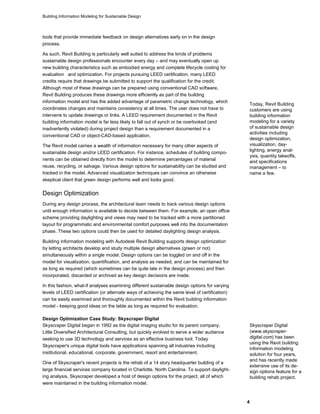
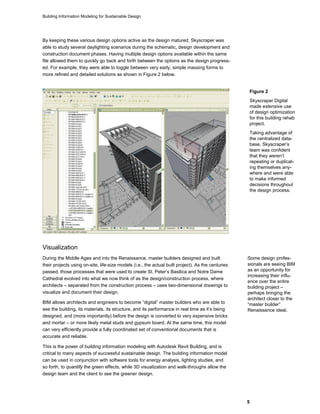
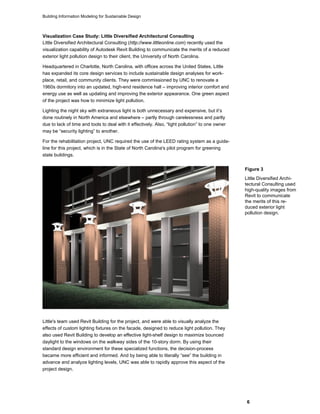
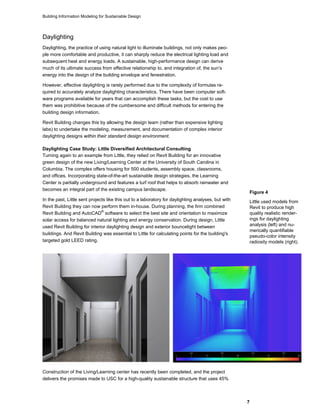

The document discusses how Building Information Modeling (BIM) using Autodesk Revit software supports sustainable design. It describes how BIM facilitates complex analyses like energy performance, daylighting, and material quantities that were previously too laborious or expensive. BIM provides continuous feedback on design alternatives early in the process. By integrating design data into a centralized model, BIM helps optimize designs, visualize sustainable features, perform daylighting and energy analyses, track LEED documentation, and reduce waste. Case studies show how architectural firms are using BIM to study design options, communicate low-light designs, and quantify daylighting performance.


