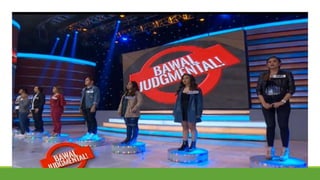
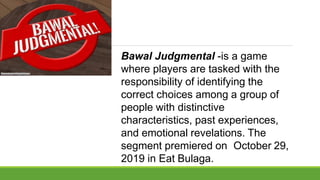
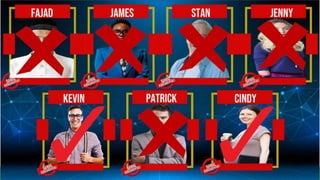
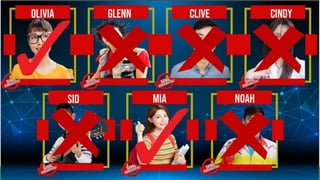
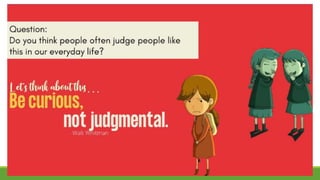
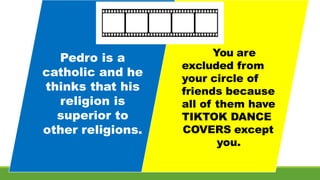
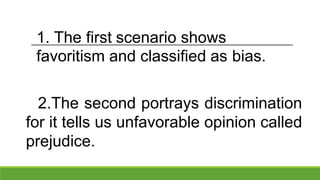
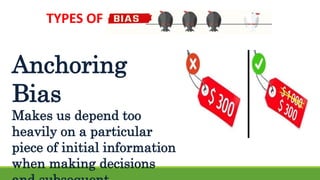
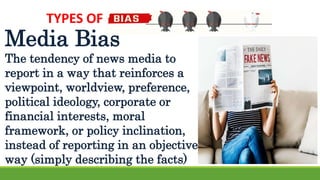
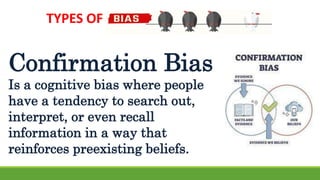
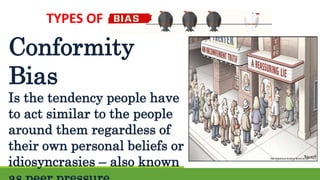
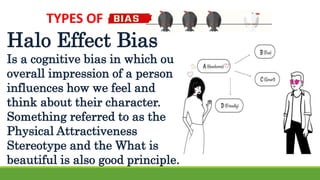
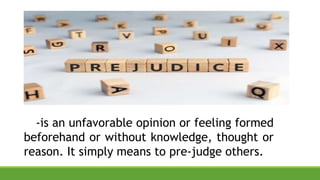
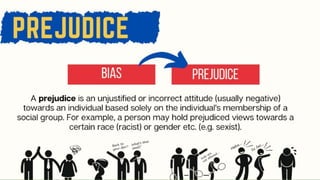
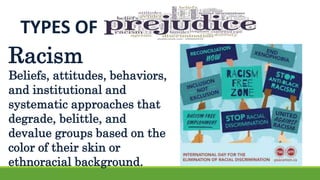
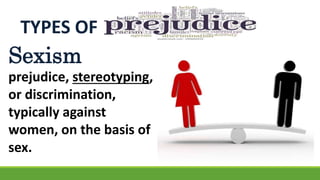
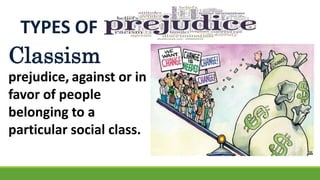
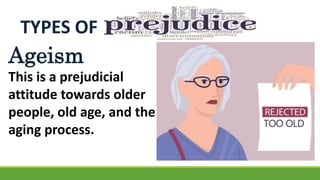
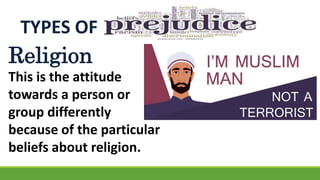
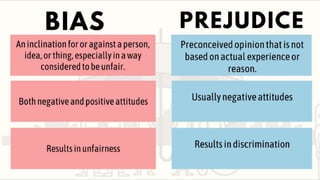
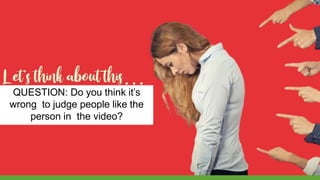
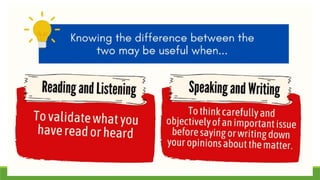
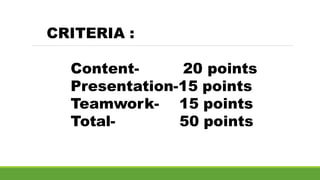
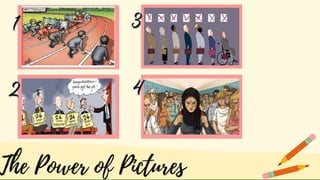
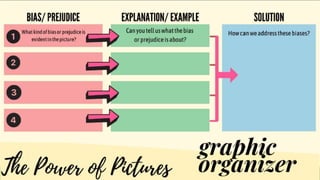
This document provides objectives and content for a game about identifying bias and prejudice. The game tasks players with choosing the correct individuals among groups with different characteristics and experiences. Examples of bias and prejudice are presented, such as favoring one's own gender or religion over others. Common types of cognitive biases like confirmation and halo effects are also defined. The document seeks to show how biases and prejudices can be based on attributes like race, age, gender, religion, and socioeconomic status. It includes discussion questions asking players to reflect on labeling and judging others. An activity requires groups to demonstrate understanding of biases through various creative means.