Tatsuya Yamazaki  Universal City Group, Knowledge Creating Communication Research Center  National Institute of Information and Communications Technology  yamazaki@nict.go.jp
Abstract automation  should  not  be  a  goal  of  smart  home  technologies interface  technologies between  humans  and  systems  detection  of  human intensions,  feelings,  and  situations
Introduction 1970s Home automation(HA) technology failed Introduction cost Total household energy savings Inflexible in new network infrastructure Lack of application and services that users want
Related works Real-life living space test beds Smart home/sensor embedded houses Welfare Techno-houses, Japan Independence for elderly and disable people Improve quality of life Aware Home Three-story, 5040-square-foot home Living laboratory For design, development and evaluation
Related works(cont’) MavHome project, UT, Arlington  House_n group, MIT
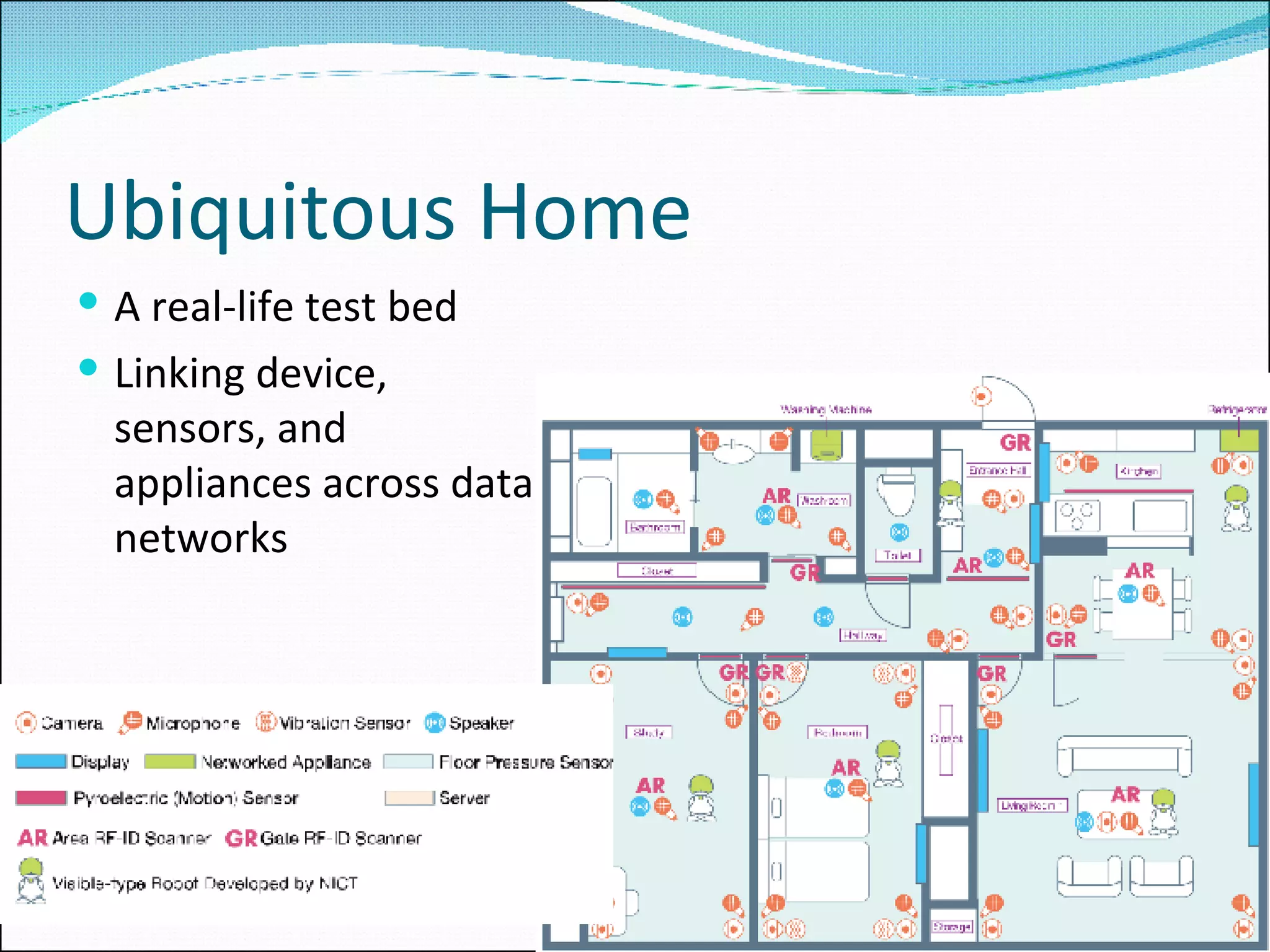
Ubiquitous Home A real-life test bed Linking device,  sensors, and  appliances across data networks
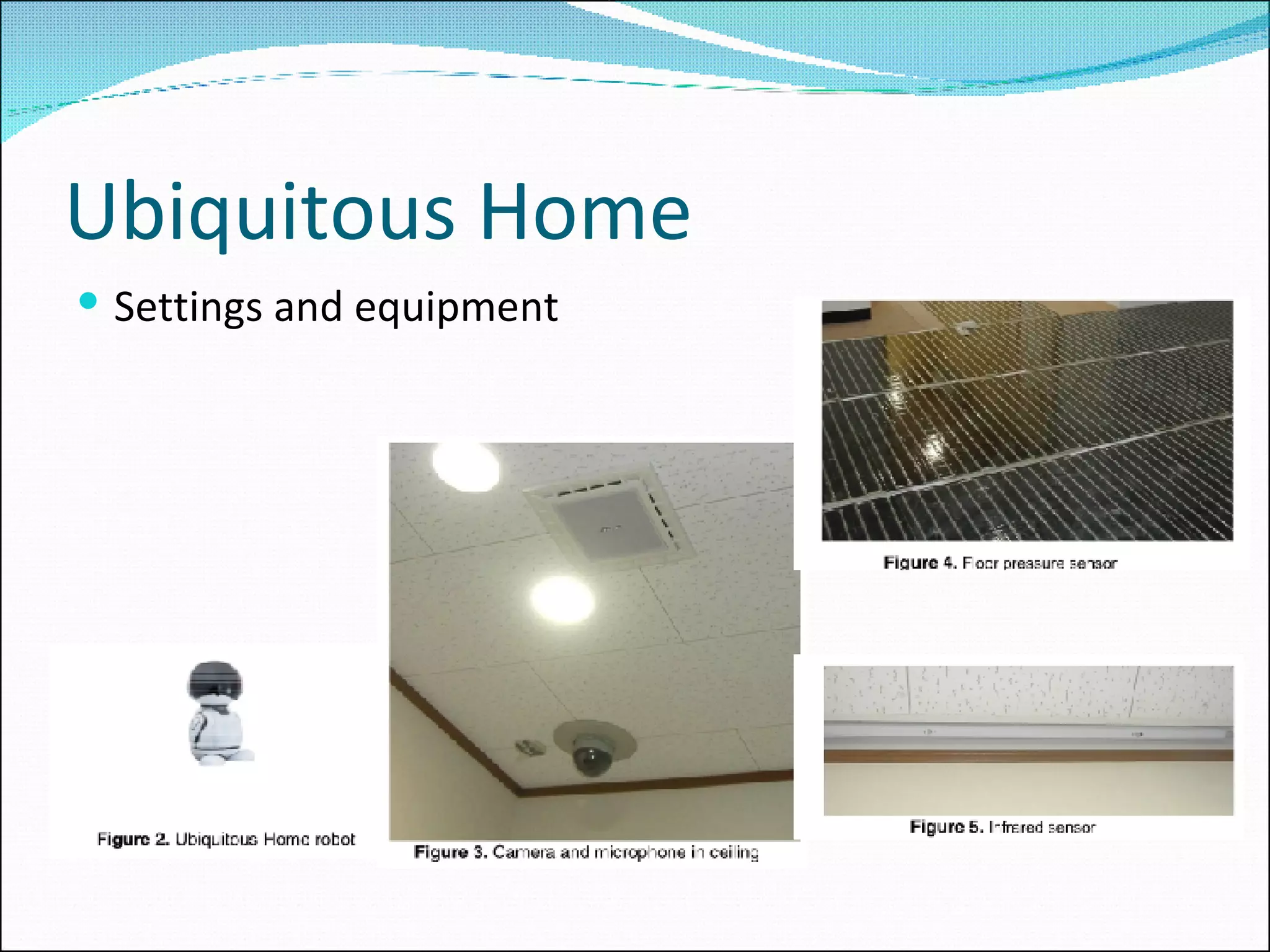
Ubiquitous Home Settings and equipment
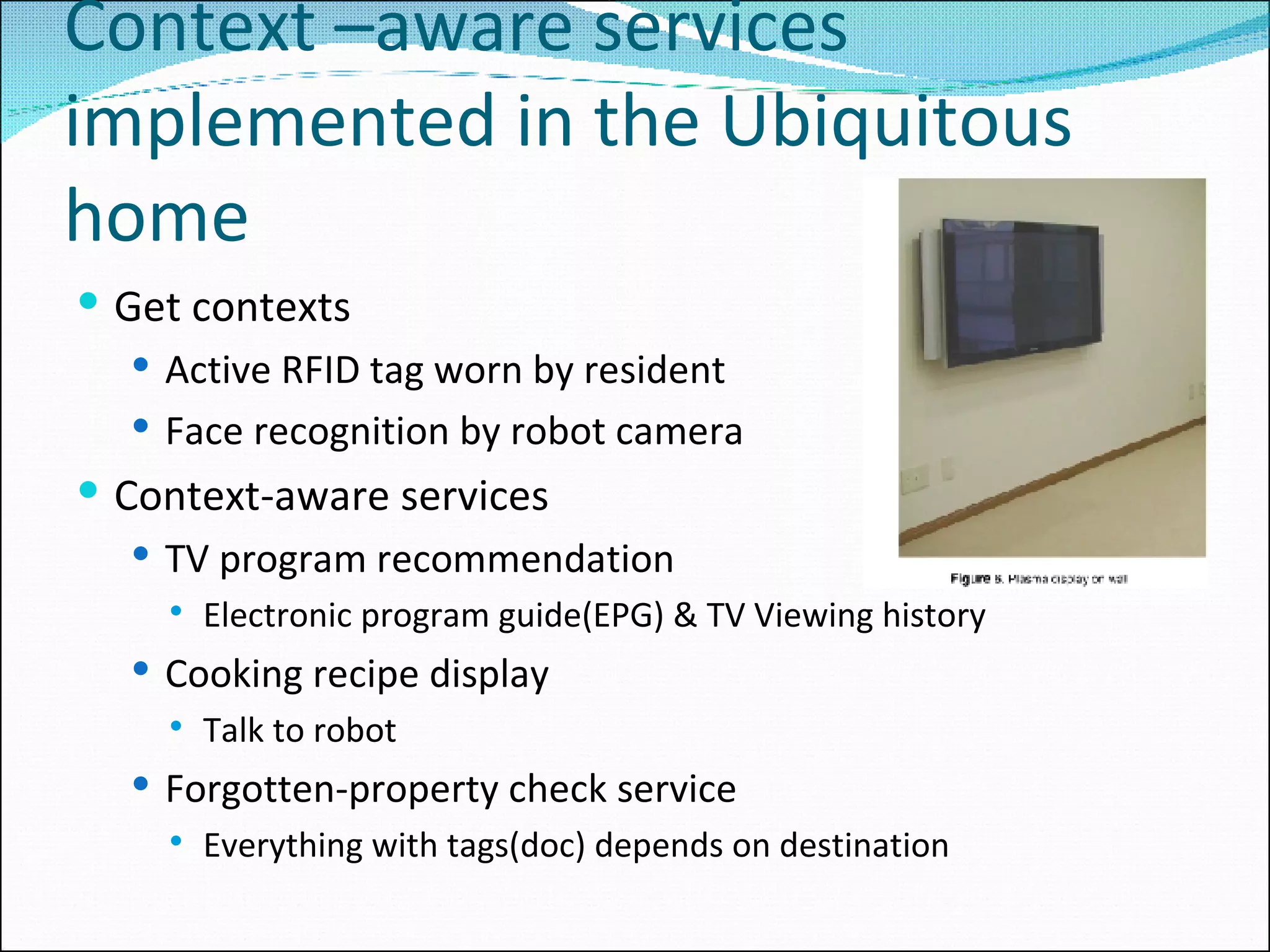
Context –aware services implemented in the Ubiquitous home Get contexts Active RFID tag worn by resident Face recognition by robot camera Context-aware services TV program recommendation Electronic program guide(EPG) & TV Viewing history Cooking recipe display Talk to robot Forgotten-property check service Everything with tags(doc) depends on destination
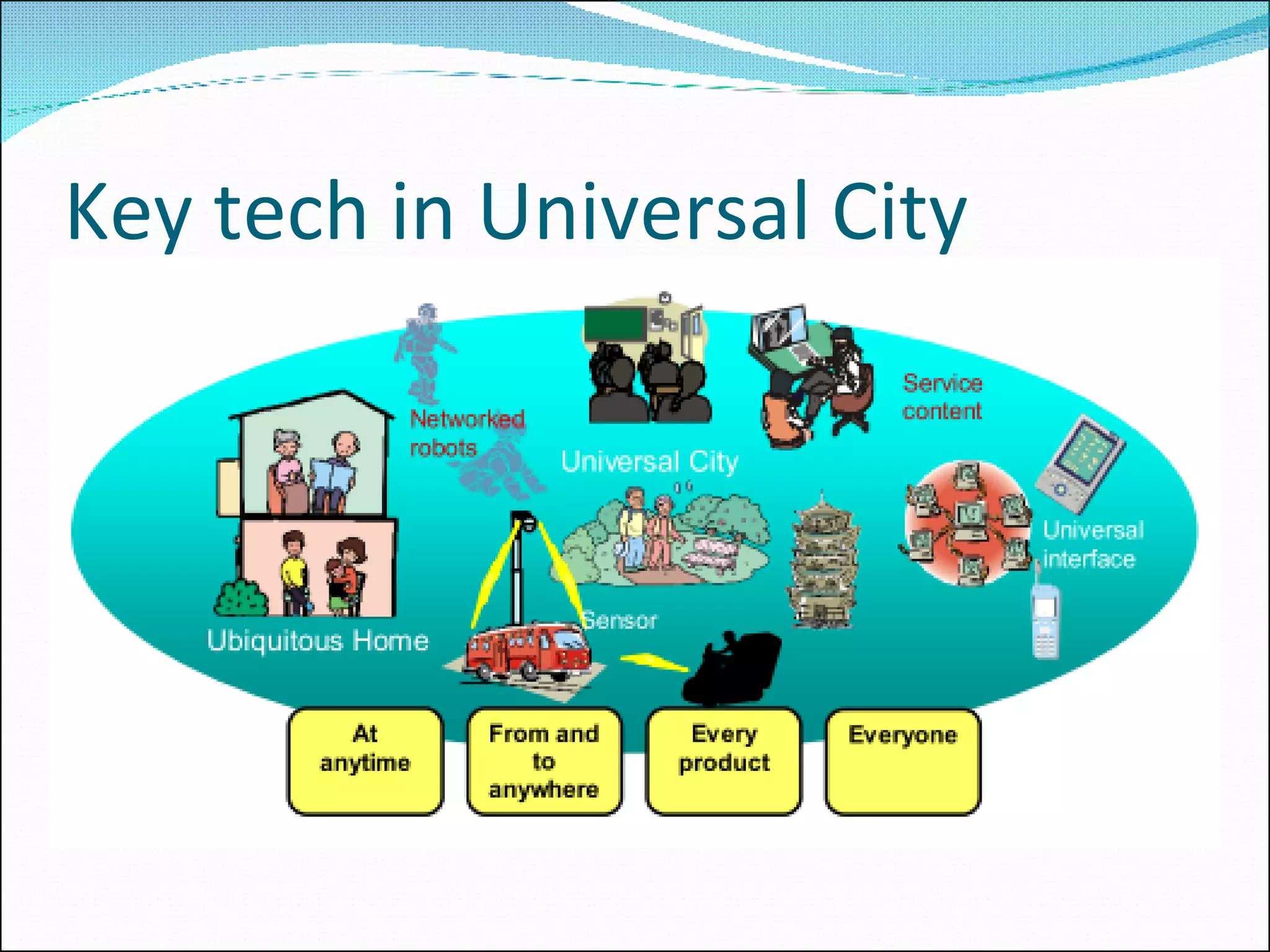
From the ubiquitous home to the universal city Activities can’t be limited inside homes University City Project
Key tech in Universal City
conclusion Go beyond smart home Not just automate all tasks Interface technologies between humans and system Detection of human  Intensions Feelings Situations Extension to outside homes Communities, towns , and cities

Beyond The Smart Home

  • 1.
    Tatsuya Yamazaki Universal City Group, Knowledge Creating Communication Research Center National Institute of Information and Communications Technology yamazaki@nict.go.jp
  • 2.
    Abstract automation should not be a goal of smart home technologies interface technologies between humans and systems detection of human intensions, feelings, and situations
  • 3.
    Introduction 1970s Homeautomation(HA) technology failed Introduction cost Total household energy savings Inflexible in new network infrastructure Lack of application and services that users want
  • 4.
    Related works Real-lifeliving space test beds Smart home/sensor embedded houses Welfare Techno-houses, Japan Independence for elderly and disable people Improve quality of life Aware Home Three-story, 5040-square-foot home Living laboratory For design, development and evaluation
  • 5.
    Related works(cont’) MavHomeproject, UT, Arlington House_n group, MIT
  • 6.
    Ubiquitous Home Areal-life test bed Linking device, sensors, and appliances across data networks
  • 7.
  • 8.
    Context –aware servicesimplemented in the Ubiquitous home Get contexts Active RFID tag worn by resident Face recognition by robot camera Context-aware services TV program recommendation Electronic program guide(EPG) & TV Viewing history Cooking recipe display Talk to robot Forgotten-property check service Everything with tags(doc) depends on destination
  • 9.
    From the ubiquitoushome to the universal city Activities can’t be limited inside homes University City Project
  • 10.
    Key tech inUniversal City
  • 11.
    conclusion Go beyondsmart home Not just automate all tasks Interface technologies between humans and system Detection of human Intensions Feelings Situations Extension to outside homes Communities, towns , and cities