Dr Azra Kasi
Medical Officer
SMBZAN ICQ
•
• Beta Blockers or beta adrenergic blocking agents are a
class of drugs used for various purposes but
particularly for the management of cardiac
arrhythmias, cardioprotection following a myocardial
infarction and hypertension.
•Beta blockers block the action of endogenous
catecholamines (epinephrine and nor epinephrine) on
beta adrenergic receptors , part of the sympathetic
nervous system.
•There are three types of B- adrenergic receptors
designated B1 B2 and B3 receptors.
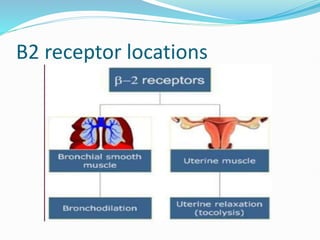
B2 receptor locations
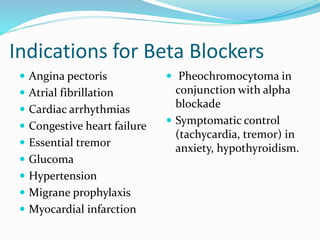
 Pheochromocytoma in
conjunction with alpha
blockade
 Symptomatic control
(tachycardia, tremor) in
anxiety, hypothyroidism.
Indications for Beta Blockers
 Angina pectoris
 Atrial fibrillation
 Cardiac arrhythmias
 Congestive heart failure
 Essential tremor
 Glucoma
 Hypertension
 Migrane prophylaxis
 Myocardial infarction
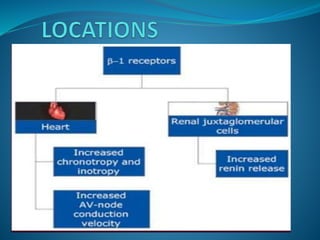
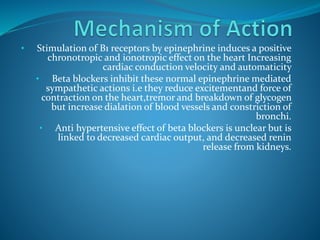
• Stimulation of B1 receptors by epinephrine induces a positive
chronotropic and ionotropic effect on the heart Increasing
cardiac conduction velocity and automaticity
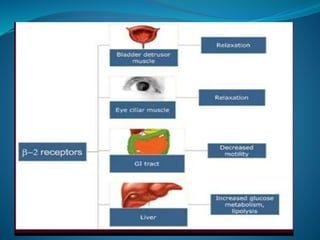
• Beta blockers inhibit these normal epinephrine mediated
sympathetic actions i.e they reduce excitementand force of
contraction on the heart,tremor and breakdown of glycogen
but increase dialation of blood vessels and constriction of
bronchi.
• Anti hypertensive effect of beta blockers is unclear but is
linked to decreased cardiac output, and decreased renin
release from kidneys.
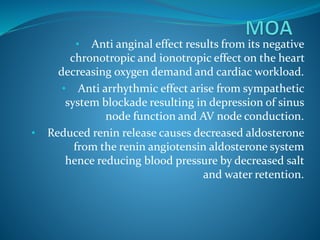
• Anti anginal effect results from its negative
chronotropic and ionotropic effect on the heart
decreasing oxygen demand and cardiac workload.
• Anti arrhythmic effect arise from sympathetic
system blockade resulting in depression of sinus
node function and AV node conduction.
• Reduced renin release causes decreased aldosterone
from the renin angiotensin aldosterone system
hence reducing blood pressure by decreased salt
and water retention.
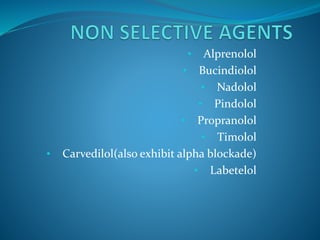
• Alprenolol
• Bucindiolol
• Nadolol
• Pindolol
• Propranolol
• Timolol
• Carvedilol(also exhibit alpha blockade)
• Labetelol
•Acebutolol
•Atenolol
•Betaxolol
•Esmolol
•Metoprolol
•Nebivolol
•Agents specifically used for cardiac arrhythmias are
(esmolol, sotalol and landiolol)
•Agents specifically used for CHF (bisoprolol,
carvidolol, nebivolol)
•Agents specifically used for MI (Atenolol, metoprolol,
propranolol )
•Agents indicated for migrane prophylaxis
(propranolol, Timolol)
•Propranolol is the only agent used for tremor control,
Portal hypertension and esophageal variceal bleeding.
• Adverse effects associated with the use of beta blockers include:
• Nausea, diarrhoea
• Dysnea
• Cold extremities, exacerbation of Raynaud’s
• Bradycardia
• Hypotension
• Heart failure, heart block
• Erectile dysfunction
• Increase TG and LDL/HDL ratio.
• diabetes (they mask the effects of Hypoglycemia)
•CNS ADVERSE EFFECTS
•Hallucinations
•Insomnia
•Nightmares
•Cns adverse effects are more common with lipid
soulable beta blockers which can cross the blood brain
barrier.
• Beta blockers must not be used in the treatment of cocaine, amphetamine
or other alpha agonist overdose.
• Second or 3rd degree AV block, severe bradycardia
• Uncontrolled heart failure
• Asthma, COPD
• Hepatic impairment.
beta blockers new.pptx

beta blockers new.pptx

  • 1.
    Dr Azra Kasi MedicalOfficer SMBZAN ICQ
  • 2.
  • 3.
    • Beta Blockersor beta adrenergic blocking agents are a class of drugs used for various purposes but particularly for the management of cardiac arrhythmias, cardioprotection following a myocardial infarction and hypertension. •Beta blockers block the action of endogenous catecholamines (epinephrine and nor epinephrine) on beta adrenergic receptors , part of the sympathetic nervous system. •There are three types of B- adrenergic receptors designated B1 B2 and B3 receptors.
  • 5.
  • 7.
     Pheochromocytoma in conjunctionwith alpha blockade  Symptomatic control (tachycardia, tremor) in anxiety, hypothyroidism. Indications for Beta Blockers  Angina pectoris  Atrial fibrillation  Cardiac arrhythmias  Congestive heart failure  Essential tremor  Glucoma  Hypertension  Migrane prophylaxis  Myocardial infarction
  • 8.
    • Stimulation ofB1 receptors by epinephrine induces a positive chronotropic and ionotropic effect on the heart Increasing cardiac conduction velocity and automaticity • Beta blockers inhibit these normal epinephrine mediated sympathetic actions i.e they reduce excitementand force of contraction on the heart,tremor and breakdown of glycogen but increase dialation of blood vessels and constriction of bronchi. • Anti hypertensive effect of beta blockers is unclear but is linked to decreased cardiac output, and decreased renin release from kidneys.
  • 9.
    • Anti anginaleffect results from its negative chronotropic and ionotropic effect on the heart decreasing oxygen demand and cardiac workload. • Anti arrhythmic effect arise from sympathetic system blockade resulting in depression of sinus node function and AV node conduction. • Reduced renin release causes decreased aldosterone from the renin angiotensin aldosterone system hence reducing blood pressure by decreased salt and water retention.
  • 10.
    • Alprenolol • Bucindiolol •Nadolol • Pindolol • Propranolol • Timolol • Carvedilol(also exhibit alpha blockade) • Labetelol
  • 11.
  • 12.
    •Agents specifically usedfor cardiac arrhythmias are (esmolol, sotalol and landiolol) •Agents specifically used for CHF (bisoprolol, carvidolol, nebivolol) •Agents specifically used for MI (Atenolol, metoprolol, propranolol ) •Agents indicated for migrane prophylaxis (propranolol, Timolol) •Propranolol is the only agent used for tremor control, Portal hypertension and esophageal variceal bleeding.
  • 13.
    • Adverse effectsassociated with the use of beta blockers include: • Nausea, diarrhoea • Dysnea • Cold extremities, exacerbation of Raynaud’s • Bradycardia • Hypotension • Heart failure, heart block • Erectile dysfunction • Increase TG and LDL/HDL ratio. • diabetes (they mask the effects of Hypoglycemia)
  • 14.
    •CNS ADVERSE EFFECTS •Hallucinations •Insomnia •Nightmares •Cnsadverse effects are more common with lipid soulable beta blockers which can cross the blood brain barrier.
  • 15.
    • Beta blockersmust not be used in the treatment of cocaine, amphetamine or other alpha agonist overdose. • Second or 3rd degree AV block, severe bradycardia • Uncontrolled heart failure • Asthma, COPD • Hepatic impairment.