909,SENTHUR POLYTECHNIC
COLLEGE
DEPARTMENT OF AUTOMOBILE
ENGINEERTING
SEMINAR-I
RAMESH CHANDRAN E
BELT CONVEYOR
Contents
 Introduction
 Types of Conveyors
 Belt Conveyor
 Working of Belt
 Belt Material
 Design of Belt
 Properties of Belt
 Advantages of Belt
Conveyor
 Conclusion
 References
Introduction
 A conveyor system is a common piece of mechanical handling
equipment that moves materials from one location to another
 Conveyors are especially useful in applications involving the
transportation of heavy or bulky materials in Industries.
 Conveyers are also used in general material handling such as
those moving boxes along inside a factory, such as agricultural
materials, such as grain, salt, coal, ore, sand, overburden and
more.
Types of Conveyors
 Belt Conveyor
 Chain Conveyor
 Gravity Conveyor
 Powered Roller Conveyor
 Pallet Conveyor
 Overhead Conveyor
 Magnetic Slide Conveyor
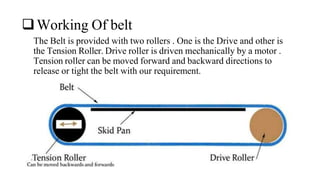
Working Of belt
The Belt is provided with two rollers . One is the Drive and other is
the Tension Roller. Drive roller is driven mechanically by a motor .
Tension roller can be moved forward and backward directions to
release or tight the belt with our requirement.
Belt Material
 Belts are typically made from cotton, canvas, Kevlar, nitrile,
nylon, polyester, polyurethane/urethane, PVC, rubber, silicone,
steel cord, Teflon, wire mesh or weave.
Properties of Belt
 Flexibility
 Transverse rigidity
 Low mass per unit length
 High strength
 Simplicity and inexpensive
 Longer life
 Should not stretch under normal working stresses ,i.e., low
relative elongation.
 Wear resistant
 Fire resistant
Advantages of Belt Conveyor
 Belt conveyor can be used for abrasive, wet, dry, sticky or dirty
material.
 Higher capacity can be handled than any other form of
conveyor at a considerably lower cost per tonne per kilometer.
 Longer distances can be covered more economically.
 It can be horizontal, incline or decline or combination of all.
 It is considered a labor saving system that allows large volumes
to move rapidly.
Limitations
 The belt needs higher initial tension.
 Conveying of sticky material is associated with problems of
cleaning and discharge causing poor productivity.
 Higher elongation of the belt (4% elongation may take place at
the working load).
Conclusion
 Belt Conveyor systems can improve efficiency and help to
reduce repetitive lifting and carrying.
 Many industries use Belt conveyor systems to transport raw
materials and products through the stages of a process.
 We can say that the Conveyor system is the backbone of an
industry, if there is any failure in conveying system that needs to
be fix as soon as possible.
THANK YOU

BELT CONVEYER.pptx

  • 1.
    909,SENTHUR POLYTECHNIC COLLEGE DEPARTMENT OFAUTOMOBILE ENGINEERTING SEMINAR-I RAMESH CHANDRAN E
  • 2.
  • 3.
    Contents  Introduction  Typesof Conveyors  Belt Conveyor  Working of Belt  Belt Material  Design of Belt  Properties of Belt  Advantages of Belt Conveyor  Conclusion  References
  • 4.
    Introduction  A conveyorsystem is a common piece of mechanical handling equipment that moves materials from one location to another  Conveyors are especially useful in applications involving the transportation of heavy or bulky materials in Industries.  Conveyers are also used in general material handling such as those moving boxes along inside a factory, such as agricultural materials, such as grain, salt, coal, ore, sand, overburden and more.
  • 5.
    Types of Conveyors Belt Conveyor  Chain Conveyor  Gravity Conveyor  Powered Roller Conveyor  Pallet Conveyor  Overhead Conveyor  Magnetic Slide Conveyor
  • 6.
    Working Of belt TheBelt is provided with two rollers . One is the Drive and other is the Tension Roller. Drive roller is driven mechanically by a motor . Tension roller can be moved forward and backward directions to release or tight the belt with our requirement.
  • 7.
    Belt Material  Beltsare typically made from cotton, canvas, Kevlar, nitrile, nylon, polyester, polyurethane/urethane, PVC, rubber, silicone, steel cord, Teflon, wire mesh or weave.
  • 8.
    Properties of Belt Flexibility  Transverse rigidity  Low mass per unit length  High strength  Simplicity and inexpensive  Longer life  Should not stretch under normal working stresses ,i.e., low relative elongation.  Wear resistant  Fire resistant
  • 9.
    Advantages of BeltConveyor  Belt conveyor can be used for abrasive, wet, dry, sticky or dirty material.  Higher capacity can be handled than any other form of conveyor at a considerably lower cost per tonne per kilometer.  Longer distances can be covered more economically.  It can be horizontal, incline or decline or combination of all.  It is considered a labor saving system that allows large volumes to move rapidly.
  • 10.
    Limitations  The beltneeds higher initial tension.  Conveying of sticky material is associated with problems of cleaning and discharge causing poor productivity.  Higher elongation of the belt (4% elongation may take place at the working load).
  • 11.
    Conclusion  Belt Conveyorsystems can improve efficiency and help to reduce repetitive lifting and carrying.  Many industries use Belt conveyor systems to transport raw materials and products through the stages of a process.  We can say that the Conveyor system is the backbone of an industry, if there is any failure in conveying system that needs to be fix as soon as possible.
  • 12.