Behavorism						        By:		Lauren D.
BehavorismHuman behavior where self-observation has no effect on teaching methodsThought of during the modernism time periodTime period based on scienceBoth humans and animals learn the same way
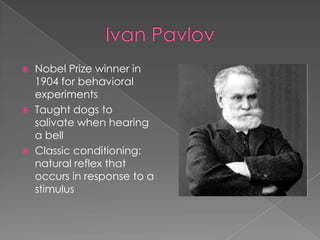
Ivan PavlovNobel Prize winner in 1904 for behavioral experimentsTaught dogs to salivate when hearing a bellClassic conditioning: natural reflex that occurs in response to a stimulus
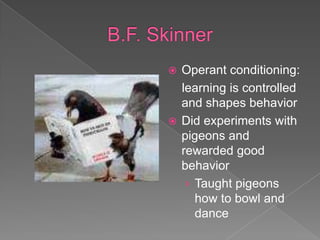
B.F. SkinnerOperant conditioning:   learning is controlled and shapes behaviorDid experiments with pigeons and rewarded good behaviorTaught pigeons how to bowl and dance
Albert BanduraThought that people mimicked behaviors observed by other peopleOberservational modelingFocused on how people retained information using imagery Analyzed how people thought they learned, thought, and motivated themselves best
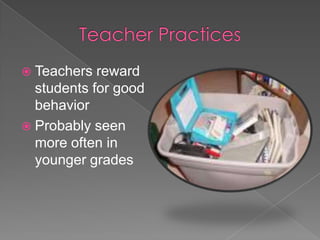
Teacher PracticesTeachers reward students for good behaviorProbably seen more often in younger grades
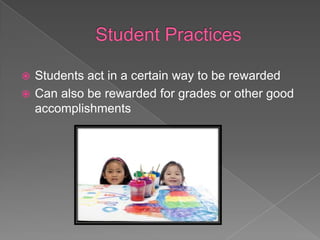
Student PracticesStudents act in a certain way to be rewarded Can also be rewarded for grades or other good accomplishments
My ThoughtsI personally think this strategy does work. I am majoring in elementary education and I believe that especially at a younger age students seem to respond well to rewards. When I was working as a daycare teacher, my students knew that if they did not behave they did not get their special afternoon snack on Friday which helped their behavior most of the time.
Creditshttp://www.fadooda.com/media/1/20090902-Ivan_Pavlov.jpghttp://www.learning-theories.com/behaviorism.htmlGoogle imagesIntegrating Technology and Digital Media in the Classroom- 6th edition Shelly Cashman Series; Shelly, Gunter, and Gunter

Behavorism