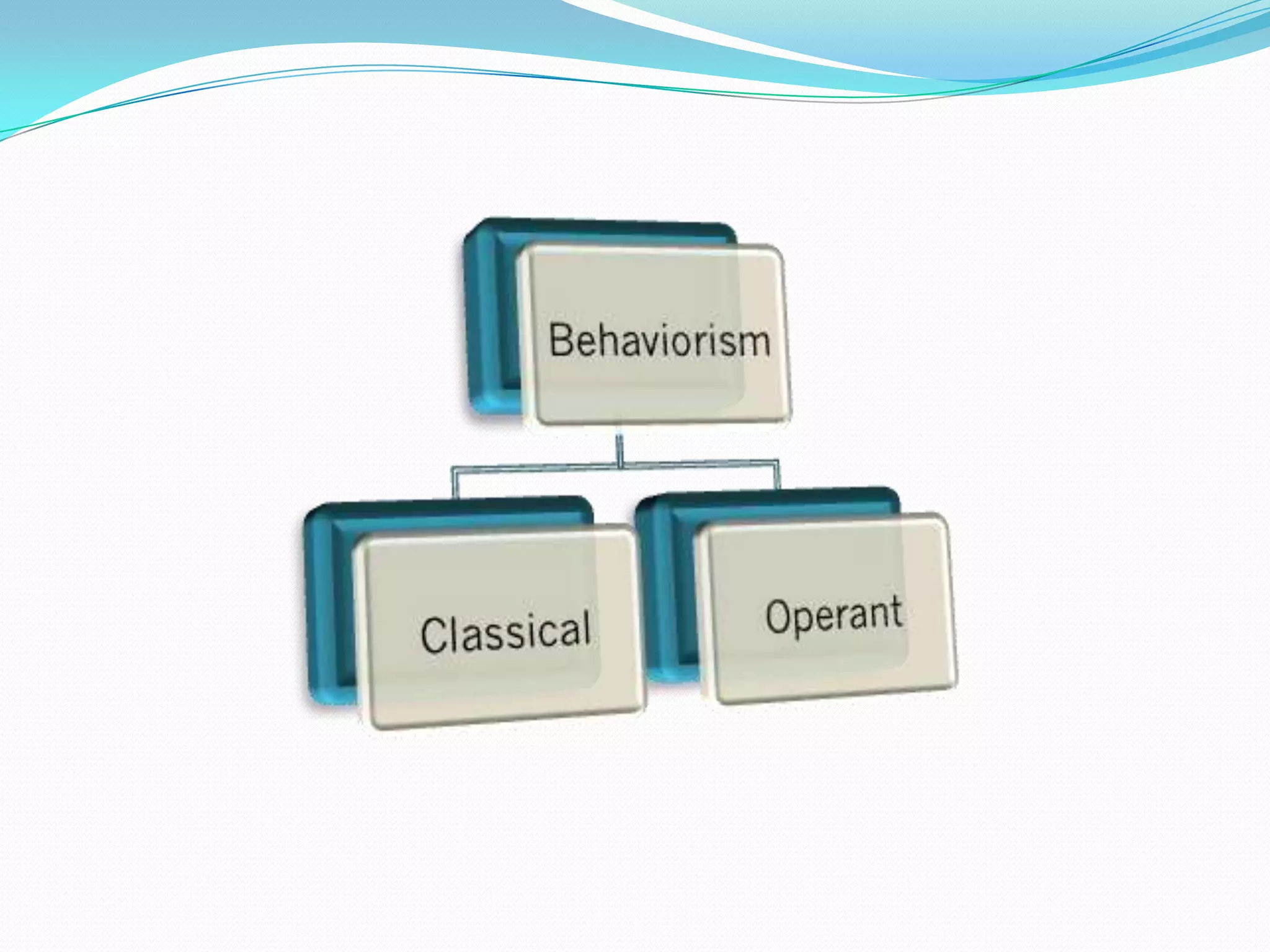
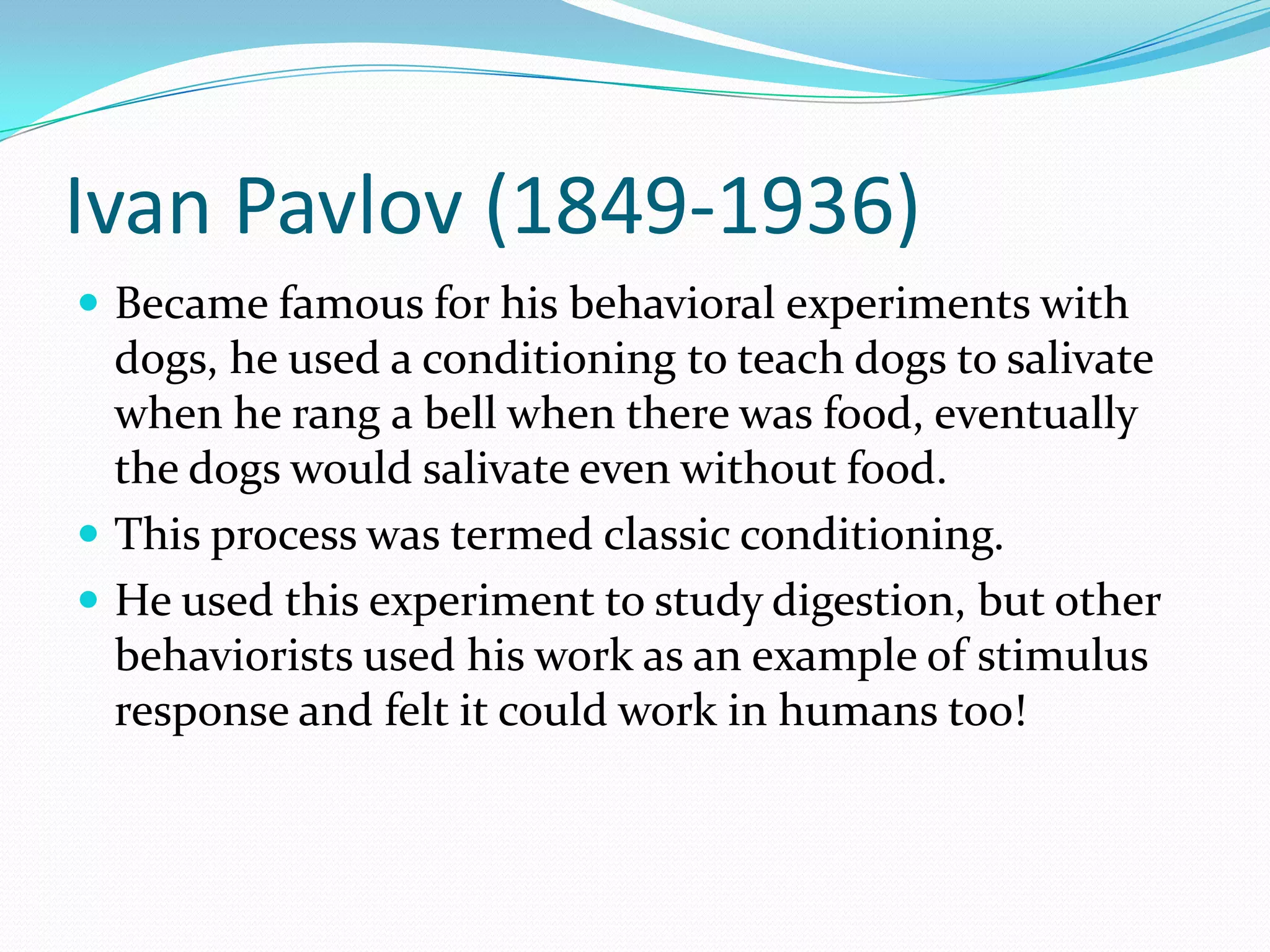
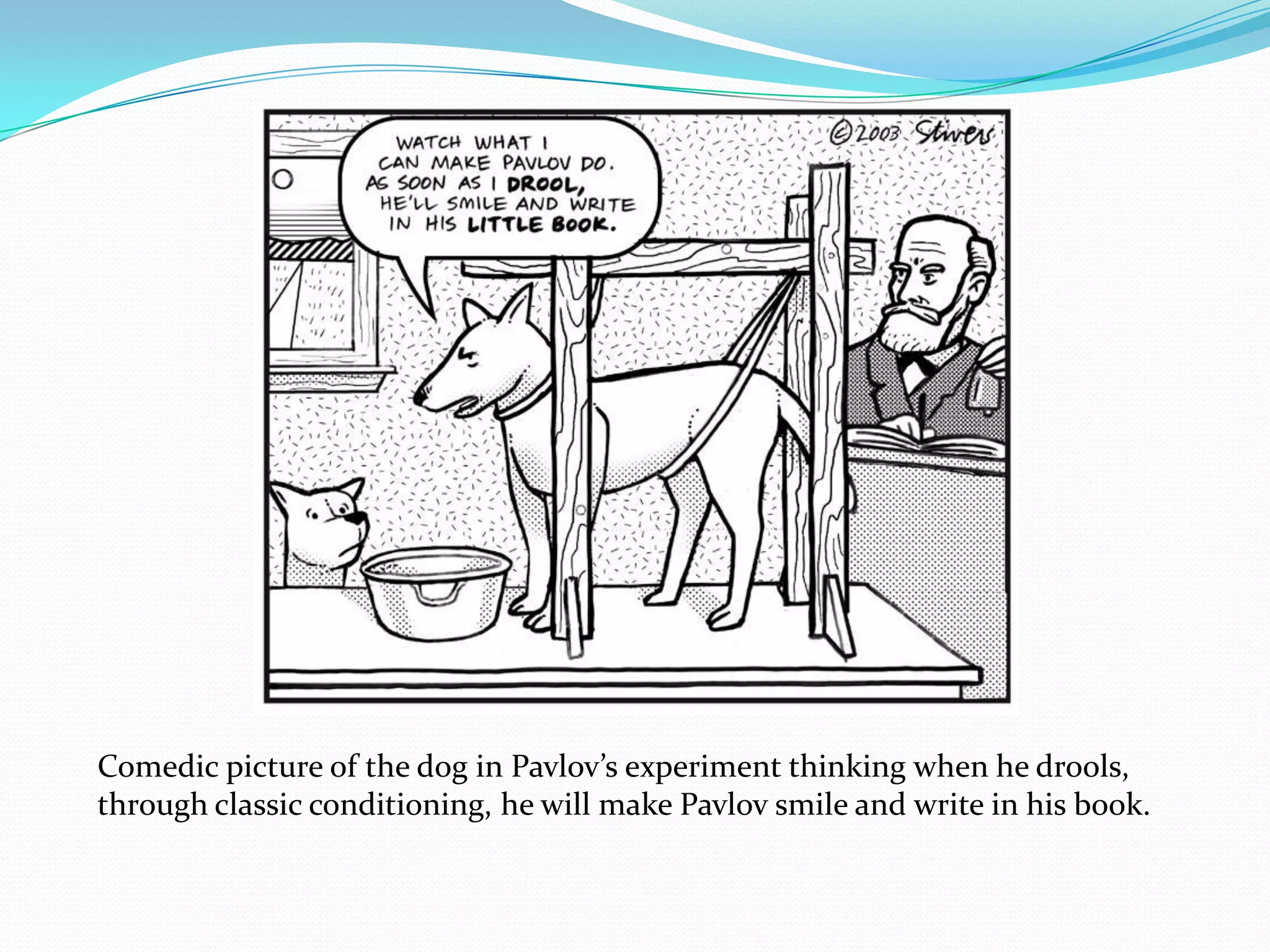
Behaviorism is a theory that views human learning as the prediction and control of behavior through stimulus-response associations, without appeal to mental states. The major figures associated with behaviorism are Ivan Pavlov, known for his experiments conditioning dogs' reflexes; B.F. Skinner, who used operant conditioning to shape animal and human behavior; and Albert Bandura, who incorporated cognitive factors like observational learning and self-efficacy. Behaviorism influenced classroom practices through positive reinforcement of desired behaviors with rewards.