BEEF
Class Case Study:
Read your case study in partners
Identify your cuts and find how much
to purchase for the banquet!
What information do you need to
know?
 What kind of cut?
 How to cook it?
 What is the yield?
Yield means the final amount
produced after trim, bones and
waste.
What effects yield?
 Bones
 Silverskin- connective
tissue surrounding all
muscles
 Fat
 Ligaments
There Are Two Basic Cuts
 Wholesale cuts
 larger cuts of meat
shipped to grocery stores and
meat markets
also called primal cuts
 Retail cuts are the family sized or single serving
cuts that are purchased at the store.
Wholesale Cuts>Retail Cuts
 There are eight Wholesale cuts that
we get our Retail cuts from.
Chuck Rib
Short Loin Sirloin
Round Flank
Plate Shank
Wholesale Cuts
Bones of a cow….
CHUCK
 From the neck region.
 Most economical cuts-
 Less Tender
 Moist Heat
 Retail Cuts:
 Boneless Chuck Roast
 Cross Rib Roast
 Short Ribs
 Pot Roasts
RIB
 Used for many
applications.
 One of the most
desirable in terms of
tenderness.
RETAIL CUTS for the Rib
 Back Ribs
 Rib Eye Roast
 Rib Eye Steak
 Rib Steak
SHORT LOIN
 Loin and short ribs.
 One of the most
desirable for
tenderness.
 Typically the most
expensive.
RETAIL CUTS for the loin
 Porterhouse Steak
 Tenderloin Roast
 T-Bone Steak
 Tenderloin Steak
 Boneless Top Loin Steak
SIRLOIN
 Is the waist of the
animal, located
between the ribs and
round.
 Top Sirloin Steak is a
favorite cut from this
section.
 Retail Cuts:
 Top Sirloin Steak
 Sirloin Steak
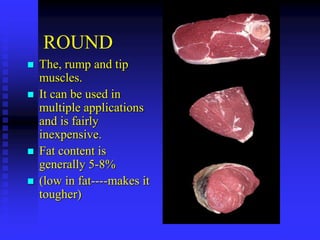
ROUND
 The, rump and tip
muscles.
 It can be used in
multiple applications
and is fairly
inexpensive.
 Fat content is
generally 5-8%
 (low in fat----makes it
tougher)
RETAIL CUTS
 Round Steak
 Boneless Rump Roast
 Tip Steak
 Top Round Roast
 Tip Roast
 Bottom Round Roast
 Top Round Steak
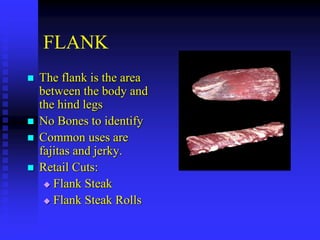
FLANK
 The flank is the area
between the body and
the hind legs
 No Bones to identify
 Common uses are
fajitas and jerky.
 Retail Cuts:
 Flank Steak
 Flank Steak Rolls
Plate
 The plate is sometimes
referred to as the short
plate.
 The plate is the section
that is separated from the
Rib.
 The Retail Cuts Include:
 Skirt Steak
 Short Ribs
FORE SHANK & BRISKET
 Taken from the breast
section beneath the
chuck, under the first five
ribs.
 Brisket is the most
common retail cut.
 Retail Cuts:
 Corned Brisket
 Brisket-Whole &
Half
 Shank Cross Cut
Questions from Case Study
 What cuts are you using?
 How much do you purchase to yield 30 pounds?
 How do you cook each type of cut?
Did you get it correct?
 Wholesale Cut: Loin
 Retail Cut:
Porterhouse
 Yield 75%
 Amount to Purchase
30 pounds/ 75%=
40 pounds
 You will need 30
edible pounds total
Did you get it correct?
 Wholesale: Rib
 Retail: Rib
 Yield: 52%
 Amount to purchase
 30 / 52% = 58 pounds
Did you get it correct?
 Wholesale: Round
 Retail: Round Steak
 Yield: 90%
 Amount to purchase
 30 /90% = 34#
 Cooking method:
 Moist Heat!
White Board Review

BeefWholesaleCuts.ppt

  • 1.
    BEEF Class Case Study: Readyour case study in partners Identify your cuts and find how much to purchase for the banquet!
  • 2.
    What information doyou need to know?  What kind of cut?  How to cook it?  What is the yield? Yield means the final amount produced after trim, bones and waste.
  • 3.
    What effects yield? Bones  Silverskin- connective tissue surrounding all muscles  Fat  Ligaments
  • 4.
    There Are TwoBasic Cuts  Wholesale cuts  larger cuts of meat shipped to grocery stores and meat markets also called primal cuts  Retail cuts are the family sized or single serving cuts that are purchased at the store.
  • 5.
    Wholesale Cuts>Retail Cuts There are eight Wholesale cuts that we get our Retail cuts from. Chuck Rib Short Loin Sirloin Round Flank Plate Shank
  • 6.
  • 7.
    Bones of acow….
  • 8.
    CHUCK  From theneck region.  Most economical cuts-  Less Tender  Moist Heat  Retail Cuts:  Boneless Chuck Roast  Cross Rib Roast  Short Ribs  Pot Roasts
  • 9.
    RIB  Used formany applications.  One of the most desirable in terms of tenderness.
  • 10.
    RETAIL CUTS forthe Rib  Back Ribs  Rib Eye Roast  Rib Eye Steak  Rib Steak
  • 11.
    SHORT LOIN  Loinand short ribs.  One of the most desirable for tenderness.  Typically the most expensive.
  • 12.
    RETAIL CUTS forthe loin  Porterhouse Steak  Tenderloin Roast  T-Bone Steak  Tenderloin Steak  Boneless Top Loin Steak
  • 13.
    SIRLOIN  Is thewaist of the animal, located between the ribs and round.  Top Sirloin Steak is a favorite cut from this section.  Retail Cuts:  Top Sirloin Steak  Sirloin Steak
  • 14.
    ROUND  The, rumpand tip muscles.  It can be used in multiple applications and is fairly inexpensive.  Fat content is generally 5-8%  (low in fat----makes it tougher)
  • 15.
    RETAIL CUTS  RoundSteak  Boneless Rump Roast  Tip Steak  Top Round Roast  Tip Roast  Bottom Round Roast  Top Round Steak
  • 16.
    FLANK  The flankis the area between the body and the hind legs  No Bones to identify  Common uses are fajitas and jerky.  Retail Cuts:  Flank Steak  Flank Steak Rolls
  • 17.
    Plate  The plateis sometimes referred to as the short plate.  The plate is the section that is separated from the Rib.  The Retail Cuts Include:  Skirt Steak  Short Ribs
  • 18.
    FORE SHANK &BRISKET  Taken from the breast section beneath the chuck, under the first five ribs.  Brisket is the most common retail cut.  Retail Cuts:  Corned Brisket  Brisket-Whole & Half  Shank Cross Cut
  • 19.
    Questions from CaseStudy  What cuts are you using?  How much do you purchase to yield 30 pounds?  How do you cook each type of cut?
  • 20.
    Did you getit correct?  Wholesale Cut: Loin  Retail Cut: Porterhouse  Yield 75%  Amount to Purchase 30 pounds/ 75%= 40 pounds  You will need 30 edible pounds total
  • 21.
    Did you getit correct?  Wholesale: Rib  Retail: Rib  Yield: 52%  Amount to purchase  30 / 52% = 58 pounds
  • 22.
    Did you getit correct?  Wholesale: Round  Retail: Round Steak  Yield: 90%  Amount to purchase  30 /90% = 34#  Cooking method:  Moist Heat!
  • 23.