English as a
Second
Language:
when Spanish
was the first
language
A Comparison
By
Jayne Bass
Key Features of Spanish
• Spanish is a romance language

• 400 million native speakers

• Spoken in Spain, Latin America and the USA

• 34 million people, 12.2 percent, of the population more than five years old
  speak Spanish at home (Wikipedia)

• Spanish is written in the Latin Alphabet

• a, b, c, d, e, f, g, h, i, j, k, l, m, n, ñ, o, p, q, r, s, t, u, v, w, x, y, z, ch, ll.

• The letters "k" and "w" are used only in words and names coming from
  foreign languages

• pronunciation can be entirely determined from spelling
Spanish compared to English
 Both use the Roman alphabet
 30% to 40% of all words in English have
  related words in Spanish
 Spanish is a much more heavily inflected
  language than English
 5 pure vowels and 5 dipthongs
Impact of L1 on the Development
of the English Language Learner
 Spanish  is highly inflected language
  (English is not)
 Affix usage is an area of difficulty
 Spanish does not use quotation marks
 Spanish does not use contractions
 Spanish does not use auxiliaries
 Spanish does use a subject – verb – object
  but Spanish allows for flexibility in word
  movement.
Case Study

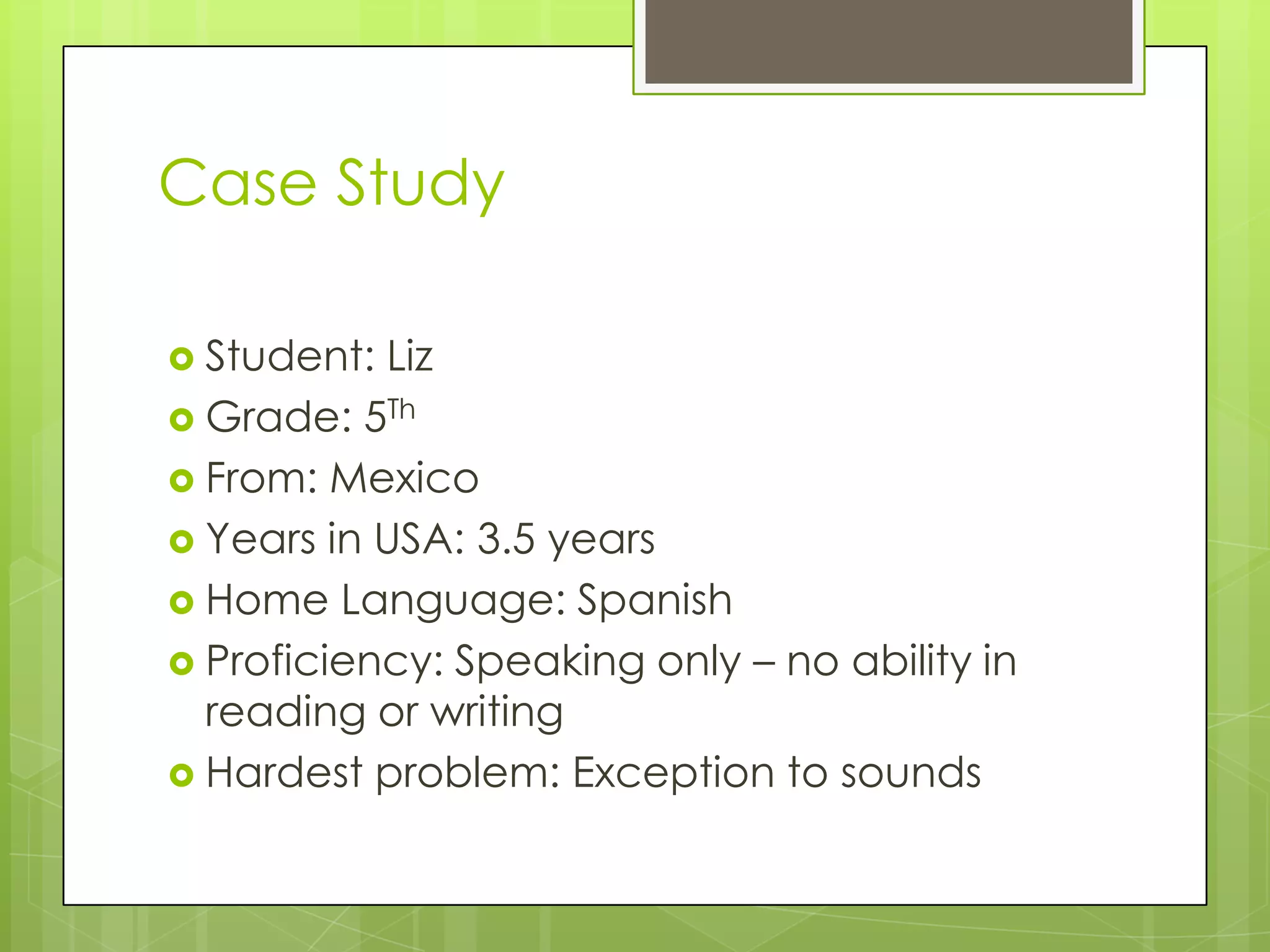
 Student: Liz
 Grade: 5Th
 From: Mexico
 Years in USA: 3.5 years
 Home Language: Spanish
 Proficiency: Speaking only – no ability in
  reading or writing
 Hardest problem: Exception to sounds
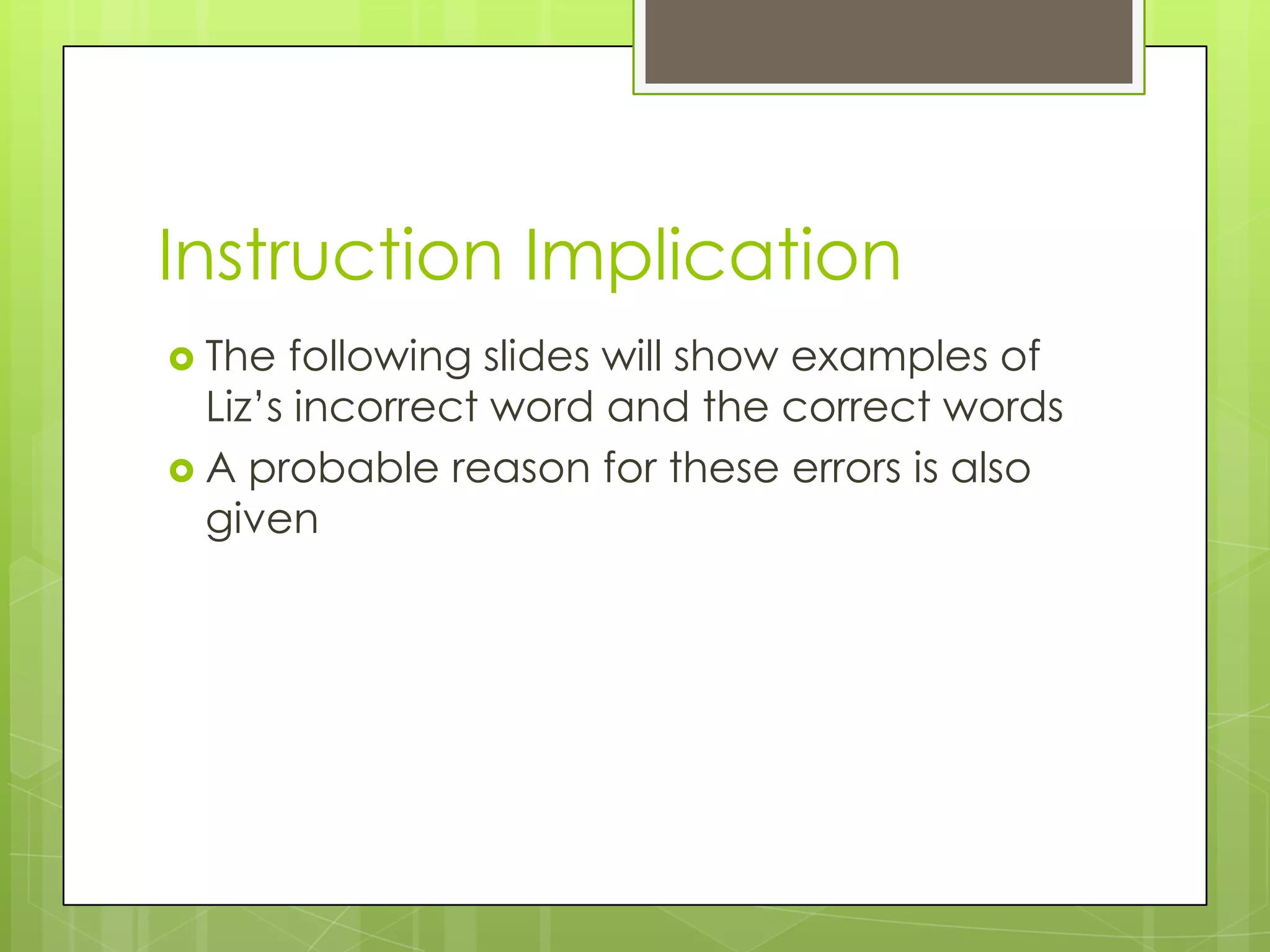
Instruction Implication
 The  following slides will show examples of
  Liz’s incorrect word and the correct words
 A probable reason for these errors is also
  given
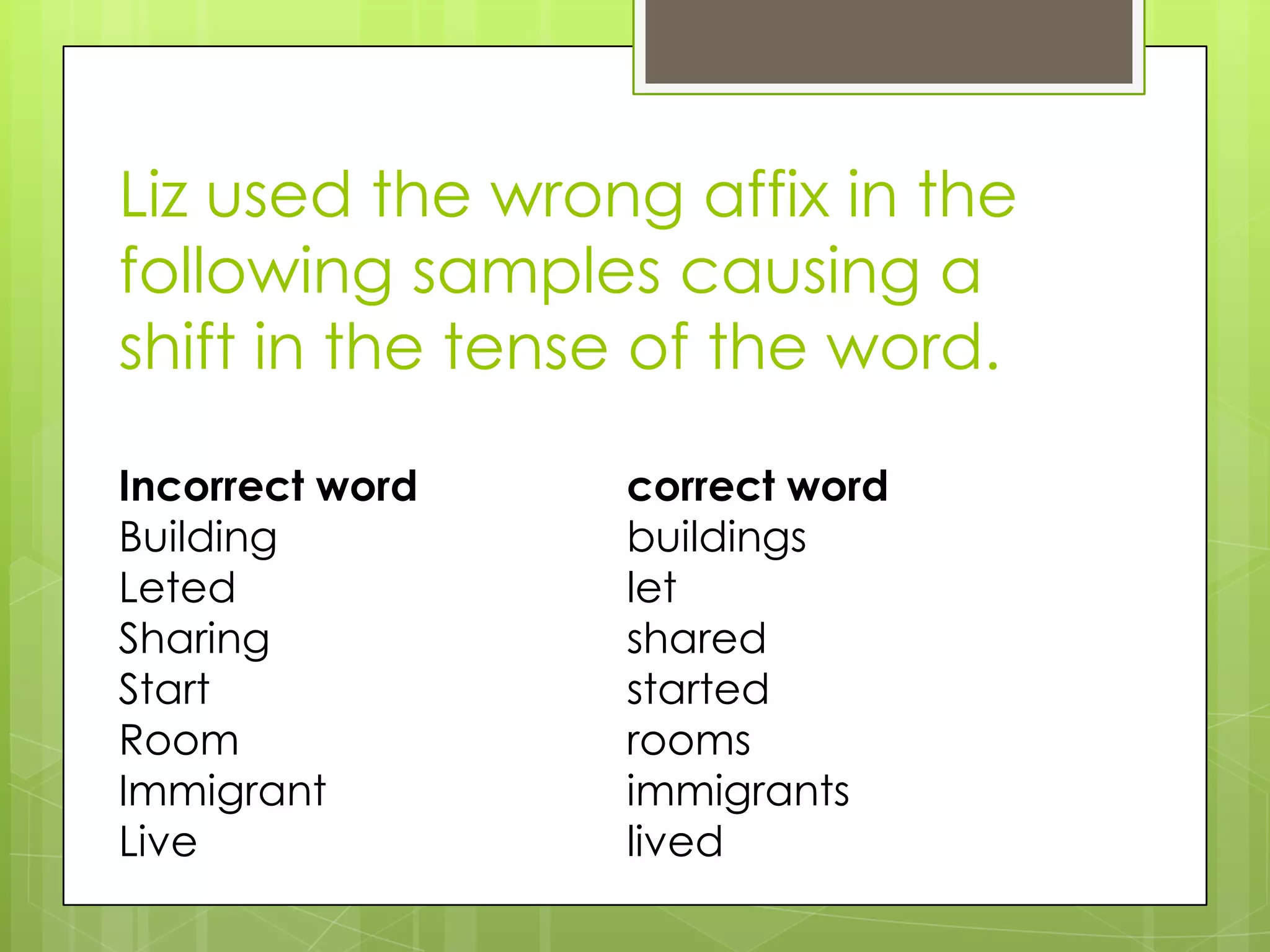
Liz used the wrong affix in the
following samples causing a
shift in the tense of the word.

Incorrect word   correct word
Building         buildings
Leted            let
Sharing          shared
Start            started
Room             rooms
Immigrant        immigrants
Live             lived
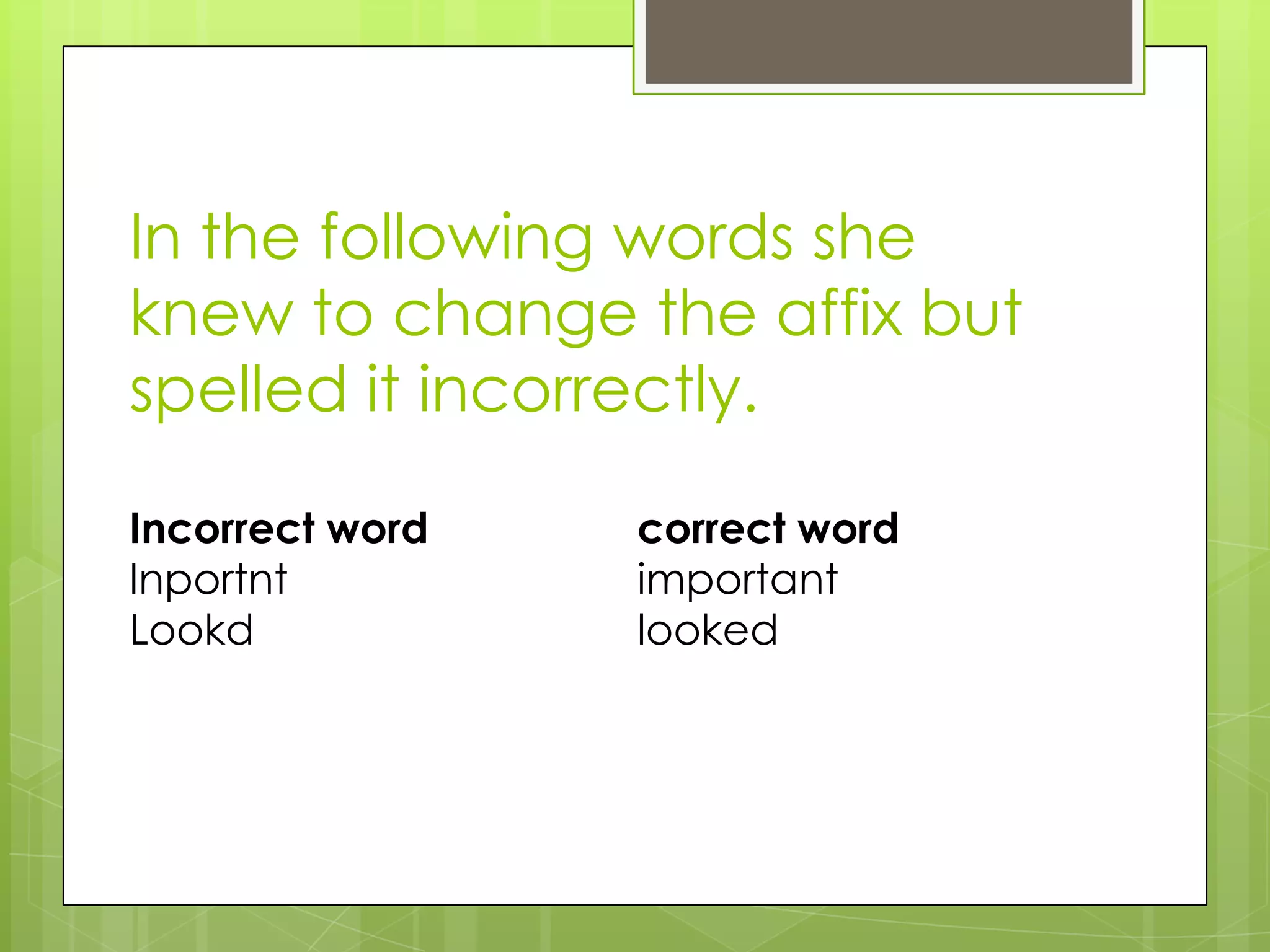
In the following words she
knew to change the affix but
spelled it incorrectly.

Incorrect word   correct word
Inportnt         important
Lookd            looked
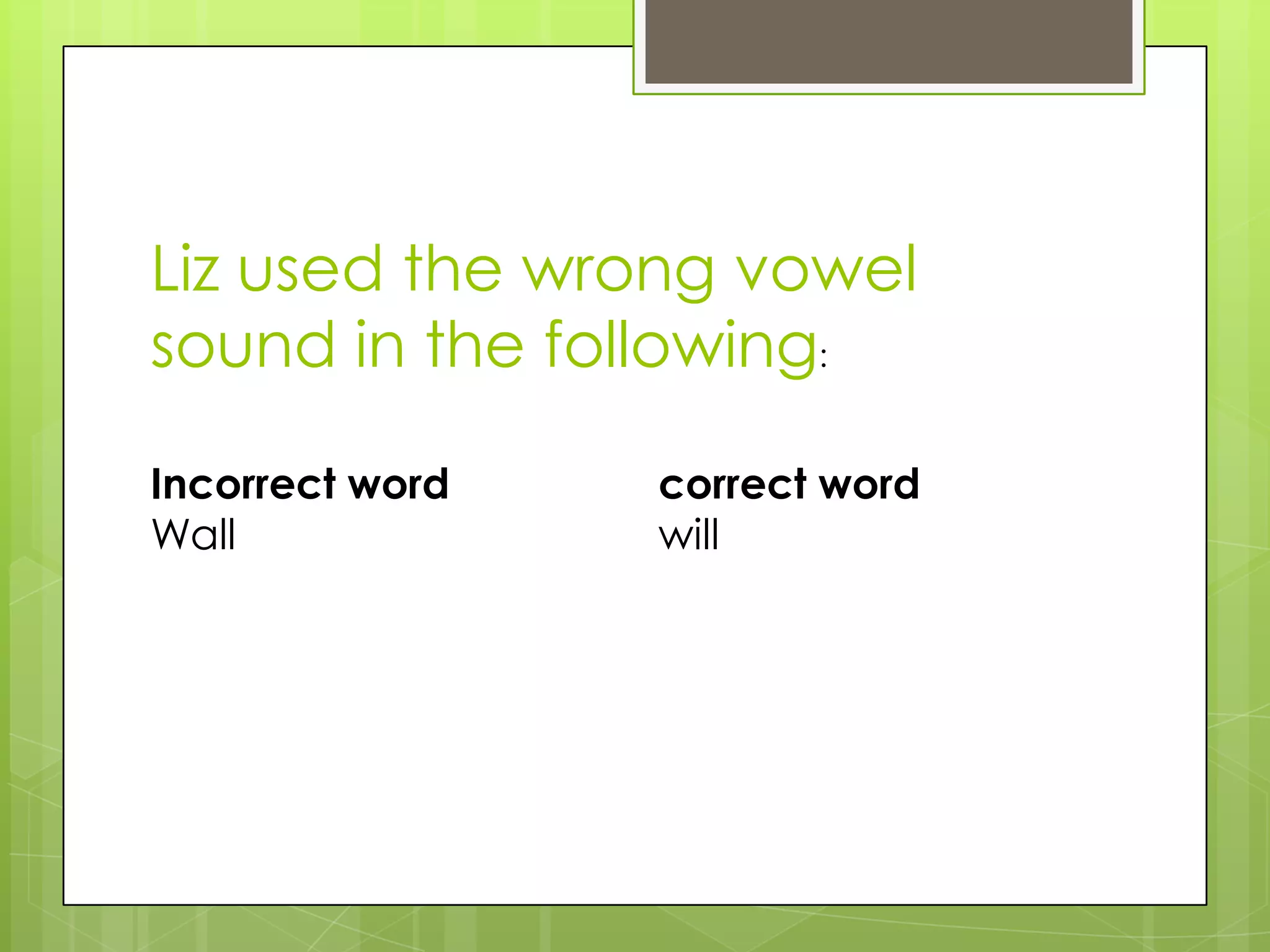
Liz used the wrong vowel
sound in the following:

Incorrect word   correct word
Wall             will
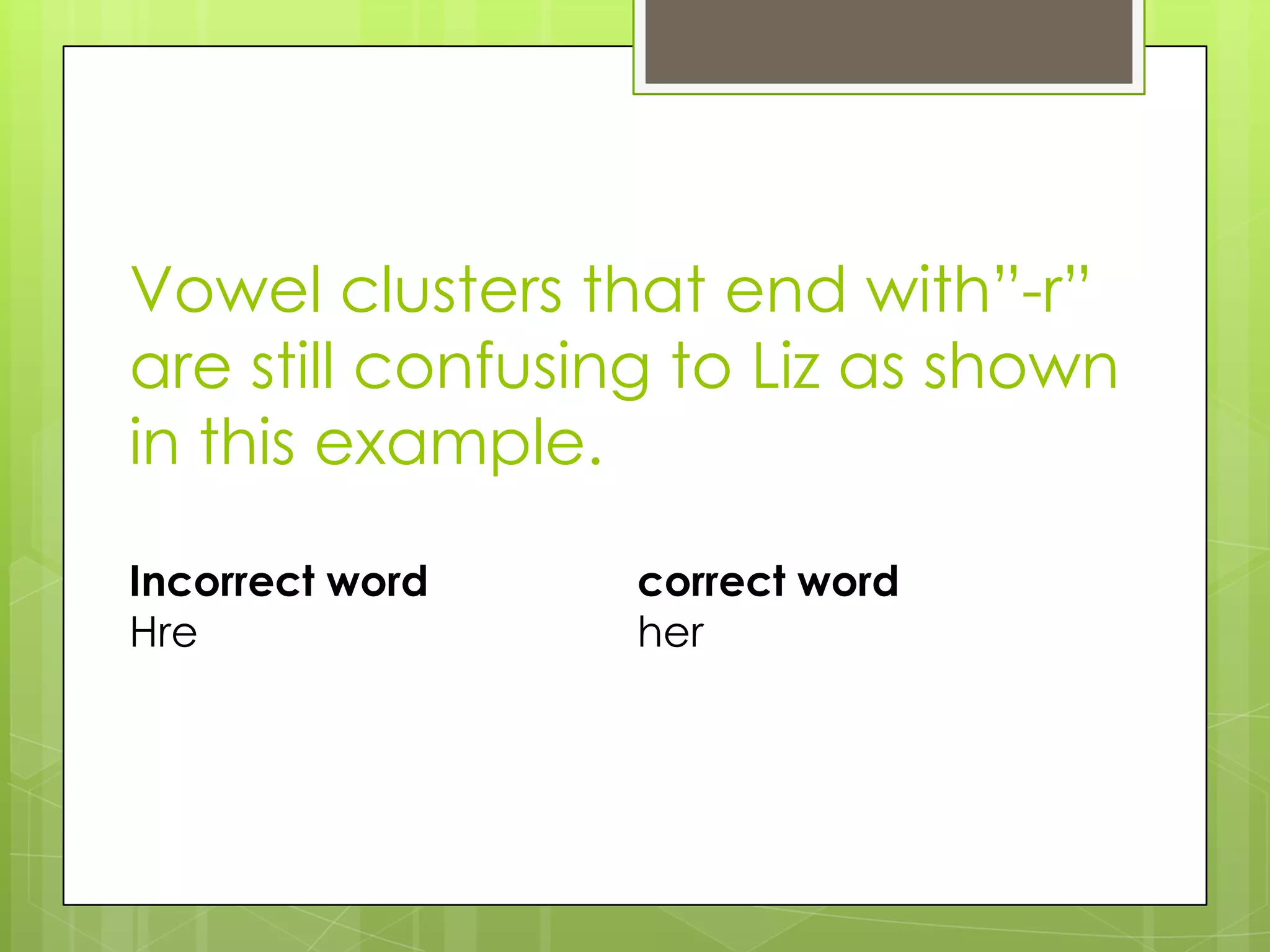
Vowel clusters that end with”-r”
are still confusing to Liz as shown
in this example.

Incorrect word   correct word
Hre              her
The vowel cluster with [er] where
the /r/ is not pronounced is a
close cousin to the “her”
problem.


Incorrect word   correct word
Amreica          America
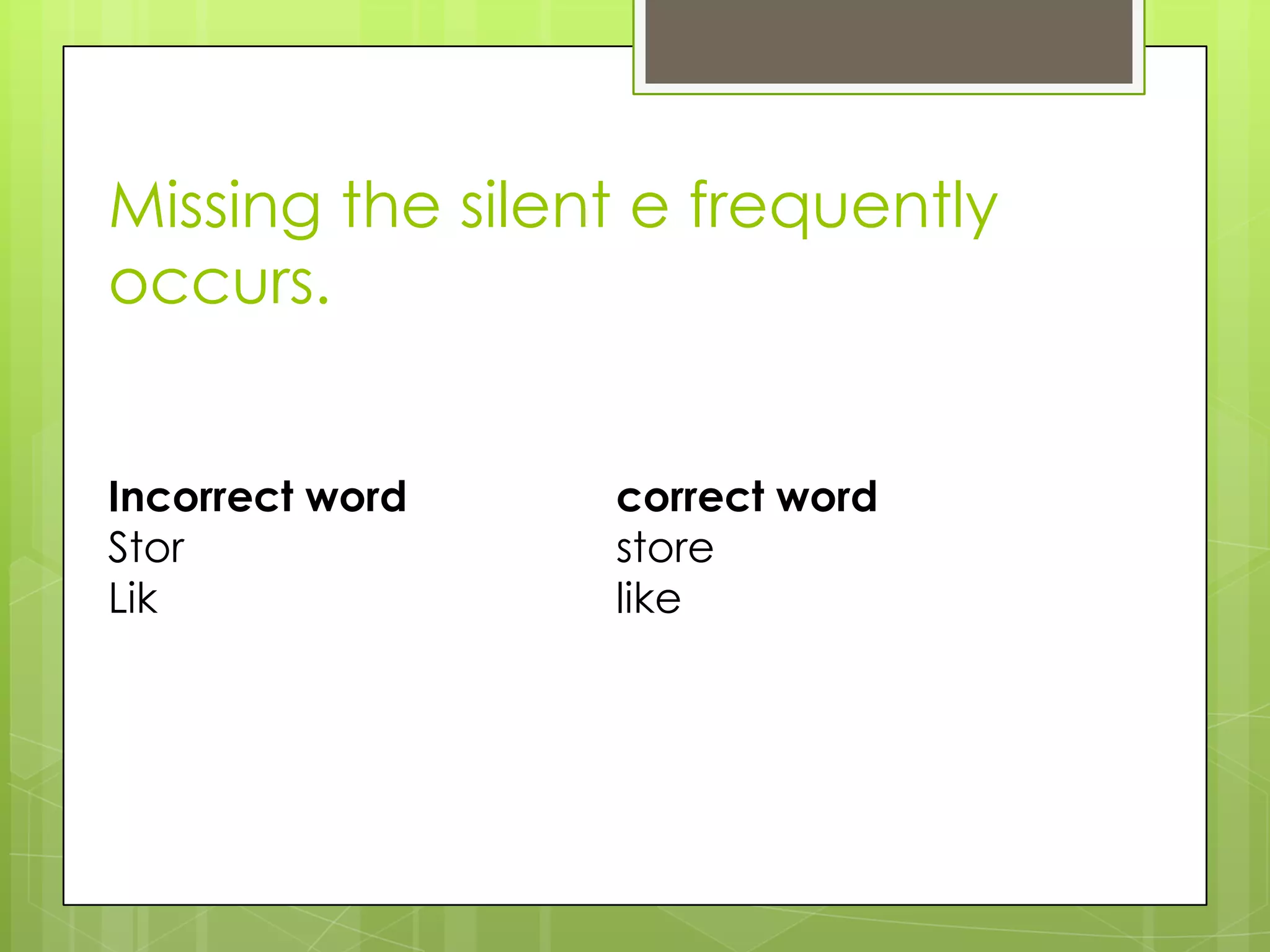
Missing the silent e frequently
occurs.


Incorrect word   correct word
Stor             store
Lik              like
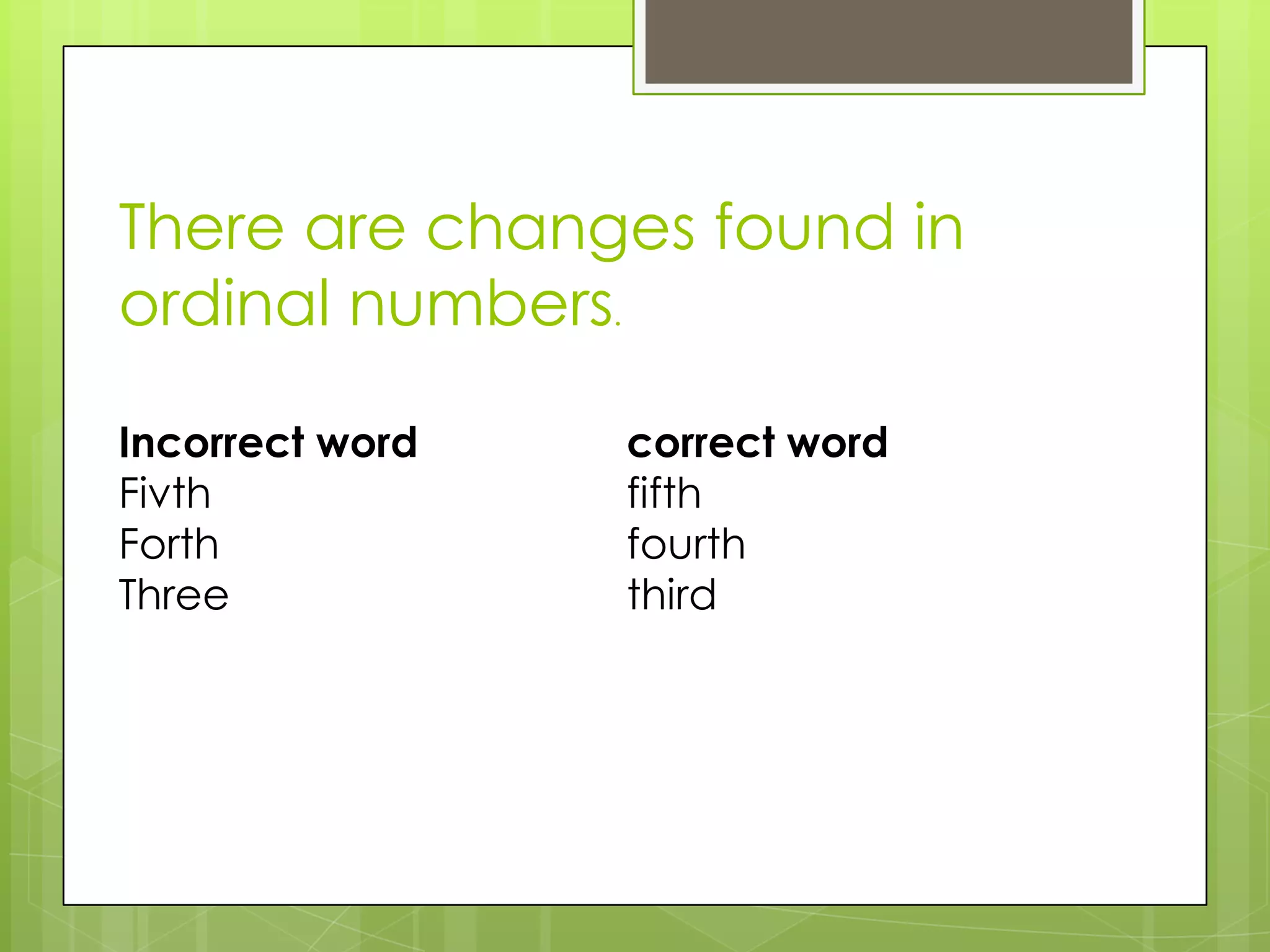
There are changes found in
ordinal numbers.

Incorrect word   correct word
Fivth            fifth
Forth            fourth
Three            third
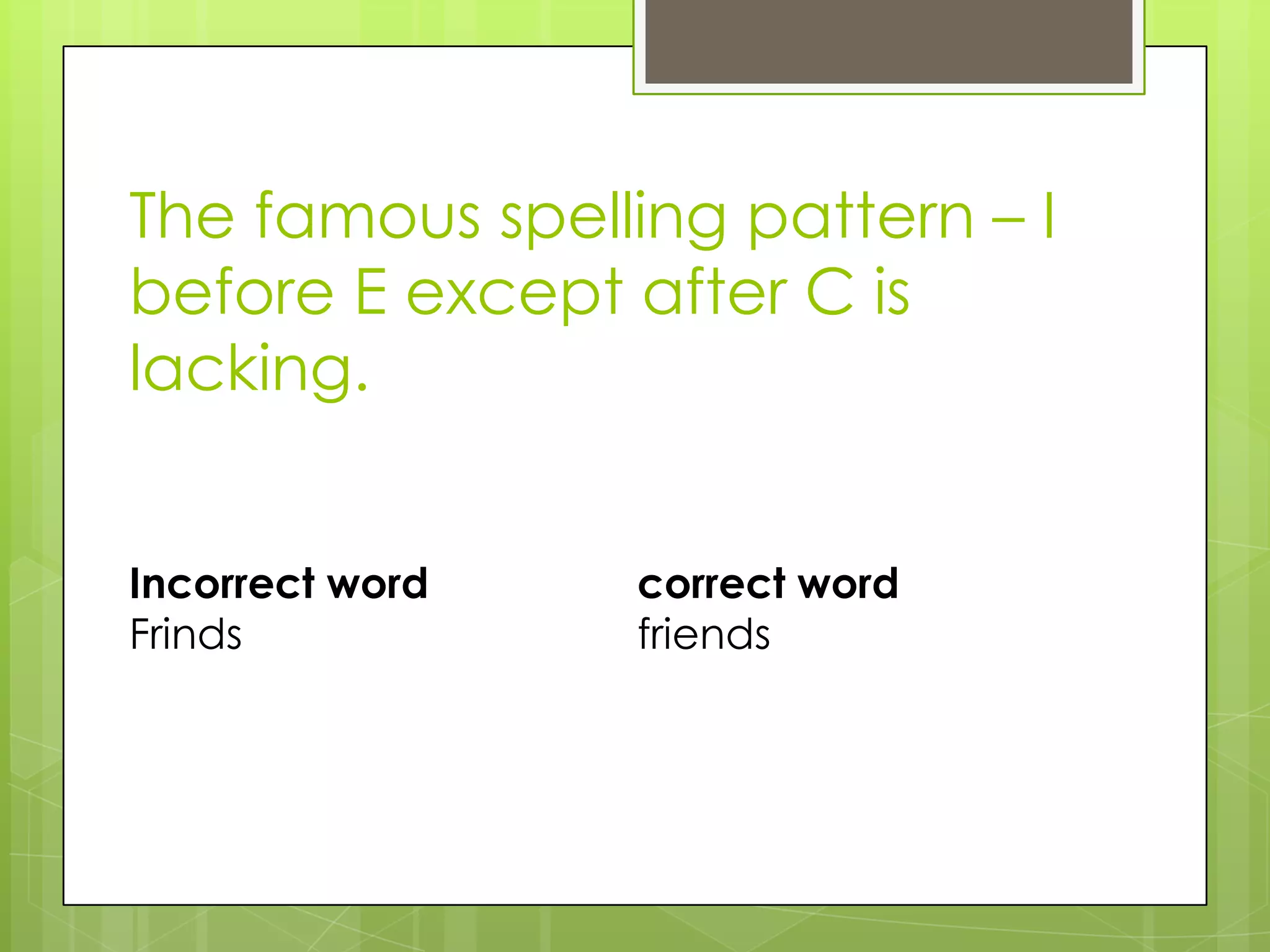
The famous spelling pattern – I
before E except after C is
lacking.


Incorrect word   correct word
Frinds           friends
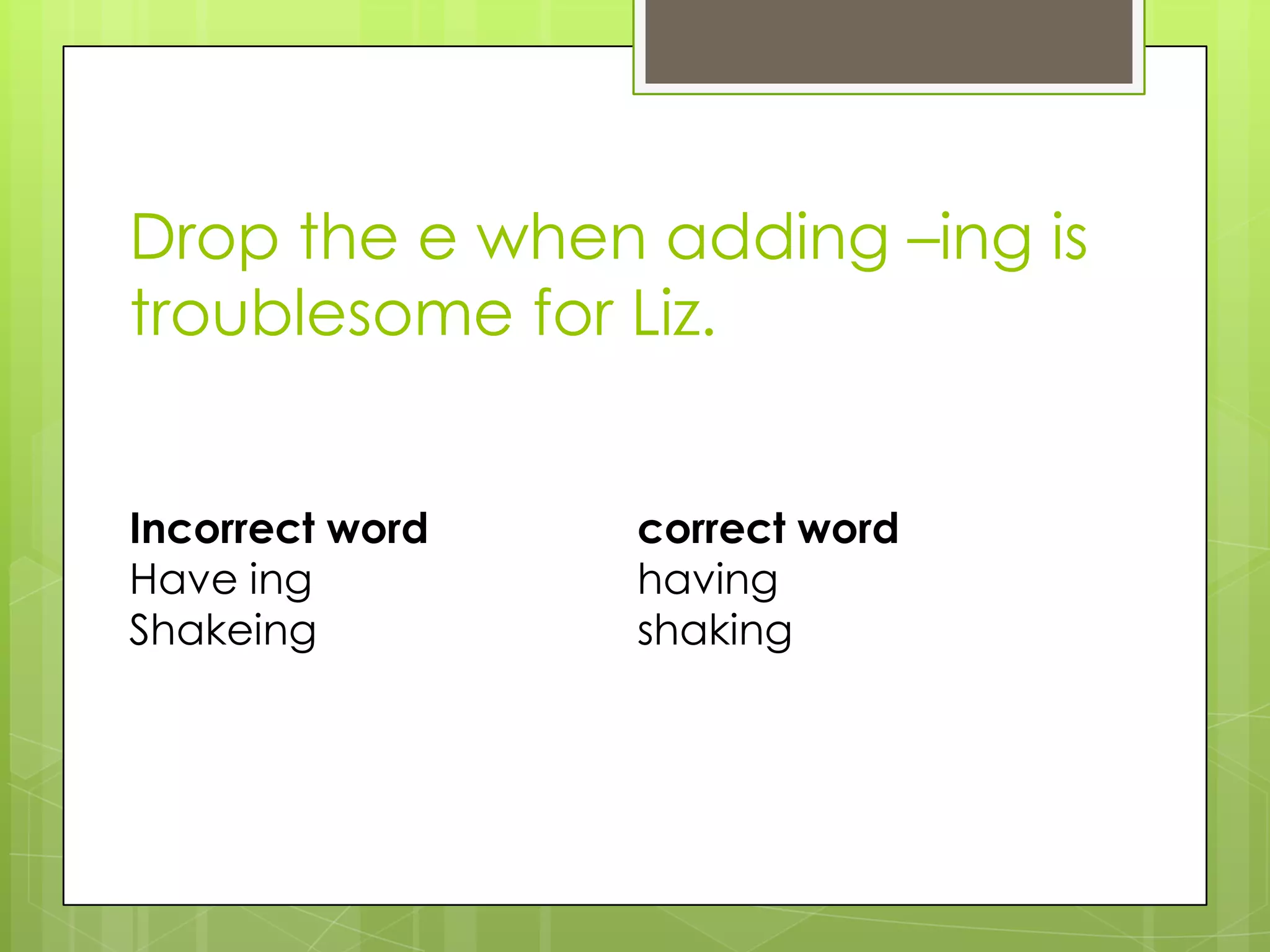
Drop the e when adding –ing is
troublesome for Liz.


Incorrect word   correct word
Have ing         having
Shakeing         shaking
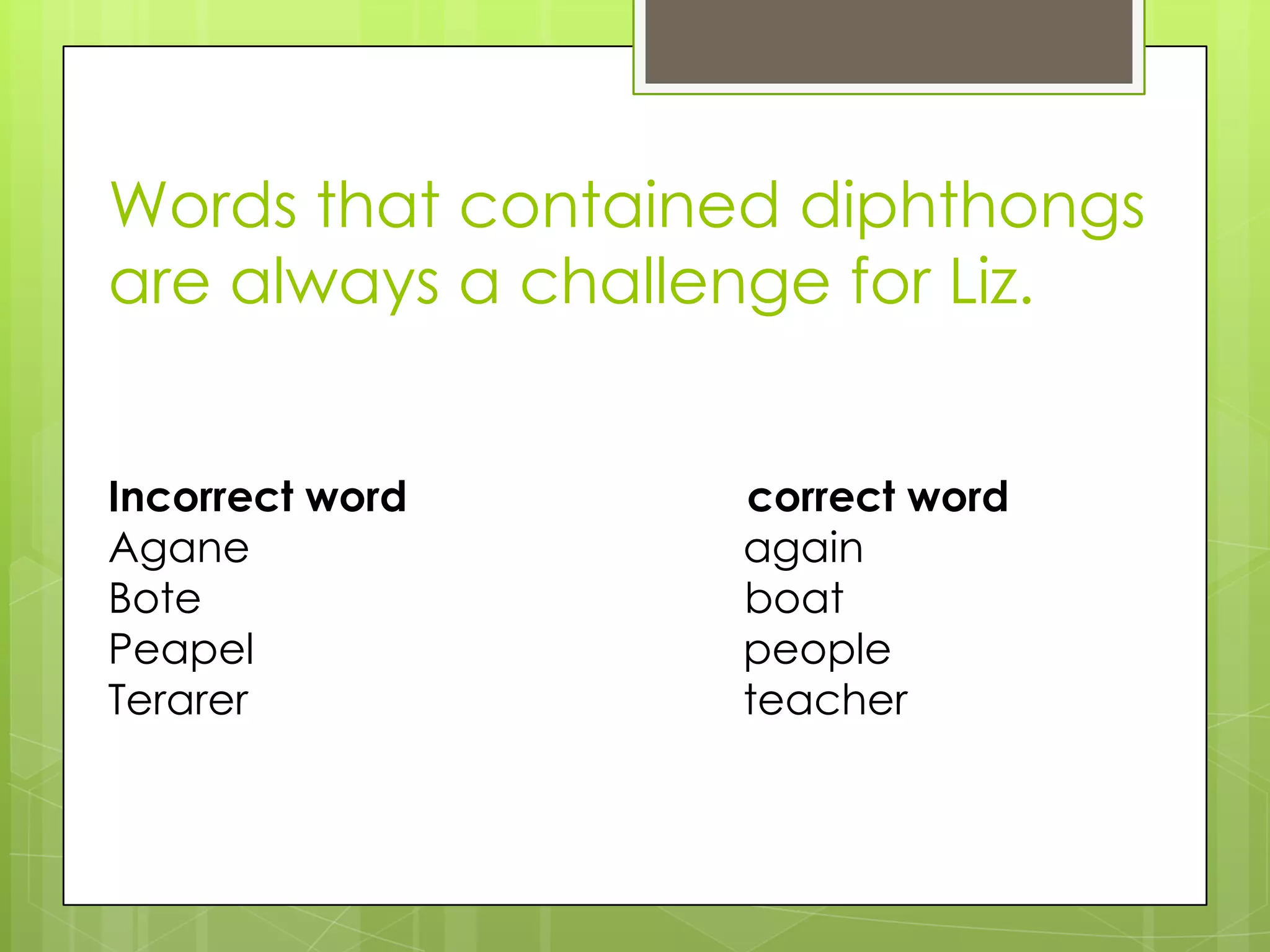
Words that contained diphthongs
are always a challenge for Liz.


Incorrect word    correct word
Agane             again
Bote              boat
Peapel            people
Terarer           teacher
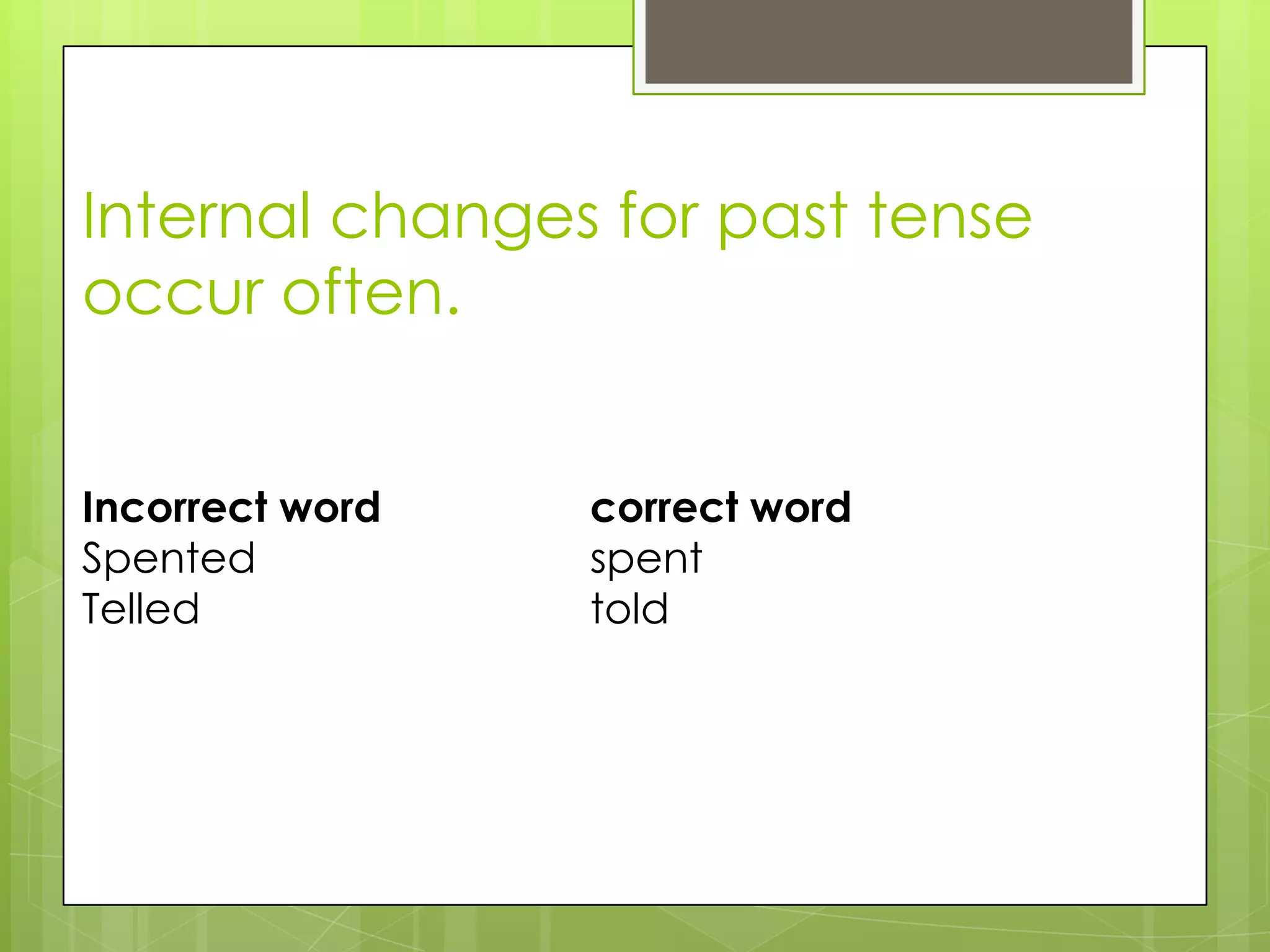
Internal changes for past tense
occur often.


Incorrect word   correct word
Spented          spent
Telled           told
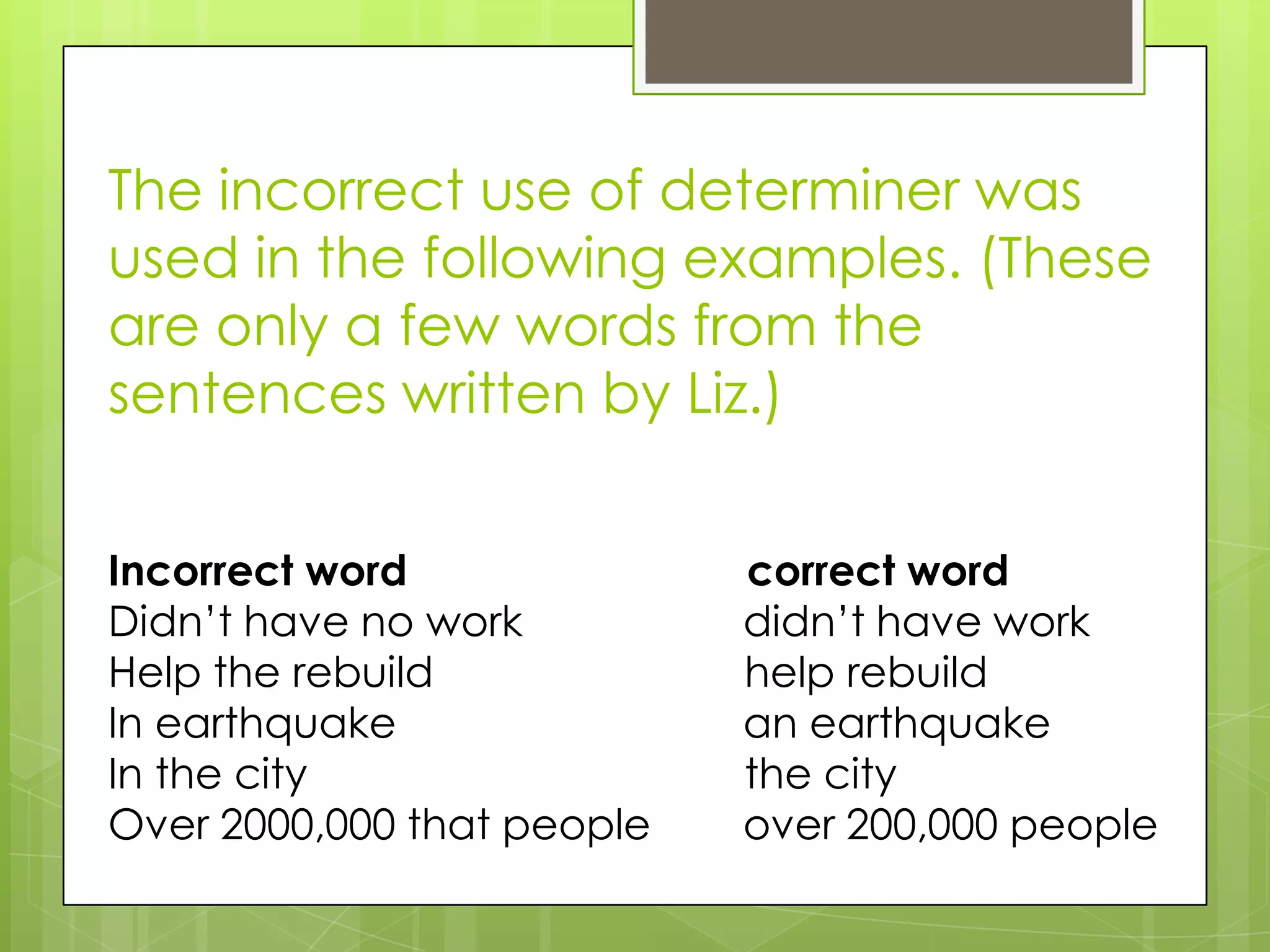
The incorrect use of determiner was
used in the following examples. (These
are only a few words from the
sentences written by Liz.)


Incorrect word              correct word
Didn’t have no work         didn’t have work
Help the rebuild            help rebuild
In earthquake               an earthquake
In the city                 the city
Over 2000,000 that people   over 200,000 people
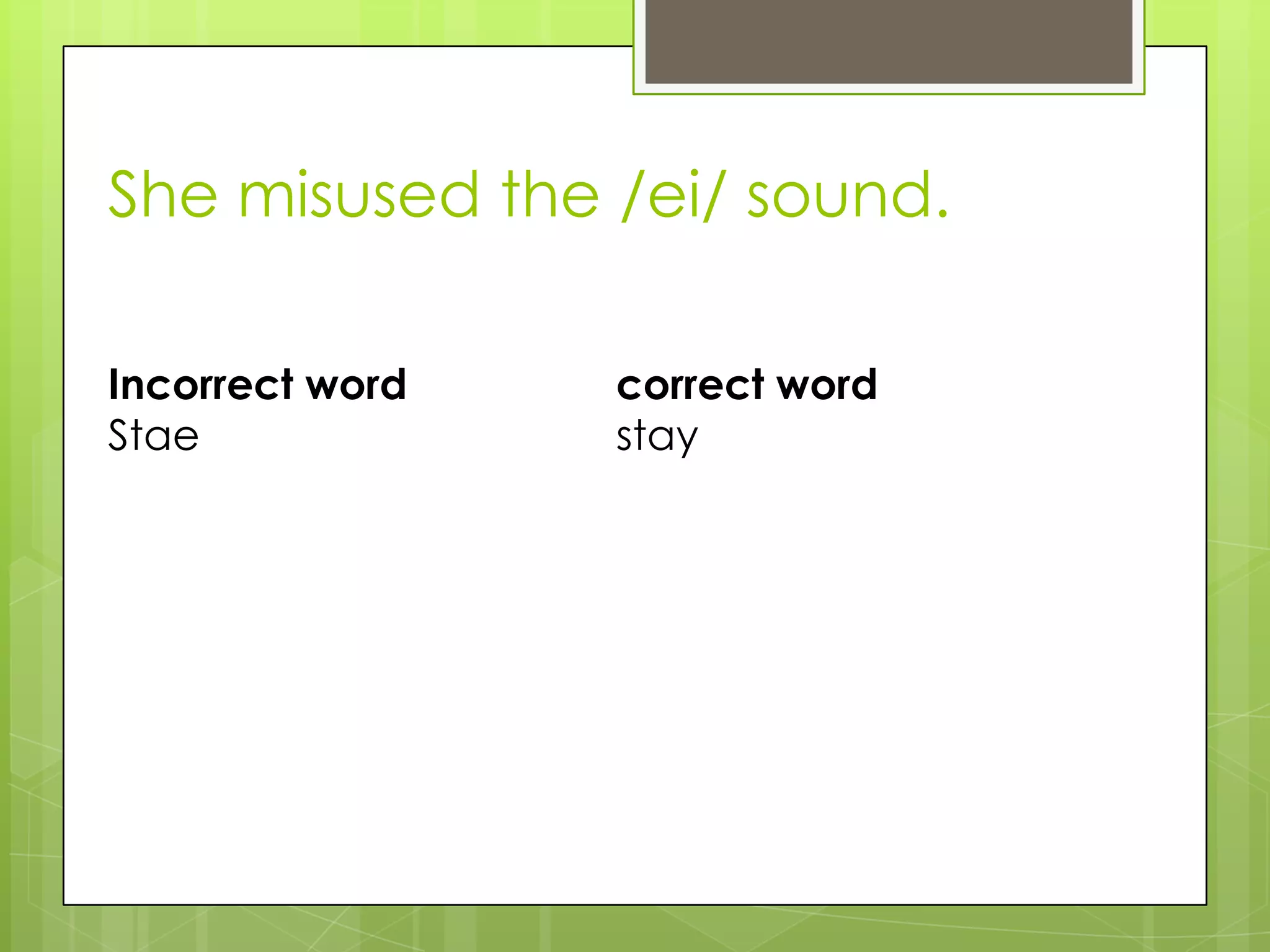
She misused the /ei/ sound.

Incorrect word   correct word
Stae             stay
The dd makes the /d/ sound and
/d/ and /t/ are both consonant
[anterior] stops.

Incorrect word    correct word
Meted             middle
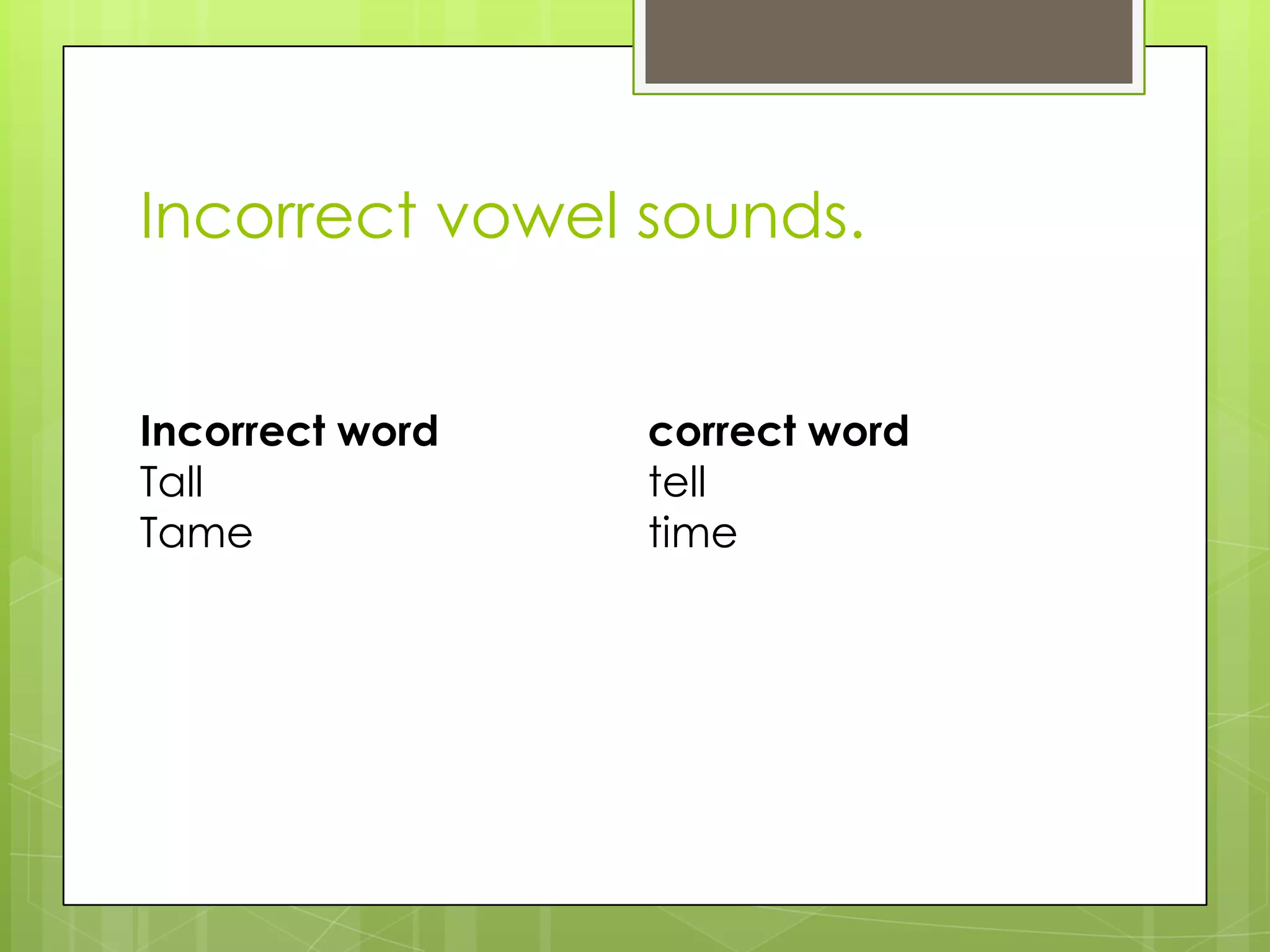
Incorrect vowel sounds.


Incorrect word   correct word
Tall             tell
Tame             time
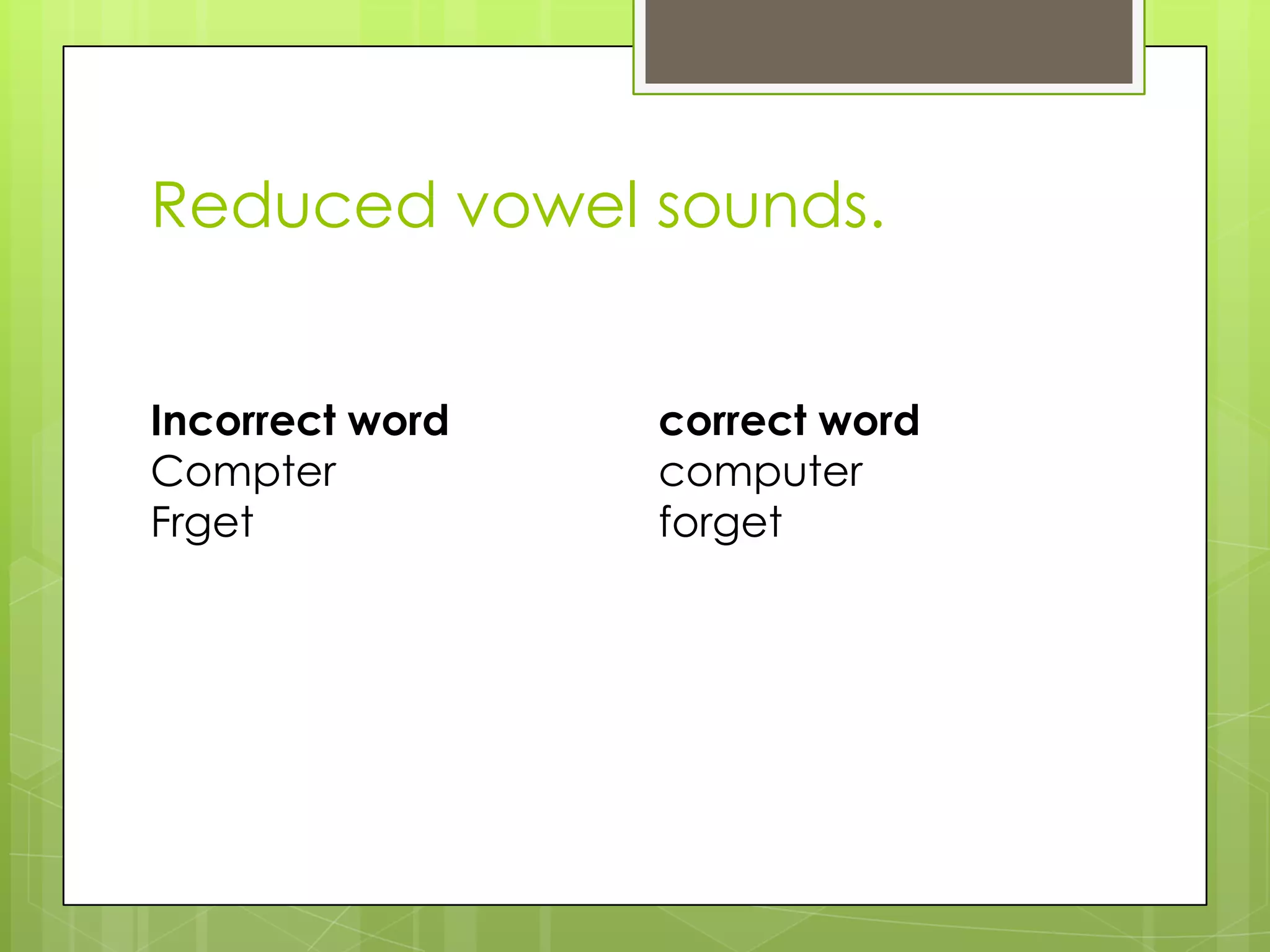
Reduced vowel sounds.


Incorrect word   correct word
Compter          computer
Frget            forget
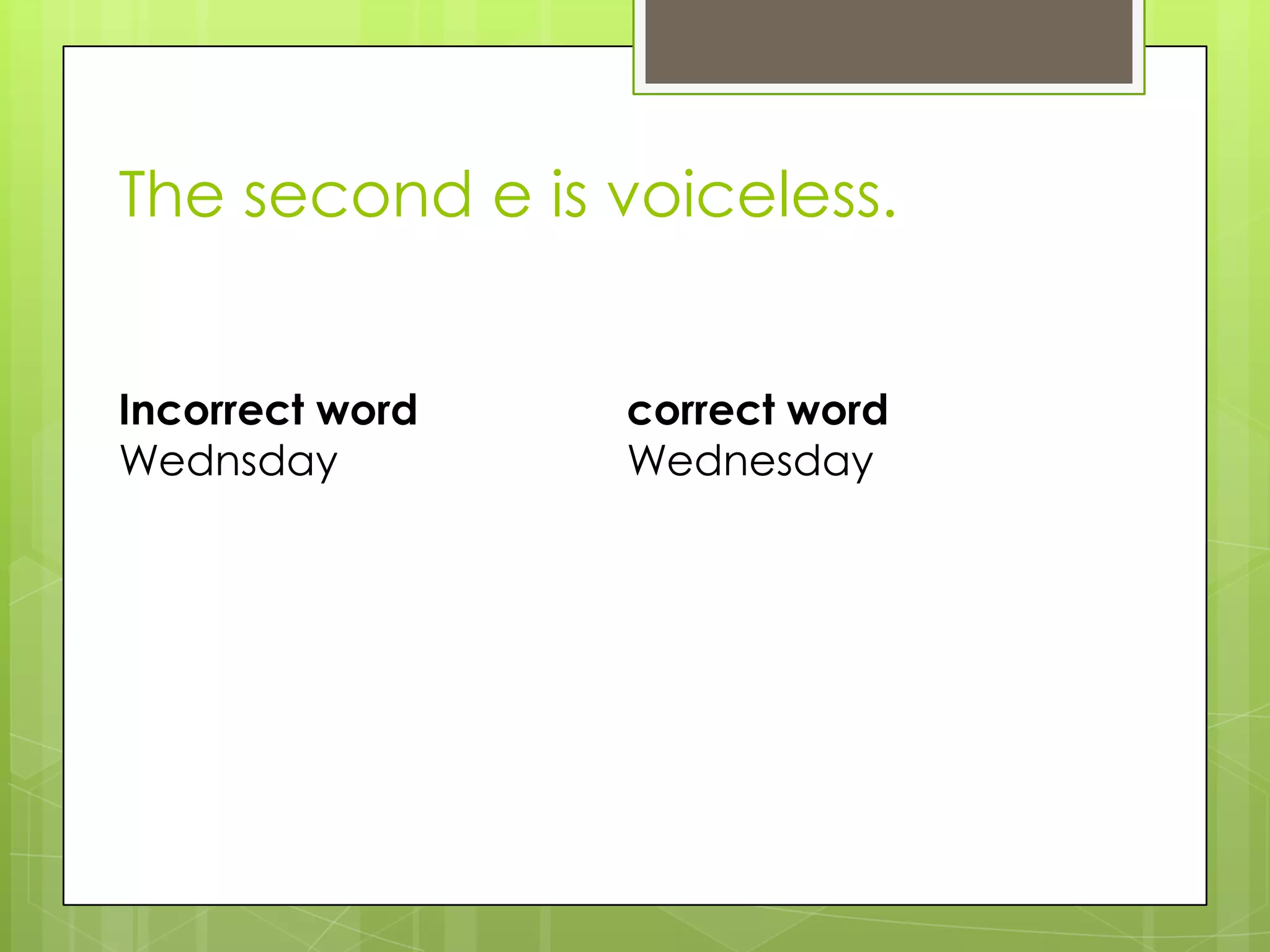
The second e is voiceless.


Incorrect word   correct word
Wednsday         Wednesday
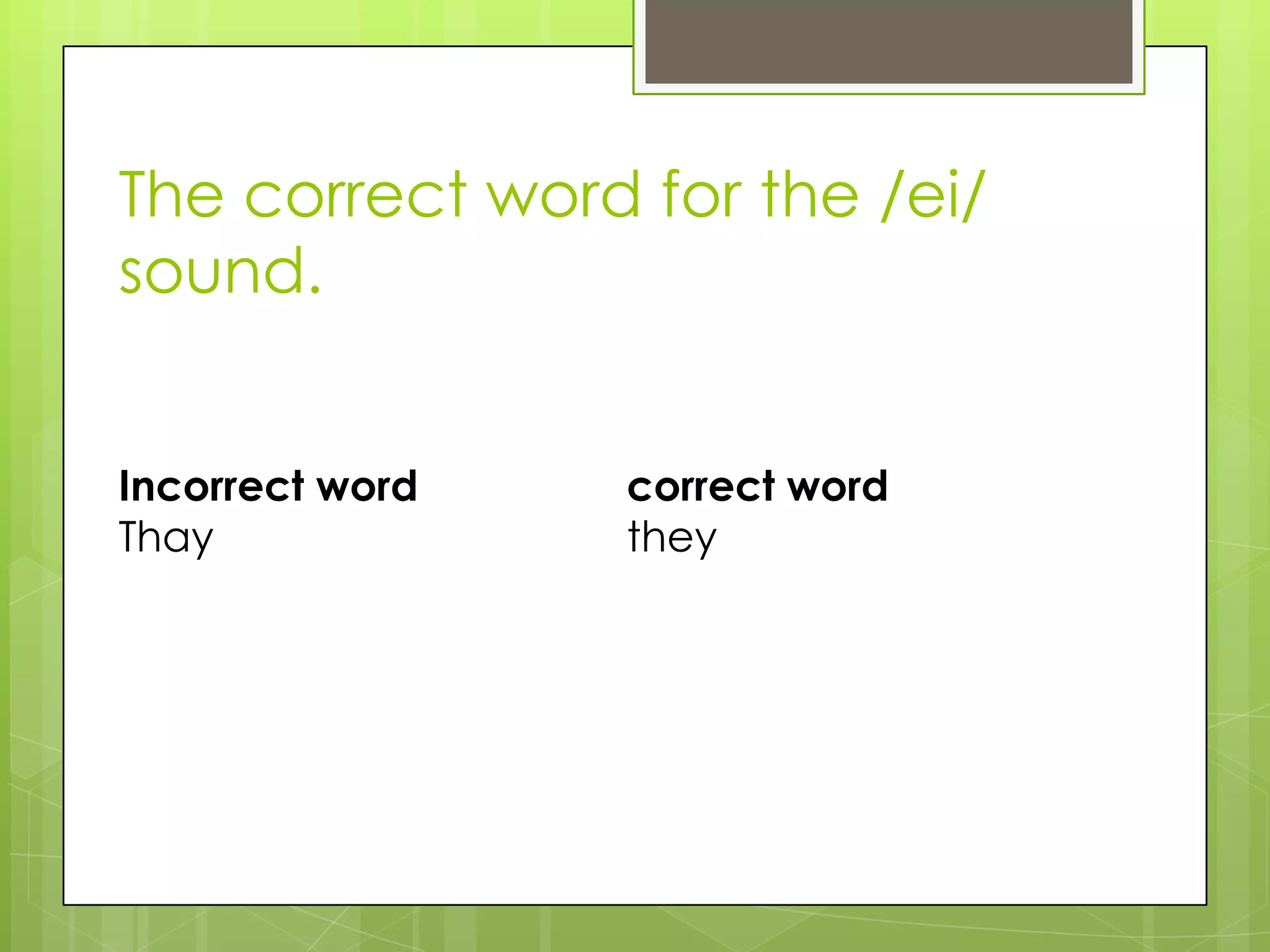
The correct word for the /ei/
sound.


Incorrect word   correct word
Thay             they
The sound for /v/ and /f/ are both
[LABIAL] – [ROUND]

Incorrect word      correct word
Bevfor              before
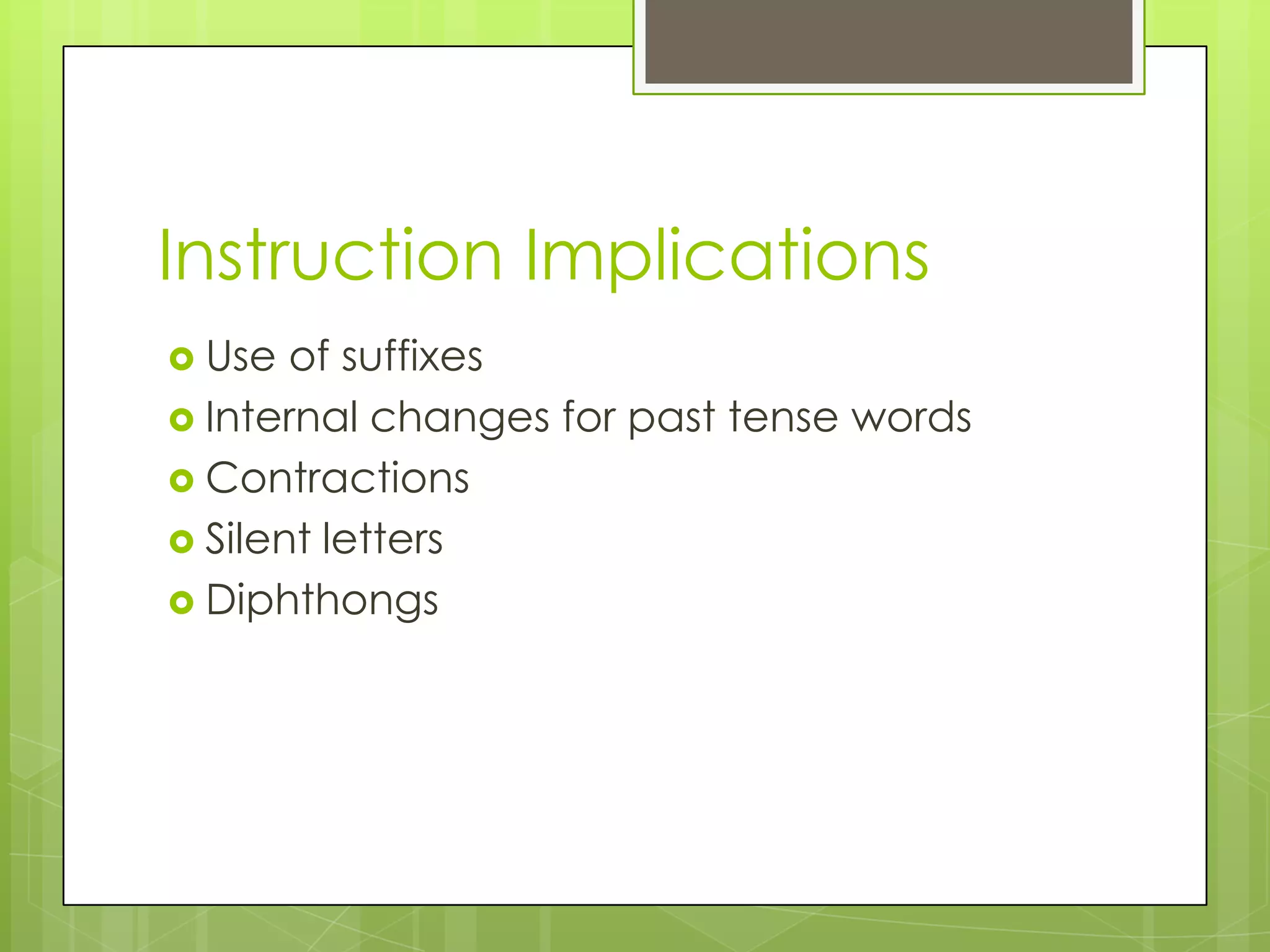
Instruction Implications
 Use  of suffixes
 Internal changes for past tense words
 Contractions
 Silent letters
 Diphthongs
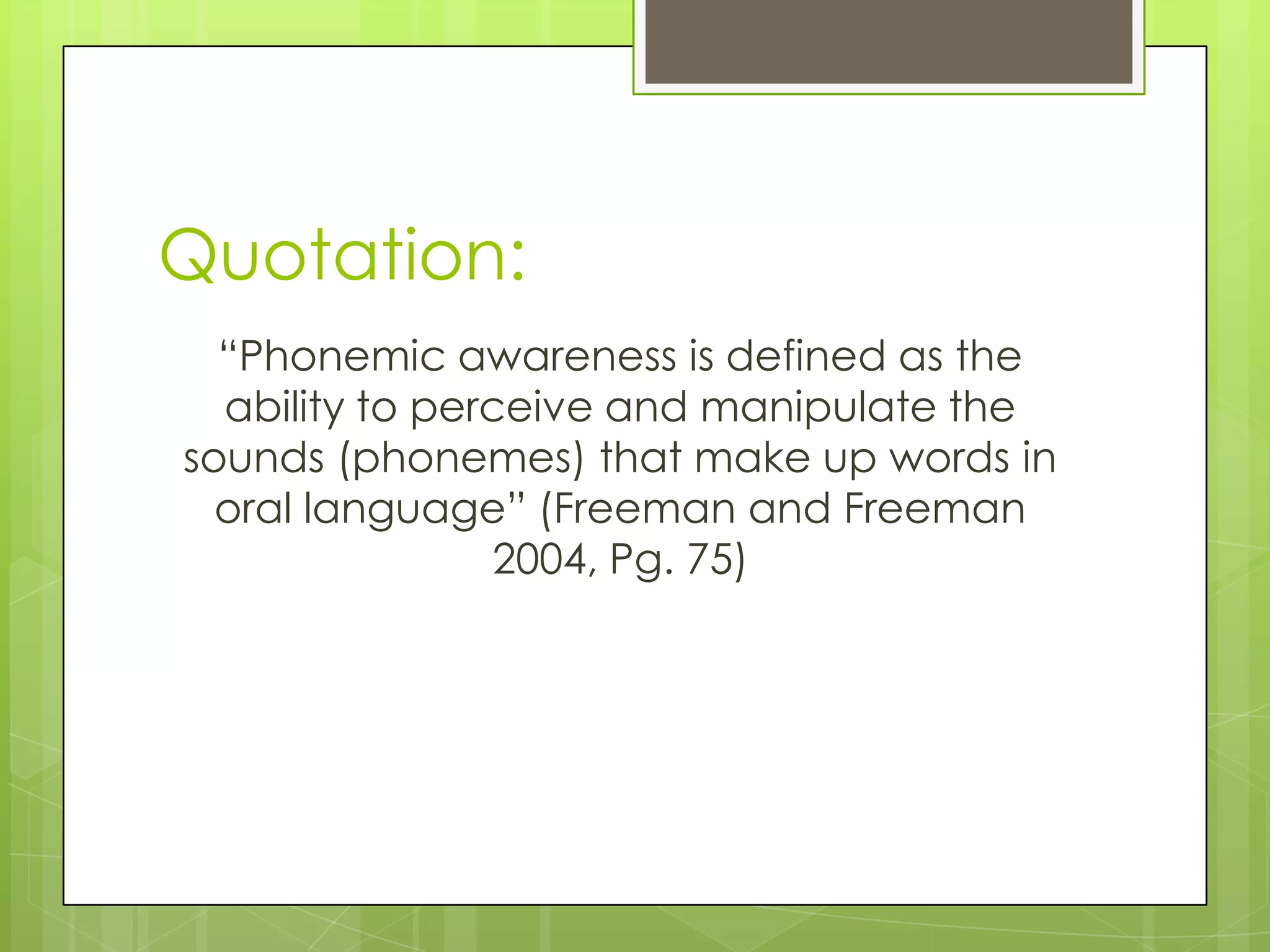
Quotation:
  “Phonemic awareness is defined as the
  ability to perceive and manipulate the
sounds (phonemes) that make up words in
  oral language” (Freeman and Freeman
                 2004, Pg. 75)
Summary
 Lizis progressing but has obstacles that
  slow her learning.
 Limited L1 learning to transfer to L2
 Nervousness and anxiety towards tests
 No support in English at home
Conclusion
Liz’s language situation is not unique. Many who move here from
a Spanish speaking country stop learning in Spanish. This was
done after the time when learning acquisition has past. Native
learners learn from listening first to our families. Students who
come into English during the school years only hear English
spoken in school. Students develop an interlanguage and even
fossilize errors in what knowledge they try to transfer between the
two languages.

Bass jayne u11a1 language comparison

  • 1.
    English as a Second Language: whenSpanish was the first language A Comparison By Jayne Bass
  • 2.
    Key Features ofSpanish • Spanish is a romance language • 400 million native speakers • Spoken in Spain, Latin America and the USA • 34 million people, 12.2 percent, of the population more than five years old speak Spanish at home (Wikipedia) • Spanish is written in the Latin Alphabet • a, b, c, d, e, f, g, h, i, j, k, l, m, n, ñ, o, p, q, r, s, t, u, v, w, x, y, z, ch, ll. • The letters "k" and "w" are used only in words and names coming from foreign languages • pronunciation can be entirely determined from spelling
  • 3.
    Spanish compared toEnglish  Both use the Roman alphabet  30% to 40% of all words in English have related words in Spanish  Spanish is a much more heavily inflected language than English  5 pure vowels and 5 dipthongs
  • 4.
    Impact of L1on the Development of the English Language Learner  Spanish is highly inflected language (English is not)  Affix usage is an area of difficulty  Spanish does not use quotation marks  Spanish does not use contractions  Spanish does not use auxiliaries  Spanish does use a subject – verb – object but Spanish allows for flexibility in word movement.
  • 5.
    Case Study  Student:Liz  Grade: 5Th  From: Mexico  Years in USA: 3.5 years  Home Language: Spanish  Proficiency: Speaking only – no ability in reading or writing  Hardest problem: Exception to sounds
  • 6.
    Instruction Implication  The following slides will show examples of Liz’s incorrect word and the correct words  A probable reason for these errors is also given
  • 7.
    Liz used thewrong affix in the following samples causing a shift in the tense of the word. Incorrect word correct word Building buildings Leted let Sharing shared Start started Room rooms Immigrant immigrants Live lived
  • 8.
    In the followingwords she knew to change the affix but spelled it incorrectly. Incorrect word correct word Inportnt important Lookd looked
  • 9.
    Liz used thewrong vowel sound in the following: Incorrect word correct word Wall will
  • 10.
    Vowel clusters thatend with”-r” are still confusing to Liz as shown in this example. Incorrect word correct word Hre her
  • 11.
    The vowel clusterwith [er] where the /r/ is not pronounced is a close cousin to the “her” problem. Incorrect word correct word Amreica America
  • 12.
    Missing the silente frequently occurs. Incorrect word correct word Stor store Lik like
  • 13.
    There are changesfound in ordinal numbers. Incorrect word correct word Fivth fifth Forth fourth Three third
  • 14.
    The famous spellingpattern – I before E except after C is lacking. Incorrect word correct word Frinds friends
  • 15.
    Drop the ewhen adding –ing is troublesome for Liz. Incorrect word correct word Have ing having Shakeing shaking
  • 16.
    Words that containeddiphthongs are always a challenge for Liz. Incorrect word correct word Agane again Bote boat Peapel people Terarer teacher
  • 17.
    Internal changes forpast tense occur often. Incorrect word correct word Spented spent Telled told
  • 18.
    The incorrect useof determiner was used in the following examples. (These are only a few words from the sentences written by Liz.) Incorrect word correct word Didn’t have no work didn’t have work Help the rebuild help rebuild In earthquake an earthquake In the city the city Over 2000,000 that people over 200,000 people
  • 19.
    She misused the/ei/ sound. Incorrect word correct word Stae stay
  • 20.
    The dd makesthe /d/ sound and /d/ and /t/ are both consonant [anterior] stops. Incorrect word correct word Meted middle
  • 21.
    Incorrect vowel sounds. Incorrectword correct word Tall tell Tame time
  • 22.
    Reduced vowel sounds. Incorrectword correct word Compter computer Frget forget
  • 23.
    The second eis voiceless. Incorrect word correct word Wednsday Wednesday
  • 24.
    The correct wordfor the /ei/ sound. Incorrect word correct word Thay they
  • 25.
    The sound for/v/ and /f/ are both [LABIAL] – [ROUND] Incorrect word correct word Bevfor before
  • 26.
    Instruction Implications  Use of suffixes  Internal changes for past tense words  Contractions  Silent letters  Diphthongs
  • 27.
    Quotation: “Phonemicawareness is defined as the ability to perceive and manipulate the sounds (phonemes) that make up words in oral language” (Freeman and Freeman 2004, Pg. 75)
  • 28.
    Summary  Lizis progressingbut has obstacles that slow her learning.  Limited L1 learning to transfer to L2  Nervousness and anxiety towards tests  No support in English at home
  • 29.
    Conclusion Liz’s language situationis not unique. Many who move here from a Spanish speaking country stop learning in Spanish. This was done after the time when learning acquisition has past. Native learners learn from listening first to our families. Students who come into English during the school years only hear English spoken in school. Students develop an interlanguage and even fossilize errors in what knowledge they try to transfer between the two languages.