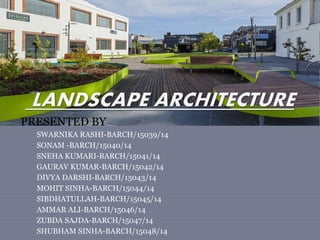
PRESENTED BY
SWARNIKA RASHI-BARCH/15039/14
SONAM -BARCH/15040/14
SNEHA KUMARI-BARCH/15041/14
GAURAV KUMAR-BARCH/15042/14
DIVYA DARSHI-BARCH/15043/14
MOHIT SINHA-BARCH/15044/14
SIBDHATULLAH-BARCH/15045/14
AMMAR ALI-BARCH/15046/14
ZUBDA SAJDA-BARCH/15047/14
SHUBHAM SINHA-BARCH/15048/14
LANDSCAPE
The art and practice of designing the outdoor
environment, especially designing parks or
gardens to harmonize with buildings and roads.
Landscape Architecture is the design of outdoor
public areas , landmarks and structure to achieve
environmental , or aesthetic condition.
Landscape Architecture includes urban landscape
,activity spaces , landscapes of exclusion ,heritage
landscape.
 NATURAL LANDSCAPE
 MANMADE LANDSCAPE
 NATURAL LANSCAPE
• Natural landscape is when an area of land & the elements
that are on it and not directly changed ,altered or moved
by humans.
• Parts of the environment that are present within it with
out the influence of people.
• Natural landscape includes climate, soil , vegetation, land,
water and relief.
• Manmade landscape includes macro,
medium and micro.
• Macro includes regional city, town
planning etc .Medium includes site
planning, site analysis, potential
development process and micro includes
landscape design , parking roads.
• Color
• Forms &shape
• Line of sight
• Scale
• Balance
• Texture
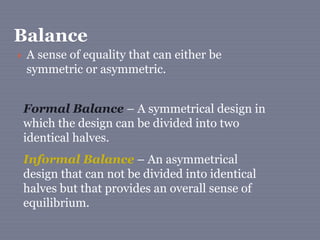
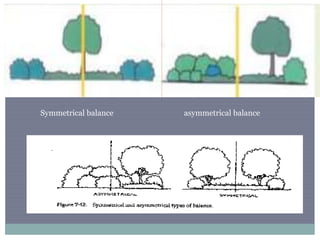
Balance
 A sense of equality that can either be
symmetric or asymmetric.
Formal Balance – A symmetrical design in
which the design can be divided into two
identical halves.
Informal Balance – An asymmetrical
design that can not be divided into identical
halves but that provides an overall sense of
equilibrium.
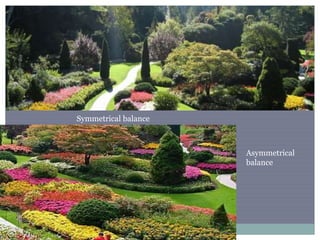
Symmetrical balance asymmetrical balance
Asymmetrical
balance
Symmetrical balance
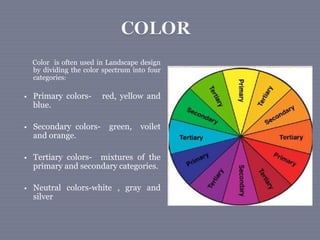
Color is often used in Landscape design
by dividing the color spectrum into four
categories:
 Primary colors- red, yellow and
blue.
 Secondary colors- green, voilet
and orange.
 Tertiary colors- mixtures of the
primary and secondary categories.
 Neutral colors-white , gray and
silver
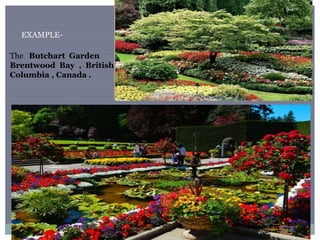
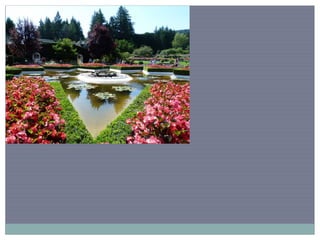
The Butchart Garden
Brentwood Bay , British
Columbia , Canada .
EXAMPLE-
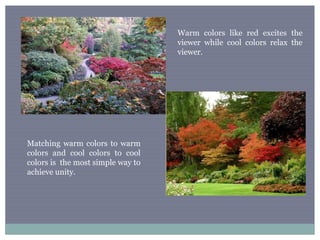
Matching warm colors to warm
colors and cool colors to cool
colors is the most simple way to
achieve unity.
Warm colors like red excites the
viewer while cool colors relax the
viewer.
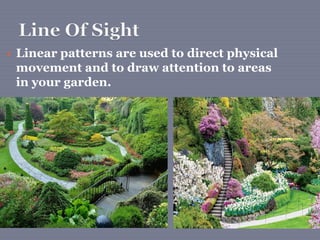
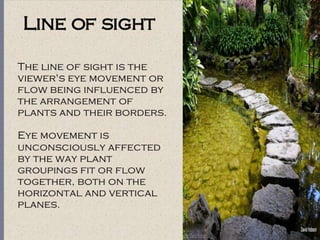
 Linear patterns are used to direct physical
movement and to draw attention to areas
in your garden.
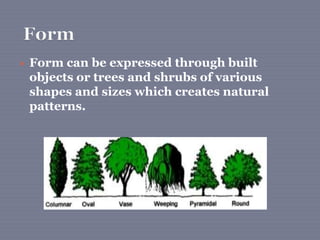
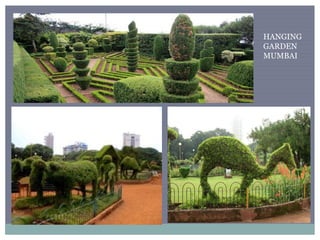
 Form can be expressed through built
objects or trees and shrubs of various
shapes and sizes which creates natural
patterns.
HANGING
GARDEN ,
MUMBAI
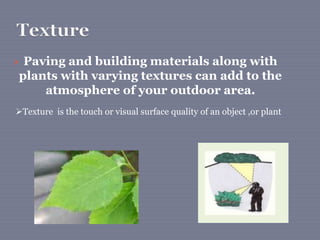
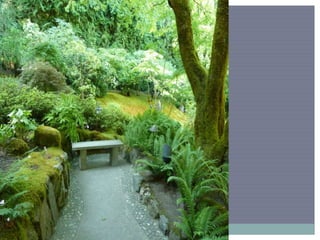
 Paving and building materials along with
plants with varying textures can add to the
atmosphere of your outdoor area.
Texture is the touch or visual surface quality of an object ,or plant
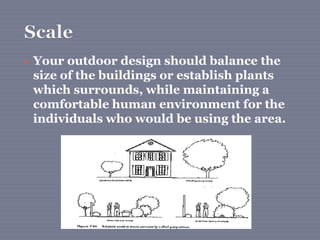
 Your outdoor design should balance the
size of the buildings or establish plants
which surrounds, while maintaining a
comfortable human environment for the
individuals who would be using the area.
THANK YOU

basic elements of landscape architechture

  • 1.
    PRESENTED BY SWARNIKA RASHI-BARCH/15039/14 SONAM-BARCH/15040/14 SNEHA KUMARI-BARCH/15041/14 GAURAV KUMAR-BARCH/15042/14 DIVYA DARSHI-BARCH/15043/14 MOHIT SINHA-BARCH/15044/14 SIBDHATULLAH-BARCH/15045/14 AMMAR ALI-BARCH/15046/14 ZUBDA SAJDA-BARCH/15047/14 SHUBHAM SINHA-BARCH/15048/14
  • 2.
    LANDSCAPE The art andpractice of designing the outdoor environment, especially designing parks or gardens to harmonize with buildings and roads. Landscape Architecture is the design of outdoor public areas , landmarks and structure to achieve environmental , or aesthetic condition. Landscape Architecture includes urban landscape ,activity spaces , landscapes of exclusion ,heritage landscape.
  • 3.
     NATURAL LANDSCAPE MANMADE LANDSCAPE  NATURAL LANSCAPE • Natural landscape is when an area of land & the elements that are on it and not directly changed ,altered or moved by humans. • Parts of the environment that are present within it with out the influence of people. • Natural landscape includes climate, soil , vegetation, land, water and relief.
  • 4.
    • Manmade landscapeincludes macro, medium and micro. • Macro includes regional city, town planning etc .Medium includes site planning, site analysis, potential development process and micro includes landscape design , parking roads.
  • 5.
    • Color • Forms&shape • Line of sight • Scale • Balance • Texture
  • 6.
    Balance  A senseof equality that can either be symmetric or asymmetric. Formal Balance – A symmetrical design in which the design can be divided into two identical halves. Informal Balance – An asymmetrical design that can not be divided into identical halves but that provides an overall sense of equilibrium.
  • 7.
  • 8.
  • 9.
    Color is oftenused in Landscape design by dividing the color spectrum into four categories:  Primary colors- red, yellow and blue.  Secondary colors- green, voilet and orange.  Tertiary colors- mixtures of the primary and secondary categories.  Neutral colors-white , gray and silver
  • 10.
    The Butchart Garden BrentwoodBay , British Columbia , Canada . EXAMPLE-
  • 11.
    Matching warm colorsto warm colors and cool colors to cool colors is the most simple way to achieve unity. Warm colors like red excites the viewer while cool colors relax the viewer.
  • 12.
     Linear patternsare used to direct physical movement and to draw attention to areas in your garden.
  • 14.
     Form canbe expressed through built objects or trees and shrubs of various shapes and sizes which creates natural patterns.
  • 15.
  • 16.
     Paving andbuilding materials along with plants with varying textures can add to the atmosphere of your outdoor area. Texture is the touch or visual surface quality of an object ,or plant
  • 18.
     Your outdoordesign should balance the size of the buildings or establish plants which surrounds, while maintaining a comfortable human environment for the individuals who would be using the area.
  • 20.