



Course Learning
Objectives (CLO 2)
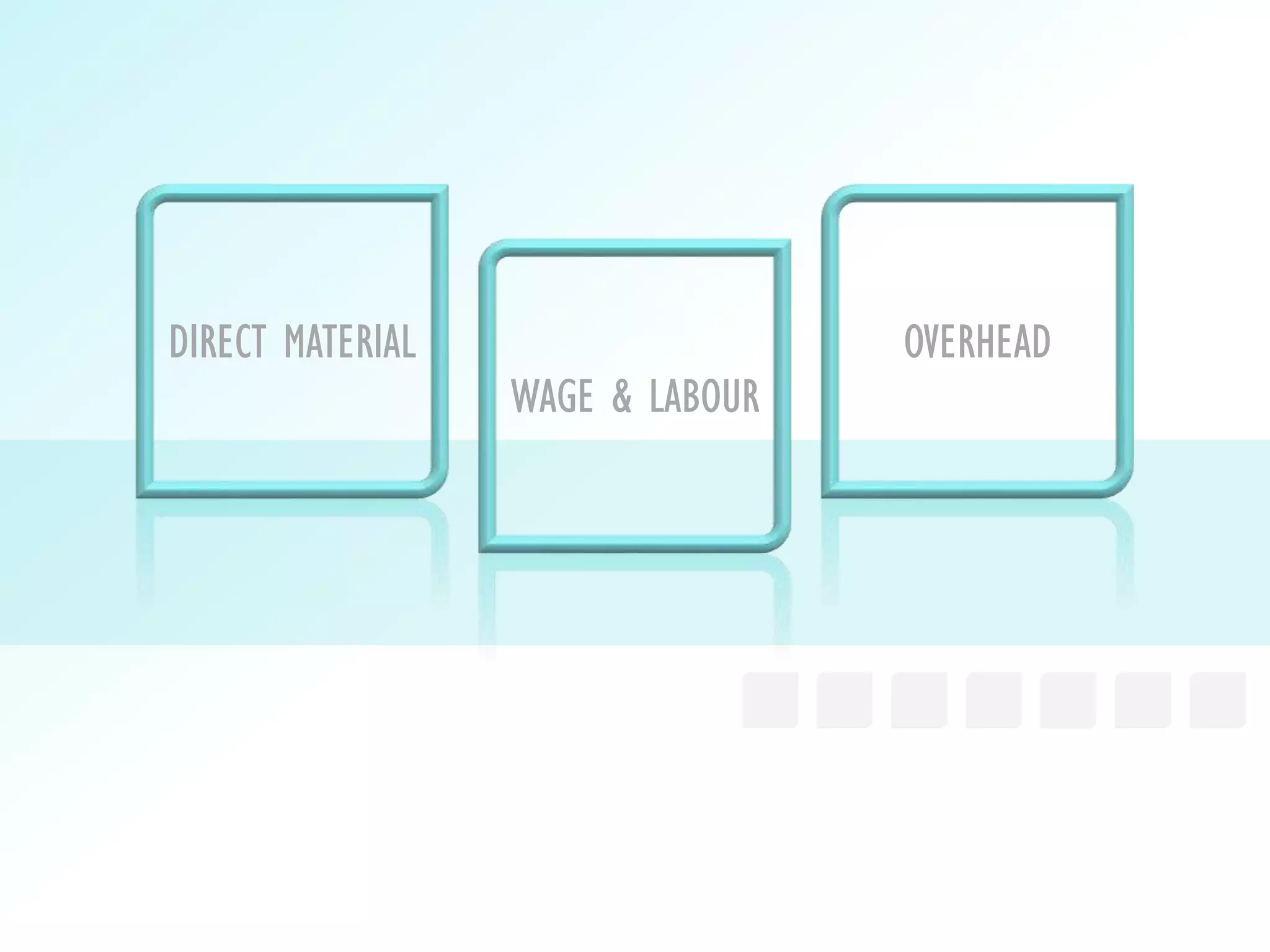
DIRECT MATERIAL
WAGE & LABOUR
OVERHEAD
© 2009 McGraw-Hill Ryerson Limited
1-4
Learning Objective 1
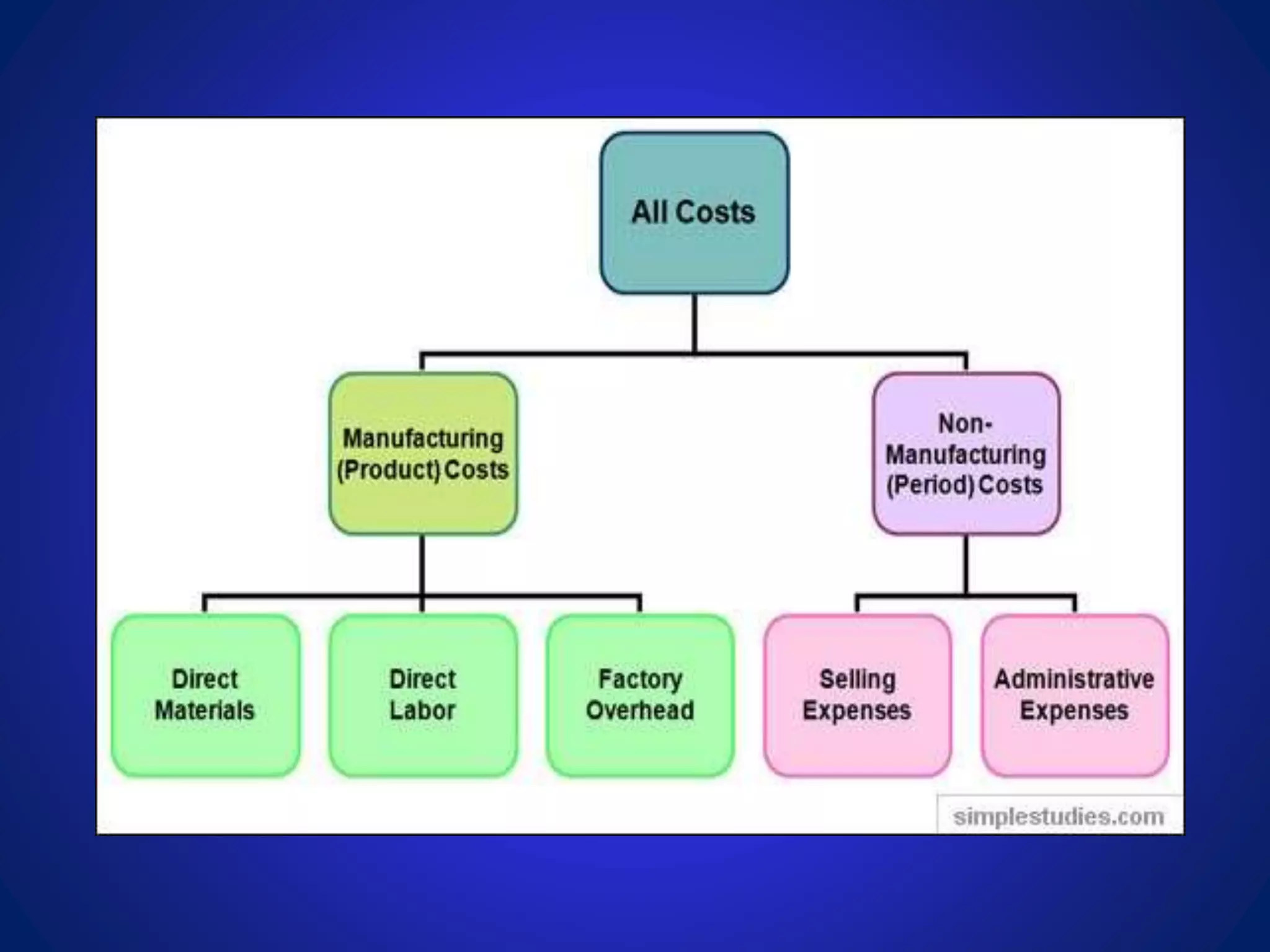
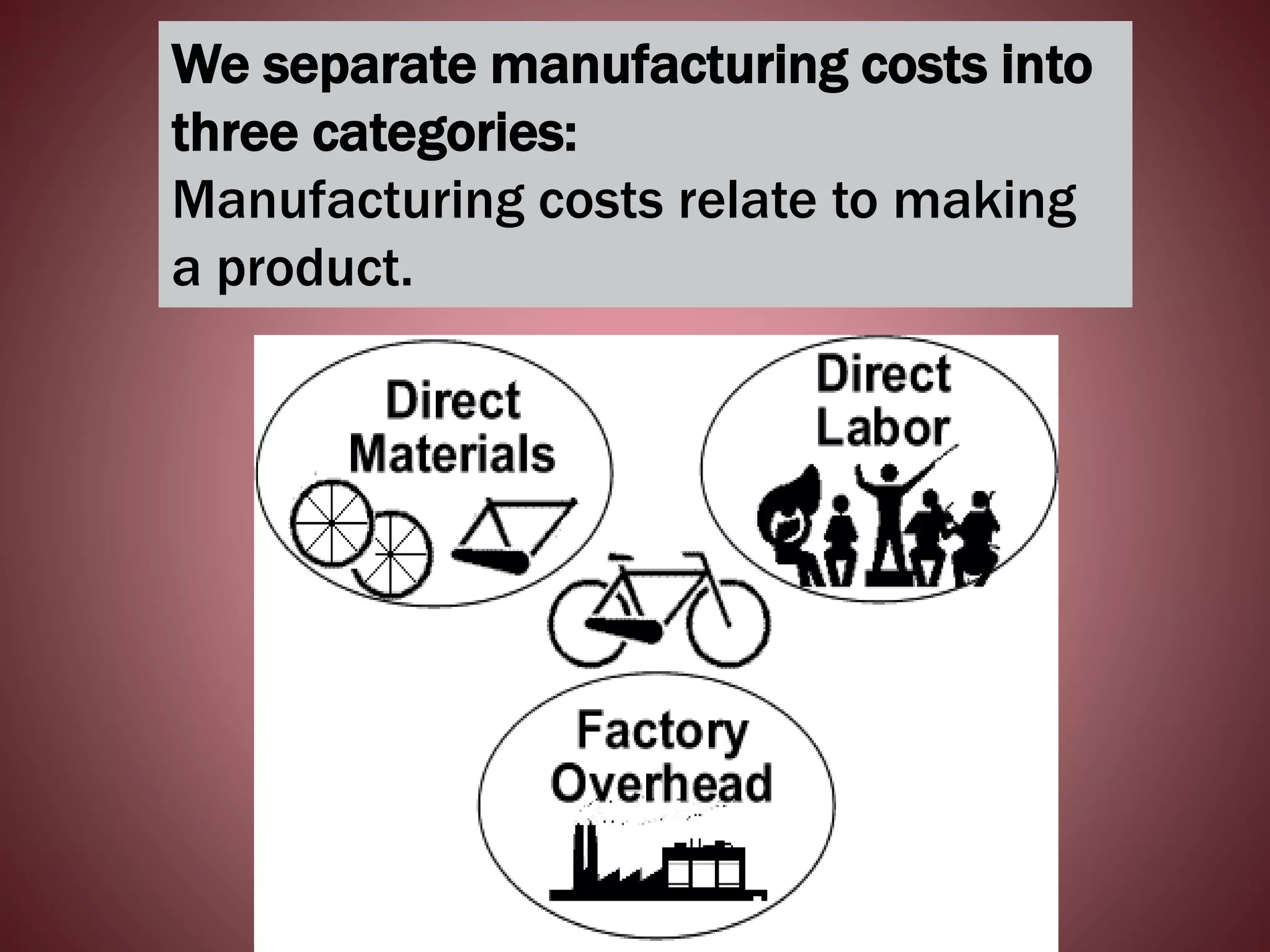
We separate manufacturing costs into
three categories:
Manufacturing costs relate to making
a product.
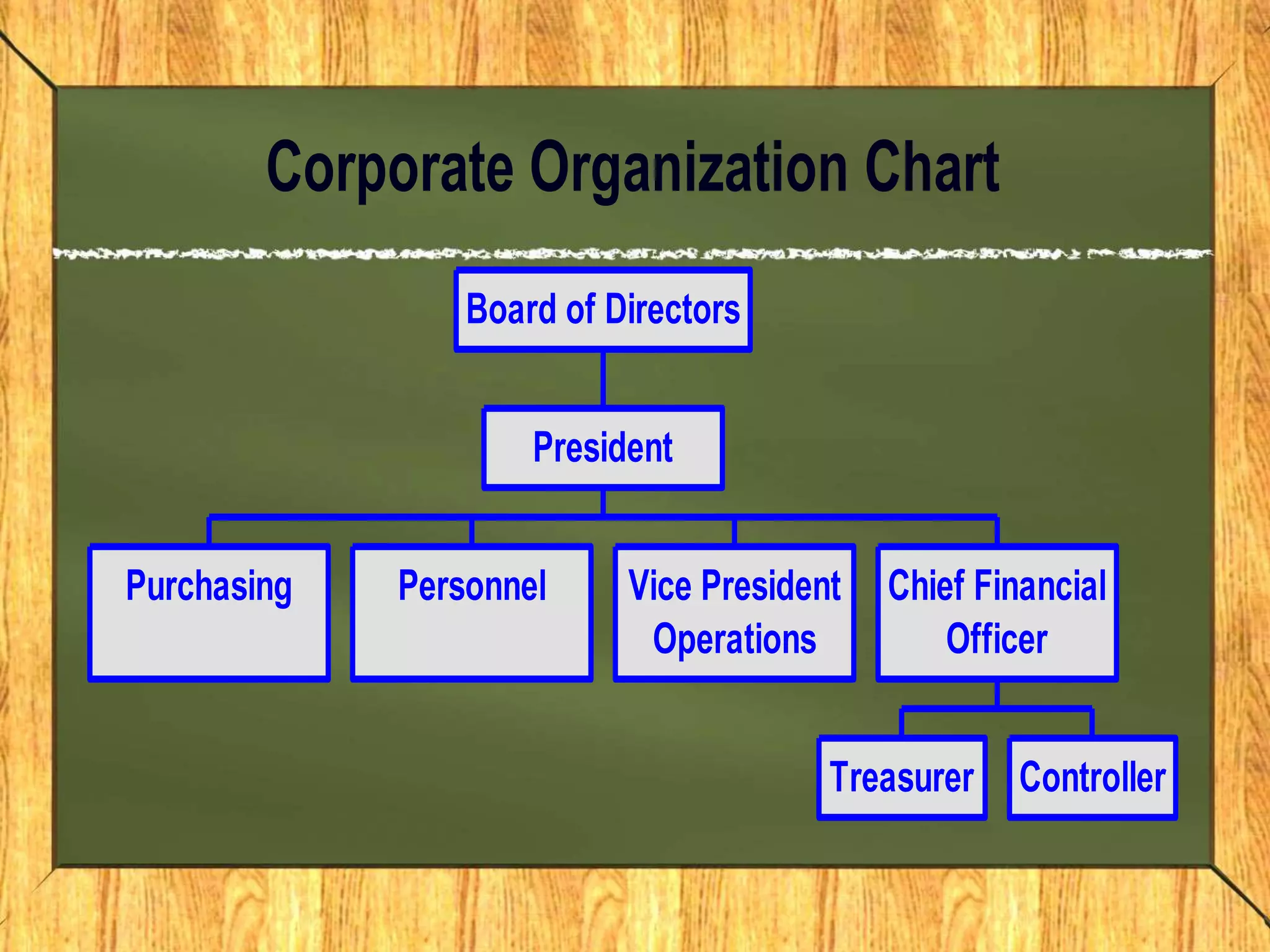
Corporate Organization Chart
Purchasing Personnel Vice President
Operations
Treasurer Controller
Chief Financial
Officer
President
Board of Directors
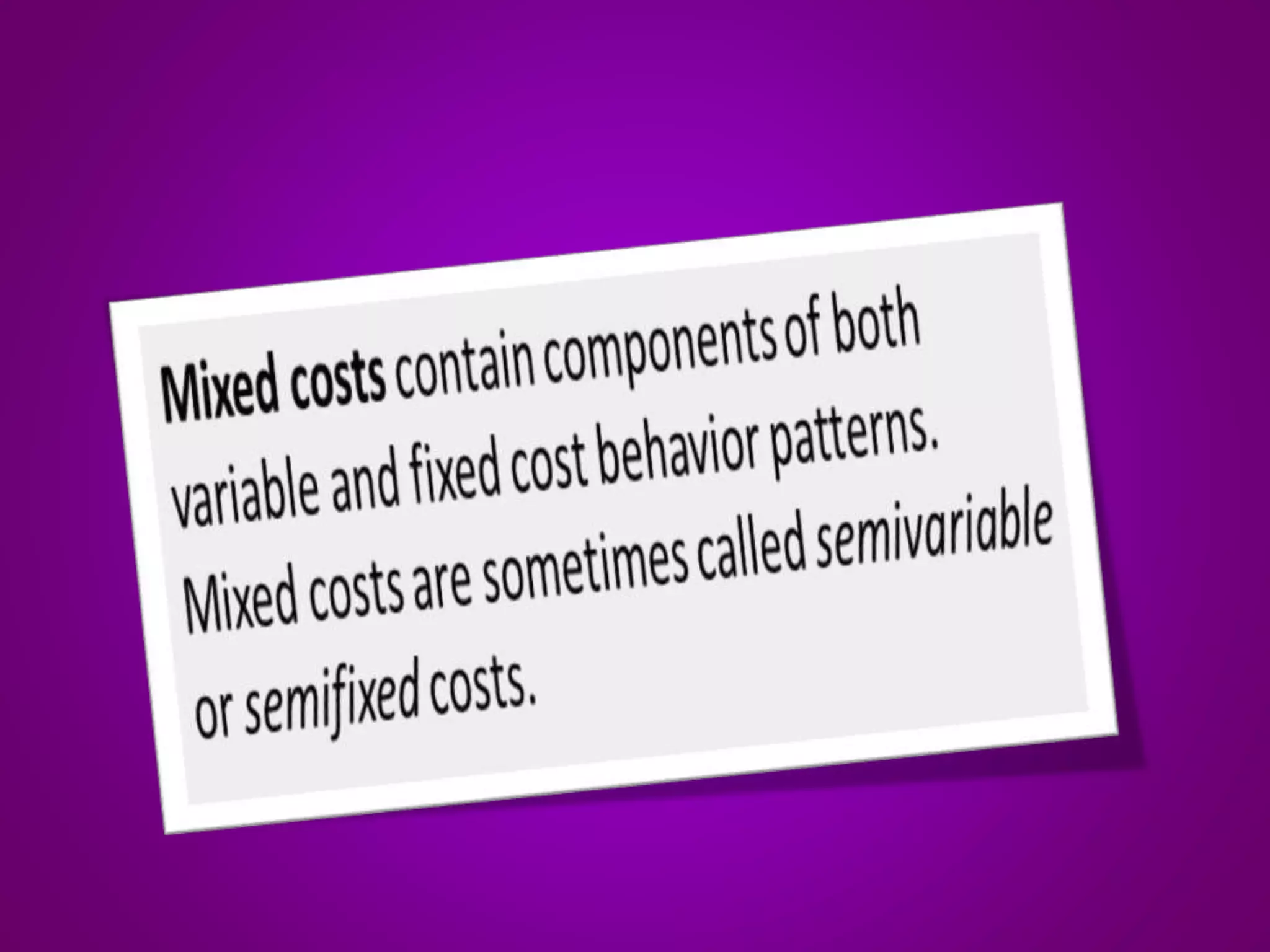
Mixed costs contain components of both
variable and fixed cost behavior patterns.
Mixed costs are sometimes called semivariable
or semifixed costs.
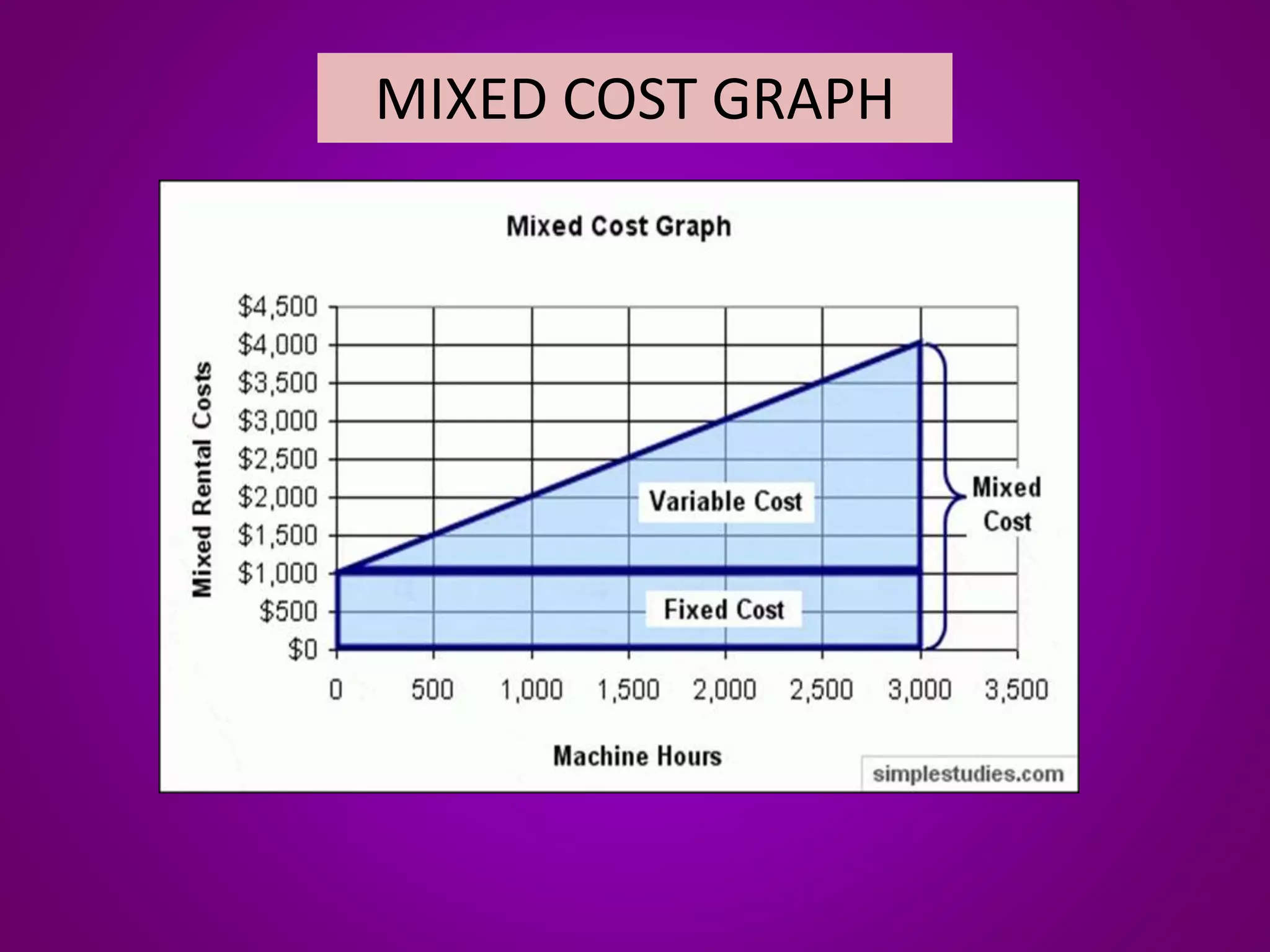
Mixed costs contain components of both
variable and fixed cost behavior patterns.
Mixed costs are sometimes called semivariable
or semifixed costs.
MIXED COST GRAPH
Mixed costs contain components of both
variable and fixed cost behavior patterns.
Mixed costs are sometimes called semivariable
or semifixed costs.
CLICK HEREBACK
© 2009 McGraw-Hill Ryerson Limited
1-21
Learning Objective 2
Identify raw material and
store organisation
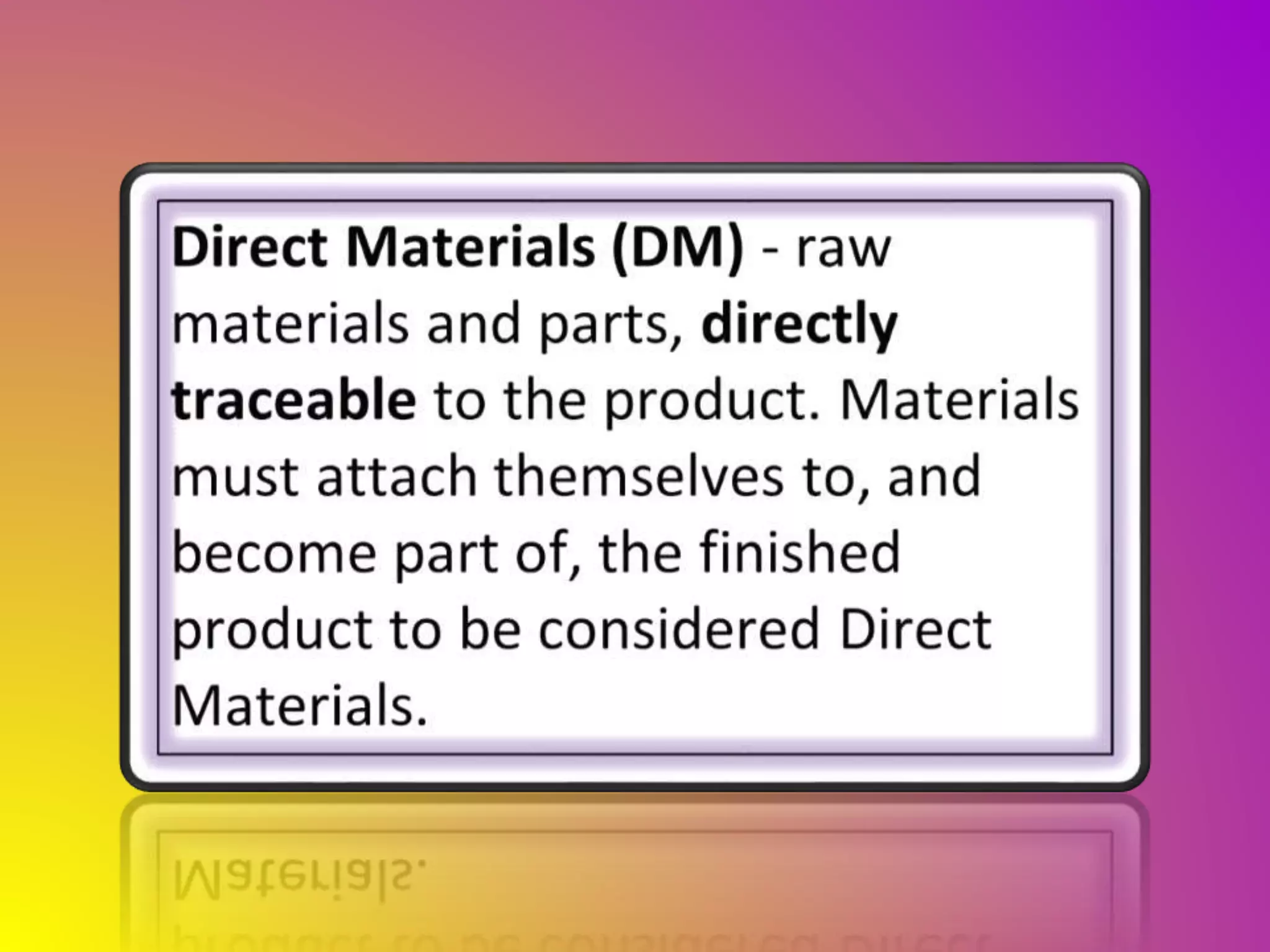
DIRECT MATERIAL
The manufacture of products or goods
required material as the first basic
element. These materials generally fall in
to categories. These categories are direct
materials and indirect materials. The
materials used in the course of
manufacture which enters into and
becomes part of the product. Metals in
the manufacture of fans, boilers,
automobiles, aeroplans; wood in
manufacture of furniture, silk, ribbon and
leather band used in making a hat, cloth in
tailoring garments, Clay in the
manufacturing of bricks, leather in the
manufacture of shoes, wheat used in
milling flour are called direct material.
Direct material forms an integral part of the
finished product and can be directly
identified or included in computing the cost
of such product. In other words, it is the
material which can be directly measured
and charged to the cost of the order or
product being manufactured without
requiring excessive and uneconomical
details for such measurements and
identification.
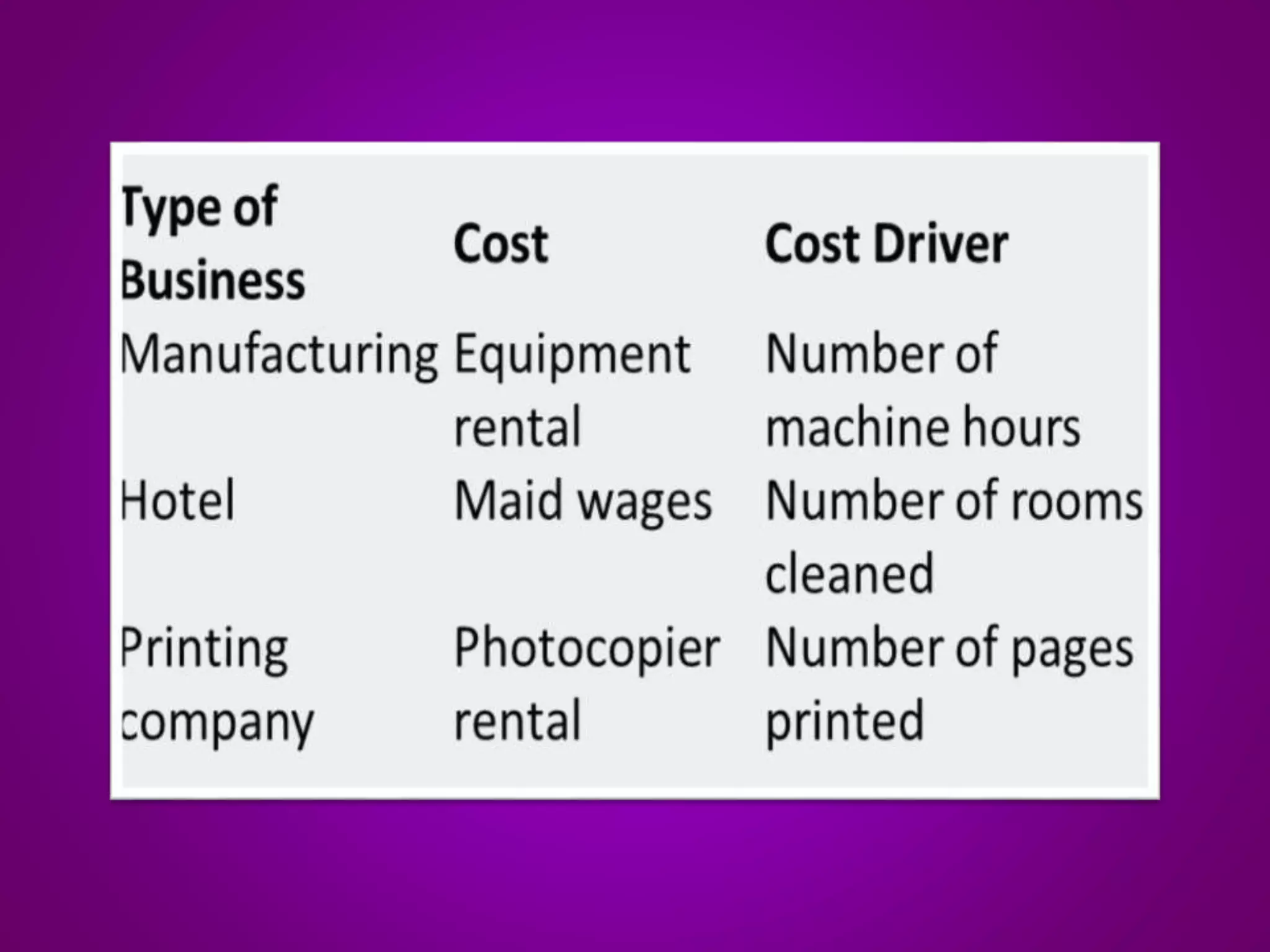
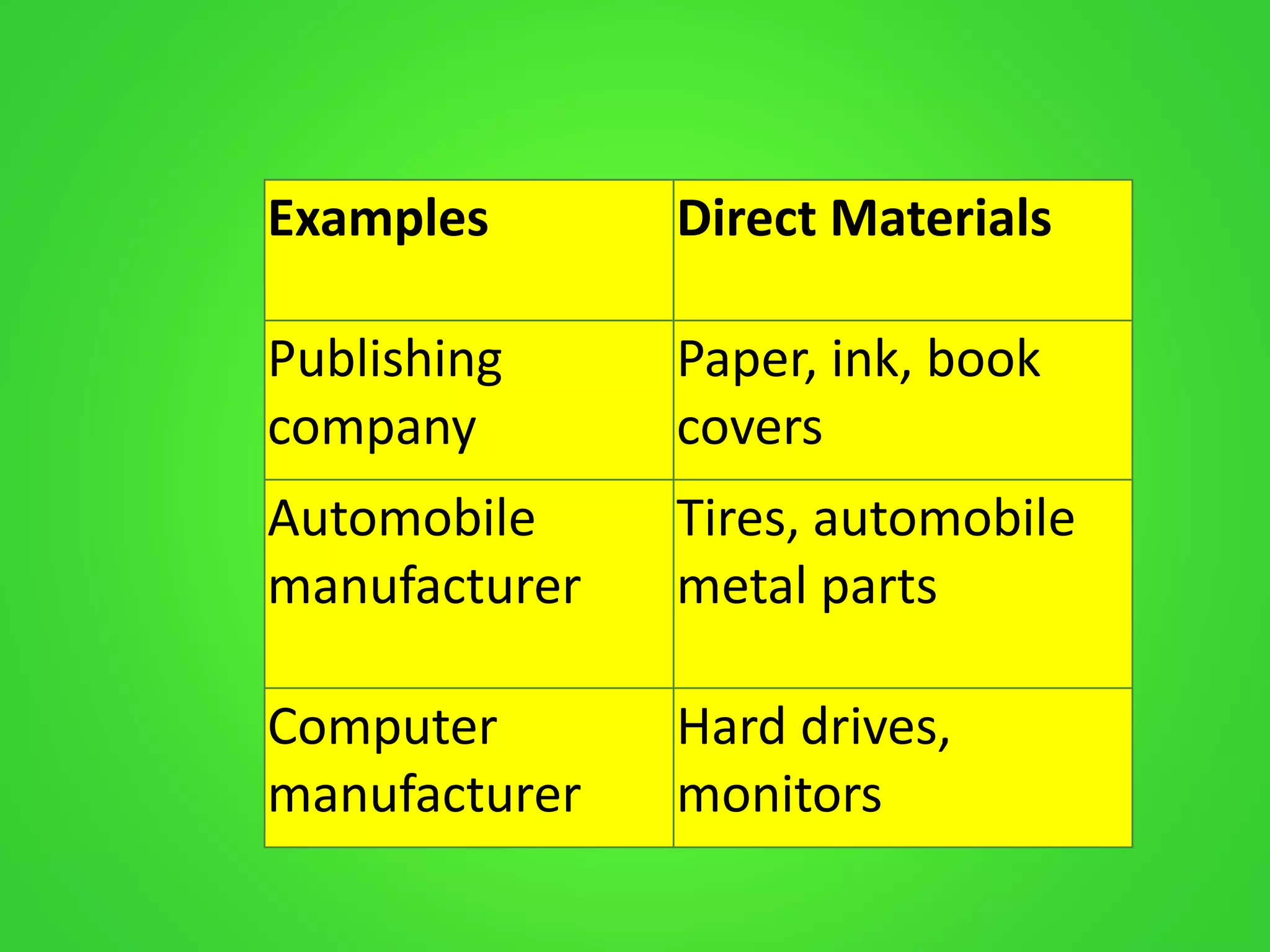
Examples Direct Materials
Publishing
company
Paper, ink, book
covers
Automobile
manufacturer
Tires, automobile
metal parts
Computer
manufacturer
Hard drives,
monitors
© 2009 McGraw-Hill Ryerson Limited
1-27
Learning Objective
Identify labour and wage
analysis
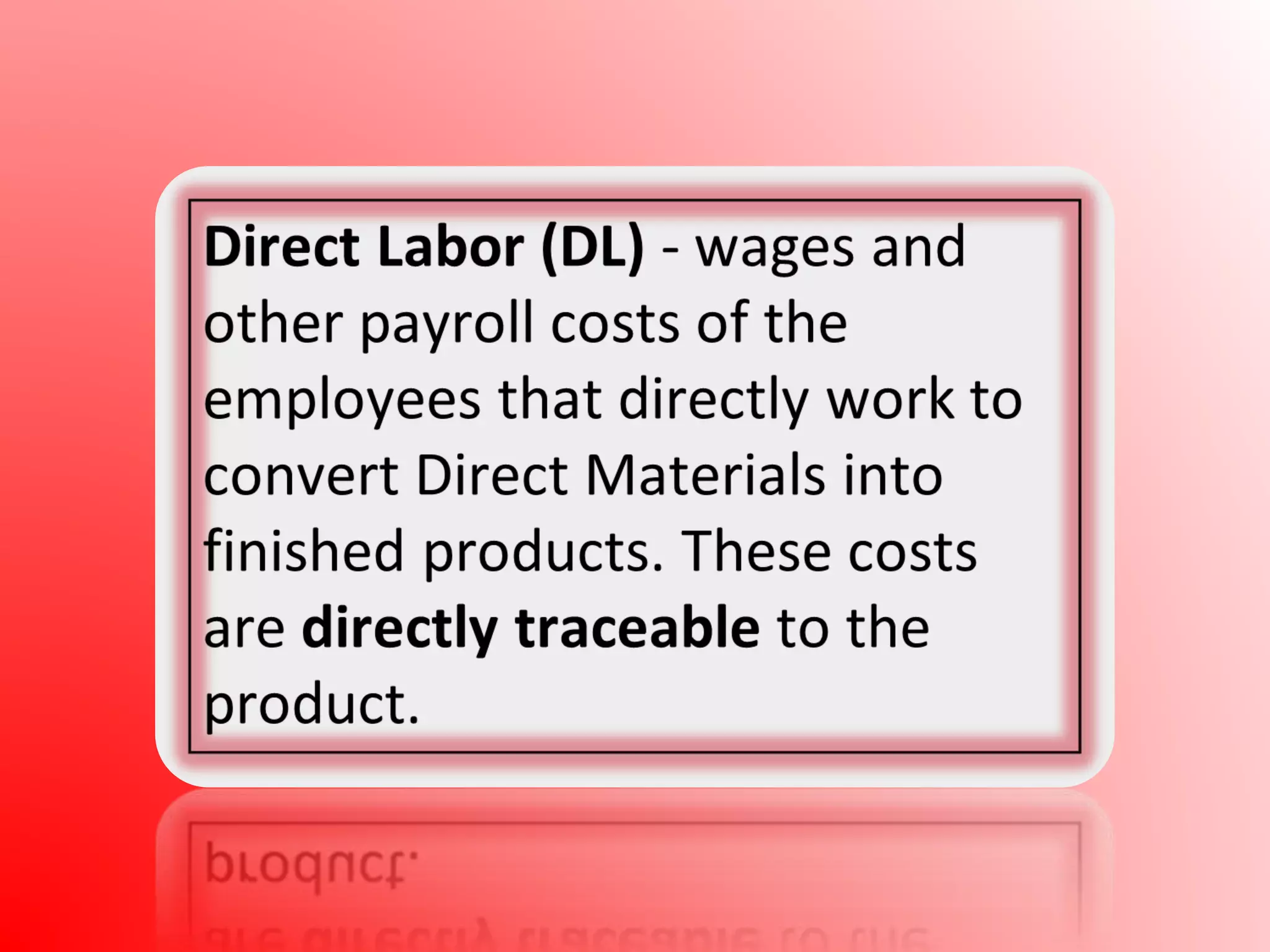
is the cost of wages to be
paid to individuals who work
on specific products or in
other words, the cost of
wages of employees who are
directly involved in
converting raw materials
into finished goods.
Direct labor
Almost any production plant or
factory requires employees to
operate equipment, move raw
materials from the warehouse to
equipment, and so on. These
employees are directly involved in
the production process and the
cost of their remuneration and
benefits represents direct labor:
Direct labor
Usually direct labor is a variable
cost. In most situations the
amount of direct labor required is
directly correlated with the
amount of finished goods
produced. For example, wages
and related benefits of
employees who operate
machinery to produce valves
represent direct labor costs for
Friends Company.
Direct labor
The more valves are to be
produced, the more employees
will be required to operate
machinery, paint, assemble, etc.
Direct labor
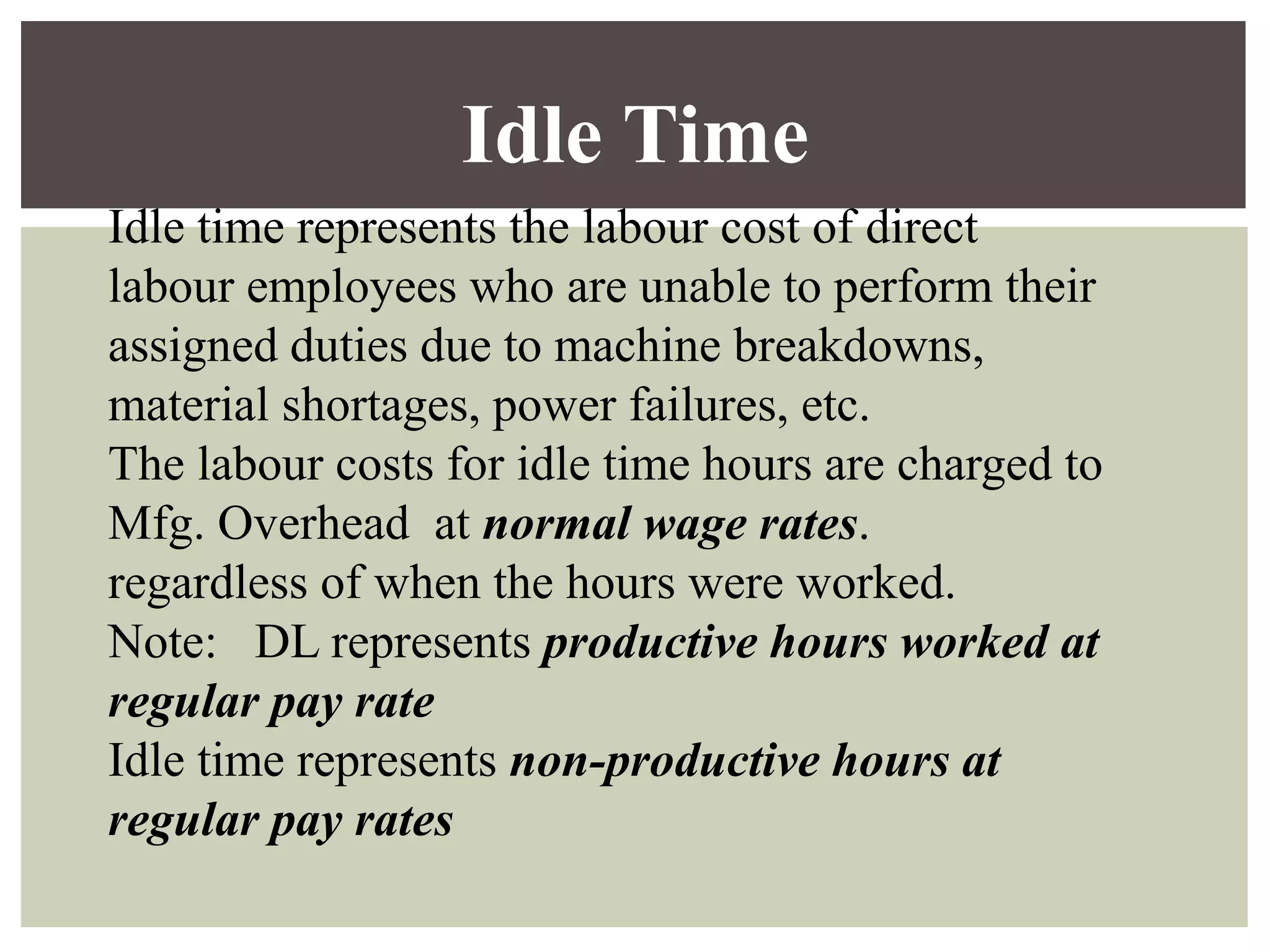
Idle time represents the labour cost of direct
labour employees who are unable to perform their
assigned duties due to machine breakdowns,
material shortages, power failures, etc.
The labour costs for idle time hours are charged to
Mfg. Overhead at normal wage rates.
regardless of when the hours were worked.
Note: DL represents productive hours worked at
regular pay rate
Idle time represents non-productive hours at
regular pay rates
Idle Time
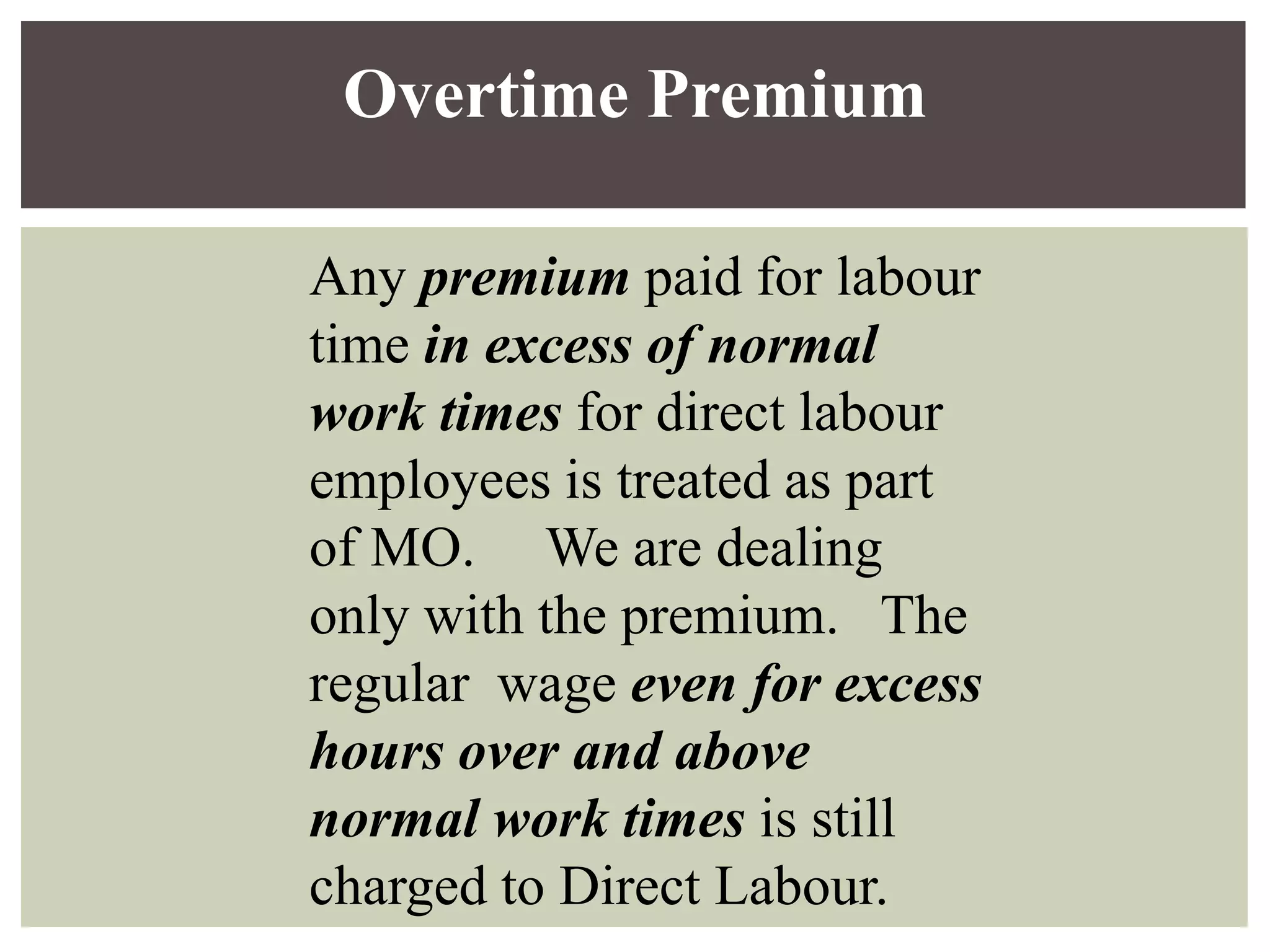
Any premium paid for labour
time in excess of normal
work times for direct labour
employees is treated as part
of MO. We are dealing
only with the premium. The
regular wage even for excess
hours over and above
normal work times is still
charged to Direct Labour.
Overtime Premium
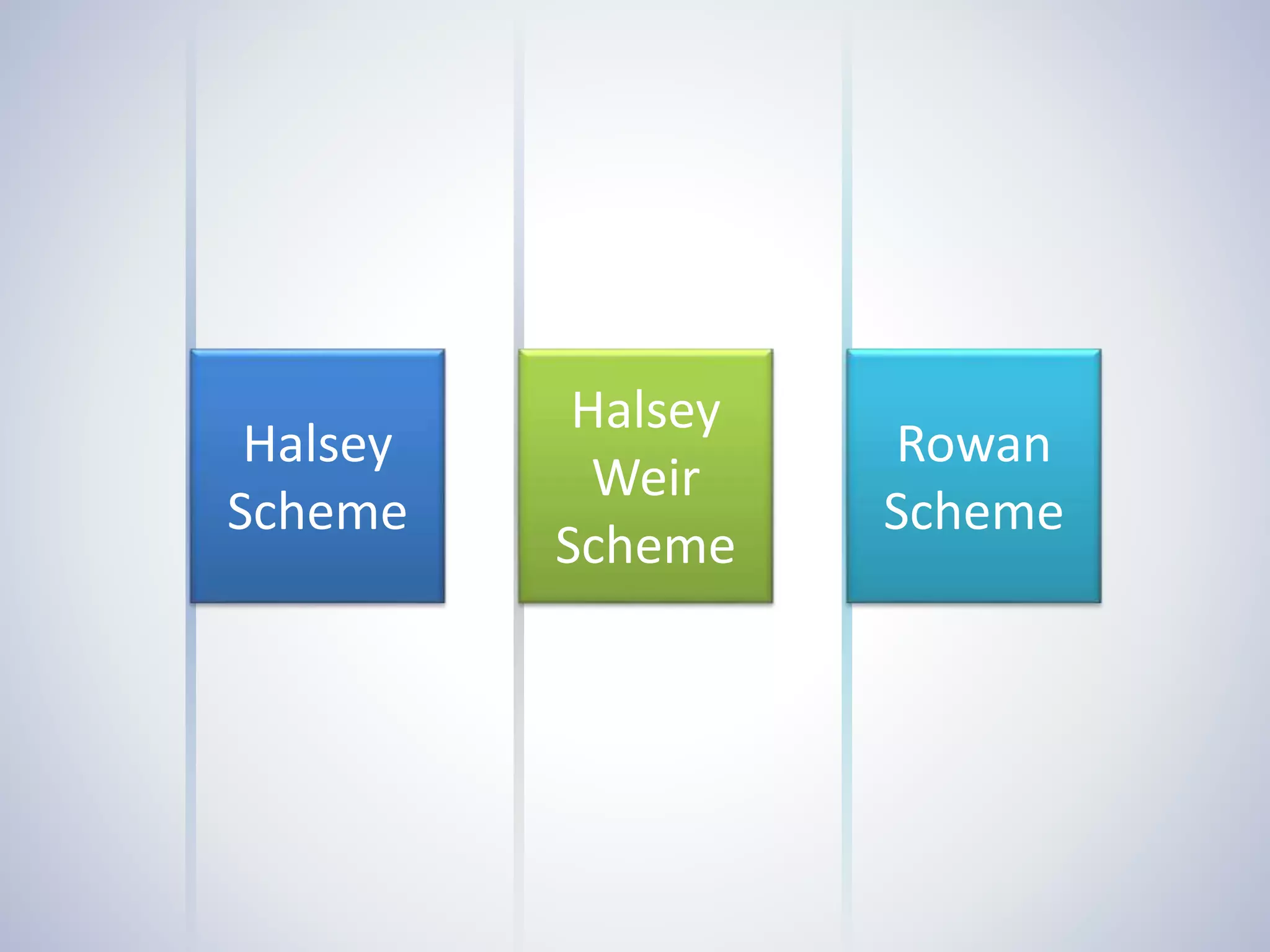
Halsey
Scheme
Halsey
Weir
Scheme
Rowan
Scheme
© 2009 McGraw-Hill Ryerson Limited
1-35
Learning Objective 3
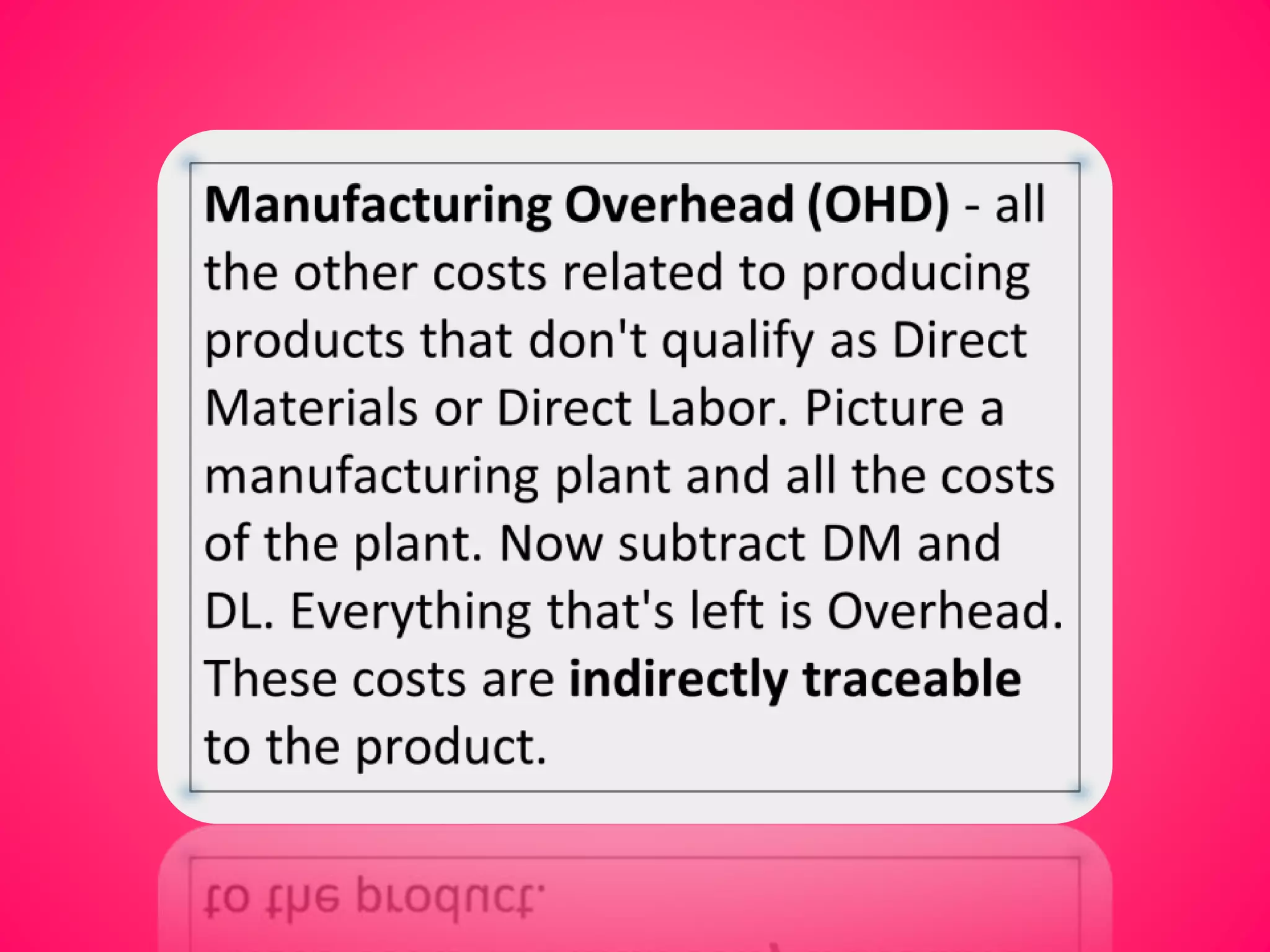
Identify Overhead
Categories
MORE NOTES ON THIS CLICK
ADDITIONAL 1
ADDITIONAL 2
ADDITIONAL 3
FORMULA
36
GO TO
OVERHEAD
NOTES

Basic element in Cost Accounting

  • 1.
  • 3.
    DIRECT MATERIAL WAGE &LABOUR OVERHEAD
  • 4.
    © 2009 McGraw-HillRyerson Limited 1-4 Learning Objective 1
  • 9.
    We separate manufacturingcosts into three categories: Manufacturing costs relate to making a product.
  • 14.
    Corporate Organization Chart PurchasingPersonnel Vice President Operations Treasurer Controller Chief Financial Officer President Board of Directors
  • 17.
    Mixed costs containcomponents of both variable and fixed cost behavior patterns. Mixed costs are sometimes called semivariable or semifixed costs.
  • 18.
    Mixed costs containcomponents of both variable and fixed cost behavior patterns. Mixed costs are sometimes called semivariable or semifixed costs. MIXED COST GRAPH
  • 19.
    Mixed costs containcomponents of both variable and fixed cost behavior patterns. Mixed costs are sometimes called semivariable or semifixed costs.
  • 20.
  • 21.
    © 2009 McGraw-HillRyerson Limited 1-21 Learning Objective 2 Identify raw material and store organisation
  • 22.
  • 23.
    The manufacture ofproducts or goods required material as the first basic element. These materials generally fall in to categories. These categories are direct materials and indirect materials. The materials used in the course of manufacture which enters into and becomes part of the product. Metals in the manufacture of fans, boilers,
  • 24.
    automobiles, aeroplans; woodin manufacture of furniture, silk, ribbon and leather band used in making a hat, cloth in tailoring garments, Clay in the manufacturing of bricks, leather in the manufacture of shoes, wheat used in milling flour are called direct material.
  • 25.
    Direct material formsan integral part of the finished product and can be directly identified or included in computing the cost of such product. In other words, it is the material which can be directly measured and charged to the cost of the order or product being manufactured without requiring excessive and uneconomical details for such measurements and identification.
  • 26.
    Examples Direct Materials Publishing company Paper,ink, book covers Automobile manufacturer Tires, automobile metal parts Computer manufacturer Hard drives, monitors
  • 27.
    © 2009 McGraw-HillRyerson Limited 1-27 Learning Objective Identify labour and wage analysis
  • 28.
    is the costof wages to be paid to individuals who work on specific products or in other words, the cost of wages of employees who are directly involved in converting raw materials into finished goods. Direct labor
  • 29.
    Almost any productionplant or factory requires employees to operate equipment, move raw materials from the warehouse to equipment, and so on. These employees are directly involved in the production process and the cost of their remuneration and benefits represents direct labor: Direct labor
  • 30.
    Usually direct laboris a variable cost. In most situations the amount of direct labor required is directly correlated with the amount of finished goods produced. For example, wages and related benefits of employees who operate machinery to produce valves represent direct labor costs for Friends Company. Direct labor
  • 31.
    The more valvesare to be produced, the more employees will be required to operate machinery, paint, assemble, etc. Direct labor
  • 32.
    Idle time representsthe labour cost of direct labour employees who are unable to perform their assigned duties due to machine breakdowns, material shortages, power failures, etc. The labour costs for idle time hours are charged to Mfg. Overhead at normal wage rates. regardless of when the hours were worked. Note: DL represents productive hours worked at regular pay rate Idle time represents non-productive hours at regular pay rates Idle Time
  • 33.
    Any premium paidfor labour time in excess of normal work times for direct labour employees is treated as part of MO. We are dealing only with the premium. The regular wage even for excess hours over and above normal work times is still charged to Direct Labour. Overtime Premium
  • 34.
  • 35.
    © 2009 McGraw-HillRyerson Limited 1-35 Learning Objective 3 Identify Overhead Categories
  • 36.
    MORE NOTES ONTHIS CLICK ADDITIONAL 1 ADDITIONAL 2 ADDITIONAL 3 FORMULA 36 GO TO OVERHEAD NOTES