ELEMENT
S OF
COST
ELEMENTS OF
COST
The elements of cost are the factors on
the basis of which expenditure is
incurred. It may be defined as a group
name of smaller costs of identical
nature. Elements of cost make the
analysis of the cost easy and facilitate
maximum information regarding costs to
the manufacturers.
COST
Cost refers to the expenditure incurred on producing
the goods and services. It represents the sacrifice,
foregoing or a release of something of value.
ACCORDING TO ICMA (Institute of Cost and
Management Accountants), London
‘Cost is the amount of expenditure (actual or
notional) incurred on or attributable to a given
thing.”
Example: In manufacturing of automobiles, the
expenditure incurred on its spare parts, painting and
finishing, design, etc constitute the cost of the
automobile.
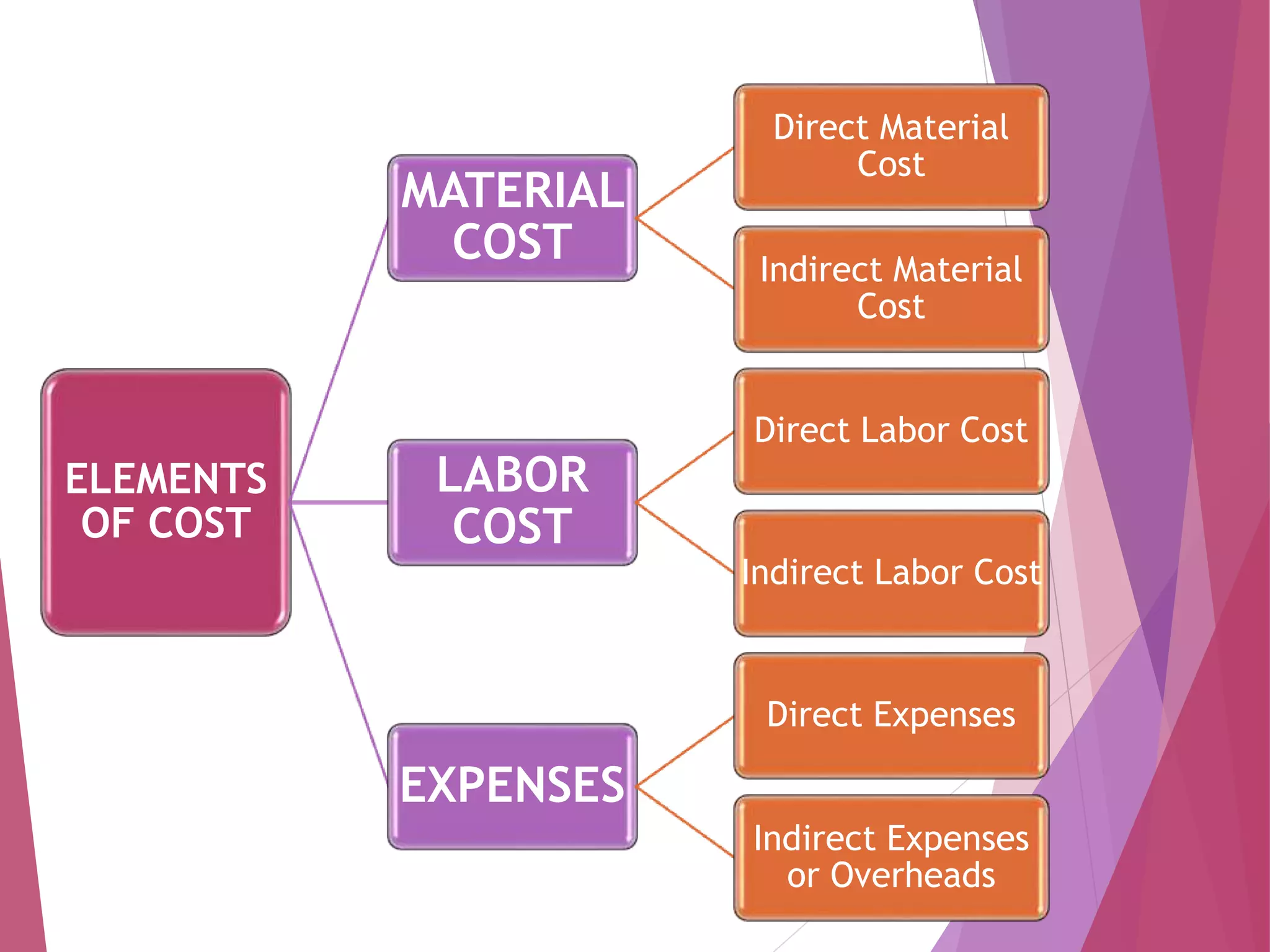
ELEMENTS
OF COST
MATERIAL
COST
Direct Material
Cost
Indirect Material
Cost
LABOR
COST
Direct Labor Cost
Indirect Labor Cost
EXPENSES
Direct Expenses
Indirect Expenses
or Overheads
MATERIAL
COSTIt refers to the cost of the material that is
supplied to the manufacturing unit for
producing the finished product.
Example: Cost of thread, nails, shoe
polish, leather supplied to an
undertaking engages in production of
shoes constitute material cost.
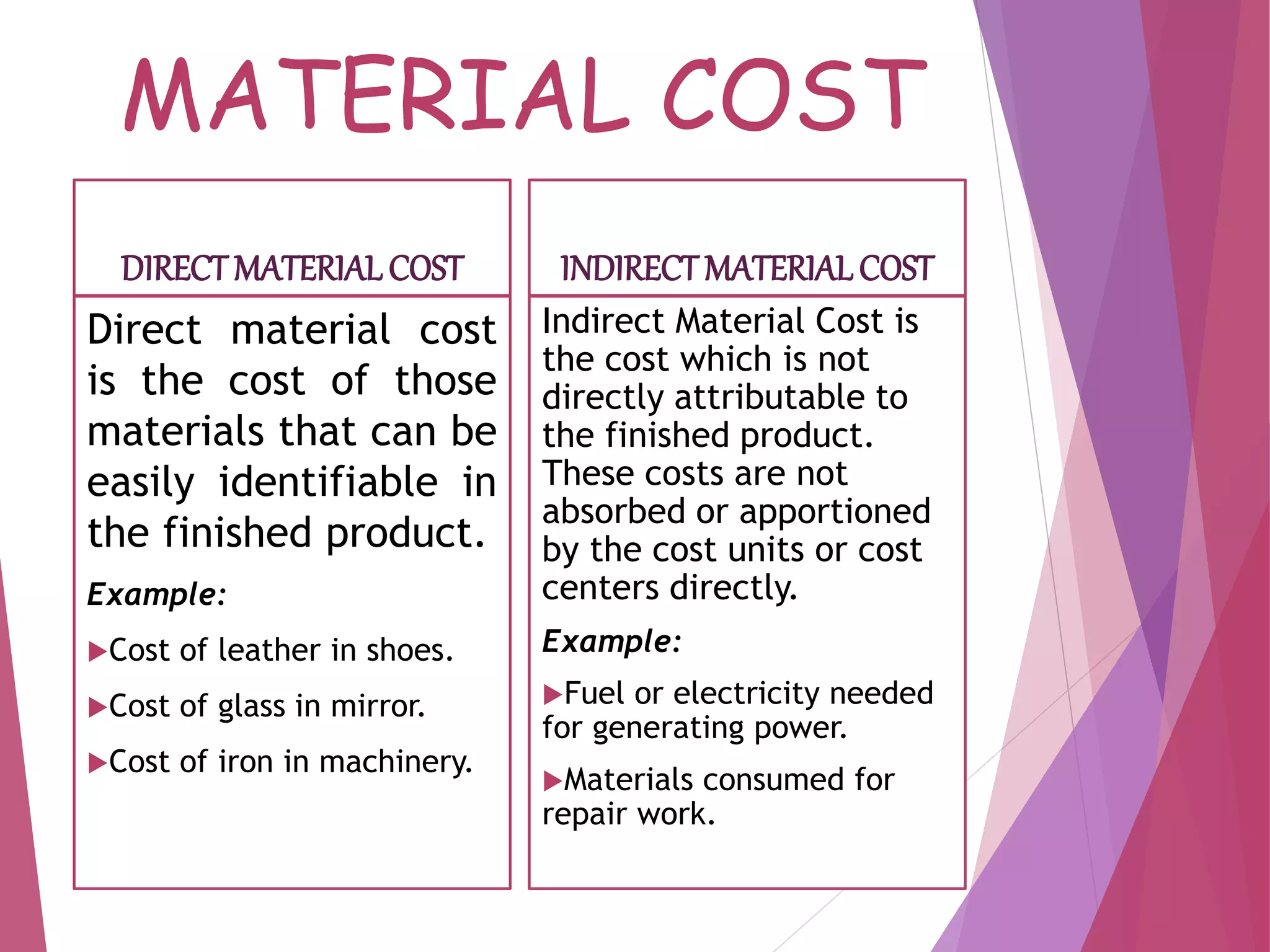
MATERIAL COST
DIRECTMATERIAL COST
Direct material cost
is the cost of those
materials that can be
easily identifiable in
the finished product.
Example:
Cost of leather in shoes.
Cost of glass in mirror.
Cost of iron in machinery.
INDIRECTMATERIALCOST
Indirect Material Cost is
the cost which is not
directly attributable to
the finished product.
These costs are not
absorbed or apportioned
by the cost units or cost
centers directly.
Example:
Fuel or electricity needed
for generating power.
Materials consumed for
repair work.
LABOR COST
Labor cost refers to the cost of
remuneration of the workers employed
in an organization. It includes the
amount of wages, salaries, perquisites,
allowances etc.
Example:
Salary paid to workmen
Commission paid to agents
LABOR COST
DIRECT LABOR
COST
These are also known as
direct wages. This cost
can be identified with and
allocated to cost centers
or cost units.
Example:
Wages paid for spinning
yarn in a spinning mill.
Wages paid to the driver
and conductor of a bus.
INDIRECT LABOR
COST
These are also known as
indirect wages. It refers
to that part of labor cost
which is not directly
attributable to the cost
centers or cost units.
Example:
Salary paid to the
manager, Salary paid to
the guard of the office.
EXPENSES
Expenses refer to the cost of services
provided to an undertaking and the
notional costs of the use of the assets
owned by the business house.
Example: Deprecation on building, plant
and machinery etc.
EXPENSES
DIRECT EXPENSES
 These expenses are also
called chargeable
expenses. These expenses
can be directly identified
to the cost centers or cost
units.
 Example:
 Carriage and freight paid
on direct materials
purchased.
 Import duty
 Octroi duty etc.
INDIRECT EXPENSES
(OVERHEADS)
 Expenses which cannot be
allocated to the cost centers
or units but can be
apportioned by them are
known as overheads or
indirect expenses.
 Example:
 Rent, rates and taxes
 Repairs to machinery
 Factory lighting
 Office lighting
 Depreciation and insurance of
showroom building etc.
OVERHEADS
OFFICE AND
ADMINISTRATIVE
OVERHEADS
FACTORY
OVERHEADS
SELLING AND
DISTRIBUTION
OVERHEADS
OVERHEADS
•It includes all the indirect costs incurred in factory
in respect of manufacturing operations.
•Example: Cost of lubricating oil, coal, gas and
fuel, etc.
FACTORY
OVERHEADS
•It includes all the indirect costs relating to
direction, guidance, management, control and
administration of business concern.
•Example: Salary of general manager, insurance
expenses, etc.
OFFICE AND
ADMINISTRATION
OVERHEADS
•These include all indirect costs which are incurred
for Promoting the sales, Retaining the customers,
Providing after sale services to the consumers
•Example: advertisement, salary of sales manager
etc.
SELLING AND
DISTRIBUTION
OVERHEADS

Elements of cost

  • 1.
  • 2.
    ELEMENTS OF COST The elementsof cost are the factors on the basis of which expenditure is incurred. It may be defined as a group name of smaller costs of identical nature. Elements of cost make the analysis of the cost easy and facilitate maximum information regarding costs to the manufacturers.
  • 3.
    COST Cost refers tothe expenditure incurred on producing the goods and services. It represents the sacrifice, foregoing or a release of something of value. ACCORDING TO ICMA (Institute of Cost and Management Accountants), London ‘Cost is the amount of expenditure (actual or notional) incurred on or attributable to a given thing.” Example: In manufacturing of automobiles, the expenditure incurred on its spare parts, painting and finishing, design, etc constitute the cost of the automobile.
  • 4.
    ELEMENTS OF COST MATERIAL COST Direct Material Cost IndirectMaterial Cost LABOR COST Direct Labor Cost Indirect Labor Cost EXPENSES Direct Expenses Indirect Expenses or Overheads
  • 5.
    MATERIAL COSTIt refers tothe cost of the material that is supplied to the manufacturing unit for producing the finished product. Example: Cost of thread, nails, shoe polish, leather supplied to an undertaking engages in production of shoes constitute material cost.
  • 6.
    MATERIAL COST DIRECTMATERIAL COST Directmaterial cost is the cost of those materials that can be easily identifiable in the finished product. Example: Cost of leather in shoes. Cost of glass in mirror. Cost of iron in machinery. INDIRECTMATERIALCOST Indirect Material Cost is the cost which is not directly attributable to the finished product. These costs are not absorbed or apportioned by the cost units or cost centers directly. Example: Fuel or electricity needed for generating power. Materials consumed for repair work.
  • 7.
    LABOR COST Labor costrefers to the cost of remuneration of the workers employed in an organization. It includes the amount of wages, salaries, perquisites, allowances etc. Example: Salary paid to workmen Commission paid to agents
  • 8.
    LABOR COST DIRECT LABOR COST Theseare also known as direct wages. This cost can be identified with and allocated to cost centers or cost units. Example: Wages paid for spinning yarn in a spinning mill. Wages paid to the driver and conductor of a bus. INDIRECT LABOR COST These are also known as indirect wages. It refers to that part of labor cost which is not directly attributable to the cost centers or cost units. Example: Salary paid to the manager, Salary paid to the guard of the office.
  • 9.
    EXPENSES Expenses refer tothe cost of services provided to an undertaking and the notional costs of the use of the assets owned by the business house. Example: Deprecation on building, plant and machinery etc.
  • 10.
    EXPENSES DIRECT EXPENSES  Theseexpenses are also called chargeable expenses. These expenses can be directly identified to the cost centers or cost units.  Example:  Carriage and freight paid on direct materials purchased.  Import duty  Octroi duty etc. INDIRECT EXPENSES (OVERHEADS)  Expenses which cannot be allocated to the cost centers or units but can be apportioned by them are known as overheads or indirect expenses.  Example:  Rent, rates and taxes  Repairs to machinery  Factory lighting  Office lighting  Depreciation and insurance of showroom building etc.
  • 11.
  • 12.
    OVERHEADS •It includes allthe indirect costs incurred in factory in respect of manufacturing operations. •Example: Cost of lubricating oil, coal, gas and fuel, etc. FACTORY OVERHEADS •It includes all the indirect costs relating to direction, guidance, management, control and administration of business concern. •Example: Salary of general manager, insurance expenses, etc. OFFICE AND ADMINISTRATION OVERHEADS •These include all indirect costs which are incurred for Promoting the sales, Retaining the customers, Providing after sale services to the consumers •Example: advertisement, salary of sales manager etc. SELLING AND DISTRIBUTION OVERHEADS