Global Learn Berlin 2015:
Global Conference on Learning and Technology "The Local Global Conference"
Barriers to the Integration and Adoption of
iPads in Schools: A Systematic Literature
Review based on the philosophy of “think global, act
local.”
Md. Saifuddin Khalid | Gökce Kilic | Jeanette Christoffersen | Aparna Purushothaman
Barriers to the Integration and Adoption of iPads in
Schools: A Systematic Literature
❖ Introduction
❖ Research Question
❖ Methods
❖ Results & Discussion
❖ Conclusion
Introduction
❖ The literature review originates from the public initiatives in
the Danish context and the ongoing discussion on how
digital technologies must be integrated into the learning
environments.
❖ The challenges in using iPad as a learning tool in primary
and secondary educational settings.
❖ This review is based on the philosophy, "Think global, Act
local”
Research Question
❖ What are the barriers affecting the integration of iPad in
a learning environment in primary and secondary
schools?
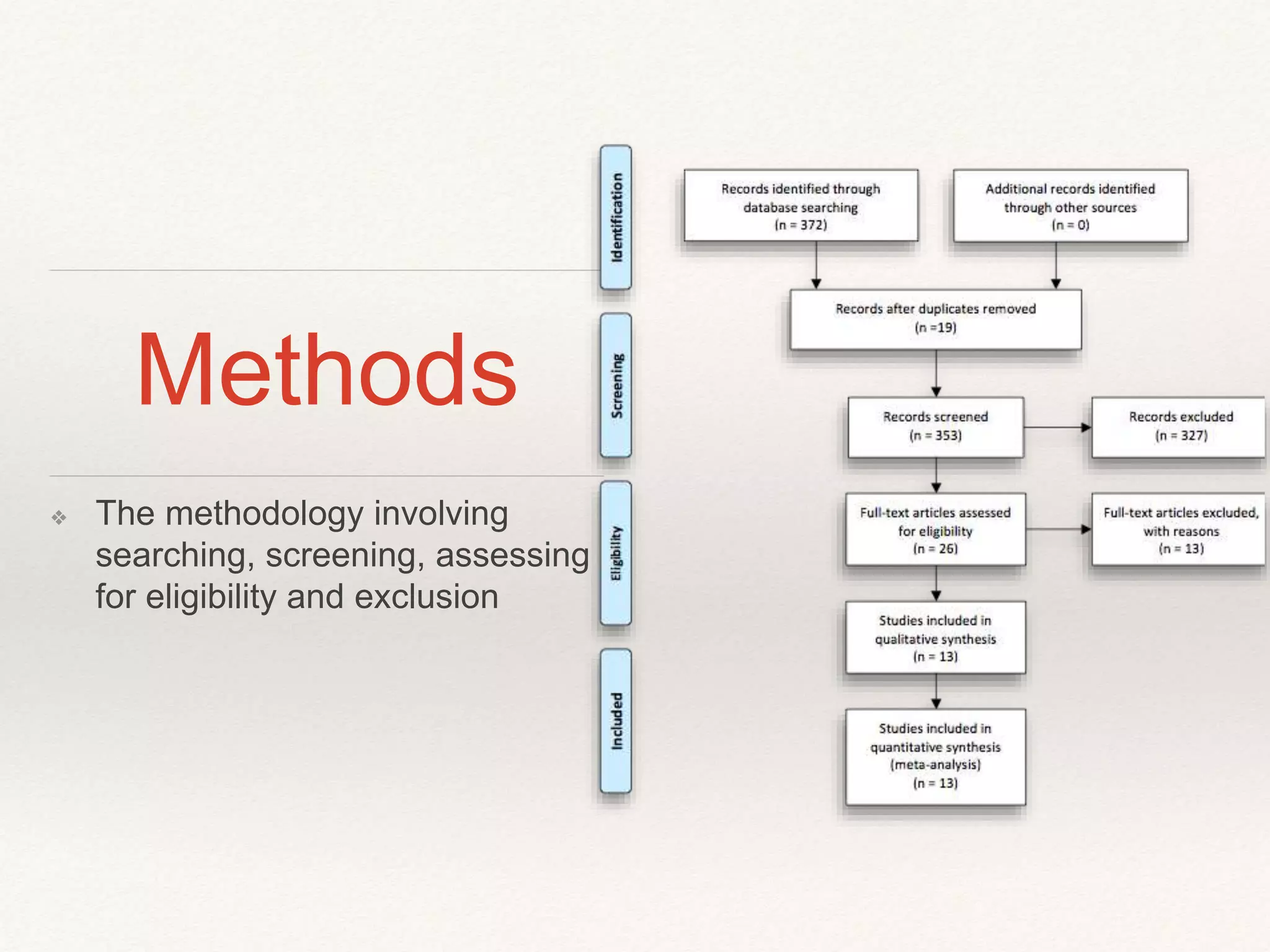
Methods
❖ The methodology involving
searching, screening, assessing
for eligibility and exclusion
Results & Discussion
❖ Basic challenges
❖ iPad as a learning tool
❖ Literature on the iPad in an educational context
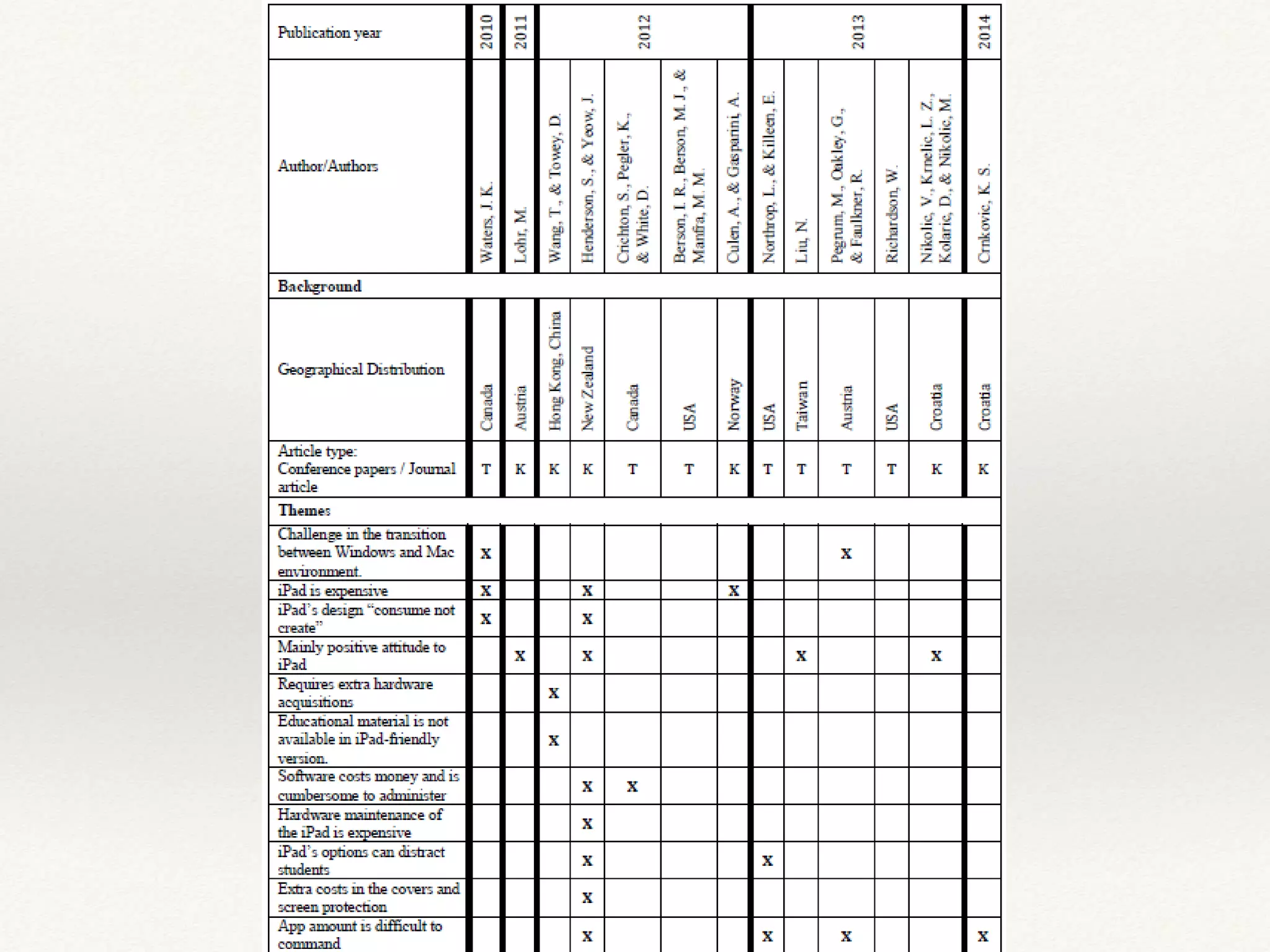
❖ Barriers to the integration of the iPad
❖ Costs
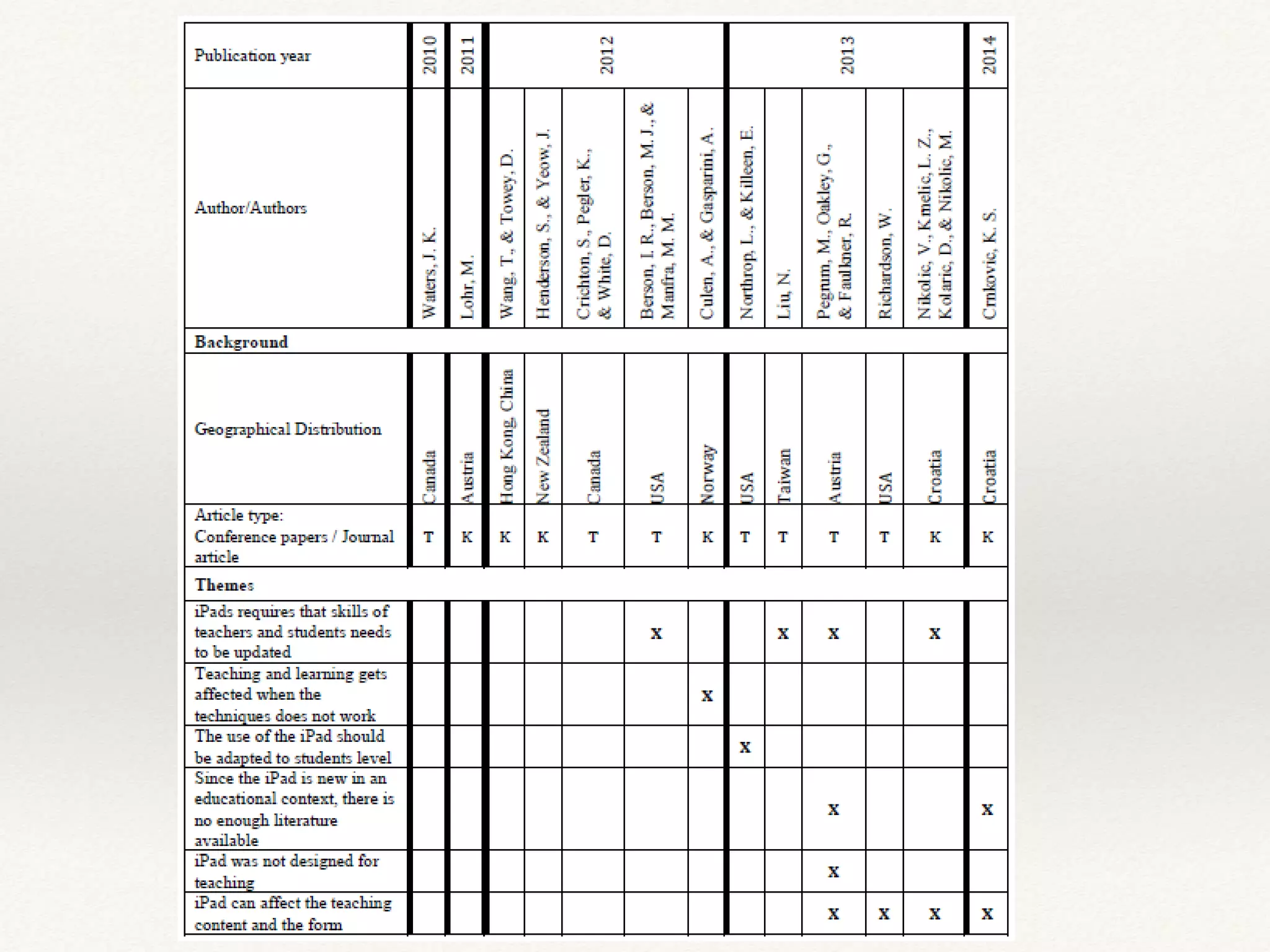
❖ Skills
❖ Barriers in the use of the iPad
❖ Barriers in learning
❖ iPad’s influence of the teaching method
Basic challenges
❖ iPad as a learning tool
❖ Most of the mobile handheld devices which are used as
educational or learning tools were not originally designed to be a
part of a learning environment.
❖ Literature on the iPad in an educational context
❖ The most of the articles reflect positive experiences with iPad,
while the media shows many frustrations with iPad when used as
a part of the learning environments
Barriers to the integration of the iPad
❖ Costs
❖ The iPad is relatively expensive to buy, and more expensive than
some notebooks and tablet PCs in the market.
❖ Skills
❖ Skills play an important role in using any technological tool when
it is used as a learning tool in an educational context.
Barriers in the use of the iPad
❖ Barriers in learning
❖ Use of technology does not necessarily lead to increasing
students' presentation and the use of a technology and its
contents must match the student’s level of competence.
❖ iPad’s influence of the teaching method
❖ Technologies have been seen as a digital addition to teaching
and have addressed question concerning the devices to be
selected.
Conclusion
❖ The aim
❖ Brief overview
❖ Future work
Questions and Comments
Citation: Khalid, Md. Saifuddin, Gökce Kilic, and Jeanette Christoffersen.
“Barriers to the Integration and Adoption of iPads in Schools: A Systematic
Literature Review Based on the Philosophy of ‘Think Global, Act Local.’” In
Proceedings of Global Learn 2015, 2015:35–45. FernUniversität in Hagen,
Regionalzentrum Berlin: April 16-17, 2015: Association for the Advancement
of Computing in Education (AACE), 2015. http://www.editlib.org/pv/150926/.

Barriers to the Integration and Adoption of iPads in Schools: A Systematic Literature Review based on the philosophy of "think global, act local.”

  • 1.
    Global Learn Berlin2015: Global Conference on Learning and Technology "The Local Global Conference" Barriers to the Integration and Adoption of iPads in Schools: A Systematic Literature Review based on the philosophy of “think global, act local.” Md. Saifuddin Khalid | Gökce Kilic | Jeanette Christoffersen | Aparna Purushothaman
  • 2.
    Barriers to theIntegration and Adoption of iPads in Schools: A Systematic Literature ❖ Introduction ❖ Research Question ❖ Methods ❖ Results & Discussion ❖ Conclusion
  • 3.
    Introduction ❖ The literaturereview originates from the public initiatives in the Danish context and the ongoing discussion on how digital technologies must be integrated into the learning environments. ❖ The challenges in using iPad as a learning tool in primary and secondary educational settings. ❖ This review is based on the philosophy, "Think global, Act local”
  • 4.
    Research Question ❖ Whatare the barriers affecting the integration of iPad in a learning environment in primary and secondary schools?
  • 5.
    Methods ❖ The methodologyinvolving searching, screening, assessing for eligibility and exclusion
  • 6.
    Results & Discussion ❖Basic challenges ❖ iPad as a learning tool ❖ Literature on the iPad in an educational context ❖ Barriers to the integration of the iPad ❖ Costs ❖ Skills ❖ Barriers in the use of the iPad ❖ Barriers in learning ❖ iPad’s influence of the teaching method
  • 9.
    Basic challenges ❖ iPadas a learning tool ❖ Most of the mobile handheld devices which are used as educational or learning tools were not originally designed to be a part of a learning environment. ❖ Literature on the iPad in an educational context ❖ The most of the articles reflect positive experiences with iPad, while the media shows many frustrations with iPad when used as a part of the learning environments
  • 10.
    Barriers to theintegration of the iPad ❖ Costs ❖ The iPad is relatively expensive to buy, and more expensive than some notebooks and tablet PCs in the market. ❖ Skills ❖ Skills play an important role in using any technological tool when it is used as a learning tool in an educational context.
  • 11.
    Barriers in theuse of the iPad ❖ Barriers in learning ❖ Use of technology does not necessarily lead to increasing students' presentation and the use of a technology and its contents must match the student’s level of competence. ❖ iPad’s influence of the teaching method ❖ Technologies have been seen as a digital addition to teaching and have addressed question concerning the devices to be selected.
  • 12.
    Conclusion ❖ The aim ❖Brief overview ❖ Future work
  • 13.
    Questions and Comments Citation:Khalid, Md. Saifuddin, Gökce Kilic, and Jeanette Christoffersen. “Barriers to the Integration and Adoption of iPads in Schools: A Systematic Literature Review Based on the Philosophy of ‘Think Global, Act Local.’” In Proceedings of Global Learn 2015, 2015:35–45. FernUniversität in Hagen, Regionalzentrum Berlin: April 16-17, 2015: Association for the Advancement of Computing in Education (AACE), 2015. http://www.editlib.org/pv/150926/.