Mitzi Hanold, MPH Food for the Hungry
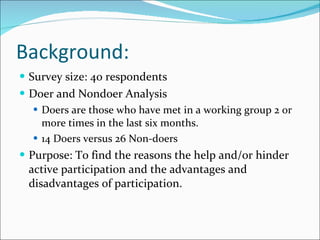
Background: Survey size: 40 respondents Doer and Nondoer Analysis Doers are those who have met in a working group 2 or more times in the last six months. 14 Doers versus 26 Non-doers Purpose: To find the reasons the help and/or hinder active participation and the advantages and disadvantages of participation.
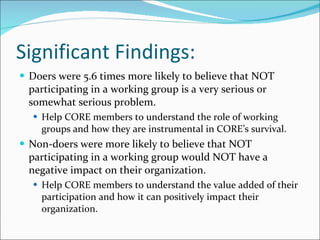
Significant Findings: Doers were 5.6 times more likely to believe that NOT participating in a working group is a very serious or somewhat serious problem. Help CORE members to understand the role of working groups and how they are instrumental in CORE’s survival. Non-doers were more likely to believe that NOT participating in a working group would NOT have a negative impact on their organization. Help CORE members to understand the value added of their participation and how it can positively impact their organization.
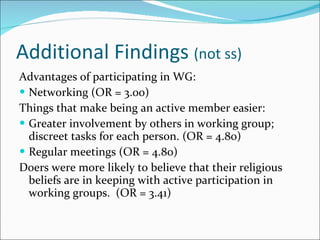
Additional Findings  (not ss) Advantages of participating in WG: Networking (OR = 3.00) Things that make being an active member easier: Greater involvement by others in working group; discreet tasks for each person. (OR = 4.80) Regular meetings (OR = 4.80) Doers were more likely to believe that their religious beliefs are in keeping with active participation in working groups.  (OR = 3.41)
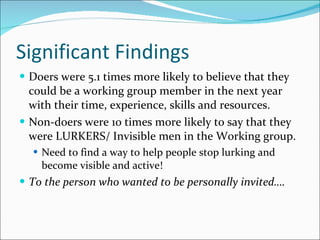
Significant Findings Doers were 5.1 times more likely to believe that they could be a working group member in the next year with their time, experience, skills and resources. Non-doers were 10 times more likely to say that they were LURKERS/ Invisible men in the Working group. Need to find a way to help people stop lurking and become visible and active! To the person who wanted to be personally invited….

Barrier Analysis Survey: Working Group Participation

  • 1.
    Mitzi Hanold, MPHFood for the Hungry
  • 2.
    Background: Survey size:40 respondents Doer and Nondoer Analysis Doers are those who have met in a working group 2 or more times in the last six months. 14 Doers versus 26 Non-doers Purpose: To find the reasons the help and/or hinder active participation and the advantages and disadvantages of participation.
  • 3.
    Significant Findings: Doerswere 5.6 times more likely to believe that NOT participating in a working group is a very serious or somewhat serious problem. Help CORE members to understand the role of working groups and how they are instrumental in CORE’s survival. Non-doers were more likely to believe that NOT participating in a working group would NOT have a negative impact on their organization. Help CORE members to understand the value added of their participation and how it can positively impact their organization.
  • 4.
    Additional Findings (not ss) Advantages of participating in WG: Networking (OR = 3.00) Things that make being an active member easier: Greater involvement by others in working group; discreet tasks for each person. (OR = 4.80) Regular meetings (OR = 4.80) Doers were more likely to believe that their religious beliefs are in keeping with active participation in working groups. (OR = 3.41)
  • 5.
    Significant Findings Doerswere 5.1 times more likely to believe that they could be a working group member in the next year with their time, experience, skills and resources. Non-doers were 10 times more likely to say that they were LURKERS/ Invisible men in the Working group. Need to find a way to help people stop lurking and become visible and active! To the person who wanted to be personally invited….