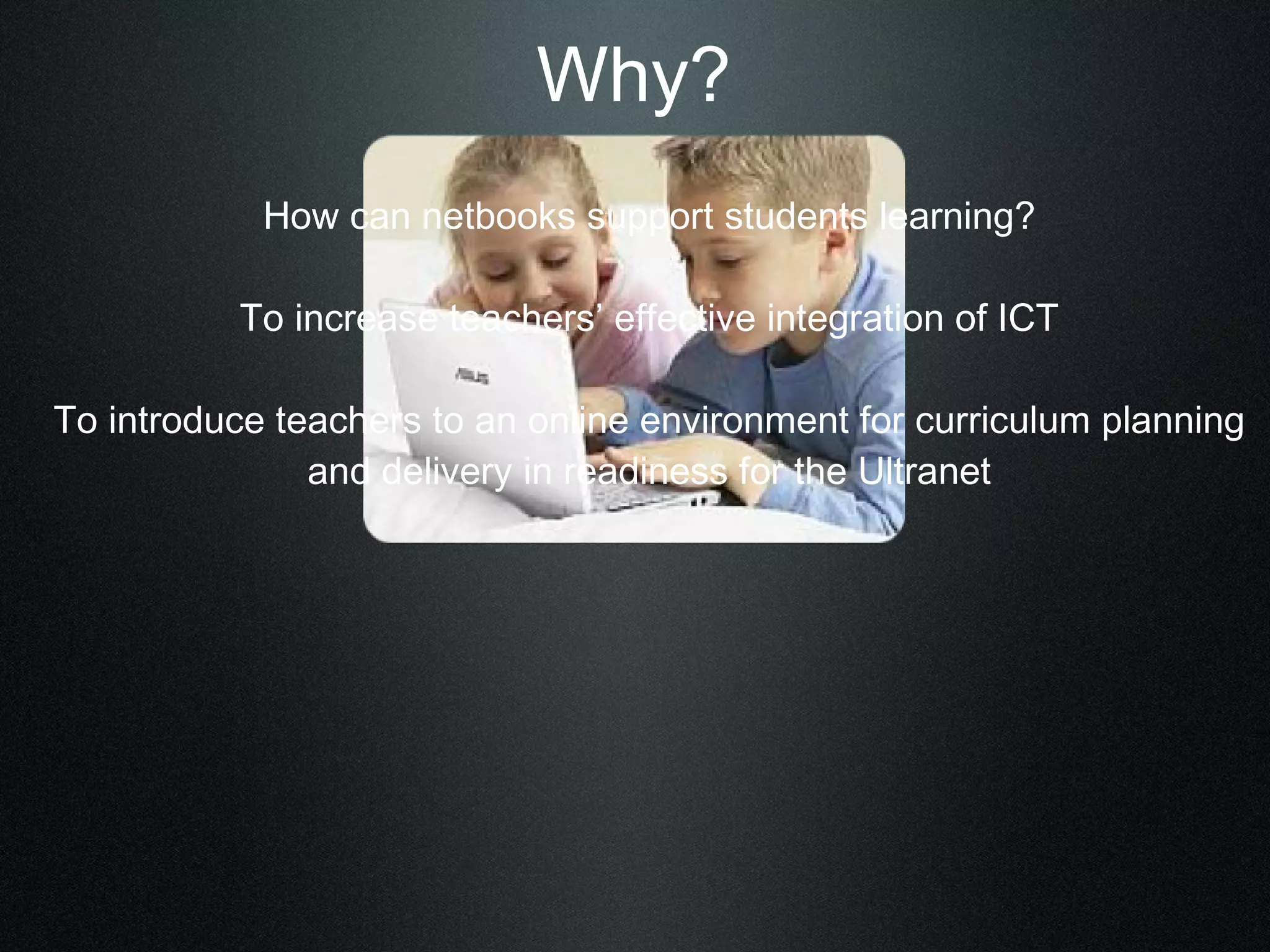
How can netbooks support students learning? To increase teachers’ effective integration of ICT To introduce teachers to an online environment for curriculum planning and delivery in readiness for the Ultranet Why?
Resources Wikispaces:  http://netbooktrial.wikispaces.com / “ In Your Hands” “ 101 classroom ideas for 1:1” eLearning tutorials and videos Case studies Cybersafety Year 7 Technical solutions
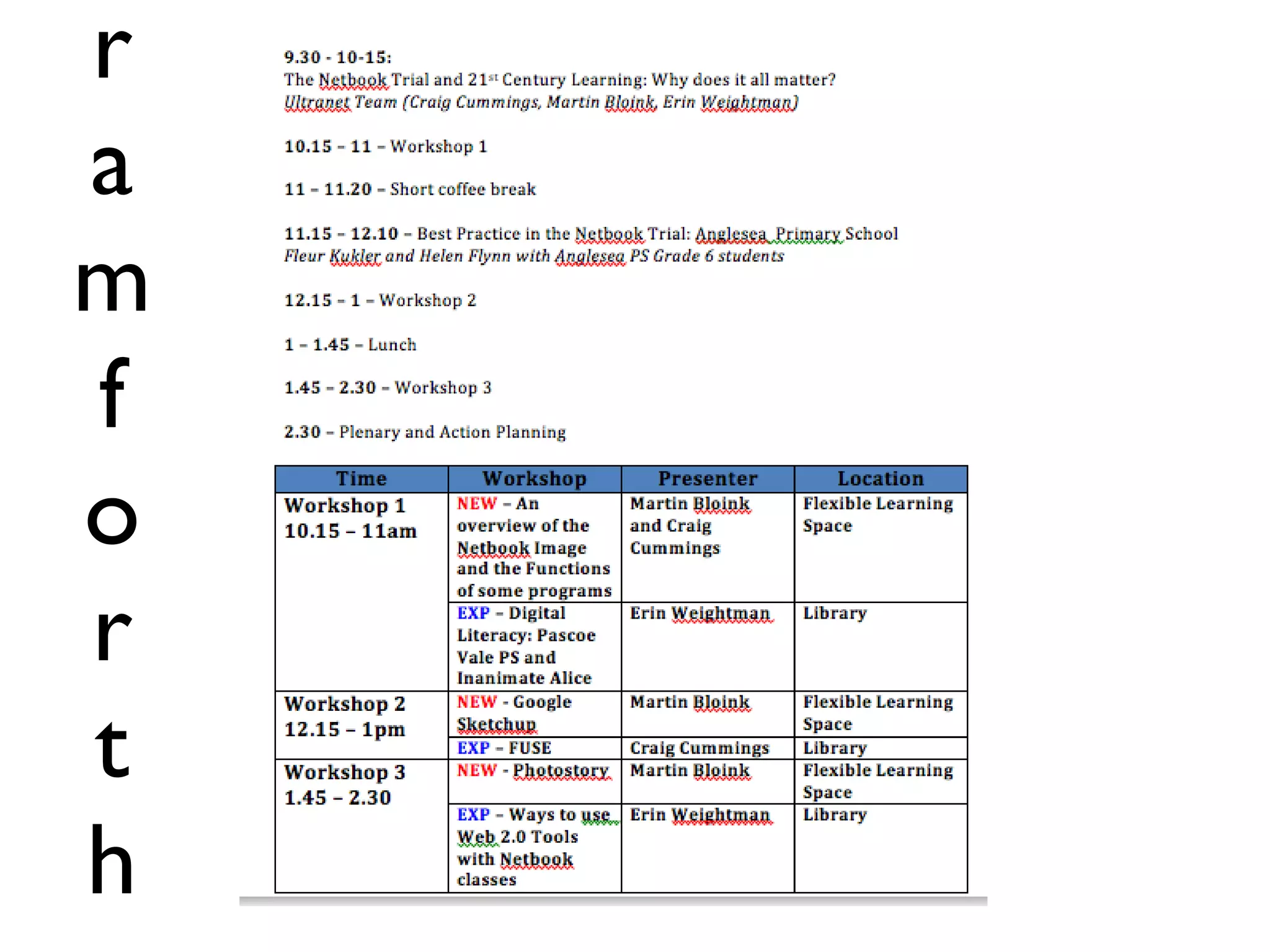
Program for the day
The Future of Learning
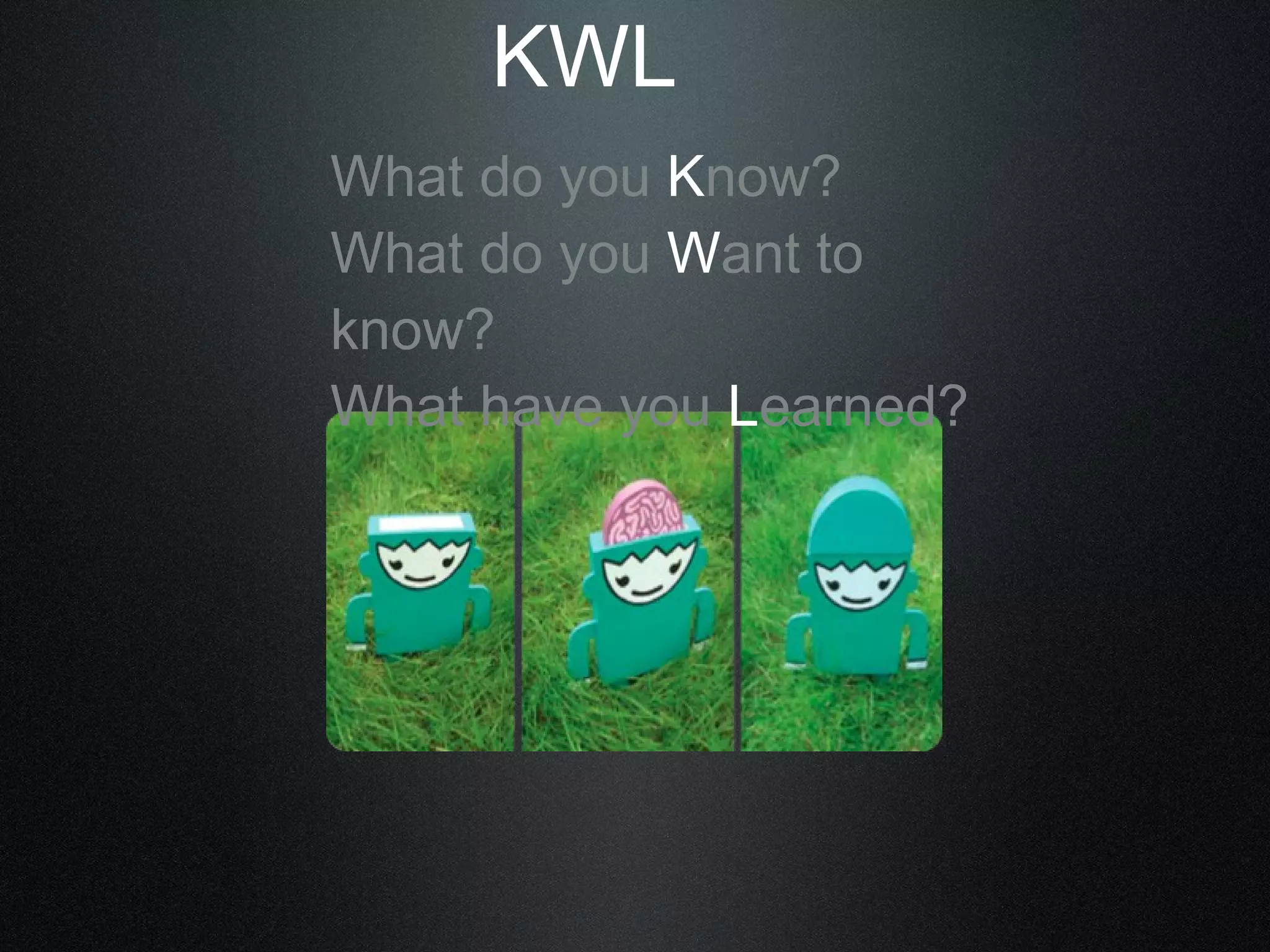
KWL What do you  K now? What do you  W ant to know? What have you  L earned?
fact in 2/3 of BSW classrooms the teacher makes ALL the decisions regarding the use of technology in 2/3 of BSW classrooms the teacher makes ALL the decisions regarding the use of technology in 2/3 of BSW classrooms the teacher makes ALL the decisions regarding the use of technology in 2/3 of BSW classrooms the teacher makes ALL the decisions regarding the use of technology in 2/3 of BSW classrooms the teacher makes ALL the decisions regarding the use of technology in 2/3 of BSW classrooms the teacher makes ALL the decisions regarding the use of technology in 2/3 of BSW classrooms the teacher makes ALL the decisions regarding the use of technology in 2/3 of BSW classrooms the teacher makes ALL the decisions regarding the use of technology source: BSW ePotential Data 2008
question who makes these decisions when ALL of your students have a Netbook? who makes these decisions when ALL of your students have a Netbook? who makes these decisions when ALL of your students have a Netbook? who makes these decisions when ALL of your students have a Netbook? who makes these decisions when ALL of your students have a Netbook? who makes these decisions when ALL of your students have a Netbook? who makes these decisions when ALL of your students have a Netbook? who makes these decisions when ALL of your students have a Netbook?
The missing technological element is true one-to-one computing, in which each student has a device he or she can work on, keep, customize, and take home... “” 1:1 ?
...For true technological advance to occur, the computers must be personal to each learner... “” 1:1 ?
...When used properly and well for education, these computers become extensions of the students' personal self and brain. They must have each student's stuff and each student's style all over them (in case you haven't noticed, kids love to customize and make technology personal), and that is something sharing just doesn't allow... “” 1:1 ?
“” ...Any ratio that involves sharing computers -- even two kids to a computer -- will delay the technology revolution from happening... Marc Prensky 1:1 ?
The more powerful technology becomes, the more indispensable good teachers are...
 
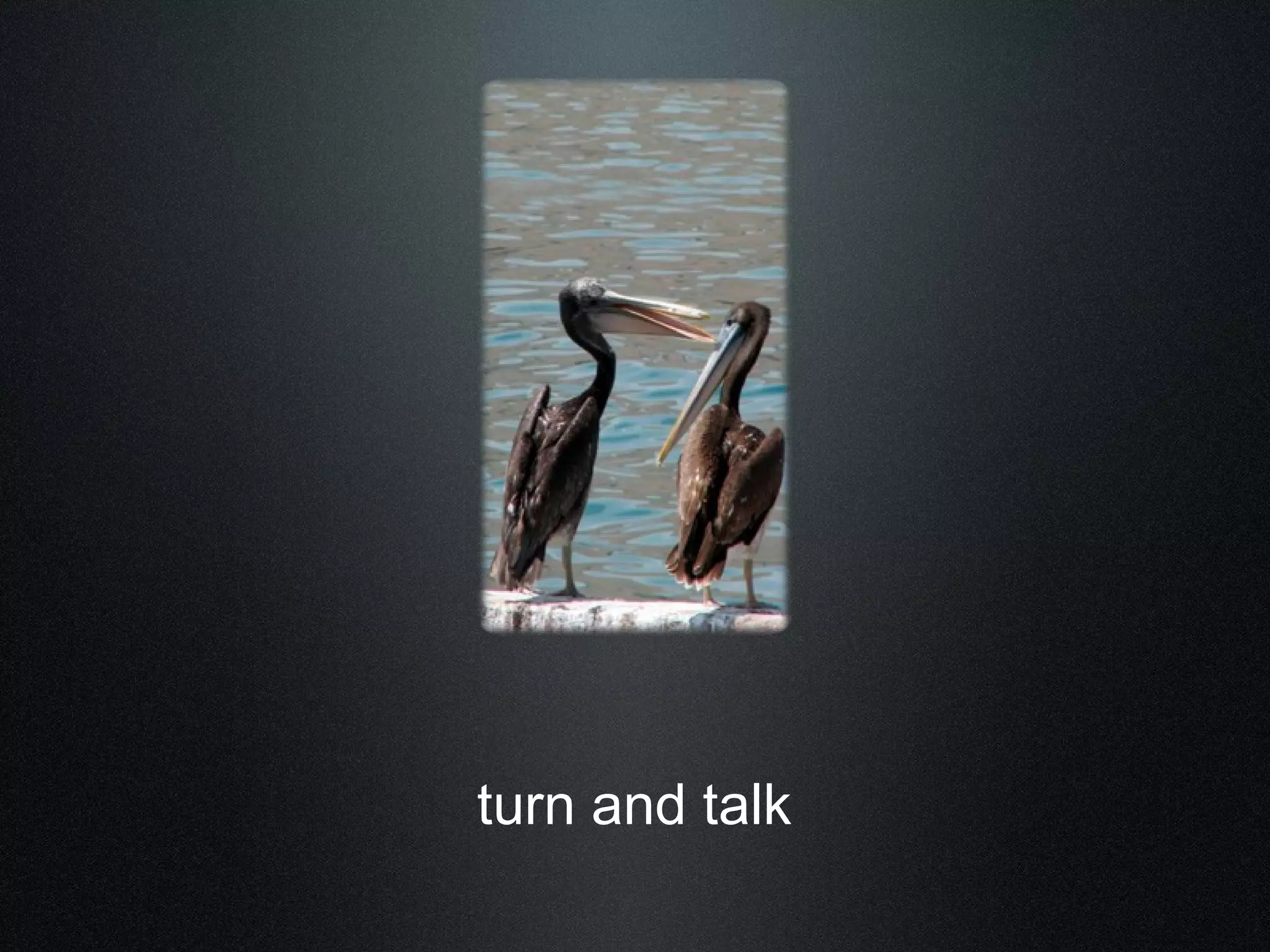
turn and talk
21st Century Literacy?
upload to YouTube edit a Wikipedia article choose a safe online payments site subscribe to a podcast and un-subscribe turn on and off predictive text manage a groups Flickr photos (and spell Flickr!) look after a community in Facebook
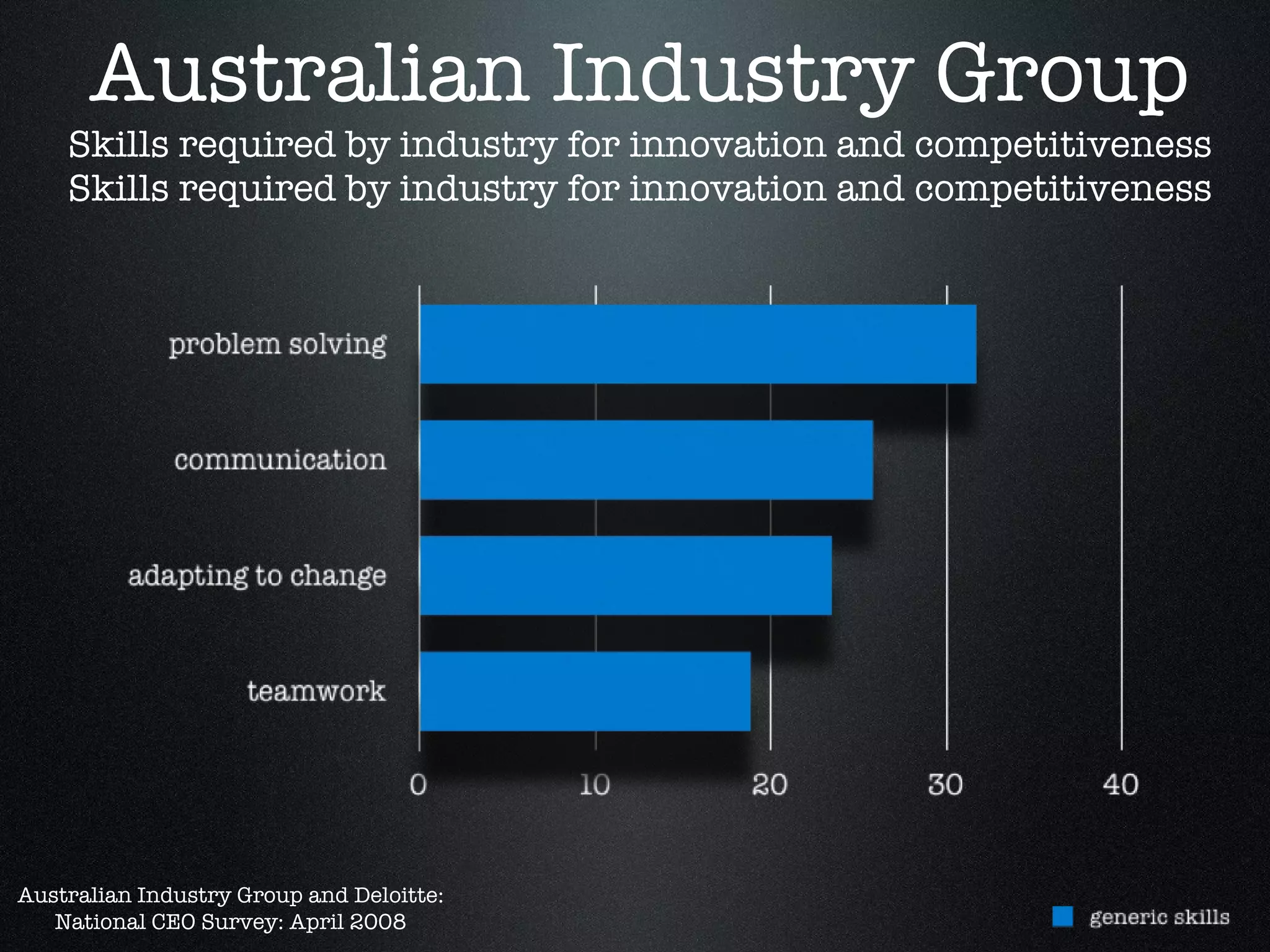
Australian Industry Group Skills required by industry for innovation and competitiveness Skills required by industry for innovation and competitiveness Australian Industry Group and Deloitte: National CEO Survey: April 2008
Let’s discuss the shifts...
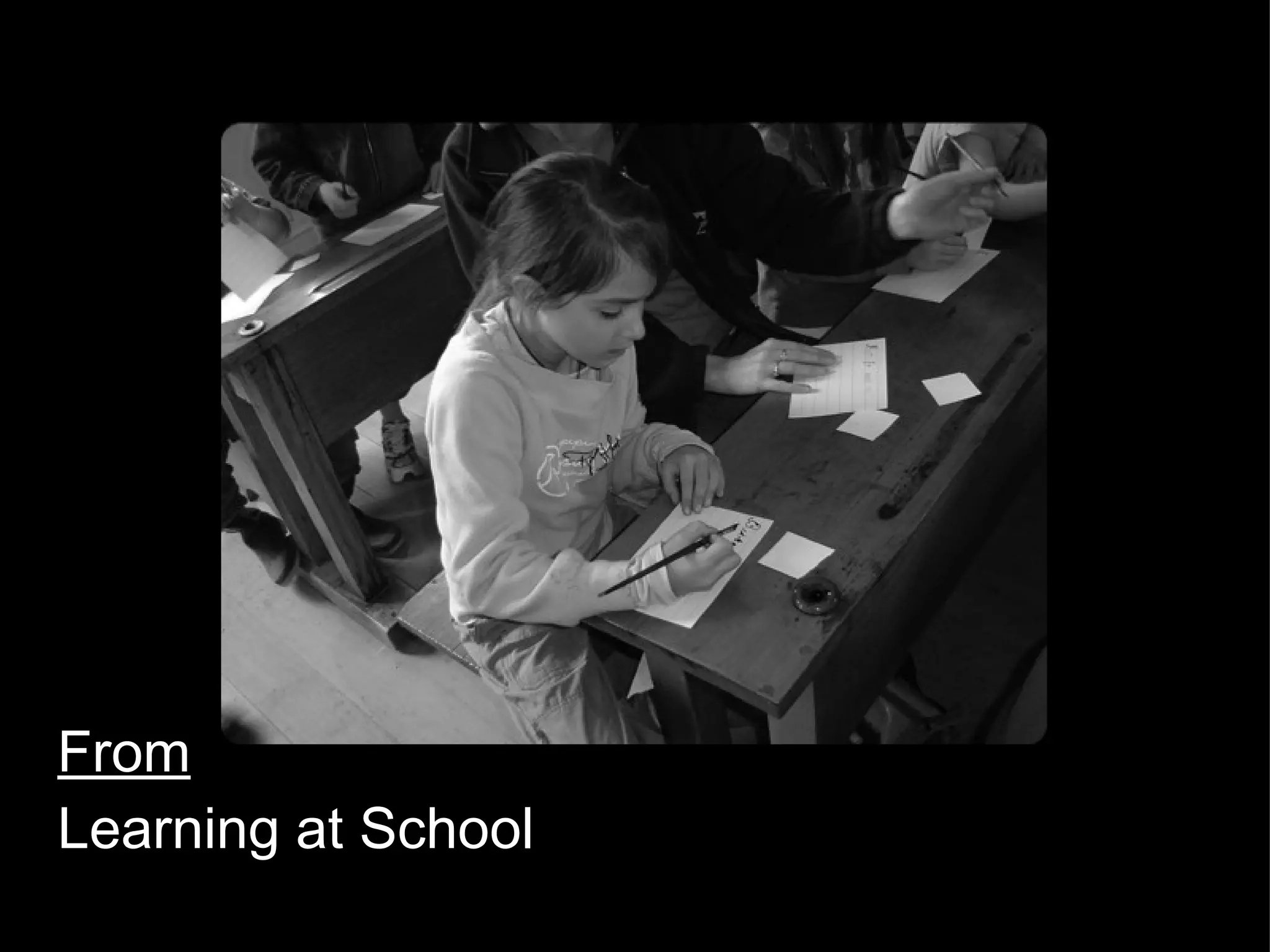
From Learning at School
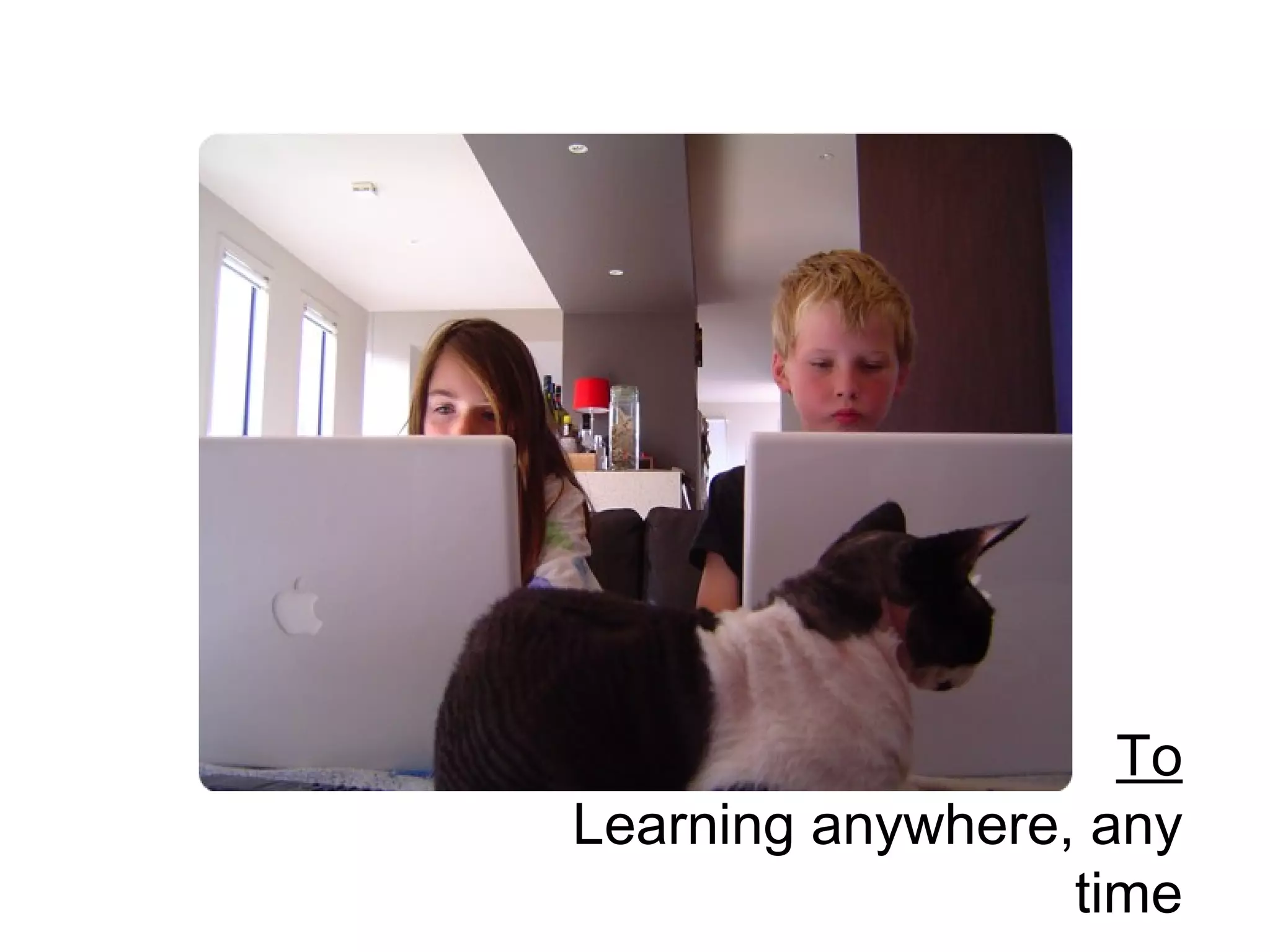
To Learning anywhere, any time
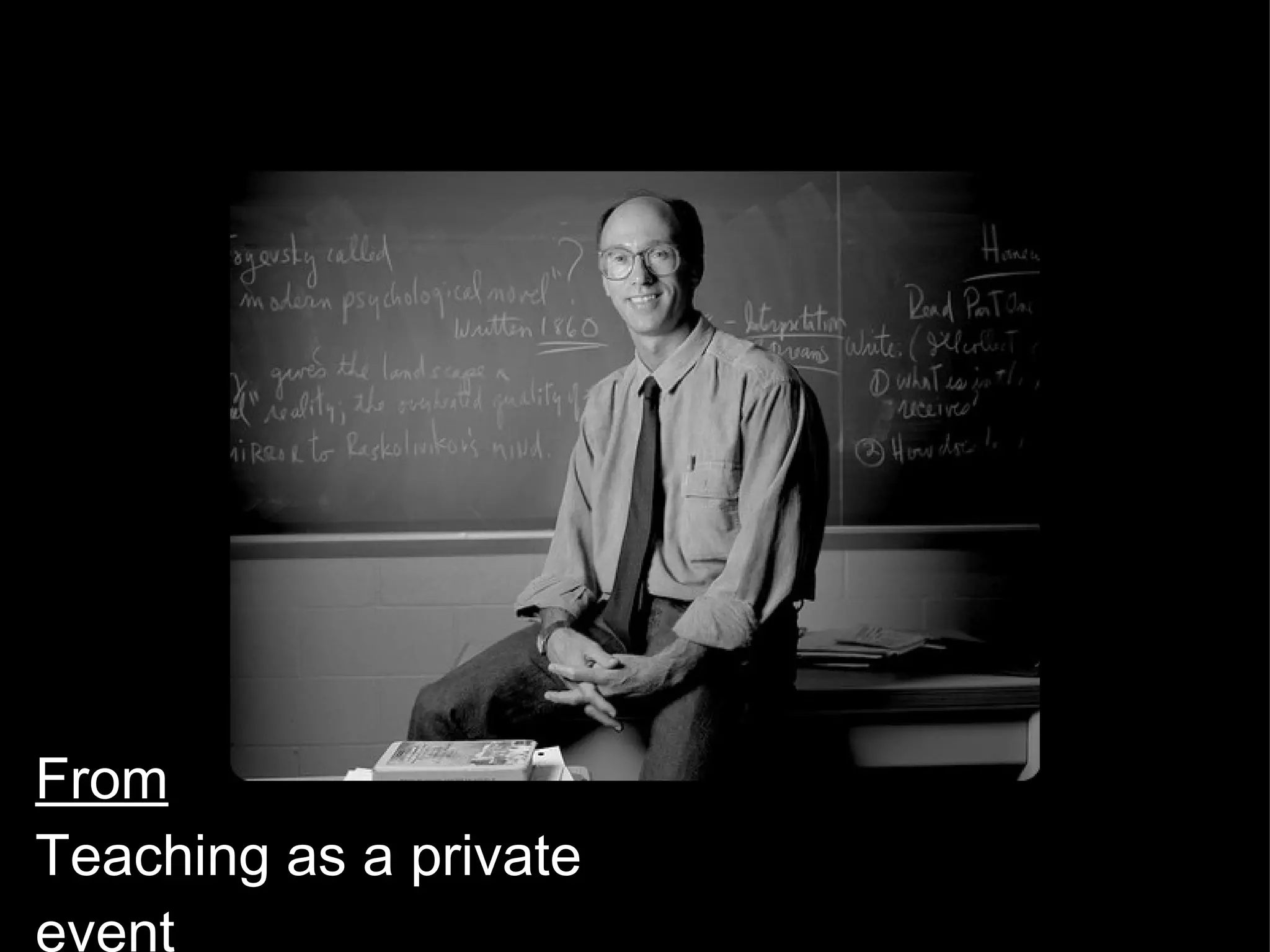
From Teaching as a private event
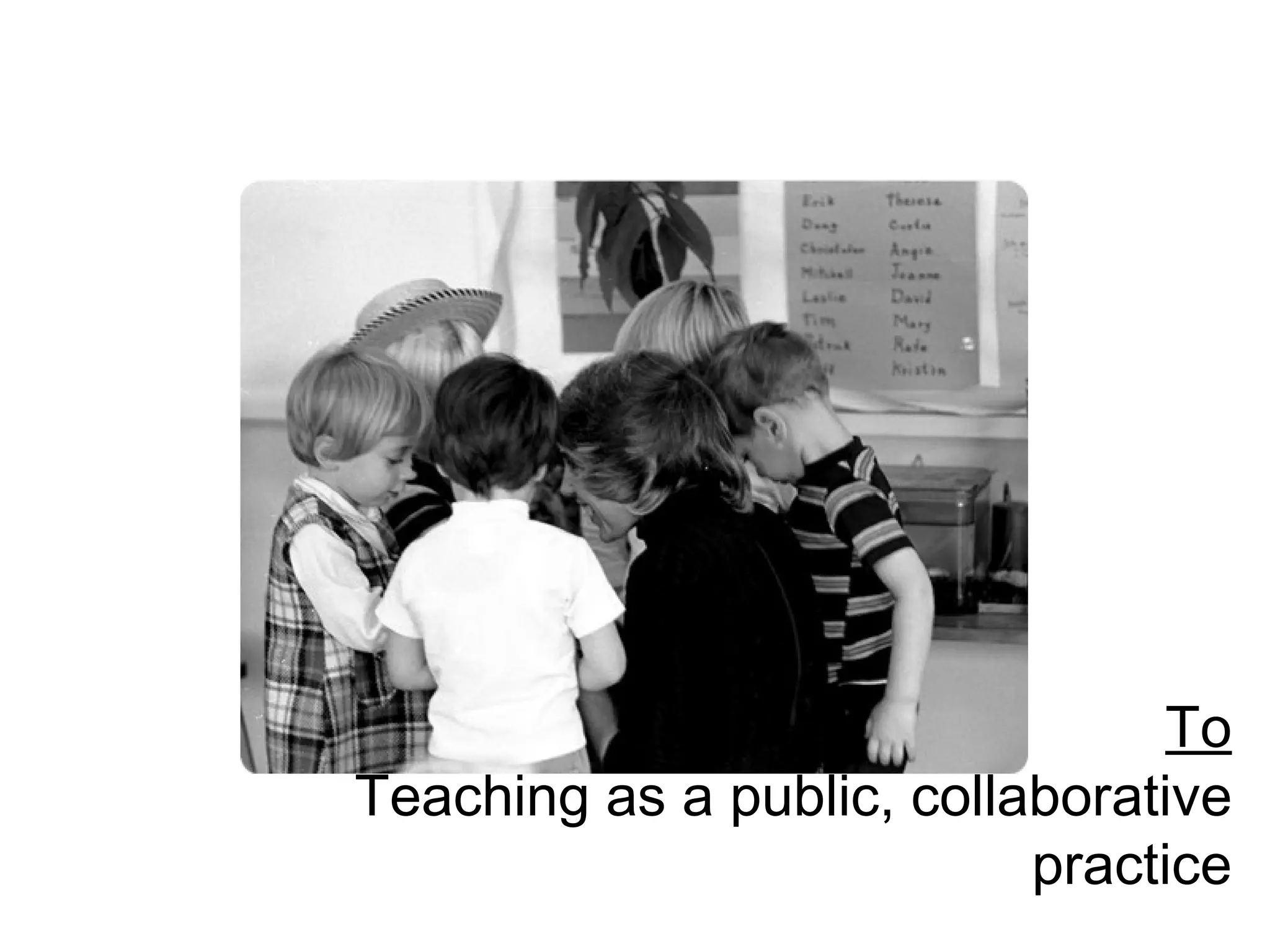
To Teaching as a public, collaborative practice
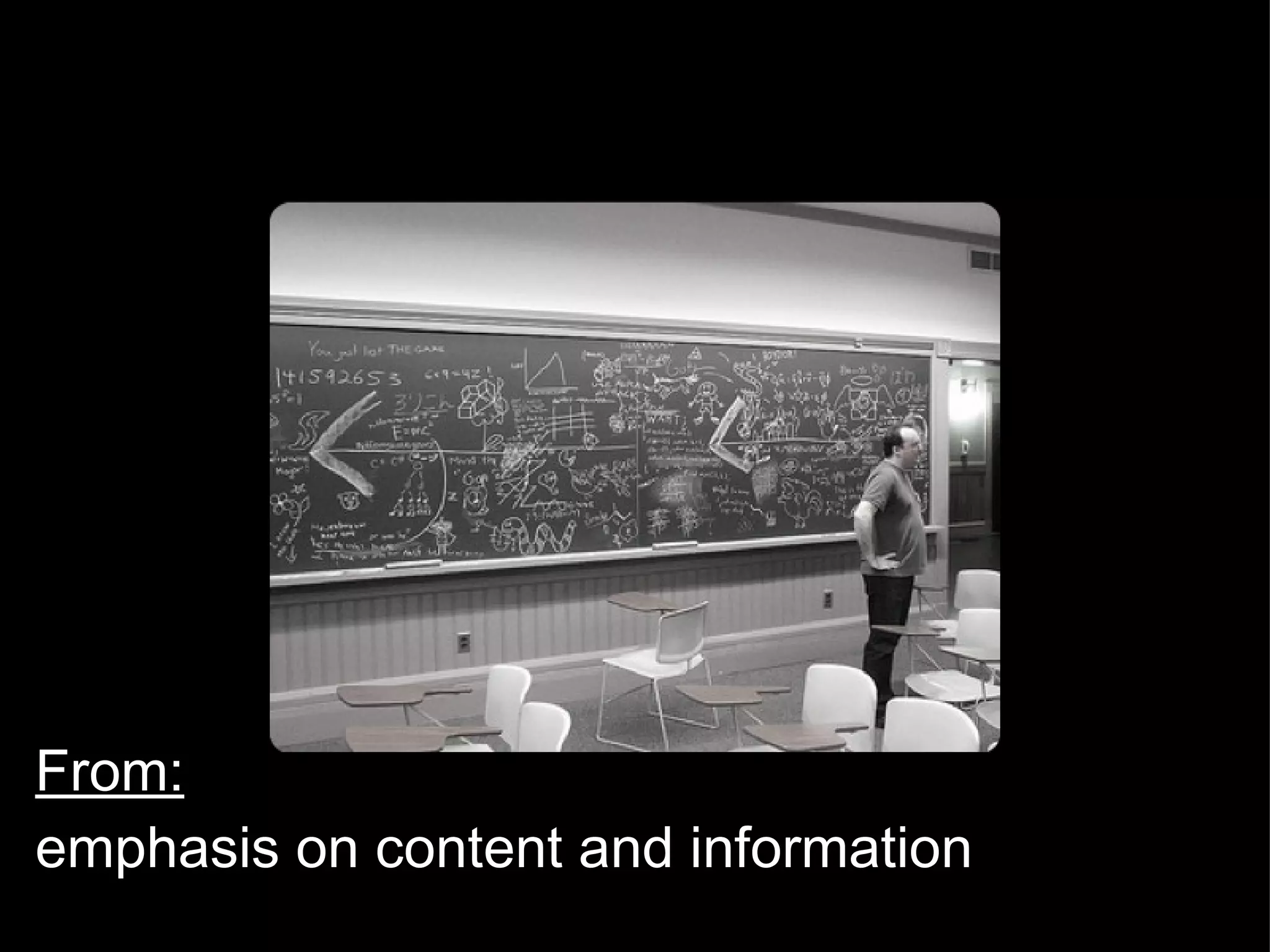
From: emphasis on content and information
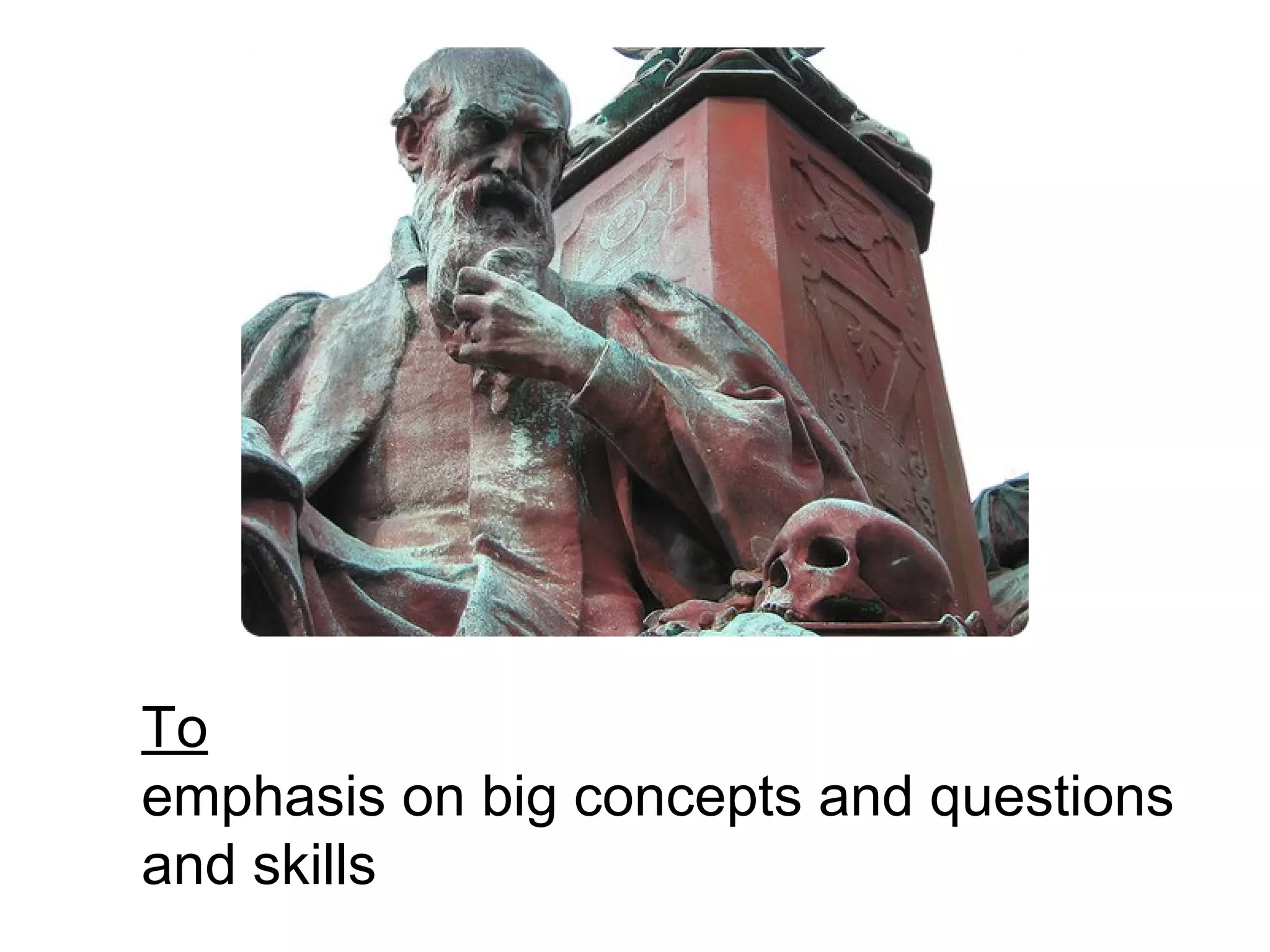
To emphasis on big concepts and questions and skills
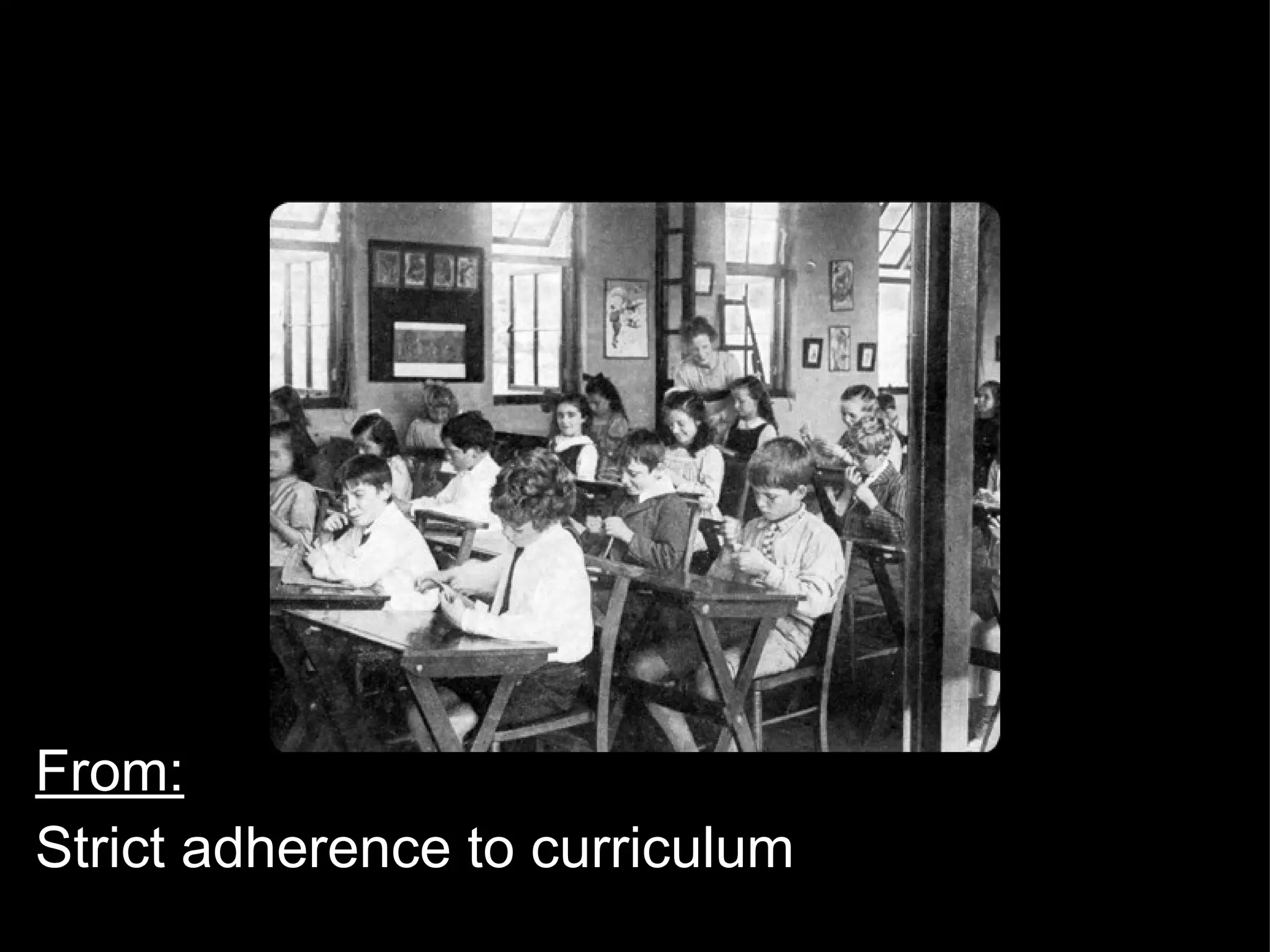
From: Strict adherence to curriculum
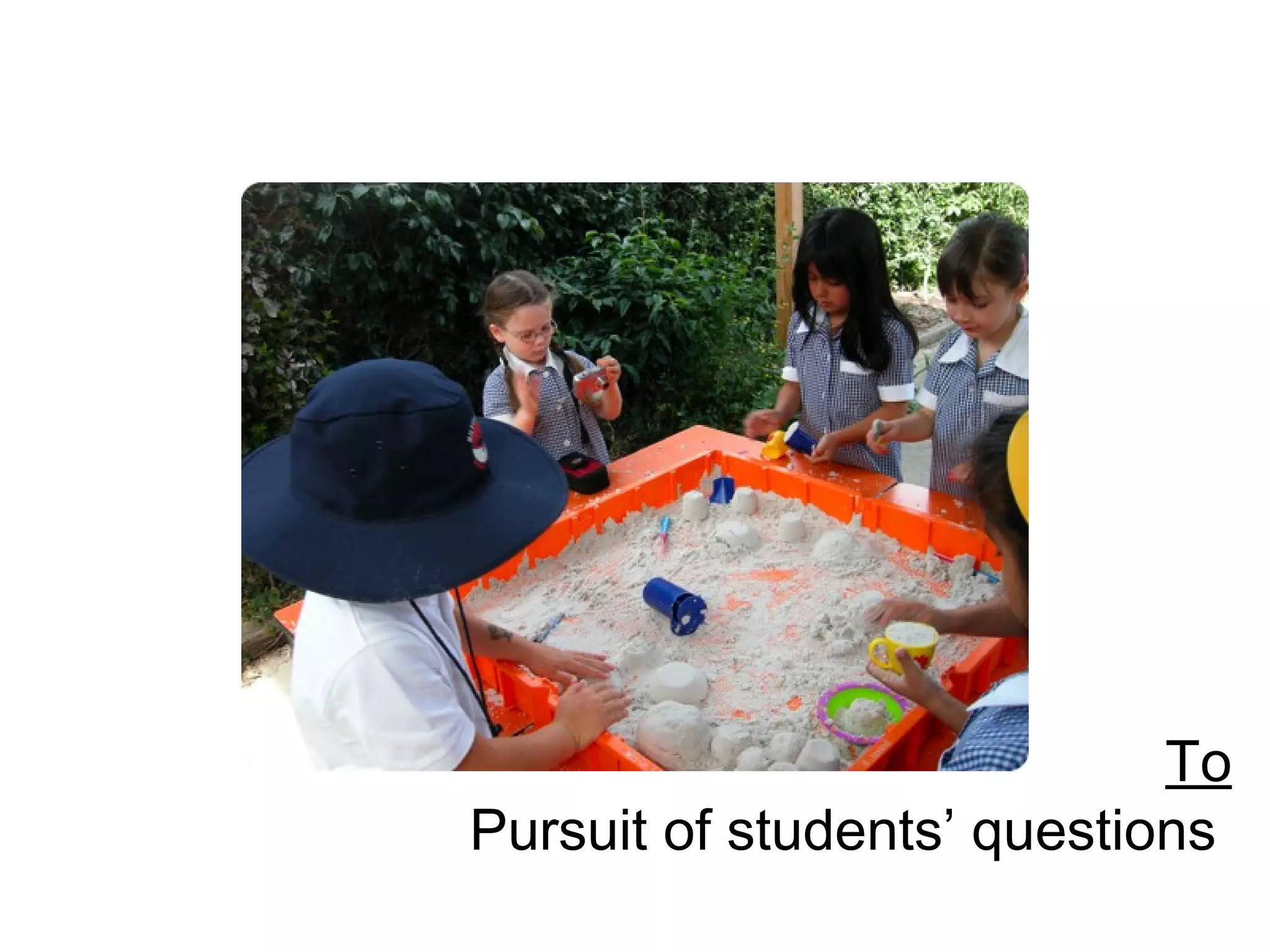
To Pursuit of students’ questions
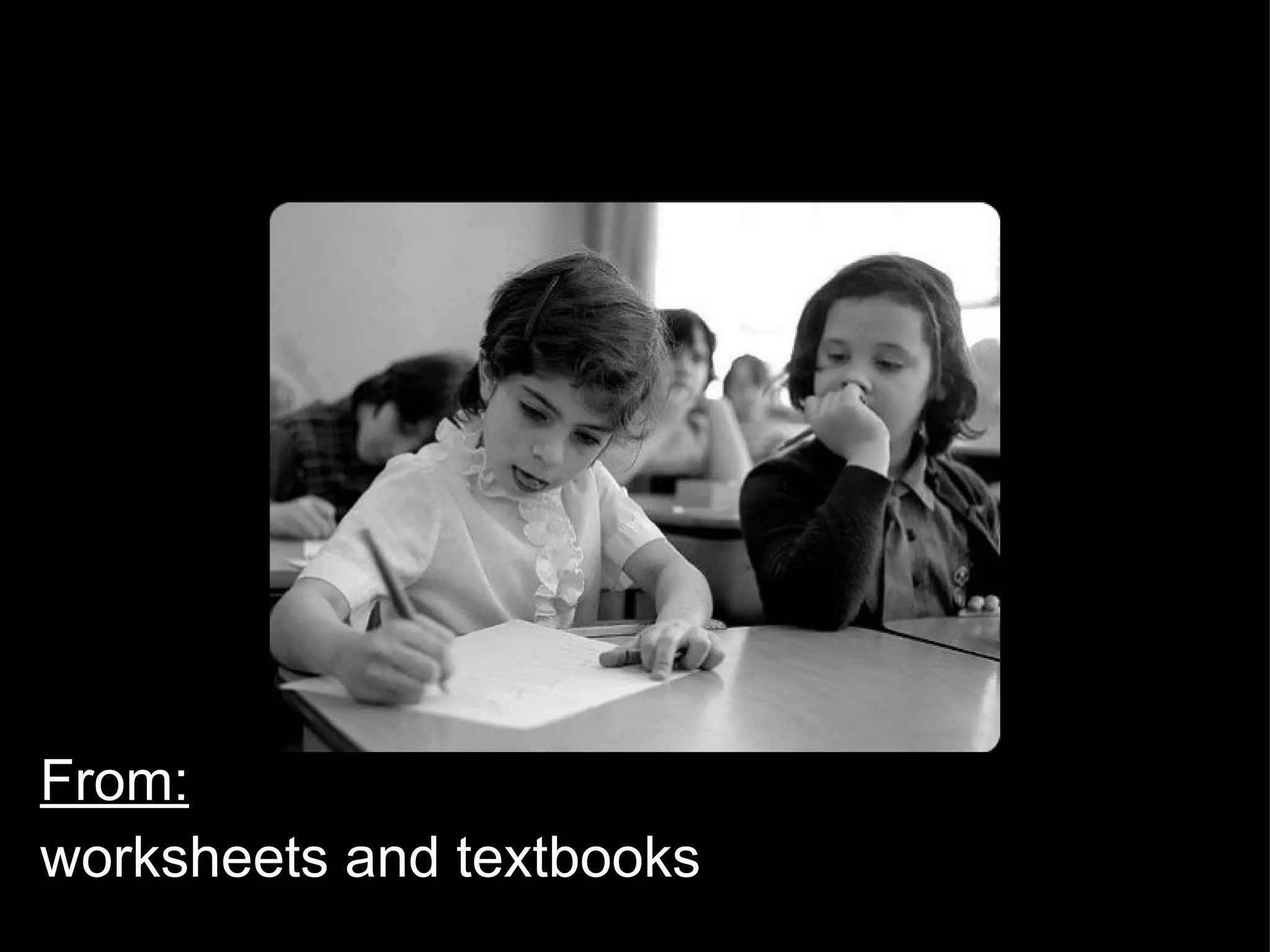
From: worksheets and textbooks
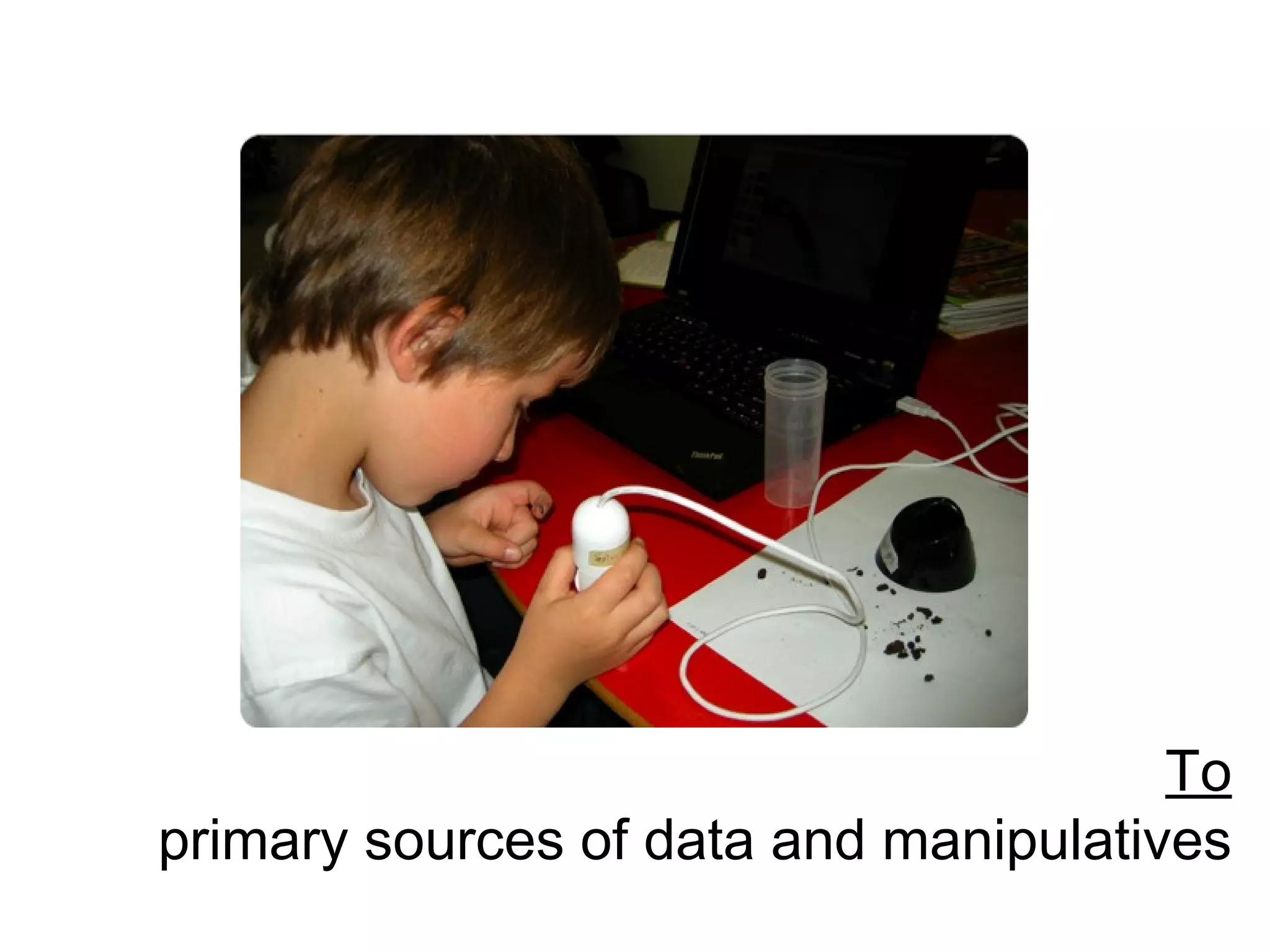
To primary sources of data and manipulatives
From: Students are blank slates
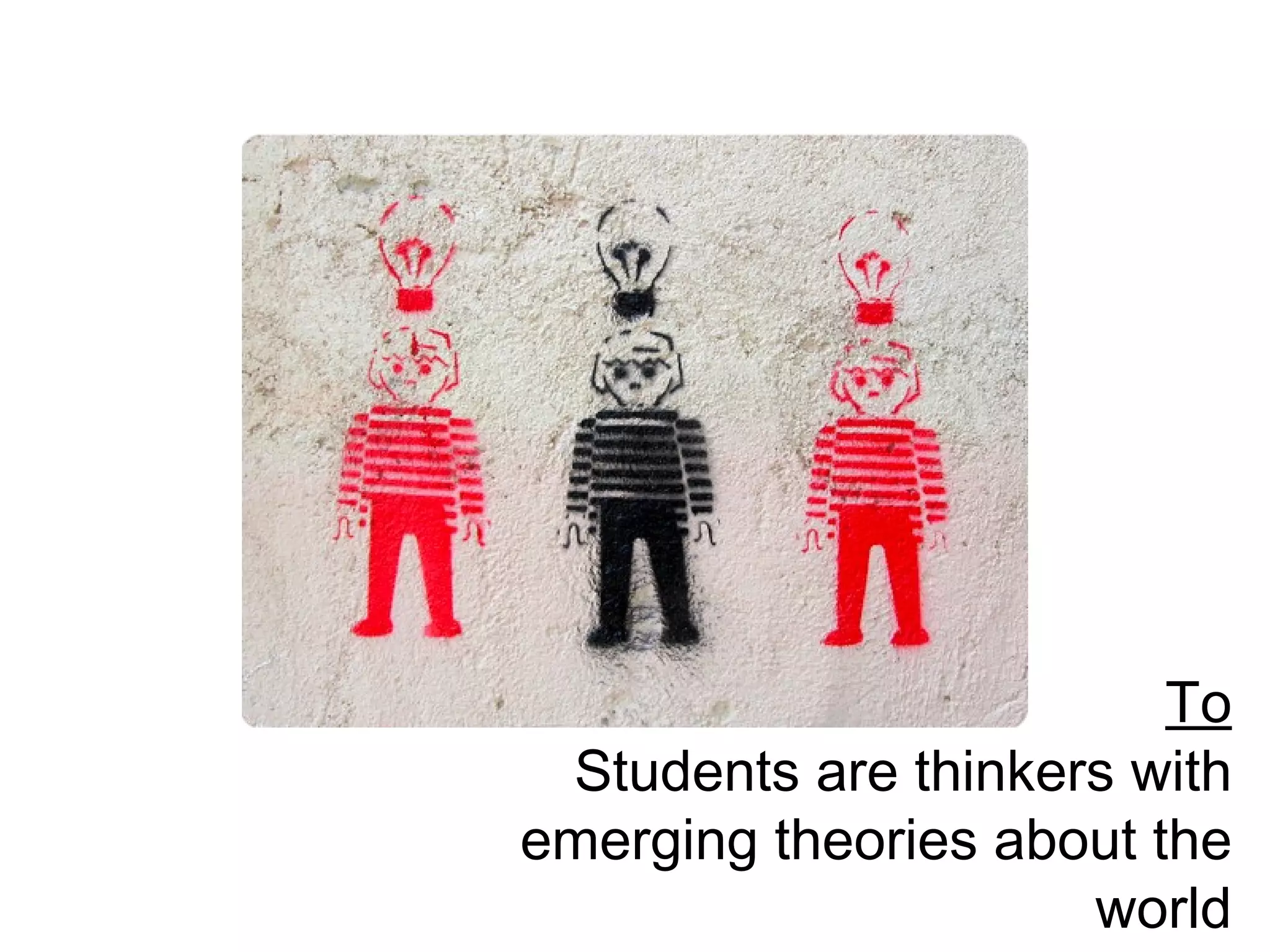
To Students are thinkers with emerging theories about the world
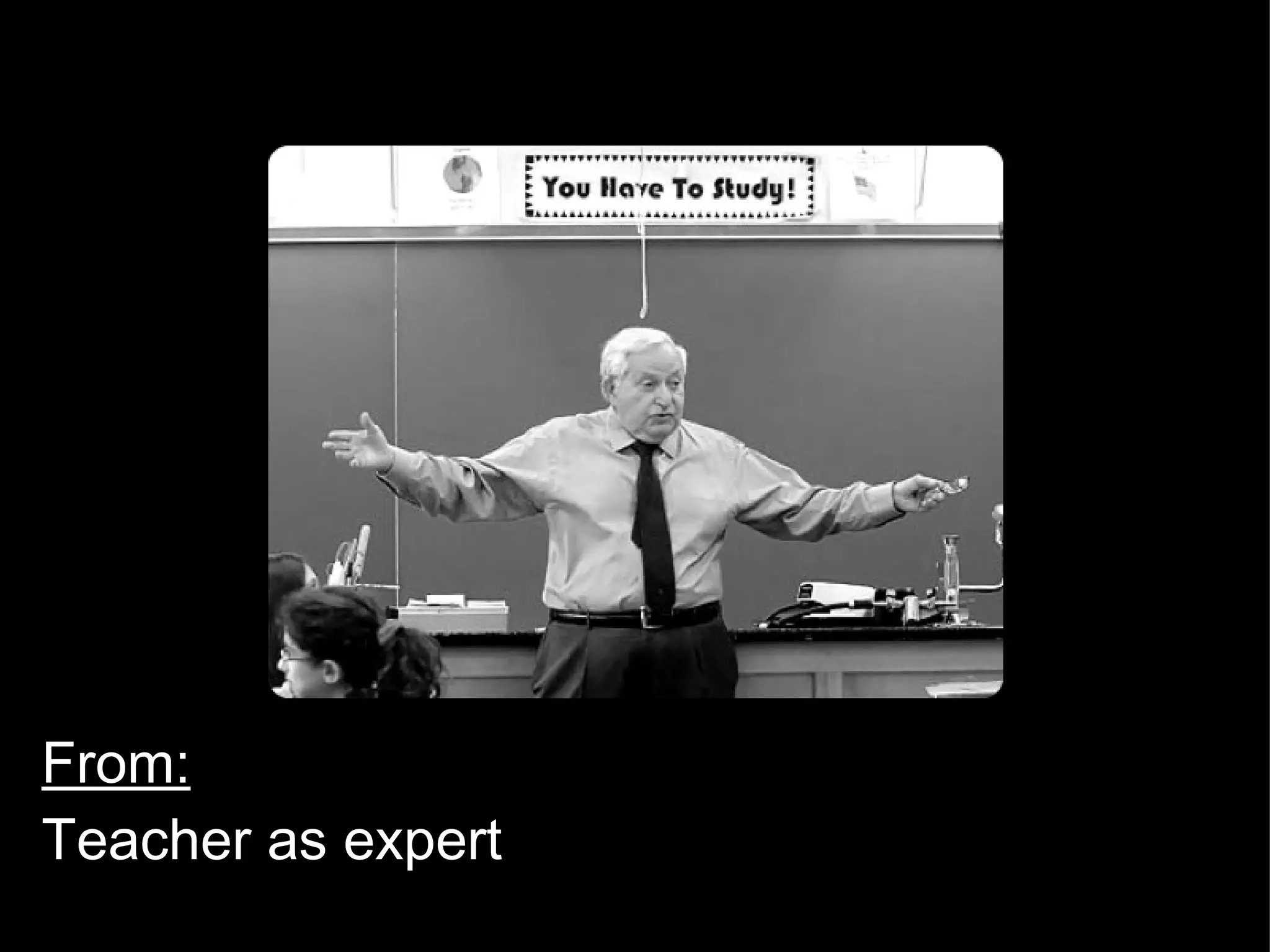
From: Teacher as expert
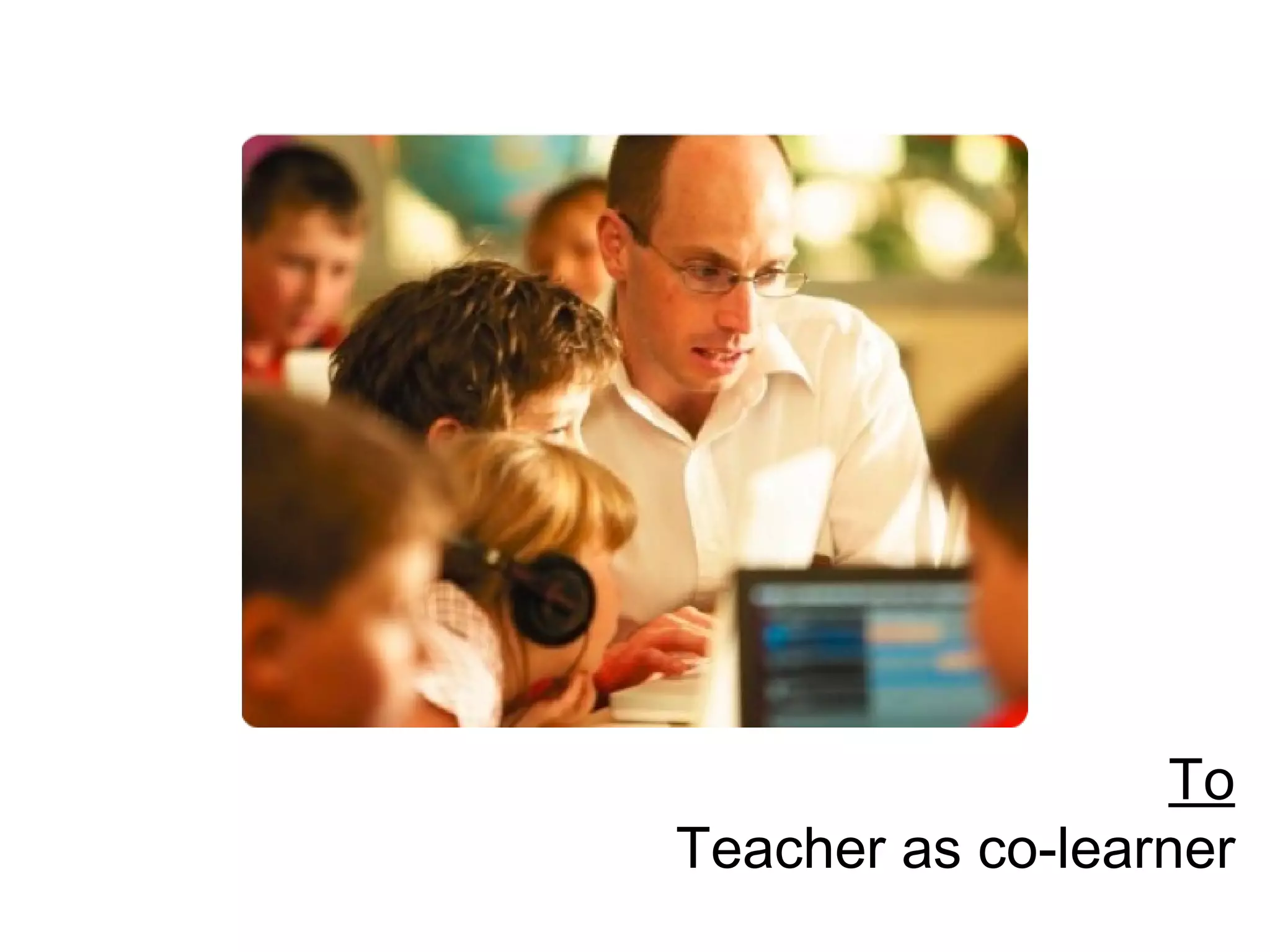
To Teacher as co-learner
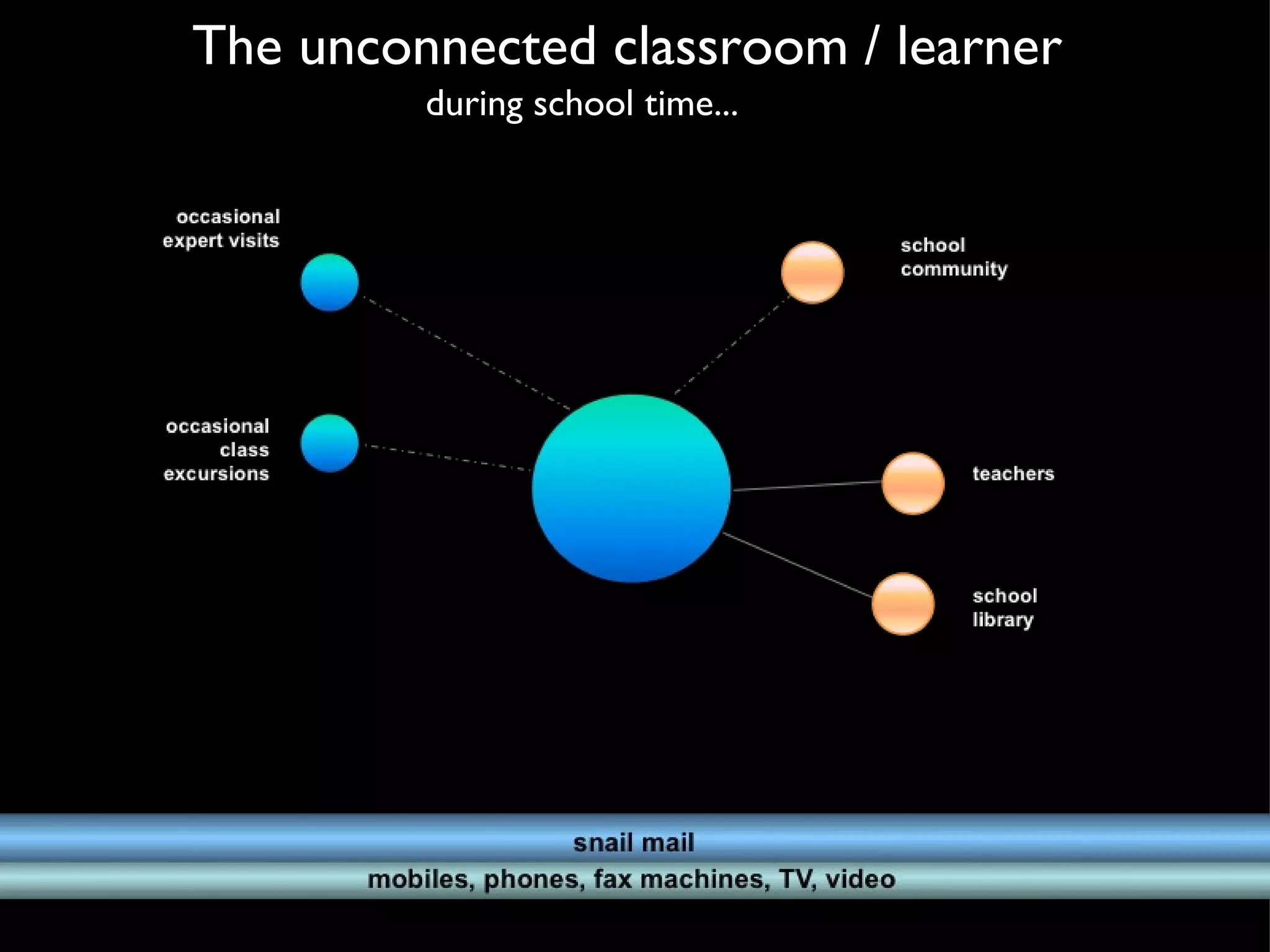
The unconnected classroom / learner  during school time...
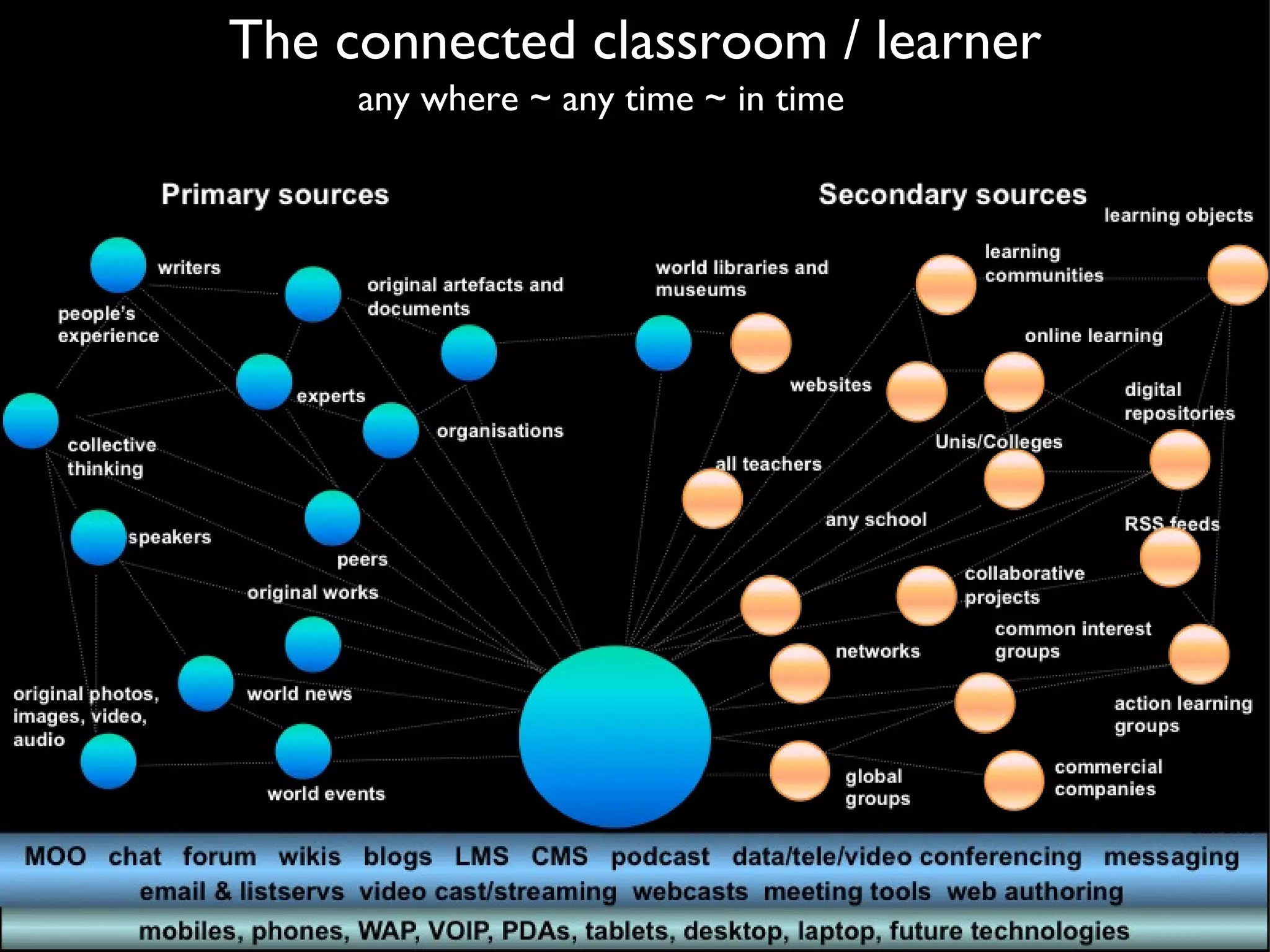
The connected classroom / learner any where ~ any time ~ in time
Ultranet
Coming, ready or not!

Netbook trial 21st century learning 2010

  • 1.
  • 2.
    How can netbookssupport students learning? To increase teachers’ effective integration of ICT To introduce teachers to an online environment for curriculum planning and delivery in readiness for the Ultranet Why?
  • 3.
    Resources Wikispaces: http://netbooktrial.wikispaces.com / “ In Your Hands” “ 101 classroom ideas for 1:1” eLearning tutorials and videos Case studies Cybersafety Year 7 Technical solutions
  • 4.
  • 5.
    The Future ofLearning
  • 6.
    KWL What doyou K now? What do you W ant to know? What have you L earned?
  • 7.
    fact in 2/3of BSW classrooms the teacher makes ALL the decisions regarding the use of technology in 2/3 of BSW classrooms the teacher makes ALL the decisions regarding the use of technology in 2/3 of BSW classrooms the teacher makes ALL the decisions regarding the use of technology in 2/3 of BSW classrooms the teacher makes ALL the decisions regarding the use of technology in 2/3 of BSW classrooms the teacher makes ALL the decisions regarding the use of technology in 2/3 of BSW classrooms the teacher makes ALL the decisions regarding the use of technology in 2/3 of BSW classrooms the teacher makes ALL the decisions regarding the use of technology in 2/3 of BSW classrooms the teacher makes ALL the decisions regarding the use of technology source: BSW ePotential Data 2008
  • 8.
    question who makesthese decisions when ALL of your students have a Netbook? who makes these decisions when ALL of your students have a Netbook? who makes these decisions when ALL of your students have a Netbook? who makes these decisions when ALL of your students have a Netbook? who makes these decisions when ALL of your students have a Netbook? who makes these decisions when ALL of your students have a Netbook? who makes these decisions when ALL of your students have a Netbook? who makes these decisions when ALL of your students have a Netbook?
  • 9.
    The missing technologicalelement is true one-to-one computing, in which each student has a device he or she can work on, keep, customize, and take home... “” 1:1 ?
  • 10.
    ...For true technologicaladvance to occur, the computers must be personal to each learner... “” 1:1 ?
  • 11.
    ...When used properlyand well for education, these computers become extensions of the students' personal self and brain. They must have each student's stuff and each student's style all over them (in case you haven't noticed, kids love to customize and make technology personal), and that is something sharing just doesn't allow... “” 1:1 ?
  • 12.
    “” ...Any ratiothat involves sharing computers -- even two kids to a computer -- will delay the technology revolution from happening... Marc Prensky 1:1 ?
  • 13.
    The more powerfultechnology becomes, the more indispensable good teachers are...
  • 14.
  • 15.
  • 16.
  • 17.
    upload to YouTubeedit a Wikipedia article choose a safe online payments site subscribe to a podcast and un-subscribe turn on and off predictive text manage a groups Flickr photos (and spell Flickr!) look after a community in Facebook
  • 18.
    Australian Industry GroupSkills required by industry for innovation and competitiveness Skills required by industry for innovation and competitiveness Australian Industry Group and Deloitte: National CEO Survey: April 2008
  • 19.
  • 20.
  • 21.
  • 22.
    From Teaching asa private event
  • 23.
    To Teaching asa public, collaborative practice
  • 24.
    From: emphasis oncontent and information
  • 25.
    To emphasis onbig concepts and questions and skills
  • 26.
  • 27.
    To Pursuit ofstudents’ questions
  • 28.
  • 29.
    To primary sourcesof data and manipulatives
  • 30.
    From: Students areblank slates
  • 31.
    To Students arethinkers with emerging theories about the world
  • 32.
  • 33.
    To Teacher asco-learner
  • 34.
    The unconnected classroom/ learner during school time...
  • 35.
    The connected classroom/ learner any where ~ any time ~ in time
  • 36.
  • 37.

Editor's Notes

  • #3 With a key focus on literacy and numeracy This will form the basis of the formal evaluation procedures. The trial will run for one year after which responsibility for the continued use of the netbooks will transfer to regions understand the ways in which netbooks can support student learning across all areas of VELS understand those factors which contribute to the effective implementation of a one to one program in a school evaluate the capacity of our system to take this model to scale develop exemplar curriculum resources for learning, teaching and assessment, to be accessible to all Victorian teachers through the Ultranet and ePotential ICT

  • #7 Learning Journey, constructivism, adults and children, netbooks (technology) supports this type of learning Turn to your partner and discussion, comments (feedback)
  • #12 Customisation, personal, extensions of the self 1:1 is about “on demand”, pencil analogy 1:1 on demand ICT but it doesnt imply that we always work in isolation (teachers role how ICT is deployed) accidental breakage/Damage/lost is reduced
  • #13 “ on demand” ICT Where to from now in your school??
  • #14 Research –Michael Fullan Technology supports, but does not replace, good teaching and learning. Role of the teacher is evolving.
  • #16 Have a quick chat to your partner for two minutes about what this movie means for you as a grade 5 teacher Turn and Talk is a powerful teaching tool. It enables learners to take the ideas, articulate it, and thus understand it at a deeper level. Students need only 2 minutes for this strategy, and it can be used often in a classroom setting –particularly during a read aloud session in your classroom.
  • #18 Stephen Heppell’s list of 21C skills after asking a group of students what skills they thought it important for a teacher to have to be literate in the 21st century 10 years ago???
  • #21 Classroom, desk, seated, school hours, replicated at home
  • #22 Flexible, less need for boundaries, rules etc. 24/7, anywhere
  • #23 Close the door, the teacher rules
  • #24 Team teaching, teacher as a co learner, participant, contributor,
  • #25 Text book, limited library, set content and topics, teacher directed, teacher interest
  • #26 Overarching, deep questions, no simple answers, children making real contributions to solving real problems
  • #28 Student directed learning, students following their own line of inquiry, engaged students, stuff students produce varies, skill development and reflection on learning important
  • #30 Capturing data and producing, refining, making sense of it, sharing this with others
  • #32 Real contributions