 It is defined as the state of complete
physical,mental and social well being
and not merely the absence of
disease and infirmity
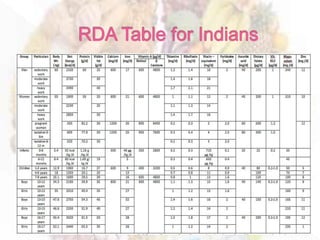
 The average daily dietary nutrient intake
level sufficient to meet the nutrient
requirement of nearly all healthy individuals
in a particular life stage and gender group.
 Balanced diet is one which contains different
types of foods in such quantities and
proportion so that need for
calories,proteins,minerals,vitamins and other
nutrients is adequately met and a small
provision is made for extra nutrients to
withstand short duration of leanness
 Meets Nutritional Requirements.
 Provides Phytochemicals(Plant derived
chemicals).
 Improves Immunity.
 Develpos optimum cognitive(Brain) Ability.
 Helps to cope up stress.
 A balanced diet should provide 60-70 percent of calories from
carbohydrate, 10-20 percent from protein and 20-25 percent from fat.
 Calorie allowance can be + 50, while for all other nutrients minimum RDA
must be met.
 Energy from cereals should not be more than 75 percent.
 Include two cereals in one meal eg:- rice and wheat.
 To improve protein quality the ratio of cereal protein to pulse protein
should be 4:1.
 Two to three serving of pulses should be taken a day.
 Include atleast one medium size fruit. The fruit can be given raw without
much cooking.
 Five servings of fruits and vegetables should be included in a day
 The diet should include minimum 100ml milk per day.
 Foods rich in fibre should be included.
 One third of the nutritional requirements, at least calorie and protein
should be met by lunch or dinner.
 Recommended Dietary Allowance
 Food List
 Making Menu
 Makes a person fit
 Balances weight.
 Prevents Vitamins and Mineral Deficiency.
 Reduces BP,Heart Diseases,Blood
Sugar,Cholestrol and Obesity.
 Helps Immune system and Brain function.
Balanced diet

Balanced diet

  • 2.
     It isdefined as the state of complete physical,mental and social well being and not merely the absence of disease and infirmity
  • 3.
     The averagedaily dietary nutrient intake level sufficient to meet the nutrient requirement of nearly all healthy individuals in a particular life stage and gender group.
  • 4.
     Balanced dietis one which contains different types of foods in such quantities and proportion so that need for calories,proteins,minerals,vitamins and other nutrients is adequately met and a small provision is made for extra nutrients to withstand short duration of leanness
  • 5.
     Meets NutritionalRequirements.  Provides Phytochemicals(Plant derived chemicals).  Improves Immunity.  Develpos optimum cognitive(Brain) Ability.  Helps to cope up stress.
  • 8.
     A balanceddiet should provide 60-70 percent of calories from carbohydrate, 10-20 percent from protein and 20-25 percent from fat.  Calorie allowance can be + 50, while for all other nutrients minimum RDA must be met.  Energy from cereals should not be more than 75 percent.  Include two cereals in one meal eg:- rice and wheat.  To improve protein quality the ratio of cereal protein to pulse protein should be 4:1.  Two to three serving of pulses should be taken a day.  Include atleast one medium size fruit. The fruit can be given raw without much cooking.  Five servings of fruits and vegetables should be included in a day  The diet should include minimum 100ml milk per day.  Foods rich in fibre should be included.  One third of the nutritional requirements, at least calorie and protein should be met by lunch or dinner.
  • 10.
     Recommended DietaryAllowance  Food List  Making Menu
  • 11.
     Makes aperson fit  Balances weight.  Prevents Vitamins and Mineral Deficiency.  Reduces BP,Heart Diseases,Blood Sugar,Cholestrol and Obesity.  Helps Immune system and Brain function.