2411-15
Balanced diet
DEFINITION
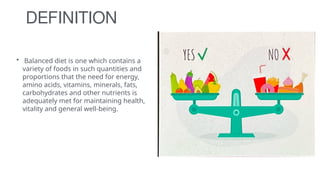
• Balanced diet is one which contains a
variety of foods in such quantities and
proportions that the need for energy,
amino acids, vitamins, minerals, fats,
carbohydrates and other nutrients is
adequately met for maintaining health,
vitality and general well-being.
Importance of balance diet
• A balanced diet ensures that you get all the essential nutrients your body needs to function properly.
• A balanced diet can help you maintain a healthy weight
• Eating a variety of nutritious foods can reduce the risk of chronic diseases, such as heart, disease,
diabetes, and certain cancers
• Balance diet rich in five words from fruits, vegetables, and whole grains, promotes a healthy digestive
system and help prevent constipation.
• Proper nutrition is essential for brain function and can have significant impact on your mood and
concentration
• Consuming enough calcium and vitamin D through a balanced diet can help maintain strong bones and
prevent conditions like osteoporosis
The dietary goals recommended by various expert committees of WHO are as below
Dietary goals
• Dietary fat should be limited to approximately 15 to 30% of total daily intake .
• Saturated fat should contribute no more than 10% of the total energy intake. Unsaturated
vegetable oil should be substituted for the remaining fat requirement.
• Excessive consumption of refined carbohydrate should be avoided. Some amount of
carbohydrate rich in natural fibre should be taken.
• Sources rich in energy, such as fats and alcohol should be restricted.
• Salt intake should be reduced to an average of not more than 5 g per day.
Cont…
• Protein should account for approximately 10 to 15% of the daily intake.
• Junk food, such as colas, ketchup, and other foods that supply empty calories should be
reduced.
• There may be conditions under which the above recommendations for daily food
intake do not apply. For example, diet should be adapted to the special needs of
growth, pregnancy, lactation, physical activity, and medical disorders.
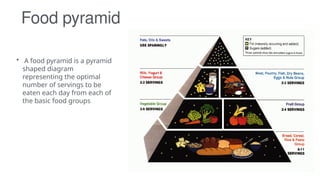
Food pyramid
• A food pyramid is a pyramid
shaped diagram
representing the optimal
number of servings to be
eaten each day from each of
the basic food groups
Constituents of balanced diet
Carbohydrates
• RDA-400g
• Energy-4kcal/g
• Sources-pulses, bread, cereals, roots, and tubers, sugar
• Function -it is chief source of energy, brain and other parts of CNS are dependent on
glucose for energy
Protein
• RDA-60g(for a 60kg adult male).
• Energy-4kcal/g
• Sources-pulses, milk, leafy vegetables, meat, cereals, and egg
• Function-They are the structural and Functional unit of cell. They maintain osmotic
pressure and have role in clotting of blood and muscle contraction. All the
enzymes ,several hormones and immunoglobulins are proteins.
Fibres
• Energy- 2kcal/g.
• Source-leafy vegetables, fruits, wheat, and legumes, rice bran
• Functions-They are useful in preventing constipation, decreasing the risk of GIT cancer.
They improve glucose tolerance and reduce plasma cholesterol levels.
Fat
• RDA-30g
• Energy-9kcal/g
• Source- butter, cheese cream, red meat, and egg
• Function- It provides 15 to 50% of total energy and is constituent of membrane
structures and regulate membrane permeability.Act as insulating material to protect
internal organs.
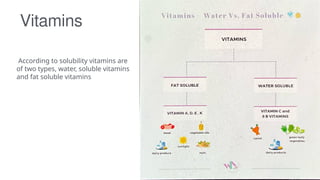
According to solubility vitamins are
of two types, water, soluble vitamins
and fat soluble vitamins
Vitamins
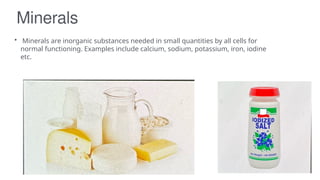
Minerals
• Minerals are inorganic substances needed in small quantities by all cells for
normal functioning. Examples include calcium, sodium, potassium, iron, iodine
etc.
Religion
Factors affecting balanced diet
• Certain religious groups are required to cover their body, which can result in vitamin D
deficiency.
Socio-economic class
• People in low social classes generally earn less money than those in the higher and
medium classes because of this are most likely to have certain kinds of deficiency and
diseases related to unhealthy diet
Geographic location
• Food that is grown in poor soil with contain fewer minerals and so quality of food is also
poor
• Many developing countries suffer from poor soil conditions, flooding, and drought which
results in repeated areas of lost harvest ,as a result people have access to restricted diets
that are rich in carbohydrates and low in protein and fat.
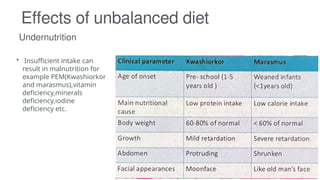
Undernutrition
Effects of unbalanced diet
• Insufficient intake can
result in malnutrition for
example PEM(Kwashiorkor
and marasmus),vitamin
deficiency,minerals
deficiency,iodine
deficiency etc.
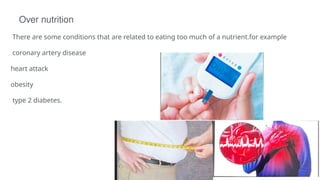
Over nutrition
There are some conditions that are related to eating too much of a nutrient.for example
coronary artery disease
heart attack
obesity
type 2 diabetes.
THANK YOU

Power point presentation on Balanced diet.pptx.

  • 1.
  • 2.
    DEFINITION • Balanced dietis one which contains a variety of foods in such quantities and proportions that the need for energy, amino acids, vitamins, minerals, fats, carbohydrates and other nutrients is adequately met for maintaining health, vitality and general well-being.
  • 3.
    Importance of balancediet • A balanced diet ensures that you get all the essential nutrients your body needs to function properly. • A balanced diet can help you maintain a healthy weight • Eating a variety of nutritious foods can reduce the risk of chronic diseases, such as heart, disease, diabetes, and certain cancers • Balance diet rich in five words from fruits, vegetables, and whole grains, promotes a healthy digestive system and help prevent constipation. • Proper nutrition is essential for brain function and can have significant impact on your mood and concentration • Consuming enough calcium and vitamin D through a balanced diet can help maintain strong bones and prevent conditions like osteoporosis
  • 4.
    The dietary goalsrecommended by various expert committees of WHO are as below Dietary goals • Dietary fat should be limited to approximately 15 to 30% of total daily intake . • Saturated fat should contribute no more than 10% of the total energy intake. Unsaturated vegetable oil should be substituted for the remaining fat requirement. • Excessive consumption of refined carbohydrate should be avoided. Some amount of carbohydrate rich in natural fibre should be taken. • Sources rich in energy, such as fats and alcohol should be restricted. • Salt intake should be reduced to an average of not more than 5 g per day.
  • 5.
    Cont… • Protein shouldaccount for approximately 10 to 15% of the daily intake. • Junk food, such as colas, ketchup, and other foods that supply empty calories should be reduced. • There may be conditions under which the above recommendations for daily food intake do not apply. For example, diet should be adapted to the special needs of growth, pregnancy, lactation, physical activity, and medical disorders.
  • 6.
    Food pyramid • Afood pyramid is a pyramid shaped diagram representing the optimal number of servings to be eaten each day from each of the basic food groups
  • 7.
  • 9.
    Carbohydrates • RDA-400g • Energy-4kcal/g •Sources-pulses, bread, cereals, roots, and tubers, sugar • Function -it is chief source of energy, brain and other parts of CNS are dependent on glucose for energy
  • 10.
    Protein • RDA-60g(for a60kg adult male). • Energy-4kcal/g • Sources-pulses, milk, leafy vegetables, meat, cereals, and egg • Function-They are the structural and Functional unit of cell. They maintain osmotic pressure and have role in clotting of blood and muscle contraction. All the enzymes ,several hormones and immunoglobulins are proteins.
  • 11.
    Fibres • Energy- 2kcal/g. •Source-leafy vegetables, fruits, wheat, and legumes, rice bran • Functions-They are useful in preventing constipation, decreasing the risk of GIT cancer. They improve glucose tolerance and reduce plasma cholesterol levels.
  • 12.
    Fat • RDA-30g • Energy-9kcal/g •Source- butter, cheese cream, red meat, and egg • Function- It provides 15 to 50% of total energy and is constituent of membrane structures and regulate membrane permeability.Act as insulating material to protect internal organs.
  • 13.
    According to solubilityvitamins are of two types, water, soluble vitamins and fat soluble vitamins Vitamins
  • 14.
    Minerals • Minerals areinorganic substances needed in small quantities by all cells for normal functioning. Examples include calcium, sodium, potassium, iron, iodine etc.
  • 15.
    Religion Factors affecting balanceddiet • Certain religious groups are required to cover their body, which can result in vitamin D deficiency. Socio-economic class • People in low social classes generally earn less money than those in the higher and medium classes because of this are most likely to have certain kinds of deficiency and diseases related to unhealthy diet
  • 16.
    Geographic location • Foodthat is grown in poor soil with contain fewer minerals and so quality of food is also poor • Many developing countries suffer from poor soil conditions, flooding, and drought which results in repeated areas of lost harvest ,as a result people have access to restricted diets that are rich in carbohydrates and low in protein and fat.
  • 17.
    Undernutrition Effects of unbalanceddiet • Insufficient intake can result in malnutrition for example PEM(Kwashiorkor and marasmus),vitamin deficiency,minerals deficiency,iodine deficiency etc.
  • 18.
    Over nutrition There aresome conditions that are related to eating too much of a nutrient.for example coronary artery disease heart attack obesity type 2 diabetes.
  • 19.