BALANCED and
UNBALANCED
Forces
Short Lesson
Purpose
Review
Language
Practice
Lesson
Activity
Lesson
Conclusion
Grade 8 Science
Lesson 3:
Teacher- I
1. I will give you 4 questions.
2. You have 30 seconds to answer each question.
3.After the given time, you will be given the chance to
share your answer in the class randomly.
4. You will earn 2 points for every correct answer.
Short Overview
06
7 240
067 068
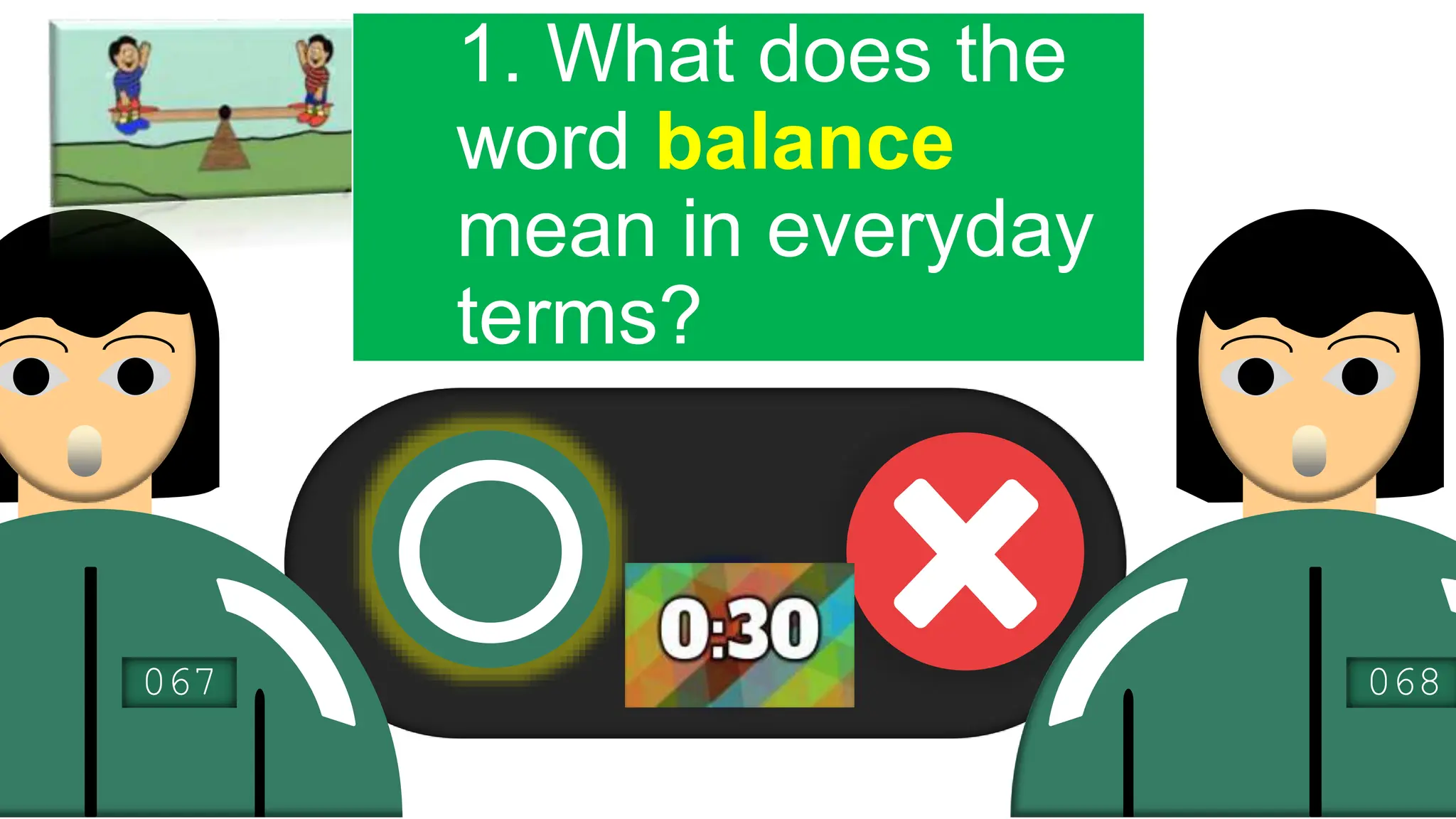
1. What does the
word balance
mean in everyday
terms?
When something
is stable.
Equal
Not falling over
067 068
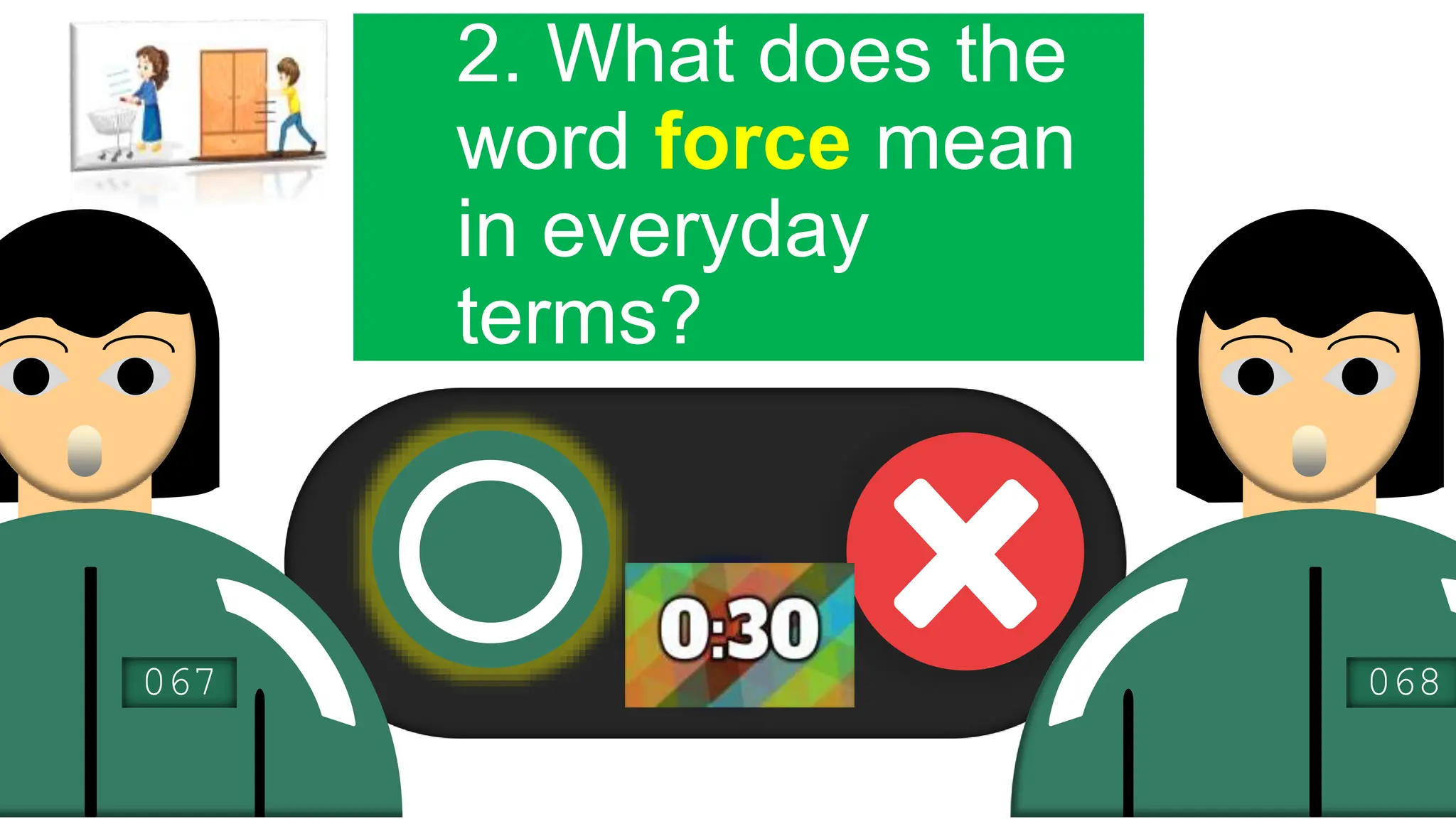
2. What does the
word force mean
in everyday
terms?
To break something open-like
to force a door open;
A push or a pull;
Something that makes things
move (accelarate)
067 068
3. What does balance
mean in scientific terms
when we are referring
to forces?
The forces are the same.
The forces are cancelling each
other;
One force counteracts the
other
067 068
4. How could you
illustrate or represent
balanced forces?
Lesson Purpose and
Intention
 Explain balanced and unbalanced
forces;
 Explain how forces can affect the
way an object moves; and
 Help students to be better at
using symbols to communicate
information in science.
Lesson
Language
Same directions
Opposite direction
Force
Representations
Situations
Cancel
Lesson
Activity
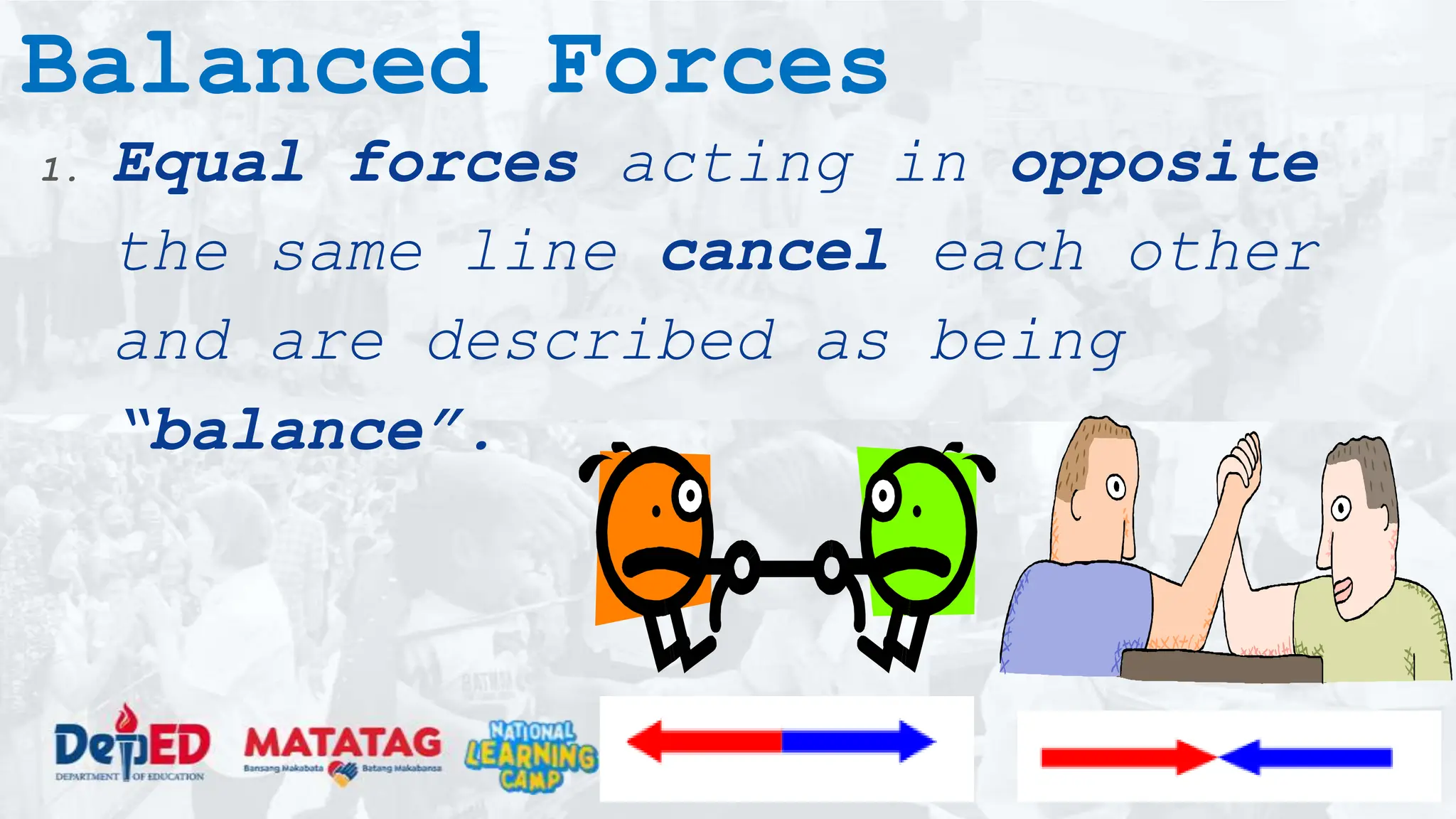
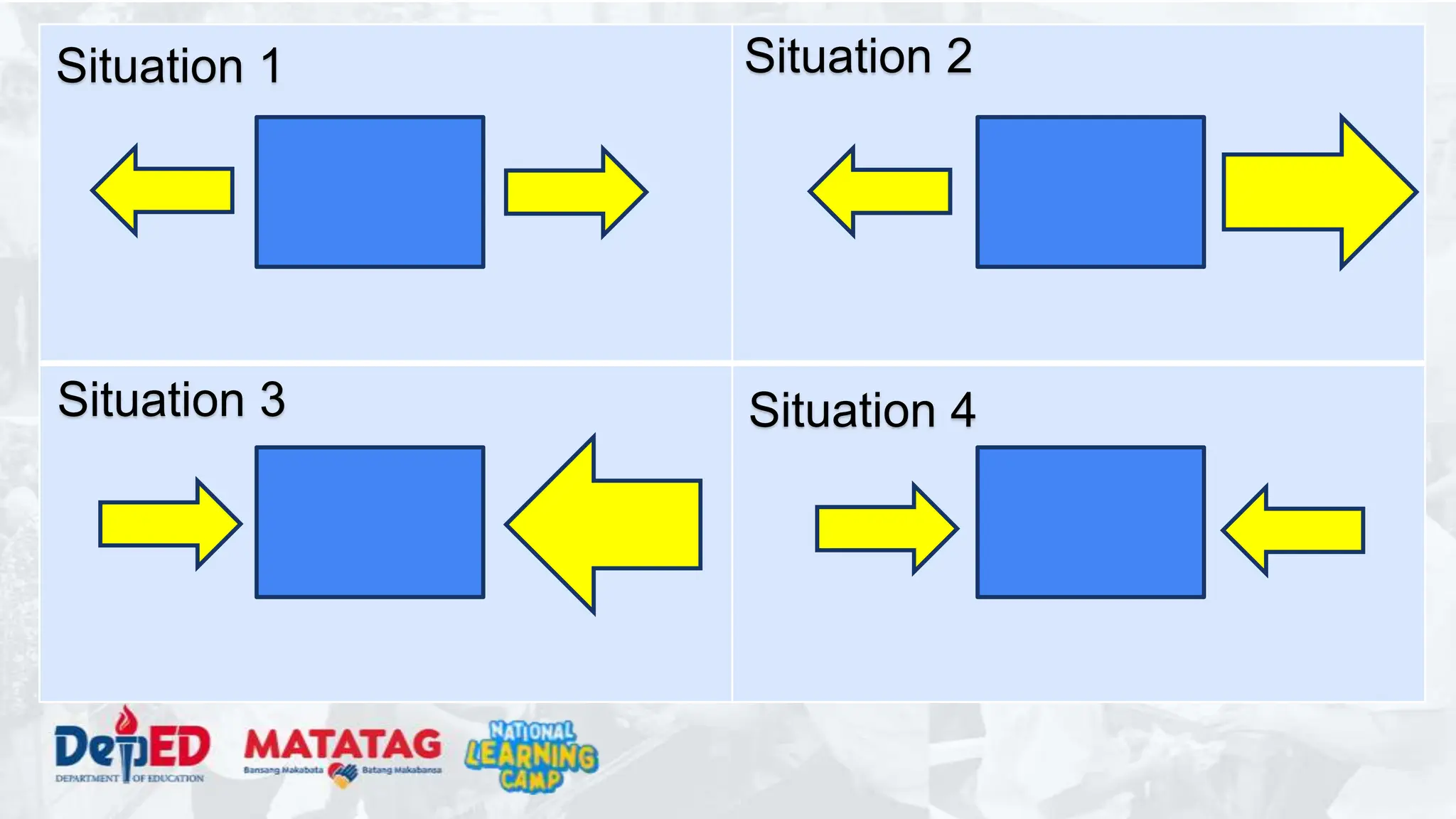
1. Equal forces acting in opposite
the same line cancel each other
and are described as being
“balance”.
Balanced Forces
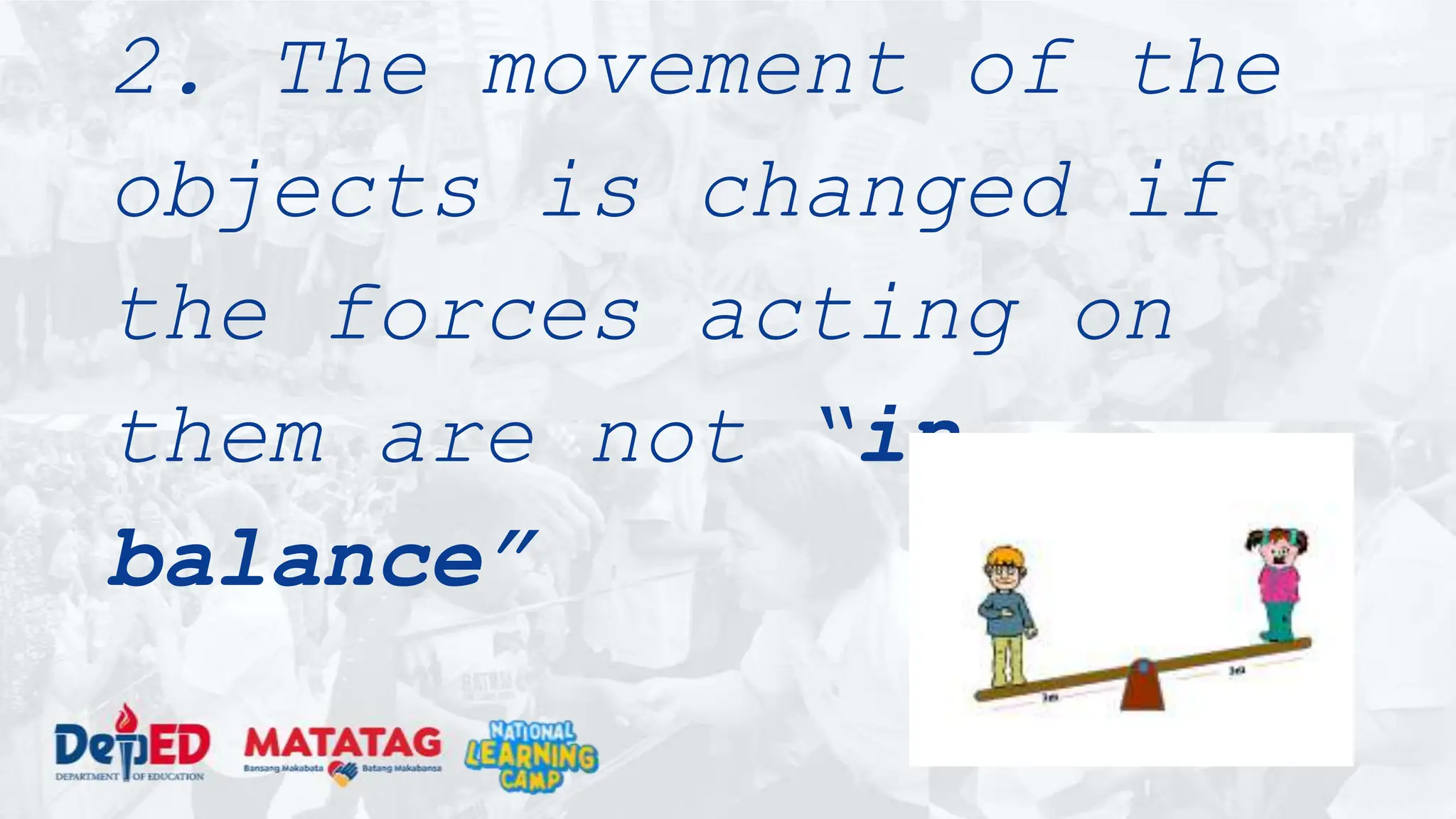
2. The movement of the
objects is changed if
the forces acting on
them are not “in
balance”
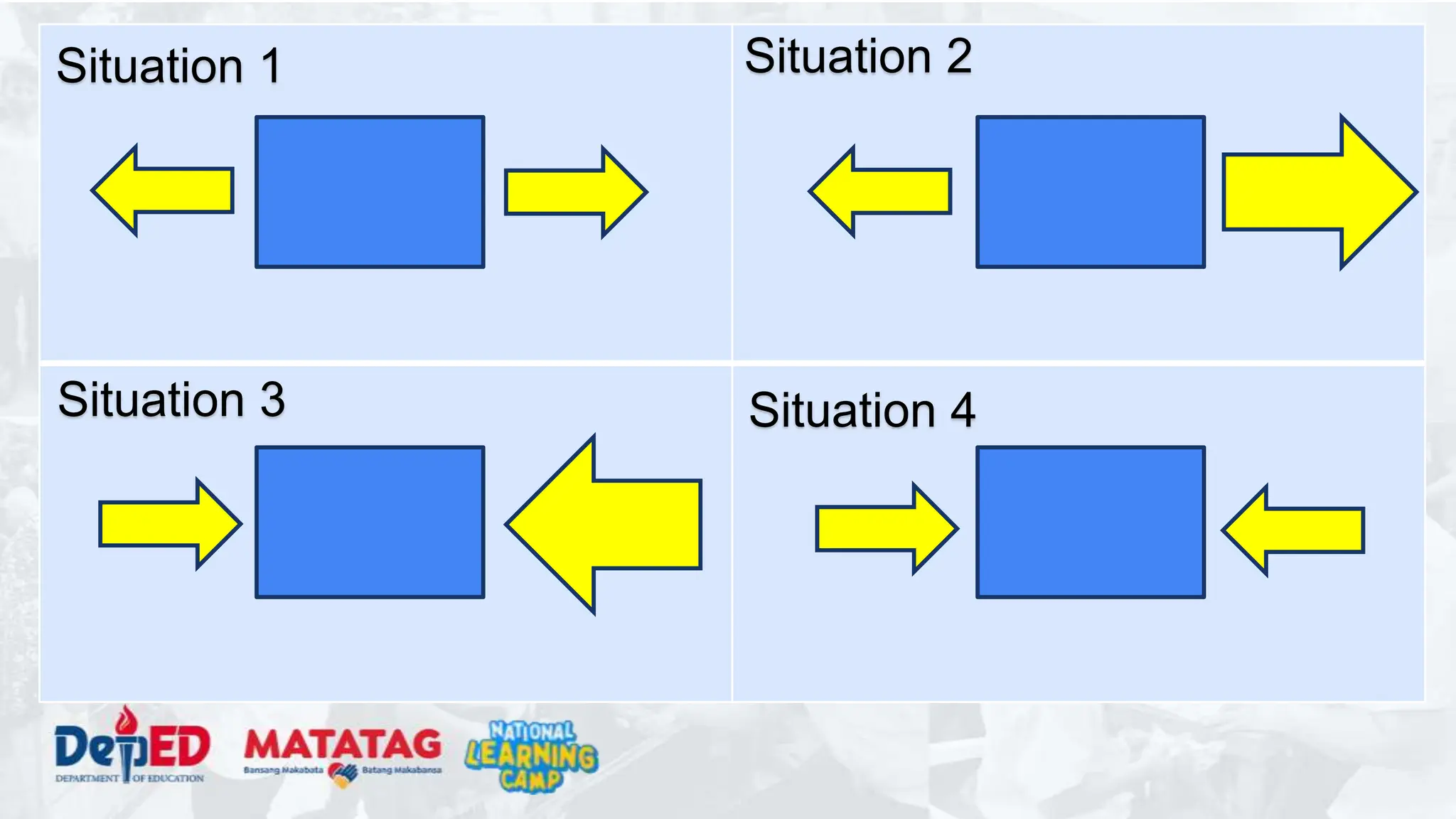
Situation 1
Situation 3
Situation 2
Situation 4
SCIENCE 8 Edition
1.You will be given 3 questions.
2. You have 30 seconds to answer each question.
3.After the given time, you will be given the chance to
share your answer in the class randomly.
4. For every correct answer, there will be a corresponding
POINTS.
Q1:
What does equal
forces mean?
The same sized
forces – two or more
Ᵽ1,000
Available balance:
P 1,000
Q2: What are
some ways that
the motion of
objects might be
changed?
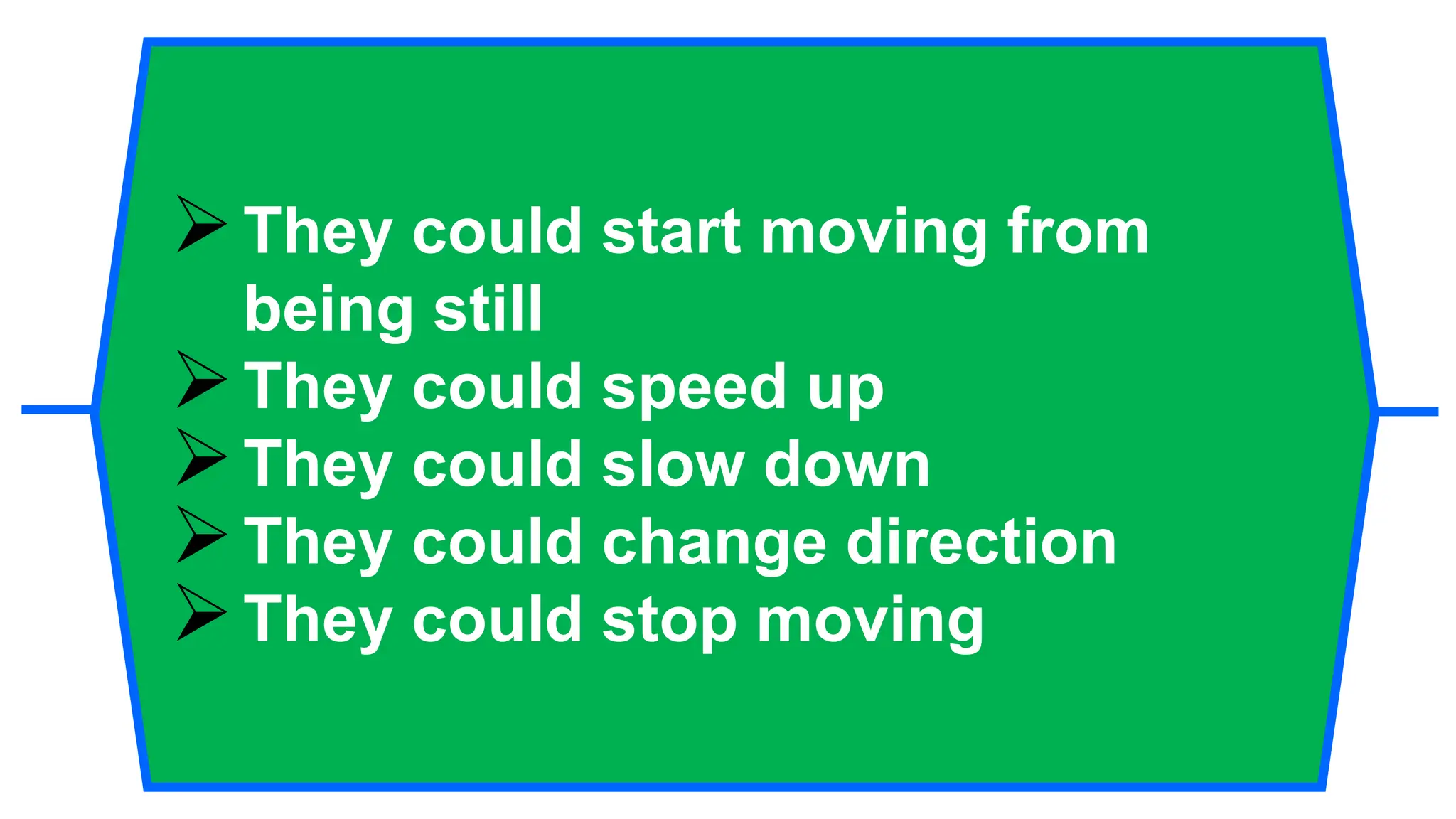
They could start moving from
being still
They could speed up
They could slow down
They could change direction
They could stop moving
Ᵽ3,000
Available balance:
P 4,000
Q3: What needs
to happen for a
force to change
an object’s
motion?
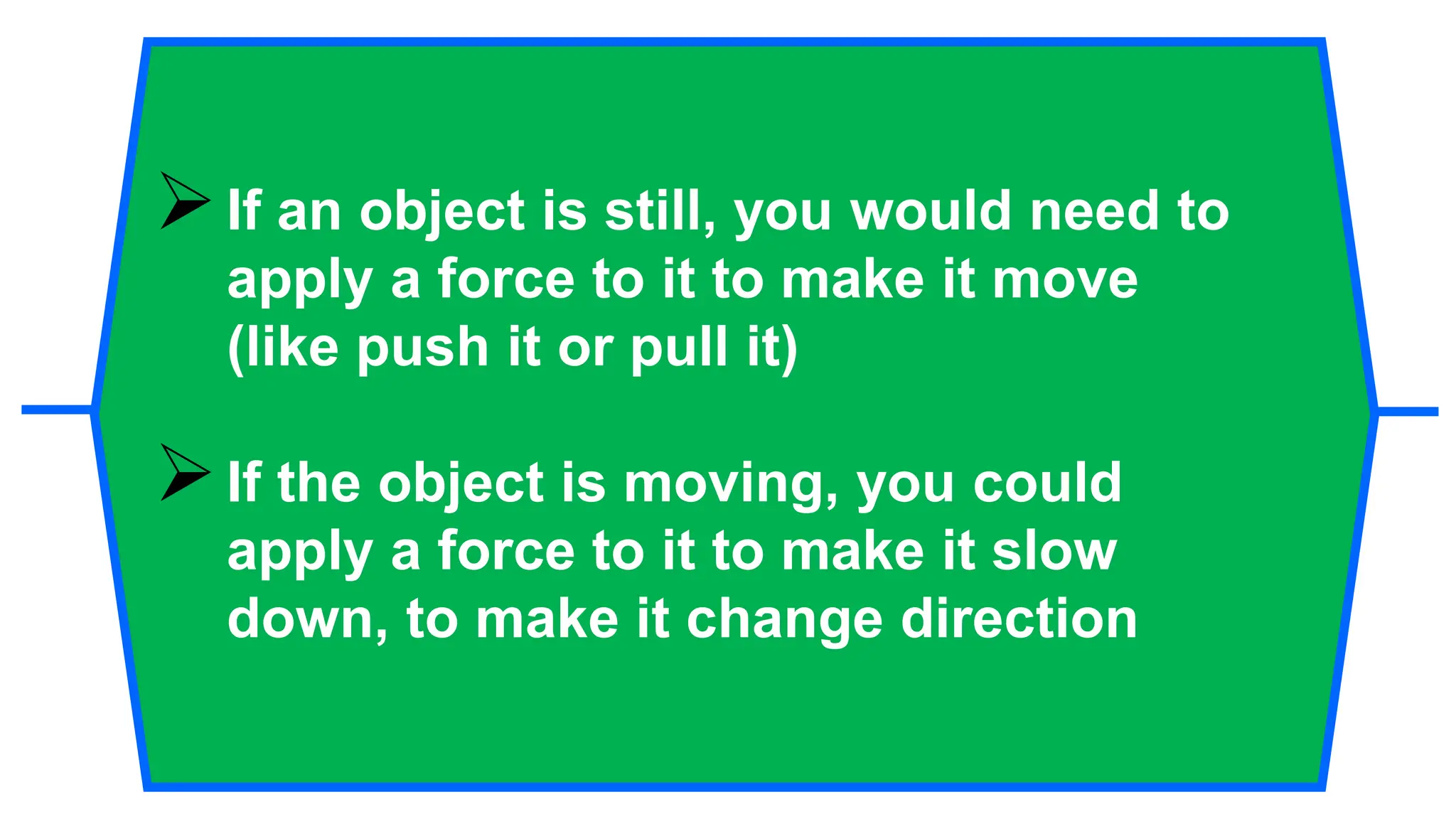
If an object is still, you would need to
apply a force to it to make it move
(like push it or pull it)
If the object is moving, you could
apply a force to it to make it slow
down, to make it change direction
Ᵽ5,000
Available balance:
P 9,000
Situation 1
Situation 3
Situation 2
Situation 4
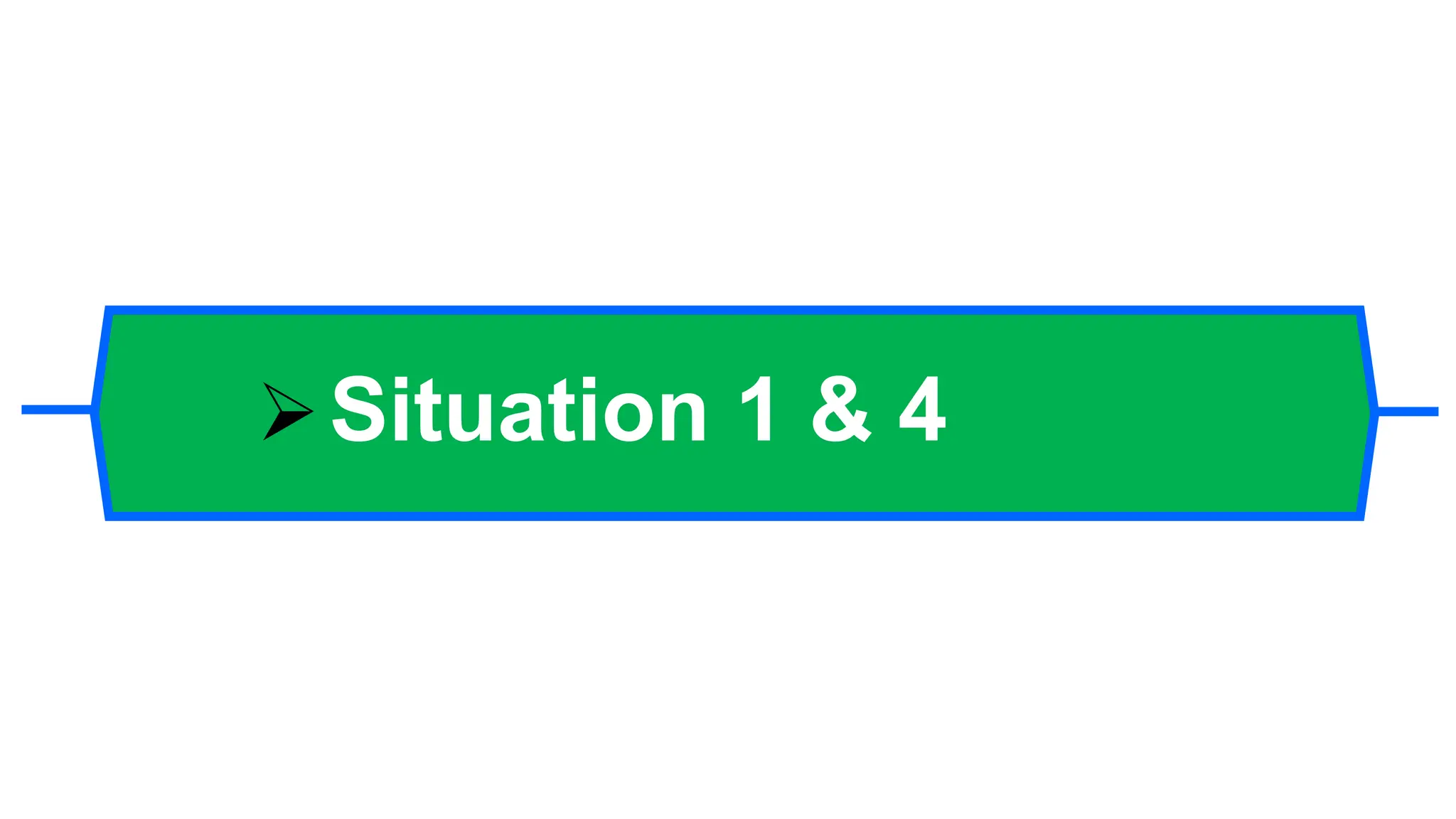
Situation 1 & 4
Ᵽ5,000
Available balance:
P 14,000
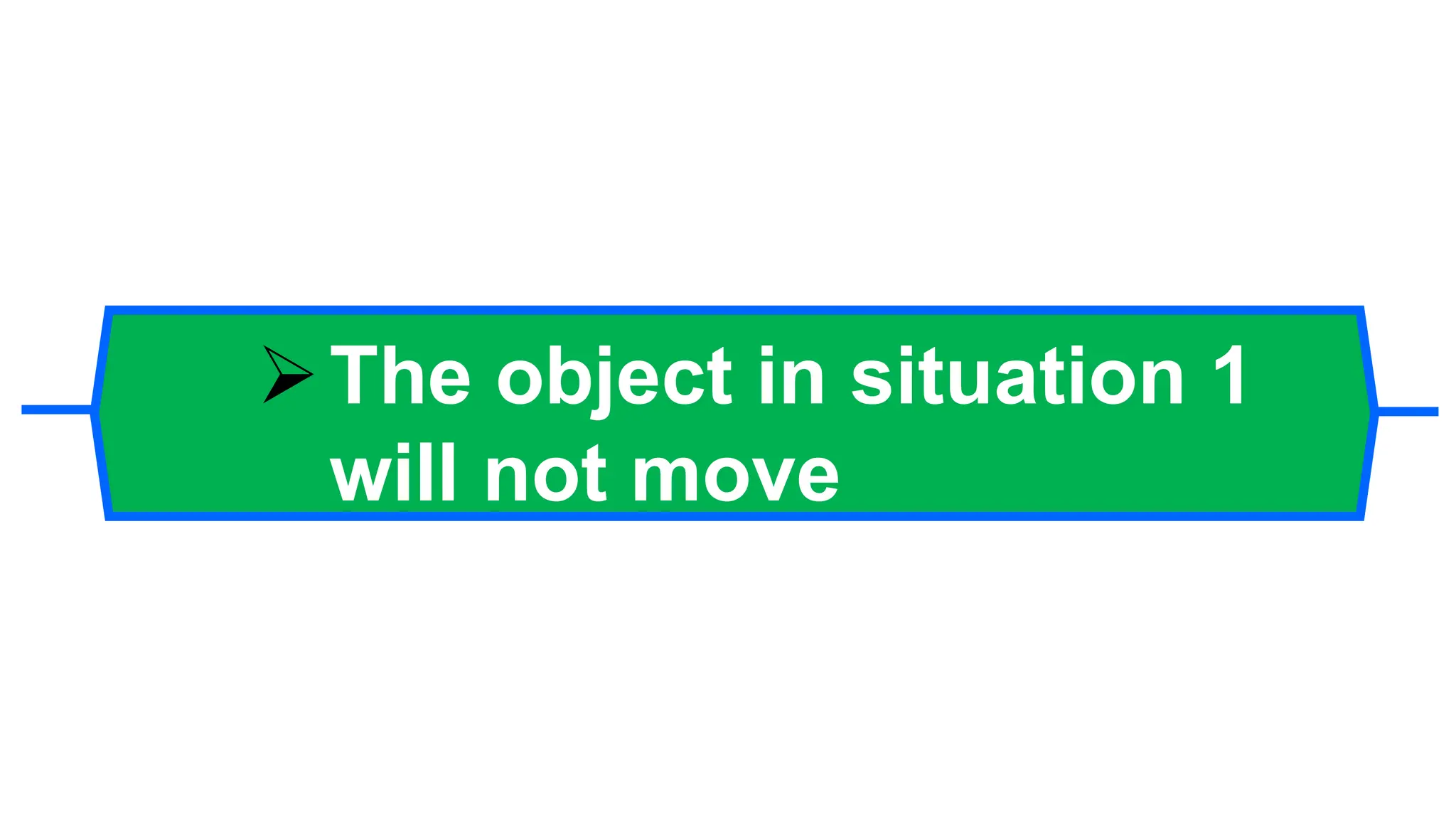
The object in situation 1
will not move
Ᵽ5,000
Available balance:
P 19,000
The object in situation 2
will move to the right
Ᵽ5,000
Available balance:
P 24,000
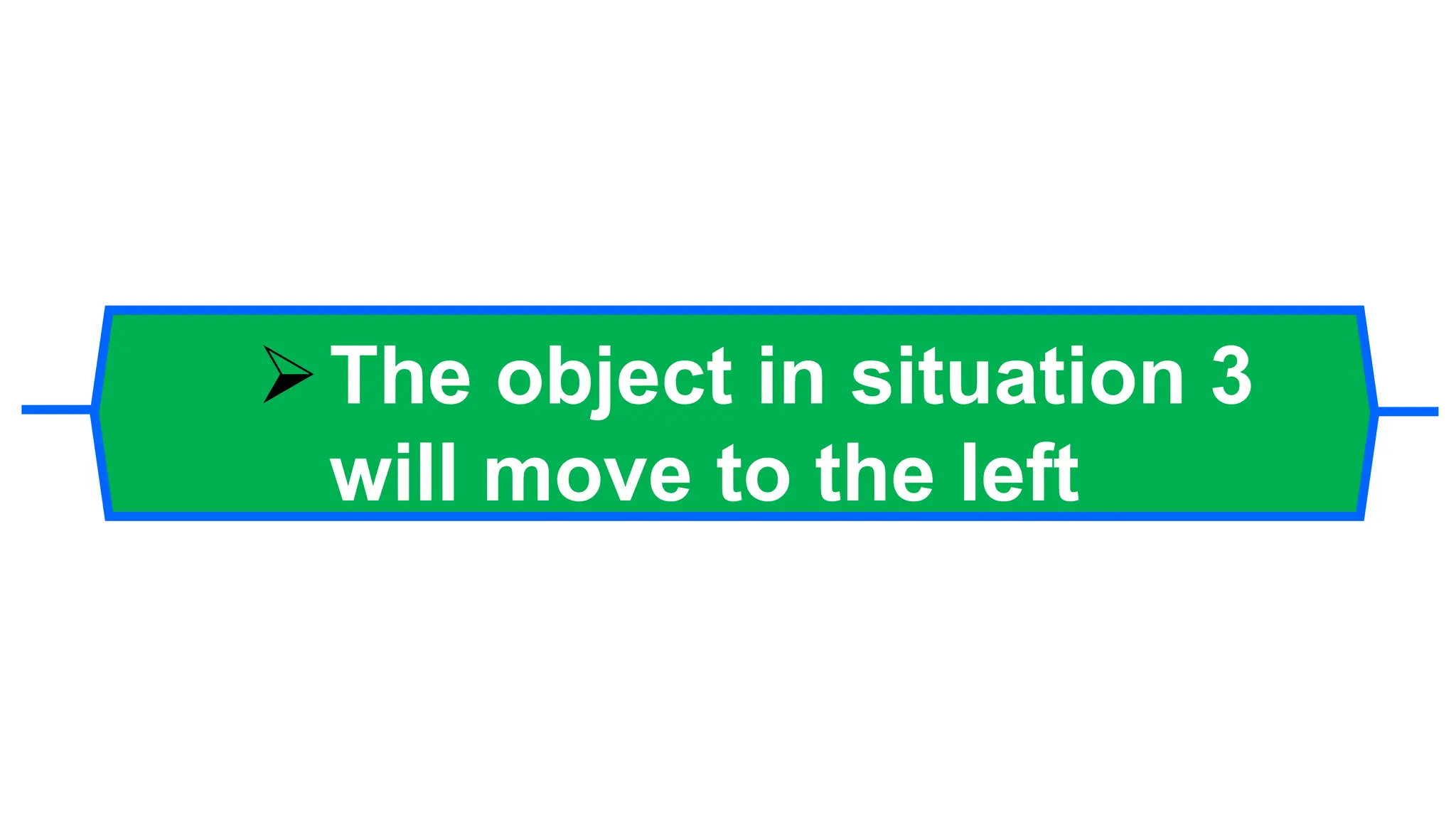
The object in situation 3
will move to the left
Ᵽ5,000
Available balance:
P 29,000
The object in situation 4
will not move
Ᵽ5,000
Available balance:
P 34,000
If the forces acting on an object are
balanced, the object will not move., or
If the forces acting on an object are
balanced, the object will move.
If there is not net force, the object will not
move.,
If there is a net force, the object will move
Ᵽ6,000
Available balance:
P 40,000
Lesson
Conclusion

BALANCED and UNBALANCED Forces - MOTION SCIENCE 8.pptx

Editor's Notes

  • #12 We want to be sure we know and understand about
  • #14 We want to be sure we know and understand about several separation techniques for mixtures
  • #15 We want to be sure we know and understand about several separation techniques for mixtures
  • #16 Refer students to the main lesson stimulus and read out the text. Ask students to reads the text to themselves.
  • #17 Here are two statements about forces and balance:
  • #18 Teacher read, then students. Ask the students if there are any words that they are not familiar with (or suggest examples such as, nails, shells, crystals) and give descriptions of any words that may be problematic.


  • #30 Now lets recall this
  • #49 Use flow diagrams to summarize the processes of separation and describe several separation techniques