BALANCE
SCORE CARD
BY:
ARJUN BHALLA
What is a Balanced Scorecard?
The Balanced Scorecard is a strategic
planning and management system used
to align business activities to the
vision and strategy of the organization
by monitoring performance against
strategic goals.
How is the Balanced Scorecard Used?
Translating the vision
Communicating and
linking
Feedback and learning
Business planning
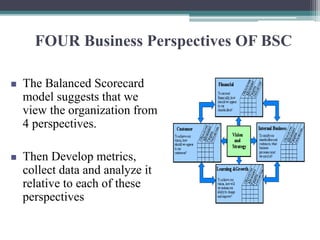
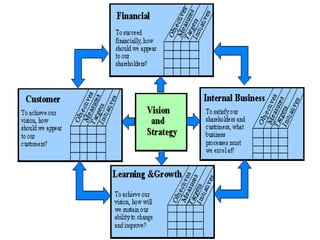
FOUR Business Perspectives OF BSC
 The Balanced Scorecard
model suggests that we
view the organization from
4 perspectives.
 Then Develop metrics,
collect data and analyze it
relative to each of these
perspectives
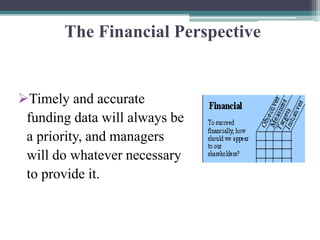
The Financial Perspective
Timely and accurate
funding data will always be
a priority, and managers
will do whatever necessary
to provide it.
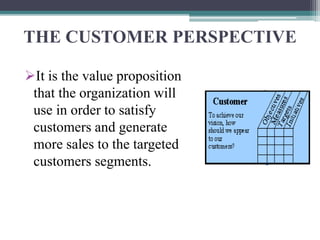
THE CUSTOMER PERSPECTIVE
It is the value proposition
that the organization will
use in order to satisfy
customers and generate
more sales to the targeted
customers segments.
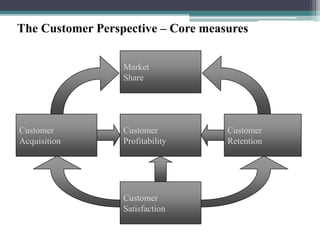
The Customer Perspective – Core measures
Market
Share
Customer
Retention
Customer
Profitability
Customer
Satisfaction
Customer
Acquisition
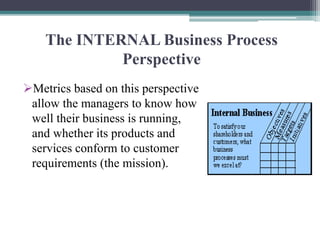
The INTERNAL Business Process
Perspective
Metrics based on this perspective
allow the managers to know how
well their business is running,
and whether its products and
services conform to customer
requirements (the mission).
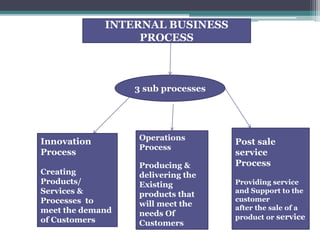
INTERNAL BUSINESS
PROCESS
3 sub processes
Innovation
Process
Creating
Products/
Services &
Processes to
meet the demand
of Customers
Operations
Process
Producing &
delivering the
Existing
products that
will meet the
needs Of
Customers
Post sale
service
Process
Providing service
and Support to the
customer
after the sale of a
product or service
The Learning & Growth Perspective
• Employee capabilities (core competencies and skills)
▫ Employees obtaining the skills necessary to support the
strategy.
• Information system capabilities
▫ Explore what information systems you might need to
execute your strategy effectively
• Strategy awareness and motivation
▫ Motivation and alignment issues by running the program
that will explain strategy to your employees and involve
them in the strategy execution.
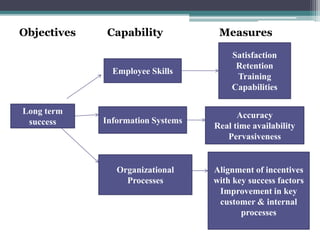
Objectives
Long term
success
Capability
Employee Skills
Information Systems
Organizational
Processes
Measures
Satisfaction
Retention
Training
Capabilities
Accuracy
Real time availability
Pervasiveness
Alignment of incentives
with key success factors
Improvement in key
customer & internal
processes
Scorecard Potential Pitfalls & Criticisms
 Lack of a well Defined Strategy
 The balanced scorecard relies on a well defined strategy and understanding
of linkages between strategic objections and metrics. Without this
foundation the implementation could fail.
 Too much focus on the lagging measures
 Focusing on only the lagging measures may cause a lack of priority or
opportunity for the leading measures.
 Use of Generic Metrics
 Don’t just copy metrics from another firm. Identify the measures that apply
to your strategy and competitive position .
 Self-serving managers
 Managers whose goal is to achieve a desired result in order to obtain a bonus
or other self reward.
Balance score card

Balance score card

  • 1.
  • 2.
    What is aBalanced Scorecard? The Balanced Scorecard is a strategic planning and management system used to align business activities to the vision and strategy of the organization by monitoring performance against strategic goals.
  • 3.
    How is theBalanced Scorecard Used? Translating the vision Communicating and linking Feedback and learning Business planning
  • 4.
    FOUR Business PerspectivesOF BSC  The Balanced Scorecard model suggests that we view the organization from 4 perspectives.  Then Develop metrics, collect data and analyze it relative to each of these perspectives
  • 6.
    The Financial Perspective Timelyand accurate funding data will always be a priority, and managers will do whatever necessary to provide it.
  • 8.
    THE CUSTOMER PERSPECTIVE Itis the value proposition that the organization will use in order to satisfy customers and generate more sales to the targeted customers segments.
  • 9.
    The Customer Perspective– Core measures Market Share Customer Retention Customer Profitability Customer Satisfaction Customer Acquisition
  • 10.
    The INTERNAL BusinessProcess Perspective Metrics based on this perspective allow the managers to know how well their business is running, and whether its products and services conform to customer requirements (the mission).
  • 11.
    INTERNAL BUSINESS PROCESS 3 subprocesses Innovation Process Creating Products/ Services & Processes to meet the demand of Customers Operations Process Producing & delivering the Existing products that will meet the needs Of Customers Post sale service Process Providing service and Support to the customer after the sale of a product or service
  • 12.
    The Learning &Growth Perspective • Employee capabilities (core competencies and skills) ▫ Employees obtaining the skills necessary to support the strategy. • Information system capabilities ▫ Explore what information systems you might need to execute your strategy effectively • Strategy awareness and motivation ▫ Motivation and alignment issues by running the program that will explain strategy to your employees and involve them in the strategy execution.
  • 13.
    Objectives Long term success Capability Employee Skills InformationSystems Organizational Processes Measures Satisfaction Retention Training Capabilities Accuracy Real time availability Pervasiveness Alignment of incentives with key success factors Improvement in key customer & internal processes
  • 14.
    Scorecard Potential Pitfalls& Criticisms  Lack of a well Defined Strategy  The balanced scorecard relies on a well defined strategy and understanding of linkages between strategic objections and metrics. Without this foundation the implementation could fail.  Too much focus on the lagging measures  Focusing on only the lagging measures may cause a lack of priority or opportunity for the leading measures.  Use of Generic Metrics  Don’t just copy metrics from another firm. Identify the measures that apply to your strategy and competitive position .  Self-serving managers  Managers whose goal is to achieve a desired result in order to obtain a bonus or other self reward.