Genome Sequencing Project:
Bacillus thuringiensis MCMY1
Research Collaboration with
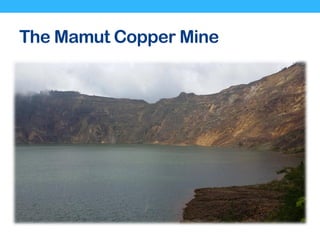
The Mamut Copper Mine
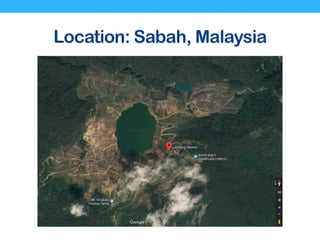
Location: Sabah, Malaysia
Research Questions
• What are the genetic mechanisms which enable
microbes to adapt to acid mine drainage?
• Is there evidence of horizontal gene transfer?
• What are the specific genetic features associated
with tolerance to acid and metal ions?
Objectives
• Isolation of microbes.
• Screening for copper tolerant species.
• Biochemical characterization.
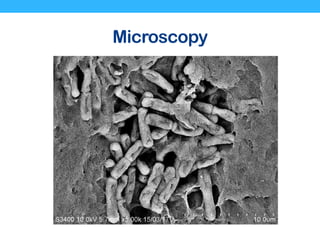
• Morphological characterization.
• Genome sequencing and analysis.
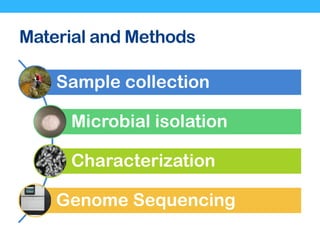
Material and Methods
Sample collection
Microbial isolation
Characterization
Genome Sequencing
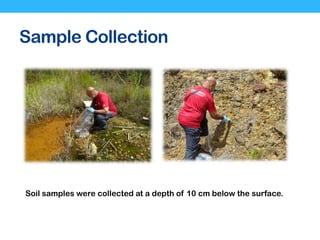
Sample Collection
Soil samples were collected at a depth of 10 cm below the surface.
This study focused of B. thuringiensis
• Molecular ribotyping based on the 16S rRNA
sequence was used to identify an isolated bacterium
which was tolerant to copper.
• The bacterium was identified :Bacillus thuringiensis.
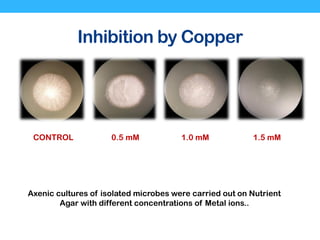
Inhibition by Copper
CONTROL 0.5 mM 1.0 mM 1.5 mM
Axenic cultures of isolated microbes were carried out on Nutrient
Agar with different concentrations of Metal ions..
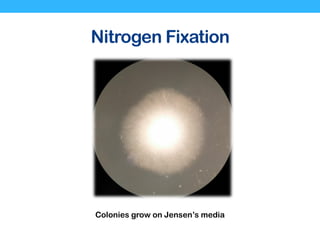
Nitrogen Fixation
Colonies grow on Jensen’s media
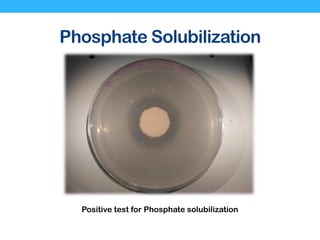
Phosphate Solubilization
Positive test for Phosphate solubilization
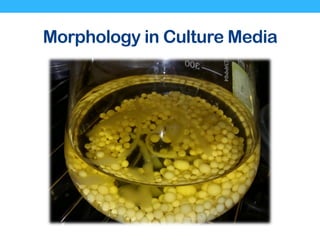
Morphology in Culture Media
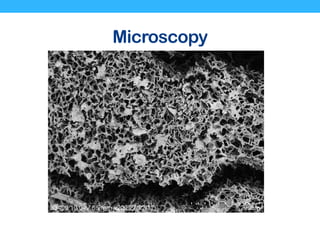
Microscopy
Microscopy
Genome Sequencing
Pacific Biosciences RS2
Single Molecule Real Time (SMRT) Sequencer.
Genome Data
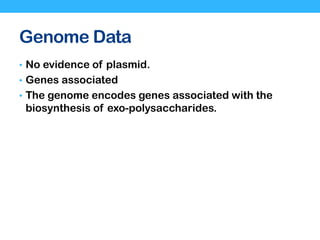
• No evidence of plasmid.
• Genes associated
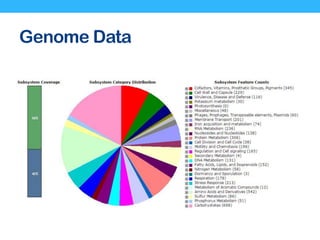
• The genome encodes genes associated with the
biosynthesis of exo-polysaccharides.
Genome Data
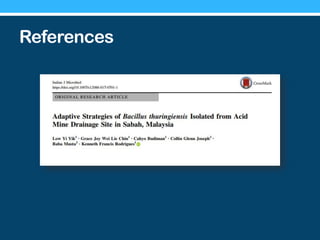
References
Acknowledgements
This research was funded by the Ministry of Higher
Education, Government of Malaysia, Research Grant
No. FRGS0455
Permission to conduct sampling at the Mamut Copper
Mine site was obtained from the Department of Mines

BACTERIAL GENOME SEQUENCING PROJECT