NEEDS OF POULTRY BACKYARD
FARMING
Submitted by:-
Alok Sharan
I.D- V 2002
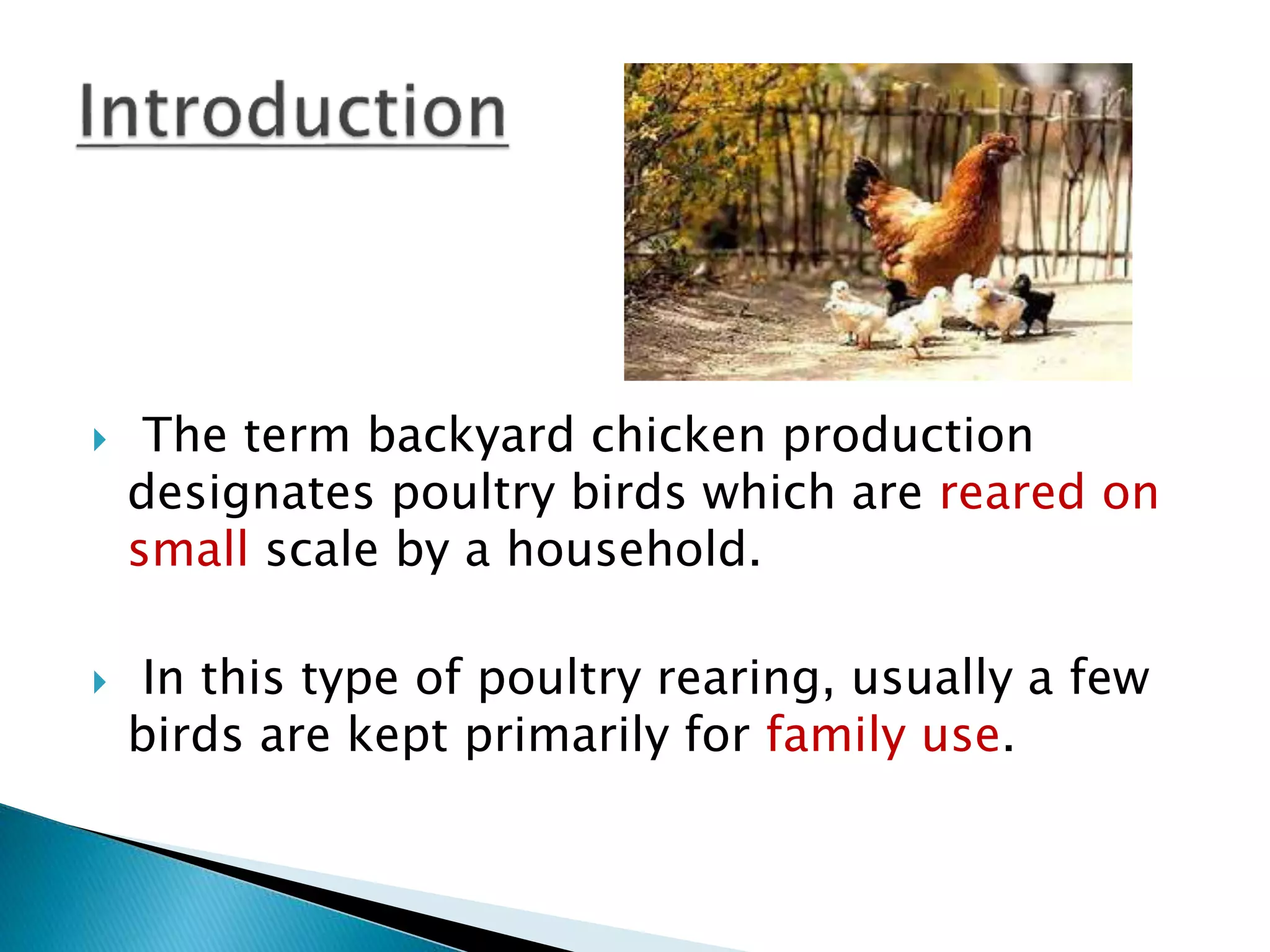
 The term backyard chicken production
designates poultry birds which are reared on
small scale by a household.
 In this type of poultry rearing, usually a few
birds are kept primarily for family use.
Contd…
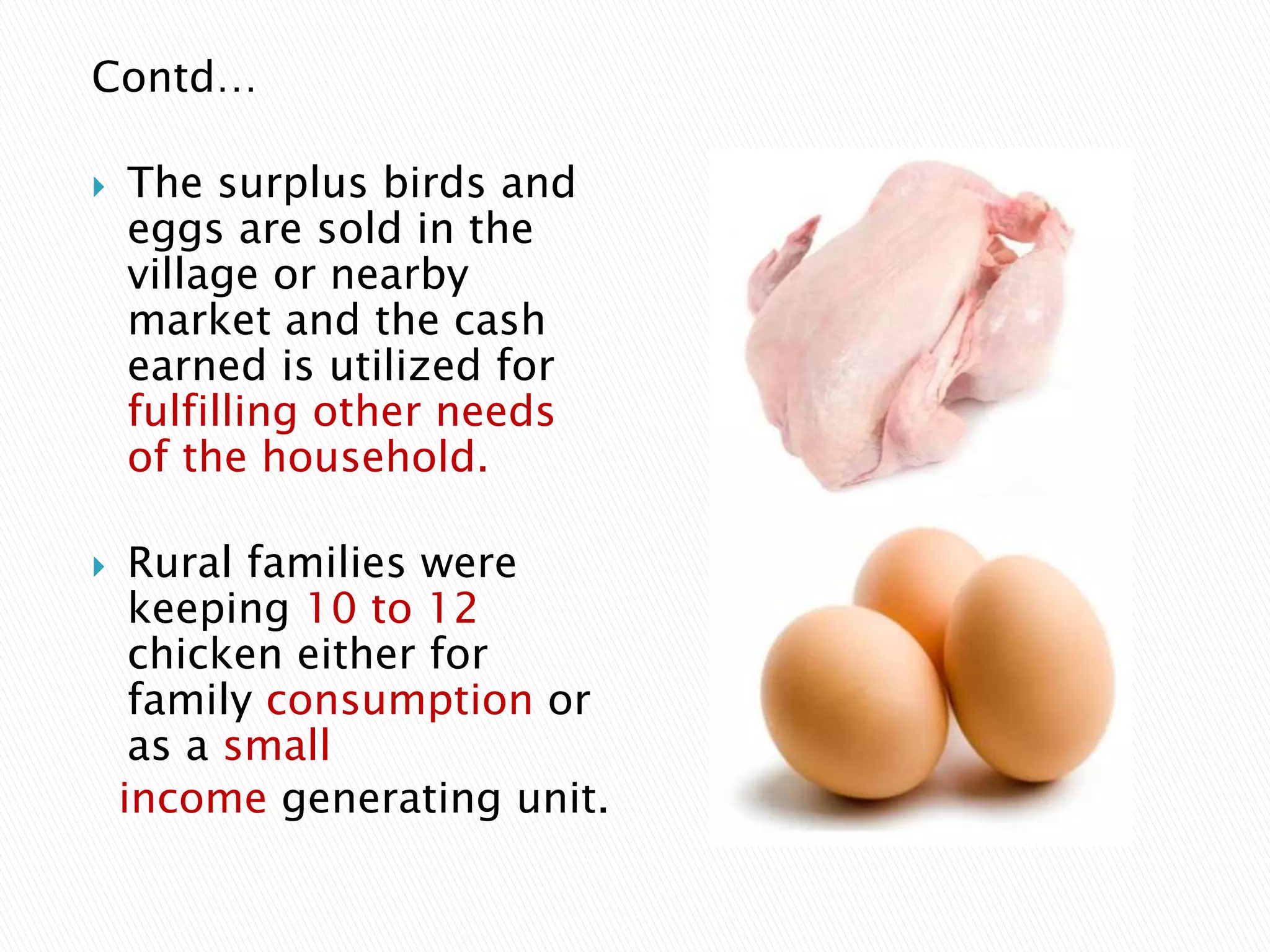
 The surplus birds and
eggs are sold in the
village or nearby
market and the cash
earned is utilized for
fulfilling other needs
of the household.
 Rural families were
keeping 10 to 12
chicken either for
family consumption or
as a small
income generating unit.
 Backyard chicken
production is an
important aspect of
poultry farming on
small scale.
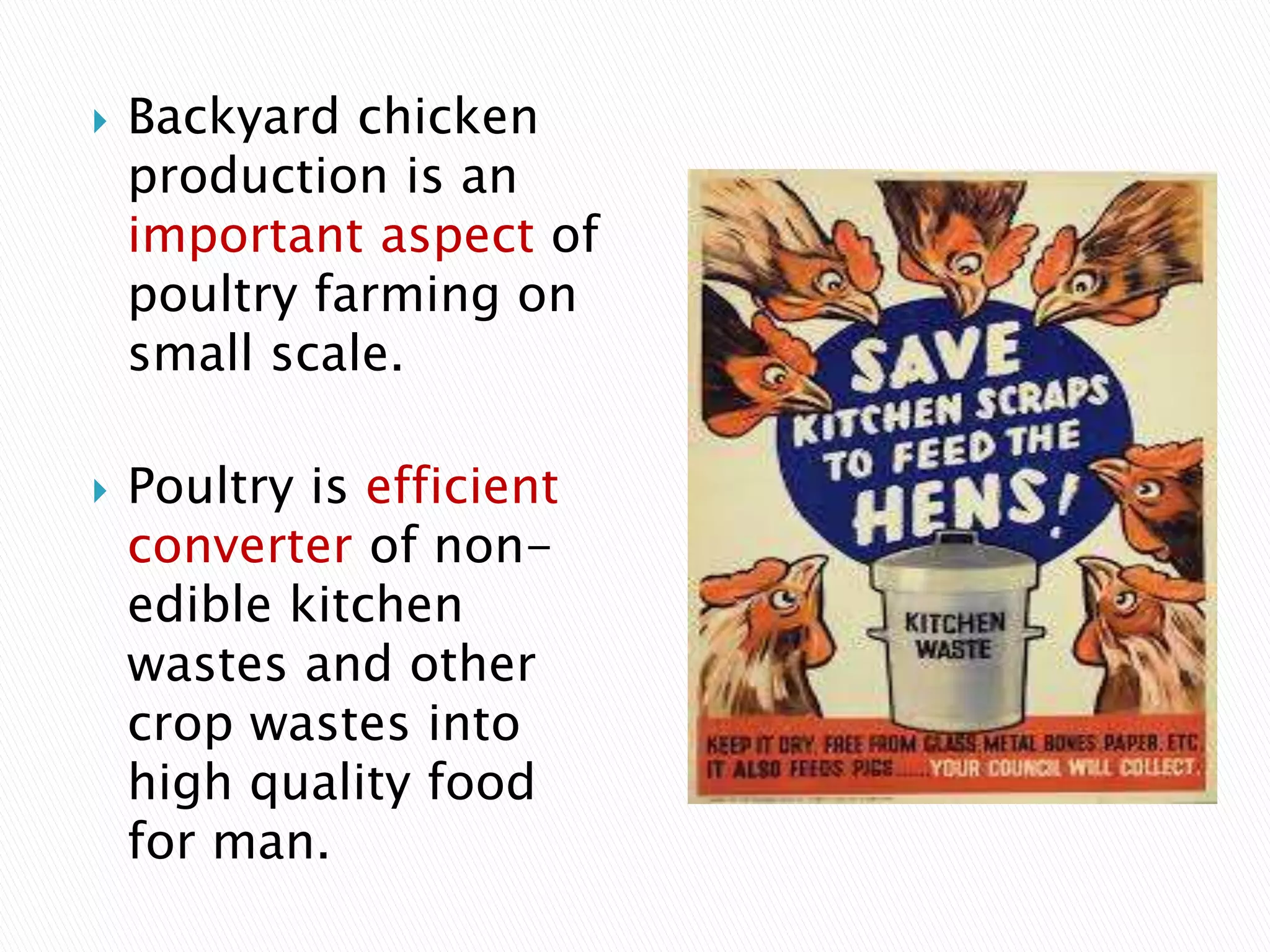
 Poultry is efficient
converter of non-
edible kitchen
wastes and other
crop wastes into
high quality food
for man.
 Backyard household chicken production is
very popular in many parts of the world,
particularly in the developing countries,
where most of the population resides in rural
areas.
 Most of the third world countries, poultry was
kept on small farms under extensive
management system which considerably
contributed to the cash income of the rural
families.
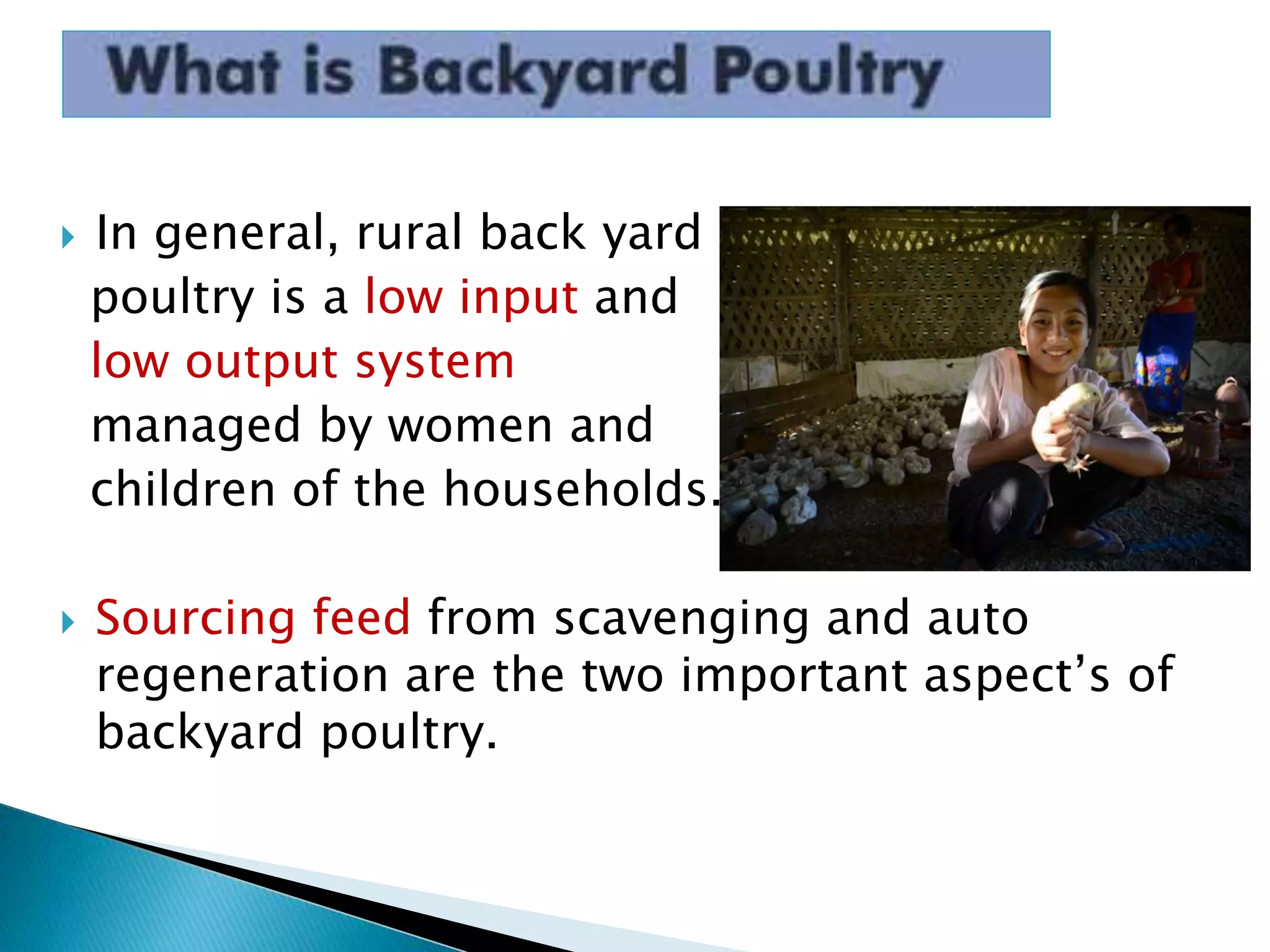
 In general, rural back yard
poultry is a low input and
low output system
managed by women and
children of the households.
 Sourcing feed from scavenging and auto
regeneration are the two important aspect’s of
backyard poultry.
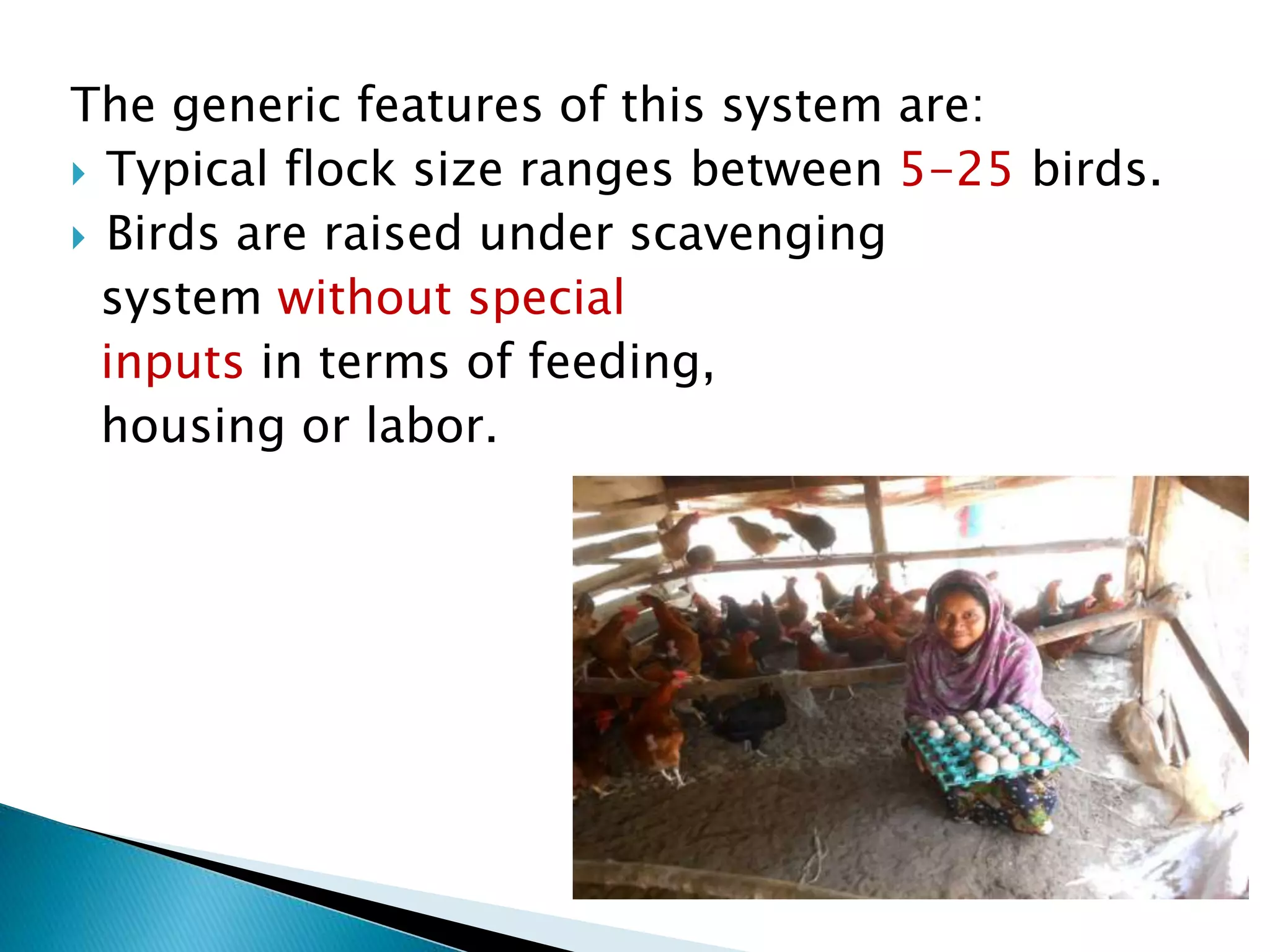
The generic features of this system are:
 Typical flock size ranges between 5-25 birds.
 Birds are raised under scavenging
system without special
inputs in terms of feeding,
housing or labor.
 Mainly local birds are reared although there
are specific/specialized indigenous breeds in
some geographical areas. These breeds
represent a rich source of disease resistant
germplasm.
 The system auto regenerates as the chicks
are usually obtained by hatching locally.
 In most of the cases, egg produced are for
home consumption or for limited trade within
the village.
 Production performances of these birds is
about 40-60 eggs/annum and 1-1.5 kg meat
at the end of production cycle.
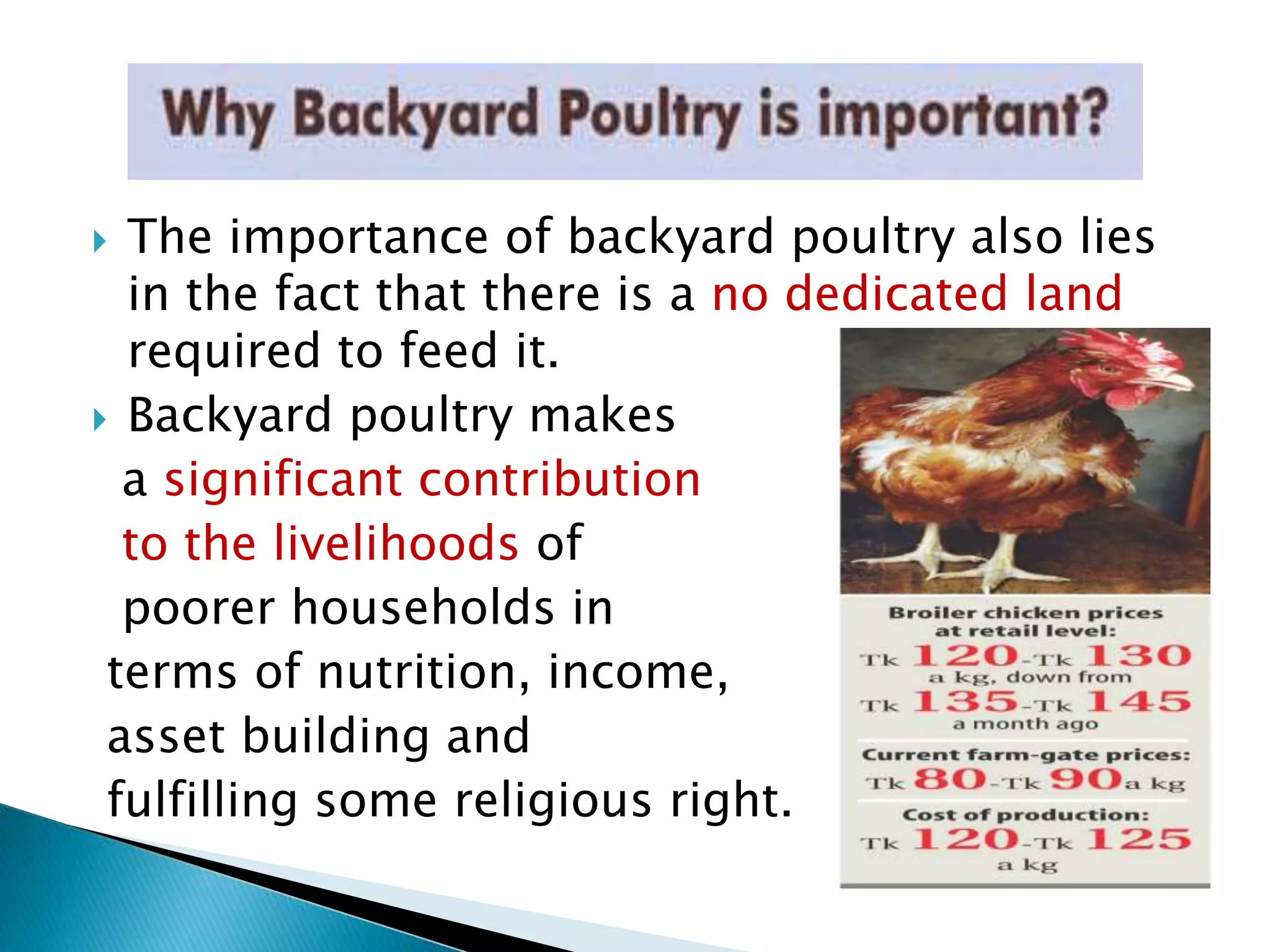
 The importance of backyard poultry also lies
in the fact that there is a no dedicated land
required to feed it.
 Backyard poultry makes
a significant contribution
to the livelihoods of
poorer households in
terms of nutrition, income,
asset building and
fulfilling some religious right.
 It is a liquid asset that can be sold quickly to
meet any emergency cash needs of poorer
family.
 Backyard poultry provides supplementary
incomes, mostly in the hands of women.
 These incomes and assets are essential
supplements for surviving droughts, at least
for the people at the margin.
 Well managed backyard poultry can easily
give returns almost equal to an acre of dry
land!
 1. Protection
 2. Adequate Space
 3. Easy Access to Feed and Water
 4. Source of Light
 5. Ventilation
 6. Appearance
 7. Use Common Sense
 A good poultry house protects the birds from
the elements (weather), predators, injury and
theft.
 Poultry require a dry, draft-free house.
 Build the coop on high, well-drained areas.
 Face the front of the coop, the windows and
outside run to the south which allows the sun
to warm and dry the coop and soil.
 Keeping poultry totally confined to together
with fence and covered runs are your best
protection from predators.
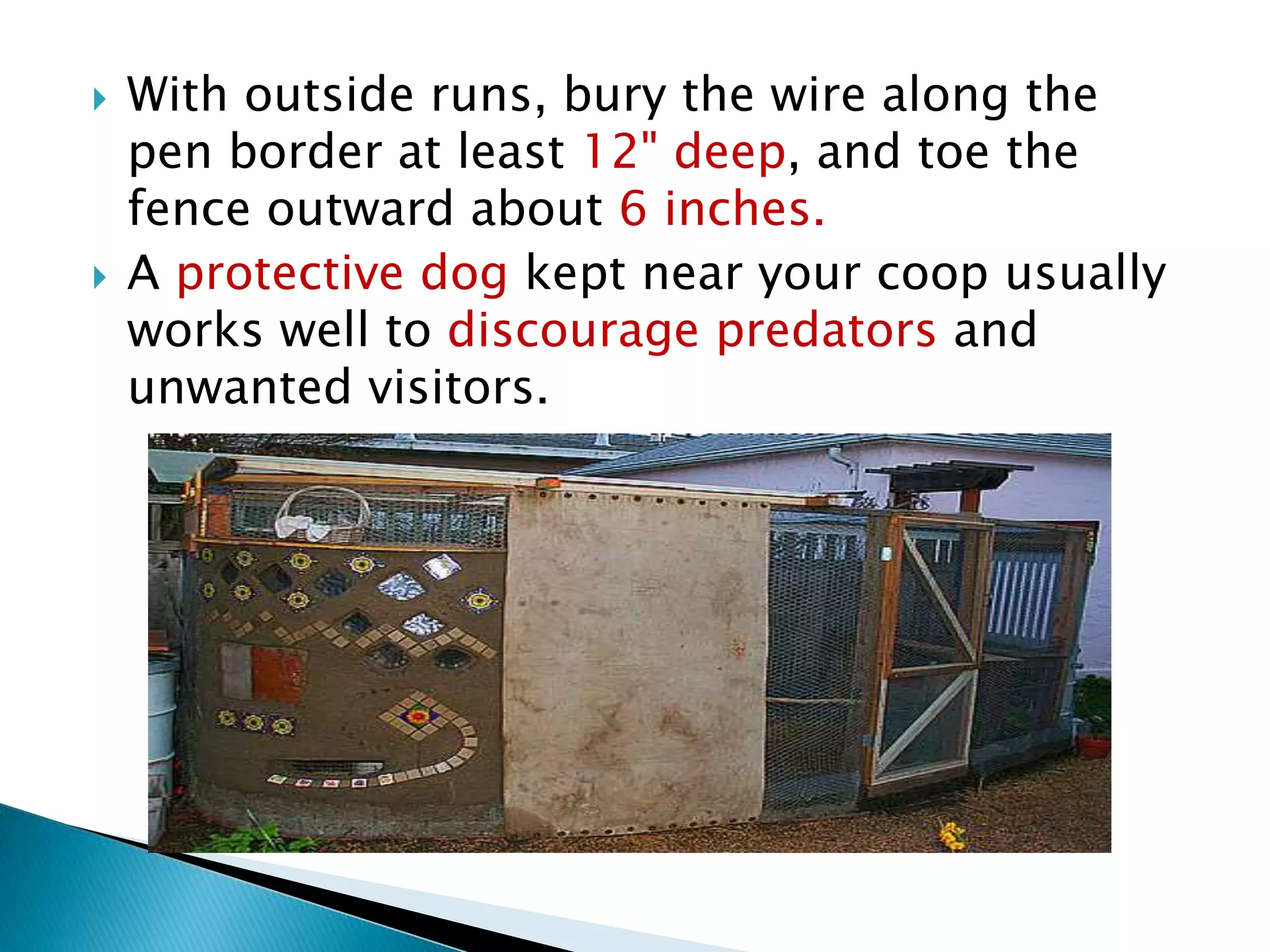
 With outside runs, bury the wire along the
pen border at least 12" deep, and toe the
fence outward about 6 inches.
 A protective dog kept near your coop usually
works well to discourage predators and
unwanted visitors.
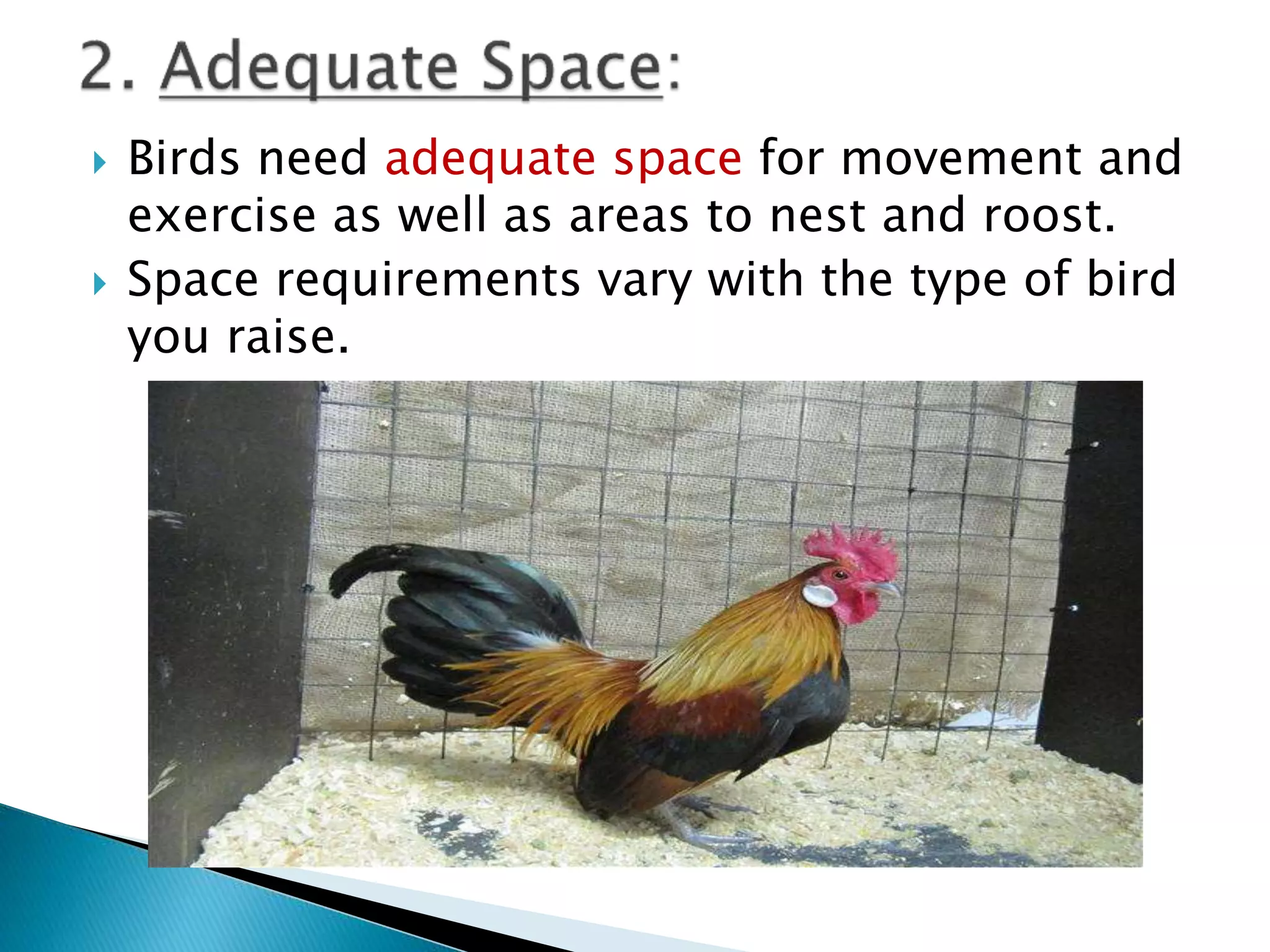
 Birds need adequate space for movement and
exercise as well as areas to nest and roost.
 Space requirements vary with the type of bird
you raise.
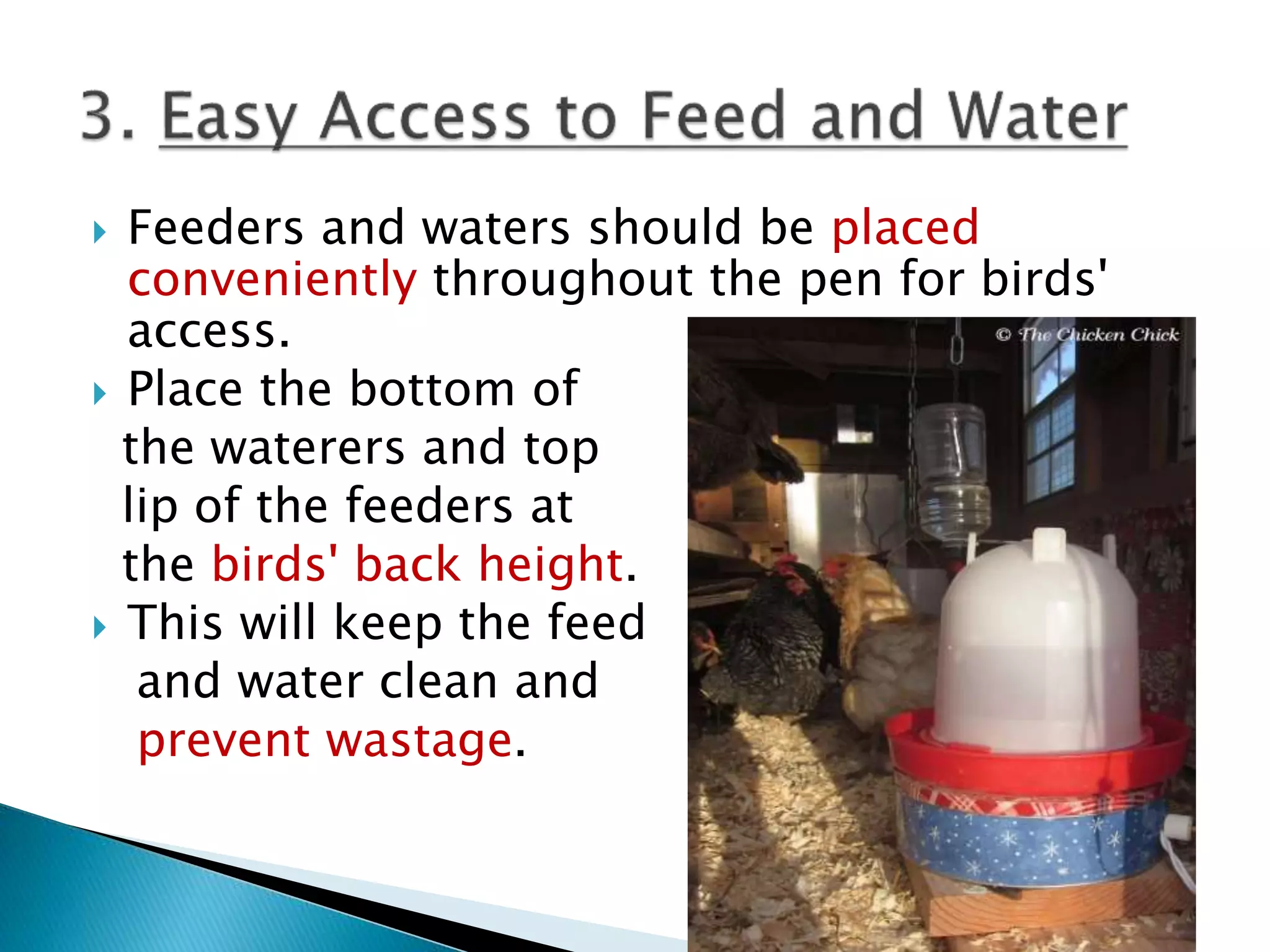
 Feeders and waters should be placed
conveniently throughout the pen for birds'
access.
 Place the bottom of
the waterers and top
lip of the feeders at
the birds' back height.
 This will keep the feed
and water clean and
prevent wastage.
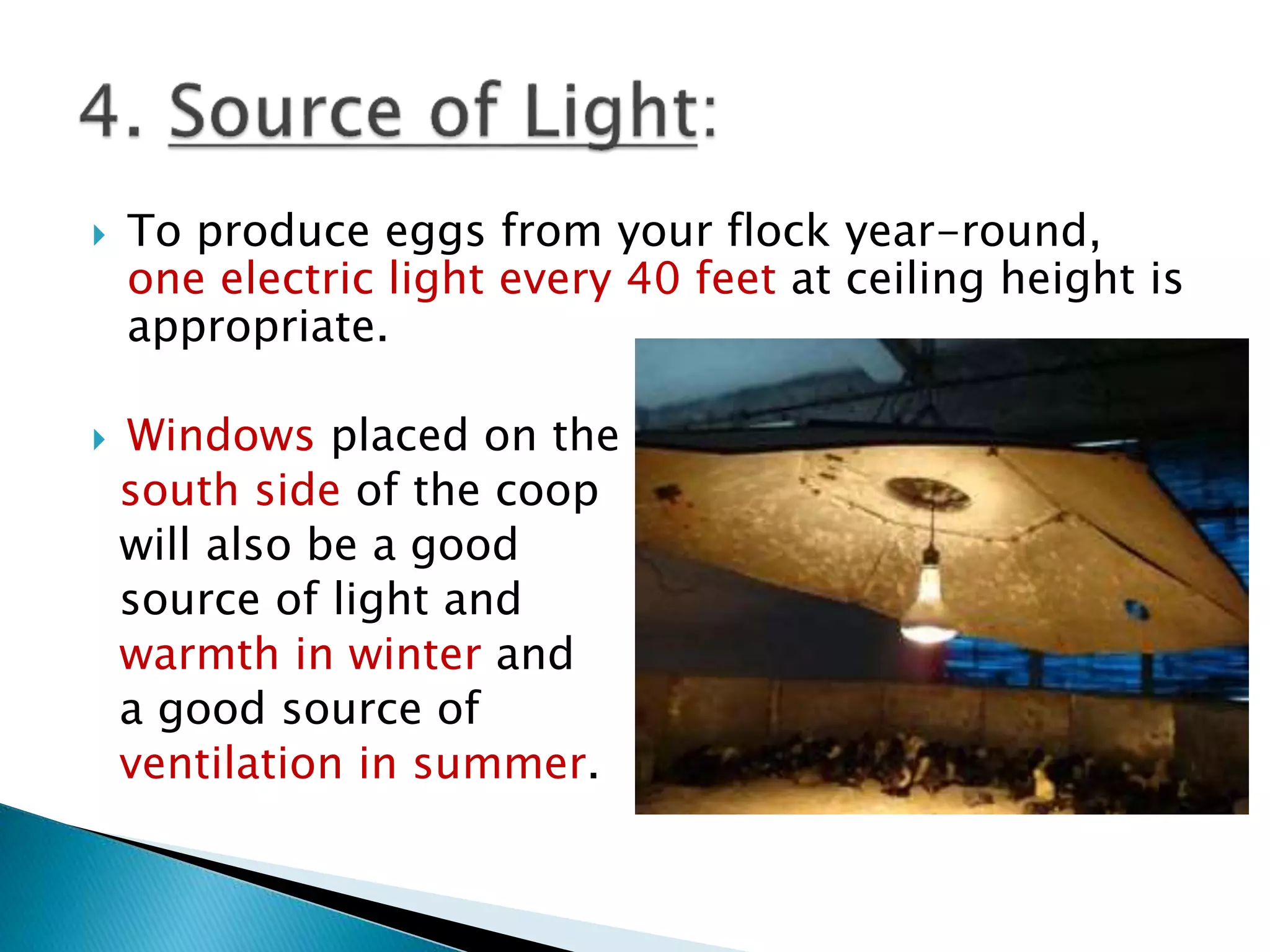
 To produce eggs from your flock year-round,
one electric light every 40 feet at ceiling height is
appropriate.
 Windows placed on the
south side of the coop
will also be a good
source of light and
warmth in winter and
a good source of
ventilation in summer.
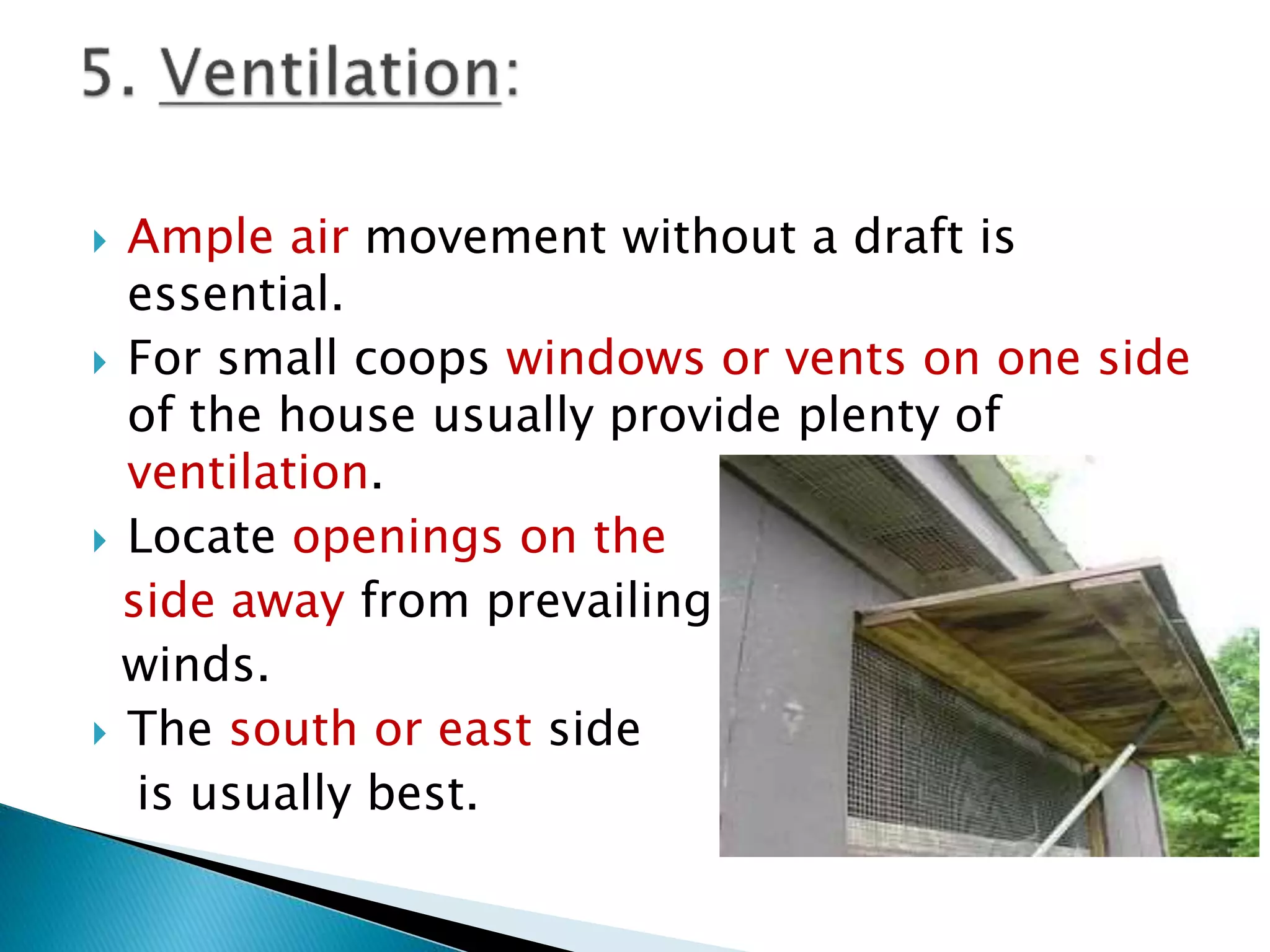
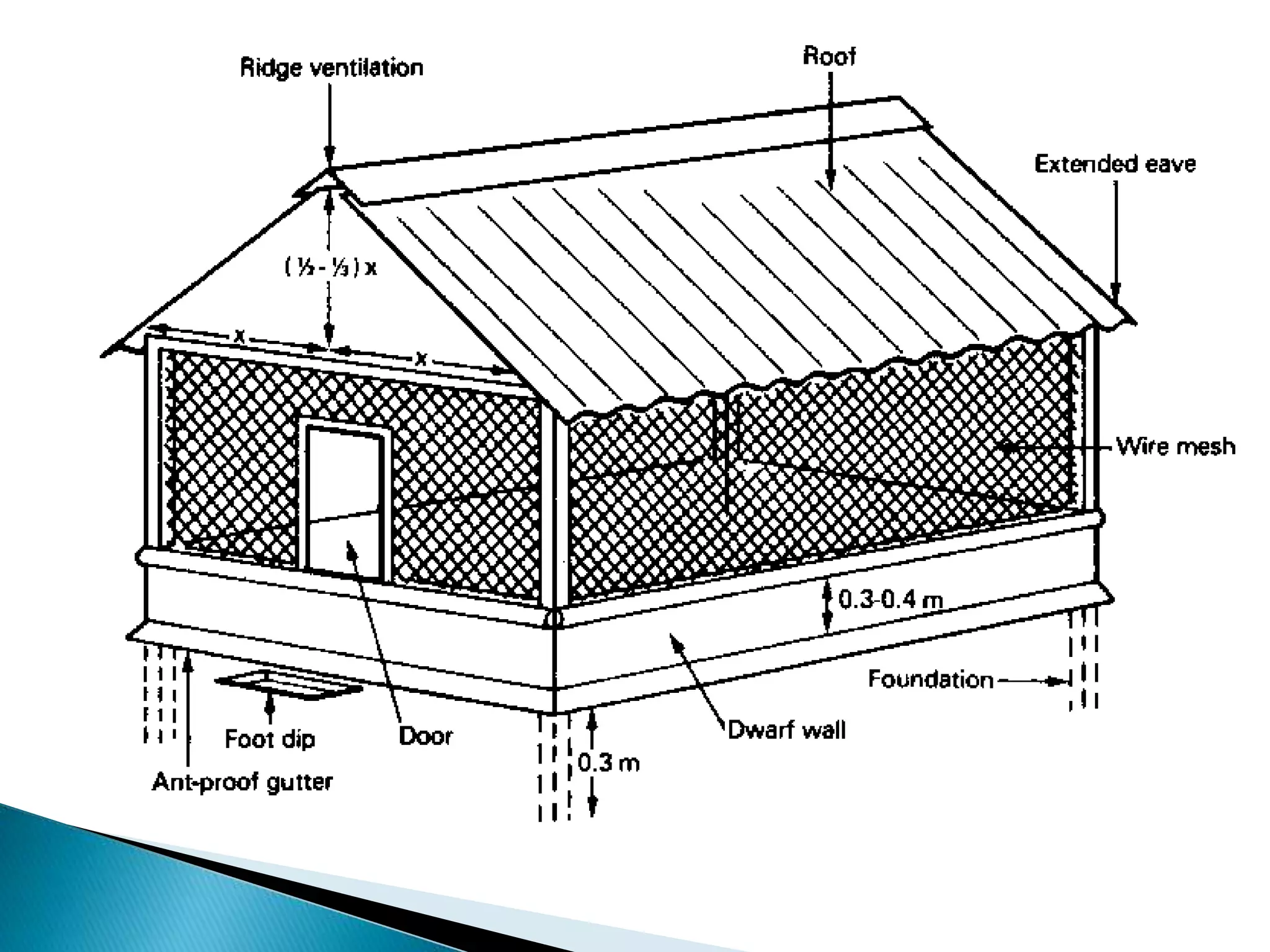
 Ample air movement without a draft is
essential.
 For small coops windows or vents on one side
of the house usually provide plenty of
ventilation.
 Locate openings on the
side away from prevailing
winds.
 The south or east side
is usually best.
 Exteriors of structures should be kept painted
and well-maintained.
 Weeds and trash should be removed from
around all facilities.
 Proper landscaping can provide screening and
also help muffle sounds from the birds.
 Build the roof high enough and situate such
permanent structures as nests, roosts, and
feeders for easy access and to make it easier
to clean all areas of the house.
 Install doors so that they open inward.
 Use building materials which will be easy to
clean and disinfect.
 Slightly sloping the floor toward the door can
help prevent puddling in the building.
Reference :-
Strengthening the backyard poultry [a
article by Experiences of AP Drought
Adaptation Initiative (AP DAI)].
Wikipedia
Poultry Production ( by Professor R. A.
SINGH)
back yard farming

back yard farming

  • 1.
    NEEDS OF POULTRYBACKYARD FARMING Submitted by:- Alok Sharan I.D- V 2002
  • 2.
     The termbackyard chicken production designates poultry birds which are reared on small scale by a household.  In this type of poultry rearing, usually a few birds are kept primarily for family use.
  • 3.
    Contd…  The surplusbirds and eggs are sold in the village or nearby market and the cash earned is utilized for fulfilling other needs of the household.  Rural families were keeping 10 to 12 chicken either for family consumption or as a small income generating unit.
  • 4.
     Backyard chicken productionis an important aspect of poultry farming on small scale.  Poultry is efficient converter of non- edible kitchen wastes and other crop wastes into high quality food for man.
  • 5.
     Backyard householdchicken production is very popular in many parts of the world, particularly in the developing countries, where most of the population resides in rural areas.  Most of the third world countries, poultry was kept on small farms under extensive management system which considerably contributed to the cash income of the rural families.
  • 6.
     In general,rural back yard poultry is a low input and low output system managed by women and children of the households.  Sourcing feed from scavenging and auto regeneration are the two important aspect’s of backyard poultry.
  • 7.
    The generic featuresof this system are:  Typical flock size ranges between 5-25 birds.  Birds are raised under scavenging system without special inputs in terms of feeding, housing or labor.
  • 8.
     Mainly localbirds are reared although there are specific/specialized indigenous breeds in some geographical areas. These breeds represent a rich source of disease resistant germplasm.  The system auto regenerates as the chicks are usually obtained by hatching locally.  In most of the cases, egg produced are for home consumption or for limited trade within the village.  Production performances of these birds is about 40-60 eggs/annum and 1-1.5 kg meat at the end of production cycle.
  • 9.
     The importanceof backyard poultry also lies in the fact that there is a no dedicated land required to feed it.  Backyard poultry makes a significant contribution to the livelihoods of poorer households in terms of nutrition, income, asset building and fulfilling some religious right.
  • 10.
     It isa liquid asset that can be sold quickly to meet any emergency cash needs of poorer family.  Backyard poultry provides supplementary incomes, mostly in the hands of women.  These incomes and assets are essential supplements for surviving droughts, at least for the people at the margin.  Well managed backyard poultry can easily give returns almost equal to an acre of dry land!
  • 11.
     1. Protection 2. Adequate Space  3. Easy Access to Feed and Water  4. Source of Light  5. Ventilation  6. Appearance  7. Use Common Sense
  • 12.
     A goodpoultry house protects the birds from the elements (weather), predators, injury and theft.  Poultry require a dry, draft-free house.  Build the coop on high, well-drained areas.  Face the front of the coop, the windows and outside run to the south which allows the sun to warm and dry the coop and soil.  Keeping poultry totally confined to together with fence and covered runs are your best protection from predators.
  • 13.
     With outsideruns, bury the wire along the pen border at least 12" deep, and toe the fence outward about 6 inches.  A protective dog kept near your coop usually works well to discourage predators and unwanted visitors.
  • 14.
     Birds needadequate space for movement and exercise as well as areas to nest and roost.  Space requirements vary with the type of bird you raise.
  • 15.
     Feeders andwaters should be placed conveniently throughout the pen for birds' access.  Place the bottom of the waterers and top lip of the feeders at the birds' back height.  This will keep the feed and water clean and prevent wastage.
  • 16.
     To produceeggs from your flock year-round, one electric light every 40 feet at ceiling height is appropriate.  Windows placed on the south side of the coop will also be a good source of light and warmth in winter and a good source of ventilation in summer.
  • 17.
     Ample airmovement without a draft is essential.  For small coops windows or vents on one side of the house usually provide plenty of ventilation.  Locate openings on the side away from prevailing winds.  The south or east side is usually best.
  • 18.
     Exteriors ofstructures should be kept painted and well-maintained.  Weeds and trash should be removed from around all facilities.  Proper landscaping can provide screening and also help muffle sounds from the birds.
  • 20.
     Build theroof high enough and situate such permanent structures as nests, roosts, and feeders for easy access and to make it easier to clean all areas of the house.  Install doors so that they open inward.  Use building materials which will be easy to clean and disinfect.  Slightly sloping the floor toward the door can help prevent puddling in the building.
  • 21.
    Reference :- Strengthening thebackyard poultry [a article by Experiences of AP Drought Adaptation Initiative (AP DAI)]. Wikipedia Poultry Production ( by Professor R. A. SINGH)

Editor's Notes

  • #6 Third world countries= is a country not associated with NATO and capitalism or Soviet Union and Communalism.
  • #10 The poultry provides “The capabilities, assets and activities required for a means of living.” so their contribution to livelihoods
  • #11 Liquid asset=an asset that can be converted into cash quickly.
  • #18 South direction provides sunlight and east direction for air flow. Prevailing winds are those which blow in one direction.
  • #21 Poultry coop= building where females chickens are kept.