Khulna university
Welcome
to the presentation on design principle
Axis
Contents
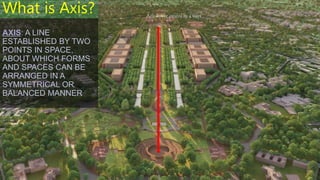
AXIS: A LINE
ESTABLISHED BY TWO
POINTS IN SPACE,
ABOUT WHICH FORMS
AND SPACES CAN BE
ARRANGED IN A
SYMMETRICAL OR
BALANCED MANNER
What is Axis? Axis can be created by 4 ways
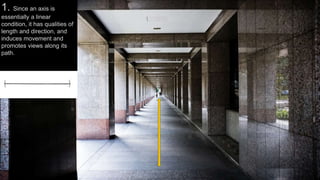
1. Since an axis is
essentially a linear
condition, it has qualities of
length and direction, and
induces movement and
promotes views along its
path.
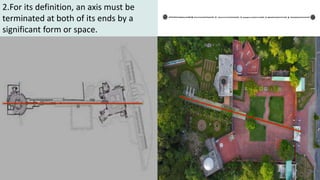
2.For its definition, an axis must be
terminated at both of its ends by a
significant form or space.
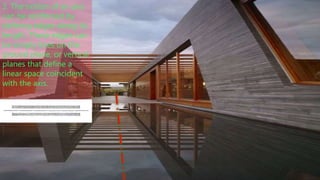
3. The notion of an axis
can be reinforced by
defining edges along its
length. These edges can
be simply lines on the
ground plane, or vertical
planes that define a
linear space coincident
with the axis.
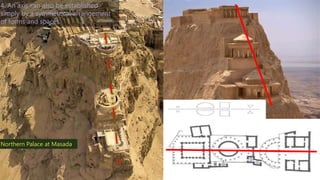
4. An axis can also be established
simply by a symmetrical arrangement
of forms and spaces.
Northern Palace at Masada
Types of axes:
• Primary Axis
• Secondary Axis
• Radial Axis
• Transverse Axis
• Diagonal Axis
• Terminating Axis
• Visual and Symbolic Axis
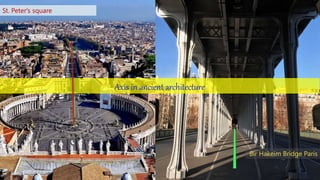
Axis in ancient architecture
Bir Hakeim Bridge Paris
St. Peter's square
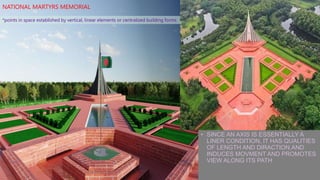
• SINCE AN AXIS IS ESSENTIALLY A
LINER CONDITION, IT HAS QUALITIES
OF LENGTH AND DIRACTION,AND
INDUCES MOVMENT AND PROMOTES
VIEW ALONG ITS PATH
NATIONAL MARTYRS MEMORIAL
*points in space established by vertical, linear elements or centralized building forms
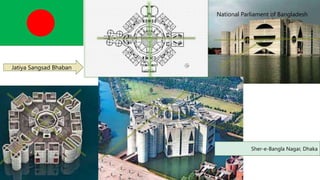
Jatiya Sangsad Bhaban
Sher-e-Bangla Nagar, Dhaka
National Parliament of Bangladesh
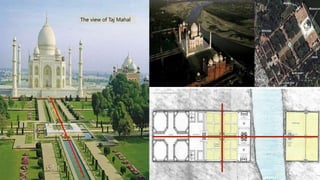
The view of Taj Mahal
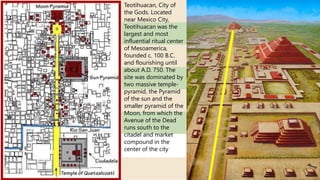
Teotihuacan, City of
the Gods. Located
near Mexico City,
Teotihuacan was the
largest and most
influential ritual center
of Mesoamerica,
founded c. 100 B.C.
and flourishing until
about A.D. 750. The
site was dominated by
two massive temple-
pyramid, the Pyramid
of the sun and the
smaller pyramid of the
Moon, from which the
Avenue of the Dead
runs south to the
citadel and market
compound in the
center of the city
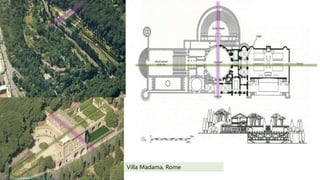
Villa Madama, Rome
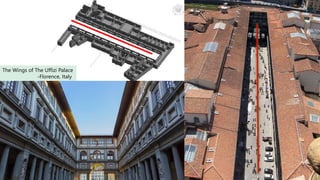
The Wings of The Uffizi Palace
-Florence, Italy
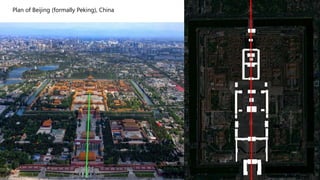
Plan of Beijing (formally Peking), China
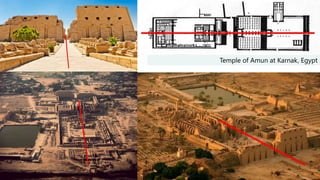
Temple of Amun at Karnak, Egypt
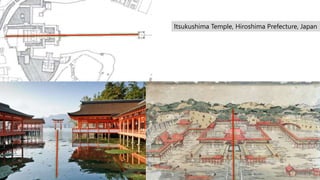
Itsukushima Temple, Hiroshima Prefecture, Japan
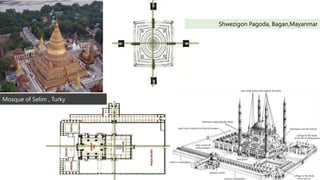
Shwezigon Pagoda, Bagan,Mayanmar
Mosque of Selim , Turky
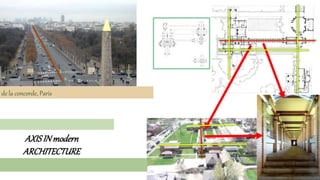
de la concorde, Paris
AXISIN modern
ARCHITECTURE
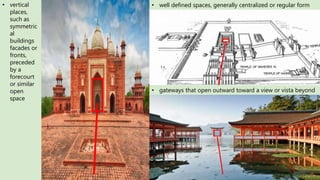
• vertical
places,
such as
symmetric
al
buildings
facades or
fronts,
preceded
by a
forecourt
or similar
open
space
• well defined spaces, generally centralized or regular form
• gateways that open outward toward a view or vista beyond
AXIS IN NATURE
SUMMARY:
Axis plays an important role in our life.
Like-
• Organizing Space
• Creating Focal Points
• Aiding Navigation
• Enhancing Symmetry and Balance
• Highlighting Views
• Facilitating Ceremony and Ritual
• Providing Cultural Significance
• Creating Visual Interest
• Supporting Urban Planning
• Defining Boundaries
All information from:
Francis D. K. Ching - Form, Space & Order
Presented by :
THANK YoU
EVERYONE
230104
230117
230125
230126
230135
230138
HASAN NUR SADAT
S.M. TOUSIF HASAN PRIYO
ARPON KUMAR GAINE
MD. MAKSUDUR RAHMAN SAIMON
MD. YASIR ARMAN MAHIN
MOTAB ANSARI

Axis- ordering Principle

  • 1.
    Khulna university Welcome to thepresentation on design principle Axis
  • 2.
  • 3.
    AXIS: A LINE ESTABLISHEDBY TWO POINTS IN SPACE, ABOUT WHICH FORMS AND SPACES CAN BE ARRANGED IN A SYMMETRICAL OR BALANCED MANNER What is Axis? Axis can be created by 4 ways
  • 4.
    1. Since anaxis is essentially a linear condition, it has qualities of length and direction, and induces movement and promotes views along its path.
  • 5.
    2.For its definition,an axis must be terminated at both of its ends by a significant form or space.
  • 6.
    3. The notionof an axis can be reinforced by defining edges along its length. These edges can be simply lines on the ground plane, or vertical planes that define a linear space coincident with the axis.
  • 7.
    4. An axiscan also be established simply by a symmetrical arrangement of forms and spaces. Northern Palace at Masada
  • 8.
    Types of axes: •Primary Axis • Secondary Axis • Radial Axis • Transverse Axis • Diagonal Axis • Terminating Axis • Visual and Symbolic Axis
  • 9.
    Axis in ancientarchitecture Bir Hakeim Bridge Paris St. Peter's square
  • 10.
    • SINCE ANAXIS IS ESSENTIALLY A LINER CONDITION, IT HAS QUALITIES OF LENGTH AND DIRACTION,AND INDUCES MOVMENT AND PROMOTES VIEW ALONG ITS PATH NATIONAL MARTYRS MEMORIAL *points in space established by vertical, linear elements or centralized building forms
  • 11.
    Jatiya Sangsad Bhaban Sher-e-BanglaNagar, Dhaka National Parliament of Bangladesh
  • 12.
    The view ofTaj Mahal
  • 13.
    Teotihuacan, City of theGods. Located near Mexico City, Teotihuacan was the largest and most influential ritual center of Mesoamerica, founded c. 100 B.C. and flourishing until about A.D. 750. The site was dominated by two massive temple- pyramid, the Pyramid of the sun and the smaller pyramid of the Moon, from which the Avenue of the Dead runs south to the citadel and market compound in the center of the city
  • 14.
  • 15.
    The Wings ofThe Uffizi Palace -Florence, Italy
  • 16.
    Plan of Beijing(formally Peking), China
  • 17.
    Temple of Amunat Karnak, Egypt
  • 18.
  • 19.
  • 20.
    de la concorde,Paris AXISIN modern ARCHITECTURE
  • 21.
    • vertical places, such as symmetric al buildings facadesor fronts, preceded by a forecourt or similar open space • well defined spaces, generally centralized or regular form • gateways that open outward toward a view or vista beyond
  • 22.
  • 23.
    SUMMARY: Axis plays animportant role in our life. Like- • Organizing Space • Creating Focal Points • Aiding Navigation • Enhancing Symmetry and Balance • Highlighting Views • Facilitating Ceremony and Ritual • Providing Cultural Significance • Creating Visual Interest • Supporting Urban Planning • Defining Boundaries
  • 24.
    All information from: FrancisD. K. Ching - Form, Space & Order Presented by : THANK YoU EVERYONE 230104 230117 230125 230126 230135 230138 HASAN NUR SADAT S.M. TOUSIF HASAN PRIYO ARPON KUMAR GAINE MD. MAKSUDUR RAHMAN SAIMON MD. YASIR ARMAN MAHIN MOTAB ANSARI