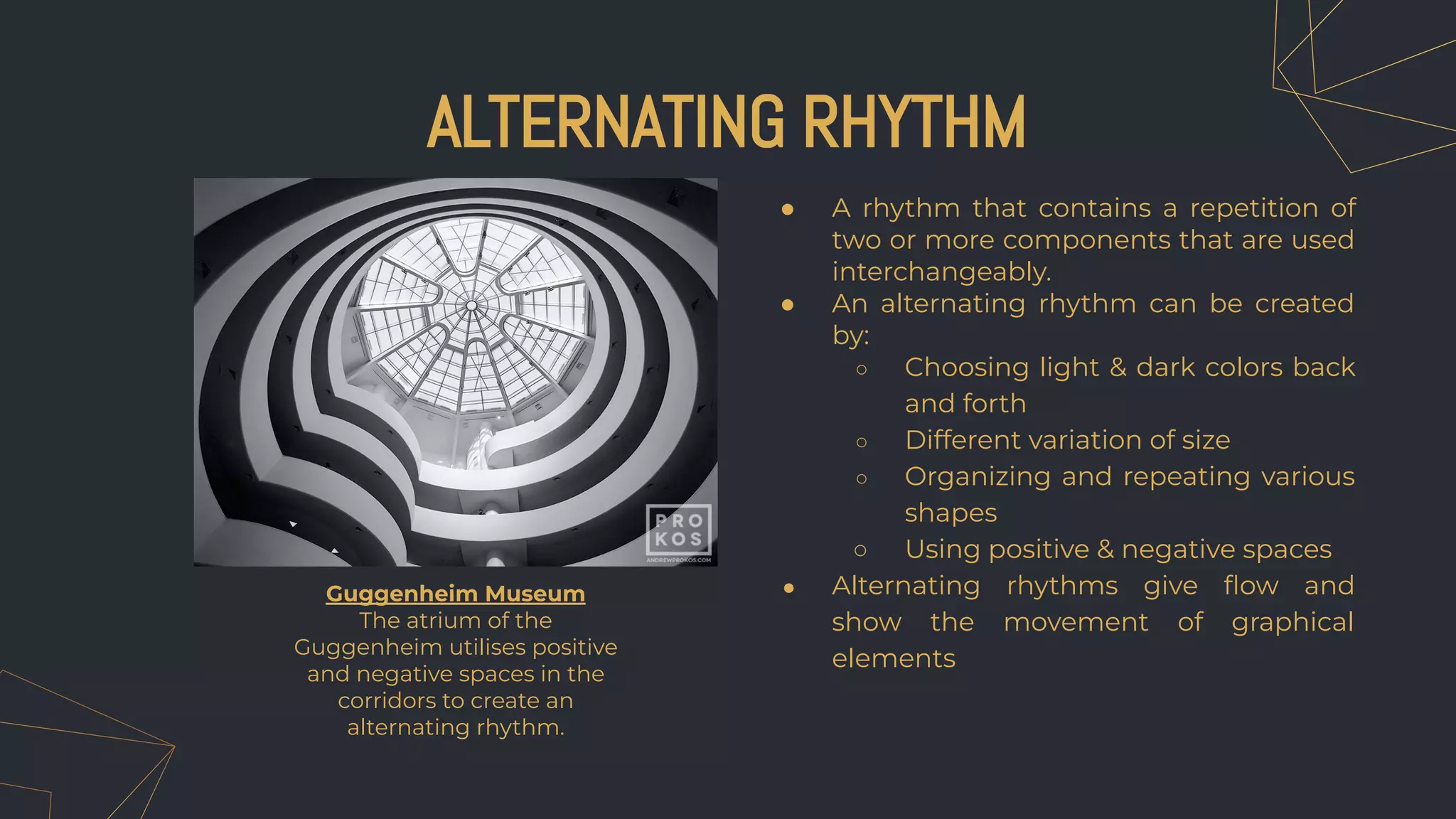
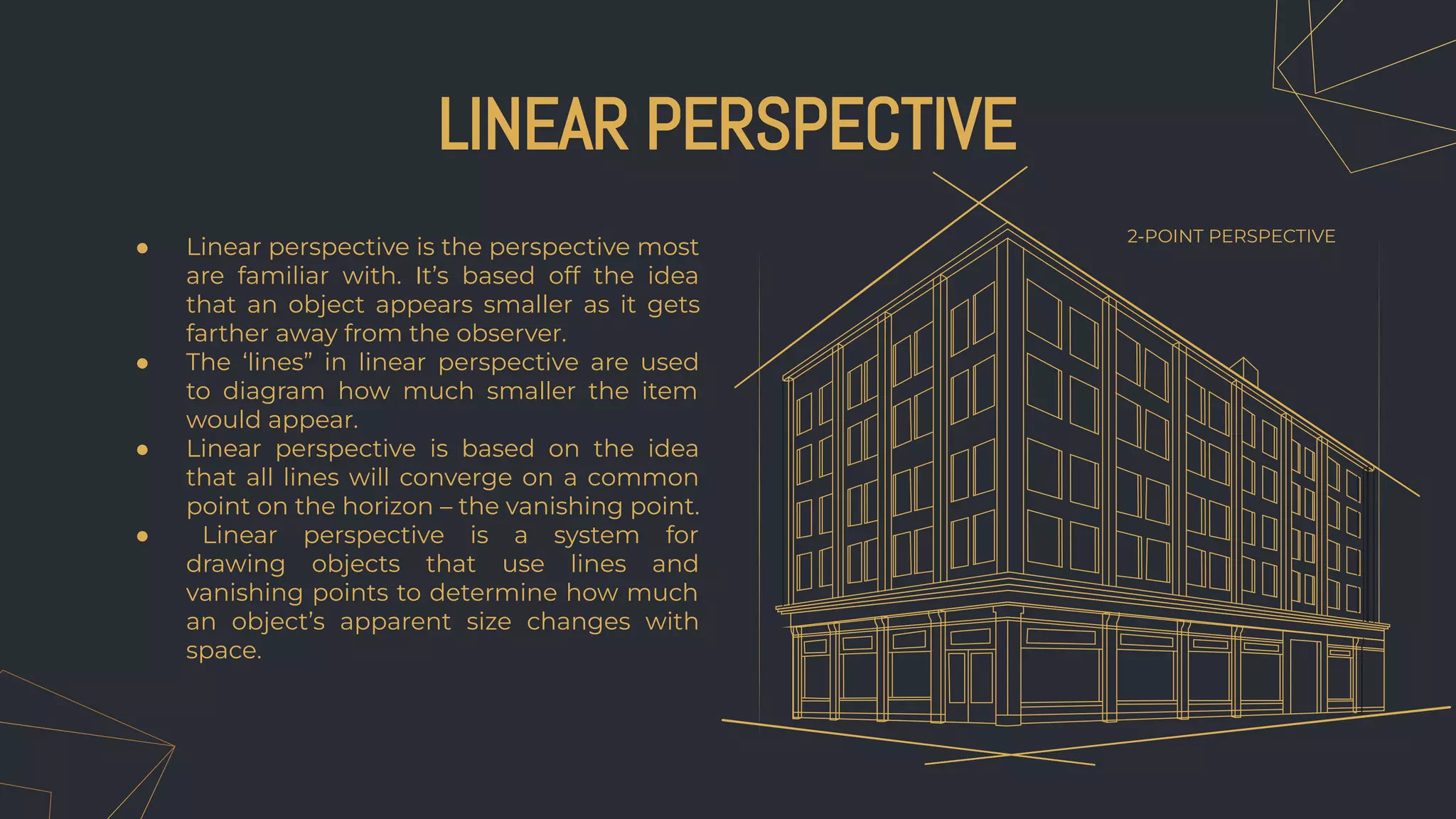
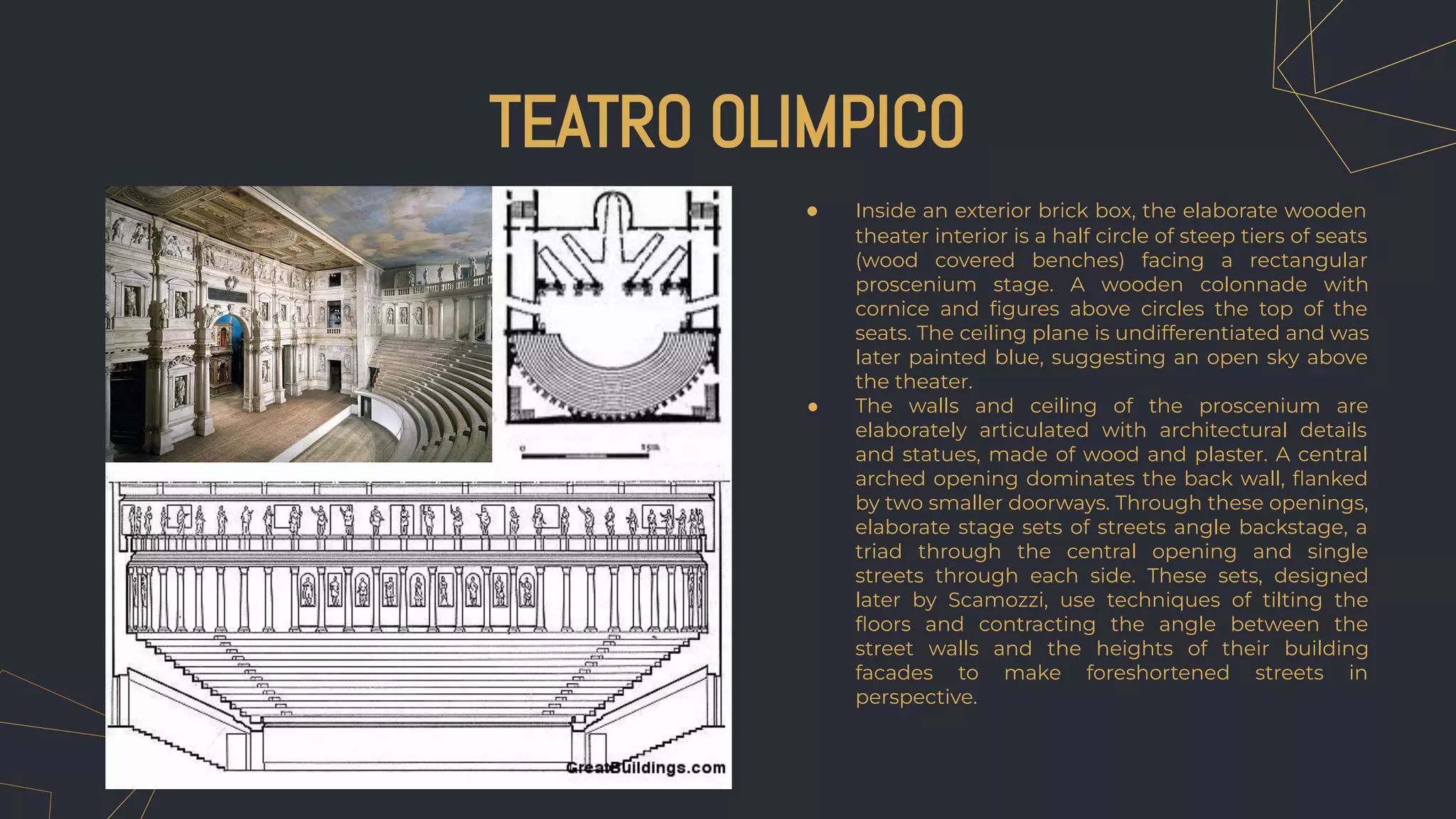
The document discusses various types of rhythm and perspective in architecture. It defines rhythm as a patterned repetition or alteration of formal elements that creates organized movement. Types of rhythm include flowing, progressive, and alternating rhythms. Flowing rhythm mimics natural curves and undulations. Progressive rhythm involves changing elements in a sequence. Alternating rhythm switches between two components. The document also explains different perspectives like linear perspective with one, two, or three vanishing points, as well as transparency in architecture being both literal and phenomenal. Renaissance innovations in perspective influenced theatrical set design to create realistic depth illusions.













![Intro to Arch Week 4 [compatibility mode]](https://cdn.slidesharecdn.com/ss_thumbnails/week4compatibilitymode-120414125508-phpapp01-thumbnail.jpg?width=640&height=640&fit=bounds)


