PRESENTATION ON VISUAL
PROPERTIES OF FORMS
SHAPE
AND
AXIS
1
GROUP A
MEMBERS:
AARATI RAYAMAJHI
AASHISH KUMAR URAW
ABHINASH KUMAR SAH
AJIT KUMAR CHAUDHARY
AMIT KUMAR YADAV
ANIS1HA RUCHAL
1
SHAPE
FORM
The form is an inclusive term that has several meanings and
synonyms and is used in architecture as an important element of
design. It refers to a shape or configuration of a building.
SHAPE
Shape is the visual property of form in architecture or the
characteristic outline of a particular form.
It is the primary means by which we recognize, identify, and
categorize particular figures and forms.
The primary shapes used in architecture form are of three types
which are listed below along with their explanation.
2
2
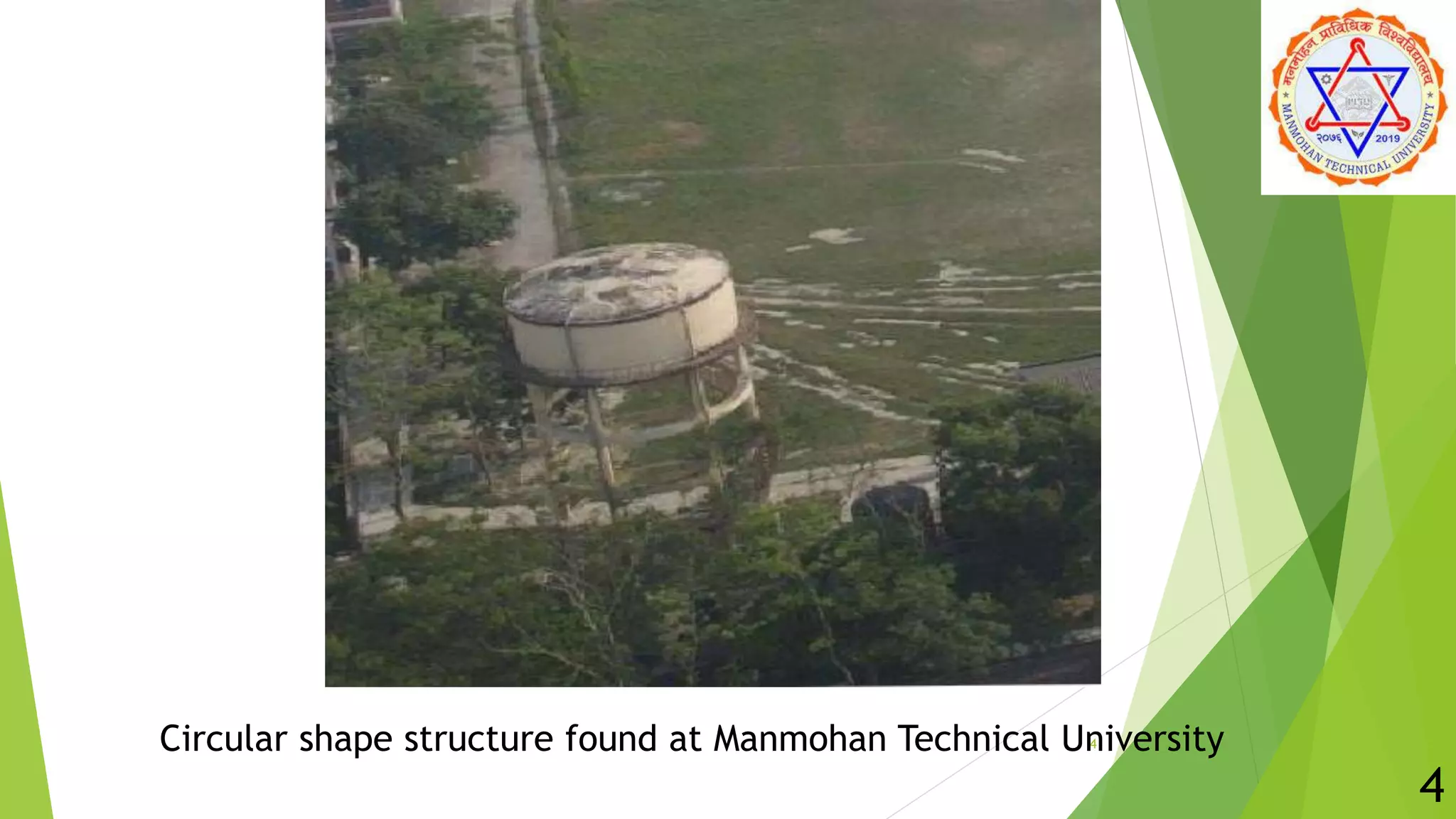
1.CIRCLE
 It is one of the shape of architecture form which is plane curve
every point of which is equidistant from a fixed point with in the
curve.
 Also, the circle is a centralized figure that is normally stable and
self-centering in its environment.
 Placing an element along its circumference or angular forms can
induce circular motion.
3
3
4
Circular shape structure found at Manmohan Technical University
4
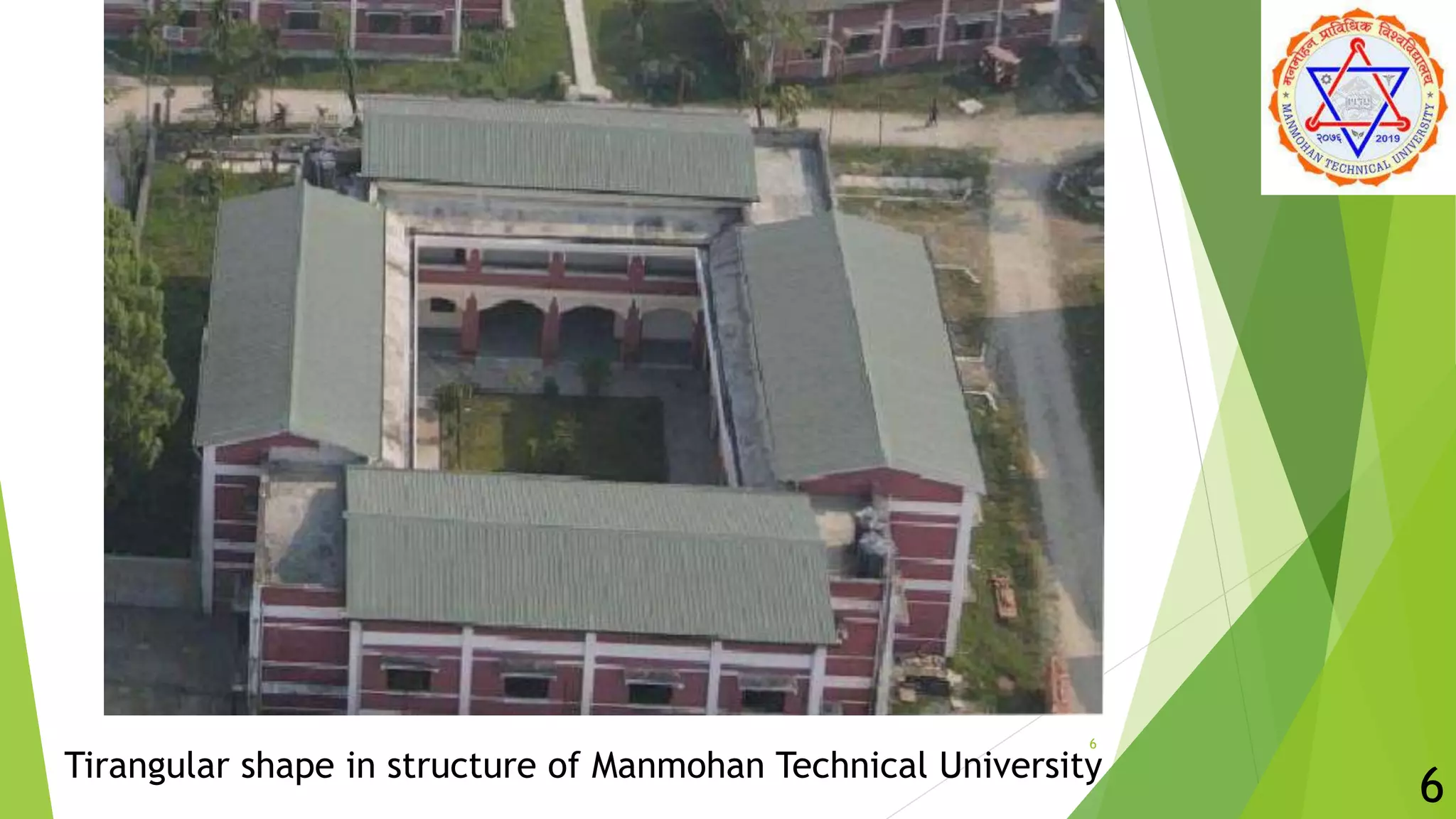
2.TRIANGLE
 A key concept in architecture is the use of triangles.
 Architects commonly use these shapes to construct their
buildings.
 The triangle congruence helps measure the forces applied on the
building to make sure that the forces are balanced, ultimately
that the building will not collapse.
 Triangles make many of the structures that we know today. The
triangles and their concepts are an essential part of Architecture.
5
6
Tirangular shape in structure of Manmohan Technical University
6
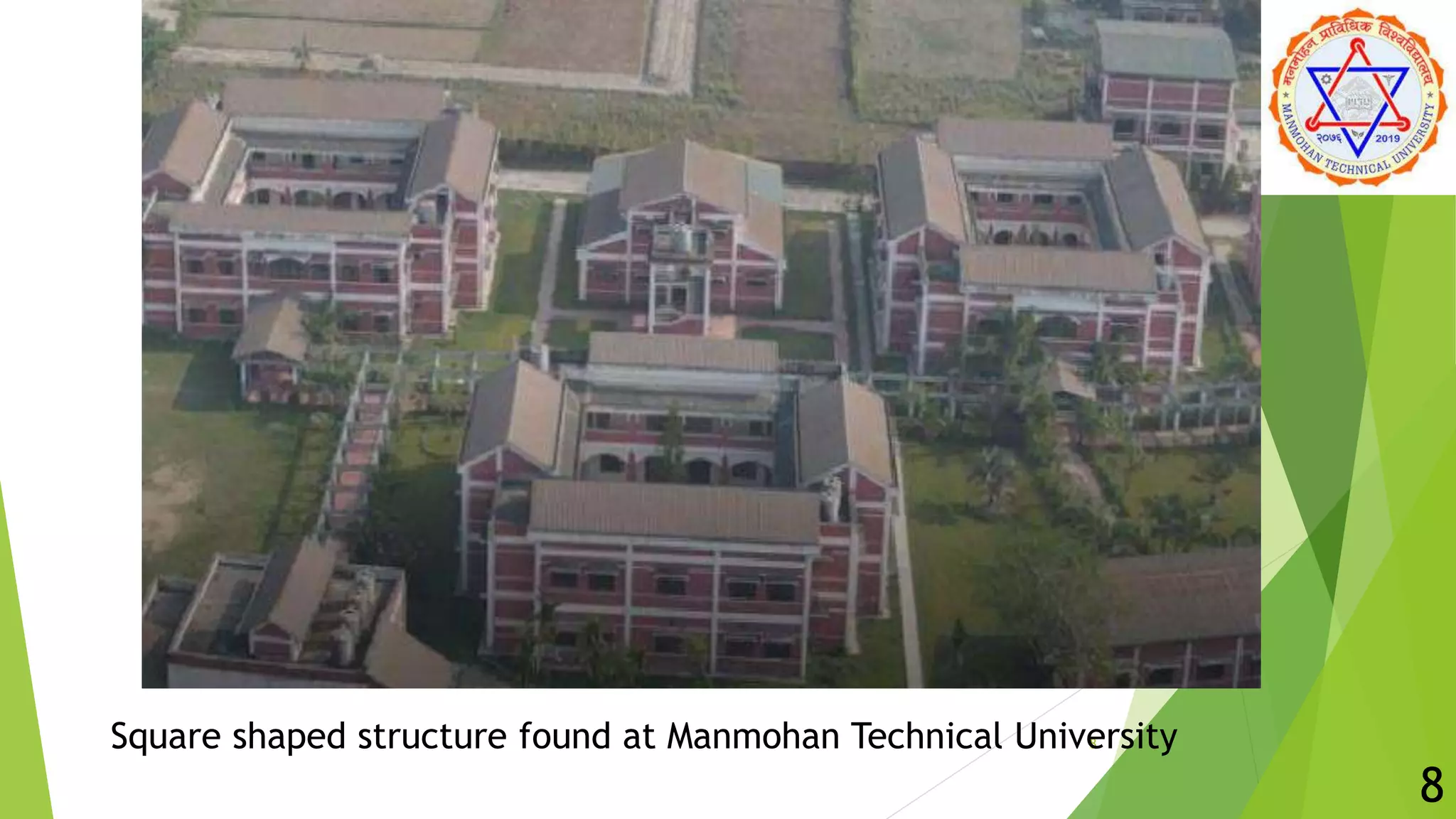
3.SQUARE
 Square is one of the most Significant Shape used in
architecture form.
 It is a plane figure having four equal sides and four right
angles which is symmetrical.
 All other rectangles can be considered as variations of the
square varying in height or width.
 Square shapes are often associated with stability, structure,
and order.
 They are commonly used in functional spaces such as offices
and classrooms.
7
7
8
Square shaped structure found at Manmohan Technical University
8
AXIS
 An axis is a line connecting two points in space about which forms can be
arranged in an asymmetrical or symmetrical, balanced manner. It is an
imaginary line that can denote structure, procession, direction, views, line of
rotation and so on. An axis is used to align elements in the design, and to
arrange and plan spaces.
 The axis can be of two types which are listed below.
 1.Symmetrical axis:
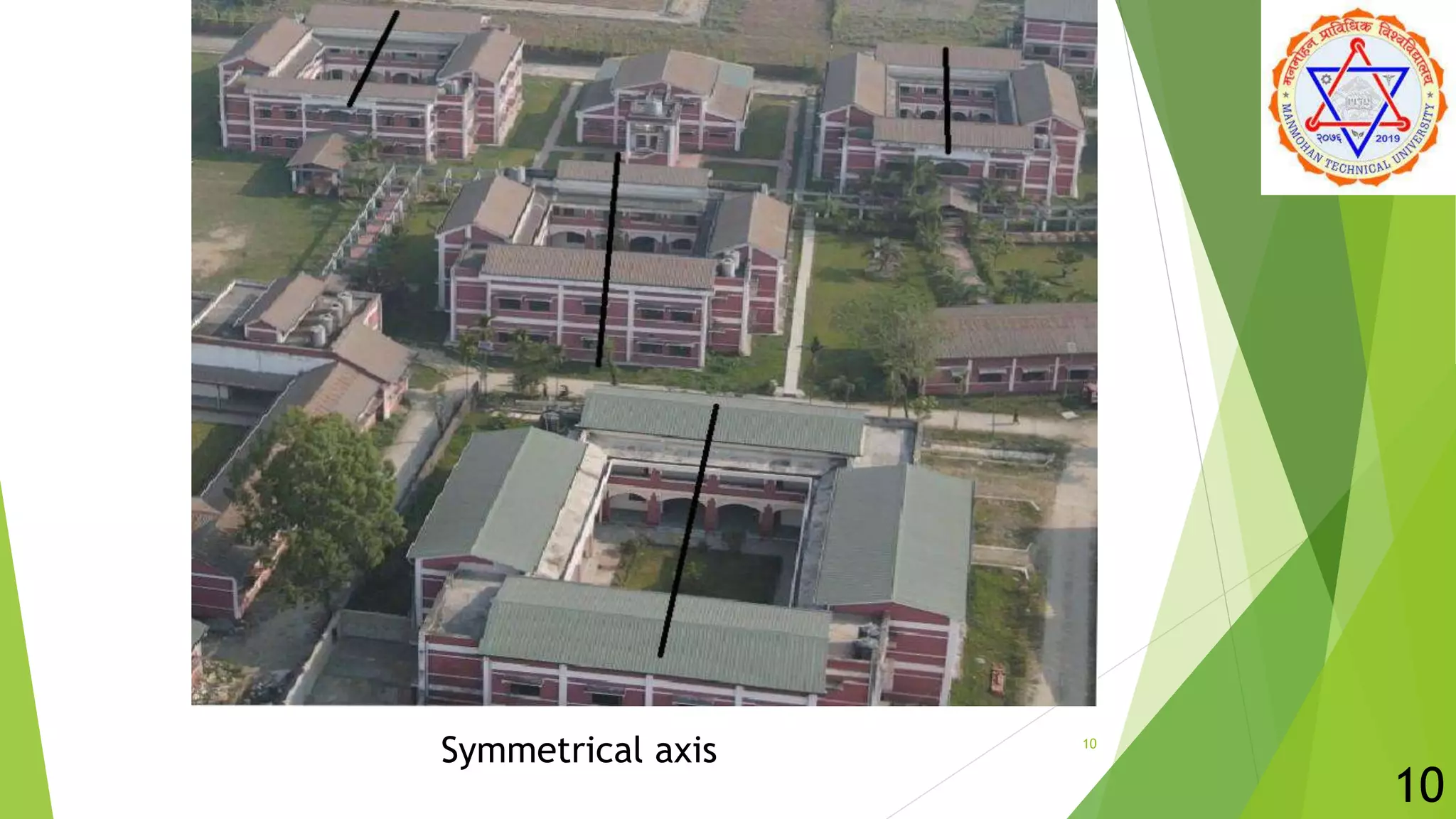
 A symmetrical axis is one that is evenly balanced on either side of a central
point or line. This means that the design elements on one side of the axis are
mirrored on the other side. his can be particularly effective in spaces where
people spend a lot of time, such as homes, offices, or religious buildings.
9
9
10
Symmetrical axis
10
 2. Asymmetrical axis:
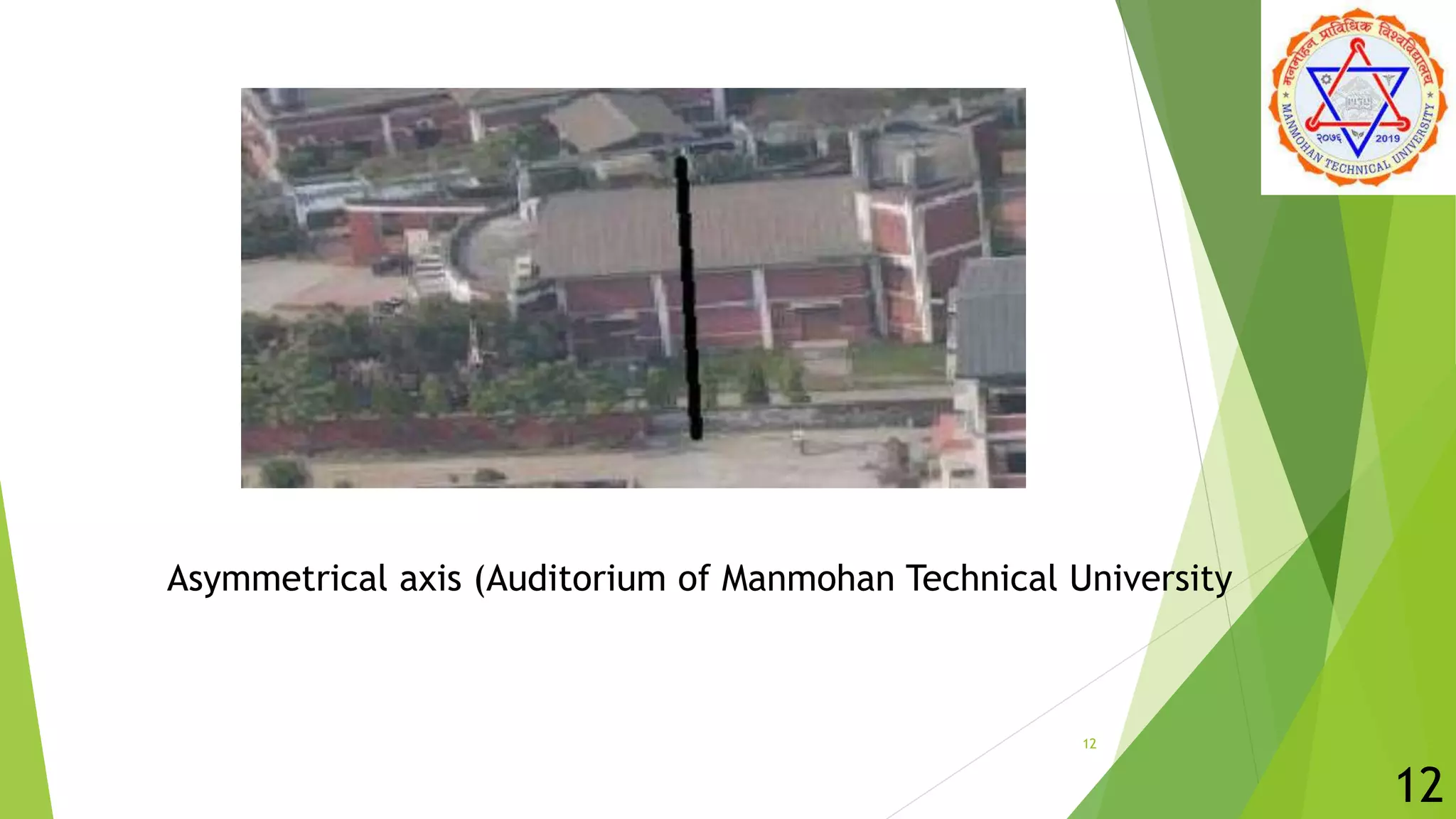
 An asymmetrical axis,on the other hand,is not evenly balanced
and does not have identical design elements on either side.
 This can create a sense of visual intrest,movement,and
dynamism in the design.
 Asymmetrical axes are often used in modern and contemporary
architecture, where designers seek to create unique and
memorable spaces that stand out from traditional buildings.
11
11
12
Asymmetrical axis (Auditorium of Manmohan Technical University
12
 References
 thearchspace.com,google,
 archi-monarch.com,google,
 firstinarchitecture.co.uk,gogole
13
Thank you!!!
14
13

FORM-Shape and size

  • 1.
    PRESENTATION ON VISUAL PROPERTIESOF FORMS SHAPE AND AXIS 1 GROUP A MEMBERS: AARATI RAYAMAJHI AASHISH KUMAR URAW ABHINASH KUMAR SAH AJIT KUMAR CHAUDHARY AMIT KUMAR YADAV ANIS1HA RUCHAL 1
  • 2.
    SHAPE FORM The form isan inclusive term that has several meanings and synonyms and is used in architecture as an important element of design. It refers to a shape or configuration of a building. SHAPE Shape is the visual property of form in architecture or the characteristic outline of a particular form. It is the primary means by which we recognize, identify, and categorize particular figures and forms. The primary shapes used in architecture form are of three types which are listed below along with their explanation. 2 2
  • 3.
    1.CIRCLE  It isone of the shape of architecture form which is plane curve every point of which is equidistant from a fixed point with in the curve.  Also, the circle is a centralized figure that is normally stable and self-centering in its environment.  Placing an element along its circumference or angular forms can induce circular motion. 3 3
  • 4.
    4 Circular shape structurefound at Manmohan Technical University 4
  • 5.
    2.TRIANGLE  A keyconcept in architecture is the use of triangles.  Architects commonly use these shapes to construct their buildings.  The triangle congruence helps measure the forces applied on the building to make sure that the forces are balanced, ultimately that the building will not collapse.  Triangles make many of the structures that we know today. The triangles and their concepts are an essential part of Architecture. 5
  • 6.
    6 Tirangular shape instructure of Manmohan Technical University 6
  • 7.
    3.SQUARE  Square isone of the most Significant Shape used in architecture form.  It is a plane figure having four equal sides and four right angles which is symmetrical.  All other rectangles can be considered as variations of the square varying in height or width.  Square shapes are often associated with stability, structure, and order.  They are commonly used in functional spaces such as offices and classrooms. 7 7
  • 8.
    8 Square shaped structurefound at Manmohan Technical University 8
  • 9.
    AXIS  An axisis a line connecting two points in space about which forms can be arranged in an asymmetrical or symmetrical, balanced manner. It is an imaginary line that can denote structure, procession, direction, views, line of rotation and so on. An axis is used to align elements in the design, and to arrange and plan spaces.  The axis can be of two types which are listed below.  1.Symmetrical axis:  A symmetrical axis is one that is evenly balanced on either side of a central point or line. This means that the design elements on one side of the axis are mirrored on the other side. his can be particularly effective in spaces where people spend a lot of time, such as homes, offices, or religious buildings. 9 9
  • 10.
  • 11.
     2. Asymmetricalaxis:  An asymmetrical axis,on the other hand,is not evenly balanced and does not have identical design elements on either side.  This can create a sense of visual intrest,movement,and dynamism in the design.  Asymmetrical axes are often used in modern and contemporary architecture, where designers seek to create unique and memorable spaces that stand out from traditional buildings. 11 11
  • 12.
    12 Asymmetrical axis (Auditoriumof Manmohan Technical University 12
  • 13.
     References  thearchspace.com,google, archi-monarch.com,google,  firstinarchitecture.co.uk,gogole 13
  • 14.