Avascular Necrosis: Causes
and Treatment
Coleman D. Fowble, M.D.
Midlands Orthopaedics, P.A.
Columbia, SC
Introduction
• Definition
Loss of blood flow to the bone leading to death of
the cellular components of bone.
Avascular Necrosis
• AVN
• Osteonecrosis
• Aseptic necrosis
• Ischemic necrosis
• Bone infarction
Bones Affected
• Femoral head – most common by far
• Shoulder – humeral head
• Odontoid (Neck)
• Scaphoid (Wrist)
• Lunate (Wrist)
• Talus (Ankle)
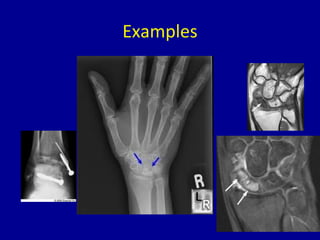
Examples
Treatment
• Frustrating
• Staging very subjective in lower stages
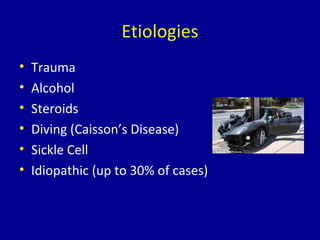
Etiologies
• Trauma
• Alcohol
• Steroids
• Diving (Caisson’s Disease)
• Sickle Cell
• Idiopathic (up to 30% of cases)
Symptoms
• Pain
• Decreased range of motion
Risk Factors
• Alcoholism
• Pancreatitis
• Diabetes
• Gout
Staging
• Initially radiographic staging
• Revised with advancement of MRI
Classification
• Ficat
Original x-ray classification of hip
• Other classifications exist for talus, scaphoid,
etc.
Stage 0
• No clinical symptoms
• No radiographic abnormalities
• Microscopic diagnosis
Stage I
• May or may not have symptoms
• Radiographs and CT are normal
• MRI is abnormal as is bone scan
• Microscopic exam confirms diagnosis
Stage II
• Patient is symptomatic
• X-rays show osteopenia, sclerosis, cysts
• No subchondral lucency or collapse
• MRI confirms diagnosis
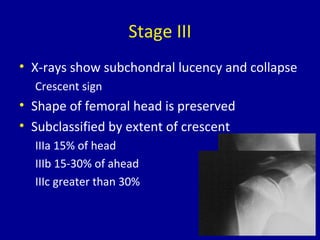
Stage III
• X-rays show subchondral lucency and collapse
Crescent sign
• Shape of femoral head is preserved
• Subclassified by extent of crescent
IIIa 15% of head
IIIb 15-30% of ahead
IIIc greater than 30%
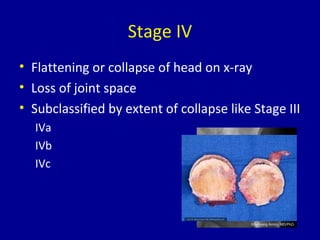
Stage IV
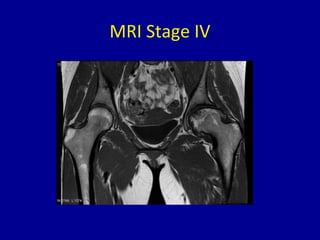
• Flattening or collapse of head on x-ray
• Loss of joint space
• Subclassified by extent of collapse like Stage III
IVa
IVb
IVc
MRI Stage IV
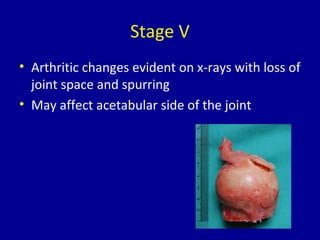
Stage V
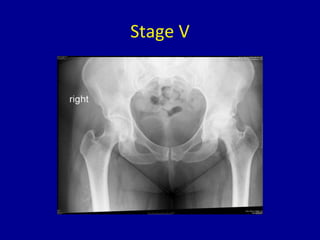
• Arthritic changes evident on x-rays with loss of
joint space and spurring
• May affect acetabular side of the joint
Stage V
Stage VI
• Extensive destruction of femoral head and
joint
• May be indistinguishable from osteoarthritis
Treatment Options
• Stage dependent
• Clinical signs and symptoms
• Physiologic condition
• Age
• Medical comorbidities
Observation
• Normal x-ray
• Possible abnormal MRI
• No clinical signs or symptoms
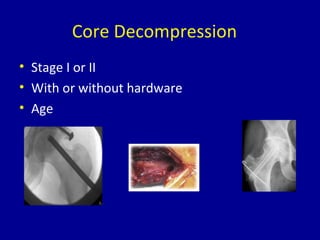
Core Decompression
• Stage I or II
• With or without hardware
• Age
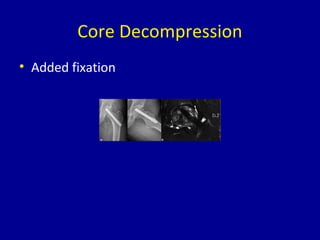
Core Decompression
• Added fixation
Free Vascularized Fibular Graft
• Pioneered in 1979 by Dr. Urbaniak at Duke
• Over 2500 performed
• Multidisciplinary approach
• Only center with real consistent results
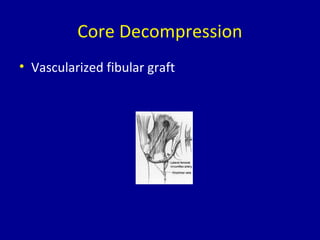
Core Decompression
• Vascularized fibular graft
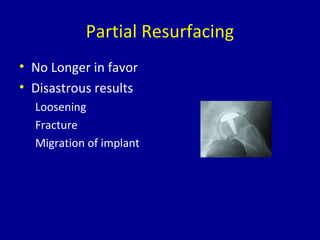
Partial Resurfacing
• No Longer in favor
• Disastrous results
Loosening
Fracture
Migration of implant
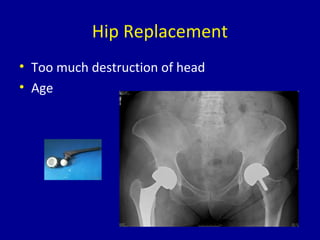
Hip Replacement
• Too much destruction of head
• Age
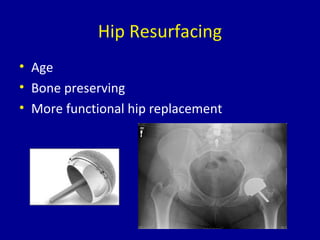
Hip Resurfacing
• Age
• Bone preserving
• More functional hip replacement
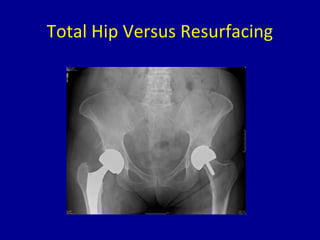
Total Hip Versus Resurfacing
Workman's Compensation
• Trauma
• Secondary injury
• Difficult
May take several years to show up
Femoral Neck Fracture
• Basilar neck
• Transcervical
• Subcapital
• Intertrochanteric
Femoral Neck Fracture
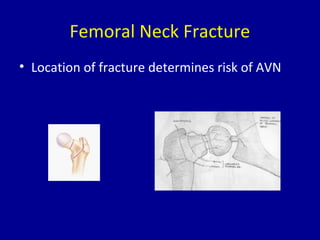
• Location of fracture determines risk of AVN
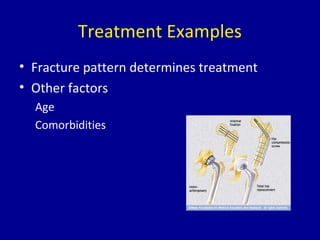
Treatment Examples
• Fracture pattern determines treatment
• Other factors
Age
Comorbidities
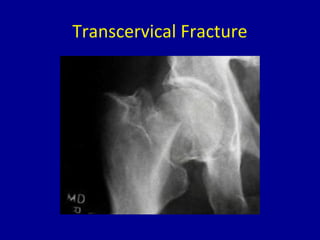
Transcervical Fracture
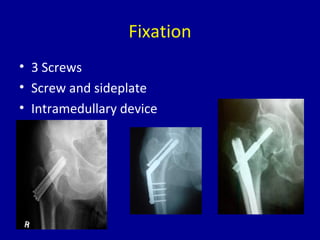
Fixation
• 3 Screws
• Screw and sideplate
• Intramedullary device
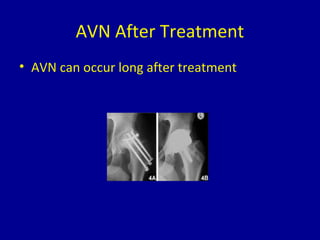
AVN After Treatment
• AVN can occur long after treatment
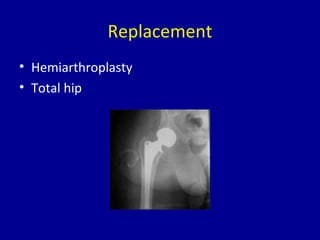
Replacement
• Hemiarthroplasty
• Total hip
Summary
• AVN is the disruption of the blood supply to
bone
• There are multiple causes
• Diagnosis may be delayed
• Treatment is dependent on stage and other
factors
Sources
Staging of Avascular Necrosis. Orthopaedia Main. In:
Orthopaedia-Collaborative Orthopaedic Knowledgebase
JBJS Br. Core Decompression of the Distal Femur. Vol. 71-B.
August, 1989
JBJS. Treatment of Osteonecrosis with Free Vascularized Fibular
Graft. Vol 77. 1995

Avascular necrosis