Autacoids and Inflammation
An 8-year-old boy is stung by a bee. Within 5 minutes he develops a 2 cm, raised, red, swollen lesion an the site of injury. Which of the following findings will be predominant in tissue from a lesion? A. Foreign body reaction B. Hemorrhage C. Lymphocytic Infiltration. D. Neutrophilic migration. E. Vasodilation
Inflammation Pathologic state. Pain, Redness, Heat, Swelling. Vascular permeability.  Variety of compounds or chemicals can elicit an inflammatory response. Eicosanoids and Autacoids.
Eicosanoids “ Eicosa ” greek for  20 . Synthesized from oxygenation of 20-carbon fatty acids.  Most potent regulator of cellular function. Produced in almost every cell. Participates in inflammation response.
Eicosanoids Forms blood cloths.  Pain, swelling and fever. Regulate smooth muscle contraction. Increase water and Na excretion. (BP) Bronchoconstriction and Bronchodilation . Gastric protection .
Eicosanoids Prostaglandins and Tromboxanes effects : Airway, Gastrointestinal, reproductive and vascular.  Platelets, monocytes, CNS, presynaptic nerve terminals, sensory nerve endings. Endocrine organs, adipose tissue, eye.
Eicosanoids Arachidonic Acid chief precursor. Derived dietary linoleic acid (essential) or as a component of meat. Store in phospholips of the cell membrane (esterification). Phospolipase A 2  release arachidonate.
Eicosanoids Four separate pathways. Ciclooxygenase :  Prostaglandins.   Lipoxygenase : Leukotrienes. P450 epoxygenase  (epoxides). Isoprostane pathway  (isoprostanes).
Prostaglandins First found on human semen. Two Isoenzimes  COX-1, COX-2 . Converts AA into prostaglandin endoperoxide. COX-1 : present in most cells. “housekeeping” stomach lining protection, reduction fever, promotes platelet aggregation.
Prostaglandins COX-2 : Inducible by cytokines, growth factors, tumor promoters. Stimulus dependent. Associated with pain and inflammation.   LPS (endotoxin) potent stimulus. Tissue specific Lungs, spleen: synthesize all types. Endothelia:  PGI 2 . Platelets:  TXA 2 .
Leukotrienes Lipoxygenase: lungs, platelets, leukocytes. Converts AA to 5-HPETE. 5-HPETE to 5-HETE or Leukotriene A4 (LTA 4 ).
Organ System Effects
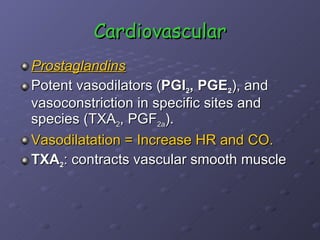
Cardiovascular Prostaglandins Potent vasodilators ( PGI 2 , PGE 2 ), and vasoconstriction in specific sites and species (TXA 2 , PGF 2a ). Vasodilatation = Increase HR and CO.  TXA 2 : contracts vascular smooth muscle
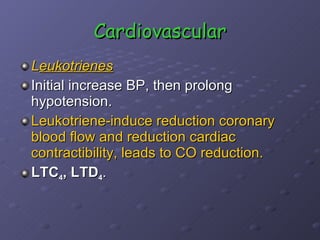
Cardiovascular L eukotrienes Initial increase BP, then prolong hypotension. Leukotriene-induce reduction coronary blood flow and reduction cardiac contractibility, leads to CO reduction.   LTC 4 , LTD 4 .
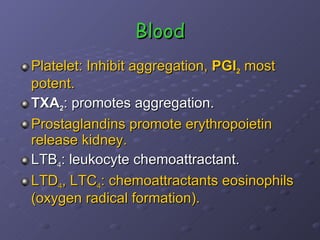
Blood Platelet: Inhibit aggregation,  PGI 2  most potent. TXA 2 : promotes aggregation. Prostaglandins promote erythropoietin release kidney. LTB 4 : leukocyte chemoattractant. LTD 4 , LTC 4 : chemoattractants eosinophils (oxygen radical formation).
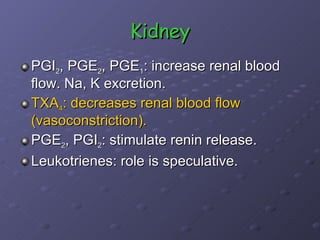
Kidney PGI 2 , PGE 2 , PGE 1 : increase renal blood flow. Na, K excretion.  TXA 4 : decreases renal blood flow (vasoconstriction). PGE 2 , PGI 2 : stimulate renin release. Leukotrienes: role is speculative.
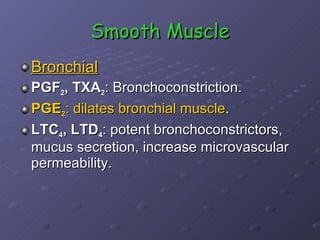
Smooth Muscle Bronchial PGF 2 , TXA 2 : Bronchoconstriction. PGE 2 : dilates bronchial muscle . LTC 4 , LTD 4 : potent bronchoconstrictors, mucus secretion, increase microvascular permeability.
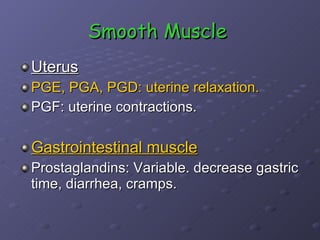
Smooth Muscle   Uterus PGE, PGA, PGD: uterine relaxation. PGF: uterine contractions.  Gastrointestinal muscle Prostaglandins: Variable. decrease gastric time, diarrhea, cramps.
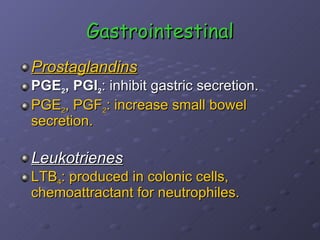
Gastrointestinal Prostaglandins PGE 2 , PGI 2 : inhibit gastric secretion. PGE 2 , PGF 2 : increase small bowel secretion. Leukotrienes LTB 4 : produced in colonic cells, chemoattractant for neutrophiles.
CNS PGE 1 , PGE 2 : increase body temperature. Intraventricular injections PGEs: sedation, stupor or catatonia. PGEs inhibit release of norepinephrine. PGFs: stimulates release norepinephrine. PGEs causes pain when injected intradermally.
Endocrine System PGE 1 : stimulates release ACTH, GH, Prolactin, Gonadotropins. PGE 2 : facilitates release LH,TSH, insulin and steroids.  PGEs: inhibit lipolysis.
Mechanism Action Receptors for prostaglandins: 5 groups according to the PG which are more selective (DP, EP, FP, IP, TP) DP-PGD, EP-PGE, TP-TXA 2 , etc. Leukotrienes receptors activate phospholipase C.
Processes TXA 2  and PGI 2 : opposite actions in modulating platelet interactions. High Prostaglandins synthesis play a role in the genesis in dysmenorrhea.  Prostaglandins are elevated in labor. Inhibition COX delays labor. PGI 2 , PGE 2  maintains patency of the ductus arteriosus.
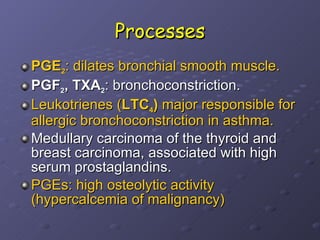
Processes PGE 2 : dilates bronchial smooth muscle.   PGF 2 , TXA 2 : bronchoconstriction.  Leukotrienes ( LTC 4 )  major responsible for allergic bronchoconstriction in asthma. Medullary carcinoma of the thyroid and breast carcinoma, associated with high serum prostaglandins.  PGEs: high osteolytic activity (hypercalcemia of malignancy)
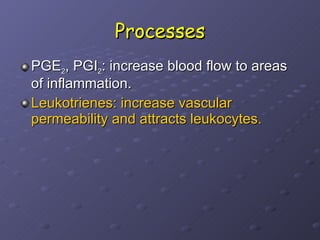
Processes PGE 2 , PGI 2 : increase blood flow to areas of inflammation. Leukotrienes: increase vascular permeability and attracts leukocytes.
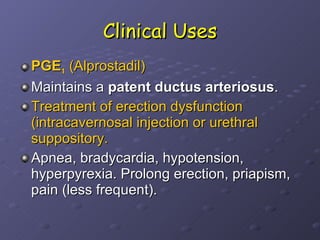
Clinical Uses PGE 1  (Alprostadil)  Maintains a  patent ductus arteriosus . Treatment of erection dysfunction (intracavernosal injection or urethral suppository.   Apnea, bradycardia, hypotension, hyperpyrexia. Prolong erection, priapism, pain (less frequent).
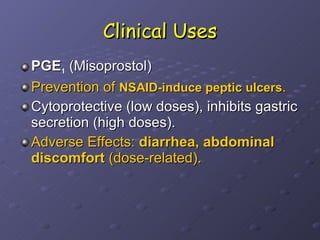
Clinical Uses PGE 1  (Misoprostol) Prevention of  NSAID-induce peptic ulcers . Cytoprotective (low doses), inhibits gastric secretion (high doses). Adverse Effects:  diarrhea, abdominal discomfort  (dose-related).
Clinical Uses PGE 2   (Dinoprostone) Inducing  abortions  in the second trimester, missed abortion, benign hydatidiform mole, ripening of the cervix.  Induction of full term labor. Adverse Effects: vomiting, diarrhea, fever, bronchoconstriction, hypotension, syncope, dizziness and flushing.
Clinical Uses PGF 2a  (Carboprost)  Second trimester abortions. Withdrawn of market. Adverse:  Cardiovascular collapse  (severe). Anaphylactic shock, pulmonary hypertension .
Clinical Uses Prostacyclin PGI 2  (epoprostenol) Substitute Heparin in Hemodialysis.   Primary and secondary  pulmonary hypertension.  Improves symptoms and prolongs survival. Extremely short half-life. Treprostinil: longer half life.
Clinical Uses PGF 2a  (Latanoprost) Glaucoma Bimatoprost, Travaprost, Unoprostone. Adverse: irreversible brown pigmentation of the iris and eyelashes, drying of the eye and conjunctivitis.
Inhibition Aspirin and NSAIDs (COX-1, COX2). Celecoxib, Rofecoxib (COX-2 specific) Corticosteriods (Inh.Phospholipase A 2 ) Zileuton (inh. Lypoxygenase) Zafirlukast, Montelukast (leukotriene receptor inhibitors)
Dietary manipulation Different fatty acids produce different eicosanoids. Two approaches.  1.- Use corn or sunflower oil (Linolenic C18:2)to produce PG 1 class (PGI 1 , PGE 1 ) 2.- Use fish oil “OMEGA-3” (C20:5) produces PG 3 class (PGI 3 , PGE 3 ). Reduction in TXA 2 , PGI 2 .  Beneficial changes in platelet aggregation, vasomotor spasm, cholesterol metabolism.
Autacoids Endogenously produced subtances of intense pharmacologic activity. Don’t fit into other specific classes. “ Local hormones”. “autopharmacologic agents”. Histamine, Serotonin, Kinins, Angiotensins, Eicosanoids.
Histamine Decarboxylation of amino acid Histidine Found in nearly all tissues. Highest concentrations skin, lung, GI mucosa.  Stored circulating basophils and tissue mast cells .  Release: secretory process triggered by binding of specific antigen to a  IgE  surface “Degranulation”. Immediate hypersensibility, allergy and anaphylaxis.  Reduce cAMP or cGMP favors release. B-adrenergic stimulation and glucocorticoids decrease release .
Organ System Effects
Cardiovascular Dilatory effect on the vasculature. Causes flushing, hypotension, low peripheral resistance, increase capillary permeability.   Inotropic and Chronotropic effect (H 2 ) “ Triple Response ” (intradermal injection) 1.- Localized erythema (vasodilatation)  2 .- Bright red flare surrounding the local spot (axon reflexes, more vasodilatation) 3.- Wheal of edema (increase permeability of postcapillary venules)
Smooth Muscle H 1 agonist: contraction;  Bronchial muscle very sensitive . Fatal bronchoconstriction. H 2  agonist: relaxation.
Exocrine Glands Common mediator of gastric secretions.   High production of  acidic gastric juice  is produce in response to histamine (H 2 ) Stimulates secretion from Pancreas, Salivary Glands and Bronchial glands.
Nerve Endings   Sensations of pain (dermis) and itch (epidermis). Part of the triple response. Stimulates the adrenal medulla to release catechols.
Metabolism Acts rapidly when given parentally, oral histamine inactivated by bowel flora.  Metabolized by methylation (N-methyltrasferase), yielding N-methylhistamine. Most of the N-methylhistamine is converted by Monoamine oxidase (MAO) to N-methyl imidazol acetic acid, then excreted by the kidney. Alternatively, some is oxidatively deaminated by diamine oxidase (DAO), excreted as ribose conjugates.
Histamine-Receptors agonist Compounds release histamine without IgE interaction (drugs, amides, alkaloids, antibiotics) Some venoms and toxins may be mediated by histamine release. Pathologic aggregation of mast cells (urticaria pigmentosa, mastocytosis,  carcinoid syndrome , myelogenous leukemia) are associated with urticaria, pruritus, headache, weakness, flushing and gastric distress.
Histamine-Receptors agonist No therapeutic uses, but is used in clinical function tests . Gastric function test: low acid production = pernicious anemia, atrophic gastritis. High acid production= Zollinger-Ellison syndrome. Sensory Nerve Test. Bronchial reactivity.
Histamine antagonist Physiologic =  epinephrine . Opposite effects, different receptors.  Cromolyn and nedocromil reduce the degranulation of the mast cells.
H 1 -Receptors antagonist
Pharmacokinetics Well-absorbed orally Metabolized by the liver. Excreted by kidney.
Pharmacologic effects Occupies the H 1  receptor without initiating a response (Competitive inhibition). No effect on gastric secretions. Antagonize bronchoconstrictor activity , as well as the “triple response”. Cough suppression via presumed CNS effect. Also acts on the “vomiting center”. Relief motion sickness via CNS effect.  Nighttime sleep aids because their sedative effects.
Indications Palliation of symptoms of  allergy,  hay fever, allergic rhinitis. Also for  cutaneous allergies  associated with urticaria, atopic and contact dermatitis.  Rhinitis  associated with the common cold. Motion sickness  and vestibular disturbances (Meniere’s disease).  Mildly useful as secondary agents for anaphylaxis and angioedema.  Antipsychotic side effects . Not useful in the treatment of asthma.
Side Effects Sedation : very common, except the piperidines.  CNS: dizziness, lack of coordination, tremors, diplopia. GI: anorexia, nausea, vomiting, constipation, diarrhea. Dryness of mucous membranes and urinary retention (antimuscarinic) Cardiovascular: palpitations, hypotension. Prolongation QT interval (serious), associated with  astemizol  and terfenadine, especially when used with an azole derivative ( ketoconazol ) or  macrolide  antibiotic.
Side Effects Peripheral Nerves: paresthesias and weakness. Teratogenicity may occur (Piperazines). Acute poisoning: hallucinations, excitement, lack of coordination, seizures, dilated pupils and fever.
H2-Receptor antagonist Acts selectively on H 2  receptors with virtually no effect on H 1  receptors. Block gastric acid secretion Cimetidine Ranitidine. Famotidine.
Serotonin 5-HT Produced by hydroxylation and subsequent decarboxylation of AA tryptophan. Neurotransmitter for the CNS . GI tract: enterochromaffin cells 90%, regulates smooth muscle function.  Platelets: regulates platelet function. Produces hallucinogenic activity (LSD, psilocybin)
Organ System Effects Respiratory system: transient increase in respiratory rate. Bronchoconstriction. Cardiovascular:  vasoconstriction  (splanchnic and renal beds),  vasodilatation  on skeletal muscle beds. Inotropic and chronotropic effect. Coronary chemoreflex: hypotension and bradycardia (vagal and sympatholytic effect). Produces venous constriction and enhances platelet aggregation.
Organ System Effects Smooth muscle: inhibits and enhances gastric and large intestine motility (various receptors). Stimulates small bowel motility.   Exocrine glands: reduces volume and acidity of gastric secretions.  Nerves: generally stimulatory, produces pain at site of injection, stimulates autonomic effect .  Depolarizes adrenal medullary chromaffin cells to induce catechol secretion.
Organ System Effects CNS Acts as an inhibitory neurotransmitter. Localized in the  raphe nucleus  of the brain stem.  Precursor of  melanotonin  in the pineal gland.   Carcinoid tumors : malignant tumor of the enterochromaffin cells, excess serotonin production. Diarrhea, abdominal cramps, malabsorption, flushing.
Metabolism Oxidative deamination by MAO to 5-hydroxyindoleacetaldehyde acid, then oxidized 5-hydroxyindoleactic (5-HIAA) by aldehyde dehydrogenase. Renally excreted.
Serotonin No  therapeutic uses. Multiple receptors identified. 5-HT. 5-HT 2 , 5-HT 4-7  are g-protein-coupled. 5-HT 3  is Na/K ligand-gated ion channel.
Bradykinin Produced by a group of enzymes called kininogenases.  Half-life of 10-20 seconds. Most inactivated in the pulmonary beds by kinase II. Potent  vasodilator s and  flushing effect . Increase microcirculatory permeability and edema formation.  Regulate urine volume and compositions. Smooth muscle constriction of the tracheobronchial muscle
Bradykinin Powerful pain stimulators. If injected, mimic inflammation. Powerful stimuli for cathecol discharge. Mechanism of action: not completely understood.  Two receptors: B1, increase during inflammation. B2, mediates actions in the absence of inflammation.
Bradykinin No clinical uses. ACE Inhibitors . Cough common  complain. Adds vasodilator effect to the ACE Inhibitors.
An 8-year-old boy is stung by a bee. Within 5 minutes he develops a 2 cm, raised, red, swollen lesion an the site of injury. Which of the following findings will be predominant in tissue from a lesion? A. Foreign body reaction B. Hemorrhage C. Lymphocytic Infiltration. D. Neutrophilic migration. E. Vasodilation
USMLE STEP1
Histamine 2 receptors Important in gastric secretion. Indirectly stimulate proton pump.
H2 Antagonist Used in management of peptic ulcer and gastroesophageal disease. Cimetidine, Ranitidine, Famotidine.
H2 Antagonist Adverse Effects Safe drugs Cimetidine inhibits multiple CYP450 enzymes.   Many drug-drug interactions. Classical Cimetidine vs. Aminophylline
Serotonin 5-HT Synthesized and store in GI cells. Neurons and platelets. 5-HT release by carcinoid tumors Diagnosis added by assays for metabolites as 5-HIAA. Somatostatin analog “ ocreotide ” to treat carcinoid.
Serotonin Receptors Numerous receptors Seven receptors subtype families. All couple to G-protein second messenger. Except 5-HT 3 , couple directly to ion channel.
Lipid-derived Autacoids Mediators, derived from membrane phospholipids. Including: Prostaglandins, Prostacyclin, Leukotrienes, TXA 2 . Usually present in low concentration. Increased amounts: Inflammation, Trauma, Toxins.
Prostaglandins Form by COXs or prostaglandins synthases. COX-1: express in most tissues, protects gastric mucosa. COX-2: Express in brain, kidney and sites of inflammation.
Prostaglandins Drugs Misoprostol PGE 1 . Use to protect the gastric mucosa, in treatment of NSAID-induce ulcers. Also used as abortifacient.
Prostaglandins Drugs Alprostadil PGE 1 . Maintains patency of ductus arteriosus in infants waiting for corrective surgery. Also used transurethrally for erectile dysfunction.
Prostaglandins Drugs PGE 2 Used to progress labor by inducing uterine smooth muscle contraction.
Leukotrienes Formed by action of lipoxygenases on Arachidonic Acid. Leukotriene B 4  (LTB 4 ) is an inflammatory mediator. LTA 3 , LTC 4 , LTD 4 : cause anaphylaxis and bronchoconstriction.

Autacoidstu

  • 1.
  • 2.
    An 8-year-old boyis stung by a bee. Within 5 minutes he develops a 2 cm, raised, red, swollen lesion an the site of injury. Which of the following findings will be predominant in tissue from a lesion? A. Foreign body reaction B. Hemorrhage C. Lymphocytic Infiltration. D. Neutrophilic migration. E. Vasodilation
  • 3.
    Inflammation Pathologic state.Pain, Redness, Heat, Swelling. Vascular permeability. Variety of compounds or chemicals can elicit an inflammatory response. Eicosanoids and Autacoids.
  • 4.
    Eicosanoids “ Eicosa” greek for 20 . Synthesized from oxygenation of 20-carbon fatty acids. Most potent regulator of cellular function. Produced in almost every cell. Participates in inflammation response.
  • 5.
    Eicosanoids Forms bloodcloths. Pain, swelling and fever. Regulate smooth muscle contraction. Increase water and Na excretion. (BP) Bronchoconstriction and Bronchodilation . Gastric protection .
  • 6.
    Eicosanoids Prostaglandins andTromboxanes effects : Airway, Gastrointestinal, reproductive and vascular. Platelets, monocytes, CNS, presynaptic nerve terminals, sensory nerve endings. Endocrine organs, adipose tissue, eye.
  • 7.
    Eicosanoids Arachidonic Acidchief precursor. Derived dietary linoleic acid (essential) or as a component of meat. Store in phospholips of the cell membrane (esterification). Phospolipase A 2 release arachidonate.
  • 8.
    Eicosanoids Four separatepathways. Ciclooxygenase : Prostaglandins. Lipoxygenase : Leukotrienes. P450 epoxygenase (epoxides). Isoprostane pathway (isoprostanes).
  • 9.
    Prostaglandins First foundon human semen. Two Isoenzimes COX-1, COX-2 . Converts AA into prostaglandin endoperoxide. COX-1 : present in most cells. “housekeeping” stomach lining protection, reduction fever, promotes platelet aggregation.
  • 10.
    Prostaglandins COX-2 :Inducible by cytokines, growth factors, tumor promoters. Stimulus dependent. Associated with pain and inflammation. LPS (endotoxin) potent stimulus. Tissue specific Lungs, spleen: synthesize all types. Endothelia: PGI 2 . Platelets: TXA 2 .
  • 11.
    Leukotrienes Lipoxygenase: lungs,platelets, leukocytes. Converts AA to 5-HPETE. 5-HPETE to 5-HETE or Leukotriene A4 (LTA 4 ).
  • 12.
  • 13.
    Cardiovascular Prostaglandins Potentvasodilators ( PGI 2 , PGE 2 ), and vasoconstriction in specific sites and species (TXA 2 , PGF 2a ). Vasodilatation = Increase HR and CO. TXA 2 : contracts vascular smooth muscle
  • 14.
    Cardiovascular L eukotrienesInitial increase BP, then prolong hypotension. Leukotriene-induce reduction coronary blood flow and reduction cardiac contractibility, leads to CO reduction. LTC 4 , LTD 4 .
  • 15.
    Blood Platelet: Inhibitaggregation, PGI 2 most potent. TXA 2 : promotes aggregation. Prostaglandins promote erythropoietin release kidney. LTB 4 : leukocyte chemoattractant. LTD 4 , LTC 4 : chemoattractants eosinophils (oxygen radical formation).
  • 16.
    Kidney PGI 2, PGE 2 , PGE 1 : increase renal blood flow. Na, K excretion. TXA 4 : decreases renal blood flow (vasoconstriction). PGE 2 , PGI 2 : stimulate renin release. Leukotrienes: role is speculative.
  • 17.
    Smooth Muscle BronchialPGF 2 , TXA 2 : Bronchoconstriction. PGE 2 : dilates bronchial muscle . LTC 4 , LTD 4 : potent bronchoconstrictors, mucus secretion, increase microvascular permeability.
  • 18.
    Smooth Muscle Uterus PGE, PGA, PGD: uterine relaxation. PGF: uterine contractions. Gastrointestinal muscle Prostaglandins: Variable. decrease gastric time, diarrhea, cramps.
  • 19.
    Gastrointestinal Prostaglandins PGE2 , PGI 2 : inhibit gastric secretion. PGE 2 , PGF 2 : increase small bowel secretion. Leukotrienes LTB 4 : produced in colonic cells, chemoattractant for neutrophiles.
  • 20.
    CNS PGE 1, PGE 2 : increase body temperature. Intraventricular injections PGEs: sedation, stupor or catatonia. PGEs inhibit release of norepinephrine. PGFs: stimulates release norepinephrine. PGEs causes pain when injected intradermally.
  • 21.
    Endocrine System PGE1 : stimulates release ACTH, GH, Prolactin, Gonadotropins. PGE 2 : facilitates release LH,TSH, insulin and steroids. PGEs: inhibit lipolysis.
  • 22.
    Mechanism Action Receptorsfor prostaglandins: 5 groups according to the PG which are more selective (DP, EP, FP, IP, TP) DP-PGD, EP-PGE, TP-TXA 2 , etc. Leukotrienes receptors activate phospholipase C.
  • 23.
    Processes TXA 2 and PGI 2 : opposite actions in modulating platelet interactions. High Prostaglandins synthesis play a role in the genesis in dysmenorrhea. Prostaglandins are elevated in labor. Inhibition COX delays labor. PGI 2 , PGE 2 maintains patency of the ductus arteriosus.
  • 24.
    Processes PGE 2: dilates bronchial smooth muscle. PGF 2 , TXA 2 : bronchoconstriction. Leukotrienes ( LTC 4 ) major responsible for allergic bronchoconstriction in asthma. Medullary carcinoma of the thyroid and breast carcinoma, associated with high serum prostaglandins. PGEs: high osteolytic activity (hypercalcemia of malignancy)
  • 25.
    Processes PGE 2, PGI 2 : increase blood flow to areas of inflammation. Leukotrienes: increase vascular permeability and attracts leukocytes.
  • 26.
    Clinical Uses PGE1 (Alprostadil) Maintains a patent ductus arteriosus . Treatment of erection dysfunction (intracavernosal injection or urethral suppository. Apnea, bradycardia, hypotension, hyperpyrexia. Prolong erection, priapism, pain (less frequent).
  • 27.
    Clinical Uses PGE1 (Misoprostol) Prevention of NSAID-induce peptic ulcers . Cytoprotective (low doses), inhibits gastric secretion (high doses). Adverse Effects: diarrhea, abdominal discomfort (dose-related).
  • 28.
    Clinical Uses PGE2 (Dinoprostone) Inducing abortions in the second trimester, missed abortion, benign hydatidiform mole, ripening of the cervix. Induction of full term labor. Adverse Effects: vomiting, diarrhea, fever, bronchoconstriction, hypotension, syncope, dizziness and flushing.
  • 29.
    Clinical Uses PGF2a (Carboprost) Second trimester abortions. Withdrawn of market. Adverse: Cardiovascular collapse (severe). Anaphylactic shock, pulmonary hypertension .
  • 30.
    Clinical Uses ProstacyclinPGI 2 (epoprostenol) Substitute Heparin in Hemodialysis. Primary and secondary pulmonary hypertension. Improves symptoms and prolongs survival. Extremely short half-life. Treprostinil: longer half life.
  • 31.
    Clinical Uses PGF2a (Latanoprost) Glaucoma Bimatoprost, Travaprost, Unoprostone. Adverse: irreversible brown pigmentation of the iris and eyelashes, drying of the eye and conjunctivitis.
  • 32.
    Inhibition Aspirin andNSAIDs (COX-1, COX2). Celecoxib, Rofecoxib (COX-2 specific) Corticosteriods (Inh.Phospholipase A 2 ) Zileuton (inh. Lypoxygenase) Zafirlukast, Montelukast (leukotriene receptor inhibitors)
  • 33.
    Dietary manipulation Differentfatty acids produce different eicosanoids. Two approaches. 1.- Use corn or sunflower oil (Linolenic C18:2)to produce PG 1 class (PGI 1 , PGE 1 ) 2.- Use fish oil “OMEGA-3” (C20:5) produces PG 3 class (PGI 3 , PGE 3 ). Reduction in TXA 2 , PGI 2 . Beneficial changes in platelet aggregation, vasomotor spasm, cholesterol metabolism.
  • 34.
    Autacoids Endogenously producedsubtances of intense pharmacologic activity. Don’t fit into other specific classes. “ Local hormones”. “autopharmacologic agents”. Histamine, Serotonin, Kinins, Angiotensins, Eicosanoids.
  • 35.
    Histamine Decarboxylation ofamino acid Histidine Found in nearly all tissues. Highest concentrations skin, lung, GI mucosa. Stored circulating basophils and tissue mast cells . Release: secretory process triggered by binding of specific antigen to a IgE surface “Degranulation”. Immediate hypersensibility, allergy and anaphylaxis. Reduce cAMP or cGMP favors release. B-adrenergic stimulation and glucocorticoids decrease release .
  • 36.
  • 37.
    Cardiovascular Dilatory effecton the vasculature. Causes flushing, hypotension, low peripheral resistance, increase capillary permeability. Inotropic and Chronotropic effect (H 2 ) “ Triple Response ” (intradermal injection) 1.- Localized erythema (vasodilatation) 2 .- Bright red flare surrounding the local spot (axon reflexes, more vasodilatation) 3.- Wheal of edema (increase permeability of postcapillary venules)
  • 38.
    Smooth Muscle H1 agonist: contraction; Bronchial muscle very sensitive . Fatal bronchoconstriction. H 2 agonist: relaxation.
  • 39.
    Exocrine Glands Commonmediator of gastric secretions. High production of acidic gastric juice is produce in response to histamine (H 2 ) Stimulates secretion from Pancreas, Salivary Glands and Bronchial glands.
  • 40.
    Nerve Endings Sensations of pain (dermis) and itch (epidermis). Part of the triple response. Stimulates the adrenal medulla to release catechols.
  • 41.
    Metabolism Acts rapidlywhen given parentally, oral histamine inactivated by bowel flora. Metabolized by methylation (N-methyltrasferase), yielding N-methylhistamine. Most of the N-methylhistamine is converted by Monoamine oxidase (MAO) to N-methyl imidazol acetic acid, then excreted by the kidney. Alternatively, some is oxidatively deaminated by diamine oxidase (DAO), excreted as ribose conjugates.
  • 42.
    Histamine-Receptors agonist Compoundsrelease histamine without IgE interaction (drugs, amides, alkaloids, antibiotics) Some venoms and toxins may be mediated by histamine release. Pathologic aggregation of mast cells (urticaria pigmentosa, mastocytosis, carcinoid syndrome , myelogenous leukemia) are associated with urticaria, pruritus, headache, weakness, flushing and gastric distress.
  • 43.
    Histamine-Receptors agonist Notherapeutic uses, but is used in clinical function tests . Gastric function test: low acid production = pernicious anemia, atrophic gastritis. High acid production= Zollinger-Ellison syndrome. Sensory Nerve Test. Bronchial reactivity.
  • 44.
    Histamine antagonist Physiologic= epinephrine . Opposite effects, different receptors. Cromolyn and nedocromil reduce the degranulation of the mast cells.
  • 45.
    H 1 -Receptorsantagonist
  • 46.
    Pharmacokinetics Well-absorbed orallyMetabolized by the liver. Excreted by kidney.
  • 47.
    Pharmacologic effects Occupiesthe H 1 receptor without initiating a response (Competitive inhibition). No effect on gastric secretions. Antagonize bronchoconstrictor activity , as well as the “triple response”. Cough suppression via presumed CNS effect. Also acts on the “vomiting center”. Relief motion sickness via CNS effect. Nighttime sleep aids because their sedative effects.
  • 48.
    Indications Palliation ofsymptoms of allergy, hay fever, allergic rhinitis. Also for cutaneous allergies associated with urticaria, atopic and contact dermatitis. Rhinitis associated with the common cold. Motion sickness and vestibular disturbances (Meniere’s disease). Mildly useful as secondary agents for anaphylaxis and angioedema. Antipsychotic side effects . Not useful in the treatment of asthma.
  • 49.
    Side Effects Sedation: very common, except the piperidines. CNS: dizziness, lack of coordination, tremors, diplopia. GI: anorexia, nausea, vomiting, constipation, diarrhea. Dryness of mucous membranes and urinary retention (antimuscarinic) Cardiovascular: palpitations, hypotension. Prolongation QT interval (serious), associated with astemizol and terfenadine, especially when used with an azole derivative ( ketoconazol ) or macrolide antibiotic.
  • 50.
    Side Effects PeripheralNerves: paresthesias and weakness. Teratogenicity may occur (Piperazines). Acute poisoning: hallucinations, excitement, lack of coordination, seizures, dilated pupils and fever.
  • 51.
    H2-Receptor antagonist Actsselectively on H 2 receptors with virtually no effect on H 1 receptors. Block gastric acid secretion Cimetidine Ranitidine. Famotidine.
  • 52.
    Serotonin 5-HT Producedby hydroxylation and subsequent decarboxylation of AA tryptophan. Neurotransmitter for the CNS . GI tract: enterochromaffin cells 90%, regulates smooth muscle function. Platelets: regulates platelet function. Produces hallucinogenic activity (LSD, psilocybin)
  • 53.
    Organ System EffectsRespiratory system: transient increase in respiratory rate. Bronchoconstriction. Cardiovascular: vasoconstriction (splanchnic and renal beds), vasodilatation on skeletal muscle beds. Inotropic and chronotropic effect. Coronary chemoreflex: hypotension and bradycardia (vagal and sympatholytic effect). Produces venous constriction and enhances platelet aggregation.
  • 54.
    Organ System EffectsSmooth muscle: inhibits and enhances gastric and large intestine motility (various receptors). Stimulates small bowel motility. Exocrine glands: reduces volume and acidity of gastric secretions. Nerves: generally stimulatory, produces pain at site of injection, stimulates autonomic effect . Depolarizes adrenal medullary chromaffin cells to induce catechol secretion.
  • 55.
    Organ System EffectsCNS Acts as an inhibitory neurotransmitter. Localized in the raphe nucleus of the brain stem. Precursor of melanotonin in the pineal gland. Carcinoid tumors : malignant tumor of the enterochromaffin cells, excess serotonin production. Diarrhea, abdominal cramps, malabsorption, flushing.
  • 56.
    Metabolism Oxidative deaminationby MAO to 5-hydroxyindoleacetaldehyde acid, then oxidized 5-hydroxyindoleactic (5-HIAA) by aldehyde dehydrogenase. Renally excreted.
  • 57.
    Serotonin No therapeutic uses. Multiple receptors identified. 5-HT. 5-HT 2 , 5-HT 4-7 are g-protein-coupled. 5-HT 3 is Na/K ligand-gated ion channel.
  • 58.
    Bradykinin Produced bya group of enzymes called kininogenases. Half-life of 10-20 seconds. Most inactivated in the pulmonary beds by kinase II. Potent vasodilator s and flushing effect . Increase microcirculatory permeability and edema formation. Regulate urine volume and compositions. Smooth muscle constriction of the tracheobronchial muscle
  • 59.
    Bradykinin Powerful painstimulators. If injected, mimic inflammation. Powerful stimuli for cathecol discharge. Mechanism of action: not completely understood. Two receptors: B1, increase during inflammation. B2, mediates actions in the absence of inflammation.
  • 60.
    Bradykinin No clinicaluses. ACE Inhibitors . Cough common complain. Adds vasodilator effect to the ACE Inhibitors.
  • 61.
    An 8-year-old boyis stung by a bee. Within 5 minutes he develops a 2 cm, raised, red, swollen lesion an the site of injury. Which of the following findings will be predominant in tissue from a lesion? A. Foreign body reaction B. Hemorrhage C. Lymphocytic Infiltration. D. Neutrophilic migration. E. Vasodilation
  • 62.
  • 63.
    Histamine 2 receptorsImportant in gastric secretion. Indirectly stimulate proton pump.
  • 64.
    H2 Antagonist Usedin management of peptic ulcer and gastroesophageal disease. Cimetidine, Ranitidine, Famotidine.
  • 65.
    H2 Antagonist AdverseEffects Safe drugs Cimetidine inhibits multiple CYP450 enzymes. Many drug-drug interactions. Classical Cimetidine vs. Aminophylline
  • 66.
    Serotonin 5-HT Synthesizedand store in GI cells. Neurons and platelets. 5-HT release by carcinoid tumors Diagnosis added by assays for metabolites as 5-HIAA. Somatostatin analog “ ocreotide ” to treat carcinoid.
  • 67.
    Serotonin Receptors Numerousreceptors Seven receptors subtype families. All couple to G-protein second messenger. Except 5-HT 3 , couple directly to ion channel.
  • 68.
    Lipid-derived Autacoids Mediators,derived from membrane phospholipids. Including: Prostaglandins, Prostacyclin, Leukotrienes, TXA 2 . Usually present in low concentration. Increased amounts: Inflammation, Trauma, Toxins.
  • 69.
    Prostaglandins Form byCOXs or prostaglandins synthases. COX-1: express in most tissues, protects gastric mucosa. COX-2: Express in brain, kidney and sites of inflammation.
  • 70.
    Prostaglandins Drugs MisoprostolPGE 1 . Use to protect the gastric mucosa, in treatment of NSAID-induce ulcers. Also used as abortifacient.
  • 71.
    Prostaglandins Drugs AlprostadilPGE 1 . Maintains patency of ductus arteriosus in infants waiting for corrective surgery. Also used transurethrally for erectile dysfunction.
  • 72.
    Prostaglandins Drugs PGE2 Used to progress labor by inducing uterine smooth muscle contraction.
  • 73.
    Leukotrienes Formed byaction of lipoxygenases on Arachidonic Acid. Leukotriene B 4 (LTB 4 ) is an inflammatory mediator. LTA 3 , LTC 4 , LTD 4 : cause anaphylaxis and bronchoconstriction.