Exercises for training
interpretation:
Exercise 3
Lopez Iglesisas, Blanca Dayana LI100110
Lopez Valladares, Karla Elizabeth LV100410
Menjivar Hernandez, Patricia Marlene MH100111
Velazco Torres, Jaqueline Vanessa VT100108
Interpretation class
TYPES OF TEXTS
DESCRIPTIVE TEXT
Features Language
Description is used
in all forms of
writing to create a
vivid impression of
a person, place,
object or event
-It engages the
reader's attention.
-It creates
characters.
-It sets a mood.
Purpose
aims to show rather
than tell Relies on
precisely chosen
vocabulary
Is focused and
concentrates only on
the aspects that add
something to the main
purpose of the
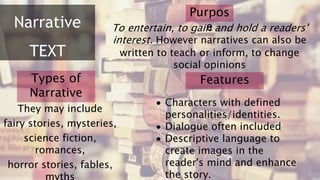
Narrative
TEXT
To entertain, to gain and hold a readers'
interest. However narratives can also be
written to teach or inform, to change
social opinions
Purpos
e
They may include
fairy stories, mysteries,
science fiction,
romances,
horror stories, fables,
Types of
Narrative
Features
 Characters with defined
personalities/identities.
 Dialogue often included
 Descriptive language to
create images in the
reader's mind and enhance
the story.
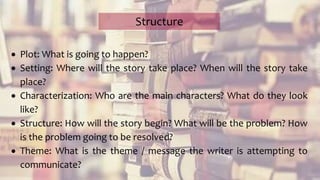
 Plot: What is going to happen?
 Setting: Where will the story take place? When will the story take
place?
 Characterization: Who are the main characters? What do they look
like?
 Structure: How will the story begin? What will be the problem? How
is the problem going to be resolved?
 Theme: What is the theme / message the writer is attempting to
communicate?
Structure
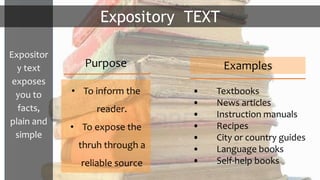
Expository TEXT
Expositor
y text
exposes
you to
facts,
plain and
simple
Purpose
• To inform the
reader.
• To expose the
thruh through a
reliable source
• Textbooks
• News articles
• Instruction manuals
• Recipes
• City or country guides
• Language books
• Self-help books
Examples
ARGUMENTAtive
TEXT
To support ideas presented in
sequence to justify a particular
stand or viewpoint that a
writer is taking.
In other words: to take a
position on some issue and
justify it.
Purpose
-A statement of position at the
beginning .
-A logical sequence
-The argument is put forward in a
series of points with back up evidence
-A good argument shows cause and
effect.
An argument usyally
consists of the
following:
Types of argument:
 To plead a case.
 To promote/sell goods and services.
 To put forward an argument
•Written in the timeless present tense.
•The writer uses repetition of words, phrases and concepts
deliberately, for effect.
•Verbs are used when expressing opinions.
•Strong effective adjectives are used.
•Thought provoking questions are used.
•Use of pronouns (I, we, us) is used to manipulate the reader to
agree with the position argued.
Language
INFORMATIONAL TEXT
It’s a
nonfiction
writing.
Written
with the
purpose
of
informing
the
reader
about a
specific
• Magazines
• science or history
books
• autobiographies
• instruction manuals.
They are written in way that
allows the reader to easily find
key information, and understand
the main topic.
The author provides tables,
diagrams, graphs, and charts, a
table of contents and a glossary
Features
Typically found in
Vocative TEXT
A vocative text is thoughtful and suggestive, rather than
declarative and final, and aims to show experientially
rather than tell rationally
Purpos
e
Elements of a
vocative textTo touch readers,
to engage them
personally with the
text, and to evoke
the lived visceral
qualities of human
• Concreteness
• Evocation
• Intensification
• Tone
• Epiphany
READING STRATEGIES
• General reading comprehension strategies.
• Reading comprehension strategies to read academic
articles.
• Strategies to analyze a reading.
.
General reading
comprehension strategies
Before you start reading anything,
ask yourself why you're reading it.
Are you reading with a purpose,
or just for pleasure? What do you
want to know after you've read it?
Think about what you want to know
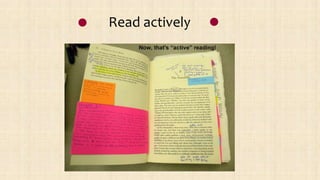
Read actively
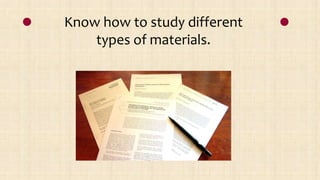
Know how to study different
types of materials.
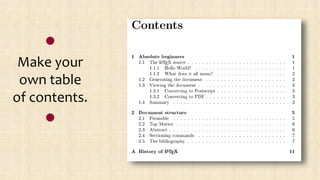
Make your
own table
of contents.
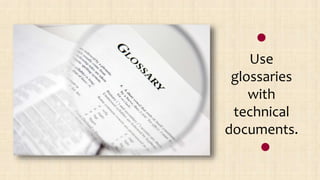
Use
glossaries
with
technical
documents.
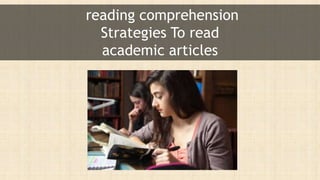
reading comprehension
Strategies To read
academic articles
Before reading ask questions.
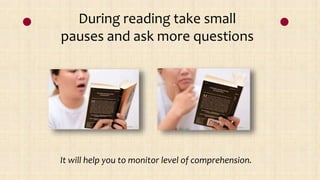
During reading take small
pauses and ask more questions
It will help you to monitor level of comprehension.
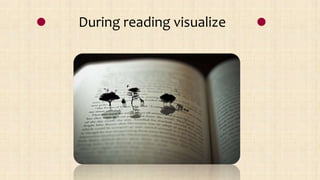
During reading visualize
During reading
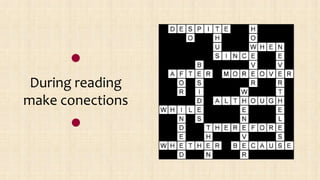
make conections
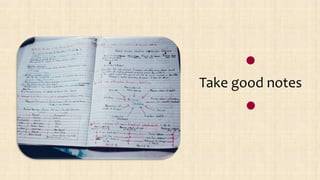
Take good notes
If the article is difficult,
read the abstract or conclusion first.
Watch for the thesis,
and take note of topic sentences.
Strategies To
analyze a reading
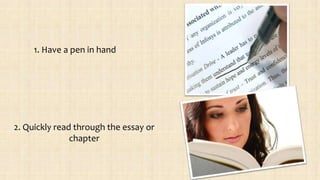
1. Have a pen in hand
2. Quickly read through the essay or
chapter
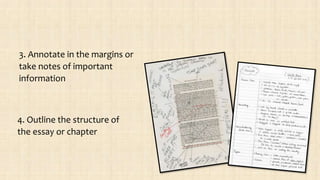
3. Annotate in the margins or
take notes of important
information
4. Outline the structure of
the essay or chapter
5. Read for evidence
and credibility.
6. Identify the audience and
purpose of the reading.
Types of text

Types of text

  • 1.
    Exercises for training interpretation: Exercise3 Lopez Iglesisas, Blanca Dayana LI100110 Lopez Valladares, Karla Elizabeth LV100410 Menjivar Hernandez, Patricia Marlene MH100111 Velazco Torres, Jaqueline Vanessa VT100108 Interpretation class
  • 2.
  • 3.
    DESCRIPTIVE TEXT Features Language Descriptionis used in all forms of writing to create a vivid impression of a person, place, object or event -It engages the reader's attention. -It creates characters. -It sets a mood. Purpose aims to show rather than tell Relies on precisely chosen vocabulary Is focused and concentrates only on the aspects that add something to the main purpose of the
  • 4.
    Narrative TEXT To entertain, togain and hold a readers' interest. However narratives can also be written to teach or inform, to change social opinions Purpos e They may include fairy stories, mysteries, science fiction, romances, horror stories, fables, Types of Narrative Features  Characters with defined personalities/identities.  Dialogue often included  Descriptive language to create images in the reader's mind and enhance the story.
  • 5.
     Plot: Whatis going to happen?  Setting: Where will the story take place? When will the story take place?  Characterization: Who are the main characters? What do they look like?  Structure: How will the story begin? What will be the problem? How is the problem going to be resolved?  Theme: What is the theme / message the writer is attempting to communicate? Structure
  • 6.
    Expository TEXT Expositor y text exposes youto facts, plain and simple Purpose • To inform the reader. • To expose the thruh through a reliable source • Textbooks • News articles • Instruction manuals • Recipes • City or country guides • Language books • Self-help books Examples
  • 7.
    ARGUMENTAtive TEXT To support ideaspresented in sequence to justify a particular stand or viewpoint that a writer is taking. In other words: to take a position on some issue and justify it. Purpose -A statement of position at the beginning . -A logical sequence -The argument is put forward in a series of points with back up evidence -A good argument shows cause and effect. An argument usyally consists of the following:
  • 8.
    Types of argument: To plead a case.  To promote/sell goods and services.  To put forward an argument •Written in the timeless present tense. •The writer uses repetition of words, phrases and concepts deliberately, for effect. •Verbs are used when expressing opinions. •Strong effective adjectives are used. •Thought provoking questions are used. •Use of pronouns (I, we, us) is used to manipulate the reader to agree with the position argued. Language
  • 9.
    INFORMATIONAL TEXT It’s a nonfiction writing. Written withthe purpose of informing the reader about a specific • Magazines • science or history books • autobiographies • instruction manuals. They are written in way that allows the reader to easily find key information, and understand the main topic. The author provides tables, diagrams, graphs, and charts, a table of contents and a glossary Features Typically found in
  • 10.
    Vocative TEXT A vocativetext is thoughtful and suggestive, rather than declarative and final, and aims to show experientially rather than tell rationally Purpos e Elements of a vocative textTo touch readers, to engage them personally with the text, and to evoke the lived visceral qualities of human • Concreteness • Evocation • Intensification • Tone • Epiphany
  • 11.
    READING STRATEGIES • Generalreading comprehension strategies. • Reading comprehension strategies to read academic articles. • Strategies to analyze a reading.
  • 12.
  • 13.
    Before you startreading anything, ask yourself why you're reading it. Are you reading with a purpose, or just for pleasure? What do you want to know after you've read it? Think about what you want to know
  • 14.
  • 15.
    Know how tostudy different types of materials.
  • 16.
  • 17.
  • 18.
  • 19.
  • 20.
    During reading takesmall pauses and ask more questions It will help you to monitor level of comprehension.
  • 21.
  • 22.
  • 23.
  • 24.
    If the articleis difficult, read the abstract or conclusion first.
  • 25.
    Watch for thethesis, and take note of topic sentences.
  • 26.
  • 27.
    1. Have apen in hand 2. Quickly read through the essay or chapter
  • 28.
    3. Annotate inthe margins or take notes of important information 4. Outline the structure of the essay or chapter
  • 29.
    5. Read forevidence and credibility. 6. Identify the audience and purpose of the reading.