Presentation on Auditor Duty Regarding
Detection, Documentation, and Reporting of
Fraud:
Presented by:
Ankit Raya
Reg. No. FN002280
ICAN
In the era of changing technology and
modernization, people have found the new
way of committing the fraud and hiding it.
The fraud is difficult to detect when it is
caused by superior leader having the ability
to hide it
NSA 240 deals with Auditor responsibility
towards detection, reporting and
documentation of fraud
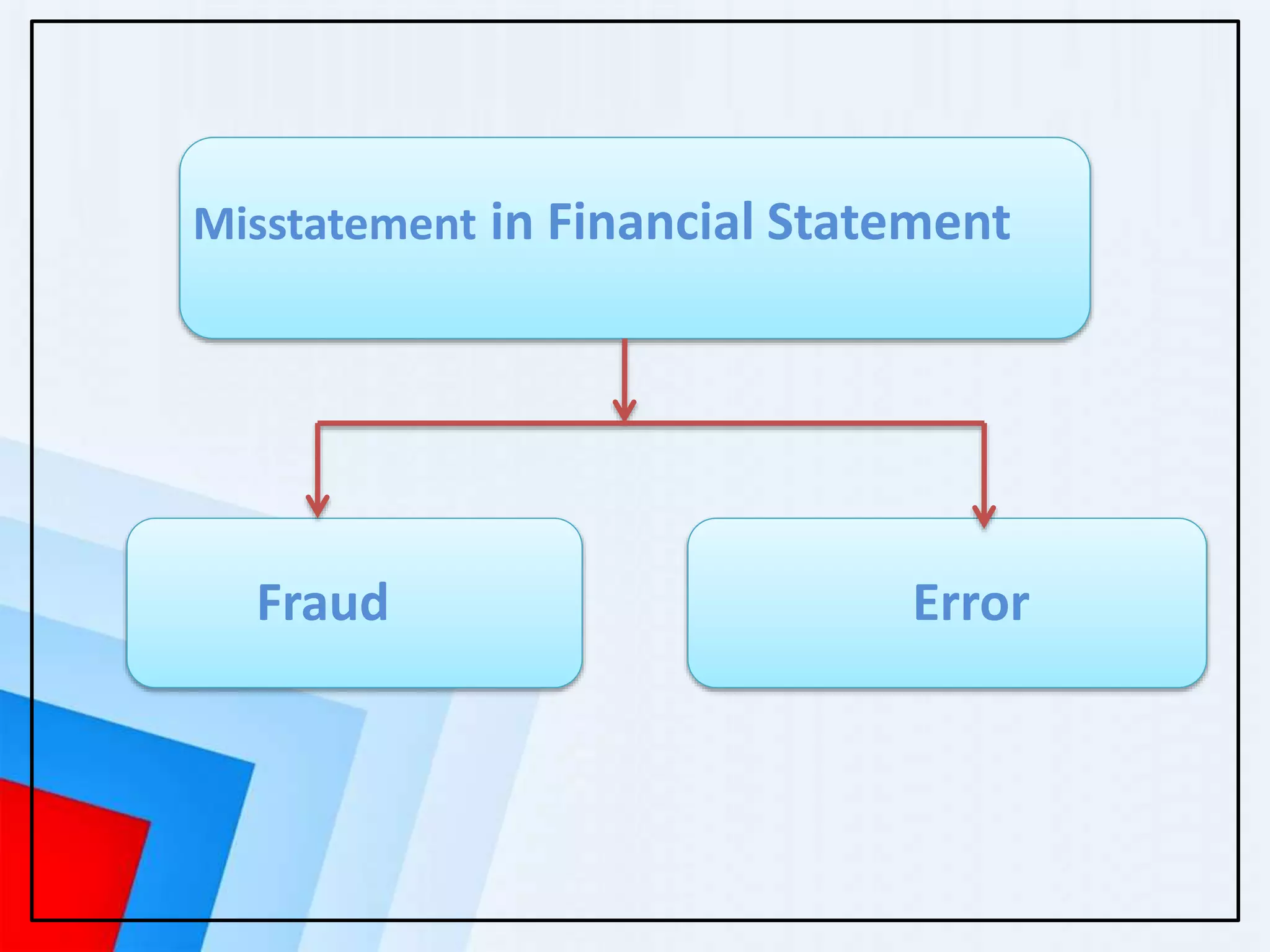
Misstatement in Financial Statement
ErrorFraud
Error refers to an unintentional misstatement in
financial statement, including the omission of
amount or a disclosure, such as
•A mistake in gathering or processing data.
•An incorrect accounting estimate arising from
oversight or misinterpretation of fact and
•A mistake in the application of accounting principle
relating to measuring, recognizition, etc
.
Fraud can be further split into two types:
I. Fraudulent financial reporting
II. Misappropriation of assets
Fraud refers to an intentional act by one or more individuals
among management, those charged with governance,
employees, or third parties, involving the use of deception to
obtain an unjust or illegal advantage
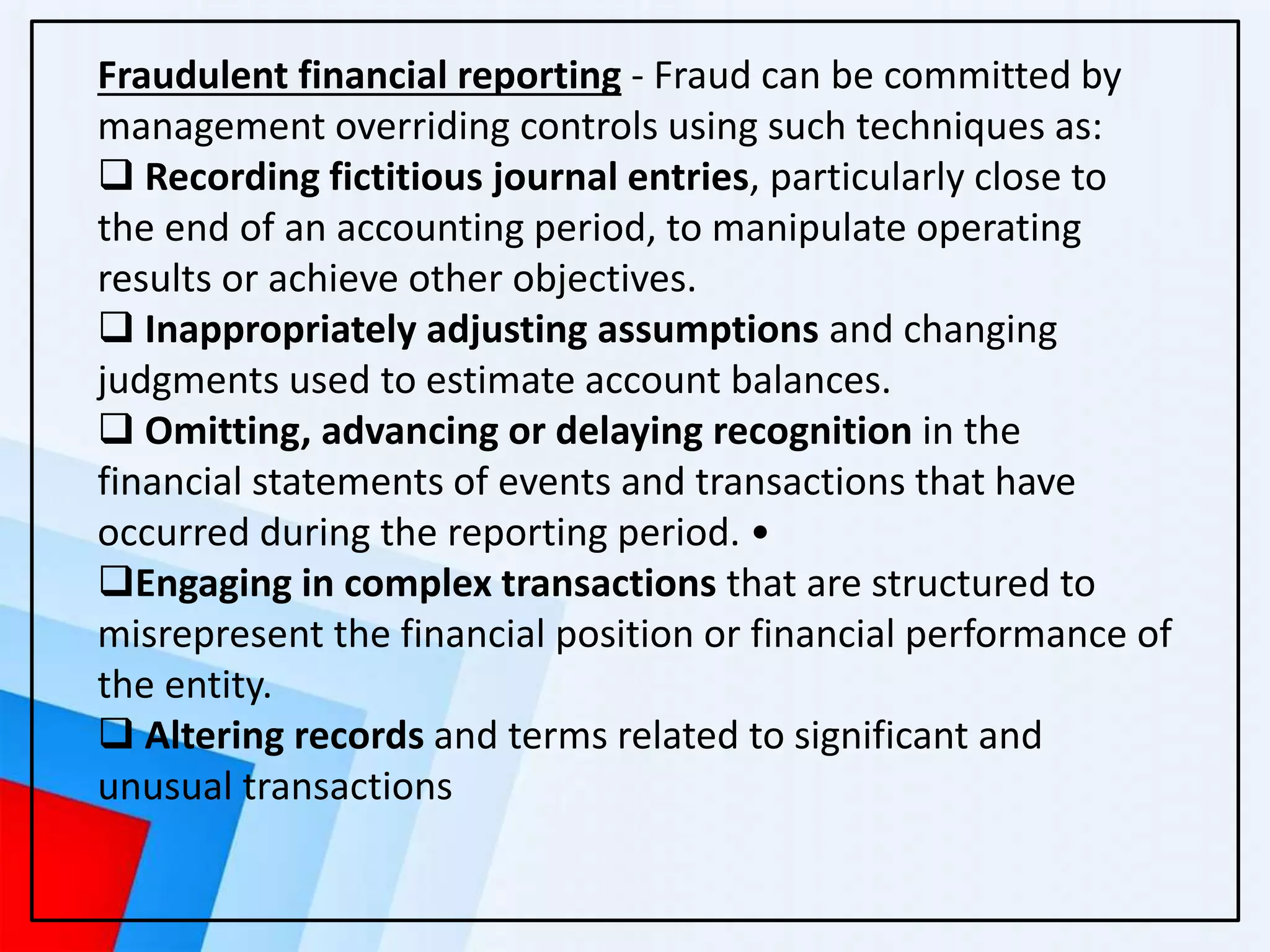
Fraudulent financial reporting - Fraud can be committed by
management overriding controls using such techniques as:
 Recording fictitious journal entries, particularly close to
the end of an accounting period, to manipulate operating
results or achieve other objectives.
 Inappropriately adjusting assumptions and changing
judgments used to estimate account balances.
 Omitting, advancing or delaying recognition in the
financial statements of events and transactions that have
occurred during the reporting period. •
Engaging in complex transactions that are structured to
misrepresent the financial position or financial performance of
the entity.
 Altering records and terms related to significant and
unusual transactions
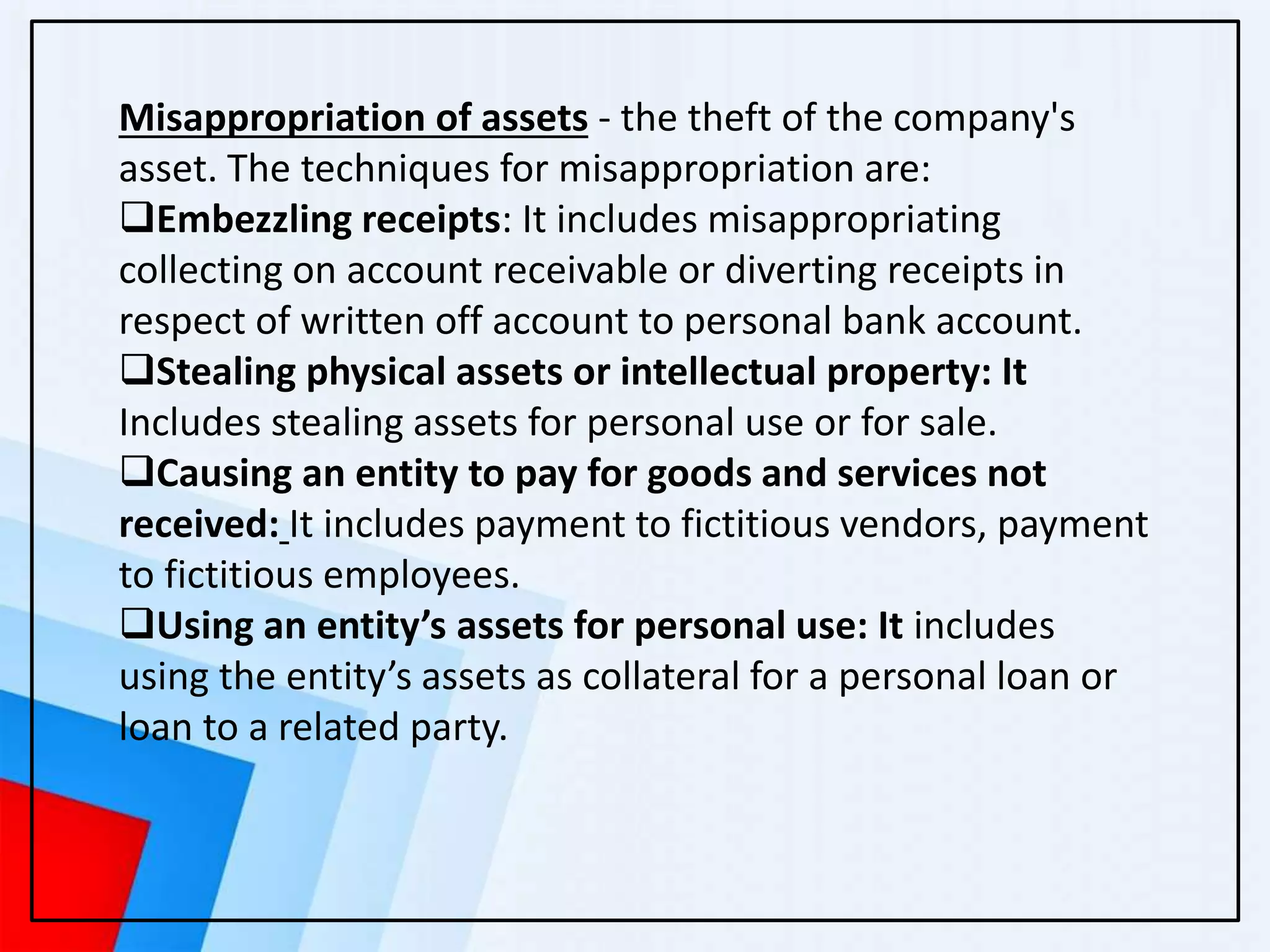
Misappropriation of assets - the theft of the company's
asset. The techniques for misappropriation are:
Embezzling receipts: It includes misappropriating
collecting on account receivable or diverting receipts in
respect of written off account to personal bank account.
Stealing physical assets or intellectual property: It
Includes stealing assets for personal use or for sale.
Causing an entity to pay for goods and services not
received: It includes payment to fictitious vendors, payment
to fictitious employees.
Using an entity’s assets for personal use: It includes
using the entity’s assets as collateral for a personal loan or
loan to a related party.
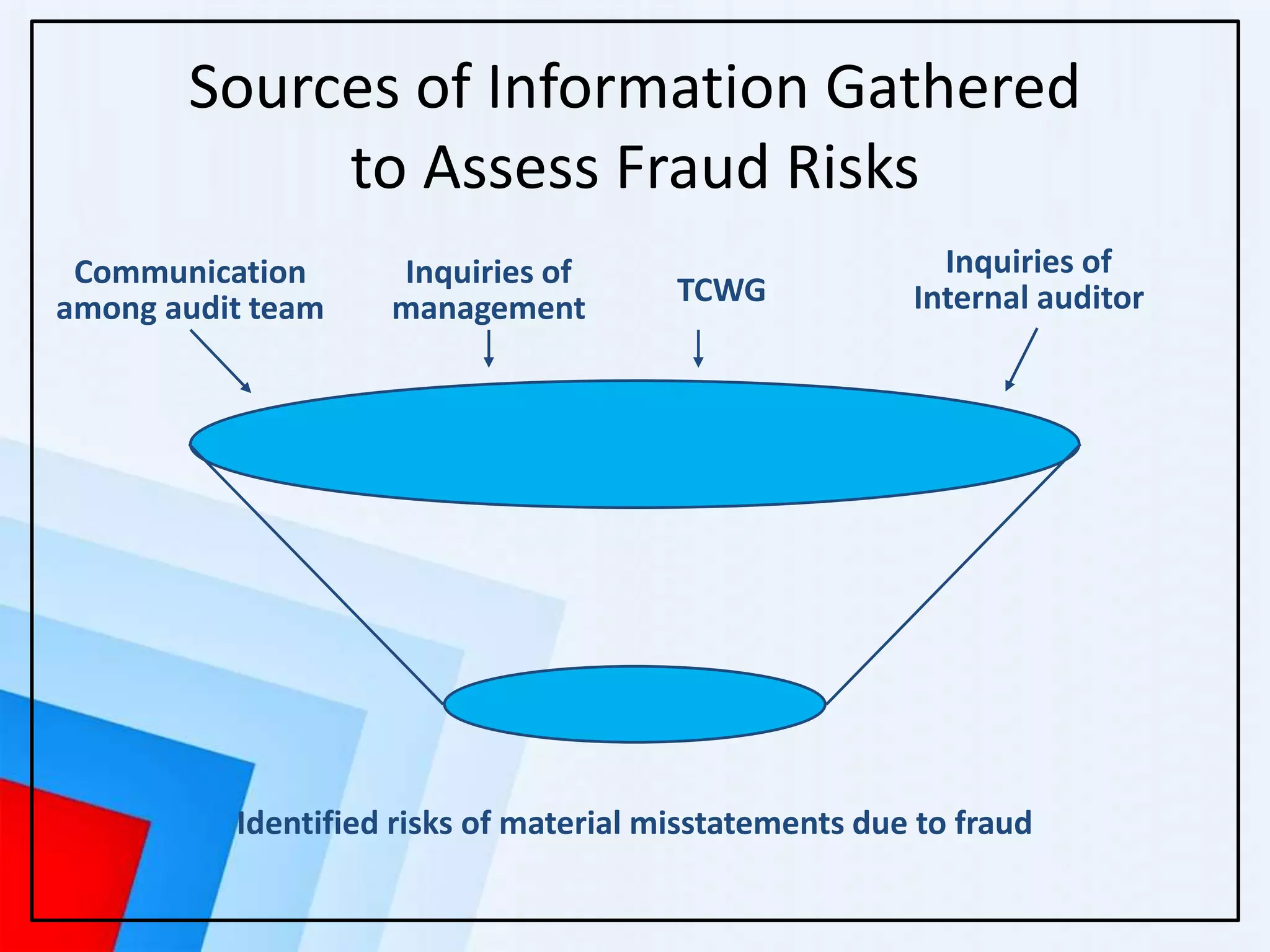
Sources of Information Gathered
to Assess Fraud Risks
Communication
among audit team
Inquiries of
management
Identified risks of material misstatements due to fraud
TCWG
Inquiries of
Internal auditor
Fraud Is Detected and cause by:
Communicate with TCWG and discuss
NTE of audit procedure to
complete the audit
If the auditor has doubt about the
Integrity of TCWG they should seek
Legal advice regarding an appropriate
Cource of action
Report to the managementEmployee
TCWG
Management
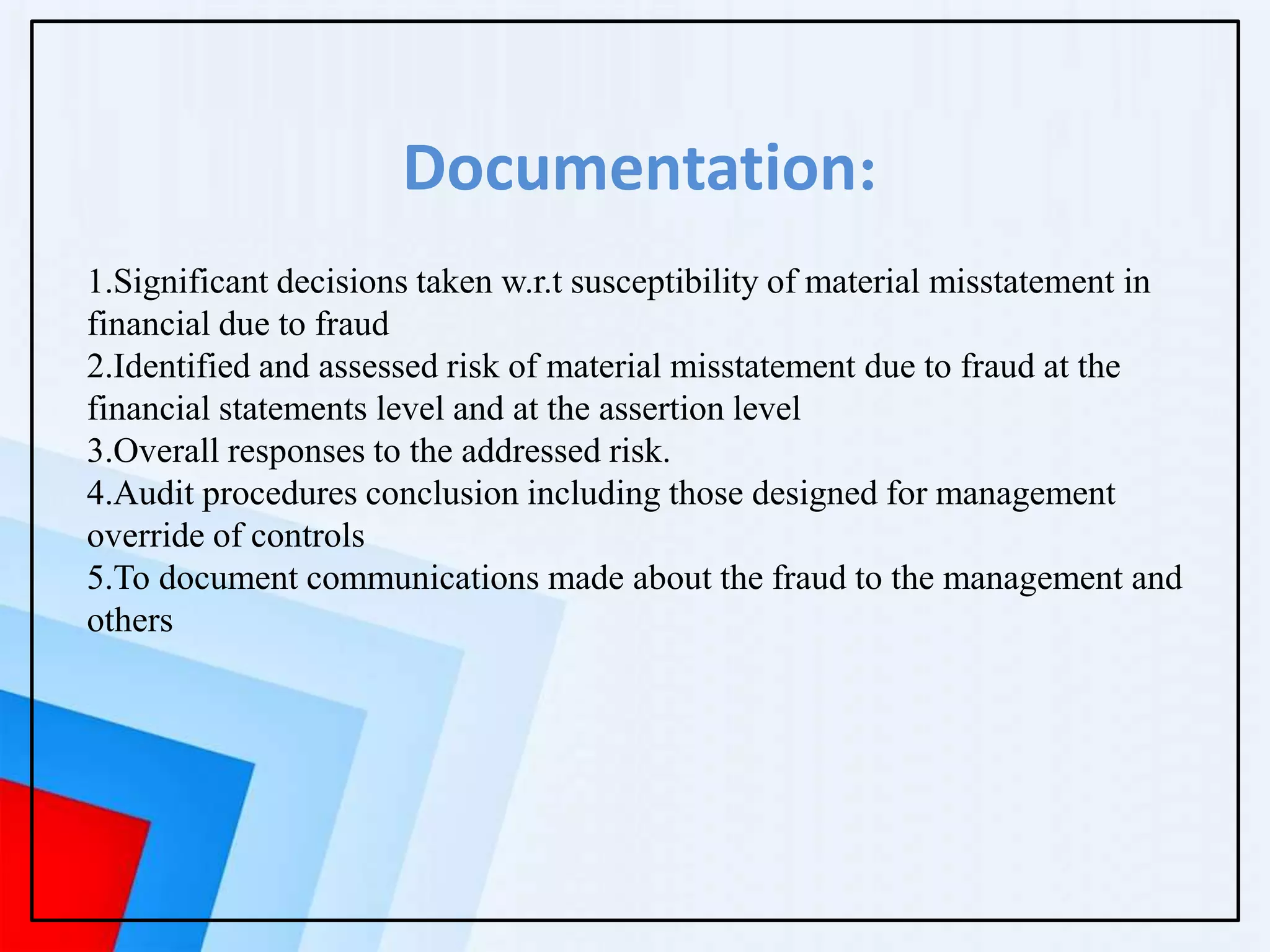
Documentation:
1.Significant decisions taken w.r.t susceptibility of material misstatement in
financial due to fraud
2.Identified and assessed risk of material misstatement due to fraud at the
financial statements level and at the assertion level
3.Overall responses to the addressed risk.
4.Audit procedures conclusion including those designed for management
override of controls
5.To document communications made about the fraud to the management and
others
The End

Auditor detection of fraud

  • 2.
    Presentation on AuditorDuty Regarding Detection, Documentation, and Reporting of Fraud: Presented by: Ankit Raya Reg. No. FN002280 ICAN
  • 3.
    In the eraof changing technology and modernization, people have found the new way of committing the fraud and hiding it. The fraud is difficult to detect when it is caused by superior leader having the ability to hide it NSA 240 deals with Auditor responsibility towards detection, reporting and documentation of fraud
  • 4.
    Misstatement in FinancialStatement ErrorFraud
  • 5.
    Error refers toan unintentional misstatement in financial statement, including the omission of amount or a disclosure, such as •A mistake in gathering or processing data. •An incorrect accounting estimate arising from oversight or misinterpretation of fact and •A mistake in the application of accounting principle relating to measuring, recognizition, etc .
  • 6.
    Fraud can befurther split into two types: I. Fraudulent financial reporting II. Misappropriation of assets Fraud refers to an intentional act by one or more individuals among management, those charged with governance, employees, or third parties, involving the use of deception to obtain an unjust or illegal advantage
  • 7.
    Fraudulent financial reporting- Fraud can be committed by management overriding controls using such techniques as:  Recording fictitious journal entries, particularly close to the end of an accounting period, to manipulate operating results or achieve other objectives.  Inappropriately adjusting assumptions and changing judgments used to estimate account balances.  Omitting, advancing or delaying recognition in the financial statements of events and transactions that have occurred during the reporting period. • Engaging in complex transactions that are structured to misrepresent the financial position or financial performance of the entity.  Altering records and terms related to significant and unusual transactions
  • 8.
    Misappropriation of assets- the theft of the company's asset. The techniques for misappropriation are: Embezzling receipts: It includes misappropriating collecting on account receivable or diverting receipts in respect of written off account to personal bank account. Stealing physical assets or intellectual property: It Includes stealing assets for personal use or for sale. Causing an entity to pay for goods and services not received: It includes payment to fictitious vendors, payment to fictitious employees. Using an entity’s assets for personal use: It includes using the entity’s assets as collateral for a personal loan or loan to a related party.
  • 9.
    Sources of InformationGathered to Assess Fraud Risks Communication among audit team Inquiries of management Identified risks of material misstatements due to fraud TCWG Inquiries of Internal auditor
  • 10.
    Fraud Is Detectedand cause by: Communicate with TCWG and discuss NTE of audit procedure to complete the audit If the auditor has doubt about the Integrity of TCWG they should seek Legal advice regarding an appropriate Cource of action Report to the managementEmployee TCWG Management
  • 11.
    Documentation: 1.Significant decisions takenw.r.t susceptibility of material misstatement in financial due to fraud 2.Identified and assessed risk of material misstatement due to fraud at the financial statements level and at the assertion level 3.Overall responses to the addressed risk. 4.Audit procedures conclusion including those designed for management override of controls 5.To document communications made about the fraud to the management and others
  • 12.