CHAPTER 2
AN OVERVIEW OF
AUDITING
An Overview of Auditing
 Topics covered;
 Generally accepted auditing practice
 Competence, independence, and confidentiality
 Audit planning and supervision
 Audit evidence
 Gathering audit evidence
 Auditing in depth
 Test check
 Precautions relating test checks
 Sampling factors
 Compliance to accounting, auditing standards and enactments
 Accounting/auditing statements, guidance notes, and standards
 Auditing and information technology
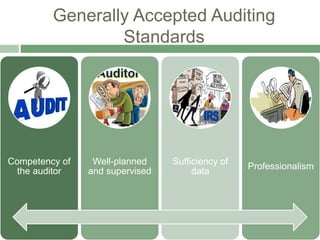
Generally Accepted Auditing
Standards
Competency of
the auditor
Well-planned
and supervised
Sufficiency of
data
Professionalism
Competence, Independence, and
Confidentiality
 Chartered accountants are competent by
practical training and passing prescribed
examination.
 Acting without fear or favor independent.
 The following persons aren’t independent;
 Employee of the company
 Partner of the company
 A person who has debt
 Must keep all information confidential. Can
disclose in case of legal or professional
requirements.
Audit Planning and Supervision
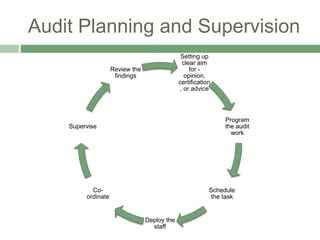
Setting up
clear aim
for -
opinion,
certification
, or advice
Program
the audit
work
Schedule
the task
Deploy the
staff
Co-
ordinate
Supervise
Review the
findings
Audit Evidence
 Audit evidence must
be;
 Sufficient
 Appropriate
 Relevant
 Enough
 Procedures followed;
 Compliance- for large
organizations where
systematic
transactions occur
and maintained
meaning internal
control mechanism is
good.
 Substantive –
checking of evidence
for completeness,
accuracy, and validity
within a very good
systematic
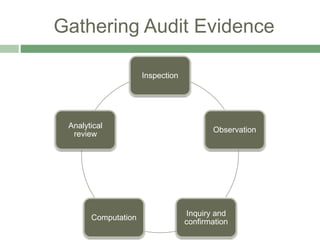
Gathering Audit Evidence
Inspection
Observation
Inquiry and
confirmation
Computation
Analytical
review
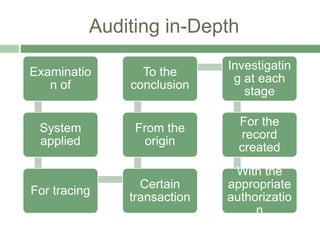
Auditing in-Depth
Examinatio
n of
System
applied
For tracing
Certain
transaction
From the
origin
To the
conclusion
Investigatin
g at each
stage
For the
record
created
With the
appropriate
authorizatio
n
Test Check
 To select and examine
 A representative sample
 From a large number
 Of similar items
 No need to check all the transaction
Test Checks Precautions
 Check every entry
 Randomly
 Different period and entry for different check
 Check for large entry
 Check for entry by different staff
 Avoid cash book audit
Factors Determining Size of
Sample
Internal
control
system
Nature
and
volume
of
busines
s
Time
Audit
aim
Risk
toleranc
e level
Previou
s
history
Analytic
al
review
Accounting Compliance, Audit
Standards and Enactments
GAA
P
• Double entry
• Book-value vs.
market value
• Accrual concept
• Capital vs. revenue
expenditure
• Conservatism
Accounting/Auditing Statements,
Guidance, and Standards
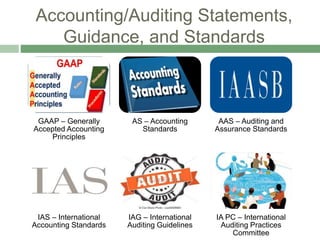
GAAP – Generally
Accepted Accounting
Principles
AS – Accounting
Standards
AAS – Auditing and
Assurance Standards
IAS – International
Accounting Standards
IAG – International
Auditing Guidelines
IA PC – International
Auditing Practices
Committee

Auditing Chapter 2

  • 1.
  • 2.
    An Overview ofAuditing  Topics covered;  Generally accepted auditing practice  Competence, independence, and confidentiality  Audit planning and supervision  Audit evidence  Gathering audit evidence  Auditing in depth  Test check  Precautions relating test checks  Sampling factors  Compliance to accounting, auditing standards and enactments  Accounting/auditing statements, guidance notes, and standards  Auditing and information technology
  • 3.
    Generally Accepted Auditing Standards Competencyof the auditor Well-planned and supervised Sufficiency of data Professionalism
  • 4.
    Competence, Independence, and Confidentiality Chartered accountants are competent by practical training and passing prescribed examination.  Acting without fear or favor independent.  The following persons aren’t independent;  Employee of the company  Partner of the company  A person who has debt  Must keep all information confidential. Can disclose in case of legal or professional requirements.
  • 5.
    Audit Planning andSupervision Setting up clear aim for - opinion, certification , or advice Program the audit work Schedule the task Deploy the staff Co- ordinate Supervise Review the findings
  • 6.
    Audit Evidence  Auditevidence must be;  Sufficient  Appropriate  Relevant  Enough  Procedures followed;  Compliance- for large organizations where systematic transactions occur and maintained meaning internal control mechanism is good.  Substantive – checking of evidence for completeness, accuracy, and validity within a very good systematic
  • 7.
    Gathering Audit Evidence Inspection Observation Inquiryand confirmation Computation Analytical review
  • 8.
    Auditing in-Depth Examinatio n of System applied Fortracing Certain transaction From the origin To the conclusion Investigatin g at each stage For the record created With the appropriate authorizatio n
  • 9.
    Test Check  Toselect and examine  A representative sample  From a large number  Of similar items  No need to check all the transaction
  • 10.
    Test Checks Precautions Check every entry  Randomly  Different period and entry for different check  Check for large entry  Check for entry by different staff  Avoid cash book audit
  • 11.
    Factors Determining Sizeof Sample Internal control system Nature and volume of busines s Time Audit aim Risk toleranc e level Previou s history Analytic al review
  • 12.
    Accounting Compliance, Audit Standardsand Enactments GAA P • Double entry • Book-value vs. market value • Accrual concept • Capital vs. revenue expenditure • Conservatism
  • 13.
    Accounting/Auditing Statements, Guidance, andStandards GAAP – Generally Accepted Accounting Principles AS – Accounting Standards AAS – Auditing and Assurance Standards IAS – International Accounting Standards IAG – International Auditing Guidelines IA PC – International Auditing Practices Committee