Downloaded 215 times
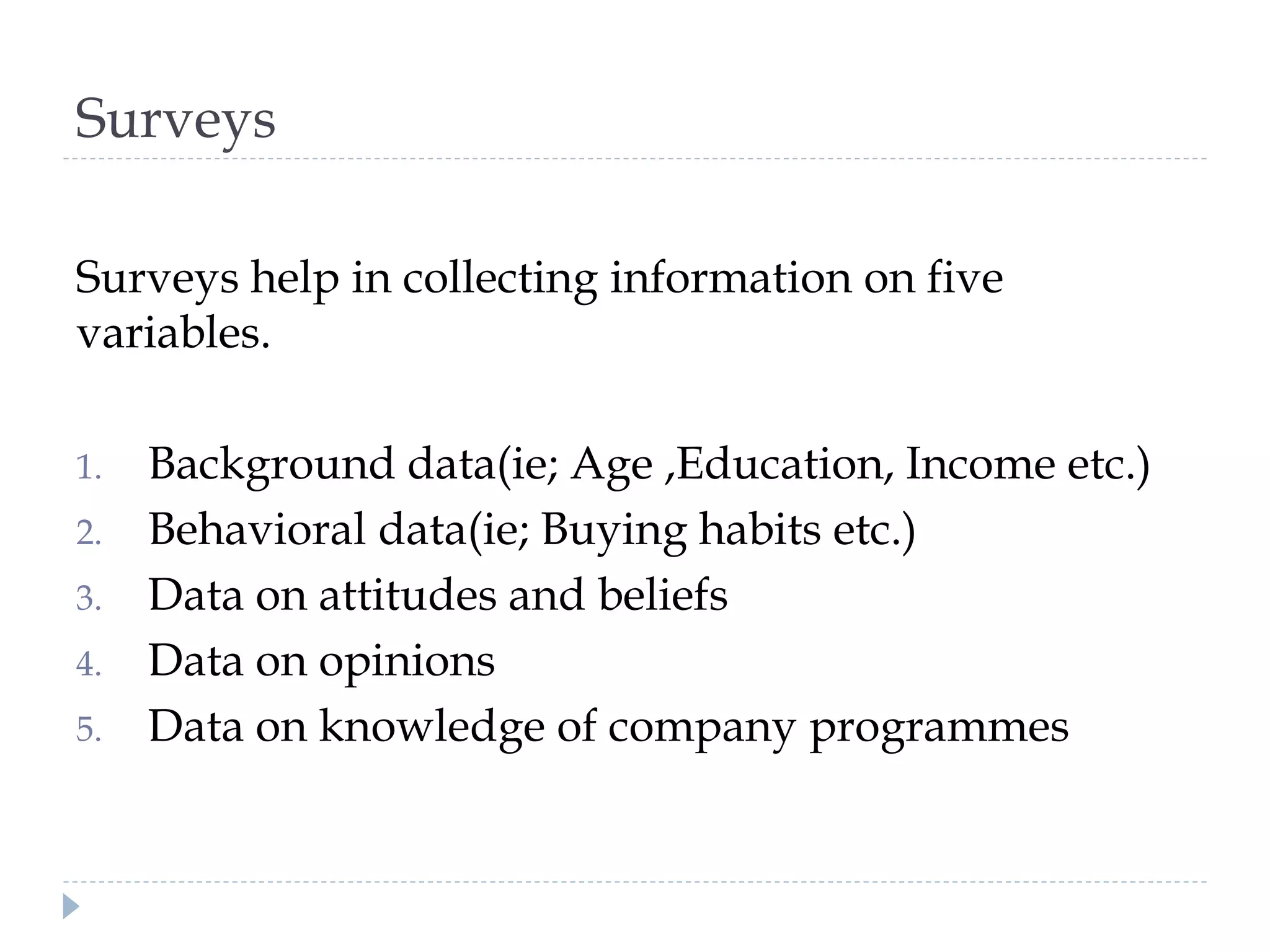
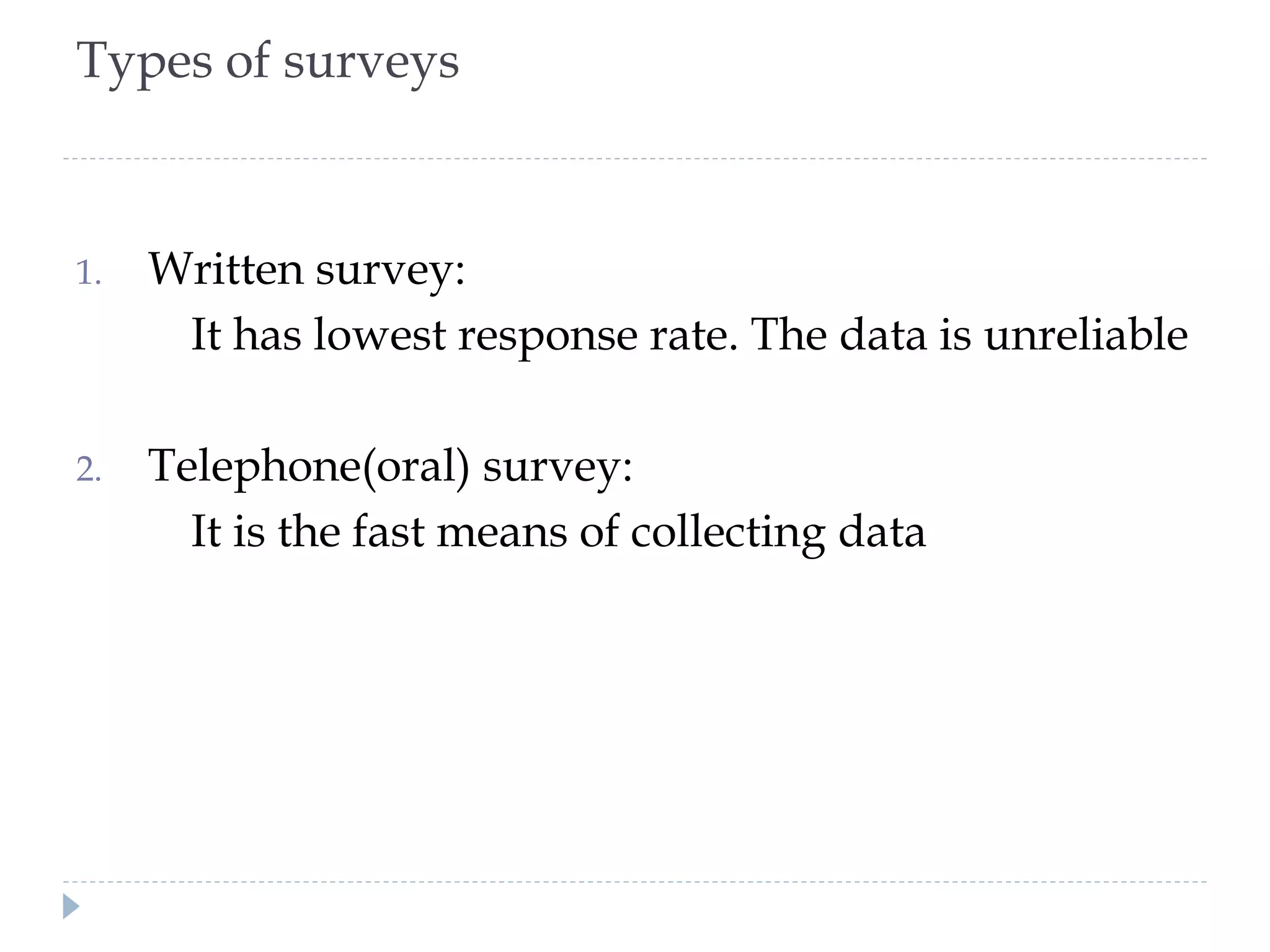
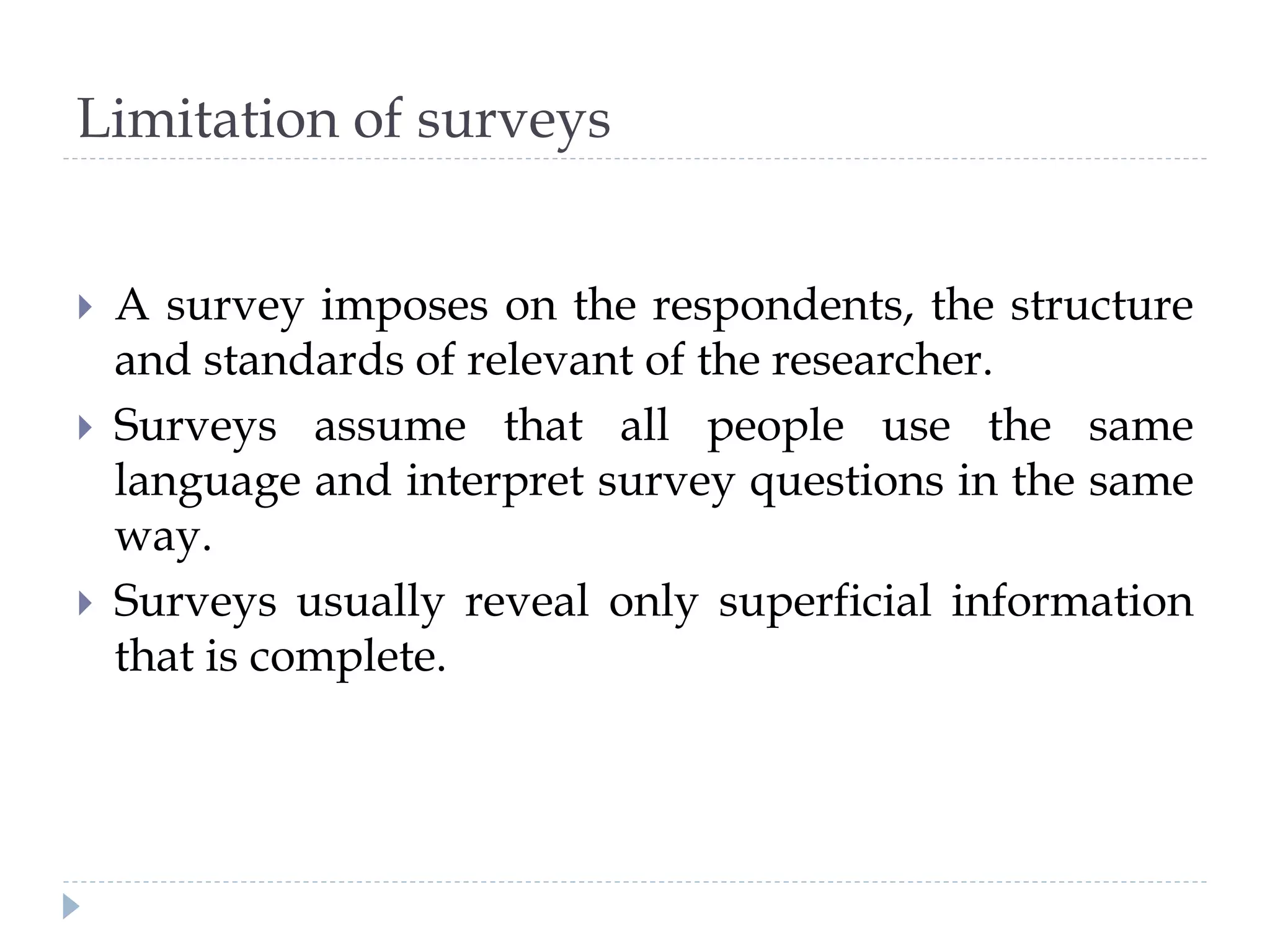
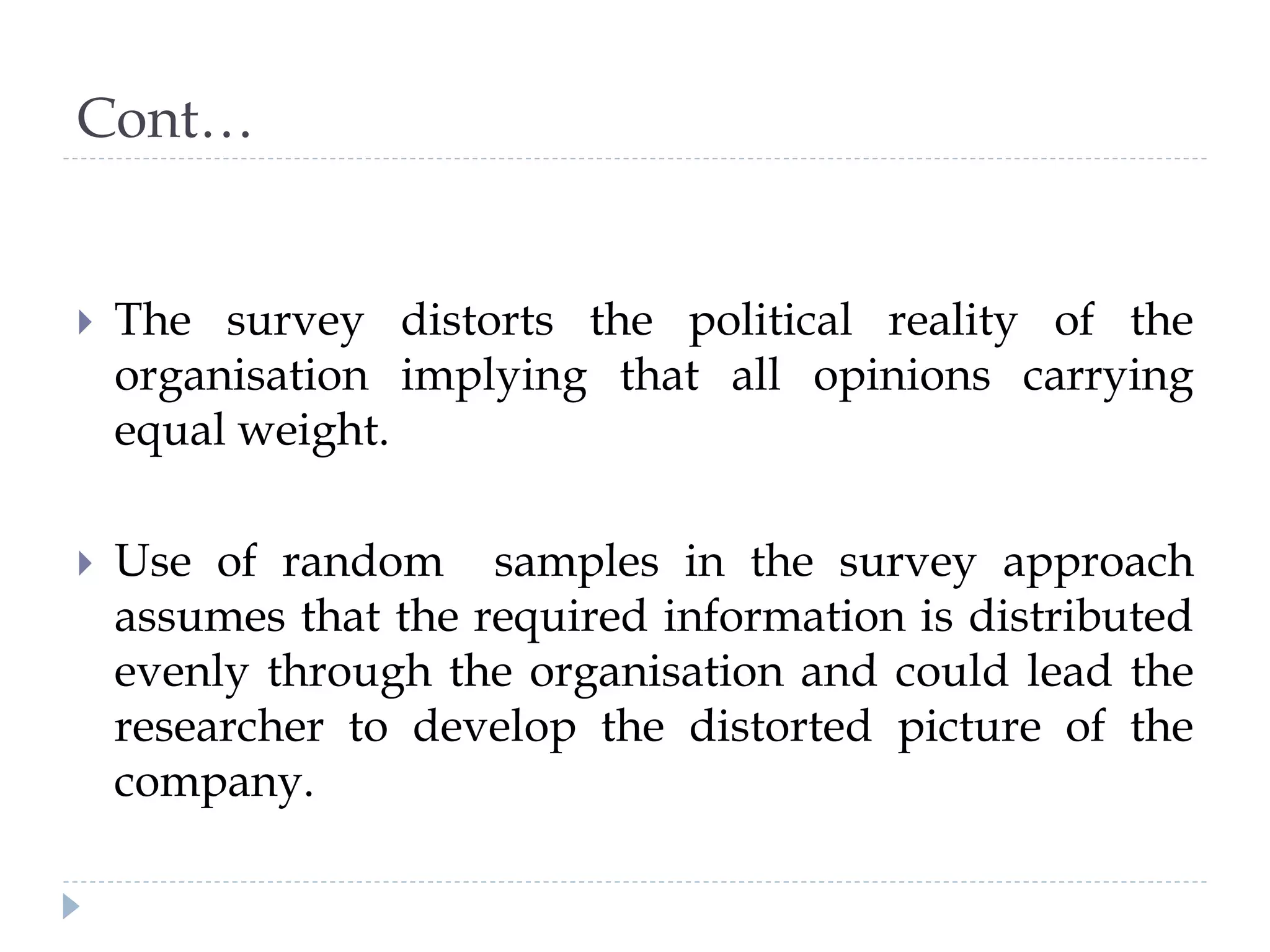
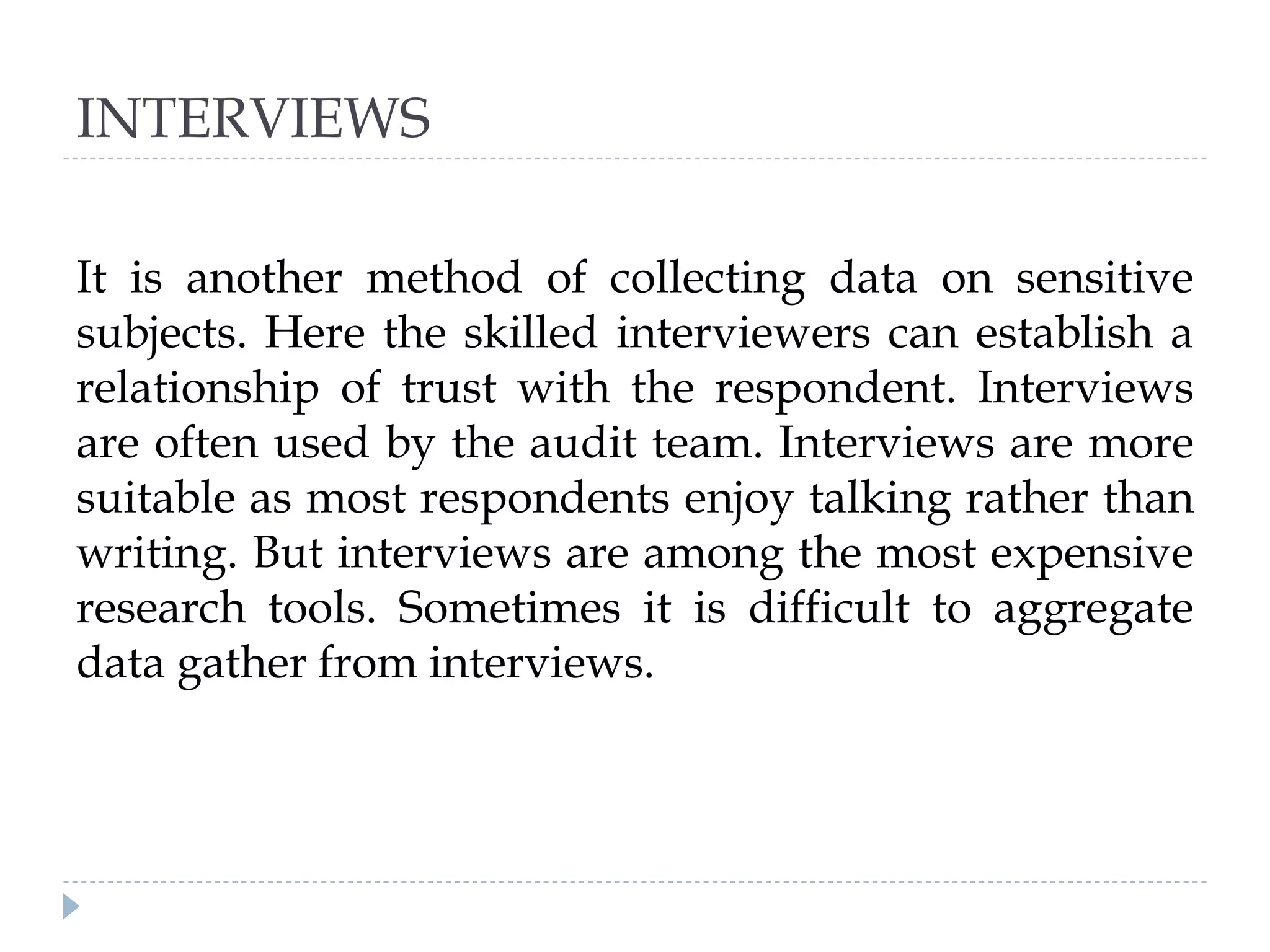
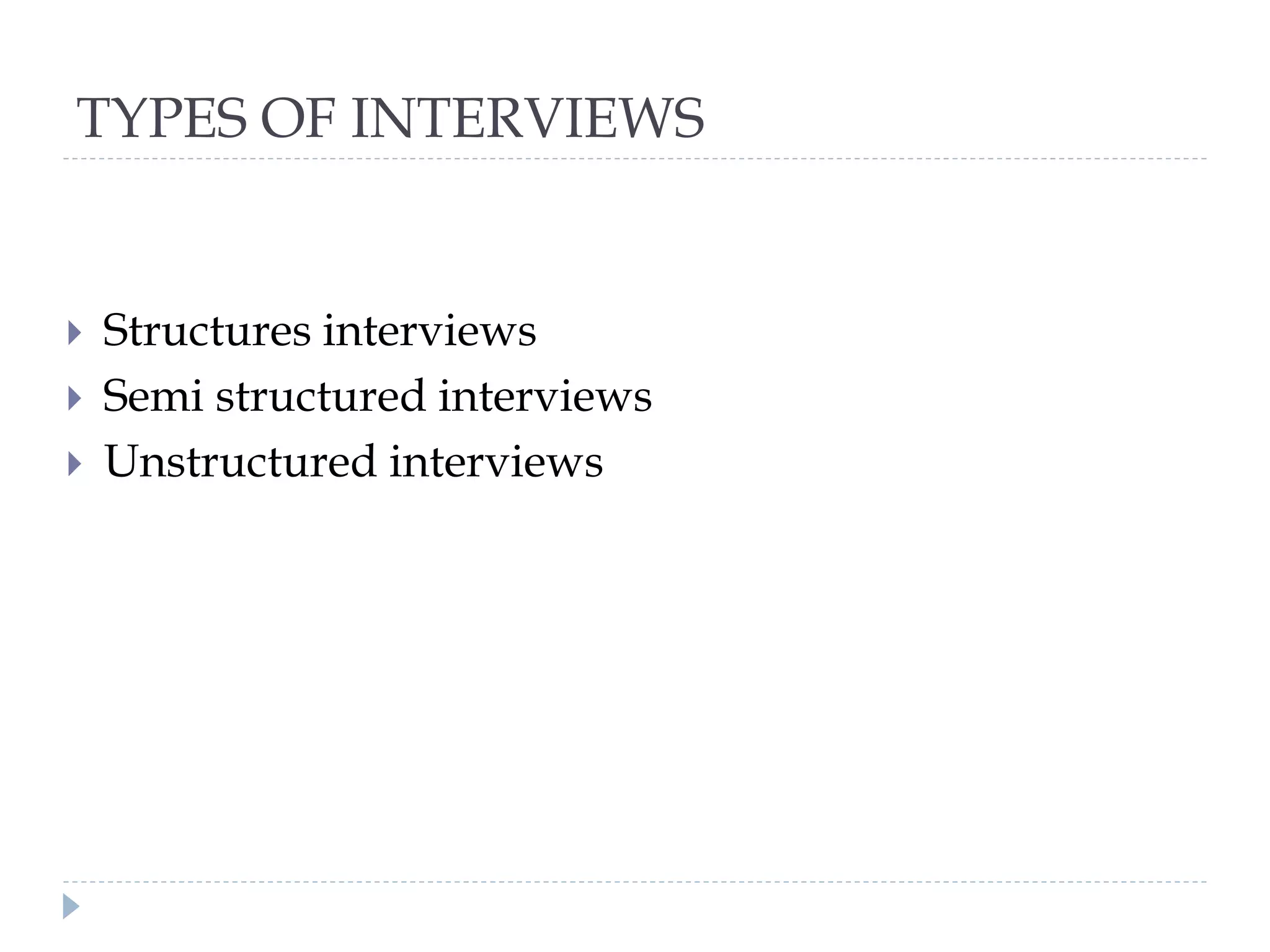
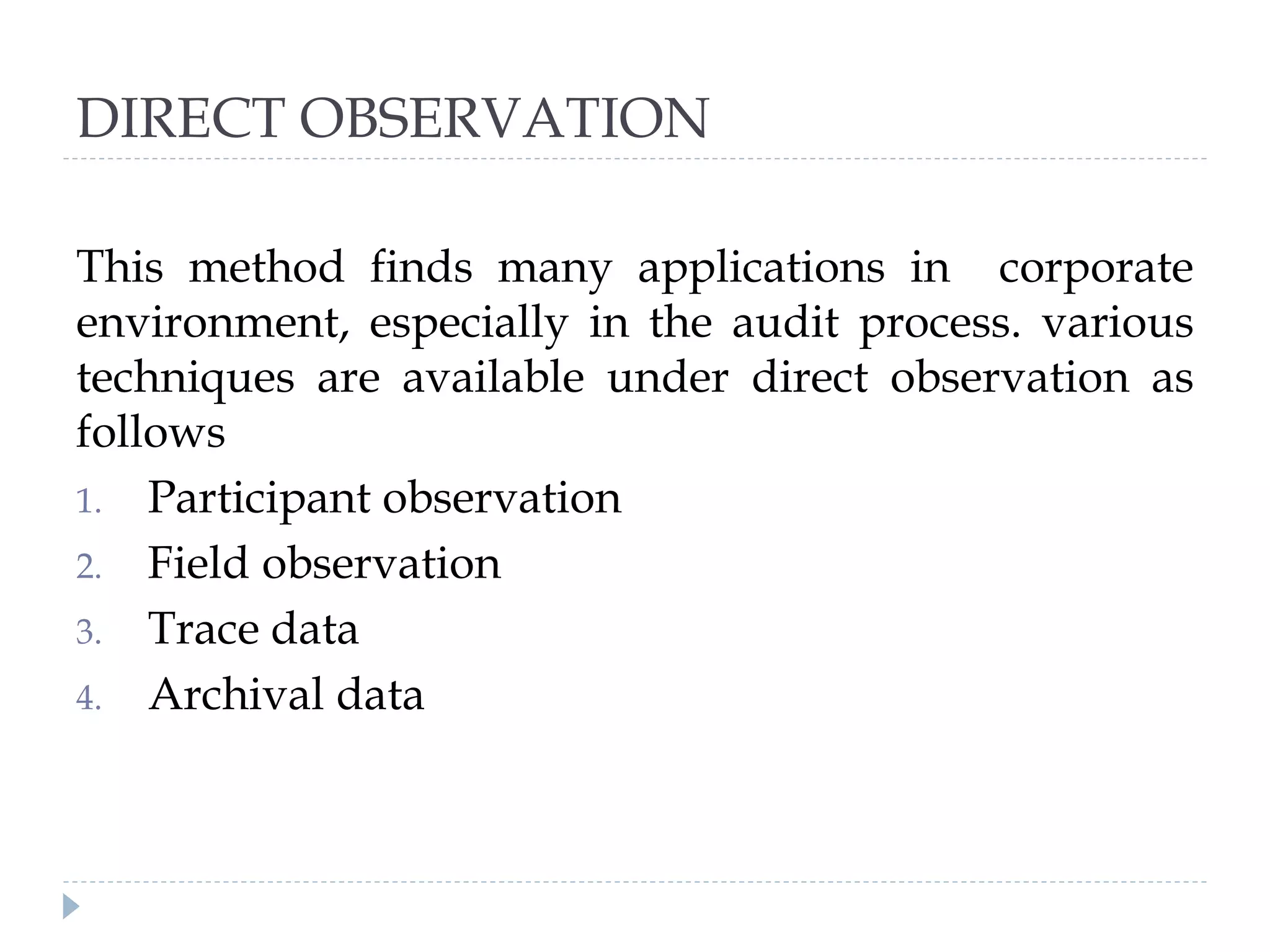


This document discusses various tools and techniques that can be used for auditing, including surveys, questionnaires, interviews, focus groups, and direct observation. Surveys are useful for collecting background data, behavioral data, attitudes, opinions, and knowledge, but have limitations such as imposing the researcher's structure and not capturing deeper information. Questionnaires guide interviews and distribute questions, while focus groups allow collection of more information from groups of 5-10 people. Interviews can establish trust but are expensive. Direct observation techniques include participant observation, field observation, trace data, and archival data. Overall, the document provides an overview of common qualitative and quantitative audit data collection methods.


![business research method chp 7]](https://cdn.slidesharecdn.com/ss_thumbnails/brmchp7-160111102915-thumbnail.jpg?width=640&height=640&fit=bounds)


