This document summarizes several theories of audience from the 20th century:
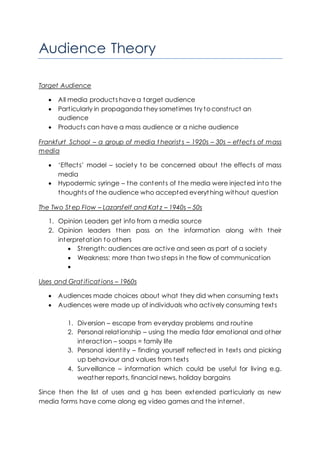
- The Frankfurt School in the 1920s-30s viewed audiences as passive receivers of media messages.
- The Two Step Flow theory from the 1940s argued that opinion leaders influence how audiences interpret media messages.
- Uses and Gratifications from the 1960s saw audiences as active individuals who choose media to fulfill specific needs like diversion, relationships, identity, and information.
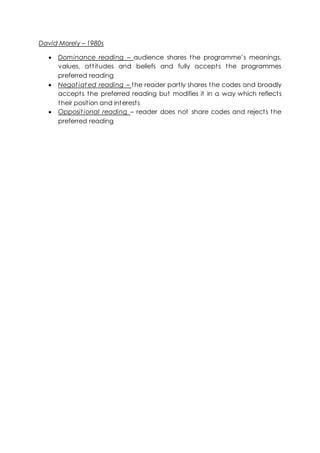
- David Morley's work in the 1980s identified different types of readings that audiences can take, from fully sharing the media's intended meanings to negotiating or opposing them based on their own views.