MARY THE QUEEN COLLEGE OF QUEZON CITY, INC.
SUBJECT: Inorganic Chemistry
TOPIC:Atoms and Molecules
Prepared by: Felix S. Carbonell , BEEd3
Submitted to: Ms. Jennifer Laco
I. Atoms and Molecules
Atoms – Atom is the smallest indivisible unit of a chemical substances
1. Indivisible – A Greek work means Uncuttable or can’t be cut further.
Molecules - a group of atoms bonded together, representing the smallest
fundamental unit of a chemical compound that can take part in a chemical
reaction.
Note: Atoms can only see by using of Microscopic Machine.
II. What are the differences and similarities between atoms and
molecules?
Molecules are formed by the combination of two or more atoms. Unlike
atoms, molecules can be subdivided to individual atoms. The atoms are
bonded together in a molecule. Molecules also are not visible to the naked eye,
while can be seen through highly magnifying microscopes and other scientific
devices. Water is comprised of numerous water molecules. Each water
molecule is made up of one oxygen atom and two hydrogen atoms. So a water
molecule can be further divided into oxygen and hydrogen atoms. But these
atoms cannot be subdivided. In a molecule, atoms are bonded together by
single, double, or triple bonds.
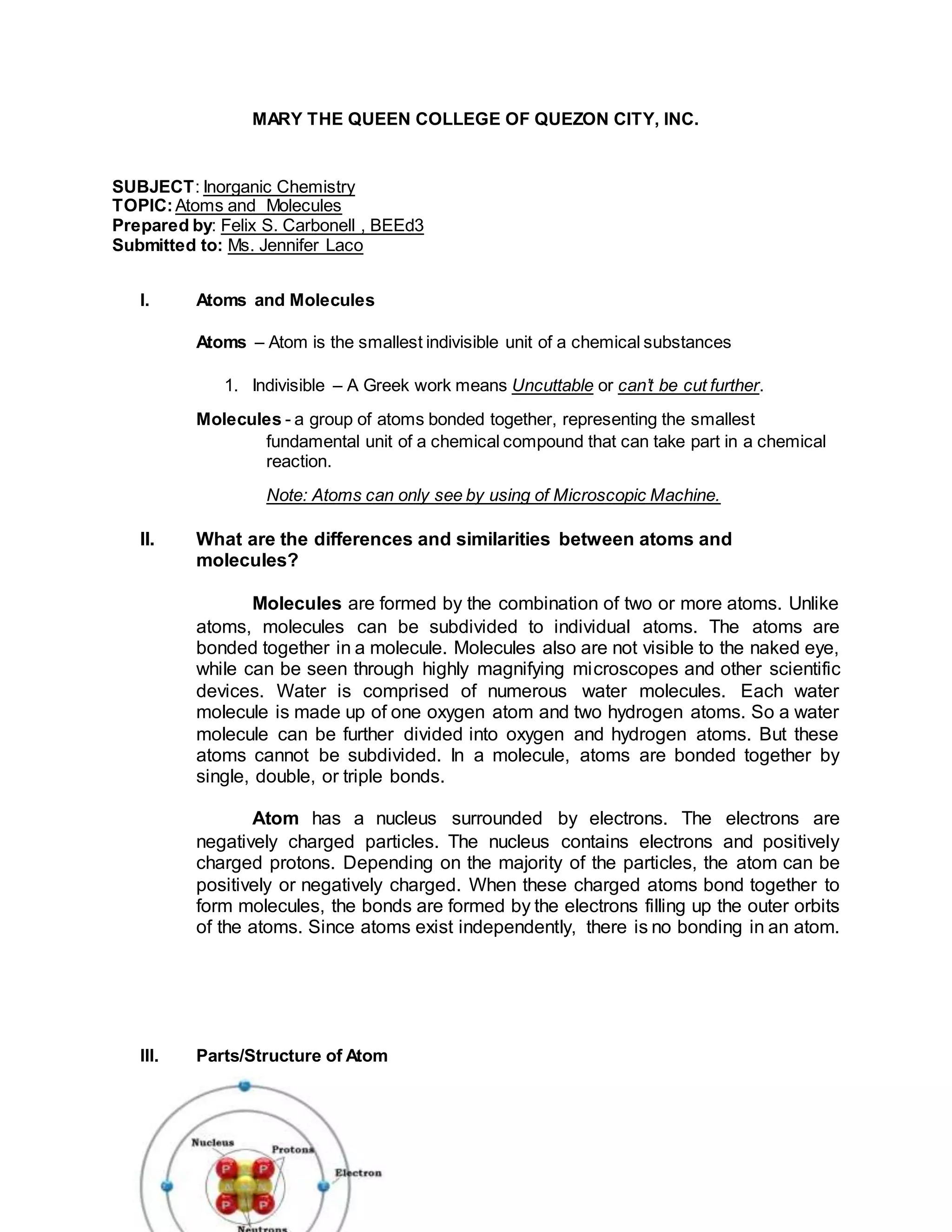
Atom has a nucleus surrounded by electrons. The electrons are
negatively charged particles. The nucleus contains electrons and positively
charged protons. Depending on the majority of the particles, the atom can be
positively or negatively charged. When these charged atoms bond together to
form molecules, the bonds are formed by the electrons filling up the outer orbits
of the atoms. Since atoms exist independently, there is no bonding in an atom.
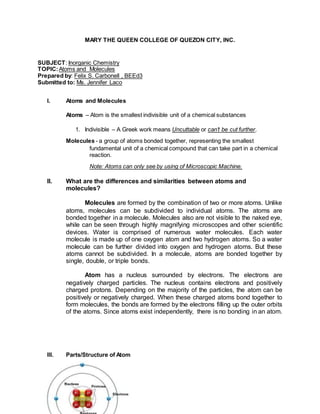
III. Parts/Structure of Atom
The electron always has a "-", or negative, charge.
The proton always has a "+", or positive, charge. If the
charge of an entire atom is "0", or neutral, there are equal
numbers of positive and negative charges. Neutral atoms
have equal numbers of electrons and protons. The third
particle is the neutron. It has a neutral charge, also known
as a charge of zero.
IV. Example of Molecules
Using sentence:
- A sentence composes of words while a words compose of letters
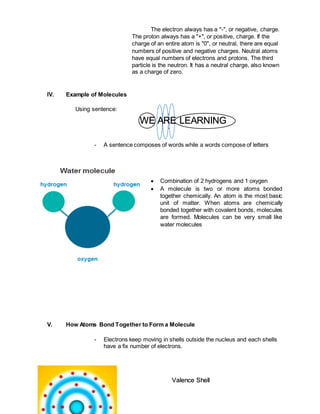
 Combination of 2 hydrogens and 1 oxygen
 A molecule is two or more atoms bonded
together chemically. An atom is the most basic
unit of matter. When atoms are chemically
bonded together with covalent bonds, molecules
are formed. Molecules can be very small like
water molecules
V. How Atoms Bond Together to Form a Molecule
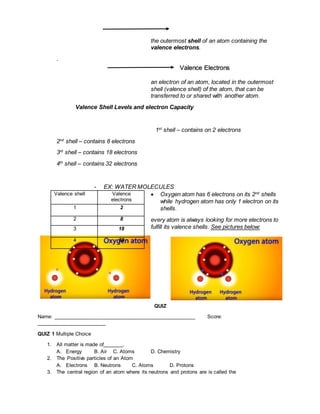
- Electrons keep moving in shells outside the nucleus and each shells
have a fix number of electrons.
WE ARE LEARNING
Valence Shell
the outermost shell of an atom containing the
valence electrons.
.
an electron of an atom, located in the outermost
shell (valence shell) of the atom, that can be
transferred to or shared with another atom.
Valence Shell Levels and electron Capacity
1st
shell – contains on 2 electrons
2nd
shell – contains 8 electrons
3rd
shell – contains 18 electrons
4th
shell – contains 32 electrons
- EX: WATER MOLECULES
 Oxygen atom has 6 electrons on its 2nd
shells
while hydrogen atom has only 1 electron on its
shells.
every atom is always looking for more electrons to
fulfill its valence shells. See pictures below:
QUIZ
Name: _________________________________________________ Score:
________________________
QUIZ 1 Multiple Choice
1. All matter is made of_______.
A. Energy B. Air C. Atoms D. Chemistry
2. The Positive particles of an Atom
A. Electrons B. Neutrons C. Atoms D. Protons
3. The central region of an atom where its neutrons and protons are is called the
Valence shell Valence
electrons
1 2
2 8
3 18
4 32
Valence Electrons
A. Nucleus B. Core C. Electron Cloud D. Center
4. Neutrons are
A. Negative B. Neutral C. Positive D. Cows
5. Electrons are
A. Negative in the nucleus
B. Not in an Atom
C. Positive and at the edge of atom
D. Negative and at the edge of the atom
6. Atoms have neutrons and ________ in the nucleus.
A. Protons B. Shells C. Electrons D. Ions
7. All ____________ are made up of two or more atoms bonded together.
A. Atoms B. Electrons C. Molecules D. Elements
8. Bonds between atoms in a molecule form as a result of the sharing of?
A. Formulas B. Atoms C. Electrons D. Chemicals
9. 2H2O: How many Oxygen Atoms are present?
A. 2 b. 1 c. 4 D. 5
10. Molecules are
A. 2 atoms bound together
B. 2 or more atoms mixed together
C. 2 elements bound together
D. 2 or more atoms bound together
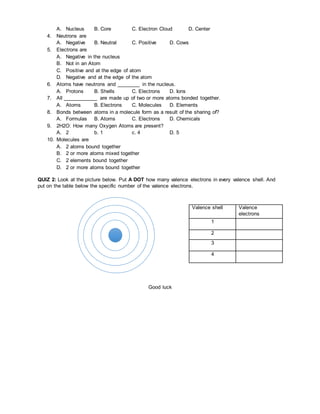
QUIZ 2: Look at the picture below. Put A DOT how many valence electrons in every valence shell. And
put on the table below the specific number of the valence electrons.
Valence shell Valence
electrons
1
2
3
4
Good luck

atoms and molecules

  • 1.
    MARY THE QUEENCOLLEGE OF QUEZON CITY, INC. SUBJECT: Inorganic Chemistry TOPIC:Atoms and Molecules Prepared by: Felix S. Carbonell , BEEd3 Submitted to: Ms. Jennifer Laco I. Atoms and Molecules Atoms – Atom is the smallest indivisible unit of a chemical substances 1. Indivisible – A Greek work means Uncuttable or can’t be cut further. Molecules - a group of atoms bonded together, representing the smallest fundamental unit of a chemical compound that can take part in a chemical reaction. Note: Atoms can only see by using of Microscopic Machine. II. What are the differences and similarities between atoms and molecules? Molecules are formed by the combination of two or more atoms. Unlike atoms, molecules can be subdivided to individual atoms. The atoms are bonded together in a molecule. Molecules also are not visible to the naked eye, while can be seen through highly magnifying microscopes and other scientific devices. Water is comprised of numerous water molecules. Each water molecule is made up of one oxygen atom and two hydrogen atoms. So a water molecule can be further divided into oxygen and hydrogen atoms. But these atoms cannot be subdivided. In a molecule, atoms are bonded together by single, double, or triple bonds. Atom has a nucleus surrounded by electrons. The electrons are negatively charged particles. The nucleus contains electrons and positively charged protons. Depending on the majority of the particles, the atom can be positively or negatively charged. When these charged atoms bond together to form molecules, the bonds are formed by the electrons filling up the outer orbits of the atoms. Since atoms exist independently, there is no bonding in an atom. III. Parts/Structure of Atom
  • 2.
    The electron alwayshas a "-", or negative, charge. The proton always has a "+", or positive, charge. If the charge of an entire atom is "0", or neutral, there are equal numbers of positive and negative charges. Neutral atoms have equal numbers of electrons and protons. The third particle is the neutron. It has a neutral charge, also known as a charge of zero. IV. Example of Molecules Using sentence: - A sentence composes of words while a words compose of letters  Combination of 2 hydrogens and 1 oxygen  A molecule is two or more atoms bonded together chemically. An atom is the most basic unit of matter. When atoms are chemically bonded together with covalent bonds, molecules are formed. Molecules can be very small like water molecules V. How Atoms Bond Together to Form a Molecule - Electrons keep moving in shells outside the nucleus and each shells have a fix number of electrons. WE ARE LEARNING Valence Shell
  • 3.
    the outermost shellof an atom containing the valence electrons. . an electron of an atom, located in the outermost shell (valence shell) of the atom, that can be transferred to or shared with another atom. Valence Shell Levels and electron Capacity 1st shell – contains on 2 electrons 2nd shell – contains 8 electrons 3rd shell – contains 18 electrons 4th shell – contains 32 electrons - EX: WATER MOLECULES  Oxygen atom has 6 electrons on its 2nd shells while hydrogen atom has only 1 electron on its shells. every atom is always looking for more electrons to fulfill its valence shells. See pictures below: QUIZ Name: _________________________________________________ Score: ________________________ QUIZ 1 Multiple Choice 1. All matter is made of_______. A. Energy B. Air C. Atoms D. Chemistry 2. The Positive particles of an Atom A. Electrons B. Neutrons C. Atoms D. Protons 3. The central region of an atom where its neutrons and protons are is called the Valence shell Valence electrons 1 2 2 8 3 18 4 32 Valence Electrons
  • 4.
    A. Nucleus B.Core C. Electron Cloud D. Center 4. Neutrons are A. Negative B. Neutral C. Positive D. Cows 5. Electrons are A. Negative in the nucleus B. Not in an Atom C. Positive and at the edge of atom D. Negative and at the edge of the atom 6. Atoms have neutrons and ________ in the nucleus. A. Protons B. Shells C. Electrons D. Ions 7. All ____________ are made up of two or more atoms bonded together. A. Atoms B. Electrons C. Molecules D. Elements 8. Bonds between atoms in a molecule form as a result of the sharing of? A. Formulas B. Atoms C. Electrons D. Chemicals 9. 2H2O: How many Oxygen Atoms are present? A. 2 b. 1 c. 4 D. 5 10. Molecules are A. 2 atoms bound together B. 2 or more atoms mixed together C. 2 elements bound together D. 2 or more atoms bound together QUIZ 2: Look at the picture below. Put A DOT how many valence electrons in every valence shell. And put on the table below the specific number of the valence electrons. Valence shell Valence electrons 1 2 3 4 Good luck