Characteristics of English Language Learners (ELLs) Language Similarities & differences Culture Childrearing practices & family values Parental role in school Previous educational experience Literacy in native language
Characteristics of ELLs Language Over 200 language backgrounds Proximity of native language to English Culture Passive vs. active Family values Child-rearing practices Previous educational experience Use of native language literacy as a building block
What is Assessment? Gathering information on what a student knows or has learned Formal or informal Observation & documentation
No Child Left Behind Good News Accountability for ELLs Bad News One size does not fit all English language standardized tests not always appropriate for ELLs Statewide testing for ELLs – an emerging field, not much research
Disaggregation of Test Scores Separating out test scores or results for ELL students from all scores To find out:  How are ELLs doing? Are they meeting state standards?
Validity Accuracy of inferences Making appropriate assumptions about test scores Use language of classroom instruction Use alternative forms of assessment that reflect classroom instruction
Video New Kid in Town Arlington Intake Center,  Arlington VA
Newcomer Assessment Used to determine Native language literacy Prior educational experience Phonemic awareness in English Prior knowledge
Inappropriate Assessments Problems with current tests Heavy language load Out of context Culturally-based
Sample Test Item Grade 3 Reading Look at the picture. Which word has the same middle and ending sounds as the name of the picture? F butter  G rabbit H kettle J nibble
Assessing Reading Must reflect classroom instruction Use interactive tasks to provide context for learning Standardized tests do not always provide context or language support
Linking Classroom Assessments  to Statewide Tests Base classroom assessments on state standards Use classroom learning tasks as opportunities for assessment
Benefits of Classroom-Based Assessments Guide both teaching & learning  Continuous adjustments by teacher & students Provide specific, personalized, timely information
Two Types of Assessment Teacher-Useful Assessments Observation & documentation Checklists, rubrics, anecdotal records Student-Friendly Assessments Checklists detailing learning expectations
Assessing ELLs with Learning Disabilities Ways to promote success: Use manipulatives, pictures, illustrations Use performance-based assessment Use instructionally-based materials
Language or Learning Disability? Ways to assess: Educational & medical history Parental interview Student interview Teacher observation and documentation on variety of learning tasks
Assessment Does not need to take time away from instruction Can be simultaneous to instruction Must be ongoing & continuous Can provide feedback to guide teaching and improve learning An integral part of instruction
Teacher Assessments Inform & Direct Instruction Needs/Diagnostic Assessment Reading Instruction Redirected Reading Instruction Cycle of  Assessment & Instruction
Before and After Teaching Find out what students know Diagnostic tests Oral questioning Group for differentiated instruction Relate to prior knowledge & students’ interests Compare results before and after tests
State Standardized Tests Measure annual growth Not as useful for informing classroom instruction on weekly basis
Video Letters and Sounds Mark Hopkins Elementary School,  Sacramento CA
Video highlights Student engaged to follow specific instruction Student performs literacy task Teacher keeps record of strengths and needs
Useful Teaching Approaches Relate new information to students’ prior knowledge Use hands-on tasks, manipulatives, games, kinesthetic activities, visuals Help learners feel they belong
Assessing and Diagnosing In a Multi-lingual Classroom Common set of teaching standards and objectives Compare each students accomplishments to standards instead of to each other
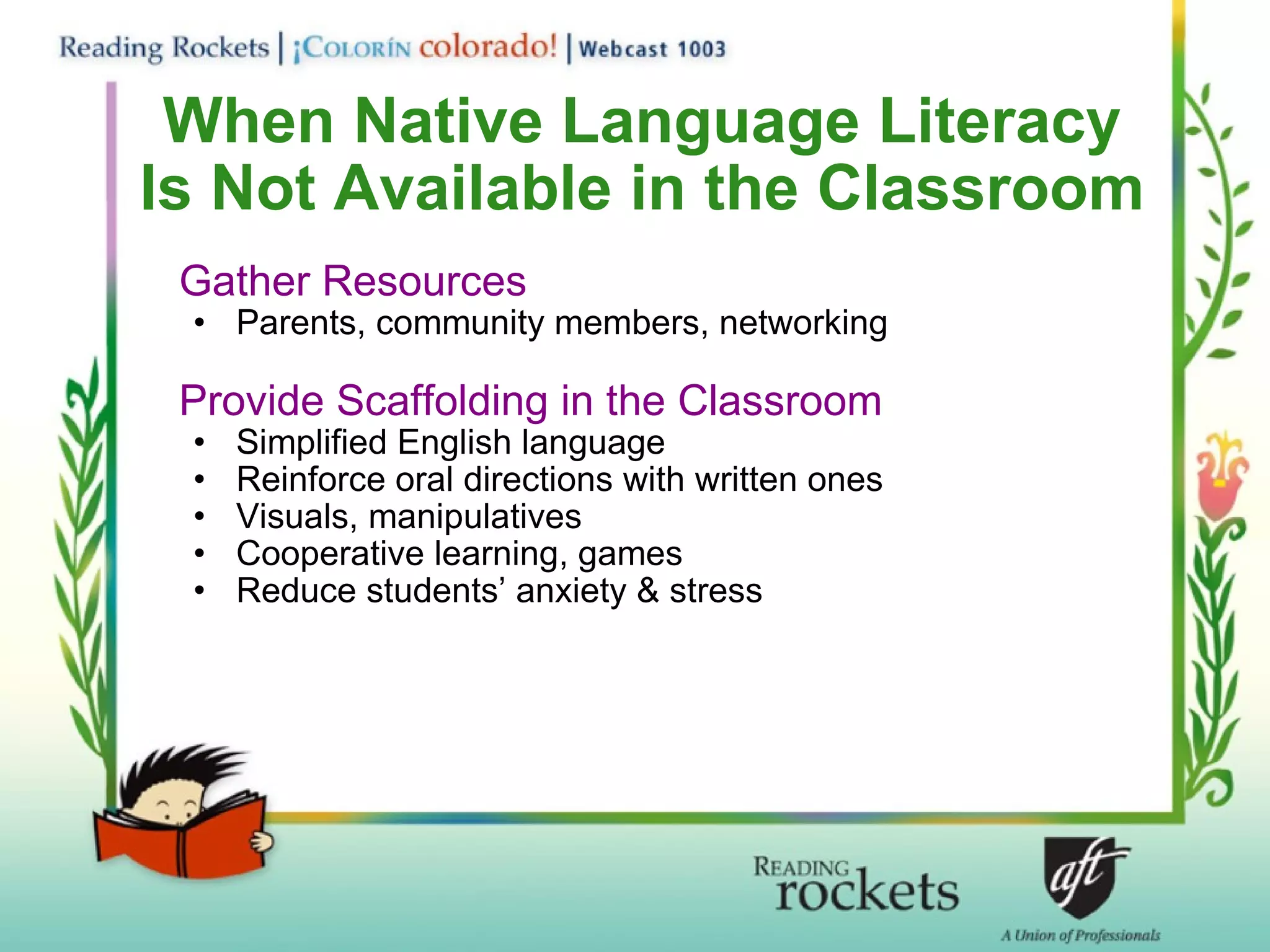
When Native Language Literacy Is Not Available in the Classroom Gather Resources Parents, community members, networking Provide Scaffolding in the Classroom Simplified English language Reinforce oral directions with written ones Visuals, manipulatives Cooperative learning, games Reduce students’ anxiety & stress
Assessment That  Promotes Learning Not just auditing learning Diagnosing strengths and needs Providing specific feedback Descriptive & productive feedback  Not just a grade Add constructive comments
Sharing Expectations with Students Ideas to try: Use wall charts, tables, graphs Use symbols to reduce language load Use color coding Use student-friendly checklists for reading skills Student/teacher conferences Essential for self-monitoring
Informing Both  Parents & Students Share learning goals, objectives, and assessment results Enable students to hit the learning target
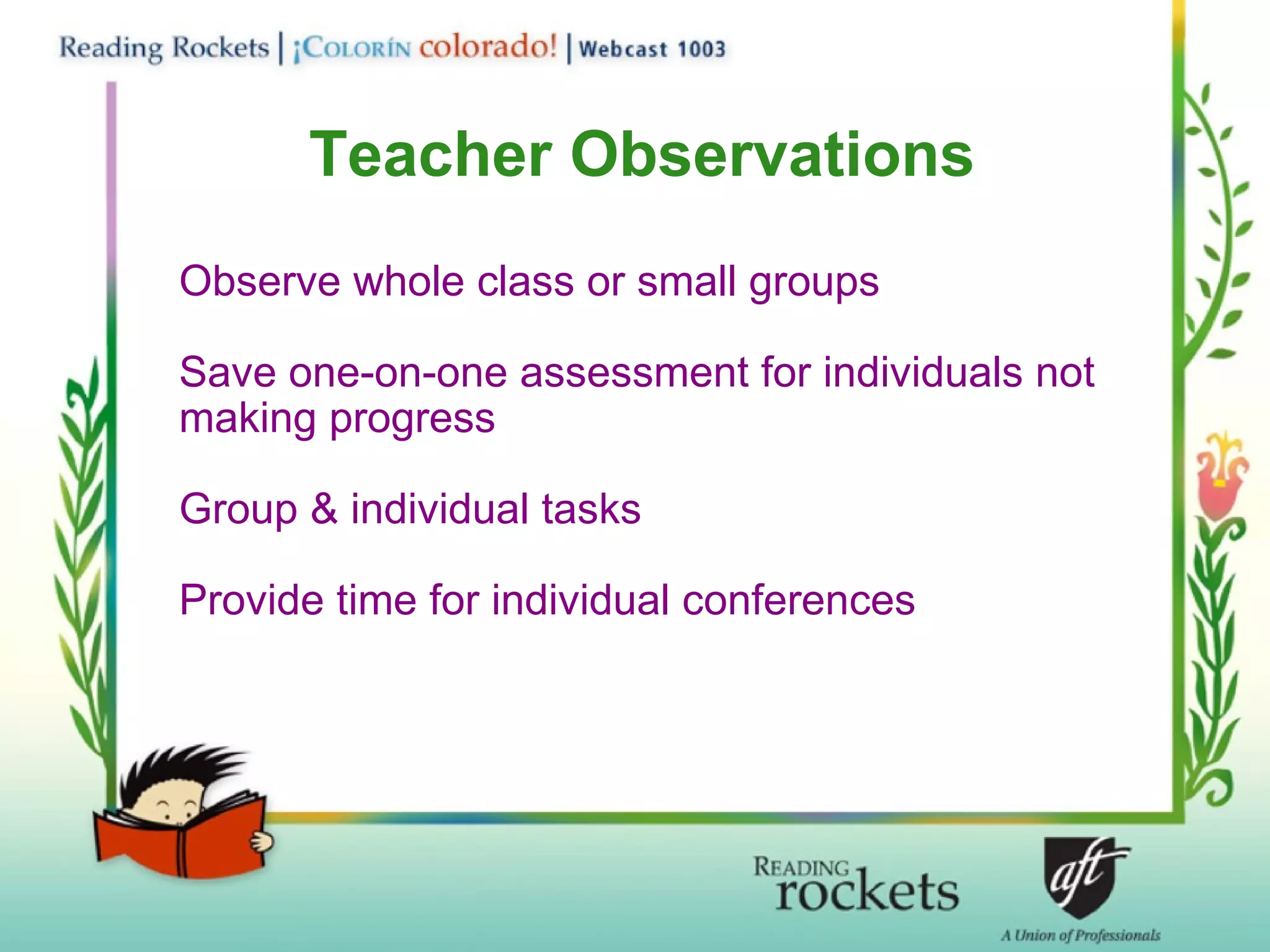
Teacher Observations Observe whole class or small groups Save one-on-one assessment for individuals not making progress Group & individual tasks  Provide time for individual conferences
Involving Parents Native language resources Provide child’s history Need to know learning goals & assessment expectations Can support literacy in the home
Summary Need variety of assessments Need to involve parents Need state legislation requiring teacher assessment literacy L. V. Pierce, George Mason University
Thank you  for  watching!

ASSESSMENT_ELL

  • 1.
  • 2.
    Characteristics of EnglishLanguage Learners (ELLs) Language Similarities & differences Culture Childrearing practices & family values Parental role in school Previous educational experience Literacy in native language
  • 3.
    Characteristics of ELLsLanguage Over 200 language backgrounds Proximity of native language to English Culture Passive vs. active Family values Child-rearing practices Previous educational experience Use of native language literacy as a building block
  • 4.
    What is Assessment?Gathering information on what a student knows or has learned Formal or informal Observation & documentation
  • 5.
    No Child LeftBehind Good News Accountability for ELLs Bad News One size does not fit all English language standardized tests not always appropriate for ELLs Statewide testing for ELLs – an emerging field, not much research
  • 6.
    Disaggregation of TestScores Separating out test scores or results for ELL students from all scores To find out: How are ELLs doing? Are they meeting state standards?
  • 7.
    Validity Accuracy ofinferences Making appropriate assumptions about test scores Use language of classroom instruction Use alternative forms of assessment that reflect classroom instruction
  • 8.
    Video New Kidin Town Arlington Intake Center, Arlington VA
  • 9.
    Newcomer Assessment Usedto determine Native language literacy Prior educational experience Phonemic awareness in English Prior knowledge
  • 10.
    Inappropriate Assessments Problemswith current tests Heavy language load Out of context Culturally-based
  • 11.
    Sample Test ItemGrade 3 Reading Look at the picture. Which word has the same middle and ending sounds as the name of the picture? F butter G rabbit H kettle J nibble
  • 12.
    Assessing Reading Mustreflect classroom instruction Use interactive tasks to provide context for learning Standardized tests do not always provide context or language support
  • 13.
    Linking Classroom Assessments to Statewide Tests Base classroom assessments on state standards Use classroom learning tasks as opportunities for assessment
  • 14.
    Benefits of Classroom-BasedAssessments Guide both teaching & learning Continuous adjustments by teacher & students Provide specific, personalized, timely information
  • 15.
    Two Types ofAssessment Teacher-Useful Assessments Observation & documentation Checklists, rubrics, anecdotal records Student-Friendly Assessments Checklists detailing learning expectations
  • 16.
    Assessing ELLs withLearning Disabilities Ways to promote success: Use manipulatives, pictures, illustrations Use performance-based assessment Use instructionally-based materials
  • 17.
    Language or LearningDisability? Ways to assess: Educational & medical history Parental interview Student interview Teacher observation and documentation on variety of learning tasks
  • 18.
    Assessment Does notneed to take time away from instruction Can be simultaneous to instruction Must be ongoing & continuous Can provide feedback to guide teaching and improve learning An integral part of instruction
  • 19.
    Teacher Assessments Inform& Direct Instruction Needs/Diagnostic Assessment Reading Instruction Redirected Reading Instruction Cycle of Assessment & Instruction
  • 20.
    Before and AfterTeaching Find out what students know Diagnostic tests Oral questioning Group for differentiated instruction Relate to prior knowledge & students’ interests Compare results before and after tests
  • 21.
    State Standardized TestsMeasure annual growth Not as useful for informing classroom instruction on weekly basis
  • 22.
    Video Letters andSounds Mark Hopkins Elementary School, Sacramento CA
  • 23.
    Video highlights Studentengaged to follow specific instruction Student performs literacy task Teacher keeps record of strengths and needs
  • 24.
    Useful Teaching ApproachesRelate new information to students’ prior knowledge Use hands-on tasks, manipulatives, games, kinesthetic activities, visuals Help learners feel they belong
  • 25.
    Assessing and DiagnosingIn a Multi-lingual Classroom Common set of teaching standards and objectives Compare each students accomplishments to standards instead of to each other
  • 26.
    When Native LanguageLiteracy Is Not Available in the Classroom Gather Resources Parents, community members, networking Provide Scaffolding in the Classroom Simplified English language Reinforce oral directions with written ones Visuals, manipulatives Cooperative learning, games Reduce students’ anxiety & stress
  • 27.
    Assessment That Promotes Learning Not just auditing learning Diagnosing strengths and needs Providing specific feedback Descriptive & productive feedback Not just a grade Add constructive comments
  • 28.
    Sharing Expectations withStudents Ideas to try: Use wall charts, tables, graphs Use symbols to reduce language load Use color coding Use student-friendly checklists for reading skills Student/teacher conferences Essential for self-monitoring
  • 29.
    Informing Both Parents & Students Share learning goals, objectives, and assessment results Enable students to hit the learning target
  • 30.
    Teacher Observations Observewhole class or small groups Save one-on-one assessment for individuals not making progress Group & individual tasks Provide time for individual conferences
  • 31.
    Involving Parents Nativelanguage resources Provide child’s history Need to know learning goals & assessment expectations Can support literacy in the home
  • 32.
    Summary Need varietyof assessments Need to involve parents Need state legislation requiring teacher assessment literacy L. V. Pierce, George Mason University
  • 33.
    Thank you for watching!