Educational Blogging and Pedagogy Peter Rawsthorne [email_address]
Workshop Objectives Upon completion of this workshop the participants will …. be able to describe blogging be able to identify the attributes of an effective blog be able to discuss the educational uses of the blog
Introductions Introduce yourself and the faculty you belong Describe your familiarity with blogging Share with the group one question you would like answered from this workshop
What is a blog? Is a journal or diary (Blog, 2006) Usually displayed in a reverse chronological order. A commentary or news on a particular subject blogs are  primarily  textual…  they sometimes contain; photographs (photoblog) videos (vlog) audio (podcasting) Are part of the social network / media
What is blogging?  DEMOS Text based  http://www.elearnspace.org/blog/ http://www.ictlogy.net/   Rich media based   http:// criticaltechnology.blogspot.com / Academic Publishing   http://elgg.net/csessums/weblog/8119.html   http://terrya.edublogs.org/   http://critical.edublogs.org/
Add a post:  DEMO http:// criticaltechnology.blogspot.com /
What is blogging? The act of creating, editing, and adding posts to a blog Can be a stream of consciousness Are used for academic publishing ???  (not peer reviewed beyond the comments) Blogging is the act of creating new content or referencing existing content. “ Never has so much been written to be read by so few” (Unknown)
Blogs vs. Webpages ? think pair share From what you have learned so far; Think  about how a blog and a web page differ Pair  up with someone next to you Share  your thoughts about the differences You have 5 minutes to complete this activity
? How do blogs differ from webpages
? How do blogs differ from  discussion groups It depends on ownership Blogs  are author owned and timeless Discussion groups  are owned by all participants and “disappear” once the discussion (course) is over. Think about online discussion groups
Parts of a blog 1. Browser window 2. Header 3. Posts 4. Search 5. Calendar 6. Additional pages 7. Archives 8. Categories 9. Blogroll 10. Administration
A good blog is concise Is  active  with posts and comments Is current Is linked to an  author profile Is organized with categories Has a well understood  theme Has related blogrolls Has good aesthetics Has  concise post titles
Quality posting is important A good post; Has a  concise post title One or  two  paragraphs only References other web information Is  a complete idea Has an  author Does not duplicate another post
Encourage thoughtful comments A  good  comment; Will   add  to the original post Should  NOT  be anonymous May include a web reference Will  avoid  being just a personal comment
Activity Identify a  theme  in your discipline that would  encourage  student posting on a course blog. think pair share From what you have learned so far; Think  about a blog post that would fit your identified theme. The post should have the attributes of a quality post. Pair  up with someone next to you Share  your blog post, and how the post content is reflected in it’s title You have 5 minutes to complete this activity
Educational uses of blogs
Writing Simpson (1999) states, “One of the best ways of  entrenching  one's knowledge is to explain it to others…” Hutchings (2002) credits Shulman with the notion of  publicly  sharing one’s work for critical review that became accepted as an  integral element of the scholarship  of teaching and learning.
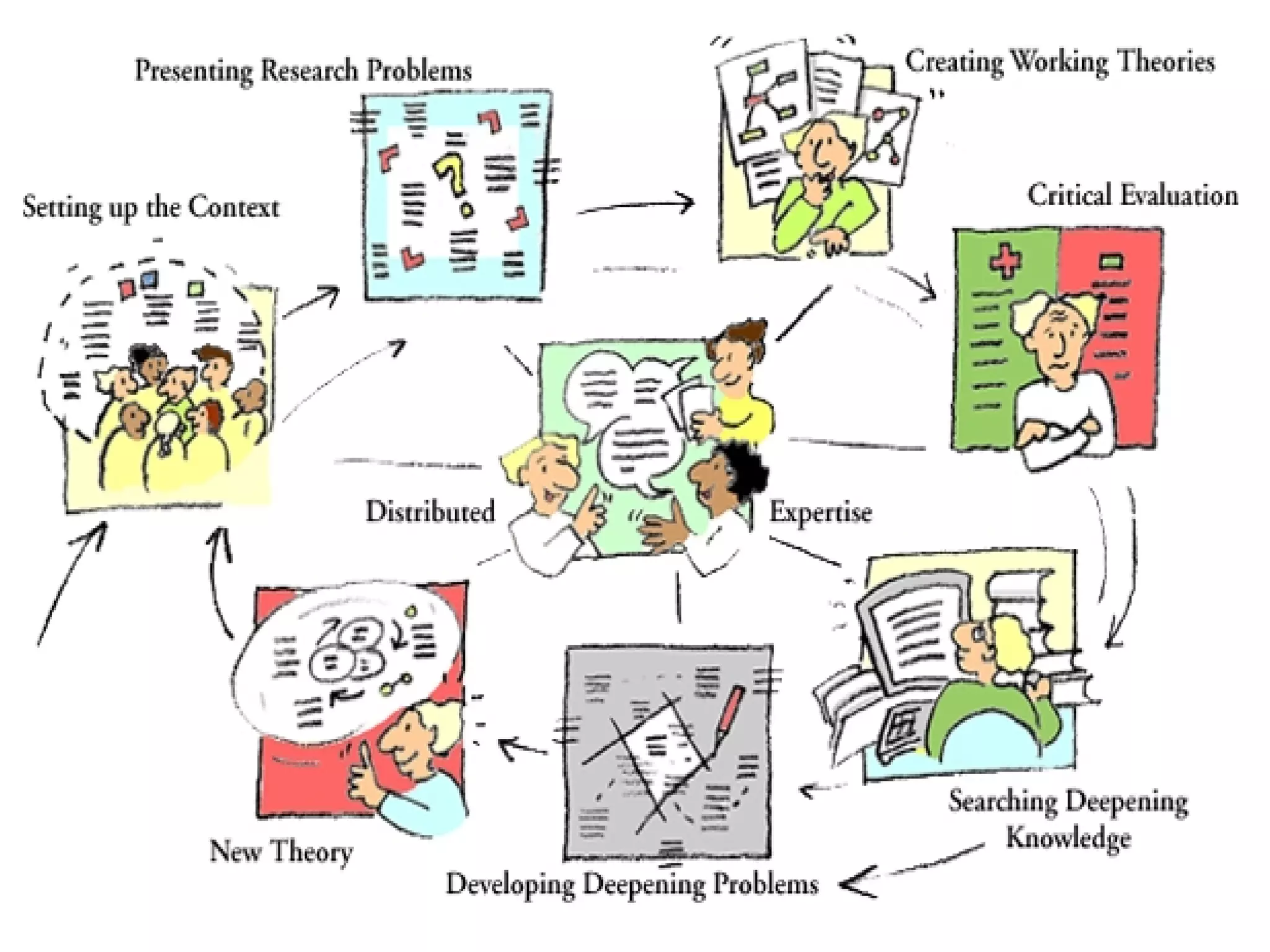
Beyond Constructivism Social Constructivism Social constructivism is a variety of  cognitive  constructivism that emphasizes the  collaborative  nature of learning.  Progressive Inquiry; Rahikainen (2001)
 
klogging Hall (2002) considers, “K-logs are weblogs used specifically for the purposes of sharing / documenting knowledge and/or sharing the process of  knowledge-making ".
Using blogs within a course SCENARIO: ED3484 – Computers and Learning Resources K6 - Newfoundland Labrador curriculum Course blog:  http://3484w06.blogspot.com/   An example blog:  http://docdwarf.blogspot.com/   RESULTS: 36 Blogs Different parts of the K6 Newfoundland Labrador curriculum blogroll:  http://www.rawsthorne.org/bit/medit/gpt/blogroll.htm
Using blogs within a course STUDENT SYTHESIS: A good way to  compliment  classroom activities Have the students  build  their own blogs Is  engaging  and a lot of  fun Helped with overcoming technology fears Social Constructivism  happens
Activity Groups of four Brainstorm uses for blogs within your respective courses Write your ideas on the paper provided Be prepared to present your ideas
Thank-you [email_address]
References Blog. (2006, September 10). In Wikipedia, The Free Encyclopedia. Retrieved September 11, 2006, from  http://en.wikipedia.org/wiki/Blog   Hall, S. (2002). Blogs and Klogs. Retrieved on Aug. 30, 2006 from  http://radio.weblogs.com/0106698/2002/10/26.html   Hutchings, P., Clarke, S.E. (2004). The Scholarship of Teaching and Learning: Contributing to Reform in Graduate Education. In D. Wulff, A. Austin, and Associates (eds.),  Paths to the Professoriate: Strategies for Enriching the Preparation of Future Faculty . San Francisco: Jossey-Bass Rahikainen, M., Lallimo, J., & Hakkarainen, K.(2001). Progressive inquiry in CSILE environment: teacher guidance and students' engagement. In P. Dillenbourg, A. Eurelings., & K. Hakkarainen (Eds.), European Perspectives on Computer-Supported Collaborative Learning. Proceedings of the First European Conference on CSCL (pp. 520-528). Maastricht, the Netherlands: Maastricht McLuhan Institute. Retrieved on Aug. 30, 2006 from  http://www.helsinki.fi/science/networkedlearning/eng/delete.html   Simpson, E. (1999). The role of graduate studies in a comprehensive university. The Aldrich Memorial Interdisciplinary Lecture. Retrieved on Aug. 30, 2006 from  http://www.mun.ca/sgs/aldrich/aldrich_1999.php (n.d.). Theories of learning: Social Constructivism. Retrieved on Sept 19, 2006 from  http://gsi.berkeley.edu/resources/learning/social.html

Educational Blogging

  • 1.
    Educational Blogging andPedagogy Peter Rawsthorne [email_address]
  • 2.
    Workshop Objectives Uponcompletion of this workshop the participants will …. be able to describe blogging be able to identify the attributes of an effective blog be able to discuss the educational uses of the blog
  • 3.
    Introductions Introduce yourselfand the faculty you belong Describe your familiarity with blogging Share with the group one question you would like answered from this workshop
  • 4.
    What is ablog? Is a journal or diary (Blog, 2006) Usually displayed in a reverse chronological order. A commentary or news on a particular subject blogs are primarily textual… they sometimes contain; photographs (photoblog) videos (vlog) audio (podcasting) Are part of the social network / media
  • 5.
    What is blogging? DEMOS Text based http://www.elearnspace.org/blog/ http://www.ictlogy.net/ Rich media based http:// criticaltechnology.blogspot.com / Academic Publishing http://elgg.net/csessums/weblog/8119.html http://terrya.edublogs.org/ http://critical.edublogs.org/
  • 6.
    Add a post: DEMO http:// criticaltechnology.blogspot.com /
  • 7.
    What is blogging?The act of creating, editing, and adding posts to a blog Can be a stream of consciousness Are used for academic publishing ??? (not peer reviewed beyond the comments) Blogging is the act of creating new content or referencing existing content. “ Never has so much been written to be read by so few” (Unknown)
  • 8.
    Blogs vs. Webpages? think pair share From what you have learned so far; Think about how a blog and a web page differ Pair up with someone next to you Share your thoughts about the differences You have 5 minutes to complete this activity
  • 9.
    ? How doblogs differ from webpages
  • 10.
    ? How doblogs differ from discussion groups It depends on ownership Blogs are author owned and timeless Discussion groups are owned by all participants and “disappear” once the discussion (course) is over. Think about online discussion groups
  • 11.
    Parts of ablog 1. Browser window 2. Header 3. Posts 4. Search 5. Calendar 6. Additional pages 7. Archives 8. Categories 9. Blogroll 10. Administration
  • 12.
    A good blogis concise Is active with posts and comments Is current Is linked to an author profile Is organized with categories Has a well understood theme Has related blogrolls Has good aesthetics Has concise post titles
  • 13.
    Quality posting isimportant A good post; Has a concise post title One or two paragraphs only References other web information Is a complete idea Has an author Does not duplicate another post
  • 14.
    Encourage thoughtful commentsA good comment; Will add to the original post Should NOT be anonymous May include a web reference Will avoid being just a personal comment
  • 15.
    Activity Identify a theme in your discipline that would encourage student posting on a course blog. think pair share From what you have learned so far; Think about a blog post that would fit your identified theme. The post should have the attributes of a quality post. Pair up with someone next to you Share your blog post, and how the post content is reflected in it’s title You have 5 minutes to complete this activity
  • 16.
  • 17.
    Writing Simpson (1999)states, “One of the best ways of entrenching one's knowledge is to explain it to others…” Hutchings (2002) credits Shulman with the notion of publicly sharing one’s work for critical review that became accepted as an integral element of the scholarship of teaching and learning.
  • 18.
    Beyond Constructivism SocialConstructivism Social constructivism is a variety of cognitive constructivism that emphasizes the collaborative nature of learning. Progressive Inquiry; Rahikainen (2001)
  • 19.
  • 20.
    klogging Hall (2002)considers, “K-logs are weblogs used specifically for the purposes of sharing / documenting knowledge and/or sharing the process of knowledge-making ".
  • 21.
    Using blogs withina course SCENARIO: ED3484 – Computers and Learning Resources K6 - Newfoundland Labrador curriculum Course blog: http://3484w06.blogspot.com/ An example blog: http://docdwarf.blogspot.com/ RESULTS: 36 Blogs Different parts of the K6 Newfoundland Labrador curriculum blogroll: http://www.rawsthorne.org/bit/medit/gpt/blogroll.htm
  • 22.
    Using blogs withina course STUDENT SYTHESIS: A good way to compliment classroom activities Have the students build their own blogs Is engaging and a lot of fun Helped with overcoming technology fears Social Constructivism happens
  • 23.
    Activity Groups offour Brainstorm uses for blogs within your respective courses Write your ideas on the paper provided Be prepared to present your ideas
  • 24.
  • 25.
    References Blog. (2006,September 10). In Wikipedia, The Free Encyclopedia. Retrieved September 11, 2006, from http://en.wikipedia.org/wiki/Blog Hall, S. (2002). Blogs and Klogs. Retrieved on Aug. 30, 2006 from http://radio.weblogs.com/0106698/2002/10/26.html Hutchings, P., Clarke, S.E. (2004). The Scholarship of Teaching and Learning: Contributing to Reform in Graduate Education. In D. Wulff, A. Austin, and Associates (eds.), Paths to the Professoriate: Strategies for Enriching the Preparation of Future Faculty . San Francisco: Jossey-Bass Rahikainen, M., Lallimo, J., & Hakkarainen, K.(2001). Progressive inquiry in CSILE environment: teacher guidance and students' engagement. In P. Dillenbourg, A. Eurelings., & K. Hakkarainen (Eds.), European Perspectives on Computer-Supported Collaborative Learning. Proceedings of the First European Conference on CSCL (pp. 520-528). Maastricht, the Netherlands: Maastricht McLuhan Institute. Retrieved on Aug. 30, 2006 from http://www.helsinki.fi/science/networkedlearning/eng/delete.html Simpson, E. (1999). The role of graduate studies in a comprehensive university. The Aldrich Memorial Interdisciplinary Lecture. Retrieved on Aug. 30, 2006 from http://www.mun.ca/sgs/aldrich/aldrich_1999.php (n.d.). Theories of learning: Social Constructivism. Retrieved on Sept 19, 2006 from http://gsi.berkeley.edu/resources/learning/social.html